

P0133 on 2011-2016 Chevrolet Cruze 1.8L: Slow O2 Sensor Causes and Fixes
On a 2011-2016 Cruze with the 1.8L engine, code P0133 is most often caused by a failing upstream oxygen sensor (Bank 1, Sensor 1). Before replacing it, check for a hissing sound from the engine cover, which indicates a failed PCV system and a vacuum leak that must be fixed first. A new sensor costs $40-$120.
- P0133 on a 1.8L Cruze most likely means the upstream O2 sensor has failed.
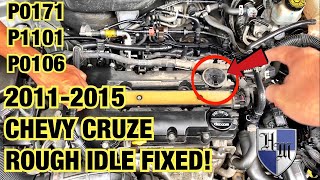
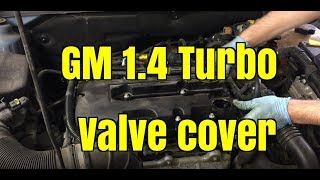
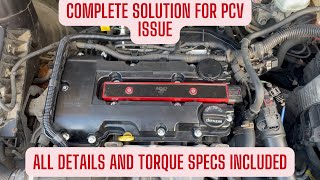
- BEFORE buying an O2 sensor, listen for a hissing noise from the engine cover. This indicates a very common PCV valve failure that creates a vacuum leak and must be fixed first by replacing the valve cover.
- Always check for other codes, especially P0171 (System Too Lean), which strongly points towards a vacuum leak.
- The correct replacement part is the upstream sensor (Bank 1, Sensor 1), located in the exhaust manifold.
- Ignoring this code will cause poor fuel economy and can eventually damage the much more expensive catalytic converter.
What's Unique About the 2011-2016 Chevrolet Cruze
While the oxygen sensor itself is the most common failure, the 1.8L engine in the Cruze is also known for a very common failure of the PCV diaphragm inside the valve cover. This creates a significant vacuum leak, which can cause various fuel trim and sensor-related codes, including P0171 (System Too Lean). This vacuum leak can alter exhaust composition and cause the ECM to interpret the O2 sensor's signal as slow, leading to a P0133 code. It's crucial to rule out this common PCV issue before replacing the O2 sensor.
Generation note: The 2011-2016 year range covers the first generation of the Chevrolet Cruze. For the 2016 model year, this guide applies to the first-generation model sold as the "Cruze Limited."
Symptoms You May Notice
- Check Engine Light is on
- Reduced fuel economy
- Rough or unstable idle
- Engine hesitation or stumbling during acceleration
- Black smoke from the exhaust in some cases
- Interruption of the cruise control system at low speeds
- "DEF Fluid Quality Poor" message (on diesel-equipped variants)
- Replacing the oxygen sensor without first checking for the common valve cover/PCV vacuum leak. If a vacuum leak is the root cause, a new O2 sensor will not fix the problem and the code will likely return.
- Replacing the downstream (Sensor 2) oxygen sensor instead of the upstream (Sensor 1) sensor.
- Replacing the catalytic converter when the issue is just a slow sensor.
Most Likely Causes
- Failing Upstream Oxygen Sensor (Bank 1, Sensor 1) 🔴 High Probability → Shop Oxygen Sensor Oxygen sensors are wear-and-tear items that degrade over time from heat cycles and contamination. On the 1.8L Cruze, this is the most direct and frequent cause of P0133, often failing after 80,000-100,000 miles.
How to confirm: Use a scan tool to graph the voltage of the Bank 1 Sensor 1. A healthy sensor's voltage should switch rapidly and frequently between ~0.1V and ~0.9V. A slow sensor will show lazy, rounded-off waves that take a second or more to transition.
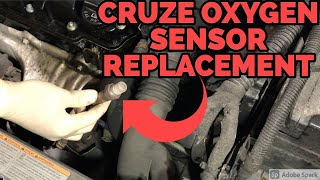
Typical fix: Replace the upstream oxygen sensor. It is located on the front of the engine in the exhaust manifold. Use a 22mm or 7/8" O2 sensor socket. Soak the threads with penetrating oil before removal. Torque the new sensor to approximately 31 ft-lbs (42 Nm).
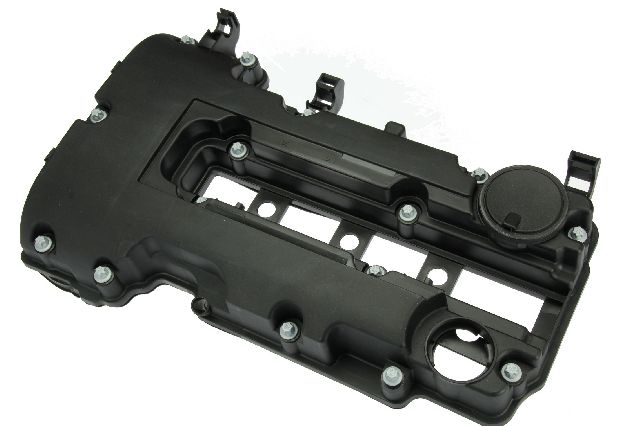
Est. part cost: $40-$120 - Failed PCV Diaphragm in Valve Cover 🟡 Medium Probability → Shop Engine Valve Cover The 1.8L LWE engine has a very common issue where the rubber PCV diaphragm integrated into the plastic valve cover tears, creating a large unmetered vacuum leak. While this issue is more famously associated with the 1.4L Cruze engine, it also affects the 1.8L.
How to confirm: With the engine running, listen for a distinct hissing or whistling sound from the top of the engine cover, specifically near the small circular cap on the valve cover. You can also try to remove the oil filler cap; if there is strong suction holding it down, the PCV system has likely failed. This issue will almost always set a P0171 (System Too Lean) code along with other codes.
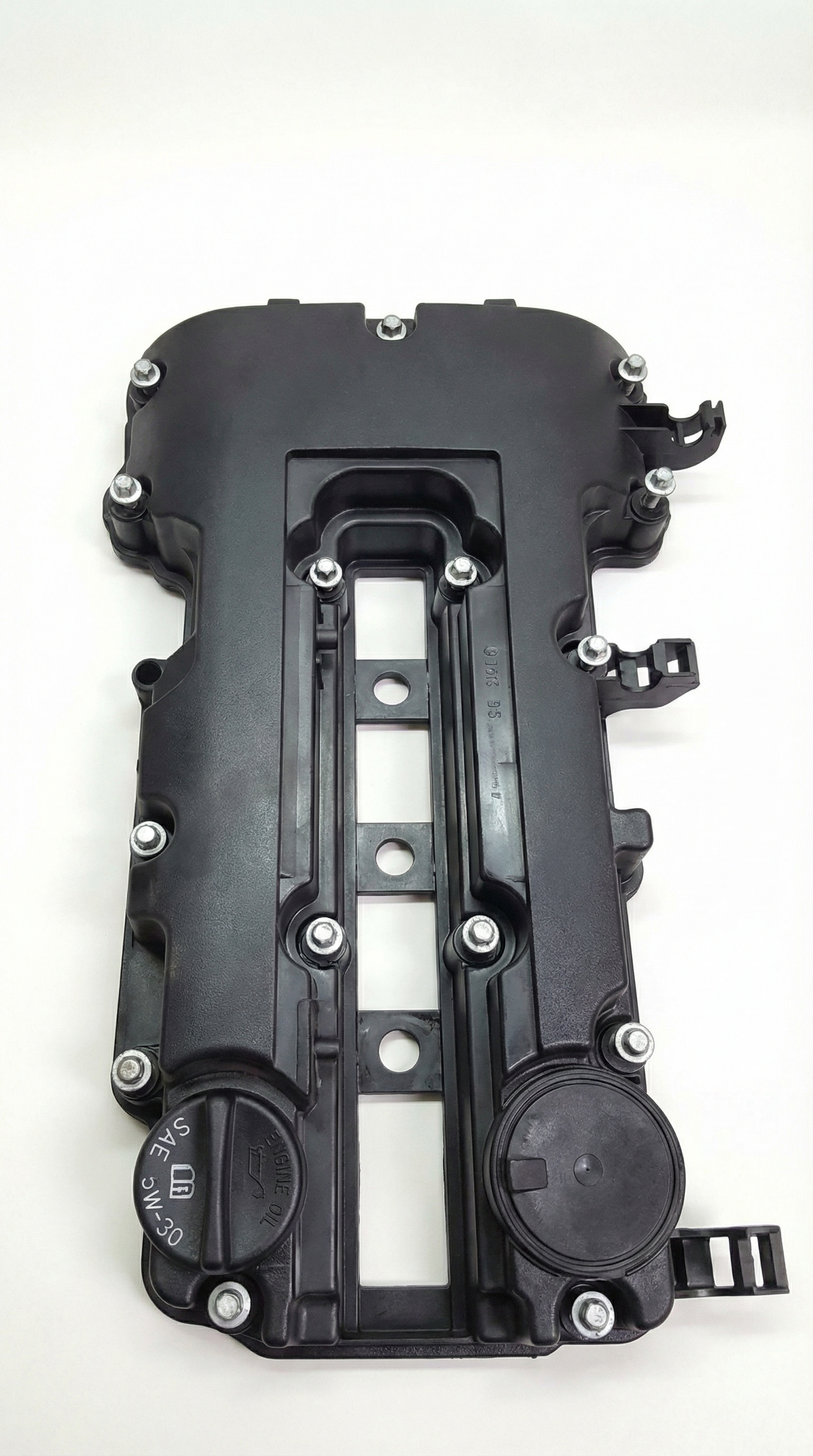
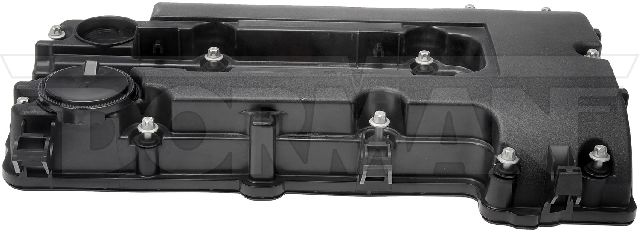
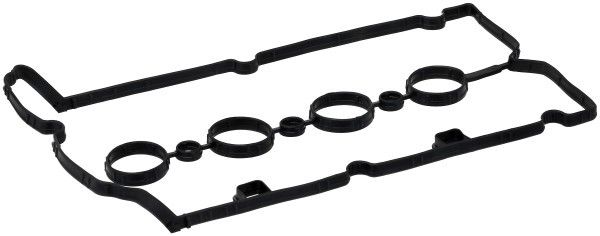
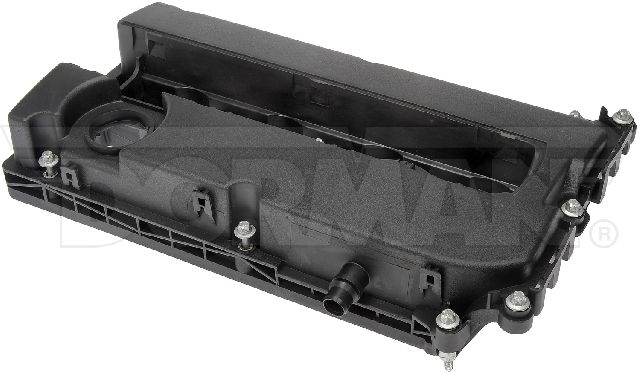
Typical fix: The entire valve cover assembly must be replaced, as the diaphragm is not sold separately by the OEM. The new cover comes with a new gasket and bolts.
Est. part cost: $50-$180 - Exhaust Leak Before the Oxygen Sensor ⚪ Low Probability → Shop Oxygen Sensor The exhaust manifold gasket can degrade over time, or the manifold itself can develop cracks, allowing outside air to enter the exhaust stream.
How to confirm: Visually inspect the exhaust manifold and the pipe leading to the O2 sensor for cracks or black soot trails indicating a leak. A smoke test is the most effective method, where smoke is forced into the intake or exhaust and leaks are identified by smoke exiting from cracks or bad gaskets.
Typical fix: Replace the leaking exhaust manifold gasket or repair/replace the cracked manifold.
Est. part cost: $20-$300
Rare But Worth Checking
- New Vehicle Catalytic Converter Break-in: A GM Preliminary Information bulletin (PIP5109A) states that on very low mileage vehicles, a P0133 code can set as the new catalytic converter goes through its initial 'de-greening' or break-in period. If no other issues are found, the code should be cleared and the vehicle driven. No parts should be replaced.
- Damaged Wiring or Connectors: Check the wiring harness and connector going to the upstream O2 sensor for any signs of melting, corrosion, or physical damage. Oil leaks from the valve cover can also contaminate the connector, leading to poor signal quality.
- Blown O2 Sensor Fuse: → Shop Oxygen Sensor Before replacing sensors, check the O2 sensor-related fuses in the underhood fuse box. For this generation of Cruze, these are typically fuses #11 (O2 Sensor Heater) and #47 (Emissions).
Diagnosis Steps
- Scan for any other DTCs. Pay close attention to lean codes like P0171, which strongly suggests a vacuum leak.
- With the engine running at idle, listen for a hissing or whistling noise from the valve cover, indicating a PCV failure. Check for strong vacuum at the oil cap.
- If no vacuum leak is apparent, perform a smoke test on the intake and exhaust systems to check for hidden leaks from gaskets or hoses.
- Inspect the O2 sensor's wiring harness and connector for any signs of melting, corrosion, or oil contamination.
- Check fuses #11 and #47 in the underhood fuse box.
- Using a scan tool with live data, graph the voltage for Bank 1 Sensor 1. The voltage should switch rapidly between approximately 0.1V and 0.9V. If the waveform is slow and lazy, the sensor has failed.
- If all other checks pass, replace the upstream oxygen sensor.
Parts You'll Likely Need
- Upstream Oxygen Sensor (Bank 1, Sensor 1)
(OEM #55572216)— This is the most common direct cause of P0133. The sensor's ability to react quickly degrades with age and contamination.
Trusted brands: ACDelco (213-4698), Bosch (17276), Denso (234-4701), NGK/NTK
OEM price range: $80-$120
Aftermarket price range: $40-$80 - Valve Cover with Integrated PCV
(OEM #25198874 (superseded by 55598673))— A failed PCV diaphragm in the valve cover is a very common source of vacuum leaks on this engine, which can trigger P0133 as a secondary code. The entire cover must be replaced.
Trusted brands: ACDelco, Dorman
OEM price range: $120-$180
Aftermarket price range: $50-$90
Related Codes That Often Appear With This One
- P0171 — System Too Lean. This code is very commonly seen with P0133 if the root cause is a vacuum leak from a failed PCV system in the valve cover. The unmetered air causes the lean condition.
- P0030 — HO2S Heater Control Circuit (Bank 1, Sensor 1). This code points to a failure in the sensor's internal heating element. If the heater fails, the sensor cannot warm up quickly enough to operate properly, which can also lead to a P0133 slow response code.
- P20EE / P22FA — These codes are often found in history alongside P0133 when a "DEF Fluid Quality Poor" message is triggered, as noted in TSB Bulletin #PI1485.
- P0128 — Engine Coolant Temperature Below Thermostat Regulating Temperature. This code may set concurrently with P0133 and can lead to cruise control interruptions, according to TSB Bulletin #PI1484.
Technical Service Bulletins (TSBs) & Recalls
- PIP5109A - Malfunction Indicator Lamp (MIL) On, DTC P0133 Set on Low Mileage Vehicles. Notes that this code can appear during the break-in period for the catalytic converter and may not require a repair. The official recommendation is to clear the DTC and test drive; if it does not return, return the vehicle to the customer.
- TSB Bulletin #PI0968 - Provides preliminary information on the Malfunction Indicator Lamp (MIL) being on specifically due to a P0133 set condition.
- TSB Bulletin #PI1484B - Addresses customer concerns regarding a "DEF Fluid Quality Poor" message and cruise control interruptions at low speeds when P0133 is present.
- TSB Bulletin #PI1484A - Notes that technicians may find P0133 in history along with P20EE and P2463 when diagnosing cruise control issues.
- TSB Bulletin #PI1484 - Provides repair information for instances where P0133 is set alongside P0128 and P2002.
- TSB Bulletin #PI1485 - Details repair information for the "DEF Fluid Quality Poor" message and MIL illumination when P0133, P20EE, or P22FA are set.
Platform-Specific Known Issues
- The integrated PCV valve diaphragm in the valve cover is a high-failure item. It tears, causing a significant vacuum leak that often results in a P0171 code but can also contribute to P0133.
- A user on CruzeTalk.com with a 2012 1.8L reported having both P0171 and P0133. After confirming a vacuum leak by listening for a hiss and feeling strong suction at the oil cap, they replaced the valve cover (part #25198874). This single repair resolved both codes, confirming the PCV failure was the root cause, not the O2 sensor itself.
Mechanic-Grade Diagnostic Values
- Upstream O2 Sensor (B1S1) Heater Circuit Resistance — expected: 10 to 30 Ohms. Some sources cite a more specific 10.5-12.5 Ohms for the OEM sensor.. Failure: A reading of 'OL' (Open Loop/infinite resistance) or 0 Ohms indicates a failed heater element within the sensor.
- Upstream O2 Sensor (B1S1) Signal Voltage (Live Data) — expected: Rapidly and constantly switching between approximately 0.1V (lean) and 0.9V (rich) on a fully warmed engine.. Failure: Waveform on the scan tool is slow, lazy, or biased towards one voltage. A modern sensor's response time should be within 100-200 milliseconds.
- Long Term Fuel Trim (LTFT) at Idle — expected: Within +/- 5%.. Failure: Consistently high positive values (e.g., > +10%) strongly suggest a vacuum leak, such as from the PCV system, is the root cause, not the sensor itself.
Scan Tool Commands That Help
- GDS2 / Professional Scan Tool: Graphing Live Data for HO2S Bank 1 Sensor 1 — This is the primary diagnostic step to visually confirm if the sensor's voltage waveform is slow, lazy, or biased, which is the core definition of a P0133 fault.
- GDS2 / Professional Scan Tool: Fuel Trim Reset — After repairing a significant vacuum leak (like a new valve cover) or replacing a major fuel system component, resetting fuel trims forces the ECM to relearn the air-fuel mixture from a baseline, which can help confirm the fix and prevent the code from immediately returning.
Wiring & Ground Locations
- ECM Connector X1, Pin 16 — On the main Engine Control Module (ECM).. This is the pin for the 'Heated Oxygen Sensor Low Signal Bank 1 Sensor 1'. A technician can back-probe this pin to check the signal directly at the ECM, ruling out the entire harness if the signal is bad here.
- ECM Connector X1, Pin 10 — On the main Engine Control Module (ECM).. This is the pin for the 'Heated Oxygen Sensor High Signal Bank 1 Sensor 1'. This, along with Pin 16, allows for a complete test of the sensor's signal circuit at the ECM.
- G105 / G106 — G105 is at the left front of the engine compartment behind the cooling fan relays. G106 is on the front center of the frame cross rail, under the crank pulley.. These are primary engine and chassis grounds. A corroded or loose ground at these locations can introduce electrical noise and resistance into sensor circuits, potentially causing erratic readings and codes like P0133. The ECM itself is grounded via these points.
Real Owner Repair Stories
- Reddit user on r/AskMechanics (Vehicle year not specified, but behavior is consistent with the 2011-2016 Cruze.) — Check engine light with P0133 and P0113 after replacing O2 sensors. Bogging, lag, and poor gas mileage.
❌ Tried (didn't work) Replacing the oxygen sensors.
✅ What actually fixed it The user noted they also had a leaking valve cover gasket, which is the housing for the failure-prone PCV system. While the final fix wasn't posted in the thread, the symptoms strongly point to the valve cover vacuum leak being the root cause that was missed before replacing the sensors.
"I Checked Everything" — The Actual Cause
- A P0133 code appearing immediately after a battery disconnect or replacement is often a false positive. When the ECM loses its adaptive fuel trim memory, it runs strict self-tests that can flag a minor, pre-existing exhaust leak or a slightly lazy sensor that it had previously compensated for and ignored. Before replacing parts, drive the vehicle for a few cycles to see if the ECM relearns and the code disappears.
OEM Part Supersession History
25198874→55598673— The original valve cover design was prone to PCV diaphragm failure. The superseding part is an updated design intended to be more durable.
Model Year Variations Within This Range
- 2011-2014 (1.4L Engine): While this article is for the 1.8L, it's critical to note that GM issued a Special Coverage program (N202299080) for the 1.4L engine in the same vehicle, extending the warranty on the PCV valve cover to 10 years or 120,000 miles due to the high failure rate. This highlights the known severity of this issue on the Cruze platform, even if the 1.8L was not officially included in the program.
Diagnostic Flowchart
Other Known Issues on This Vehicle
Issues unrelated to this code that are worth knowing about as an owner of this generation:
- Oil Cooler / Oil Filter Housing Leaks 🔴 High — Very common after 60,000-100,000 miles. The plastic housing and gaskets degrade from heat, causing significant oil and/or coolant leaks onto the exhaust manifold. (Ref: No specific recall, but a widely known failure pattern.)
- Timing Belt and Water Pump Failure 🔴 High — The timing belt is a critical maintenance item with a recommended replacement interval of 100,000 miles. Failure is catastrophic as the 1.8L is an interference engine. (Ref: TSB PI0923 recommends replacing the tensioner and idler pulley whenever the belt is replaced.)
- Cracked Plastic Water Outlet Housing 🟠 Medium — The plastic coolant outlet housing on the side of the cylinder head is prone to cracking with age and heat cycles, causing coolant leaks.
- Failing Thermostat Housing 🟠 Medium — The thermostat is integrated into a plastic housing that can fail, causing overheating or a stuck-open condition. The temperature sensor is often part of the assembly.
- Transmission Control Module (TCM) and Solenoid Failures 🟠 Medium — Some owners report harsh shifting, transmission slipping, or failure to shift, which can sometimes be traced to internal TCM faults or failing shift solenoids.
Used vs. New Parts: Buying Guide for This Vehicle
When a used part is the smart pick: A used valve cover from a low-mileage donor vehicle can be a cost-effective option, as the failure is due to a rubber diaphragm that degrades with heat and time. A newer, lower-mileage part is likely to have more life left.
Donor-vehicle mileage cap: roughly under 60000 miles for the part to have meaningful remaining life.
What to inspect on the donor part:
- Check the date code on the part if visible; newer is better.
- Inspect the small circular PCV cap on the cover; ensure it's not already cracked or brittle.
- Avoid parts from engines with heavy oil sludge, as it indicates poor maintenance and potential heat damage.
- Ensure all plastic mounting tabs and the gasket channel are intact with no cracks.
OEM-only on this vehicle (don't cheap out):
- No parts for this specific repair are strictly OEM-only, but caution is advised with aftermarket valve covers.
Aftermarket brands forum-validated for this vehicle:
- ACDelco (OEM supplier) and NTK/NGK or Denso for oxygen sensors are highly recommended for reliability.
- Dorman is a common aftermarket brand for the valve cover, with many users reporting success, but some have reported fitment issues leading to oil leaks.
Brands owners have reported issues with on this vehicle:
- Unnamed, no-brand 'generic' oxygen sensors from online marketplaces should be avoided. They often have slower response times out of the box, fail prematurely, or use incorrect heater resistances, causing codes to return.
Real Owner Stories
Aggregated from forums and TSBs cited above. Mileages and costs reflect what owners reported in those sources.
2012 Chevrolet Cruze 1.8L
Symptoms: Check engine light with codes P0171 and P0133, a distinct hissing sound from the engine cover, and strong suction felt at the oil filler cap.
What fixed it: Replacement of the valve cover assembly (part #25198874).
Source hint: cruzetalk.com - Thread: 'P0171 and now P0133'
Related OBD-II Codes
Frequently Asked Questions
Does TSB PIP5109A apply to my Chevrolet Cruze if the P0133 code appears at low mileage?
I hear a hissing sound from my 1.8L engine cover; could this be causing the P0133 code?
How can I tell if my Bank 1 Sensor 1 is actually failing on my Cruze?
Is there a specific fuse I should check for O2 sensor issues on the 2011-2016 Cruze?
Can an oil leak from my oil cooler cause exhaust-related codes?
Should I replace just the PCV valve if it's leaking?
Helpful Videos
Used OEM Parts in Stock
New Aftermarket Parts Available


The information in this article is provided for general reference and educational purposes only. Vehicle specifications, procedures, and part compatibility can vary by production date, trim level, and region. Always consult your vehicle's factory service manual and verify part numbers before purchasing or performing repairs. Safety-critical components such as airbags, seat belts, and braking systems should be installed by a qualified professional.
- Chevrolet Cruze:
- 🧭 Diagnostic Flowchart
- 🎬 Helpful Videos
- 🛍️ Shop This Part
- What's Unique About the 2011-2016 Chevrolet Cruze
- Symptoms You May Notice
- Most Likely Causes
- Rare But Worth Checking
- Diagnosis Steps
- Parts You'll Likely Need
- Related Codes That Often Appear With This One
- Technical Service Bulletins (TSBs) & Recalls
- Platform-Specific Known Issues
- Mechanic-Grade Diagnostic Values
- Scan Tool Commands That Help
- Wiring & Ground Locations
- Real Owner Repair Stories
- "I Checked Everything" — The Actual Cause
- OEM Part Supersession History
- Model Year Variations Within This Range
- Other Known Issues on This Vehicle
- Used vs. New Parts: Buying Guide for This Vehicle
- Real Owner Stories
- 2012 Chevrolet Cruze 1.8L
- Related OBD-II Codes
- Frequently Asked Questions
- 🎟️ Get 5% Off