

P0133 on 2013-2015 Chevrolet Cruze: O2 Sensor Slow Response Causes and Fixes
On a 2013-2015 Chevy Cruze, code P0133 almost always points to a failing upstream oxygen sensor (Bank 1, Sensor 1). On the 1.4L Turbo, this is often a secondary code caused by a primary PCV system failure (which also sets P0171). On diesel models, this code is often linked to broader emissions system issues, including soot-fouled sensors from air intake leaks. Replacing the sensor is a common fix, costing around $40-$90 for an aftermarket part or $100-$150 for an OEM part.
- P0133 means the upstream O2 sensor (Bank 1, Sensor 1) is responding too slowly.
- The most common fix for gasoline engines is to replace the upstream O2 sensor.
- On 2.0L Diesel models, P0133 is often a symptom of a larger emissions system problem, frequently related to soot buildup from air leaks or DEF system faults.
- Before replacing the sensor, always check for exhaust leaks between the engine and the sensor.
- If you also have a P0171 code on a 1.4L Turbo, investigate the PCV system for failures.
What's Unique About the 2013-2015 Chevrolet CRUZE
For most 2013-2015 Cruze models with gasoline engines (1.4L Turbo and 1.8L), P0133 is a straightforward O2 sensor issue, but the root cause can differ. On the 1.4L Turbo, it is very frequently a symptom of a failed PCV system, which creates a vacuum leak and is often accompanied by code P0171 (System Too Lean). For the 2.0L Turbo Diesel models, this code has specific, documented causes. Manufacturer Technical Service Bulletins (TSBs) repeatedly link P0133 to other diesel emissions codes and symptoms like a "DEF Fluid Quality Poor" message. Another bulletin, PIP5237, specifically notes that on the 2014 Cruze Diesel, P0133 can be caused by soot buildup on the O2 sensor and NOx sensor, often stemming from air leaks in the induction system.
Diagnostic Flowchart
Tap your situation to follow the diagnostic path that matches what you're seeing on this vehicle.
Symptoms You May Notice
- Check Engine Light is on
- Reduced fuel economy
- Rough or uneven idle
- Engine hesitation or slower acceleration
- Whistling noise from the engine bay at idle (on 1.4L Turbo, indicating PCV failure)
- For diesel models, a "DEF Fluid Quality Poor" message may appear on the dash.
- For diesel models, cruise control may be interrupted at low speeds.
- Replacing the downstream (Sensor 2) oxygen sensor instead of the upstream (Sensor 1) sensor.
- Replacing the oxygen sensor without first checking for exhaust leaks that are the true root cause.
- On 1.4L Turbo models, replacing the O2 sensor for P0133 when the actual root cause is a PCV system failure that also set code P0171.
- On diesel models, replacing only the O2 sensor without investigating underlying air leaks or soot issues as described in TSBs.
Most Likely Causes
- Failing Upstream Oxygen Sensor (Bank 1, Sensor 1) 🔴 High Probability → Shop Oxygen Sensor Oxygen sensors are wear-and-tear items that degrade over time from heat and contaminants like carbon and fuel residue. Their response time naturally slows with age, preventing them from switching voltage quickly enough.
How to confirm: Use an OBD-II scanner with live data to graph the sensor's voltage. A healthy sensor's voltage should switch rapidly between approximately 0.1V and 0.9V. A slow sensor will show lazy, rounded-off voltage changes that take too long to cross the rich/lean thresholds.
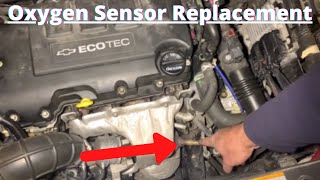
Typical fix: Replace the upstream oxygen sensor. On the 1.4L and 1.8L engines, it is located on the front of the exhaust manifold, making it relatively accessible. 🎬 Watch: A step-by-step guide to replacing the upstream oxygen sensor.
Est. part cost: $40 - $150 - Exhaust Leak 🟡 Medium Probability Leaks from a cracked exhaust manifold or a bad gasket before the O2 sensor can allow outside air into the exhaust stream. This extra oxygen skews the sensor's readings, making it appear slow to respond. This is a common issue on many vehicles, not just the Cruze.
How to confirm: Visually inspect the exhaust manifold and gaskets for black soot trails, which look like fine pencil streaks and are a clear sign of a leak. A smoke test can also be used to pinpoint the source of a leak. Some owners report hearing a ticking or hissing noise when the engine is cold.
Typical fix: Repair the exhaust leak by replacing the cracked component or faulty gasket. A common failure point is the exhaust manifold gasket.
Est. part cost: $20 - $300+ - Soot Fouling and Air Leaks (2.0L Diesel Engine) 🟡 Medium Probability As documented in TSB PIP5237, air leaks in the charge air cooler/induction system can lead to improper combustion and cause soot to build up on the O2 sensor and NOx sensor, triggering P0133.
How to confirm: Follow TSB PIP5237: Inspect the Heated Oxygen Sensor (HO2S) and NOx Sensor 1 for heavy soot buildup. If soot is present, the cause is likely an air leak. Perform an induction system smoke test, paying close attention to all five hose clamps between the air cleaner and turbocharger.
Typical fix: If sensors are soot-covered, TSB PIP5237 advises replacing both the Heated Oxygen Sensor (GM 12644786) and the NOx Sensor 1 (GM 12641556). Then, find and repair any air leaks found in the induction system to prevent recurrence.
Est. part cost: $200 - $500+ - Damaged Wiring or Connectors ⚪ Low Probability The wiring harness to the oxygen sensor is exposed to high heat and potential road debris, which can cause it to become brittle, corroded, or damaged over time, leading to a poor signal.
How to confirm: Visually inspect the O2 sensor's wiring harness and connector for any signs of melting, chafing, corrosion, or loose pins. Check for good ground and power feeds.
Typical fix: Repair or replace the damaged section of the wiring harness or the connector.
Est. part cost: $10 - $50
Rare But Worth Checking
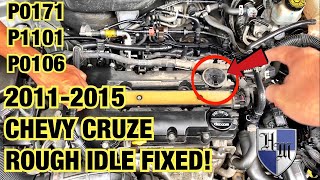
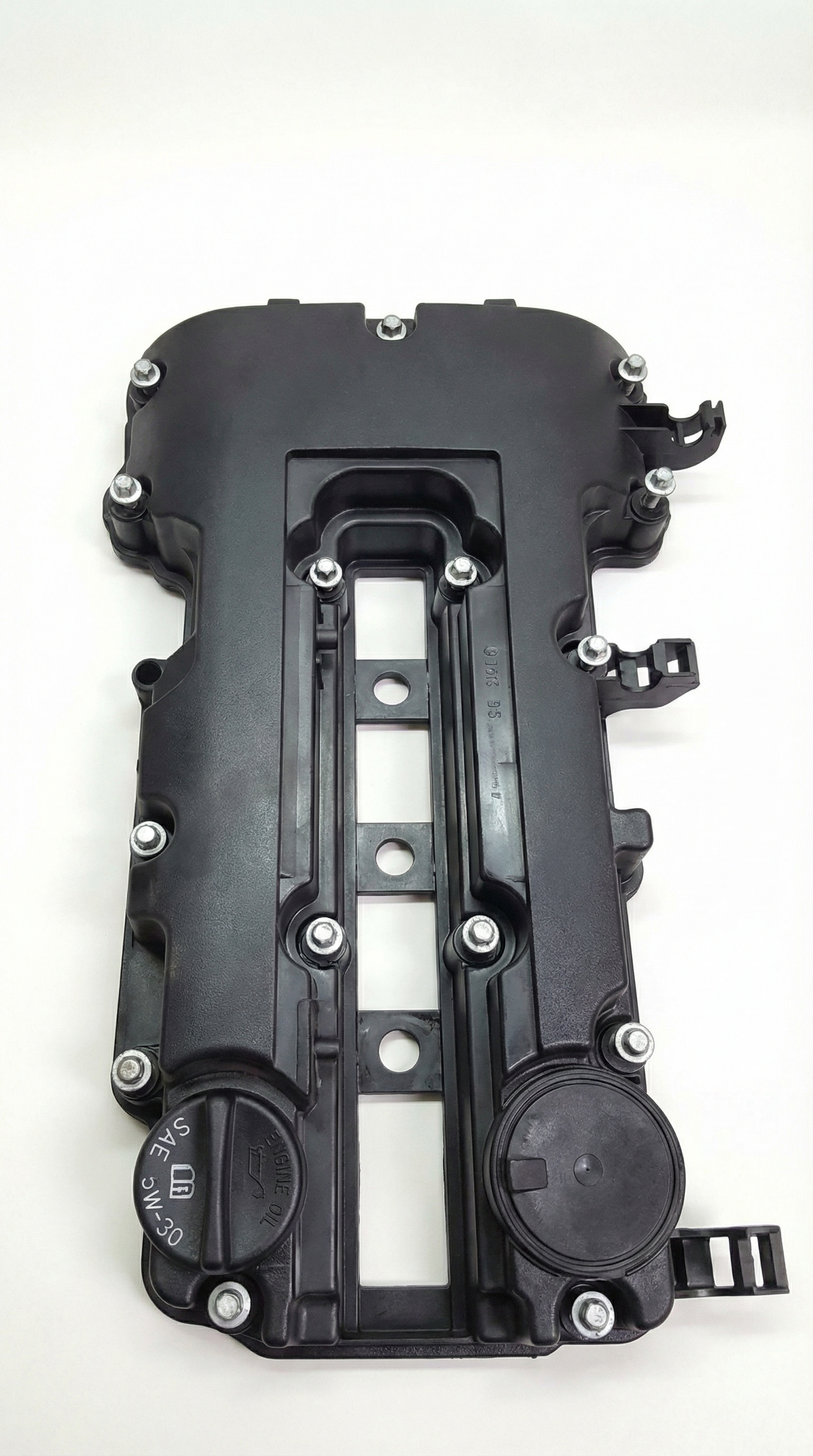
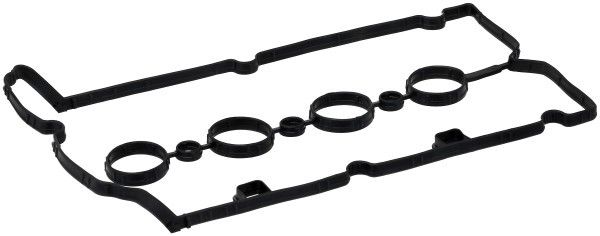
- PCV System Failure (1.4L Turbo): On the 1.4L turbo engine, this is actually a very common root cause. A failed PCV check valve in the intake manifold or a ruptured diaphragm in the valve cover (which contains an integrated PCV valve) creates a significant vacuum leak. This almost always triggers a P0171 (System Too Lean) code first or simultaneously. The unmetered air can cause the O2 sensor to respond in a way the PCM interprets as 'slow', thus setting a P0133 as a secondary code. The fix involves replacing the entire valve cover and/or intake manifold. 🎬 See how to diagnose and fix these common PCV vacuum leaks.
- PCM Software Issue: In some cases, the PCM's software calibration may be too sensitive. The TSBs provided for the diesel model suggest that updated programming is part of the repair process for related emissions issues. TSB PI0968 was also released for an unspecified P0133 condition, which can sometimes involve a software update.
Diagnosis Steps
- Read the trouble codes with an OBD-II scanner and note any other codes present. If P0171 is present on a 1.4L, investigate the PCV system first.
- If driving a diesel model, pay close attention to codes like P20EE and P22FA, as the diagnosis must follow TSB procedures for the diesel emissions system.
- On a cold engine, inspect the exhaust system for any leaks between the engine and the upstream O2 sensor. Listen for hissing sounds and look for black soot trails on the manifold gasket surface.
- Inspect the O2 sensor's wiring and connector for any signs of damage, melting, or corrosion.
- Use a scan tool to view live data for the Bank 1 Sensor 1 voltage. At operating temperature and steady RPM, the voltage should fluctuate rapidly and consistently between ~0.1V and ~0.9V. A slow, lazy waveform confirms a bad sensor. 🎬 Watch this quick video for two ways to fix code P0133.
- If the sensor appears slow, remove it for visual inspection. On diesel models, check for heavy soot. On gasoline models, a white, chalky deposit can indicate contamination.
- If no issues are found with the sensor or exhaust, check for engine vacuum leaks. On 1.4L models, test for a failed valve cover PCV diaphragm by checking for strong suction at the PCV port or a whistling noise at idle.
Parts You'll Likely Need
- Upstream Oxygen Sensor (Bank 1, Sensor 1)
(OEM #ACDelco 213-4764 (GM 55572993))— This is the most common part to fail and directly cause code P0133. It is a standard wear item. The ACDelco part number is the service part, while the GM number is the original production number.
Trusted brands: ACDelco, Bosch, Denso, NGK
OEM price range: $100-$150
Aftermarket price range: $40-$90 - Upstream Oxygen Sensor (2.0L Diesel)
(OEM #ACDelco 213-4753 (GM 12644786))— Specific part for the diesel engine, often replaced due to soot fouling as per TSB PIP5237.
Trusted brands: ACDelco
OEM price range: $80-$120
Aftermarket price range: $50-$90 - Valve Cover (1.4L Turbo)
(OEM #GM 25198874)— The integrated PCV diaphragm fails, causing a large vacuum leak that triggers P0171 and often P0133 as a secondary code. The entire cover must be replaced.
Trusted brands: GM Genuine, Dorman
OEM price range: $120-$180
Aftermarket price range: $50-$90
Related Codes That Often Appear With This One
- P0171 — System Too Lean. On the 1.4L Turbo, this code is the primary indicator of a failed PCV system (valve cover or intake manifold check valve). P0133 is often set as a direct consequence of the lean condition caused by this vacuum leak.
- P20EE — NOx Catalyst Efficiency Below Threshold. On diesel models, this code is frequently seen with P0133 and points to issues within the diesel exhaust aftertreatment system, as noted in TSBs PI1485 and PI1484B.
- P22FA — NOx Sensor Circuit Slow Response. On diesel models, TSB PIP5237 indicates this code is often set with P0133, caused by soot fouling on both the O2 and NOx sensors from an induction system air leak.
- P2096 — Post Catalyst Fuel Trim System Too Lean. This indicates a lean condition detected by the downstream O2 sensor, which can be a consequence of the upstream sensor's malfunction or a significant vacuum/exhaust leak.
Technical Service Bulletins (TSBs) & Recalls
- PI1485: Diagnostic aid for diesel models with DEF Fluid Quality Poor message and DTCs P0133, P20EE, P22FA.
- PI1484B: Information for diesel models with DEF message, cruise control issues, and a list of DTCs including P0133.
- PIP5237: Specific diagnostic path for 2014 2.0L Diesel models with P0133 and/or P22FA, focusing on soot inspection and induction system leak checks.
- PI0968: Preliminary information bulletin regarding a P0133 condition, details unspecified.
- PI1484A / PI1484: Earlier versions of PI1484B with similar information regarding diesel emissions issues and P0133.
Platform-Specific Known Issues
- Real-World Repair Story: The P0171 and P0133 Combination on a 1.4L Turbo: A very common scenario for 1.4L Cruze owners begins with a Check Engine Light and codes P0171 (System Too Lean) and sometimes P0133. Owners may also notice a distinct whistling sound at idle. Mechanics and experienced DIYers report that this combination almost always points to a failure in the PCV system. The diaphragm inside the valve cover ruptures, creating a large, unmetered vacuum leak. This causes the engine to run lean, triggering P0171. The PCM's attempt to compensate for this lean condition, combined with the unmetered air, can cause the upstream O2 sensor's readings to appear 'slow,' which then triggers P0133. Simply replacing the O2 sensor will not fix the issue; the valve cover must be replaced.
- 2.0L Diesel Models: TSB PIP5237 In-Depth: TSB #PIP5237 provides a specific diagnostic path when P0133 and/or P22FA are found on the 2014 2.0L Diesel. It instructs technicians to first inspect the O2 and NOx sensors for soot buildup. If soot is present, the fix involves replacing BOTH sensors and then performing an 'Induction System Air Leak Test' and 'Induction System Smoke Test' while manipulating the ductwork to find the source of the leak that caused the soot. The TSB specifically calls out checking that all five hose clamps between the air cleaner box and the turbocharger are tight.
- 2.0L Diesel Models: Broader Emissions Issues: TSBs #PI1485, #PI1484B, and #PI1484A explicitly state that P0133 can be set in conjunction with a 'DEF Fluid Quality Poor' message and other emissions codes like P20EE and P22FA. This indicates that on the diesel Cruze, P0133 is often a symptom of a larger problem within the complex diesel aftertreatment system, rather than an isolated sensor failure.
Mechanic-Grade Diagnostic Values
- Upstream O2 Sensor (Bank 1 Sensor 1) Voltage — expected: Rapidly fluctuating between approximately 0.1 volts (lean) and 0.9 volts (rich) on a fully warmed-up engine.. Failure: A slow, lazy waveform, or a voltage that is stuck high or low and does not switch quickly.
- Mode $06 - O2 Sensor Response Rate Test — expected: The measured test value should be well below the maximum allowable limit set by the manufacturer.. Failure: A test value that is very close to or exceeds the maximum limit indicates the sensor is on the verge of failing or has failed the PCM's internal test, even if it hasn't set a code yet.
Hidden / Shadow Codes Worth Checking
- P0133-00: This is a common format seen on more advanced scan tools like the Foxwell. The '-00' suffix is a GM-specific sub-code or symptom byte, often just indicating the primary fault with no further qualifiers. A user reported seeing this along with many other O2 codes that were only visible on their advanced scanner and not on a basic phone app. (see via A professional-grade scan tool (e.g., GM GDS2, Tech2, Foxwell, Autel) capable of reading manufacturer-specific codes and data.)
Scan Tool Commands That Help
- GM GDS2 / Professional Scan Tool: Graphing Live Data for HO2S Bank 1 Sensor 1 — This is the primary diagnostic step. By graphing the sensor's voltage, a technician can visually confirm if the sensor is switching slowly, which is the definition of the P0133 code. A good sensor produces a rapid sine wave; a bad one is slow and rounded.
- GM GDS2 / Professional Scan Tool: O2 Sensor Heater Circuit Test — To verify the integrity of the sensor's internal heater. A slow-to-warm-up sensor will respond slowly, triggering P0133. This command checks if the heater is being activated and drawing the correct amperage.
Wiring & Ground Locations
- G103 — On the left front shock tower in the engine compartment.. This is a major chassis and component ground point. While not directly for the O2 sensor, a poor ground here can introduce electrical noise and voltage offsets that affect various sensor readings processed by the ECM.
- G100 / G105 — Located at the left front corner of the engine compartment.. These are primary grounding points for the engine compartment. The Engine Control Module (ECM) and its sensors rely on clean and solid grounds to function correctly. A corroded or loose ground at this location can cause erratic sensor behavior.
- Engine Control Module (ECM) Ground — Part of the main negative battery cable harness, located at the left front of the engine block.. This is the direct ground for the ECM. Any resistance or corrosion on this connection can cause a host of unpredictable issues, including incorrect interpretation of sensor data like the O2 sensor signal.
Real Owner Repair Stories
- Reddit user in /r/MechanicAdvice (2013-2015 Chevrolet Cruze (engine not specified, but common on 1.4L)) — Persistent P0133 code.
❌ Tried (didn't work) Replacing the upstream oxygen sensor.
✅ What actually fixed it The intake manifold gasket had melted with age, causing a leak. Replacing the intake manifold gasket resolved the code. - Reddit user in /r/cruze (2016 1.4L Limited (Gen 1 platform)) — Recurring P0171 (System Too Lean) and P0133 codes approximately one month after replacing the O2 sensor. Live data showed the sensor voltage was stuck and not fluctuating.
❌ Tried (didn't work) Replacing the upstream O2 sensor multiple times with OEM parts.
✅ What actually fixed it The root cause was identified as a failed PCV check valve inside the intake manifold, a classic Gen 1 Cruze issue. The fix is to replace the intake manifold or install an external PCV check valve kit. The valve cover diaphragm may also need replacement if it has ruptured. - Reddit user in /r/cruze (2014 LS 1.8L with 95k miles) — Rough idle, Service Stabilitrak message, but no check engine light. Spark plugs were black (running rich).
❌ Tried (didn't work) Cleaning ECM connectors, Replacing spark plugs, Cleaning throttle body
✅ What actually fixed it The final fix was replacing the ignition coil pack. Infrequent misfires from the failing coil were causing the Stabilitrak warnings and running condition issues before being severe enough to set a misfire code.
"I Checked Everything" — The Actual Cause
- In some cases with the 1.4L Turbo engine, a smoke test for vacuum leaks may come back clean, yet the P0133 and P0171 codes persist. The actual cause is often a ruptured PCV diaphragm inside the valve cover. This internal leak doesn't always show up on a smoke test but can be confirmed by a high-pitched whistle at idle or by removing the oil cap while the engine is running—if a strong vacuum sucks the cap down, the diaphragm is likely torn.
When the Usual Fixes Don't Work
- While replacing the upstream O2 sensor is the most frequent fix for a standalone P0133, many owners have found this does not resolve the issue. On the 1.4L Turbo, a recurring P0133, especially when paired with P0171, is almost always a symptom of the underlying PCV system failure in either the valve cover or intake manifold. One owner on a forum replaced the sensor only to have the code return; the final fix was a melted intake manifold gasket. In these cases, the O2 sensor is correctly reporting a problem (a lean condition making it appear 'slow'), but it is not the root cause of the problem.
OEM Part Supersession History
GM 25198874→GM 25209141— Standard part revision and update by the manufacturer for the 1.4L engine valve cover assembly.GM 55572993 (O2 Sensor)→ACDelco 213-4764 (Service Part Number)— ACDelco is the GM Genuine Parts service brand. 213-4764 is the service part number for the original 55572993 sensor.
Heads up: Some sources note that this part may require programming or special setup procedures after installation.
Model Year Variations Within This Range
- 2013-2015 (Gen 1): The PCV system design on the 1.4L turbo engine is a known failure point across the entire first generation. The check valve inside the intake manifold and the diaphragm in the valve cover are prone to failure, making P0171/P0133 a very common code combination on these specific model years.
Helpful Videos
![How to Fix P0133 Engine Code in 3 Minutes [2 DIY Methods / Only $8.35]](https://img.youtube.com/vi/Qk7iEApm11M/mqdefault.jpg)
Used OEM Parts in Stock
New Aftermarket Parts Available



The information in this article is provided for general reference and educational purposes only. Vehicle specifications, procedures, and part compatibility can vary by production date, trim level, and region. Always consult your vehicle's factory service manual and verify part numbers before purchasing or performing repairs. Safety-critical components such as airbags, seat belts, and braking systems should be installed by a qualified professional.
- Chevrolet CRUZE:
- 🧭 Diagnostic Flowchart
- 🎬 Helpful Videos
- 🛍️ Shop This Part
- What's Unique About the 2013-2015 Chevrolet CRUZE
- Symptoms You May Notice
- Most Likely Causes
- Rare But Worth Checking
- Diagnosis Steps
- Parts You'll Likely Need
- Related Codes That Often Appear With This One
- Technical Service Bulletins (TSBs) & Recalls
- Platform-Specific Known Issues
- Mechanic-Grade Diagnostic Values
- Hidden / Shadow Codes Worth Checking
- Scan Tool Commands That Help
- Wiring & Ground Locations
- Real Owner Repair Stories
- "I Checked Everything" — The Actual Cause
- When the Usual Fixes Don't Work
- OEM Part Supersession History
- Model Year Variations Within This Range
- 🎟️ Get 5% Off