

P0133 on 2016-2024 Chevrolet Malibu: Slow O2 Sensor Causes and Fixes
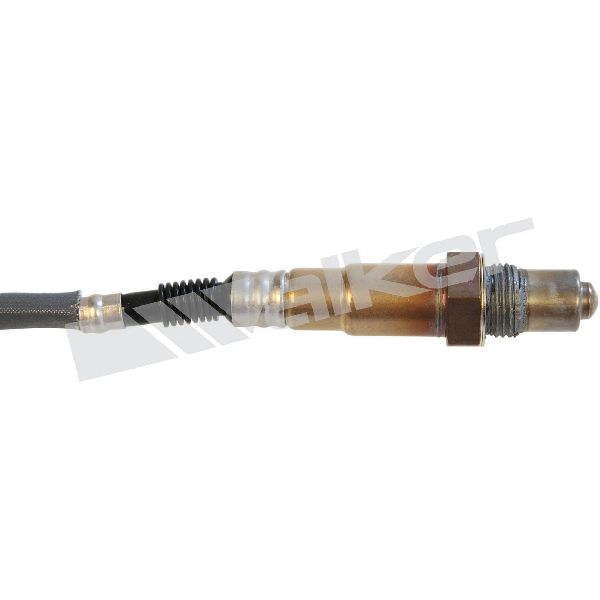
On a 2016-2024 Malibu, code P0133 almost always means the upstream oxygen sensor (Bank 1, Sensor 1) is failing. Before replacing it, check for exhaust leaks between the engine and the sensor, a common secondary cause. An OEM ACDelco sensor (Part No. 12663317) costs around $70-$120, with DIY difficulty rated at 2/5.
- P0133 means the upstream oxygen sensor (before the catalytic converter) is responding too slowly.
- The most likely fix is to replace the upstream O2 sensor itself.
- Before buying a new sensor, always inspect for exhaust leaks between the engine and the sensor, as this is a common and often misdiagnosed cause.
- Check the sensor's wiring for any signs of melting or physical damage.
- If you also have a P0171 code, suspect a vacuum leak as the primary issue.
What's Unique About the 2016-2024 Chevrolet Malibu
For the ninth-generation Malibu, which primarily uses 1.5L (LFV) and 2.0L (LTG) turbocharged four-cylinder engines, the P0133 code is straightforward. Since these are inline engines, there is only one bank, making "Bank 1" the default. The most common failure point is simply the upstream O2 sensor wearing out. However, it's also worth noting that exhaust leaks at the manifold or turbo flange, as well as chafed sensor wiring, have been reported and can mimic a failed sensor. A case involving a 2016 Malibu 1.5L highlighted that the sensor's wiring harness can chafe against an exhaust bracket, causing an intermittent short that can trigger sensor-related codes.
Symptoms You May Notice
- Check Engine Light is on
- Decreased fuel economy
- Rough or uneven idle
- Engine hesitation or misfires during acceleration
- Black smoke from the exhaust in some cases
- Rotten egg smell from the exhaust
- Cruise control interrupt at low speeds (as noted in related manufacturer bulletins)
- Replacing the downstream (Bank 1, Sensor 2) oxygen sensor. P0133 specifically refers to the upstream sensor (Sensor 1).
- Replacing the catalytic converter. This code relates to sensor response time, not converter efficiency (which would typically set a P0420 code).
- Replacing the O2 sensor without first checking for exhaust leaks. If a leak is present, the new sensor will not fix the problem and the code will likely return.
Most Likely Causes
- Failing Upstream Oxygen Sensor (Bank 1, Sensor 1) 🔴 High Probability → Shop Oxygen Sensor Oxygen sensors are wear items that degrade over time from heat and contaminants like carbon and oil residue. After 60,000-90,000 miles, their ability to respond quickly diminishes, which is a common failure mode.
How to confirm: Use a scan tool to graph the live data for 'O2S B1S1'. At operating temperature and a steady 2000 RPM, the voltage should fluctuate rapidly and consistently between approximately 0.1V and 0.9V. A slow, lazy wave pattern that takes more than a second to switch from high to low confirms a bad sensor.
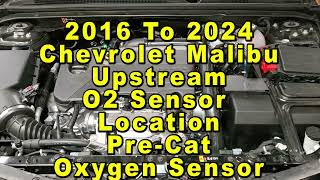
Typical fix: Replace the upstream oxygen sensor. On the 1.5L and 2.0L turbo engines, it is located on the turbocharger housing or the exhaust manifold, before the catalytic converter. 🎬 Watch: Locate the upstream O2 sensor on your 9th-gen Malibu.
Est. part cost: $50-$120 - Exhaust Leak Before the Sensor 🟡 Medium Probability Leaks can develop at the exhaust manifold gasket or the flange where the turbo connects to the manifold or downpipe due to heat cycles and vibration. An exhaust leak allows outside air into the exhaust stream, which skews the sensor's readings and can make the PCM interpret the data as a slow response.
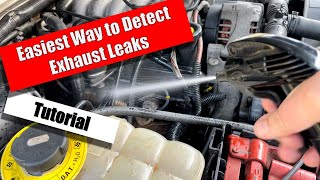
How to confirm: With the engine cold, start it and listen for a ticking or puffing sound from the engine bay that may quiet down as the engine warms up. Visually inspect the exhaust manifold and downpipe for black soot trails, which indicate a leak. A smoke machine can also be used to pinpoint the leak. 🎬 Watch: A simple trick to find exhaust leaks yourself.
Typical fix: Replace the leaking gasket (e.g., exhaust manifold gasket, turbo flange gasket) or tighten the loose flange bolts. In some cases, a cracked manifold may need to be replaced.
Est. part cost: $15-$100 - Damaged Sensor Wiring or Connector ⚪ Low Probability The wiring harness for the O2 sensor is close to hot exhaust components and can become brittle, melt, or chafe over time. A documented case on a 2016 Malibu 1.5L showed the harness chafing on an exhaust bracket, leading to a recurring sensor code until the wire was repaired. Additionally, manufacturer bulletin #PIP4699A notes that technicians should check for the pre and post oxygen sensor connectors being accidentally swapped.
How to confirm: Visually inspect the entire length of the oxygen sensor's wiring harness for signs of melting, chafing against engine parts, or corrosion in the connector plug. Check for continuity using a multimeter if visual inspection is inconclusive.
Typical fix: Repair the damaged section of the wire or replace the connector pigtail. Secure the harness away from heat sources or sharp edges.
Est. part cost: $10-$40
Rare But Worth Checking
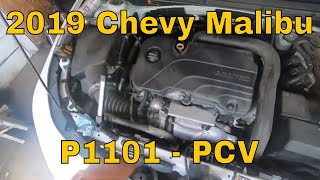
- Engine Vacuum Leak: A significant vacuum leak (e.g., from a cracked PCV valve cover, a known issue on the 1.5L LFV engine) 🎬 See how a faulty PCV valve cover causes these codes. can introduce unmetered air, causing a lean condition that the PCM might interpret as a slow sensor response. This is often accompanied by a P0171 (System Too Lean) or P1101 (Intake Airflow System) code.
- Contaminated Mass Airflow (MAF) Sensor: → Shop Fuel Injection Air Flow Meter A dirty MAF sensor can under-report the amount of air entering the engine, causing the PCM to create a fuel mixture that affects O2 sensor readings. Cleaning the MAF sensor with a dedicated cleaner is a simple diagnostic step.
- Leaking Fuel Injectors: A leaking fuel injector can create a rich condition that may affect the O2 sensor's ability to switch properly, potentially being misinterpreted by the PCM as a slow response.
Diagnosis Steps
- Connect an OBD-II scanner and confirm that P0133 is the primary code. Note any other codes present, especially P0171, P1101, or P0135.
- With the engine cold, start the car and listen for any ticking or hissing sounds from the exhaust manifold area, which would indicate an exhaust leak.
- Visually inspect the oxygen sensor wiring harness for any signs of melting, chafing, or damage. A known chafe point is against an exhaust bracket on the 1.5L engine. Ensure the connector is securely plugged in and free of corrosion.
- Use the scanner's live data function to monitor the 'Bank 1 Sensor 1' voltage. Warm the engine to operating temperature.
- Hold the engine RPM steady at around 2,000 RPM and observe the voltage graph. A healthy sensor will show rapid, clean fluctuations between ~0.1V and ~0.9V. A sensor that is slow to switch, or has a flat or biased voltage, is faulty.
- If the sensor waveform is slow, and no exhaust leaks or wiring issues are found, the sensor itself is the most likely culprit.
- If other codes like P0171 or P1101 are present, investigate potential vacuum leaks from sources like the PCV system in the valve cover, intake hoses, or vacuum lines before replacing the O2 sensor.
Parts You'll Likely Need
- Upstream Oxygen Sensor (Bank 1, Sensor 1)
(OEM #12663317, 12701634)— This sensor is the most common cause of failure for a P0133 code due to its critical role and exposure to extreme heat and exhaust gases.
Trusted brands: ACDelco (OEM), Denso, Bosch, NGK/NTK
OEM price range: $70-$120
Aftermarket price range: $50-$90
Related Codes That Often Appear With This One
- P0171 — A vacuum leak or exhaust leak can cause both a lean condition (P0171) and affect the O2 sensor's response time, triggering P0133 as a secondary code.
- P0135 — This code indicates a fault in the heater circuit of the same oxygen sensor. It's common to see heater circuit codes alongside performance codes when a sensor fails internally.
- P0128, P20EE, P22FA, P2463 — According to manufacturer bulletins #PI1484B and #PI1484A, these codes may set alongside P0133, sometimes accompanied by a "DEF Fluid Quality Poor" message or cruise control interruptions.
Platform-Specific Known Issues
- On the 1.5L LFV engine, the upstream O2 sensor is mounted directly on the turbocharger housing. Access can be tight, but it is typically manageable with a 22mm (or 7/8") oxygen sensor socket and an extension.
- The wiring for the upstream O2 sensor is routed near hot components. A documented failure point is where the harness can rub against a metal exhaust bracket, causing a short. Always inspect the full length of the harness during diagnosis.
Technical Service Bulletins (TSBs) & Recalls
- Bulletin #PI0968: This preliminary informational bulletin provides specific details on the set conditions for DTC P0133.
- Bulletin #PI1485: Notes that technicians may find P0133 set in conjunction with a "DEF Fluid Quality Poor" message or a Malfunction Indicator Lamp (MIL).
- Bulletin #PI1484B / #PI1484A: These bulletins address customer concerns regarding cruise control interrupts at low speeds and the presence of DTC P0133 among other codes.
Mechanic-Grade Diagnostic Values
- Upstream O2 Sensor (B1S1) Heater Circuit Resistance — expected: 5-15 Ohms. Failure: An open circuit (infinite resistance) or a reading outside the typical range indicates a failed internal heater. A bad heater prevents the sensor from reaching operating temperature quickly, causing slow response codes.
- Mass Air Flow (MAF) Sensor Live Data at Idle — expected: 2-7 grams/second (g/s) at normal idle. Failure: Readings that are erratic or significantly outside this range can indicate a dirty or failing MAF sensor, which can indirectly cause the ECM to misinterpret O2 sensor data and set a P0133.
- Long Term Fuel Trim (LTFT) at Idle — expected: Within +/- 10%. Failure: A persistently high positive value (e.g., > +15%) suggests the ECM is compensating for a lean condition caused by an unmetered air leak (vacuum or exhaust), which can also trigger a P0133.
Scan Tool Commands That Help
- GDS2 (GM Techline Connect): Oxygen Sensor Heater Test — This bidirectional command allows a technician to manually activate the O2 sensor's heater circuit. It is used to verify if the heater element, its wiring, and the ECM driver are functioning correctly, which is crucial because a slow-to-heat sensor is a primary cause of P0133.
- GDS2 (GM Techline Connect): Fuel Trim Reset — After replacing an oxygen sensor or fixing a vacuum/exhaust leak, the learned fuel trim values in the ECM are no longer accurate. Performing a fuel trim reset forces the ECM to relearn the air-fuel mixture strategy from scratch with the new/repaired components, preventing the code from returning due to old adaptive values.
Wiring & Ground Locations
- Upstream HO2S (B1S1) Connector — On the 1.5L engine, the connector is typically clipped to a bracket on the back of the cylinder head, near the firewall. The harness runs from the sensor on the turbocharger housing up to this point.. This connector is a key test point for checking voltage, ground, and heater circuit integrity. Corrosion or damage at this connector can directly cause P0133. The known chafing issue often occurs on the harness section leading to this connector.
- G103 / G105 — These are primary engine block ground points. On many GM Ecotec engines, a key ground is located on the engine block near the starter motor or on the cylinder head.. A poor engine ground can introduce electrical noise and voltage offsets, affecting the sensitive low-voltage signal from the oxygen sensor and potentially causing the ECM to interpret the signal as slow or erratic.
Real Owner Repair Stories
- Reddit user in r/MechanicAdvice (2016-2017 Chevrolet Malibu (model year inferred from context)) — Persistent P1101 (Intake Airflow System Performance) code, which is often seen with fuel trim and O2 sensor issues.
❌ Tried (didn't work) Cleaning the throttle body, Cleaning the MAF sensor
✅ What actually fixed it The root cause was a clogged PCV valve integrated into the camshaft/valve cover. Replacing the valve cover assembly, which contained the faulty PCV component, resolved the code. The user noted oil buildup in the intake duct as a symptom pointing to the PCV failure. - YouTube video by 'Flat Rate Mechanic' (Chevrolet Malibu (year not specified, but 9th Gen body style)) — P1101 code returned after multiple repairs.
❌ Tried (didn't work) Replacing the Mass Airflow (MAF) sensor (done by customer), Cleaning the throttle body, Replacing the MAP sensor
✅ What actually fixed it The final repair that resolved the P1101 code was replacing the entire throttle body assembly. This suggests that even after cleaning, the throttle body's internal electronics or position sensor were faulty, causing airflow calculation errors that can affect O2 sensor readings.
OEM Part Supersession History
12663317→12701634— Standard part number update by GM. The replacement part is functionally and physically identical.
Heads up: The parts are fully interchangeable. When ordering, either part number may be supplied by the dealer.ACDelco 213-4764→GM Part 55572993— This is an ACDelco service part number that cross-references to a GM internal part number.
Heads up: ACDelco 213-4764 is a valid part number for an upstream O2 sensor for this application and is often sold in the aftermarket as an OEM equivalent.
Diagnostic Flowchart
Other Known Issues on This Vehicle
Issues unrelated to this code that are worth knowing about as an owner of this generation:
- Cracked Pistons (Stochastic Pre-Ignition) 🔴 High — Common on 2016-2017 models with the 1.5L LFV engine, typically occurring under 100,000 miles. Symptoms include misfires (P0300), poor performance, and high oil consumption. (Ref: Customer Satisfaction Program N162071350 (formerly 17019) involved an ECM reprogram and switch to dexos1 Gen 2 synthetic oil to mitigate the issue.)
- Intermittent 'Shift to Park' Message 🟠 Medium — Very common on 2016-2019 models. Prevents the vehicle from shutting off completely, leading to a dead battery. The cause is a faulty microswitch in the shifter assembly. (Ref: TSB 19-NA-206 provides a fix that involves replacing the switch and installing a jumper harness, avoiding the need to replace the entire shifter assembly.)
- Failed Brake Vacuum Pump 🔴 High — A known weak point on the 1.5L LFV engine. The camshaft-driven pump can fail, sometimes catastrophically, sending metal debris into the engine and causing loss of power brake assist.
- Clogged PCV Orifice in Valve Cover 🟠 Medium → Shop Engine Valve Cover — The small PCV orifice in the camshaft cover of the 1.5L LFV engine is prone to clogging with carbon, leading to excess crankcase pressure, oil leaks, and codes like P1101. (Ref: TSB #20-NA-047 addresses this issue.)
- CVT Transmission Failure 🔴 High — The CVT transmission used on 1.5L models from 2019 onwards has reports of premature failure, sometimes around 120,000 miles. Repair often involves a costly full replacement.
Used vs. New Parts: Buying Guide for This Vehicle
When a used part is the smart pick: For this repair, buying a used part is almost never a smart choice. The primary cause of P0133 is the oxygen sensor itself, which is a wear-and-tear item with a finite lifespan. A used sensor from a junkyard has unknown mileage and exposure to contaminants, and it may fail shortly after installation.
Donor-vehicle mileage cap: roughly under 20000 miles for the part to have meaningful remaining life.
What to inspect on the donor part:
- If forced to consider used, inspect the sensor tip for heavy white, black, or oily deposits, which indicate contamination and imminent failure.
- Check the wiring pigtail for any signs of melting, brittleness, or previous repairs.
- Avoid sensors from vehicles that show signs of a major engine failure (e.g., blown head gasket).
OEM-only on this vehicle (don't cheap out):
- While not strictly 'OEM-only', using a GM Genuine or ACDelco OEM sensor is highly recommended. Modern engine management systems are precisely calibrated, and off-brand sensors can sometimes have slightly different response curves or heater characteristics that may not resolve the code or could cause it to return prematurely.
Aftermarket brands forum-validated for this vehicle:
- Denso
- NGK/NTK
- Bosch
Brands owners have reported issues with on this vehicle:
- Unnamed, no-brand 'universal' sensors that require splicing wires should be avoided. The connections are a common failure point, and the sensor may not be calibrated correctly for the vehicle.
Real Owner Stories
Aggregated from forums and TSBs cited above. Mileages and costs reflect what owners reported in those sources.
2016 Chevrolet Malibu 1.5L
Symptoms: Recurring sensor code; a P0135 heater circuit code returned even after the sensor was replaced.
What fixed it: Repairing the wiring harness which was found chafing on an exhaust bracket, exposing the wires.
Source hint: AliExpress Product Q&A for 2016 Malibu 1.5L
2017 Chevrolet Malibu
Symptoms: P0133 code appeared after using high-octane racing fuel.
What fixed it: The code was attributed to unusual fuel composition causing the sensor to read incorrectly and appear 'slow'.
Source hint: Reddit r/MechanicAdvice - Accidental Racing Fuel in 2017 Malibu
Related OBD-II Codes
Frequently Asked Questions
Where is the upstream oxygen sensor located on the 1.5L or 2.0L turbo Malibu?
Is there a specific wiring issue I should check for on my 2016 Malibu 1.5L?
Could my P0133 code be related to the 'Shift to Park' message or cracked pistons mentioned for this model?
What tools do I need to replace the O2 sensor on the 1.5L LFV engine?
Can using different fuel types cause a slow response code on a 2017 Malibu?
My Malibu has over 70,000 miles; is it common for the sensor to fail now?
Helpful Videos
We Have This Part in Stock

The information in this article is provided for general reference and educational purposes only. Vehicle specifications, procedures, and part compatibility can vary by production date, trim level, and region. Always consult your vehicle's factory service manual and verify part numbers before purchasing or performing repairs. Safety-critical components such as airbags, seat belts, and braking systems should be installed by a qualified professional.
- Chevrolet Malibu:
- 🧭 Diagnostic Flowchart
- 🎬 Helpful Videos
- 🛍️ Shop This Part
- What's Unique About the 2016-2024 Chevrolet Malibu
- Symptoms You May Notice
- Most Likely Causes
- Rare But Worth Checking
- Diagnosis Steps
- Parts You'll Likely Need
- Related Codes That Often Appear With This One
- Platform-Specific Known Issues
- Technical Service Bulletins (TSBs) & Recalls
- Mechanic-Grade Diagnostic Values
- Scan Tool Commands That Help
- Wiring & Ground Locations
- Real Owner Repair Stories
- OEM Part Supersession History
- Other Known Issues on This Vehicle
- Used vs. New Parts: Buying Guide for This Vehicle
- Real Owner Stories
- 2016 Chevrolet Malibu 1.5L
- 2017 Chevrolet Malibu
- Related OBD-II Codes
- Frequently Asked Questions
- 🎟️ Get 5% Off