

P0133 on 2002-2009 Chevrolet TrailBlazer 4.2L: Slow O2 Sensor Causes and Fixes
P0133 on a TrailBlazer 4.2L almost always means the upstream oxygen sensor (Bank 1, Sensor 1) is old and needs replacement. A cracked exhaust manifold is the second most likely cause, a known weak point on this platform. Before replacing the sensor, listen for a cold-engine exhaust tick. Expect to pay around $50-$90 for a quality ACDelco or Denso sensor and solve the problem yourself in under an hour.
- P0133 on the TrailBlazer 4.2L is most often a simple fix: replace the upstream (Bank 1, Sensor 1) O2 sensor.
- Before buying parts, listen for a ticking noise when the engine is cold. This strongly suggests a cracked exhaust manifold, which is the second most common cause and a known issue on this engine.
- Use a scan tool to watch the sensor's live data. A lazy, slow-moving line on the graph confirms a bad sensor.
- When replacing the O2 sensor, use a quality OEM (ACDelco) or reputable aftermarket (Denso, Bosch) part to avoid premature failure.
- This is a DIY-friendly repair if it's just the sensor. If the exhaust manifold is cracked, the repair is more difficult due to the risk of breaking bolts.
What's Unique About the 2002-2009 Chevrolet TrailBlazer
On the TrailBlazer's 4.2L inline-6 engine, the P0133 code is a very common and straightforward issue, almost always pointing to the original O2 sensor simply wearing out. However, what makes this platform unique is the high probability of a cracked exhaust manifold, which can also cause this code by allowing outside air to enter the exhaust stream and confuse the sensor. This is a well-documented failure on the GMT360 platform. Owners should listen for a ticking or exhaust leak noise, especially when the engine is cold, as this often points to a cracked manifold rather than just a bad sensor.
🎬 Watch: How to find the real cause before buying parts.Symptoms You May Notice
- Reduced fuel economy
- Rough or unstable idle
- Hesitation or lack of power during acceleration
- Engine stalling at low speeds
- Loud ticking or exhaust noise from the engine bay, especially on a cold start (if caused by an exhaust leak)
- Replacing the downstream (Bank 1, Sensor 2) oxygen sensor. This code specifically points to Sensor 1, the upstream sensor, which performs fuel control.
- Replacing the catalytic converter. This code relates to sensor response time, not converter efficiency (which would be a P0420 code). A slow sensor can, however, damage the converter over time.
- Replacing the O2 sensor without first checking for an obvious exhaust leak. If a cracked manifold is the root cause, a new sensor won't fix the problem for long, as the unmetered air will still cause slow readings.
- Using a cheap, off-brand oxygen sensor. Owners on forums frequently report that Bosch sensors, in particular, can be problematic on this platform, sometimes causing new codes. Sticking with OEM ACDelco or Denso is highly recommended.
Most Likely Causes
- Failing Upstream Oxygen Sensor (Bank 1, Sensor 1) 🔴 High Probability → Shop Oxygen Sensor Oxygen sensors are wear items with a finite lifespan, typically 100,000 miles. After this point, the internal chemical elements degrade, and the sensor's ability to react quickly to mixture changes diminishes, which is the direct cause of a 'slow response' code.
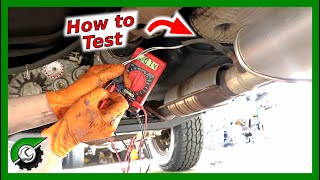
How to confirm: Use a scan tool to graph the live data for the B1S1 O2 sensor voltage. A healthy sensor will show rapid, sharp switching between ~0.1V and ~0.9V multiple times per second. A slow sensor will have a lazy, rounded waveform that takes much longer to switch, often looking more like a sine wave 🎬 See this guide on how to test your O2 sensor. than a square wave. A healthy sensor's response time should be under 100 milliseconds. Forcing the mixture rich (with propane) and lean (with a vacuum leak) should cause an immediate voltage response; a slow sensor will lag.
Typical fix: Replace the upstream oxygen sensor. On the 4.2L I6, this is the sensor located in the exhaust manifold, easily accessible from the passenger side of the engine bay after removing the air intake box and tube. An O2 sensor socket (a 22mm or 7/8" slotted socket) is required. Torque the new sensor to 30 ft-lbs.
Est. part cost: $50-$150 - Cracked Exhaust Manifold 🟡 Medium Probability → Shop Exhaust Manifold The cast iron exhaust manifold on the LL8 engine is notorious for developing cracks from repeated heat cycles, especially in colder climates. This is a widely-documented issue on the TrailBlazer and its platform mates.
How to confirm: Visually inspect the exhaust manifold for cracks, often near the collector or welds. You will likely need to remove the heat shield for a clear view. A distinct ticking or exhaust leak sound that is loudest when the engine is cold and may quiet down as the manifold heats up and expands is a classic symptom. A shop can use a smoke machine to confirm the leak.
Typical fix: Replace the exhaust manifold and gasket. This is a more involved repair, as bolts can be seized or break off in the aluminum cylinder head, requiring extraction. Using a quality aftermarket replacement like a Dorman 674-777 is a common choice. 🎬 Watch: Step-by-step walkthrough for replacing a cracked exhaust manifold.
Est. part cost: $100-$250 - Damaged Wiring or Connector ⚪ Low Probability The O2 sensor harness is routed near hot exhaust components. Over time, the plastic loom can become brittle and the wiring insulation can melt or chafe, causing a short or open circuit. A manufacturer service bulletin for other Chevrolet models, TSB Bulletin #PIP4699A, notes that technicians should also check if the pre- and post-oxygen sensor connectors have been accidentally swapped, which can trigger P0133 or P1133.
How to confirm: Visually inspect the O2 sensor's wiring harness from the sensor connector up into the main engine loom. Look for any signs of melting, chafing, or corrosion on the pins of the connector itself. Check for continuity on the signal and heater circuit wires using a multimeter.
Typical fix: Repair the damaged section of wiring or replace the connector pigtail. Ensure the repaired harness is secured away from hot surfaces.
Est. part cost: $15-$40
Rare But Worth Checking
- Intake Vacuum Leak: A significant vacuum leak (e.g., from a cracked intake manifold gasket or PCV hose) can lean out the air-fuel mixture to the point that it affects O2 sensor readings, but this will typically set other codes as well, such as P0171 (System Too Lean).
- Low Fuel Pressure: Incorrect fuel pressure from a failing fuel pump or regulator can cause a lean condition that may contribute to a P0133, but this is uncommon and would likely be accompanied by other driveability issues and codes.
Diagnosis Steps
- Read the trouble codes with an OBD-II scanner. Confirm P0133 is present and note any other codes like P1133 or P0171.
- Start the engine when it is cold and listen carefully for any ticking or exhaust leak sounds coming from the passenger side of the engine bay. A manifold leak will be loudest when cold.
- If a leak is suspected, perform a visual inspection of the exhaust manifold for any obvious cracks. You may need to remove the heat shield for a clear view. A smoke test is the definitive way to find a leak.
- If no exhaust leak is apparent, use a scan tool with live data graphing capabilities. Monitor the 'O2S B1S1' voltage at a steady 2000-2500 RPM on a fully warmed-up engine.
- Analyze the waveform. A healthy sensor will fluctuate rapidly and sharply between ~0.1V and ~0.9V. If the graph shows a slow, lazy, rounded sine wave, the sensor has failed and is responding too slowly.
- Inspect the wiring and connector for the upstream O2 sensor. Look for any signs of melting, corrosion, or physical damage to the harness near the exhaust.
- If an exhaust leak is found, the manifold must be replaced. If no leak is found and the sensor's waveform is slow, replace the Bank 1 Sensor 1 oxygen sensor with a quality ACDelco or Denso part.
Parts You'll Likely Need
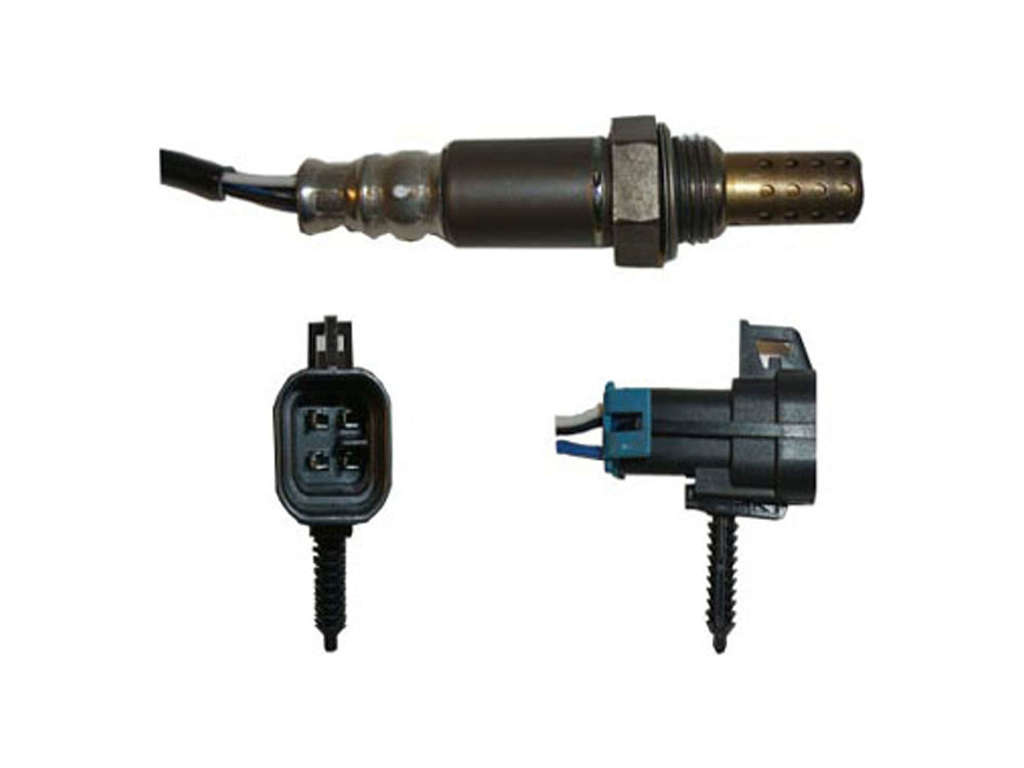
- Upstream Oxygen Sensor (Bank 1, Sensor 1)
(OEM #12609457 (ACDelco #213-4229))— This is the most common cause of P0133. The sensor is a wear item that degrades over time. Forum users strongly recommend using OEM ACDelco or Denso sensors and avoiding Bosch for this application.
Trusted brands: ACDelco (Recommended), Denso (Recommended), NTK
OEM price range: $100-$150
Aftermarket price range: $50-$90 - Exhaust Manifold
(OEM #88890560)— A common failure point on the 4.2L LL8 engine that can cause a P0133 code by introducing an exhaust leak.
Trusted brands: Dorman (Part #674-777 is a common replacement), AP Exhaust Technologies
OEM price range: $250-$400
Aftermarket price range: $100-$200 - O2 Sensor Socket — A special 7/8" (22mm) socket with a slot for the wire is required to remove and install the oxygen sensor without damaging it.
Trusted brands: Lisle, OEMTOOLS
Aftermarket price range: $10-$20
Related Codes That Often Appear With This One
- P0171 — If an exhaust leak before the O2 sensor is the cause of P0133, the extra unmetered air entering the exhaust stream can make the PCM believe the engine is running lean, triggering a P0171 (System Too Lean) code.
- P1133 — This is a manufacturer-specific GM code for 'HO2S Insufficient Switching'. It is very similar to P0133 and often appears alongside it. Seeing both codes together strongly indicates the Bank 1 Sensor 1 oxygen sensor is faulty or is being affected by an exhaust leak.
Technical Service Bulletins (TSBs) & Recalls
- TSB #040604038 - For the 2004 Buick Rainier (a platform mate), this TSB addresses a Service Engine Soon light with codes P0133 and P0172, indicating GM was aware of sensor and calibration issues on this platform.
- TSB Bulletin #PI0968 - This preliminary informational bulletin provides details regarding the Malfunction Indicator Lamp (MIL) being on with DTC P0133 set.
- TSB Bulletin #PI1484B - A manufacturer service bulletin notes that P0133 can be set in conjunction with cruise control interruptions at low speeds and "DEF Fluid Quality Poor" messages on certain Chevrolet diesel platforms.
- TSB Bulletin #PI1485 - This bulletin addresses customer concerns regarding the Malfunction Indicator Lamp and P0133 being found by technicians.
- TSB Bulletin #PI1484A - Manufacturer documentation indicates that P0133 may be found in history or set alongside other codes like P0128 and P20EE during diagnosis of speed control issues.
Platform-Specific Known Issues
- The exhaust manifold on the 4.2L I6 engine is known to crack, causing an exhaust leak that can trigger a P0133 code. This should be investigated before simply replacing the O2 sensor.
- Forum consensus suggests that the LL8 engine is sensitive to the brand of O2 sensor used. Many owners have reported issues with Bosch sensors, while ACDelco and Denso sensors are generally problem-free.
Mechanic-Grade Diagnostic Values
- Upstream O2 Sensor (B1S1) Voltage Range — expected: Rapidly switching between approximately 0.1V (lean) and 0.9V (rich) on a warmed-up engine at steady RPM.. Failure: A slow, lazy, rounded waveform that takes more than 1-2 seconds to switch, or a signal that is biased to one voltage.
- Upstream O2 Sensor (B1S1) Response Time — expected: Less than 100 milliseconds (0.1 seconds) to respond to a change in air/fuel mixture (e.g., snap throttle).. Failure: A response time greater than 100-200 milliseconds.
- O2 Sensor Heater Circuit Resistance — expected: Typically a low resistance value, often between 2 and 30 ohms depending on the specific sensor. This must be compared to the specification for the exact replacement part.. Failure: An open circuit (infinite resistance) or a short (zero resistance) indicates a failed heater element.
- O2 Sensor Heater Circuit Voltage — expected: Approximately battery voltage (12V) supplied to the heater circuit when the key is on and the engine is running. The PCM may pulse the ground side to control temperature.. Failure: No voltage at the supply wire indicates a fuse or wiring issue upstream.
Scan Tool Commands That Help
- Tech2 / Professional Scan Tool: O2 Sensor Live Data Graphing — This is the primary diagnostic step to visually confirm if the sensor's voltage switching is slow. A lazy, rounded waveform instead of a sharp, rapid switch is a clear sign of a failing sensor.
- Tech2 / Professional Scan Tool: Fuel Trim Reset — After replacing the O2 sensor or fixing an exhaust/vacuum leak, resetting the fuel trims forces the PCM to relearn the air/fuel mixture strategy immediately with the new, correct data, rather than slowly adapting from the old, incorrect values.
Wiring & Ground Locations
- G105 — In the engine compartment, on the firewall, near the instrument panel harness pass-through.. This is a major ground for various engine and body components. A loose or corroded connection here can introduce electrical noise or voltage drops that may affect the PCM's interpretation of sensor data, although it's a less common cause.
- G109 / G110 — On the lower left side of the 4.2L engine block.. These are critical engine block grounds. The PCM and its sensors rely on a solid ground reference. A poor connection at these points can cause erratic sensor readings, including the O2 sensor, potentially leading to a false P0133 code.
- Upstream O2 Sensor Connector — The 4-way female gray connector for the B1S1 sensor is located on the passenger side of the engine, clipped to the engine block or a bracket, following the wire up from the exhaust manifold.. This connector is a common point for issues. The pins can corrode, or the wiring near the connector can become brittle and break from heat cycles, causing an open or intermittent signal from the O2 sensor.
Real Owner Repair Stories
- Reddit user in r/AskMechanics (2010 Chevrolet Tahoe (similar GM V8 platform, but same code principle)) — Bogging, lag, poor gas mileage, and Check Engine Light with code P0133.
❌ Tried (didn't work) Replacing all O2 sensors (twice). The code would return after a short drive.
✅ What actually fixed it The user discovered a broken exhaust hanger had created a small, penny-sized hole in the exhaust pipe. Welding the hole shut was the implied final fix for the recurring O2 sensor codes.
OEM Part Supersession History
Varies (e.g., 213-1551 for early models)→12609457 (ACDelco 213-4229)— Part consolidation and design updates over the vehicle's production run.
Heads up: While ACDelco 213-4229 is listed for many applications, it's critical to verify the specific part for the vehicle's year. Early models (2002-2003) may use a different part number (like ACDelco 213-1551) than later models. Always verify fitment with the VIN. The ACDelco 213-4229 part itself is also used as a downstream sensor on many other GM trucks, so ensure you are purchasing for the correct upstream position.
Model Year Variations Within This Range
- 2002-2005: Early models of the GMT360 platform were more prone to having overly sensitive PCM calibrations for O2 sensor response time. GM released software updates to widen the acceptable parameters and prevent false P0133 codes. If all hardware checks out on an early model, checking for a PCM reflash is a valid next step.
- 2006-2009: A minor refresh occurred for the 2006 model year, which included some interior and exterior cosmetic changes. While the core LL8 engine and its common issues (O2 sensor, manifold) remained the same, there were slight revisions to wiring harnesses and component locations. The O2 sensor part numbers are more consistent for this later range.
Diagnostic Flowchart
Other Known Issues on This Vehicle
Issues unrelated to this code that are worth knowing about as an owner of this generation:
- Cracked Exhaust Manifold 🔴 High → Shop Exhaust Manifold — Very common, especially after 80,000 miles or in regions with large temperature swings.
- Faulty Fuel Level Sensor 🟠 Medium — Common failure leading to an inaccurate or erratic fuel gauge reading. Often requires replacing the entire fuel pump module.
- Failing Fan Clutch 🟠 Medium — The electronically controlled viscous fan clutch is known to fail, causing a loud 'roaring' sound from the engine bay and reduced power/MPG. Often sets code P0483 or P0495. (Ref: TSB #040604090)
- Ignition Switch Failure 🟠 Medium — Can cause a no-start or intermittent stalling condition. The PassLock security system can also be a source of starting issues.
- HVAC Blower Motor Resistor/Module Failure 🟡 Low — Extremely common failure causing some or all fan speeds to stop working. The resistor (for manual HVAC) or module (for automatic) is the typical culprit.
- 4WD System Malfunctions 🟠 Medium — Issues with the front axle disconnect actuator or the transfer case control module (TCCM) are common, leading to the 'Service 4WD' light and inability to switch modes.
Used vs. New Parts: Buying Guide for This Vehicle
When a used part is the smart pick: A used exhaust manifold from a junkyard is a very sensible choice. It is a simple cast iron part with no moving components. Finding one from a lower-mileage, rear-end collision vehicle is ideal.
Donor-vehicle mileage cap: roughly under 80000 miles for the part to have meaningful remaining life.
What to inspect on the donor part:
- For an exhaust manifold, inspect the entire surface for hairline cracks, especially around the collector flange and the welds between the runners.
- Check that all mounting studs are present and not broken off.
- Ensure the mating surface that meets the cylinder head is flat and not excessively warped or pitted.
OEM-only on this vehicle (don't cheap out):
- Oxygen Sensor
Aftermarket brands forum-validated for this vehicle:
- ACDelco (OEM for sensor)
- Denso (OEM equivalent for sensor)
- Dorman (for exhaust manifold, part #674-777 is well-regarded)
Brands owners have reported issues with on this vehicle:
- Bosch (for oxygen sensor - many forum users report incompatibility and new codes on the TrailBlazer platform)
- Ultra-cheap, no-name oxygen sensors from online marketplaces.
Real Owner Stories
Aggregated from forums and TSBs cited above. Mileages and costs reflect what owners reported in those sources.
2002-2009 Chevrolet TrailBlazer 4.2L I6 — ~100000 miles
Symptoms: The O2 sensor became 'lazy,' showing a rounded waveform on a scan tool rather than sharp switching, leading to a slow response code.
What fixed it: Replacement of the upstream oxygen sensor with a quality unit.
Source hint: common_causes section regarding Failing Upstream Oxygen Sensor (Bank 1, Sensor 1)
2002-2009 Chevrolet TrailBlazer 4.2L I6
Symptoms: A persistent P0133 code that remained even after initial attempts at repair.
What fixed it: Replacing the O2 sensor with a third OEM part, as even new parts can sometimes be faulty.
Source hint: iATN (International Automotive Technicians Network) post from 2009
2002-2009 Chevrolet TrailBlazer 4.2L I6
Symptoms: The vehicle set a P0133 code because the O2 sensor failed to switch correctly at higher RPMs, though it did not cause noticeable idle issues.
What fixed it: Replacing the slow O2 sensor.
Source hint: GMTNation.com forum citation
2002-2009 Chevrolet TrailBlazer 4.2L I6 — ~80000 miles
Symptoms: Loud ticking noise from the passenger side of the engine bay during cold starts that quiets down as the engine warms up.
What fixed it: Replacement of the cracked exhaust manifold and gasket, often using a Dorman 674-777 replacement part.
Source hint: known_issues and forum_citations (GMTNation.com and TrailVoy.com)
Related OBD-II Codes
Frequently Asked Questions
I have a 2004 Buick Rainier with P0133 and P0172; is there an official bulletin for this?
Which brand of oxygen sensor should I use for my TrailBlazer's 4.2L I6 engine?
Could the ticking sound I hear on cold starts be related to the P0133 code?
Where is the Bank 1 Sensor 1 O2 sensor located on the 4.2L LL8 engine?
Is the cracked exhaust manifold a common problem for the TrailBlazer?
What tools do I need to replace the O2 sensor myself?
Helpful Videos
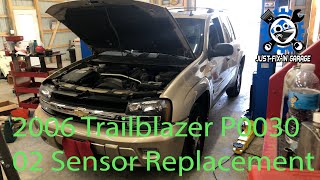
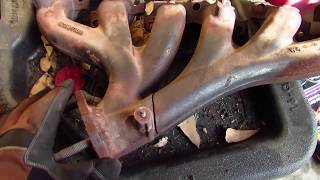
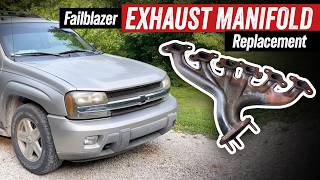
We Have This Part in Stock

The information in this article is provided for general reference and educational purposes only. Vehicle specifications, procedures, and part compatibility can vary by production date, trim level, and region. Always consult your vehicle's factory service manual and verify part numbers before purchasing or performing repairs. Safety-critical components such as airbags, seat belts, and braking systems should be installed by a qualified professional.
- Chevrolet TrailBlazer:
- 🧭 Diagnostic Flowchart
- 🎬 Helpful Videos
- 🛍️ Shop This Part
- What's Unique About the 2002-2009 Chevrolet TrailBlazer
- Symptoms You May Notice
- Most Likely Causes
- Rare But Worth Checking
- Diagnosis Steps
- Parts You'll Likely Need
- Related Codes That Often Appear With This One
- Technical Service Bulletins (TSBs) & Recalls
- Platform-Specific Known Issues
- Mechanic-Grade Diagnostic Values
- Scan Tool Commands That Help
- Wiring & Ground Locations
- Real Owner Repair Stories
- OEM Part Supersession History
- Model Year Variations Within This Range
- Other Known Issues on This Vehicle
- Used vs. New Parts: Buying Guide for This Vehicle
- Real Owner Stories
- 2002-2009 Chevrolet TrailBlazer 4.2L I6 — ~100000 miles
- 2002-2009 Chevrolet TrailBlazer 4.2L I6
- 2002-2009 Chevrolet TrailBlazer 4.2L I6
- 2002-2009 Chevrolet TrailBlazer 4.2L I6 — ~80000 miles
- Related OBD-II Codes
- Frequently Asked Questions
- 🎟️ Get 5% Off