

P0133 on 2001-2010 Chrysler PT Cruiser: Slow O2 Sensor Causes and Fixes
This code means the upstream oxygen sensor (O2 sensor) is responding too slowly. The most common fix is to replace the Bank 1, Sensor 1 O2 sensor itself. However, on PT Cruisers, it is critical to first inspect for a leaking oil pressure switch, as leaking oil can contaminate the O2 sensor's wiring and cause this code.
- P0133 most often means you need a new upstream oxygen sensor.
- Before buying any parts, you MUST check for a leaking oil pressure switch. Unplug the O2 sensor and oil pressure switch connectors and look for oil inside.
- If oil is present, replace the oil pressure switch first and clean the connectors thoroughly.
- Replacing the sensor is a DIY-friendly job that requires a special O2 sensor socket, which can often be rented from auto parts stores.
- Using a quality aftermarket brand like Denso or NGK/NTK is recommended, as they are often the original equipment suppliers.
What's Unique About the 2001-2010 Chrysler PT Cruiser
While a failing oxygen sensor is the most frequent cause for P0133 on any car, the 2001-2010 PT Cruiser has a well-documented quirk that every owner should check first. The oil pressure switch on the 2.4L engine is prone to leaking oil directly into the wiring harness. This oil can travel or 'wick' through the copper wire strands, sometimes over several feet, and contaminate the oxygen sensor's electrical connector. This contamination disrupts the sensitive voltage signal, causing a slow response or other sensor-related fault codes. Ignoring this can lead to replacing a perfectly good O2 sensor when the root cause is the inexpensive oil leak.
Symptoms You May Notice
- Check Engine Light is on
- Reduced fuel economy
- Rough or uneven engine idle
- Slight hesitation during acceleration
- Failing an emissions test
- A faint smell of gasoline or rich exhaust
- Replacing the oxygen sensor without first checking for oil contamination in the wiring harness from a leaking oil pressure switch.
- Replacing the oxygen sensor when the true cause is an exhaust leak before the sensor.
- Assuming the O2 sensor is bad when a PCM software update is what's actually required (see TSB #18-031-03).
Most Likely Causes
- Failing Upstream Oxygen Sensor (Bank 1, Sensor 1) 🔴 High Probability → Shop Oxygen Sensor O2 sensors are wear items that degrade over time from heat and contaminants like soot and carbon buildup, causing them to become sluggish.
How to confirm: Use a scan tool to graph the voltage of the upstream O2 sensor. A healthy sensor will show rapid, sharp switching between approximately 0.1V and 0.9V multiple times per second. A slow sensor will have lazy, rounded-off peaks and valleys, taking much longer to switch.
Typical fix: Replace the upstream (Bank 1, Sensor 1) oxygen sensor. This requires a special 22mm (or 7/8") slotted O2 sensor socket and penetrating oil for the often-rusted threads. 🎬 See this walkthrough for replacing the upstream oxygen sensor.
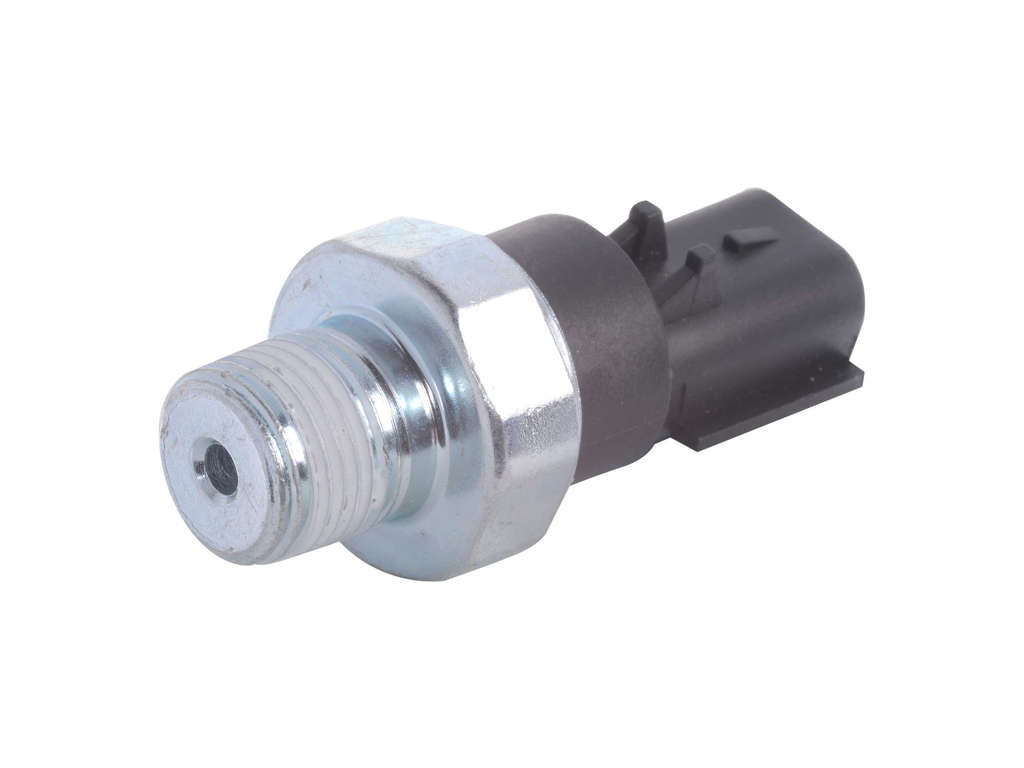
Est. part cost: $40-$100 - Leaking Oil Pressure Switch Contaminating Wiring 🟡 Medium Probability → Shop Engine Oil Pressure Switch This is a very common failure on Chrysler's 2.4L engine. The switch, located on the back of the engine block near the oil filter housing, fails internally and pushes engine oil into its electrical connector, where it wicks up the wiring harness.
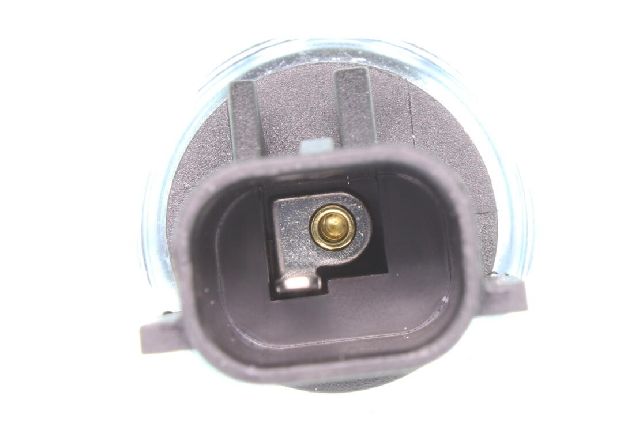
How to confirm: Disconnect the electrical connectors for both the oil pressure switch and the upstream O2 sensor. Inspect the inside of the connectors and the wiring for any signs of engine oil. If oil is present at either connector, the switch is the source.
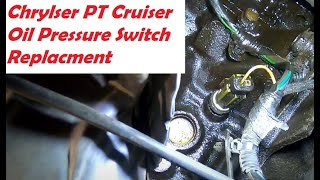
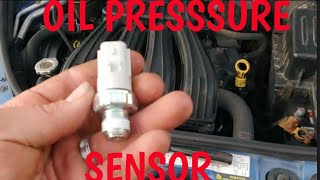
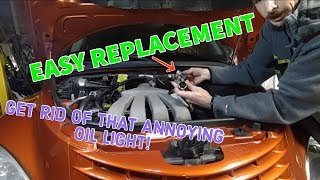
Typical fix: Replace the leaking oil pressure switch (Mopar P/N 05149062AA). 🎬 Watch: Step-by-step guide to replacing the oil pressure switch. Thoroughly clean the oil out of the O2 sensor connector and harness using a dedicated electrical contact cleaner. If the contamination is severe, the O2 sensor and/or harness pigtail may also need replacement.
Est. part cost: $15-$40 - Exhaust Leak ⚪ Low Probability Rust or failed gaskets can cause leaks in the exhaust manifold or the pipe section before the O2 sensor. The PT Cruiser's exhaust manifold can develop cracks over time.
How to confirm: Visually inspect the exhaust manifold for cracks or black soot trails indicating a leak. A leak will often sound like a ticking or puffing noise that is most noticeable on a cold start and may quiet down as the metal expands. A smoke test can pinpoint the exact source.
Typical fix: Replace the cracked exhaust manifold or the failed gasket.
Est. part cost: $20-$300 - Damaged Wiring or Connectors ⚪ Low Probability Engine bay heat can make wiring brittle over time. Wires can also be damaged by improper routing or contact with hot exhaust components. The O2 sensor harness is particularly vulnerable.
How to confirm: Visually inspect the wiring harness leading to the upstream O2 sensor for any signs of melting, chafing, or corrosion. Check the connector pins for corrosion or a loose fit. Tug gently on the wires at the connector to ensure they are secure.
Typical fix: Repair the damaged section of wire or replace the connector pigtail.
Est. part cost: $10-$30
Rare But Worth Checking
- Engine Vacuum Leak: A large unmetered air leak from a vacuum hose or intake gasket can lean out the air-fuel mixture, which can sometimes be misinterpreted by the PCM as a slow sensor response.
- Low Fuel Pressure: A weak fuel pump or clogged filter can affect the air-fuel ratio and cause the O2 sensor's readings to be abnormal, potentially triggering the code.
- PCM Software Issue: Chrysler issued TSB #18-031-03 for some 2004 models with the 2.4L engine, which involved a PCM reflash to correct overly sensitive logic for O2 sensor monitoring that could falsely set codes like P0133. If other causes are ruled out, checking for an available PCM update is a valid diagnostic step.
Diagnosis Steps
- Read the code with an OBD-II scanner to confirm P0133 is the primary code present.
- Crucial Step for PT Cruiser: Locate the oil pressure switch on the rear of the engine block. Disconnect its electrical connector and the upstream O2 sensor connector. Inspect both for the presence of engine oil. If oil is found, the oil pressure switch is leaking and must be replaced. Clean all connectors thoroughly with electrical cleaner before reassembly.
- If no oil is found, visually inspect the upstream O2 sensor's wiring harness and connector for obvious damage, melting, or corrosion.
- Inspect the exhaust manifold and downpipe for any signs of leaks (soot trails, cracks, audible ticking noises, especially when cold). Repair any leaks found.
- Use a scan tool with live data capability to graph the Bank 1 Sensor 1 voltage. At operating temperature and a steady 2000 RPM, the voltage should switch rapidly and consistently between ~0.1V and ~0.9V. If the waveform is slow, lazy, or flat, the sensor has likely failed.
- If the sensor signal appears normal, investigate secondary causes like vacuum leaks or low fuel pressure.
- If all other possibilities are exhausted, especially on a 2004 model, contact a dealer or equipped shop to check if a PCM software update per TSB 18-031-03 is available and applicable.
- Replace the upstream oxygen sensor.
Parts You'll Likely Need
- Upstream Oxygen Sensor (Bank 1, Sensor 1)
(OEM #Mopar 56029049AA (Varies by year/engine, confirm with VIN))— This is the component that the code directly identifies as slow. It is a common wear-and-tear item and the most frequent fix for P0133.
Trusted brands: Denso (e.g., 234-4588), NGK/NTK, Bosch (e.g., 15510)
OEM price range: $80-$150
Aftermarket price range: $40-$100 - Oil Pressure Switch / Sensor
(OEM #Mopar 05149062AA (supersedes 5149062AB))— A very common failure point on this platform that can cause false O2 sensor codes by leaking oil into the wiring harness.
Trusted brands: Mopar, Standard Motor Products (PS418), CarBole
OEM price range: $25-$50
Aftermarket price range: $15-$30
Technical Service Bulletins (TSBs) & Recalls
- TSB #18-031-03: Addresses a PCM software update for some 2004 model year 2.4L engines that could cause various fault codes, including P0133, due to overly sensitive diagnostic logic.
Platform-Specific Known Issues
- The oil pressure switch, located on the back of the engine block, is known to fail and leak oil through its electrical connector. This oil can migrate through the wiring harness and contaminate the O2 sensor connectors, causing fault codes. This is a widely discussed issue in owner forums and demonstrated in many DIY repair videos.
- For 2004 models specifically, a PCM re-flash (TSB 18-031-03) may be required to fix overly sensitive monitoring parameters that can trigger a false P0133 code.
Mechanic-Grade Diagnostic Values
- Upstream O2 Sensor Heater Element Resistance — expected: 4 to 8 Ohms at room temperature.. Failure: A reading of infinite resistance (Open Loop / OL) or near-zero Ohms (short circuit) indicates a failed heater element within the sensor.
- O2 Sensor Heater Circuit Voltage Supply (Key On, Engine Off) — expected: Approximately 12V (battery voltage) at the heater power wire in the harness-side connector.. Failure: Significantly low or no voltage indicates a problem upstream, such as a blown fuse, a faulty Auto Shutdown (ASD) relay, or a break in the wiring, not a faulty sensor.
Scan Tool Commands That Help
- Professional Scan Tool (e.g., DRB III, StarSCAN, wiTECH): O2 Sensor Heater Actuation / Active Test — After checking for power and ground, a technician can use this function to command the PCM to turn the O2 sensor heater on. While monitoring sensor voltage or temperature PIDs, this confirms the PCM's ability to control the circuit and can help isolate a wiring issue from a failed PCM driver.
Wiring & Ground Locations
- G102 — At the left front strut tower in the engine compartment.. This is a major grounding point for multiple engine and chassis systems. Corrosion or a loose connection here can introduce electrical noise or voltage offsets, potentially affecting the PCM's interpretation of the sensitive O2 sensor signal and causing various phantom electrical issues.
- Cylinder Head to Chassis Ground Strap — A braided strap running from the back of the cylinder head to a bracket on the passenger side strut tower.. This provides a critical ground path for the engine itself. A missing or corroded strap forces sensor ground reference currents to find other, less stable paths, which can directly impact the accuracy of sensor readings like the O2 sensor.
- Upstream O2 Sensor Connector Pins — On the 4-wire connector for the upstream O2 sensor.. Knowing the pin functions is crucial for testing. Typically for Chrysler 4-wire sensors: two same-colored wires are for the heater circuit (one for 12V power from the ASD relay, one for PCM control/ground), one is the signal wire (0-1V), and one is the sensor ground/return. Testing for voltage, ground, and signal at these specific pins is the core of electrical diagnosis for this code.
Real Owner Repair Stories
- 2CarPros Forum User (2004 Chrysler PT Cruiser) — Codes P0032 & P0038 (Heater circuit high), engine runs rough and goes into 'limp mode'.
❌ Tried (didn't work) Swapping the ASD relay with the horn relay., Replacing the upstream O2 sensor with a new OEM Denso part., Clearing codes by disconnecting the battery for an hour.
✅ What actually fixed it The user ultimately traced the issue to a faulty Powertrain Control Module (PCM) and resolved it by replacing the PCM with a refurbished unit. This is an edge case after all common causes were ruled out.
OEM Part Supersession History
Varies by model year→56029049AA— Part consolidation and updates over the vehicle's production run.
Heads up: While 56029049AA is a widely cited Mopar part number, it fits a vast range of Chrysler vehicles and may not be correct for all PT Cruiser years. It is critical to verify the exact part number using the vehicle's VIN, as harness length and connector keying can vary.
Model Year Variations Within This Range
- 2003-2005 (NGC Engine Controller): Starting with the Next Generation Controller (NGC) PCM, the strategy for checking the O2 heater circuit changed. The NGC checks heater resistance almost immediately after startup. This can lead to heater circuit codes setting very quickly on key-on or immediately after starting if a fault is present, compared to older SBEC controllers which had a different monitoring strategy.
Diagnostic Flowchart
Other Known Issues on This Vehicle
Issues unrelated to this code that are worth knowing about as an owner of this generation:
- Timing Belt Failure 🔴 High — The 2.4L is an interference engine. The belt must be replaced around the manufacturer's recommended interval of 102,000-105,000 miles or by age (8-10 years), whichever comes first. Failure will cause catastrophic engine damage.
- Premature Front Lower Control Arm Bushing Failure 🟠 Medium — Extremely common. Bushings often fail well before 100,000 miles, causing clunking noises, poor alignment, and wandering steering. Many owners report replacing them multiple times.
- Cooling Fan Assembly Failure 🟠 Medium — The entire cooling fan assembly (motor, blades, and shroud) is a common failure point, leading to overheating, especially in traffic. The fan motor bearings wear out, causing a loud grinding noise.
- Automatic Transmission Solenoid Pack Failure 🟠 Medium — The transmission solenoid pack on the 41TE (A604) automatic transmission can fail, causing harsh shifting, getting stuck in gear (limp mode), or setting a P0700 code. Leaks at the solenoid connector are also common.
- Engine Stalling / TIPM Issues 🔴 High — Some model years, particularly 2006, are noted for random engine stalling while driving. This is often linked to issues with the Totally Integrated Power Module (TIPM), which can cause a wide range of electrical problems.
Used vs. New Parts: Buying Guide for This Vehicle
When a used part is the smart pick: Used parts are generally not recommended for this specific repair. However, if the wiring harness connector (pigtail) is damaged, a used pigtail from a junkyard vehicle with a clean, oil-free harness can be a cost-effective repair option by splicing it into your existing harness.
Donor-vehicle mileage cap: roughly under 120000 miles for the part to have meaningful remaining life.
What to inspect on the donor part:
- For a wiring pigtail, ensure the connector is free of oil contamination inside and out.
- Check for brittle plastic, cracks, or broken locking tabs on the connector.
- Inspect the wires for at least 6 inches back from the connector to ensure they are not brittle, cracked, or previously repaired.
OEM-only on this vehicle (don't cheap out):
- Oil Pressure Switch: Given the low cost of a new OEM or quality aftermarket part and the high potential for a used one to leak, a used switch is not a wise choice.
Aftermarket brands forum-validated for this vehicle:
- NTK: Frequently cited as the original equipment manufacturer (OEM) for many Chrysler vehicles, making it a top choice.
- Denso: A major OEM supplier with a strong reputation for quality and reliability that matches factory performance.
Brands owners have reported issues with on this vehicle:
- Universal / Splice-in Sensors: While cheaper, these require cutting and splicing wires, which introduces potential points of failure and is not recommended, especially for beginners.
- Bosch: While a major brand, some forum users report compatibility issues or premature failures specifically with Bosch sensors on Jeep/Chrysler platforms, preferring NTK or Denso.
Real Owner Stories
Aggregated from forums and TSBs cited above. Mileages and costs reflect what owners reported in those sources.
2001-2010 Chrysler PT Cruiser 2.4L
Symptoms: The oil pressure switch failed and was leaking oil through the electrical connector, which is described as one of the most common issues with this vehicle.
What fixed it: Replaced the oil pressure sensor using a special socket.
Source hint: Easiest way to fix a pt cruiser oil pressure sensor (YouTube)
2001-2010 Chrysler PT Cruiser
Symptoms: The Check Engine Light came on with code P0133, but the car showed no noticeable driving symptoms. The issue appeared specifically after washing the undercarriage of the vehicle.
What fixed it: The situation highlighted potential wiring and connector sensitivity to moisture/cleaning.
Source hint: ptcruiserclub.com - A Polish PT Cruiser forum discusses a user with P0133 and no symptoms
2004 Chrysler PT Cruiser 2.4L
Symptoms: The vehicle triggered a P0133 code due to overly sensitive monitoring parameters in the factory software.
What fixed it: PCM software update per TSB 18-031-03.
Source hint: TSB #18-031-03
Related OBD-II Codes
Frequently Asked Questions
I have a 2004 PT Cruiser with a P0133 code; is there a specific software fix for this?
How can an oil leak cause an O2 sensor code like P0133 on my 2.4L engine?
What part number do I need if my oil pressure switch is leaking into the O2 sensor harness?
Can I just clean the O2 sensor connector if it's contaminated with oil?
Is the P0133 code related to the common PT Cruiser exhaust manifold issues?
What tools do I need to replace the upstream O2 sensor on my PT Cruiser?
Helpful Videos
We Have This Part in Stock


The information in this article is provided for general reference and educational purposes only. Vehicle specifications, procedures, and part compatibility can vary by production date, trim level, and region. Always consult your vehicle's factory service manual and verify part numbers before purchasing or performing repairs. Safety-critical components such as airbags, seat belts, and braking systems should be installed by a qualified professional.
- Chrysler PT Cruiser:
- 🧭 Diagnostic Flowchart
- 🎬 Helpful Videos
- 🛍️ Shop This Part
- What's Unique About the 2001-2010 Chrysler PT Cruiser
- Symptoms You May Notice
- Most Likely Causes
- Rare But Worth Checking
- Diagnosis Steps
- Parts You'll Likely Need
- Technical Service Bulletins (TSBs) & Recalls
- Platform-Specific Known Issues
- Mechanic-Grade Diagnostic Values
- Scan Tool Commands That Help
- Wiring & Ground Locations
- Real Owner Repair Stories
- OEM Part Supersession History
- Model Year Variations Within This Range
- Other Known Issues on This Vehicle
- Used vs. New Parts: Buying Guide for This Vehicle
- Real Owner Stories
- 2001-2010 Chrysler PT Cruiser 2.4L
- 2001-2010 Chrysler PT Cruiser
- 2004 Chrysler PT Cruiser 2.4L
- Related OBD-II Codes
- Frequently Asked Questions
- 🎟️ Get 5% Off