

P0133 on 2013-2016 Dodge Dart: O2 Sensor Slow Response Causes and Fixes
On a 2013-2016 Dodge Dart, P0133 most often means the upstream oxygen sensor (Bank 1, Sensor 1) is failing. However, it can also be caused by an exhaust leak or, very commonly on 2.0L and 2.4L models, outdated PCM software that requires an update from a dealer, as noted in several Technical Service Bulletins. Many owners replace the sensor only to find the code returns, indicating the software update was the necessary fix.
- P0133 on a Dodge Dart means the upstream O2 sensor (before the catalytic converter) is responding too slowly.
- The most common fix is to replace the upstream O2 sensor.
- Before replacing parts, check for exhaust leaks between the engine and the sensor.
- Be aware that several TSBs exist for this code, and the actual fix may be a PCM software update performed by a dealer.
- Ignoring this code will lead to poor fuel mileage and will cause you to fail an emissions test.
What's Unique About the 2013-2016 Dodge DART
While a failing O2 sensor is a common cause for P0133 on any vehicle, the 2013-2016 Dodge Dart, particularly models with the 2.0L and 2.4L engines, has a well-documented history of this code being triggered by a software issue within the Powertrain Control Module (PCM). Chrysler issued multiple Technical Service Bulletins (TSBs) indicating that a PCM software update is required to correct the logic that monitors the O2 sensor's response time. This means that simply replacing the sensor may not resolve the issue if the underlying software calibration is the true cause, a common experience reported by many Dart owners.
Diagnostic Flowchart
Tap your situation to follow the diagnostic path that matches what you're seeing on this vehicle.
Symptoms You May Notice
- Check Engine Light is on
- Reduced fuel economy
- Rough or uneven idle
- Hesitation during acceleration
- Failing a vehicle emissions test
- Black smoke from the exhaust
- Replacing the downstream (post-catalyst) O2 sensor. P0133 specifically refers to Sensor 1, which is the upstream sensor.
- Replacing the catalytic converter. While a failing converter can cause other O2 sensor codes, it is not a direct cause of a slow response code for the upstream sensor.
- Using an incompatible aftermarket O2 sensor. Many owners report that using brands other than Mopar, NTK, or Denso can cause the code to persist or return quickly.
Most Likely Causes
- Failing Upstream Oxygen Sensor (Bank 1, Sensor 1) 🔴 High Probability → Shop Oxygen Sensor O2 sensors are wear items that degrade over time from heat and contaminants. Their ability to react quickly diminishes with age. Owners often report replacing this part first.
How to confirm: Use a scan tool to graph the live data from the B1S1 O2 sensor. A healthy sensor's voltage should switch rapidly between ~0.1V and ~0.9V. A slow, lazy, or rounded waveform indicates a failing sensor.
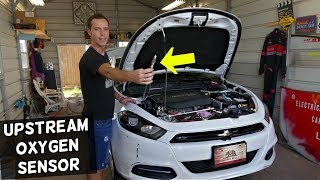
Typical fix: Replace the upstream oxygen sensor. On Dart inline-four engines, this is the sensor located in the exhaust manifold before the catalytic converter. 🎬 Watch: How to replace the upstream sensor on a 2.4L engine. It is highly recommended to use OEM (Mopar) or OEM-equivalent brands like NTK or Denso, as many owners report issues with Bosch or other generic brands on this platform.
Est. part cost: $50-$150 - Outdated Powertrain Control Module (PCM) Software 🔴 High Probability → Shop Engine Control Module (ECM) Manufacturer TSBs #18-022-17 REV. A and #18-023-16 REV. D specifically call out P0133 as a code that can be resolved with a PCM software update for 2013-2015 Darts with the 2.0L or 2.4L engine. The software's sensitivity for monitoring the sensor was too high.
How to confirm: A Dodge dealership or a properly equipped independent shop can check your vehicle's current software version against the latest available calibration using a tool like wiTECH. If an update related to the TSBs is available, this is a likely cause, especially if a new O2 sensor didn't fix the problem.
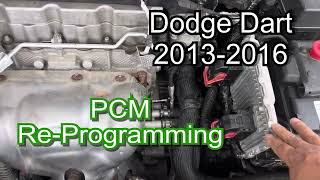
Typical fix: Have the dealership or a qualified shop reflash the PCM to the latest software version. 🎬 See how a professional shop performs a PCM re-programming. This is a common final fix for many owners.
Est. part cost: $100-$250 - Exhaust Leak 🟡 Medium Probability Leaks from a cracked exhaust manifold or a bad gasket between the manifold and cylinder head can allow outside air into the exhaust stream. This extra oxygen disrupts the sensor's readings, making it appear slow to respond.
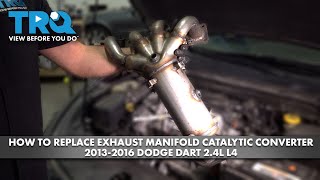
How to confirm: Visually inspect the exhaust manifold for cracks. 🎬 Watch this guide on replacing a cracked exhaust manifold assembly. Listen for ticking or hissing sounds from the engine bay, especially when the engine is cold. A shop can perform a smoke test by forcing smoke into the exhaust system to pinpoint the location of a leak.
Typical fix: Replace the cracked exhaust manifold or the faulty gasket.
Est. part cost: $20-$400 - Damaged Wiring or Connectors ⚪ Low Probability The O2 sensor wiring harness is close to hot exhaust components and can become brittle, melted, or frayed over time, causing high resistance or an open in the circuit.
How to confirm: Visually inspect the wiring harness and connector for the upstream O2 sensor. Look for any signs of melting, chafing, or corrosion on the pins. Use a multimeter to check for continuity and resistance from the sensor connector to the PCM.
Typical fix: Repair the damaged section of the harness or replace the connector pigtail.
Est. part cost: $15-$50
Rare But Worth Checking
- Engine Vacuum Leak: A significant vacuum leak can cause the engine to run lean, which can sometimes affect O2 sensor readings enough to trigger a slow response code. This would typically be accompanied by other codes like P0171 (System Too Lean) or P2172.
- Fuel Pressure Issues: Incorrect fuel pressure from a weak pump or faulty regulator can lead to a consistently rich or lean condition that may affect the O2 sensor's ability to switch properly.
Diagnosis Steps
- Scan for Codes: Use an OBD-II scanner to confirm P0133 is the primary code. Note any other codes present, as they can provide valuable clues (e.g., P0171 for a vacuum leak).
- Check for TSBs: This is a critical step for the Dart. Ask a dealer if your vehicle's VIN has any open recalls or applicable TSBs, specifically mentioning #18-022-17 and #18-023-16 for P0133. If the PCM has never been updated, this is a highly likely cause.
- Inspect Wiring: Perform a thorough visual inspection of the upstream O2 sensor's wiring harness and connector. Look for any signs of melting, corrosion, or physical damage.
- Inspect for Exhaust Leaks: With the engine cool, start it and listen for any hissing or ticking noises around the exhaust manifold that would indicate a leak. A smoke test is the most effective method.
- Analyze Live Data: Use a scan tool with live data graphing capabilities. Watch the Bank 1 Sensor 1 voltage. It should switch rapidly and consistently between approximately 0.1 and 0.9 volts. If the waveform is slow, rounded, or biased to one voltage, the sensor is likely faulty.
- Prioritize the Fix: Given the platform's history, the diagnostic path is often non-linear. Many owners report the following journey: a) Replace O2 sensor. b) Code returns. c) Check for exhaust leaks. d) Find none. e) Finally get the PCM flashed at the dealer, which permanently resolves the code.
- Replace or Repair: Based on your findings, replace the faulty O2 sensor (with an OEM-equivalent brand), repair the exhaust leak, fix the wiring, or have the PCM updated by a professional.
Parts You'll Likely Need
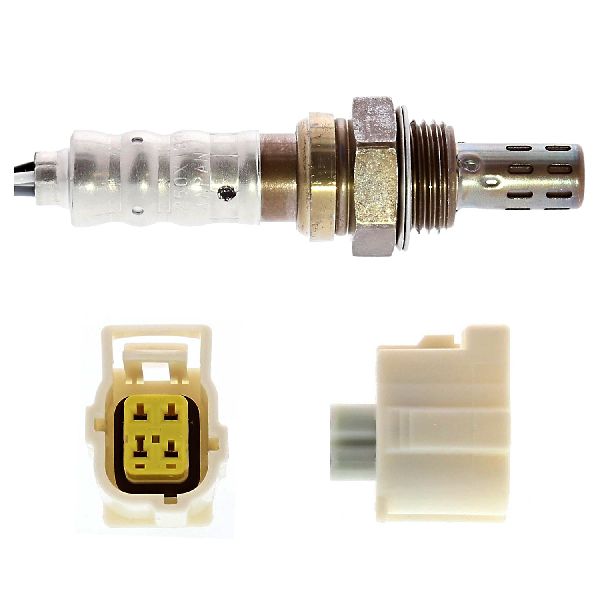
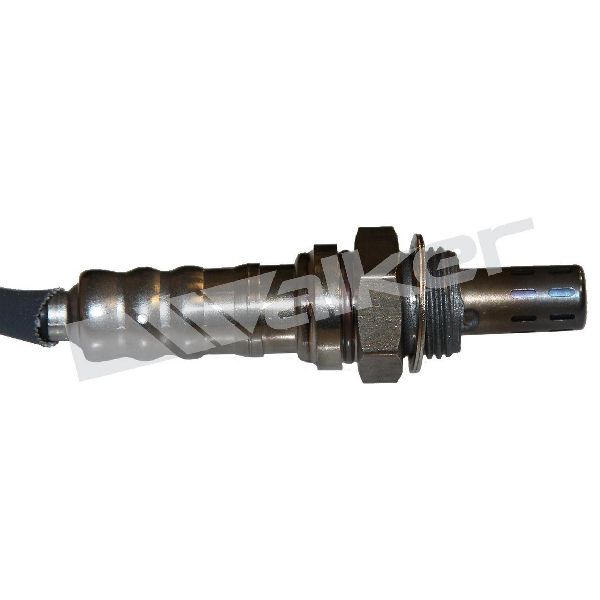
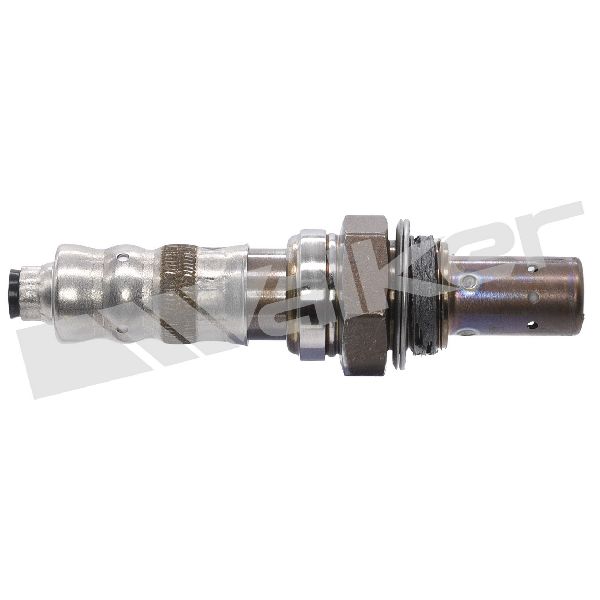
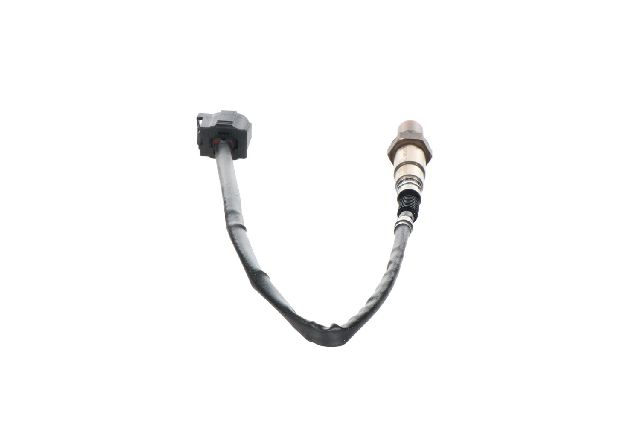
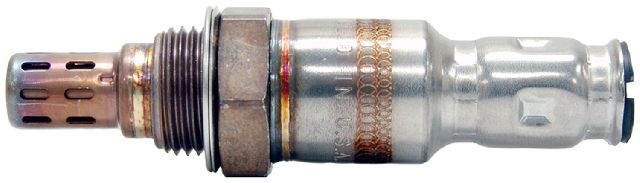
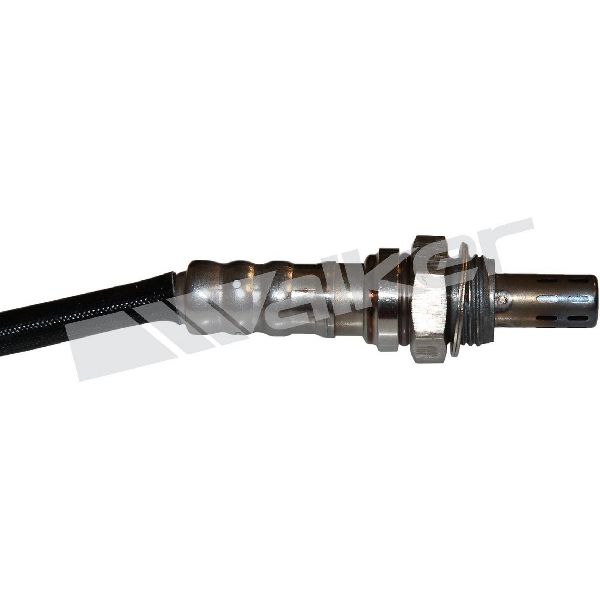
- Upstream Oxygen Sensor
(OEM #68087364AA (For 2.0L/2.4L))— This is the most common component to fail and directly cause a P0133 code. It is a wear-and-tear item and the first step for most DIY repairs.
Trusted brands: Mopar, NTK (NGK), Denso
OEM price range: $120-$180
Aftermarket price range: $50-$110
Related Codes That Often Appear With This One
- P050D — Cold Start Rough Idle. Listed in TSB #18-022-17 REV. A as another code addressed by the same PCM update.
- P0335 — Crankshaft Position Sensor Circuit. Listed in TSB #18-022-17 REV. A as another code addressed by the same PCM update.
- P0456 — EVAP System Small Leak. Listed in TSB #18-022-17 REV. A as another code addressed by the same PCM update.
- P2172 — High Airflow/Vacuum Leak Detected. Also listed in TSBs related to PCM updates for the 2.4L engine.
Technical Service Bulletins (TSBs) & Recalls
- 18-022-17 REV. A: Addresses P0133 and other codes via a PCM software update for 2013-2015 models with the 2.4L engine.
- 18-023-16 REV. D: Also addresses P0133 via a PCM software update for 2015 models with 2.0L or 2.4L engines, improving diagnostic logic.
Platform-Specific Known Issues
- TSB #18-022-17 REV. A and #18-023-16 REV. D identify that on some 2013-2015 Darts with the 2.0L or 2.4L engine, the P0133 code may be set due to overly sensitive PCM software logic. The prescribed fix is a software update, not necessarily a part replacement. Many owners chase this issue by replacing the sensor first, only to find the light returns, requiring a trip to the dealer for the reflash to achieve a permanent fix.
Mechanic-Grade Diagnostic Values
- Upstream O2 Sensor Voltage (Live Data) — expected: Rapidly fluctuating between 0.1V and 0.9V (100mV - 900mV) when in closed loop.. Failure: Voltage is slow to change, flat-lines, or stays biased high (>0.55V) or low (<0.35V).
- O2 Sensor Heater Circuit Resistance — expected: Typically between 2 and 16 ohms when the sensor is cold. Varies by manufacturer.. Failure: An infinite reading (open circuit) or zero reading (short circuit) on a multimeter. A low reading around 1.9 ohms has been noted by some users but may be out of spec.
- O2 Sensor Heater Fuse (F87) — expected: Continuity. The fuse is located in the under-hood fuse box.. Failure: Blown fuse. This will cause the sensor to heat up slowly, potentially triggering a slow response code, especially on cold starts.
Scan Tool Commands That Help
- Generic OBD-II Scanner / wiTECH: O2 Sensor Readiness Monitor Drive Cycle — After replacing an O2 sensor or clearing codes, the PCM's readiness monitor for the O2 sensor must be reset by performing a specific drive cycle. For Chrysler vehicles, this typically involves idling for five minutes to enter closed loop, then driving at a steady speed above 25 mph for two minutes.
Wiring & Ground Locations
- Engine to Chassis Ground — A ground strap running from the passenger side of the engine (near the head) to the passenger side strut tower. Prone to corrosion.. A poor engine ground can introduce electrical noise and voltage offsets, affecting the PCM's interpretation of the O2 sensor's low-voltage signal.
- Battery Negative to Chassis Ground — The main ground cable from the battery negative terminal bolts to the chassis frame rail behind the driver's side wheel well splash guard. This location is exposed to moisture and is a common point of corrosion.. Corrosion at this primary ground point can cause a host of electrical issues, including erratic sensor readings. Some owners have found cleaning this ground stud and the cable end resolves intermittent electrical problems.
- Upstream O2 Sensor Connector — On the 2.0L/2.4L engine, the connector is accessible from the top of the engine bay, attached to the wiring harness near the back of the engine.. This is the primary connection point to check for corrosion, damage, or poor pin fitment before suspecting the sensor or PCM. The PCM is located on the left front of the engine compartment for non-turbo models.
Real Owner Repair Stories
- dodge-dart.org forum member (2013 Dodge Dart SXT 2.0L) — Check Engine Light with code P0133.
❌ Tried (didn't work) Replaced the upstream O2 sensor with an aftermarket part., Code returned., Replaced the aftermarket sensor with an OEM Mopar sensor., Code returned again.
✅ What actually fixed it Took the vehicle to the Dodge dealership. The dealer performed a PCM software update (reflash) as per a Technical Service Bulletin. The code did not return after the software update. - Reddit user in r/dodgedart (2013 Dodge Dart) — No crank, no start, dead battery symptoms. Also associated with flickering gauges and other electrical gremlins.
❌ Tried (didn't work) Replacing the starter., Replacing the battery.
✅ What actually fixed it Cleaning the main battery ground connection point on the chassis behind the driver's side wheel well. The 13mm and 10mm nuts holding the ground wires were removed, the contact surfaces were cleaned of corrosion with a wire brush, and then reassembled. This restored proper grounding and resolved the electrical issues.
OEM Part Supersession History
68087364AA→No direct supersession found, this remains the primary part number.
Heads up: While not a supersession, forum users and mechanics strongly advise against using universal or non-OEM equivalent (Bosch) sensors on this platform, as they frequently fail to resolve the P0133 code and may cause it to return quickly. Stick to Mopar, NTK, or Denso branded sensors specified for the vehicle.
Model Year Variations Within This Range
- 2014-2016: For the 2014 model year, the 184-horsepower 2.4L Tigershark engine became standard on the SXT, Limited, and GT trims, replacing the 2.0L on some trims. While the P0133 issue and its TSBs apply to both engines, the expanded use of the 2.4L engine from 2014 onward means the software-related cause is more prevalent in these later model years.
Helpful Videos
We Have This Part in Stock

The information in this article is provided for general reference and educational purposes only. Vehicle specifications, procedures, and part compatibility can vary by production date, trim level, and region. Always consult your vehicle's factory service manual and verify part numbers before purchasing or performing repairs. Safety-critical components such as airbags, seat belts, and braking systems should be installed by a qualified professional.
- Dodge DART:
- 🧭 Diagnostic Flowchart
- 🎬 Helpful Videos
- 🛍️ Shop This Part
- What's Unique About the 2013-2016 Dodge DART
- Symptoms You May Notice
- Most Likely Causes
- Rare But Worth Checking
- Diagnosis Steps
- Parts You'll Likely Need
- Related Codes That Often Appear With This One
- Technical Service Bulletins (TSBs) & Recalls
- Platform-Specific Known Issues
- Mechanic-Grade Diagnostic Values
- Scan Tool Commands That Help
- Wiring & Ground Locations
- Real Owner Repair Stories
- OEM Part Supersession History
- Model Year Variations Within This Range
- 🎟️ Get 5% Off