

P0133 on 2011-2024 Dodge Durango 5.7L Hemi: Slow O2 Sensor Causes and Fixes
This code most often means the driver's side upstream oxygen sensor is failing. A common secondary cause on the 5.7L Hemi is an exhaust leak from broken manifold bolts. Before replacing parts, check for a 'Hemi tick' noise on cold starts, which indicates a leak. Expect to pay $40-$80 for an aftermarket sensor or $120-$180 for OEM. It's a DIY-friendly repair (2/5 difficulty).
- P0133 on your Durango points to a slow-reacting upstream O2 sensor on the driver's side.
- Before replacing the sensor, carefully check for an exhaust leak at the driver's side manifold, a very common issue on the 5.7L Hemi that can also cause this code. Listen for a 'tick' on cold starts.
- If no leak is present, the most likely fix is replacing the Bank 1, Sensor 1 O2 sensor. This is a manageable DIY job for most home mechanics.
- Ignoring the code will lead to poor fuel mileage and can eventually cause expensive damage to your catalytic converter.
What's Unique About the 2011-2024 Dodge Durango
On the Dodge Durango with the 5.7L Hemi engine, while a failing O2 sensor is a frequent culprit, this platform has a well-documented tendency for the rear exhaust manifold bolts to break due to repeated heat cycles. This often creates a small exhaust leak, which is a common cause of the 'Hemi tick' noise on cold startups. This leak allows un-metered air into the exhaust stream, which can confuse the O2 sensor and cause it to respond slowly, triggering a P0133 code even if the sensor itself is still functional.
Symptoms You May Notice
- Check Engine Light illuminated
- Decreased fuel economy
- Rough or unstable idle
- Hesitation or sluggish acceleration
- Audible 'ticking' noise from the engine bay, especially when cold
- Exhaust fumes smell in the cabin
- Replacing the catalytic converter. This code points to the sensor *before* the converter. A bad converter would typically set a P0420 or P0430 code.
- Replacing the wrong O2 sensor. This code is specific to Bank 1 (driver's side) and Sensor 1 (upstream/pre-catalyst). Replacing the passenger side (Bank 2) or downstream sensor will not fix the issue.
- Confusing an exhaust leak 'tick' with a lifter 'tick'. An exhaust leak is typically loudest on a cold start and may quiet down as the engine warms, while a lifter tick often persists or gets worse when hot.
Most Likely Causes
- Failing Bank 1, Sensor 1 Oxygen Sensor 🔴 High Probability → Shop Oxygen Sensor O2 sensors are wear items that degrade over time, typically after 80,000-100,000 miles. Contamination from oil, coolant, or excessive carbon can also cause premature failure.
How to confirm: Use an OBD-II scanner with live data to graph the B1S1 voltage. A healthy sensor's voltage will switch rapidly between ~0.1V and ~0.9V. A slow, lazy waveform compared to the Bank 2 Sensor 1 waveform indicates a failing sensor.
Typical fix: Replace the Bank 1, Sensor 1 (driver's side, upstream) oxygen sensor.
Est. part cost: $40-$180 - Exhaust Manifold Leak (Broken Bolts) 🔴 High Probability → Shop Exhaust Manifold The 5.7L Hemi engine is notorious for the rear exhaust manifold bolts breaking due to repeated heat cycles, causing a leak at the gasket. This is often heard as a 'ticking' noise when the engine is cold that may disappear as the engine warms up and the metal expands to seal the gap.
How to confirm: Listen for a ticking or puffing sound from the driver's side wheel well, especially on a cold start. Visually inspect the manifold bolts, particularly the ones at the rear of the head, for breakage. You may also see black soot trails around the leak or be able to feel the heat shield is loose.
Typical fix: Replace the broken manifold bolts and the exhaust manifold gasket. This may require extracting the broken bolt from the cylinder head. Many owners upgrade to stronger aftermarket bolts or headers.
Est. part cost: $20-$70 - Damaged O2 Sensor Wiring or Connector ⚪ Low Probability → Shop Oxygen Sensor The wiring harness is close to hot exhaust components and can become melted, brittle, or chafed over time. A poor connection can disrupt the sensor's voltage signal.
How to confirm: Visually inspect the wiring and connector for the Bank 1, Sensor 1 O2 sensor. Look for any signs of melting, corrosion, chafing, or loose pins in the connector.
Typical fix: Repair the damaged section of the wiring harness or replace the connector pigtail.
Est. part cost: $15-$40
Rare But Worth Checking
- Vacuum Leak: A significant vacuum leak from a line or intake gasket can alter the air-fuel mixture enough to affect O2 sensor readings. This would typically be accompanied by other codes like P0171 (System Too Lean).
- Low or Incorrect Fuel Pressure: A failing fuel pump or faulty fuel pressure regulator can lead to erratic O2 sensor readings, though this is uncommon and would likely present other symptoms and codes.
- Powertrain Control Module (PCM) Software Issue: → Shop Engine Control Module (ECM) In some cases, a manufacturer may release a PCM software update to change the sensitivity parameters for setting this code. TSBs have been issued for other Hemi vehicles for this exact reason, making a dealer check for updates a valid diagnostic step if no physical faults are found.
- Faulty Engine Ground Strap: A corroded or broken engine-to-chassis ground strap has been identified in owner forums as a rare but real cause for persistent O2 sensor codes that don't resolve after sensor replacement.
Diagnosis Steps
- Verify the code with an OBD-II scanner. Note any other codes present, especially P0171 or P0153.
- On a cold engine, start the vehicle and listen carefully from the driver's side wheel well for a 'ticking' or 'puffing' sound that may diminish as the engine warms up. This strongly indicates an exhaust manifold leak.
- Visually inspect the exhaust manifold on the driver's side. Check for broken or missing rear bolts and look for black soot trails indicating a gasket leak.
- If no leak is apparent, use a scanner with live data to graph the voltage of the Bank 1 Sensor 1 O2 sensor. Compare its switching frequency to Bank 2 Sensor 1. A slow or lazy signal on B1S1 points to a faulty sensor.
- Inspect the O2 sensor wiring and connector for any signs of melting, chafing, corrosion, or damage. Also check the main engine ground straps for integrity.
- If an exhaust leak is found, repair it first. This is a very common cause on the 5.7L Hemi and a new O2 sensor will not fix the code if a leak is present.
- If no exhaust leak is found and the wiring is intact, the O2 sensor itself is the most likely culprit and should be replaced.
- If a new sensor does not resolve the code, contact a dealer with your VIN to check for any available PCM software updates related to emissions.
Parts You'll Likely Need
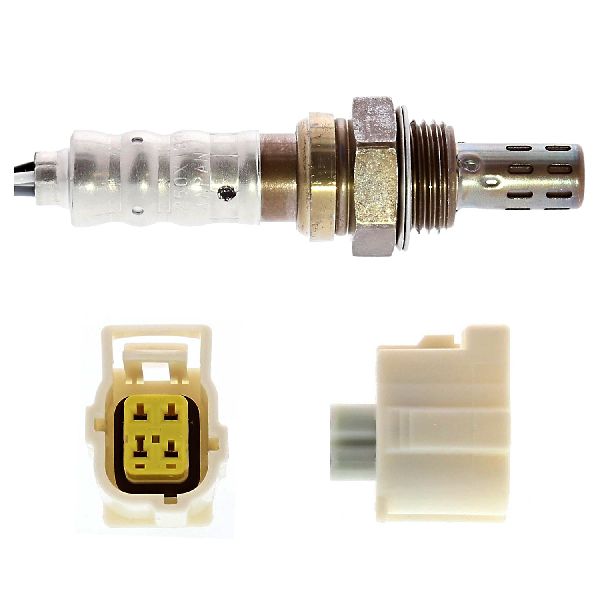
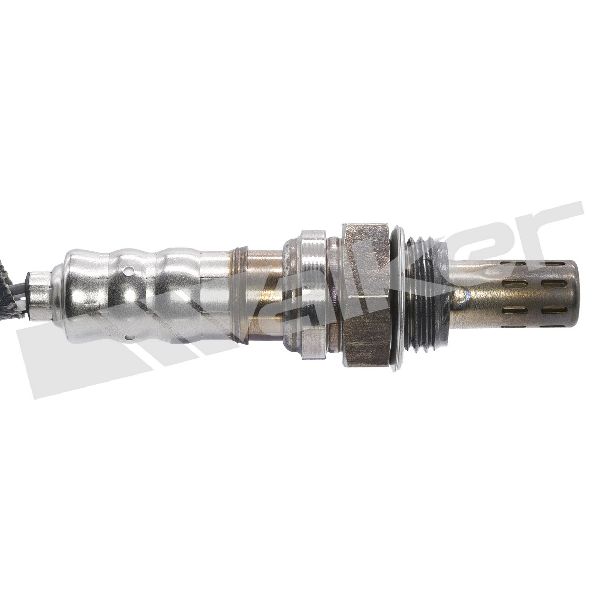
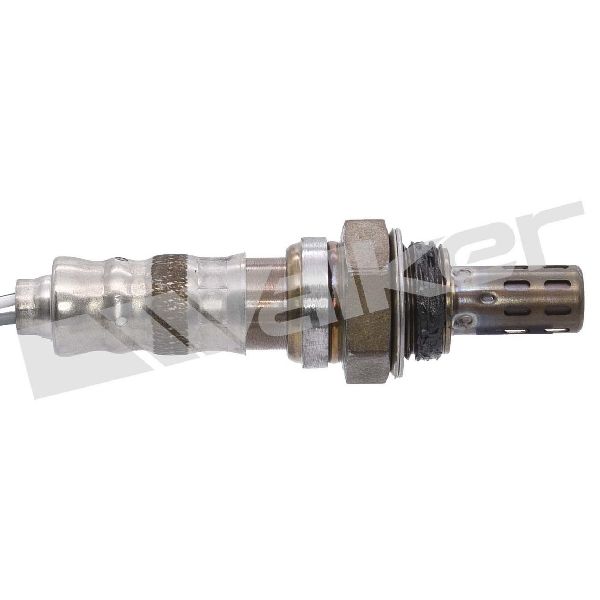
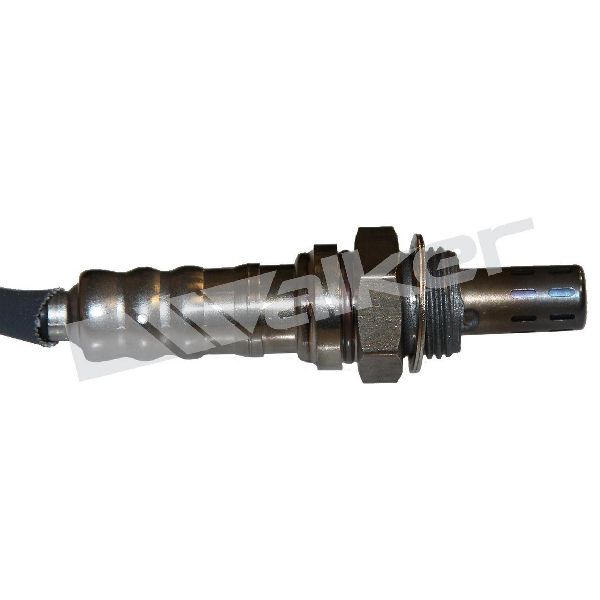
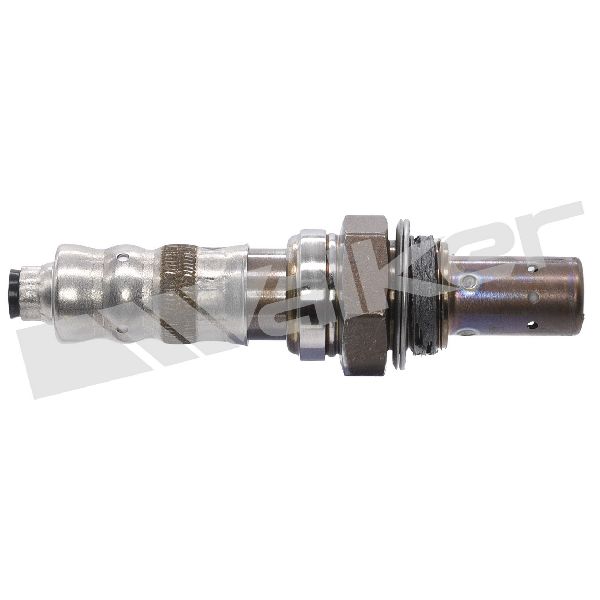
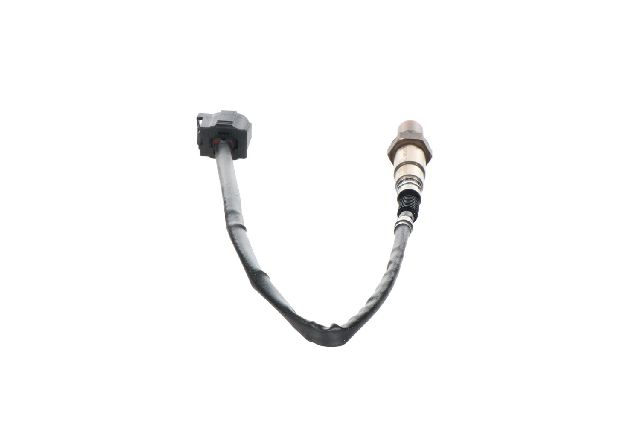
- Upstream Oxygen Sensor (Bank 1, Sensor 1)
(OEM #56029049AA (Verify with VIN, supersedes 5149170AA for many applications))— This is the sensor that the PCM is monitoring for this code. It is the most common point of failure when no exhaust leak is present.
Trusted brands: NTK, Denso, Bosch, Mopar
OEM price range: $120-$180
Aftermarket price range: $40-$80 - Exhaust Manifold Gasket and Bolt Kit — Needed if the cause is a leak from broken manifold bolts, a very common issue on the 5.7L Hemi engine. Kits often include new gaskets and stronger-than-stock hardware.
Trusted brands: Fel-Pro (Gasket: MS 96454), Dorman (Bolt Kit: 03414B), Mopar
OEM price range: $40-$70
Aftermarket price range: $20-$50
Related Codes That Often Appear With This One
- P0171 — System Too Lean (Bank 1). This code often appears with P0133 when an exhaust manifold leak is the root cause, as the extra oxygen entering the exhaust is interpreted as a lean condition.
- P0300-P0308 — Misfire codes. A persistent misfire can send unburnt fuel into the exhaust, which can contaminate and damage the O2 sensor over time, eventually leading to a P0133 code. Also, a severe 'Hemi tick' from lifter failure can cause misfires.
- P0153 — O2 Sensor Circuit Slow Response (Bank 2, Sensor 1). If both upstream sensors are failing around the same time due to age, it's common to see both codes together. If they appear simultaneously, it could also point to a systemic issue like a PCM software update being required.
Technical Service Bulletins (TSBs) & Recalls
- While no TSB is specific to the Durango for P0133, TSB 18-032-09 was issued for a 2010 Challenger with a Hemi engine for P0133/P0153, indicating a PCM reflash as the fix. Other TSBs for the Ram 1500 with the same engine also exist for this purpose, suggesting that software updates can be a potential, though less common, solution for the Durango as well.
Platform-Specific Known Issues
- The 5.7L Hemi engine is widely known for breaking its rear exhaust manifold bolts, causing an exhaust leak that is a frequent cause of code P0133. This is often referred to as the 'Hemi tick'.
- The sound of a cold-start exhaust leak ('tick') can be mistaken for the more serious 'Hemi tick' caused by lifter failure. An exhaust tick usually quiets down as the engine warms, while a lifter tick does not.
Mechanic-Grade Diagnostic Values
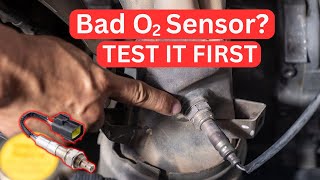
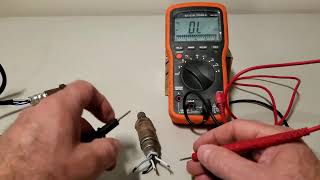
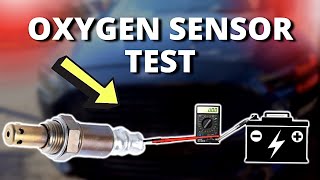
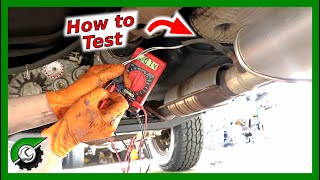
- O2 Sensor Heater Element Resistance — expected: Between 2.0 and 30.0 Ohms at room temperature. OEM-style NTK/NGK sensors typically measure between 5-7 Ohms.. Failure: A reading of infinity (Open Loop) or near zero Ohms indicates a failed heater element.
- Upstream O2 Sensor (B1S1) Voltage - Live Data — expected: Rapidly fluctuating between ~0.1V (lean) and ~0.9V (rich) in closed loop.. Failure: Voltage is slow to change, stuck (e.g., at 0.45V), or the rich-to-lean switch time exceeds 100 milliseconds.
- Mode 6, Test ID $81, Component ID $01 (O2S B1S1 Rich to Lean Time) — expected: Value should be below the PCM's maximum threshold (e.g., < 100ms).. Failure: A reported value that exceeds the maximum limit confirms the PCM's diagnosis of a slow-switching sensor.
- O2 Sensor Signal Wire Voltage (Harness Side, Sensor Disconnected, KOEO) — expected: Approximately 5.0 Volts reference from the PCM.. Failure: Low or no voltage points to a problem in the wiring harness or the PCM itself, not the sensor.
Scan Tool Commands That Help
- wiTECH or equivalent high-end scanner: O2 Sensor Response Test — This is a guided, active test that forces rich and lean conditions to directly measure the sensor's response time, providing a definitive pass/fail result without having to interpret live data graphs during a drive cycle.
Wiring & Ground Locations
- B1S1 O2 Sensor Connector — On the driver's side of the transmission bell housing, attached to a bracket. The harness runs up from the sensor in the exhaust manifold.. This connector is a common point for corrosion or damage. The harness is also susceptible to melting from contact with the exhaust.
- Main Engine Ground Strap — A braided strap running from the passenger-side cylinder head to the firewall.. Owners have confirmed that a corroded or broken main engine ground strap can cause a persistent P0133 code, as it disrupts the sensor's reference ground and signal integrity. A new sensor will not fix the issue if this ground is faulty.
- B1S1 Connector Pinout (Typical 4-wire) — At the sensor connector.. Knowing the pin functions allows for testing the heater circuit (typically two same-colored wires) and the signal circuit. For example, testing for 12V at the heater circuit and a 5V reference on the signal wire from the PCM.
Real Owner Repair Stories
- 13 (Vehicle with aftermarket headers and tune (similar principle applies to Durango)) — Check Engine Light with code P0133 immediately after installing aftermarket headers and an O2 sensor spacer.
❌ Tried (didn't work) Initially assumed it was a tuning issue.
✅ What actually fixed it The issue was resolved by completely removing the O2 sensor spacer. The spacer was too restrictive, slowing the flow of exhaust gases to the sensor and causing the 'slow response' code. - 23 (2007 Dodge Ram 5.7 Hemi) — Persistent P0133 code that kept returning.
❌ Tried (didn't work) Dealership replaced all four O2 sensors, but the code returned., A custom CMR tune kept the light off for a few months, but it eventually came back.
✅ What actually fixed it The final fix was not explicitly stated in the thread, but the user was advised to swap the front O2 sensors from side-to-side to see if the code would follow the sensor (changing to P0153), thus confirming a bad sensor despite it being new. This highlights the possibility of receiving a faulty new part.
OEM Part Supersession History
5149170AA→56029049AA— Part update for improved performance, reliability, or manufacturing change.
Heads up: While the newer part number is generally backward compatible, it is always critical to verify the correct part number with the vehicle's VIN. Using the wrong sensor, even if it physically fits, can result in persistent codes.
Model Year Variations Within This Range
- 2014-2024: The 2014 model year refresh introduced the ZF 8-speed automatic transmission across the lineup, replacing the older 5-speed and 6-speed units. This change in transmission and its control module can affect engine load and PCM software logic, though the root causes for P0133 (exhaust leaks, sensor failure) remain the same.
- 2013-2023: The Mopar 80mm throttle body part number 53034251AD is specified for 2013 and newer 5.7L VVT engines, indicating a potential change in the induction system around that time compared to the early (2011-2012) models of this generation.
Diagnostic Flowchart
Other Known Issues on This Vehicle
Issues unrelated to this code that are worth knowing about as an owner of this generation:
- Hemi Lifter/Camshaft Failure 🔴 High — More common on higher mileage (80k-150k miles) engines, especially those with extended oil change intervals or frequent idling. The 'Hemi tick' from a lifter is distinct from an exhaust leak tick as it persists or worsens when the engine is hot.
- Totally Integrated Power Module (TIPM) Failure 🔴 High — Especially prevalent in 2011-2013 models. Can cause a wide range of bizarre electrical issues, including crank-no-start conditions, fuel pump staying on, horn honking randomly, and wipers activating on their own. (Ref: A recall was issued for the 2011 Durango for TIPM issues related to the fuel pump relay.)
- Premature Water Pump Failure 🟠 Medium — Water pumps on the 5.7L Hemi are known to fail, sometimes as early as 60,000 miles, but commonly around 100,000-130,000 miles. Symptoms include coolant leaks from the front of the engine and bearing noise.
Used vs. New Parts: Buying Guide for This Vehicle
When a used part is the smart pick: For this repair, using a used part is generally not recommended for the oxygen sensor itself. However, sourcing a used exhaust manifold from a low-mileage, non-salt-belt donor vehicle can be a cost-effective option if the original is cracked.
Donor-vehicle mileage cap: roughly under 70000 miles for the part to have meaningful remaining life.
What to inspect on the donor part:
- For an exhaust manifold, check the mounting flange with a straight edge to ensure it is not warped.
- Inspect carefully for hairline cracks, especially near the collector and rear bolt holes.
- Ensure all studs are intact and not stripped; broken-off studs are a major red flag.
- Avoid parts with heavy rust or scaling, as this indicates a life spent in a harsh climate.
OEM-only on this vehicle (don't cheap out):
- Oxygen Sensor: While top-tier aftermarket is acceptable, Hemi engines are notoriously sensitive to O2 sensor calibration. Using a genuine Mopar sensor (often made by NTK) is the safest bet to avoid persistent codes.
Aftermarket brands forum-validated for this vehicle:
- NTK (often the OEM supplier)
- Denso
- Bosch (for O2 sensors)
- Fel-Pro (for exhaust manifold gaskets)
- Dorman (for manifold bolt kits, often with improved designs)
Brands owners have reported issues with on this vehicle:
- Generic, unbranded 'eBay special' oxygen sensors. Owners frequently report these are dead-on-arrival or fail within a few months, causing the code to return.
Real Owner Stories
Aggregated from forums and TSBs cited above. Mileages and costs reflect what owners reported in those sources.
2012 Dodge Durango R/T AWD 5.7L — 7000 miles
Symptoms: Check Engine Light (CEL) on. The owner was initially told it was an EVAP system error code.
What fixed it: The dealer performed a PCM (Powertrain Control Module) flash update as per Technical Service Bulletin (TSB) #18-050-11 to correct incorrect software monitoring.
Source hint: DodgeForum.com owner report cited in context regarding TSB 18-050-11
2011-2024 Dodge Durango 5.7L Hemi — ~90000 miles
Symptoms: Audible 'ticking' noise from the engine bay when cold; Check Engine Light illuminated.
What fixed it: Replacement of broken rear exhaust manifold bolts and the exhaust manifold gasket.
Source hint: vehicle_specific_issues and common_causes regarding 'Hemi tick' and manifold leaks
Related OBD-II Codes
Frequently Asked Questions
Is the 'ticking' noise on my 5.7L Hemi Durango always a sign of a bad O2 sensor?
Does TSB 18-050-11 apply to my 2012 Durango R/T with code P0133?
Why is my Durango's 5.7L Hemi prone to P0133 after 80,000 miles?
Can I just replace the O2 sensor to fix P0133 on my Durango?
Are there any other software updates for P0133 besides the Durango-specific ones?
Could my Durango's TIPM issue be related to the O2 sensor code?
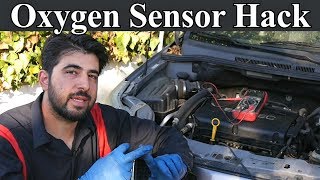
Helpful Videos


We Have This Part in Stock

The information in this article is provided for general reference and educational purposes only. Vehicle specifications, procedures, and part compatibility can vary by production date, trim level, and region. Always consult your vehicle's factory service manual and verify part numbers before purchasing or performing repairs. Safety-critical components such as airbags, seat belts, and braking systems should be installed by a qualified professional.
- Dodge Durango:
- 🧭 Diagnostic Flowchart
- 🎬 Helpful Videos
- 🛍️ Shop This Part
- What's Unique About the 2011-2024 Dodge Durango
- Symptoms You May Notice
- Most Likely Causes
- Rare But Worth Checking
- Diagnosis Steps
- Parts You'll Likely Need
- Related Codes That Often Appear With This One
- Technical Service Bulletins (TSBs) & Recalls
- Platform-Specific Known Issues
- Mechanic-Grade Diagnostic Values
- Scan Tool Commands That Help
- Wiring & Ground Locations
- Real Owner Repair Stories
- OEM Part Supersession History
- Model Year Variations Within This Range
- Other Known Issues on This Vehicle
- Used vs. New Parts: Buying Guide for This Vehicle
- Real Owner Stories
- 2012 Dodge Durango R/T AWD 5.7L — 7000 miles
- 2011-2024 Dodge Durango 5.7L Hemi — ~90000 miles
- Related OBD-II Codes
- Frequently Asked Questions
- 🎟️ Get 5% Off