

P0133 on 2007-2014 Ford Edge 3.5L: O2 Sensor Slow Response Causes and Fixes
This code almost always means the upstream oxygen sensor on the firewall side of the engine (Bank 1) is old and needs replacement. Expect to pay $50-$100 for an aftermarket sensor or $120-$180 for an OEM Motorcraft part. It's a DIY-possible job, but access is notoriously tight, requiring specific tools and patience.
- P0133 on a 2007-2014 Edge almost always points to a worn-out upstream oxygen sensor on the firewall side of the engine (Bank 1).
- Before replacing the sensor, perform a quick visual inspection for exhaust leaks (soot trails) on the rear manifold and check that the code didn't just appear after a battery change.
- Accessing the sensor is the hardest part of the job; be prepared with a 22mm offset O2 sensor socket, a swivel, and multiple extensions.
- This vehicle has several known major issues (internal water pump, PTU failure) that are more serious than a P0133 code. Be aware of their symptoms.
What's Unique About the 2007-2014 Ford Edge
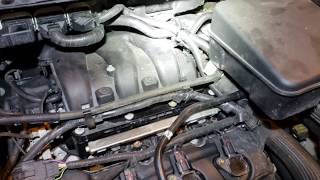
For the 3.5L V6 in the Ford Edge, the P0133 code is a very common and straightforward issue, typically pointing directly to the sensor itself. The main challenge specific to this platform is the physical location of Bank 1 Sensor 1. Because the engine is mounted transversely (sideways), Bank 1 is the cylinder bank located against the firewall, making the upstream O2 sensor extremely difficult to access from either the top or bottom 🎬 See this walkthrough for locating the rear Bank 1 sensor. of the engine bay. Owners and technicians on forums frequently report needing a combination of a specific 22mm (or 7/8") offset O2 sensor socket, multiple long extensions, and a swivel joint to reach and apply enough torque to remove the sensor.
Symptoms You May Notice
- Check Engine Light is on
- Decreased fuel economy
- Rough or poor idle
- Hesitation or reduced acceleration
- Black smoke from exhaust in some cases
- Replacing the wrong O2 sensor (e.g., Bank 2 Sensor 1 on the radiator side, or the downstream Sensor 2 after the catalytic converter).
- Replacing the catalytic converter when a P0420 code is also present. A slow O2 sensor can provide bad data that falsely triggers a catalyst efficiency code. Always fix P0133 first.
- Attempting to 'fix' the code with a non-fouler or spacer. This does not address the root cause and can sometimes trigger additional codes.
Most Likely Causes
- Failing or Contaminated Bank 1, Sensor 1 Oxygen Sensor 🔴 High Probability → Shop Oxygen Sensor Oxygen sensors are wear items with a finite lifespan, typically 80,000-100,000 miles. Contamination from carbon, oil, or internal coolant leaks (a known issue on this engine) can insulate the sensing element, slowing its response time. This is the most common cause by a wide margin.
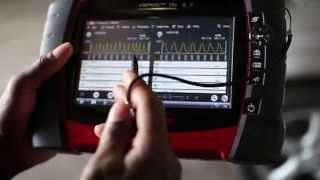
How to confirm: Use a scan tool with live data graphing capabilities. 🎬 Watch: How to check for slow response using a scan tool. Observe the Bank 1 Sensor 1 (O2S11) voltage. A healthy sensor's voltage will fluctuate rapidly and frequently between approximately 0.1V and 0.9V in a smooth sine wave. A slow sensor will show lazy, rounded-off waves that take more than 100ms to switch or appear jagged.
Typical fix: Replace the Bank 1, Sensor 1 (upstream, rear/firewall side) oxygen sensor.
Est. part cost: $50-$180 - Exhaust Leak Before the O2 Sensor 🟡 Medium Probability → Shop Oxygen Sensor Cracks in the exhaust manifold or a leaking manifold-to-head gasket can allow outside air into the exhaust stream. This unmetered oxygen mathematically slows the sensor's perceived switching time, triggering a P0133 even if the sensor is healthy.
How to confirm: With the engine cold, perform a visual inspection of the rear exhaust manifold for cracks or fine black soot trails, which are definitive signs of a leak. You can also use a mechanic's stethoscope to listen for a ticking or puffing sound from the manifold area on a cold start. A professional smoke test is the most reliable method.
Typical fix: Repair the leak. This may involve replacing the exhaust manifold gasket or the entire exhaust manifold if it is cracked.
Est. part cost: $20-$400 - Damaged Wiring or Connectors ⚪ Low Probability
How to confirm: Visually inspect the wiring harness leading to the Bank 1 Sensor 1 O2 sensor. Look for any signs of melting, chafing, corrosion, or loose pins in the connector. The harness is routed in a high-heat area near the firewall and exhaust, making it susceptible to damage.
Typical fix: Repair the damaged section of the wiring harness or clean/replace the connector.
Est. part cost: $10-$50
Rare But Worth Checking
- Vacuum Leak: A significant vacuum leak from a cracked hose or bad intake manifold gasket can lean out the air-fuel mixture, sometimes affecting O2 sensor readings enough to trigger a slow response code.
- Low Fuel Pressure: A weak fuel pump or clogged filter can cause a lean condition that the O2 sensor struggles to report correctly, potentially leading to a P0133. This is usually accompanied by other codes like P0171 (System Too Lean).
- PCM Software Issue / Post-Battery Replacement Glitch: While less common for this generation, some Ford PCMs can have overly sensitive parameters. More frequently, a P0133 can appear as a 'ghost' code immediately after a battery replacement because the PCM's learned fuel trim adjustments have been erased, causing it to fail a strict cold-start emissions test. Always clear codes and perform a drive cycle after a battery change before replacing parts.
- Dirty or Malfunctioning Mass Air Flow (MAF) Sensor: → Shop Fuel Injection Air Flow Meter A contaminated MAF sensor can provide incorrect airflow data to the PCM, leading to improper fuel calculations that can, in turn, cause the O2 sensor to appear slow in its response.
Diagnosis Steps
- Connect an OBD-II scanner and confirm P0133 is the active code. Check for any other codes and note them.
- Using the scanner's live data function, graph the voltage for 'O2S11' (Bank 1, Sensor 1). At operating temperature and a steady 2500 RPM, the voltage should switch rapidly in a clean wave between ~0.1V and ~0.9V. If the wave is slow, lazy, or flat, the sensor is likely faulty.
- Perform a thorough visual inspection of the rear exhaust manifold with the engine cold. Look for black soot streaks indicating a gasket leak or cracks in the manifold itself.
- Inspect the O2 sensor's wiring harness for any signs of melting, chafing, or damage from contact with hot engine or exhaust components. Ensure the connector is clean and secure.
- If a recent battery replacement occurred, clear the codes, and perform a complete drive cycle to see if the code returns. A false positive is possible.
- If no leaks or wiring damage are found and the live data confirms a slow response, the O2 sensor itself is the most probable cause.
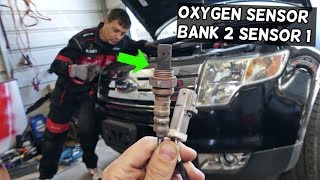
- Replace the Bank 1, Sensor 1 oxygen sensor. Access is tight, so a 22mm (7/8") offset oxygen sensor socket, a universal joint (swivel), and several long extensions are highly recommended.
- After replacement, clear the codes and perform another drive cycle to ensure the code does not return.
Parts You'll Likely Need
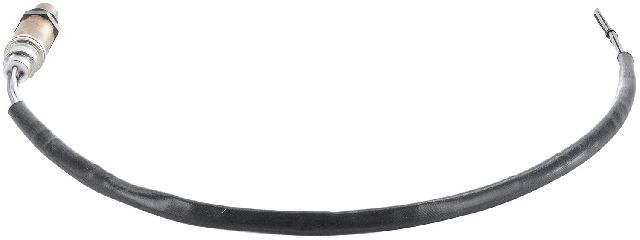
- Upstream Oxygen Sensor (Bank 1, Sensor 1)
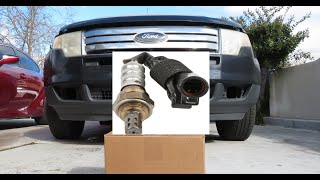
(OEM #7T4Z-9F472-A)— This is the sensor being monitored by the PCM for code P0133. Its performance degrades over time, making it the most common failure point. The Motorcraft service part number is DY1064, which corresponds to OEM part 7T4Z-9F472-A.
Trusted brands: Motorcraft, Denso, NTK, Bosch
OEM price range: $120-$180
Aftermarket price range: $50-$100
Related Codes That Often Appear With This One
- P0171 — If an exhaust or vacuum leak is the root cause, it will introduce unmetered air, creating a lean condition (P0171) and also slowing the O2 sensor's response (P0133).
- P0135 — This code indicates a failure in the O2 sensor's internal heater circuit. A sensor that cannot heat up to its ~600°F operating temperature quickly will also respond slowly, often triggering P0133 and P0135 together.
- P0153 — This is the same 'slow response' code but for Bank 2 (the front/radiator side). Seeing both P0133 and P0153 could point to a systemic issue like low fuel pressure, a vacuum leak affecting both banks, or simply that both sensors have reached the end of their service life at the same time.
Technical Service Bulletins (TSBs) & Recalls
- While no TSB directly addresses P0133 on this model, Ford has issued TSBs for other models like the F-350 (TSB 24-2066) for PCM software causing false P0133 codes, indicating a precedent for software-related fixes. It is always a valid last diagnostic step to check for PCM updates.
Platform-Specific Known Issues
- The primary vehicle-specific issue is the difficult access to the Bank 1 (rear, firewall side) upstream O2 sensor. Many owners and technicians find it challenging to reach and get leverage on the sensor to remove it, increasing labor time. Some DIYers report having to access it from the passenger side wheel well or by removing the cowl.
- Coolant contamination from a failing internal water pump can prematurely destroy oxygen sensors. If the oil cap shows milky residue or coolant is disappearing with no visible external leak, this must be investigated before replacing O2 sensors.
Mechanic-Grade Diagnostic Values
- O2 Sensor Heater Element Resistance — expected: 2-5 Ohms. Failure: A reading of OL (infinite resistance) or a value significantly outside the expected range indicates a failed heater element, which can cause a slow response code.
- O2 Sensor Heater Circuit Voltage Supply (at harness connector) — expected: ~12 Volts (Battery Voltage) with Key On, Engine Off. Failure: A reading of 0 volts points to a blown fuse or an open in the power supply wire from the PCM.
- Oxygen Sensor Installation Torque — expected: 48 Nm (35 lb-ft). Failure: Improper torque can lead to exhaust leaks (if too loose) or damaged threads (if too tight).
Hidden / Shadow Codes Worth Checking
- Mode $06, TID $81, CID $11: This refers to the specific on-board diagnostic monitor for the HO2S11 (Heated Oxygen Sensor Bank 1 Sensor 1) response rate. A failure of this internal test is what directly triggers the P0133 DTC. Technicians can use this data to see the sensor's measured switch time and compare it against the PCM's calibrated limit. (see via A professional scan tool (like Ford IDS) or advanced DIY software (like FORScan) capable of reading Mode $06 data.)
Scan Tool Commands That Help
- Ford IDS / FORScan: Datalogger > Powertrain > Engine PIDs — Use this to view and graph live Parameter IDs (PIDs) for O2S11 voltage, short-term fuel trim (SHRTFT1), and long-term fuel trim (LONGFT1). Graphing the O2S11 voltage is the primary method to visually confirm if the sensor is switching slowly.
- Ford IDS: Self-Test > Key On Engine Off (KOEO) or Key On Engine Running (KOER) — This runs on-demand diagnostic tests of the O2 sensor circuits and can help identify circuit faults (like a bad heater) separate from slow response performance issues.
Wiring & Ground Locations
- Fuse F79 (Under-hood) — In the under-hood fuse box, located on the driver's side of the engine bay. For 2011-2014 models, this is often fuse position 79.. This fuse commonly provides power to the heater circuits for the oxygen sensors. A blown fuse will cause the heater to fail, leading to slow sensor warm-up and triggering codes like P0133 and P0135.
- Fuse F18 (Interior) — In the interior fuse panel, located under the dashboard on the driver's side. Fuse position 18 is cited for 2011-2014 models.. This is another fuse related to the oxygen sensor circuits. It's critical to check both under-hood and interior fuses when diagnosing heater circuit-related faults.
- G101 / G109 — G101 is on the front of the engine (left side for non-2.0L). G109 is on the right front of the engine. These are primary engine-to-chassis grounds.. A poor engine ground can introduce electrical noise and voltage offsets, potentially affecting the sensitive low-voltage signal from the O2 sensor and causing erratic readings or fault codes.
Real Owner Repair Stories
- Reddit user in r/AskMechanics (Vehicle not specified, but general P0133 case) — Check engine light with P0133, slight lag on acceleration.
❌ Tried (didn't work) Replaced the Bank 1 Sensor 1 O2 sensor.
✅ What actually fixed it The code returned within 20 minutes of driving. The community consensus pointed strongly toward a small, undetected exhaust leak upstream of the sensor as the next most likely cause to investigate.
Model Year Variations Within This Range
- 2007-2010 vs 2011-2014: The 3.5L V6 engine received a power increase in the 2011 model year facelift, going from 265 hp to 285 hp. While the fundamental design and P0133 causes are the same, wiring diagrams and fuse locations can have minor differences. For example, fuse locations cited in one source are specifically for 2011-2014 models.
- 2011-2014: The Edge Sport trim for these years used a larger 3.7L V6 engine (305 hp). While it is part of the same engine family, some components, including potentially the exhaust and specific sensor part numbers, may differ from the 3.5L.
Diagnostic Flowchart
Other Known Issues on This Vehicle
Issues unrelated to this code that are worth knowing about as an owner of this generation:
- Internal Water Pump Failure 🔴 High — Can occur around 100,000-150,000 miles. Failure is catastrophic as coolant mixes with engine oil, often requiring complete engine replacement.
- Power Transfer Unit (PTU) Failure (AWD Models) 🔴 High — The PTU fluid is considered 'lifetime' but gets cooked by the adjacent catalytic converter, leading to seal leaks and internal gear failure, often starting around 80,000-120,000 miles.
- Electronic Throttle Body Failure 🟠 Medium — Can cause sudden 'limp mode' where the vehicle loses acceleration. Widespread across many Ford V6 models. (Ref: Customer Satisfaction Programs 13N03 and 16B23 extended warranty coverage for this part on certain model years.)
- Faulty Brake Booster 🟠 Medium — A tear in the internal diaphragm can lead to a hard brake pedal and a hissing noise. Common on 2007-2015 models. (Ref: Ford issued a recall (23S12) and a Customer Satisfaction Program (13N02) for some model years.)
- Timing Chain Wear 🟠 Medium — The 3.5L V6 can experience timing chain stretching or tensioner failure, leading to rattling noises on startup, rough running, and potentially other timing-related codes.
Used vs. New Parts: Buying Guide for This Vehicle
When a used part is the smart pick: For this repair, a used part is almost never a smart choice. The primary failure is the oxygen sensor itself, which is a wear-and-tear item. A used sensor from a junkyard has an unknown amount of life left and is very likely to fail soon, if it works at all. The labor to access the Bank 1 sensor is significant, so it is not worth risking a repeat repair to save a small amount on the part.
Donor-vehicle mileage cap: roughly under 20000 miles for the part to have meaningful remaining life.
What to inspect on the donor part:
- If forced to use a used sensor, look for one from a very low-mileage, late-model year wreck.
- Ensure the connector is not damaged and the wiring is intact with no signs of melting or brittleness.
- The sensor tip should be light gray, not coated in black soot or white deposits.
OEM-only on this vehicle (don't cheap out):
- While not strictly OEM-only, using a Motorcraft-branded sensor is highly recommended for fit and electronic compatibility. Some aftermarket sensors can have slightly different response curves or heater resistances that may not satisfy the PCM's strict monitoring parameters.
Aftermarket brands forum-validated for this vehicle:
- NTK
- Denso
- Bosch
Brands owners have reported issues with on this vehicle:
- Avoid unbranded, 'white-box' parts from online marketplaces, as their quality control, materials, and electronic specifications are often poor and can lead to the code returning quickly.
Real Owner Stories
Aggregated from forums and TSBs cited above. Mileages and costs reflect what owners reported in those sources.
2011 Ford Edge 3.5L V6 — 113000 miles
Symptoms: Owner experienced both P0133 and P0153 codes simultaneously.
What fixed it: Replaced both upstream oxygen sensors (Bank 1 and Bank 2) at the same time due to age.
Source hint: Ford Edge Forum thread titled 'P0133 and P0153 - Ford Edge Forum'
2007-2014 Ford Edge 3.5L V6
Symptoms: Extreme difficulty reaching the B1S1 sensor; limited leverage for removal.
What fixed it: Accessed the sensor from the passenger side wheel well or by removing the cowl using a 22mm offset oxygen sensor socket and several long extensions.
Source hint: Ford Edge Forum thread titled 'O2 Sensor Bank 1 Sensor 1 Location - Ford Edge Forum'
Related OBD-II Codes
Frequently Asked Questions
Where is the Bank 1 Sensor 1 oxygen sensor located on my Ford Edge 3.5L?
Is there a TSB for P0133 software issues on the 2007-2014 Ford Edge?
Could a coolant leak cause my P0133 code on this engine?
Why is the labor for replacing the Bank 1 sensor so high on this vehicle?
Can a recent battery replacement cause a P0133 code on my Edge?
Are there any extended warranties that might cover related engine issues?
Helpful Videos
We Have This Part in Stock

The information in this article is provided for general reference and educational purposes only. Vehicle specifications, procedures, and part compatibility can vary by production date, trim level, and region. Always consult your vehicle's factory service manual and verify part numbers before purchasing or performing repairs. Safety-critical components such as airbags, seat belts, and braking systems should be installed by a qualified professional.
- Ford Edge:
- 🧭 Diagnostic Flowchart
- 🎬 Helpful Videos
- 🛍️ Shop This Part
- What's Unique About the 2007-2014 Ford Edge
- Symptoms You May Notice
- Most Likely Causes
- Rare But Worth Checking
- Diagnosis Steps
- Parts You'll Likely Need
- Related Codes That Often Appear With This One
- Technical Service Bulletins (TSBs) & Recalls
- Platform-Specific Known Issues
- Mechanic-Grade Diagnostic Values
- Hidden / Shadow Codes Worth Checking
- Scan Tool Commands That Help
- Wiring & Ground Locations
- Real Owner Repair Stories
- Model Year Variations Within This Range
- Other Known Issues on This Vehicle
- Used vs. New Parts: Buying Guide for This Vehicle
- Real Owner Stories
- 2011 Ford Edge 3.5L V6 — 113000 miles
- 2007-2014 Ford Edge 3.5L V6
- Related OBD-II Codes
- Frequently Asked Questions
- 🎟️ Get 5% Off