

P0133 on 2011-2019 Ford Explorer 3.5L: Slow O2 Sensor Response Causes and Fixes
This code almost always means the upstream oxygen sensor on Bank 1 has failed. On the 3.5L V6, this is the sensor on the rear cylinder bank (firewall side), which is difficult to access. Expect to pay $40-$80 for an aftermarket sensor (Denso, NTK, Bosch) or $90-$150 for an OEM Motorcraft part. Replacement is the most common fix, but verifying there are no exhaust leaks first is critical.
- P0133 on your Explorer means the upstream O2 sensor on the firewall side of the engine is failing.
- Before replacing the sensor, perform a quick check for exhaust leaks (listen for ticking noises) and inspect the sensor's wiring.
- The most reliable diagnostic method is to graph the sensor's voltage on a scan tool and look for a slow, lazy signal compared to the other bank.
- The repair is considered difficult for a DIYer solely because the sensor is very hard to reach. Be prepared for a tight workspace.
- Always use the correct OEM part number (BL3Z-9F472-A) or a quality aftermarket equivalent from brands like Bosch or Denso.
What's Unique About the 2011-2019 Ford Explorer
While P0133 is a generic code, the main challenge on the fifth-generation Explorer with the 3.5L V6 is the physical location of the Bank 1, Sensor 1. It is tucked between the engine and the firewall, making access notoriously difficult compared to the easily reachable Bank 2 sensor at the front. This difficult access is the primary factor that increases labor time and DIY difficulty. Many owners and technicians report needing a combination of extensions, swivels, and specialized O2 sensor sockets to perform the replacement from the top of the engine bay. Some even remove the passenger wheel and fender liner for better access from the side.
Symptoms You May Notice
- Check Engine Light is on
- Decreased fuel economy
- Rough or hesitant idling
- Slightly reduced engine performance or slower acceleration
- Rotten egg or sulfur-like smell from the exhaust if the engine runs excessively rich.
- Replacing the wrong oxygen sensor (e.g., the downstream Sensor 2 or the easily accessible Bank 2 sensor). Bank 1 is the firewall side.
- Replacing the oxygen sensor when the root cause is an exhaust leak. Always check for leaks before buying parts.
- Assuming the sensor is bad when a misfire on Bank 1 is the true cause. Unburnt fuel and air from a misfire can cause erratic O2 readings.
Most Likely Causes
- Failing or Worn Bank 1, Sensor 1 Oxygen Sensor 🔴 High Probability → Shop Oxygen Sensor Oxygen sensors are wear items that degrade over time from heat and contaminants like carbon, oil, and coolant. After 80,000-100,000 miles, their ability to respond quickly diminishes, making this the most common cause for P0133.
How to confirm: Use a scan tool with live data to graph the voltage of 'O2S11' (Bank 1, Sensor 1). Compare it to 'O2S21' (Bank 2, Sensor 1). A healthy sensor's voltage will fluctuate rapidly between approximately 0.1V and 0.9V. A slow sensor will show lazy, delayed, or flat-lined voltage readings. A healthy sensor should switch multiple times per second. 🎬 Watch: How to check for slow response using a scan tool
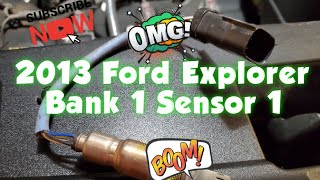
Typical fix: Replace the Bank 1, Sensor 1 oxygen sensor. Due to its location on the firewall side, access is difficult. A specific DIY video shows a mechanic accessing it from the top after removing the engine cover and using a long extension with a swivel socket. Applying penetrating oil beforehand and using a dedicated O2 sensor socket is highly recommended.
Est. part cost: $40-$150 - Exhaust Leak Before the O2 Sensor 🟡 Medium Probability → Shop Oxygen Sensor Cracked exhaust manifolds or leaking gaskets can allow outside air to enter the exhaust stream. This unmetered air cools the sensor and skews its readings, causing it to appear slow or lazy to the PCM. This is a common misdiagnosis for a bad sensor.
How to confirm: Visually inspect the exhaust manifold on the rear bank for cracks or black soot trails indicating a leak. A common symptom is a 'ticking' noise from the engine bay, especially when cold, that may quiet down as the engine warms up and the metal expands. A smoke test is the most definitive way to find small leaks. 🎬 See how to diagnose a ticking exhaust manifold leak
Typical fix: Repair the exhaust leak. This may involve replacing the exhaust manifold gasket or the entire exhaust manifold if it is cracked.
Est. part cost: $20-$400 - Damaged Wiring or Connector ⚪ Low Probability The wiring harness for the rear O2 sensor is routed in a high-heat area near the firewall. While less common than sensor failure, the harness can become brittle, melt, or chafe against the engine or chassis over time.
How to confirm: Visually inspect the wiring harness and connector leading to the Bank 1, Sensor 1 for any signs of melting, corrosion, chafing, or loose pins. Use a multimeter to check for continuity and proper voltage at the connector per the vehicle's service manual. High resistance in the harness, even as low as 0.5 Ω, can be enough to dampen the signal and trigger P0133.
Typical fix: Repair the damaged section of the wiring harness or replace the connector pigtail.
Est. part cost: $15-$50
Rare But Worth Checking
- Vacuum Leak: A significant vacuum leak (e.g., from the intake manifold gasket) can alter the air-fuel mixture enough to affect O2 sensor readings, though it would typically set lean codes (P0171/P0174) as well.
- Low Fuel Pressure: Incorrect fuel pressure can cause a lean condition that might manifest as a slow sensor response, but this would usually be accompanied by other fuel system codes.
- Contaminated Sensor: An internal coolant leak (e.g., from a head gasket) or excessive oil consumption can foul the O2 sensor tip with deposits, chemically 'slowing' its reaction. This is less common but possible on higher mileage engines.
- Powertrain Control Module (PCM) Fault: → Shop Engine Control Module (ECM) This is extremely rare. The PCM should only be considered after all other possibilities, including the sensor, wiring, and exhaust system, have been thoroughly ruled out.
Diagnosis Steps
- Connect an OBD-II scanner and confirm that P0133 is the primary code. Check for any other pending or stored codes, especially misfire or lean codes.
- Start the engine from cold and listen for any ticking or exhaust leak sounds coming from the rear of the engine bay near the firewall.
- Use a scan tool with live data graphing capabilities. Select and graph the voltage for Bank 1 Sensor 1 (O2S11) and Bank 2 Sensor 1 (O2S21).
- Compare the two graphs. O2S11 should switch between ~0.1V and ~0.9V as rapidly as O2S21. If the O2S11 graph is slow, lazy, or has a compressed voltage range, the sensor is likely faulty.
- If the sensor appears slow, perform a thorough visual inspection of the rear exhaust manifold and the connection to the catalytic converter for any signs of leaks (soot, cracks). A smoke test is the most reliable method.
- Inspect the wiring harness and connector for the Bank 1 Sensor 1. Check for any signs of melting, corrosion, or physical damage. Ensure the connector is securely latched.
- If no exhaust leaks or wiring issues are found, the oxygen sensor itself is the most probable cause of the fault and should be replaced.
Parts You'll Likely Need
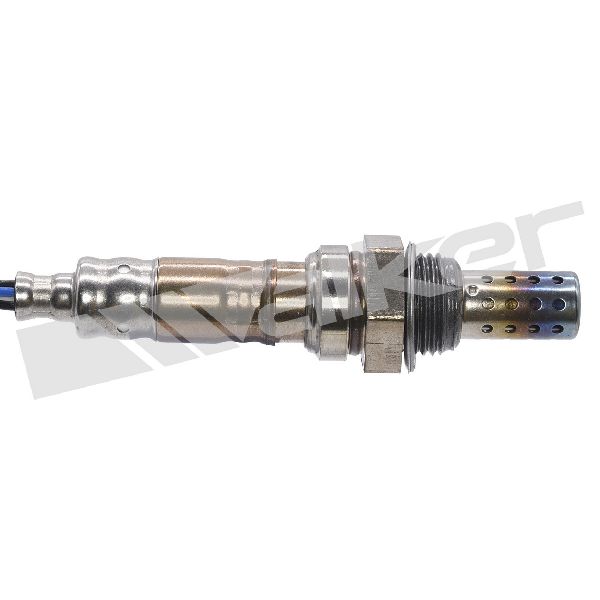
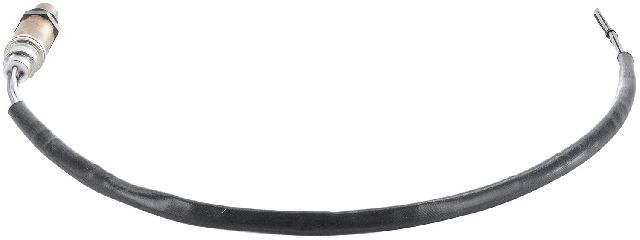
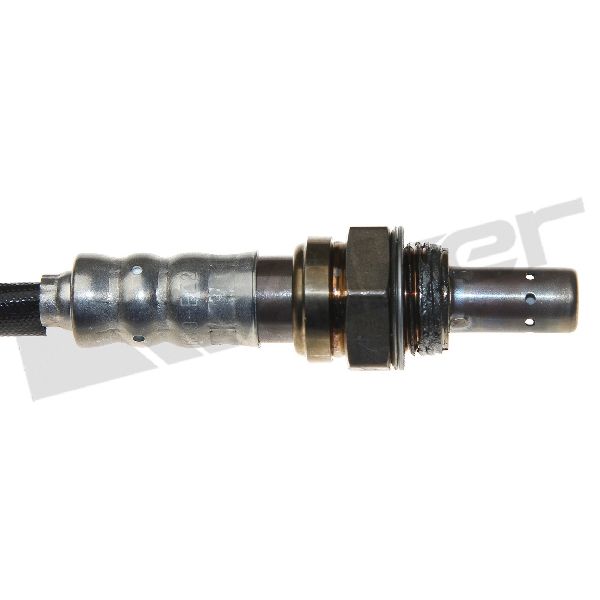
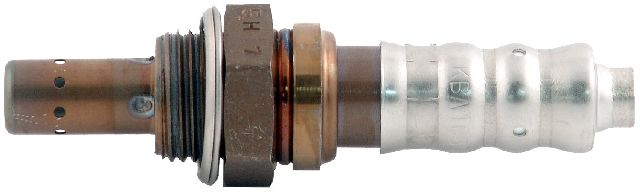
- Upstream Oxygen Sensor (Bank 1, Sensor 1)
(OEM #BL3Z-9F472-A)— This is the sensor identified by the P0133 code. It is a common wear-and-tear component that degrades over time, leading to slow response. The OEM part number BL3Z-9F472-A is listed for this application and is also cross-referenced as DY1178.
Trusted brands: Motorcraft, Bosch, Denso, NTK
OEM price range: $90-$150
Aftermarket price range: $40-$80
Related Codes That Often Appear With This One
- P0171 — If an exhaust leak is the cause of P0133, the unmetered air entering the exhaust can also cause the system to run lean, triggering a P0171 (System Too Lean Bank 1) code.
- P0174 — If a vacuum leak is large enough to affect both banks, you might see P0133 along with lean codes for both Bank 1 (P0171) and Bank 2 (P0174).
- P013C — This code (O2 Sensor Slow Response - Rich to Lean Bank 1 Sensor 2) relates to the downstream sensor but can sometimes appear with upstream sensor issues as the PCM tries to correlate their readings. TSB 19-2244 addresses P013C on some 3.5L engines.
Technical Service Bulletins (TSBs) & Recalls
- TSB 19-2244: While not directly for P0133, this TSB addresses related slow-response O2 sensor codes (P013A, P013C) on some 2013-2019 Explorers with the 3.5L Ti-VCT engine, indicating that sensor response issues are a known area of concern for Ford on this platform.
Platform-Specific Known Issues
- The primary vehicle-specific issue is the difficult access to the Bank 1 (rear) upstream O2 sensor. Many technicians access it by removing the passenger-side front wheel and wheel well liner, or by removing intake components from the top to reach down behind the engine.
- A YouTube video titled 'How to: Remove Bank 1 Sensor 1 Oxygen Sensor on a 2013 Ford Explorer' specifically details the process, showing the mechanic standing on the passenger tire and using a long extension with a swivel and O2 sensor socket to reach the sensor from above.
Mechanic-Grade Diagnostic Values
- Upstream O2 Sensor Voltage (Live Data) — expected: Rapidly fluctuating between approximately 0.1V (lean) and 0.9V (rich) when the engine is warm.. Failure: Voltage is slow to change, lazy, stuck, or the transition time exceeds 100-200 milliseconds.
- O2 Sensor Heater Circuit Resistance — expected: Typically between 2 and 8 ohms when measured across the two heater circuit pins (often same-colored wires) on the sensor connector.. Failure: A reading of infinite resistance (open circuit) or near-zero resistance (short circuit) indicates a failed heater element.
- Wiring Harness Resistance — expected: Less than 0.5 Ω on signal, ground, and heater circuit wires from the PCM connector to the sensor connector.. Failure: Resistance greater than 0.5 Ω can dampen the voltage signal enough to trigger a P0133 code.
Hidden / Shadow Codes Worth Checking
- Mode $06, TID $81, CID $11: This refers to the onboard diagnostic monitor for the HO2S11 (Heated Oxygen Sensor Bank 1 Sensor 1) response rate. A failure of this internal test is what directly triggers the P0133 DTC. The data shows the sensor's rich-to-lean and lean-to-rich switch times. (see via A professional scan tool capable of reading Mode $06 data. The values can be compared against the manufacturer's maximum allowable time limit to confirm a slow sensor.)
Scan Tool Commands That Help
- Ford IDS / FORScan: Keep Alive Memory (KAM) Reset — After replacing the oxygen sensor, performing a KAM reset clears the PCM's learned fuel trim adaptations. This forces the module to relearn values with the new, faster-responding sensor, preventing the code from returning due to old adaptive data.
Wiring & Ground Locations
- Main Engine Ground Strap — On the 3.5L transverse platform, a critical ground strap is located on the transmission case, below the brake booster, connecting the engine/transaxle assembly to the chassis.. A loose or corroded main ground can cause electrical noise and voltage drops across all engine sensors, including the O2 sensors. This can lead to erratic readings and phantom codes that are difficult to diagnose.
- G104 — A common ground point located on the right side of the engine compartment.. This ground serves various engine components. While not exclusive to the O2 sensor, ensuring it is clean and tight is a crucial step in ruling out electrical issues for any engine-related DTC.
- HO2S11 Connector — The connector for the Bank 1, Sensor 1 O2 sensor is attached to the wiring harness near the back of the engine, against the firewall. It is a 6-terminal female connector, often black and purple.. This is the primary point for testing wiring integrity. The connector's proximity to high heat makes it susceptible to damage, and its pins should be checked for corrosion or looseness.
Real Owner Repair Stories
- Ford Edge Forum (2011 Ford Edge 3.5L V6 (mechanically similar platform)) — P0420 (Catalyst System Efficiency Below Threshold Bank 1)
❌ Tried (didn't work) Installing a non-fouler/spacer on the downstream O2 sensor to trick the PCM about the P0420 code.
✅ What actually fixed it The attempt to use a spacer failed and immediately triggered an additional code, P0133 (O2 Sensor Slow Response), because the spacer physically delayed the exhaust gas from reaching the sensor, mimicking the exact fault condition for P0133.
OEM Part Supersession History
BL3Z-9F472-A→No direct supersession found, but this part is also sold under the Motorcraft service number DY1178.— N/A
Heads up: BL3Z-9F472-A is specified for multiple positions (Upstream Left/Right) on various 3.5L Ford engines from 2011-2016, confirming its use on the Explorer. Ensure the replacement part is listed as compatible with the upstream position.
Model Year Variations Within This Range
- 2011-2019: While the base 3.5L Cyclone V6 remained largely the same, Ford did introduce updates to the larger 3.5L engine family (like the EcoBoost) around 2013 and 2017, including changes to fuel systems and turbochargers. However, for the naturally aspirated 3.5L Cyclone in the Explorer, the P0133 diagnosis and repair procedure is consistent across the 2011-2019 generation. The mid-cycle refresh in 2016 was primarily cosmetic and did not alter the location or function of the O2 sensors for this engine.
Diagnostic Flowchart
Other Known Issues on This Vehicle
Issues unrelated to this code that are worth knowing about as an owner of this generation:
- Internal Water Pump Failure 🔴 High — Common after 80,000-120,000 miles. A weep hole may show a small leak, but failure often occurs internally, mixing coolant with engine oil.
- Electronic Throttle Body (ETB) Failure 🟠 Medium — Widespread issue causing sudden 'limp mode'. Often triggers codes like P2111 or P2112. (Ref: Customer Satisfaction Program 13N03, TSB 16-0139)
- Power Transfer Unit (PTU) Overheating/Failure 🟠 Medium — The PTU fluid can overheat and break down due to a lack of a drain plug and small fluid capacity, leading to seal leaks and eventual failure. Often occurs after 60,000 miles if fluid is not serviced.
- Cracked Rear Toe Links 🔴 High — A fracture of the rear suspension toe link can cause a sudden loss of steering control. (Ref: Recall 19S17)
- Exhaust Odor In Cabin 🟡 Low — Many owners have reported exhaust smells entering the cabin, particularly under hard acceleration. This was more prominent on Police Interceptor versions but affected civilian models too. (Ref: Ford offered complimentary service (17N03) to address potential sources of exhaust leaks.)
Used vs. New Parts: Buying Guide for This Vehicle
When a used part is the smart pick: It is strongly advised NOT to buy a used oxygen sensor. They are wear-and-tear items with a finite lifespan, and their performance degrades with mileage and exposure to contaminants. A used sensor may work initially but could fail soon after or provide a slow response right from the start, causing the P0133 code to return. The only used parts that make sense for this job are structural, like a replacement exhaust manifold if the original is cracked.
Donor-vehicle mileage cap: roughly under 20000 miles for the part to have meaningful remaining life.
What to inspect on the donor part:
- For an exhaust manifold: check for hairline cracks, especially around the flange and collector.
- Ensure all mounting studs are intact and not broken off.
- Verify the flange surface is flat and not warped.
OEM-only on this vehicle (don't cheap out):
- While not strictly 'OEM-only', using a Motorcraft sensor (BL3Z-9F472-A / DY1178) is the safest bet for guaranteed compatibility and correct response time. Some PCMs can be sensitive to the specific calibration of aftermarket sensors.
Aftermarket brands forum-validated for this vehicle:
- NTK
- Denso
- Bosch
Brands owners have reported issues with on this vehicle:
- No-name, unbranded sensors from online marketplaces should be avoided. They often have poor quality control, incorrect heater resistance, or slow response times out of the box, leading to immediate or premature failure.
Real Owner Stories
Aggregated from forums and TSBs cited above. Mileages and costs reflect what owners reported in those sources.
2017 Ford Explorer 3.5L
Symptoms: Experienced both P0133 and P0153 slow response codes simultaneously.
What fixed it: Replacement of both upstream oxygen sensors.
Source hint: https://www.explorerforum.com/forums/threads/p0133-and-p0153-slow-response-o2.493015/
2013 Ford Explorer 3.5L
Symptoms: Check engine light with P0133; difficult access to the rear sensor.
What fixed it: Removed the engine cover and used a long extension with a swivel and O2 sensor socket to reach the sensor from above while standing on the passenger tire.
Source hint: YouTube video titled 'How to: Remove Bank 1 Sensor 1 Oxygen Sensor on a 2013 Ford Explorer'
Ford Truck/SUV (Cyclone V6 platform)
Symptoms: P0133 code appearing alongside an engine misfire.
What fixed it: Addressing the engine misfire resolved the O2 sensor slow response code.
Source hint: https://www.ford-trucks.com/forums/665538-p0133-code.html
Ford Explorer 3.5L
Symptoms: Slow O2 sensor response and a noticeable negative impact on fuel economy.
What fixed it: Replacement of the faulty oxygen sensor.
Source hint: https://www.ford-trucks.com/forums/949989-error-code-p0133.html
Related OBD-II Codes
Frequently Asked Questions
Does TSB 19-2244 apply to my 2013-2019 Ford Explorer with the 3.5L Ti-VCT engine?
I have a P0133 on my 2017 Explorer; is it common for both upstream sensors to fail?
Why is the Bank 1 Sensor 1 so difficult to replace on the Explorer 3.5L?
Could a ticking noise on cold starts be related to my P0133 code?
Can a misfire cause a P0133 code on my Ford truck or SUV?
How many miles do the O2 sensors typically last on the 3.5L Cyclone V6?
Helpful Videos

We Have This Part in Stock

The information in this article is provided for general reference and educational purposes only. Vehicle specifications, procedures, and part compatibility can vary by production date, trim level, and region. Always consult your vehicle's factory service manual and verify part numbers before purchasing or performing repairs. Safety-critical components such as airbags, seat belts, and braking systems should be installed by a qualified professional.
- Ford Explorer:
- 🧭 Diagnostic Flowchart
- 🎬 Helpful Videos
- 🛍️ Shop This Part
- What's Unique About the 2011-2019 Ford Explorer
- Symptoms You May Notice
- Most Likely Causes
- Rare But Worth Checking
- Diagnosis Steps
- Parts You'll Likely Need
- Related Codes That Often Appear With This One
- Technical Service Bulletins (TSBs) & Recalls
- Platform-Specific Known Issues
- Mechanic-Grade Diagnostic Values
- Hidden / Shadow Codes Worth Checking
- Scan Tool Commands That Help
- Wiring & Ground Locations
- Real Owner Repair Stories
- OEM Part Supersession History
- Model Year Variations Within This Range
- Other Known Issues on This Vehicle
- Used vs. New Parts: Buying Guide for This Vehicle
- Real Owner Stories
- 2017 Ford Explorer 3.5L
- 2013 Ford Explorer 3.5L
- Ford Truck/SUV (Cyclone V6 platform)
- Ford Explorer 3.5L
- Related OBD-II Codes
- Frequently Asked Questions
- 🎟️ Get 5% Off