

P0133 on 2007-2010 Ford Explorer Sport Trac: Slow O2 Sensor Response Causes and Fixes
This code means the upstream oxygen sensor on Bank 1 is responding too slowly. The most common fix is to replace the Bank 1, Sensor 1 oxygen sensor. Expect to pay between $30-$70 for an aftermarket sensor and $70-$120 for an OEM Motorcraft part. It's a DIY-friendly job for many.
- P0133 on your Sport Trac almost always means the passenger-side, upstream O2 sensor is old and needs replacement.
- Bank 1 is the passenger side of the engine, and Sensor 1 is before the catalytic converter.
- While you can drive with this code, your fuel mileage will suffer, and you risk damaging your catalytic converter over the long term.
- It is a good practice to replace upstream O2 sensors in pairs (both banks) if the vehicle has high mileage.
- Before buying parts, check for obvious exhaust leaks or wiring damage, as these can also trigger the code.
What's Unique About the 2007-2010 Ford Explorer Sport Trac
On the 2007-2010 Explorer Sport Trac, whether equipped with the 4.0L SOHC V6 or 4.6L 3V V8, the P0133 code is a straightforward issue almost always pointing to the sensor itself. These sensors are a common maintenance item that simply wears out over time due to age and contamination. While exhaust and vacuum leaks can be a cause, a high-mileage, aged sensor is the primary culprit on this particular truck. Unlike some newer Ford models where P0133 can be caused by a PCM software glitch, this is not a typical issue for this Sport Trac generation.
Symptoms You May Notice
- Check Engine Light is on
- Decreased fuel economy
- Rough or uneven idle
- Hesitation or poor acceleration
- Black smoke from the exhaust in some cases
- Engine may run hot or ping/knock under load.
- Replacing the catalytic converter. A P0133 code points to the sensor *before* the converter; converter efficiency codes are different (e.g., P0420).
- Replacing the wrong sensor. This code is for Bank 1 (passenger side) and Sensor 1 (upstream/before the catalytic converter). Always verify the location before replacement.
- Ignoring an exhaust leak. Some owners replace the sensor, only to have the code return because the root cause was an exhaust leak introducing oxygen and skewing the sensor's readings.
Most Likely Causes
- Failing Bank 1, Sensor 1 Oxygen Sensor 🔴 High Probability → Shop Oxygen Sensor Oxygen sensors are a normal wear-and-tear item. After 80,000+ miles, their ability to react quickly diminishes due to age and exposure to exhaust gases, silicone, or coolant contamination.
How to confirm: Use an OBD-II scanner with live data to monitor the B1S1 voltage. It should fluctuate rapidly between ~0.1V and ~0.9V. A slow, lazy swing compared to the Bank 2 sensor (if applicable) confirms the issue. A good sensor should cross-count (switch between rich and lean) multiple times per second.
Typical fix: Replace the Bank 1, Sensor 1 (upstream, passenger side) oxygen sensor. It is often recommended to replace the upstream sensors on both banks at the same time for balanced performance, especially on high-mileage vehicles. After replacement, it's good practice to clear the PCM's Keep Alive Memory (KAM) so it can relearn fuel trims with the new sensor's input.
Est. part cost: $30 - $120 - Exhaust Leak 🟡 Medium Probability Rust can cause leaks in the exhaust manifold or connecting pipes, especially in regions that use road salt. The exhaust manifold gaskets on these Ford engines can also degrade and leak over time.
How to confirm: Visually inspect the exhaust manifold and pipes near the sensor for soot trails or cracks. A hissing or ticking sound may be audible, especially when the engine is cold. A smoke test is the most definitive way to find a leak.
Typical fix: Repair the leak by replacing the gasket, affected pipe section, or exhaust manifold.
Est. part cost: $20 - $500+ - Wiring or Connector Issue ⚪ Low Probability The wiring harness is close to hot exhaust components and can become brittle, melted, or corroded over time. The connector itself can also accumulate dirt and moisture, leading to a poor connection.
How to confirm: Visually inspect the O2 sensor's wiring harness and connector for any signs of melting, chafing, corrosion on the pins, or loose connections. Use a multimeter to check for continuity and proper voltage at the connector.
Typical fix: Repair the damaged section of wire or clean/replace the connector. Motorcraft sells replacement pigtail connectors (e.g., WPT-152).
Est. part cost: $5 - $50
Rare But Worth Checking
- Engine Vacuum Leak: A significant vacuum leak from a cracked hose or bad intake manifold gasket can introduce unmetered air, causing a lean condition that may confuse the PCM and trigger a P0133 code. This is often accompanied by a P0171 or P0174 lean code.
- Low Fuel Pressure: A weak fuel pump or clogged filter can lead to a lean running condition, which can sometimes be misinterpreted as a slow sensor response.
- Contaminated Sensor: An internal engine leak (coolant, oil) or use of improper fuel additives or RTV sealant can contaminate the sensor tip, causing it to respond slowly. A bad Mass Airflow (MAF) sensor can also cause improper fueling that leads to this code.
- Failing Powertrain Control Module (PCM): → Shop Engine Control Module (ECM) In very rare cases, the PCM itself can fail. One owner on a Reddit forum reported that a bad PCM was the ultimate cause of their issues after other parts were replaced. This is an unlikely cause and should only be considered after all other possibilities are exhausted.
Diagnosis Steps
- Connect an OBD-II scanner and confirm P0133 is the active code. Note any other codes present.
- Inspect the exhaust system from the passenger side exhaust manifold back to the catalytic converter for any signs of leaks (soot, cracks, audible hissing). Pay close attention to the manifold-to-head gasket.
- Inspect the wiring and connector for the Bank 1, Sensor 1 O2 sensor. It is located on the passenger side, before the catalytic converter. Check for melting, corrosion, or damage.
- Using the live data function on your scanner, observe the voltage for 'O2S11' or 'B1S1'. At operating temperature and a steady idle (~2500 RPM), the voltage should switch rapidly and consistently between approximately 0.1V and 0.9V. If it's slow, biased high or low, or flat, the sensor is likely bad.
- Compare the B1S1 waveform to the B2S1 (Bank 2, Sensor 1) waveform if your vehicle has a V-engine. They should have similar switching characteristics. A lazy B1S1 compared to a healthy B2S1 is a strong indicator of a bad sensor.
- If the sensor signal looks slow, proceed with replacing the Bank 1, Sensor 1 oxygen sensor. An O2 sensor socket will make removal much easier.
- If a new sensor does not resolve the code, perform a smoke test to definitively check for exhaust and intake vacuum leaks.
- If no leaks are found, check fuel pressure to ensure it is within specification.
Parts You'll Likely Need
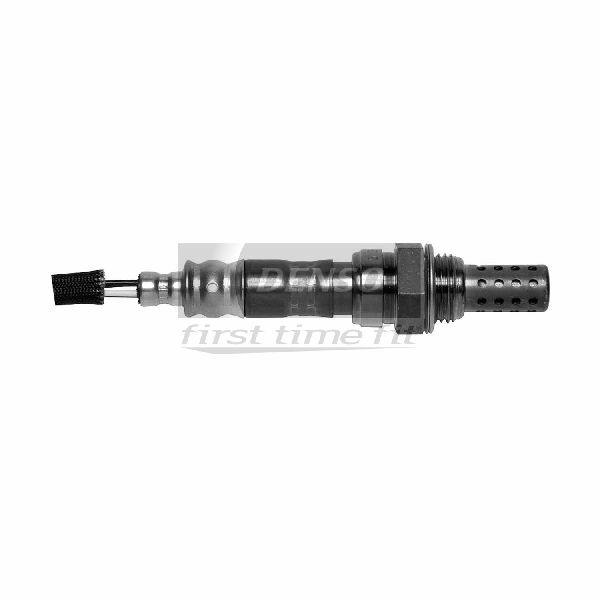
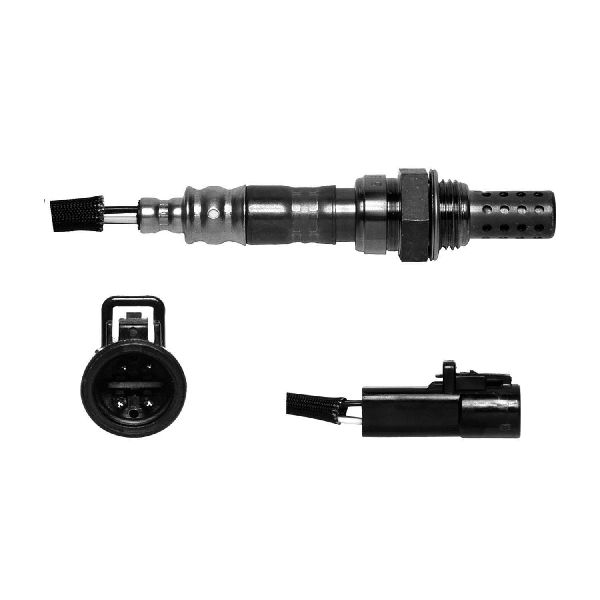
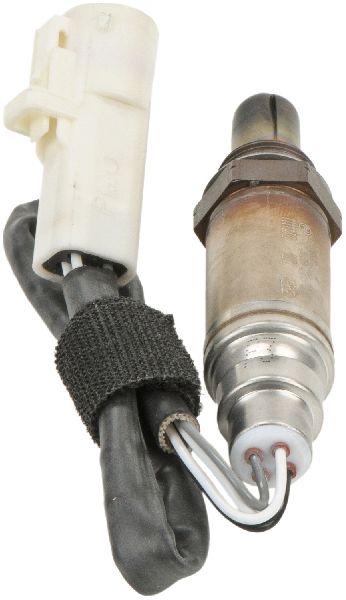
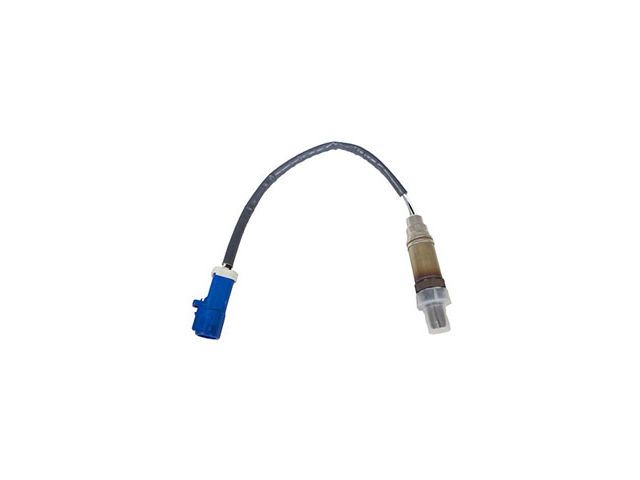
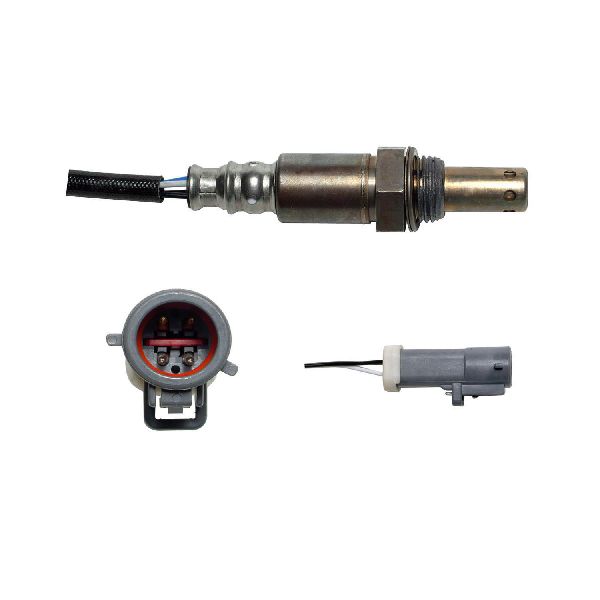
- Oxygen Sensor (Bank 1, Sensor 1)
(OEM #Motorcraft DY-835 (for 4.0L V6 & 4.6L V8, but always verify with VIN))— This is the component that has failed in the vast majority of P0133 cases due to normal aging.
Trusted brands: Motorcraft, Bosch, Denso, NGK/NTK
OEM price range: $70-$120
Aftermarket price range: $30-$70
Related Codes That Often Appear With This One
- P0171 — If an exhaust or vacuum leak is the root cause, the system will detect a lean condition on Bank 1, triggering both codes.
- P0153 — This is the equivalent 'Slow Response' code for Bank 2. If both appear, it's highly likely the sensors are old and failing at the same time, or there's a shared issue like low fuel pressure.
Platform-Specific Known Issues
- Access to Sensor: On both the 4.0L and 4.6L engines, the Bank 1 Sensor 1 is on the passenger side. Access can be tight, and removing the front passenger wheel and inner fender liner may provide better access from the side.
- Rusted-in Sensor: Due to age and heat cycles, the old sensor can be seized in the exhaust pipe. Generous use of penetrating oil (let it soak on a warm, not hot, exhaust) and a proper O2 sensor socket are highly recommended to avoid stripping the threads.
Mechanic-Grade Diagnostic Values
- Upstream O2 Sensor (HO2S) Heater Circuit Resistance — expected: 5 - 15 Ohms. Failure: A reading of infinite resistance (Open Loop/OL) indicates a broken internal heater, requiring sensor replacement.
- Upstream O2 Sensor (HO2S) Signal Voltage — expected: Fluctuating rapidly between 0.1V and 0.9V at warm idle.. Failure: A slow, lazy swing, or a signal that is stuck high or low. A healthy sensor should switch at least once per second.
- Fuel Pressure (Key On, Engine Off) — expected: 35-45 PSI. Failure: Pressure below 30 PSI suggests a weak fuel pump or clogged filter, which can create a lean condition and indirectly trigger a P0133.
Hidden / Shadow Codes Worth Checking
- Mode $06, TID $01, CID $11: This refers to the On-Board Diagnostic Test ID for the Bank 1 Sensor 1 O2 sensor response rate (rich to lean). A failing value here, even before a full DTC is set, can indicate the sensor is becoming lazy. (see via A professional scan tool (like Ford IDS, Autel, Snap-on) that can access Mode $06 test data.)
Scan Tool Commands That Help
- Ford IDS, FORScan, or equivalent professional scanner: KAM (Keep Alive Memory) Reset — After replacing the oxygen sensor or fixing a vacuum/exhaust leak, a KAM reset should be performed. This clears the long-term fuel trim adaptations that the PCM learned with the faulty sensor, allowing it to create a new baseline with the new, accurate sensor data, which can resolve idle or performance issues more quickly.
Wiring & Ground Locations
- G104 — Right front corner of the engine compartment.. This is a critical engine compartment ground. Corrosion or a loose connection here can create electrical noise or unstable voltage, potentially affecting the PCM's interpretation of sensor signals, including the O2 sensor.
- G106 — Right side of the engine compartment.. Another primary engine bay ground point. A poor connection at G106 can affect various engine sensors and the PCM, leading to erratic readings that could be misinterpreted as a slow sensor response.
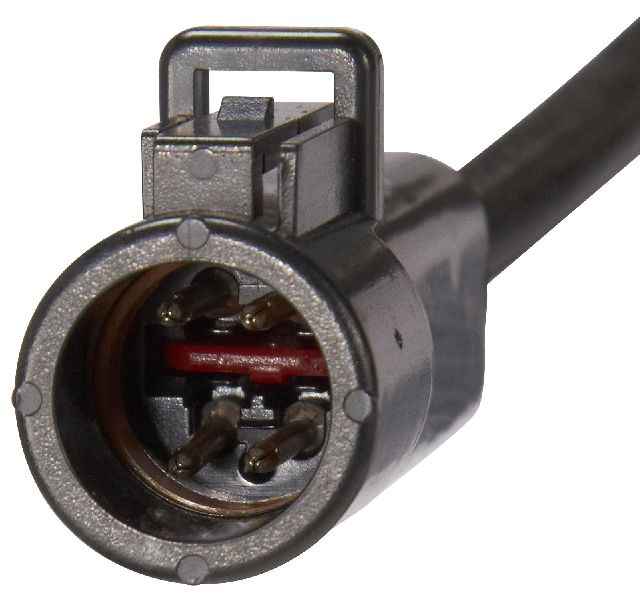
- HO2S B1S1 Connector — On the passenger side of the vehicle, connected to the O2 sensor located in the exhaust manifold before the catalytic converter.. This connector is the direct interface for the sensor's signal and heater circuits. It is exposed to heat and moisture, making it a potential point of failure due to melted plastic, corrosion on pins, or backed-out terminals.
Real Owner Repair Stories
- MOTOR Magazine (2012 Ford Edge 3.5L V6 (similar PCM logic)) — Check Engine Light, fluctuating idle, occasional stalling at stops.
❌ Tried (didn't work) Initial diagnosis pointed towards O2 sensors due to rich codes (P2196, P2198).
✅ What actually fixed it The root cause was a leaking EVAP purge solenoid that was sticking open, allowing un-commanded fuel vapors into the intake manifold. This created a rich condition that the O2 sensors correctly reported, but the underlying fault was not the sensors themselves. Replacing the purge solenoid and resetting the KAM fixed the issue.
OEM Part Supersession History
XL3Z-9F472-AA→Motorcraft DY-835— Standard part evolution and consolidation for various Ford platforms.
Model Year Variations Within This Range
- 2007-2010: No significant variations related to the P0133 code have been identified within this model year range. Both the 4.0L V6 and optional 4.6L V8 use a similar upstream O2 sensor setup, and the diagnostic procedure is consistent across these years.
Diagnostic Flowchart
Other Known Issues on This Vehicle
Issues unrelated to this code that are worth knowing about as an owner of this generation:
- 4.0L SOHC Timing Chain Cassette Failure 🔴 High — Common on higher-mileage engines, often signaled by a rattling or chain-slap noise at startup or between 2000-3000 RPM. The issue was improved in later years but never fully eliminated. (Ref: Multiple TSBs were issued over the years (e.g., 04-15-04), but no recall. Repairs are labor-intensive and expensive as the engine often needs to be removed.)
- 5R55S/W Automatic Transmission Problems 🔴 High — Issues like harsh/delayed shifts, particularly into reverse, are common. Problems often appear as the vehicle ages and can be intermittent when cold. (Ref: No recall, but the issue is widely documented. The cause is often a failed solenoid pack or worn bores in the valve body, requiring replacement of the solenoid block or the entire valve body.)
- Cracked Plastic Tailgate Applique 🟡 Low — Extremely common. The plastic panel below the rear window develops stress cracks, often starting from the Ford emblem. This was a major issue on the preceding Explorer generation (2002-2005) leading to lawsuits, but the design flaw persists to some degree on these models. (Ref: No recall for this cosmetic issue. Repair involves replacing the entire applique panel at the owner's expense.)
- Cracked Plastic Thermostat Housing (4.0L V6) 🟠 Medium — The OEM plastic thermostat housing is prone to cracking and developing coolant leaks over time, which can lead to overheating. (Ref: No recall. The common fix is to replace the plastic housing with a more durable aluminum aftermarket version.)
- Heater Blend Door Actuator Failure 🟠 Medium — A common failure causing a clicking/thumping noise from behind the dashboard and an inability to control cabin temperature (e.g., stuck on hot). (Ref: No recall. Repair requires accessing the actuator behind the dashboard, which can be labor-intensive.)
Used vs. New Parts: Buying Guide for This Vehicle
When a used part is the smart pick: For this repair, a used part is almost never a smart choice. The primary cause of P0133 is an aged, worn-out oxygen sensor. A used sensor from a donor vehicle will have unknown life remaining and is likely to fail soon. A used wiring pigtail/connector could be a viable option if the original is physically damaged.
Donor-vehicle mileage cap: roughly under 50000 miles for the part to have meaningful remaining life.
What to inspect on the donor part:
- For a wiring pigtail: check for intact locking tabs, absence of corrosion on pins, and flexible, non-brittle wiring.
- Avoid any parts from vehicles with signs of fire, flood, or major front-end damage.
OEM-only on this vehicle (don't cheap out):
- While not strictly 'OEM-only', using a Motorcraft (OEM) or a reputable OE supplier (Denso, NTK/NGK) for the oxygen sensor is highly recommended. Cheaper, unbranded sensors are notorious for failing prematurely or having incorrect response characteristics, causing the code to return.
Aftermarket brands forum-validated for this vehicle:
- Denso
- Bosch
- NTK (NGK)
Brands owners have reported issues with on this vehicle:
- Generic 'white-box' or unbranded sensors from online marketplaces.
Real Owner Stories
Aggregated from forums and TSBs cited above. Mileages and costs reflect what owners reported in those sources.
2009 Ford Explorer Sport Trac
Symptoms: The owner identified a 'lazy' passenger-side upstream sensor. Discussion noted that age is the primary cause, though exhaust leaks and coolant contamination were also possible factors.
What fixed it: Replacement of the Bank 1, Sensor 1 oxygen sensor.
Source hint: Ford Truck Enthusiasts Forums - 'Error code P0133'
2007-2010 Ford Explorer Sport Trac
Symptoms: The user replaced the O2 sensor to address the slow response code, but the P0133 error returned shortly after.
What fixed it: The situation highlighted the need to diagnose secondary causes like exhaust leaks when a sensor replacement fails to resolve the code.
Source hint: Reddit r/AskAMechanic - 'How to fix P0133...'
Ford Ranger 4.0L SOHC (Platform Mate) — ~100000 miles
Symptoms: Slow sensor response code P0133. The owner noted that the sensor had been replaced only 1.5 years prior, suggesting they can be recurring maintenance items on this engine.
What fixed it: Replacement of the upstream oxygen sensor.
Source hint: YouTube - 'Ford Ranger Code P0133 Slow Sensor Response Fixed !!'
Related OBD-II Codes
Frequently Asked Questions
Where is the Bank 1 Sensor 1 located on my 2007-2010 Sport Trac, and is it hard to reach?
I replaced my O2 sensor but the P0133 code came back. What else should I check on this Ford platform?
Are there specific parts recommended for repairing the O2 sensor wiring harness?
Should I replace both upstream sensors even if only P0133 for Bank 1 is showing?
My Sport Trac has over 80,000 miles; is it normal for this sensor to fail now?
What should I do after replacing the sensor to ensure the computer recognizes the fix?
Helpful Videos

We Have This Part in Stock

The information in this article is provided for general reference and educational purposes only. Vehicle specifications, procedures, and part compatibility can vary by production date, trim level, and region. Always consult your vehicle's factory service manual and verify part numbers before purchasing or performing repairs. Safety-critical components such as airbags, seat belts, and braking systems should be installed by a qualified professional.
- Ford Explorer Sport Trac:
- 🧭 Diagnostic Flowchart
- 🎬 Helpful Videos
- 🛍️ Shop This Part
- What's Unique About the 2007-2010 Ford Explorer Sport Trac
- Symptoms You May Notice
- Most Likely Causes
- Rare But Worth Checking
- Diagnosis Steps
- Parts You'll Likely Need
- Related Codes That Often Appear With This One
- Platform-Specific Known Issues
- Mechanic-Grade Diagnostic Values
- Hidden / Shadow Codes Worth Checking
- Scan Tool Commands That Help
- Wiring & Ground Locations
- Real Owner Repair Stories
- OEM Part Supersession History
- Model Year Variations Within This Range
- Other Known Issues on This Vehicle
- Used vs. New Parts: Buying Guide for This Vehicle
- Real Owner Stories
- 2009 Ford Explorer Sport Trac
- 2007-2010 Ford Explorer Sport Trac
- Ford Ranger 4.0L SOHC (Platform Mate) — ~100000 miles
- Related OBD-II Codes
- Frequently Asked Questions
- 🎟️ Get 5% Off