

P0133 on 2012-2018 Ford Focus ST: Slow O2 Sensor Causes and Fixes
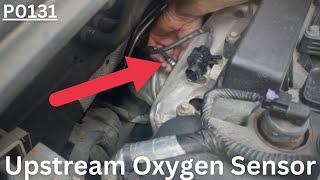
On a 2012-2018 Focus ST, P0133 almost always means the upstream oxygen sensor (Bank 1, Sensor 1) is failing. The most common fix is to replace the sensor, which costs about $70-$120 for an OEM Motorcraft part and is a 2/5 difficulty DIY job. Modified cars with aftermarket downpipes are also highly susceptible to this code.
- P0133 on a Focus ST is a very common code that almost always points to a failing upstream (pre-cat) oxygen sensor.
- The turbocharged environment creates high heat that shortens the sensor's life.
- If your car is modified with an aftermarket downpipe, this code is more likely, but the root cause is often still a worn sensor, an exhaust leak, or an improperly used O2 spacer.
- The fix is straightforward: replace the Bank 1 Sensor 1 O2 sensor with a high-quality OEM part (Motorcraft DY1182 / BA5Z-9F472-A).
- Before replacing the sensor, always perform a quick visual inspection for exhaust leaks between the engine and the sensor.
What's Unique About the 2012-2018 Ford Focus ST
On the turbocharged 2.0L EcoBoost engine, the upstream O2 sensor is subjected to high heat, which can shorten its lifespan. The code is also very common on modified vehicles, especially those with an aftermarket catless downpipe, which can alter the exhaust flow and temperature characteristics enough to trigger a slow response error even with a healthy sensor. While the fix is often a new sensor, owners of modified cars may need to consider O2 sensor spacers (often called defoulers) or specific ECU tuning to resolve the code permanently.
Symptoms You May Notice
- Check Engine Light illuminated
- Reduced fuel economy
- Rough or unstable idle, sometimes stalling on a cold start
- Hesitation or sluggish engine performance
- Potential for a black or bad-smelling exhaust 🎬 Watch: Understanding P0133 causes, symptoms, and how to fix it
- Noticeable rich fuel smell from the exhaust
- Replacing the downstream (post-catalyst) O2 sensor. This code specifically points to Sensor 1, which is the upstream sensor.
- Replacing the catalytic converter. A P0133 code points to a sensor response time issue, not a catalyst efficiency problem (like a P0420 code).
- Immediately blaming a tune or modification without first checking for a failed sensor or exhaust leak. While mods are a factor, the sensor itself is a common wear item.
- Mistakingly installing an O2 spacer/defouler on the upstream sensor (Bank 1, Sensor 1) instead of the downstream sensor (Bank 1, Sensor 2) after installing a catless downpipe.
Most Likely Causes
- Failing or Contaminated Upstream O2 Sensor 🔴 High Probability → Shop Oxygen Sensor The sensor is in a high-heat environment due to the turbocharger. Over time, it can become contaminated with carbon, oil, or coolant, or simply wear out from thermal stress, causing it to become 'lazy'.
How to confirm: The most definitive way is to use a scan tool to graph the sensor's voltage. A healthy sensor will show rapid switching between approximately 0.1V and 0.9V. A slow sensor will have lazy, rounded-off transitions. Visual inspection may show white, sooty, or oily deposits. The heater circuit resistance, measured across the two same-colored wires on the sensor connector, should be between 3 and 15 ohms when cold.
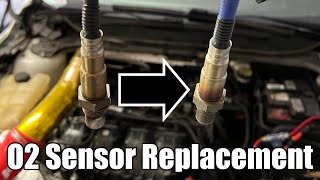
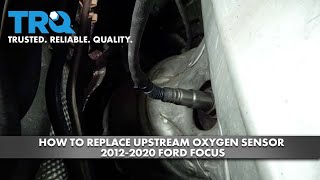
Typical fix: Replace the Bank 1, Sensor 1 oxygen sensor. It is highly recommended to use a genuine Motorcraft part (BA5Z-9F472-A / DY1182) to avoid compatibility issues, 🎬 Watch: Pro tips for replacing the Focus ST upstream O2 sensor which have been reported with some aftermarket brands.
Est. part cost: $70-$120 - Exhaust Leak Before the O2 Sensor 🟡 Medium Probability → Shop Oxygen Sensor Exhaust gaskets, particularly at the turbo-to-downpipe V-band clamp or the downpipe-to-cat-back flange, can fail over time. Aftermarket downpipe installations are also a common source of leaks if not sealed properly.
How to confirm: Perform a visual inspection for black soot trails around exhaust flanges and gaskets between the engine and the upstream O2 sensor. A smoke test is the most effective method to find small leaks. 🎬 See this quick guide on how to test for exhaust leaks You may also hear a ticking or puffing sound from the engine bay that changes with RPM, especially on a cold start.
Typical fix: Tighten loose exhaust hardware or replace the leaking gasket (e.g., the downpipe gasket).
Est. part cost: $10-$40 - Damaged O2 Sensor Wiring or Connector ⚪ Low Probability → Shop Oxygen Sensor The wiring harness is routed in a hot engine bay and can become brittle or damaged. The connectors are located behind the engine block and can be difficult to access, sometimes leading to damage during other maintenance.
How to confirm: Visually inspect the entire length of the O2 sensor harness from the sensor to the main engine harness connectors. Look for any signs of melting, chafing, frayed wires, or corrosion on the connector pins. A recall (14S17) was issued for improperly crimped wiring harness splices (including splice S133 for the O2 sensor circuit on ST models), which could cause high resistance and similar symptoms.
Typical fix: Repair the damaged section of the wire or clean the connector pins. If damage is severe, a harness repair pigtail may be needed.
Est. part cost: $5-$50
Rare But Worth Checking
- Aftermarket Downpipe or O2 Spacer: If the vehicle is modified with a high-flow or catless downpipe, it can cause this code. An O2 sensor spacer (defouler) is sometimes used on the *downstream* sensor to prevent a catalyst efficiency code (P0420). If a spacer is mistakenly installed on the *upstream* sensor, it will pull the sensor out of the direct exhaust stream, slowing its response and causing P0133.
- PCM Software Issue: In very rare cases, a glitch in the Powertrain Control Module's software can cause it to misinterpret the O2 sensor's signal. This is unlikely unless all other more common causes have been ruled out. Note that the CPV recall (18S32) does involve a PCM software update, which can address other fuel system related codes.
- Dirty or Malfunctioning Mass Airflow (MAF) Sensor: → Shop Fuel Injection Air Flow Meter While less common for this specific code, a contaminated MAF sensor can provide incorrect airflow readings to the PCM, affecting the air-fuel mixture and potentially contributing to conditions that trigger a slow O2 response code.
Diagnosis Steps
- Scan the PCM for codes. Confirm that P0133 is the primary code and note any other codes present.
- Inspect for aftermarket modifications. Check for an aftermarket downpipe or O2 sensor spacers, as these can be the root cause. Ensure any spacer is on the downstream sensor, not the upstream one.
- Inspect for exhaust leaks. Visually check the exhaust manifold and downpipe for any signs of black soot, indicating a leak. A smoke test is recommended for a thorough check. Pay close attention to the turbo V-band connection.
- Inspect O2 sensor wiring. Check the wiring harness and connector for any signs of melting, chafing, or corrosion. The connectors are located on a bracket on the back of the engine block. Check if recall 14S17 for wiring harness splices has been performed.
- Analyze live data. Use a capable scan tool to graph the voltage of Bank 1, Sensor 1. A healthy sensor should switch rapidly from ~0.1V to ~0.9V. If the waveform is slow and rounded, the sensor is lazy and needs replacement. Also check Long Term Fuel Trim (LTFT); values consistently exceeding +/- 10% can indicate an underlying issue causing the slow response.
- If all other checks pass, replace the Bank 1, Sensor 1 (upstream) oxygen sensor. Using an OEM Motorcraft sensor is strongly recommended.
- After replacement, clear the codes and perform a drive cycle to ensure the fix was successful.
Parts You'll Likely Need
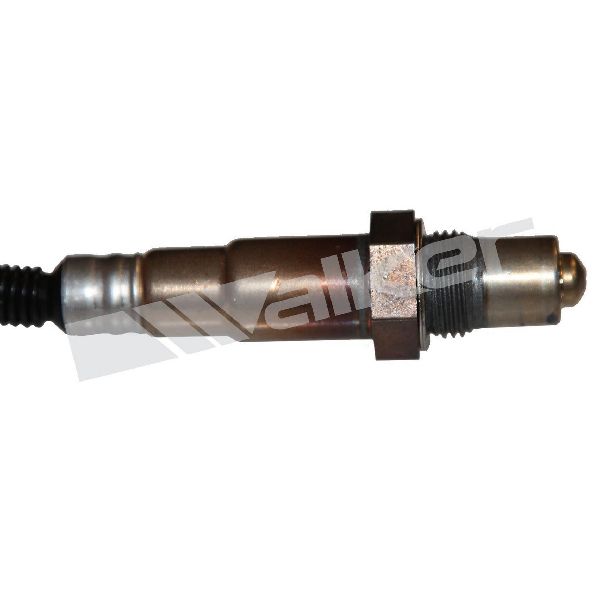
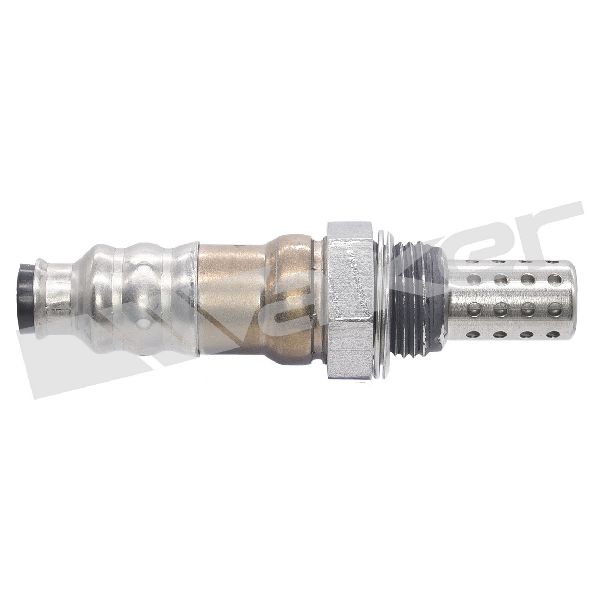
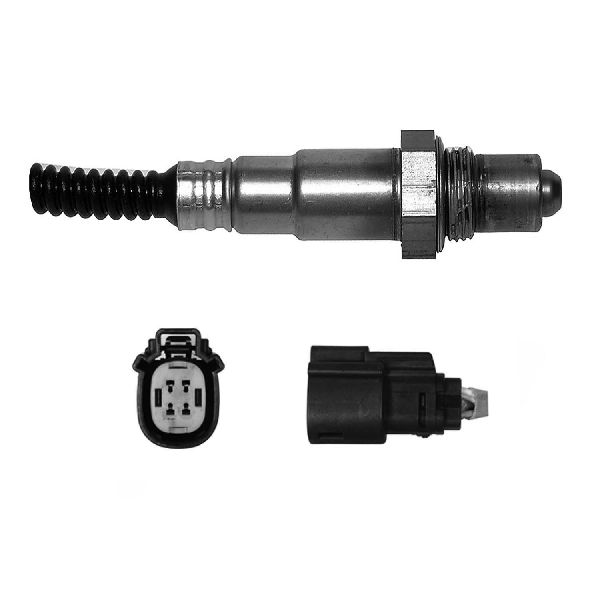
- Upstream Oxygen Sensor (Bank 1, Sensor 1)
(OEM #BA5Z-9F472-A)— This is the most common failure point for code P0133. The sensor wears out over time from extreme heat and contamination.
Trusted brands: Motorcraft (DY1182), Bosch (17258), Denso, NGK
OEM price range: $90-$130
Aftermarket price range: $60-$100
Platform-Specific Known Issues
- A recall (18S32 / NHTSA 18V-735) was issued for a faulty Canister Purge Valve (CPV) on 2012-2018 Focus models, which could cause fuel tank deformation, stalling, and a range of DTCs. While not a direct cause of P0133, a malfunctioning fuel vapor system can affect drivability and should be addressed. The recall fix includes a PCM software update.
- A recall (14S17) was issued for 2013-2014 Focus ST models for improperly crimped engine wiring harness splices. Splice S133 is part of the O2 sensor circuit and a poor connection can cause high resistance, leading to P0133 and other sensor-related codes.
Mechanic-Grade Diagnostic Values
- Upstream O2 Sensor (HEGO) Heater Circuit Resistance — expected: 3 to 15 Ohms at ambient temperature. Failure: An open circuit (infinite resistance) or a value outside the specified range indicates a faulty heater element within the sensor.
- Long Term Fuel Trim (LTFT) at Idle — expected: Should be within +/- 10%. Failure: Consistently positive values (> +10%) suggest a vacuum leak, while consistently negative values (< -10%) can indicate leaking injectors. Either extreme can contribute to conditions that trigger a P0133.
- Mode $06, Test ID $81 — expected: Value should be below the maximum threshold set by the PCM.. Failure: A test value exceeding the PCM's limit for O2 sensor response time will flag a pending or confirmed P0133 fault.
Scan Tool Commands That Help
- Ford IDS / FORScan / Capable Scan Tools: HO2S Heater Test (or similar active command) — This bidirectional command allows the technician to manually turn the O2 sensor's internal heater on and off. It's used to verify that the heater circuit (power, ground, and the element itself) is functioning correctly. When activated, you should see a corresponding voltage drop on the heater control circuit.
Wiring & Ground Locations
- Main Engine-to-Chassis Ground — A primary ground strap runs from the transmission bell housing to the chassis, located underneath the airbox/battery area.. A loose or corroded main ground can cause erratic behavior and fault codes across multiple engine sensors, including the O2 sensor, due to unstable voltage references. This should be checked if multiple, seemingly unrelated codes appear simultaneously.
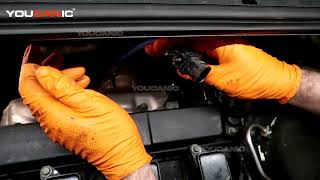
- O2 Sensor Connectors — On a bracket behind the engine block, below the cowl area. Access typically requires removing the engine air intake tube.. These connectors are the primary test point for the sensor and harness. Their location makes them susceptible to damage during other engine work, and a poor connection here is a direct cause of sensor codes.
- Splice S133 (Recall 14S17) — Within the engine wiring harness, in the area near other sensor splices.. This specific splice, identified in a Ford safety recall, connects wiring for the O2 sensor. An insufficient crimp from the factory can cause high resistance, directly leading to a P0133 code.
Real Owner Repair Stories
- PassionFord Forum user 'nick46' (2007 Ford Focus ST (European Mk2, but same engine concept and code behavior)) — Recurring P0133 check engine light.
❌ Tried (didn't work) Replacing the upstream O2 sensor with a new Bosch unit (code returned after 3,000 miles)., Checking for exhaust leaks (none found pre-sensor).
✅ What actually fixed it Removing the aftermarket 'Bluefin stage 2' ECU tune and returning to the stock software map. The fault did not return after 600 miles on the stock map, pointing to the tune's parameters being incompatible or too aggressive for the sensor's response monitoring. - Reddit user 'St_ella17' (Ford Focus ST (year not specified)) — P0133 code, stalling, and erratic idle (500-1500 RPM) on cold start.
❌ Tried (didn't work) The user had just installed a catless downpipe and immediately got the code.
✅ What actually fixed it Removing the O2 sensor spacer/defouler from the *upstream* (Bank 1, Sensor 1) O2 sensor. The user had incorrectly installed the spacer, which is intended only for the *downstream* (Bank 1, Sensor 2) sensor to prevent a P0420 code. Placing it on the upstream sensor slowed its response time, directly causing the P0133 code and drivability issues.
"I Checked Everything" — The Actual Cause
- In some cases on related Ford engines, a persistent P0133 with no evident exhaust leak has been traced to a failing intake manifold gasket. A small, unmetered air leak here can lean out the mixture, forcing fuel trims to their limits and potentially affecting the O2 sensor's switching behavior in a way that the PCM interprets as a slow response, even though the sensor itself is functional.
OEM Part Supersession History
BA5Z-9F472-A→DY-1182 (Motorcraft Service Number)— DY-1182 is the service part number that corresponds to the engineering number BA5Z-9F472-A. They refer to the same OEM part.
Heads up: While many aftermarket brands exist, Focus ST owners frequently report that using the genuine Motorcraft sensor is the most reliable way to resolve P0133, as some aftermarket sensors can have slightly different response characteristics that may not satisfy the PCM.
Model Year Variations Within This Range
- 2012-2018: There are no significant mechanical changes to the 2.0L EcoBoost engine, turbo, or upstream O2 sensor system across the 2012-2018 (C346 generation) range that would alter the diagnosis of P0133. The engine remained a single-scroll turbo design for the entire ST production run. However, the 2015 facelift did introduce revised interior controls and minor cosmetic changes.
Diagnostic Flowchart
Other Known Issues on This Vehicle
Issues unrelated to this code that are worth knowing about as an owner of this generation:
- Canister Purge Valve (CPV) Failure 🔴 High — Very common across all model years. Ford issued recall 18S32 (NHTSA 18V-735) to address this. (Ref: Recall 18S32 / 18V-735)
- Low-Speed Pre-Ignition (LSPI) 🔴 High — A known risk for many turbocharged direct-injection engines. Onset is related to driving habits (high load at low RPM) rather than mileage. Can cause catastrophic engine damage.
- Cracked Cylinder Head 🔴 High — Less common, but a known catastrophic failure where the integrated exhaust manifold ('headifold') design can crack, often near the turbo flange.
- Manual Transmission Synchronizer Failure 🟠 Medium — The Getrag MMT6 transmission can develop issues with synchronizers, leading to grinding or difficulty shifting, particularly into 3rd or 4th gear.
- Electronic Steering Rack Failure 🟠 Medium — Some owners report clunking sounds, a 'crunchy' feeling, or a complete loss of power steering assist. Failure can be caused by water ingress or internal mechanical/electrical faults.
- Engine Wiring Harness Splice Failure 🟡 Low — A recall (NHTSA 14V514000) was issued for 2012-2013 models for insufficient compression in wiring harness splices to the MAP sensor, which could cause stalling. (Ref: Recall 14V514000)
Used vs. New Parts: Buying Guide for This Vehicle
When a used part is the smart pick: For this repair, using a used part is generally not recommended. The primary cause is a failed O2 sensor, which is a wear-and-tear item with a finite lifespan. A used sensor carries a high risk of being near the end of its life or already faulty.
Donor-vehicle mileage cap: roughly under 30000 miles for the part to have meaningful remaining life.
What to inspect on the donor part:
- If considering a used sensor, ensure it comes from a very low-mileage vehicle.
- Inspect the sensor tip for heavy carbon buildup, white ash (from coolant contamination), or oily deposits.
- Check the wiring and connector for any signs of melting, fraying, or corrosion.
OEM-only on this vehicle (don't cheap out):
- Upstream Oxygen Sensor (Bank 1, Sensor 1)
Aftermarket brands forum-validated for this vehicle:
- While OEM Motorcraft is most recommended, Bosch is the original equipment manufacturer for many Ford sensors and is generally considered a reliable alternative.
Brands owners have reported issues with on this vehicle:
- Some forum users have reported recurring P0133 codes after installing unbranded or generic 'value' grade sensors, suggesting their response times may not meet the specific requirements of the Focus ST's ECU.
Real Owner Stories
Aggregated from forums and TSBs cited above. Mileages and costs reflect what owners reported in those sources.
2013-2014 Ford Focus ST 2.0L EcoBoost
Symptoms: P0133 and other sensor-related codes caused by high resistance in the circuit.
What fixed it: Repair of improperly crimped engine wiring harness splice S133 under recall 14S17.
Source hint: vehicle_specific_issues citing recall 14S17
Ford Focus ST 2.0L EcoBoost
Symptoms: Check engine light and stalling issues after installing a catless downpipe.
What fixed it: Correcting the placement of the O2 spacer; it had been incorrectly placed on the upstream sensor instead of the downstream sensor.
Source hint: reddit.com/r/FocusST thread titled 'well first check engine light on the fart focus'
Ford Focus ST 2.0L EcoBoost
Symptoms: Recurring P0133 fault after installing an aftermarket downpipe and a new Bosch sensor.
What fixed it: The user discussion highlights issues with non-OEM parts and modifications, suggesting a return to genuine components.
Source hint: passionford.com thread titled 'p0133-reoccurring-fault'
Related OBD-II Codes
Frequently Asked Questions
Does the wiring harness recall for the 2013-2014 Focus ST affect the O2 sensor?
I installed an aftermarket downpipe and now have a P0133. Could the sensor spacer be the problem?
Which specific Motorcraft part number should I use for the upstream O2 sensor on my Focus ST?
Can the common Canister Purge Valve (CPV) failure cause this code?
Where are the O2 sensor connectors located on the 2.0L EcoBoost engine?
Is there a specific resistance check for the O2 sensor heater circuit?
Helpful Videos

We Have This Part in Stock



The information in this article is provided for general reference and educational purposes only. Vehicle specifications, procedures, and part compatibility can vary by production date, trim level, and region. Always consult your vehicle's factory service manual and verify part numbers before purchasing or performing repairs. Safety-critical components such as airbags, seat belts, and braking systems should be installed by a qualified professional.
- Ford Focus ST:
- 🧭 Diagnostic Flowchart
- 🎬 Helpful Videos
- 🛍️ Shop This Part
- What's Unique About the 2012-2018 Ford Focus ST
- Symptoms You May Notice
- Most Likely Causes
- Rare But Worth Checking
- Diagnosis Steps
- Parts You'll Likely Need
- Platform-Specific Known Issues
- Mechanic-Grade Diagnostic Values
- Scan Tool Commands That Help
- Wiring & Ground Locations
- Real Owner Repair Stories
- "I Checked Everything" — The Actual Cause
- OEM Part Supersession History
- Model Year Variations Within This Range
- Other Known Issues on This Vehicle
- Used vs. New Parts: Buying Guide for This Vehicle
- Real Owner Stories
- 2013-2014 Ford Focus ST 2.0L EcoBoost
- Ford Focus ST 2.0L EcoBoost
- Ford Focus ST 2.0L EcoBoost
- Related OBD-II Codes
- Frequently Asked Questions
- 🎟️ Get 5% Off