

P0133 on 2010-2019 Ford Taurus: O2 Sensor Slow Response Causes and Fixes
This code almost always means the upstream oxygen sensor on Bank 1 (firewall side) is failing. Replacing the Bank 1, Sensor 1 O2 sensor is the most common fix. Expect to pay $50-$120 for an aftermarket sensor or $100-$180 for an OEM Motorcraft part. It's a DIY-friendly job if the sensor isn't seized, but access is very tight.
- P0133 on a 2010-2019 Taurus points directly to the upstream oxygen sensor on the firewall side of the engine (Bank 1, Sensor 1).
- The most likely fix is to replace the sensor. This is a manageable DIY job, but access is tight and may require removing the passenger wheel and using special tools.
- Always perform a quick visual inspection for exhaust leaks (soot trails, cracks) before buying a new sensor, as a leak can mimic a faulty sensor.
- This issue is also common on platform-mates like the Ford Flex, Ford Explorer, and Lincoln MKS with the same V6 engines.
What's Unique About the 2010-2019 Ford Taurus
On the Ford Taurus with the common transverse-mounted 3.5L V6, 'Bank 1' is the cylinder bank against the firewall, making access to this specific O2 sensor notoriously challenging compared to Bank 2, which faces the radiator. Owners and mechanics report that reaching the sensor often requires working from the passenger side wheel well or from the top with specialized tools like swivel-head O2 sensor sockets. This difficult access is the primary vehicle-specific challenge for this otherwise standard OBD-II code.
Symptoms You May Notice
- Check Engine Light is on
- Decreased fuel economy
- Rough or uneven idle
- Engine hesitation or poor acceleration
- Failing an emissions test
- Replacing the oxygen sensor without first checking for exhaust leaks. An exhaust leak can introduce oxygen into the system and make a perfectly good sensor appear to be slow or faulty.
Most Likely Causes
- Failing or Contaminated Bank 1, Sensor 1 Oxygen Sensor 🔴 High Probability → Shop Oxygen Sensor Oxygen sensors are wear-and-tear items that degrade over time, typically after 60,000-90,000 miles. Contamination from engine oil, coolant leaks, or carbon buildup can also cause premature failure.
How to confirm: Use a scan tool with live data graphing capabilities. A healthy upstream O2 sensor's voltage should fluctuate rapidly between approximately 0.1V and 0.9V. A sensor triggering P0133 will show slow, lazy, or delayed voltage changes compared to the Bank 2 Sensor 1. 🎬 See how to test and diagnose a slow response code.
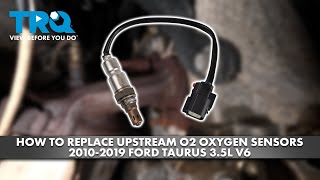
Typical fix: Replace the Bank 1, Sensor 1 (upstream, firewall side) oxygen sensor. It is recommended to use an OEM Motorcraft part or a quality aftermarket equivalent from brands like Bosch, NTK, or Denso. 🎬 Watch: Step-by-step guide to replacing your Taurus upstream sensors. Applying anti-seize compound to the threads of the new sensor is crucial.
Est. part cost: $50-$180 - Exhaust Leak Upstream of the Sensor 🟡 Medium Probability Exhaust manifold gaskets can fail, or the manifold itself can develop small cracks over time due to constant heat cycles, allowing outside air to enter the exhaust stream and skew sensor readings.
How to confirm: Visually inspect the exhaust manifold on Bank 1 for cracks or black soot trails indicating a leak. Listen for ticking or hissing noises from the engine bay, especially when the engine is cold. A smoke machine test is the most definitive way to identify the location of any leaks.
Typical fix: Repair the source of the leak. This may involve replacing the exhaust manifold gasket, or in some cases, replacing a cracked exhaust manifold.
Est. part cost: $20-$400 - Damaged Wiring or Connector ⚪ Low Probability The wiring harness for the Bank 1 sensor is in a hot, tight area near the firewall and can become brittle, chafed, or melted over time. The connector can also accumulate corrosion.
How to confirm: Visually inspect the O2 sensor's wiring harness and connector for any signs of melting, chafing, corrosion, or loose pins. Use a multimeter to check for continuity and proper voltage at the connector per the vehicle's service manual.
Typical fix: Repair the damaged section of the wiring harness or replace the connector pigtail.
Est. part cost: $15-$50
Rare But Worth Checking
- Intake Air or Vacuum Leak: A significant unmetered air leak after the MAF sensor can cause the engine to run lean, which can sometimes confuse the PCM and lead to O2 sensor codes. This would typically be accompanied by other codes like P0171 or P0174.
- Failing Mass Air Flow (MAF) Sensor: → Shop Fuel Injection Air Flow Meter A dirty or failing MAF sensor can provide incorrect airflow data to the PCM, affecting the entire fuel control strategy and potentially causing O2 sensor response codes.
- Powertrain Control Module (PCM) Software Issue: → Shop Engine Control Module (ECM) While not specifically documented for the Taurus, other Ford models have had TSBs issued (e.g., TSB 24-2066 for 6.7L engines) where a PCM software glitch incorrectly triggers P0133. A dealer reflash could be a potential fix in rare cases where all hardware checks out.
Diagnosis Steps
- Connect an OBD-II scanner and confirm that P0133 is the primary code. Note any other codes present, especially P0153, P0171, or P0174.
- Perform a thorough visual inspection of the Bank 1 (firewall side) exhaust manifold and downpipe area. Look for black soot marks, listen for audible leaks, and feel for escaping exhaust gas (use caution as components will be hot).
- Inspect the O2 sensor's wiring harness and connector for any signs of damage, melting, or corrosion.
- Use the scanner's live data function to graph the voltage of the Bank 1, Sensor 1 O2 sensor. At operating temperature and steady RPM, the voltage should switch rapidly. Compare its switching speed to the Bank 2, Sensor 1 sensor. If the B1S1 sensor is visibly slower, it is likely faulty.
- If an exhaust leak is suspected but not visible, use a smoke machine to pressurize the exhaust system and pinpoint the leak.
- If the sensor and wiring appear good and there are no exhaust leaks, investigate other potential causes like vacuum leaks or MAF sensor issues before condemning the PCM.
Parts You'll Likely Need
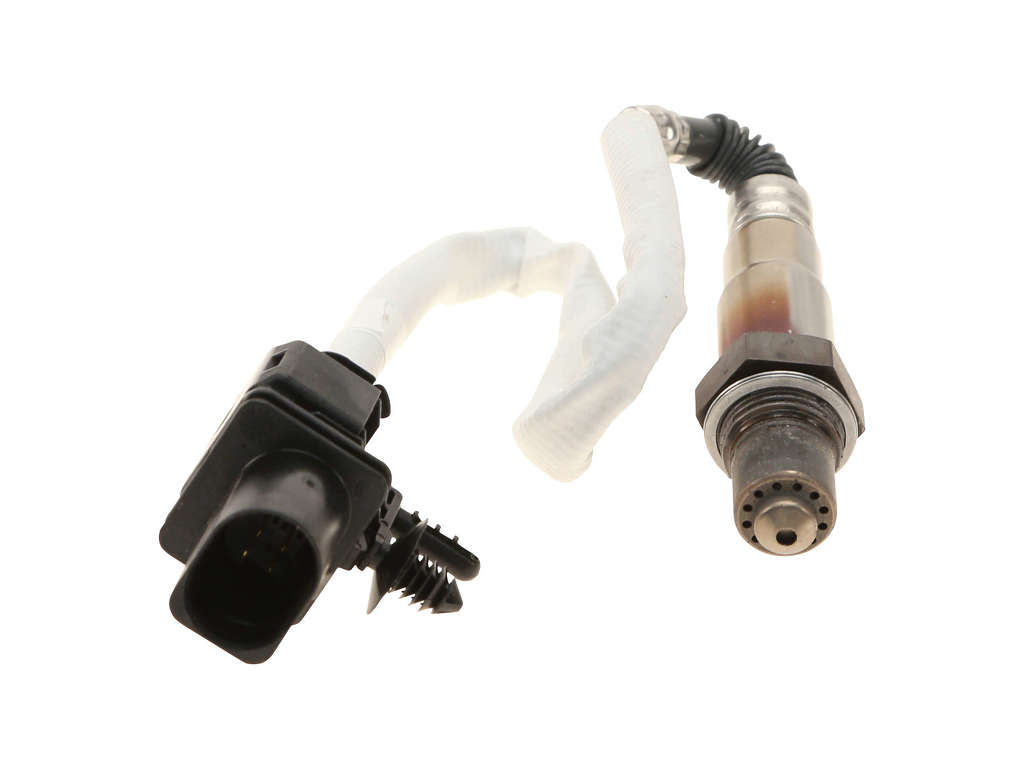
- Upstream Oxygen Sensor (Bank 1, Sensor 1)
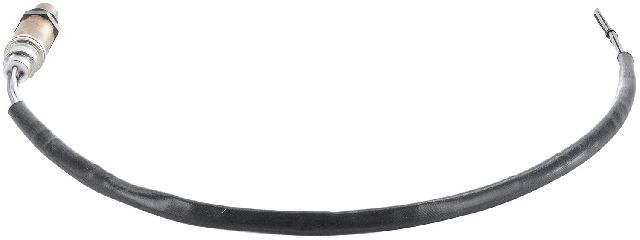
(OEM #Motorcraft DY-1167 (Upstream Right/Firewall Side for 3.5L, 2013-2019), DY-1096 (Upstream Left/Radiator Side for 3.5L, 2013-2019))— This is the most common failure point for code P0133. The sensor's internal heating element or sensing element wears out over time.
Trusted brands: Motorcraft, Bosch, NTK, Denso
OEM price range: $100-$180
Aftermarket price range: $50-$120
Related Codes That Often Appear With This One
- P0153 — This is the same 'slow response' code but for Bank 2, Sensor 1. Seeing both together (P0133 and P0153) may point to a systemic issue like low fuel pressure, a MAF problem, or contaminated fuel rather than two failed sensors.
- P0171 or P0174 — These 'System Too Lean' codes for Bank 1 and Bank 2, respectively, can indicate a vacuum leak or fuel delivery issue that is affecting the O2 sensor's ability to read correctly.
Technical Service Bulletins (TSBs) & Recalls
- While no TSB is specific to the Taurus for P0133, Ford has issued TSBs like 24-2066 and 24-2036 for other models (e.g., 2023-2024 F-Super Duty) where a PCM software glitch caused this code. This establishes a precedent for a software issue being a rare but possible cause.
Platform-Specific Known Issues
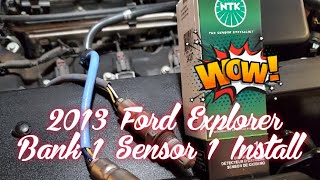
- Access to Bank 1 Sensor 1 is Difficult: Owners and mechanics frequently report that replacing the Bank 1, Sensor 1 O2 sensor is challenging due to its location on the firewall side of the transverse engine. Access is extremely limited from the top. Many find success by removing the passenger-side front wheel and wheel well liner to gain access from the side. A specialized tool like a 22mm (or 7/8") crow's foot or flexible head O2 sensor socket is often required.
Mechanic-Grade Diagnostic Values
- Upstream O2 Sensor (HO2S11) Voltage — expected: Rapidly fluctuating between 0.1V and 0.9V on a warm engine.. Failure: Voltage is slow to change, lazy, or the transition from rich-to-lean or lean-to-rich takes more than 100-150 milliseconds.
- O2 Sensor Heater Circuit Resistance — expected: Between 2 and 30 Ohms, with many Ford sensors specifically falling in the 3 to 5 Ohm range.. Failure: A reading of OL (Open Loop / infinite resistance) or near-zero Ohms indicates a failed internal heater element.
- Long-Term Fuel Trim (LTFT) for Bank 1 — expected: Within +/- 10% at idle and steady cruise.. Failure: High positive fuel trims (e.g., > +15%) can indicate an exhaust or vacuum leak is introducing unmetered air, which can cause a P0133 code before a lean code (P0171) is set.
- Harness-side Heater Circuit Voltage — expected: Battery voltage (~12V) with the key on, engine off.. Failure: Zero volts indicates a blown fuse (check PCM or power distribution box fuses) or a break in the power supply wire.
Hidden / Shadow Codes Worth Checking
- Mode $06, Test ID $01, Comp ID $11: This corresponds to the onboard monitor for HO2S11 (Bank 1, Sensor 1) response rate. The measured value is the sensor's voltage amplitude during a forced fuel control routine. A value below the minimum threshold indicates a slow sensor and is the direct trigger for the P0133 DTC. (see via A professional scan tool capable of reading Ford-specific Mode $06 data.)
Scan Tool Commands That Help
- Ford IDS / FORScan: Keep Alive Memory (KAM) Reset — After replacing the O2 sensor or repairing an exhaust/vacuum leak, a KAM reset should be performed. This clears the learned fuel trim adaptations from the PCM's memory, forcing it to relearn fuel strategy with the new, correctly functioning components and preventing the old data from causing persistent issues.
- Professional Scan Tool with Live Data Graphing: Graph O2S11 vs O2S21 — Compare the graph of Bank 1 Sensor 1 against Bank 2 Sensor 1. On a healthy engine, both upstream sensors should have similar, rapid switching patterns. If B1S1 is visibly slower or has a lower amplitude than B2S1, it strongly points to a fault with the B1S1 sensor or its circuit, assuming no Bank 2 codes are present.
Wiring & Ground Locations
- G105 — Located at the rear of the engine compartment, on the firewall side.. This is a primary engine and PCM ground point. A loose or corroded connection at G105 can introduce electrical noise or incorrect ground reference for various sensors, including the oxygen sensors, potentially causing slow or erratic readings.
- HO2S11 Connector — On the firewall side of the engine, attached to the exhaust manifold or downpipe. The wiring harness runs up towards the top rear of the engine.. The connector itself and the wiring leading to it are in a high-heat area. It's a common point for wires to become brittle and break or for the connector pins to corrode, causing high resistance that dampens the sensor's signal and triggers P0133.
Real Owner Repair Stories
- Ford Thunderbird Club Forum (2002 Ford Thunderbird (similar PCM logic)) — Check Engine Light on, no noticeable drivability issues.
❌ Tried (didn't work) Taking it to a parts store for a code scan.
✅ What actually fixed it The owner had a mechanic clear the P0133 code. The code did not return after three weeks of driving, suggesting it was a one-time glitch possibly caused by specific driving or weather conditions. The advice was to always clear the code once and see if it returns before replacing parts.
OEM Part Supersession History
Not explicitly found, but multiple part numbers exist for the generation.→Motorcraft DY-1167 is the specified part for many 2013-2019 3.5L applications (firewall side).— Standard part evolution and supplier changes.
Heads up: The part number for the firewall-side (Bank 1) sensor is different from the radiator-side (Bank 2) sensor (DY-1096). They are not interchangeable. Additionally, part numbers for 2010-2012 models may differ from 2013-2019 models. Always verify with VIN.
Model Year Variations Within This Range
- 2013-2019: The upstream oxygen sensor part number for the 3.5L V6 is commonly listed as Motorcraft DY-1167 for the firewall side (Bank 1).
- 2010-2012: Earlier models in the generation may use a different part number. Fitment must be verified by VIN as there were running changes, particularly around the 2013 model year facelift.
Diagnostic Flowchart
Other Known Issues on This Vehicle
Issues unrelated to this code that are worth knowing about as an owner of this generation:
- Internal Water Pump Failure 🔴 High — Commonly reported between 100,000 and 200,000 miles. Failure can cause coolant to mix with engine oil, leading to catastrophic engine damage if not caught early.
- Power Transfer Unit (PTU) Failure (AWD Models) 🔴 High — The PTU fluid can overheat due to proximity to the exhaust, leading to fluid breakdown and gear failure. Symptoms include a grinding noise or a smell like propane or natural gas. (Ref: Ford has issued service bulletins regarding the smell and updated parts, but no widespread recall.)
- Transmission Failure/Harsh Shifting 🟠 Medium — Some owners, particularly in 2015-2016 models, report loss of certain gears (like reverse, 3rd, 5th) or complete transmission failure, often requiring a rebuild or replacement.
- Electric Power Steering (EPAS) Failure 🟠 Medium — A recall was issued for 2011-2013 models for potential loss of power steering assist while driving. (Ref: NHTSA Campaign Number: 15V340000)
- Fuel Pump Control Module Failure 🟡 Low — Can cause a crank-no-start condition. A recall was issued for certain 2013-2015 models with the 3.5L EcoBoost engine. (Ref: NHTSA Campaign Number: 16V643000)
Used vs. New Parts: Buying Guide for This Vehicle
When a used part is the smart pick: For this repair, a used part is almost never a smart choice. Oxygen sensors are wear items with a finite lifespan, much like spark plugs or filters. Installing a used sensor is risky as it may have very little life left or could be contaminated.
Donor-vehicle mileage cap: roughly under 20000 miles for the part to have meaningful remaining life.
What to inspect on the donor part:
- If forced to consider a used sensor, ensure the donor vehicle has very low mileage.
- Inspect the sensor tip for heavy black carbon soot (rich running), white deposits (coolant/oil contamination), or physical damage. A clean, light-gray appearance is ideal.
- Ensure the wiring and connector are pristine with no signs of melting, corrosion, or frayed insulation.
OEM-only on this vehicle (don't cheap out):
- While not strictly 'OEM-only', using a Motorcraft sensor is highly recommended. Ford PCM software can be sensitive to the specific response curves and heater characteristics of the factory sensor. Some aftermarket sensors, especially budget brands, may not perform identically and can cause the code to return.
Aftermarket brands forum-validated for this vehicle:
- NTK
- Denso
- Bosch
Brands owners have reported issues with on this vehicle:
- Unnamed, no-brand, or 'white-box' sensors from online marketplaces are frequently reported to fail quickly or not meet the PCM's performance criteria, leading to a repeat of the P0133 code.
Real Owner Stories
Aggregated from forums and TSBs cited above. Mileages and costs reflect what owners reported in those sources.
Ford V6 (3.5L/3.7L family)
Symptoms: The vehicle triggered a P0133 code, indicating a slow response from the oxygen sensor.
What fixed it: Replacing the worn oxygen sensor resolved the code.
Source hint: Ford Truck Enthusiasts Forums - 'P0133 code'
2010-2019 Ford Taurus 3.5L V6
Symptoms: Difficulty accessing the Bank 1 Sensor 1 O2 sensor from the top of the engine bay.
What fixed it: Removed the passenger-side front wheel and wheel well liner to gain access from the side, then used a specialized O2 sensor socket for replacement.
Source hint: Vehicle-specific issue: 'Access to Bank 1 Sensor 1 is Difficult'
Ford Explorer (Platform-mate) 3.5L V6
Symptoms: P0133 code on the transverse 3.5L engine with extreme difficulty reaching the rear sensor.
What fixed it: Accessed the Bank 1 (rear/firewall side) sensor through the passenger front wheel well.
Source hint: Reddit r/FordExplorer - 'Bank 1, Sensor 1 Location'
Related OBD-II Codes
Frequently Asked Questions
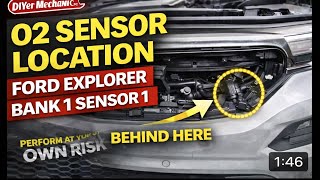
Where is the Bank 1 Sensor 1 oxygen sensor located on my 2010-2019 Ford Taurus?
Does Ford TSB 24-2066 or 24-2036 apply to my Taurus for the P0133 code?
Is there a specialized tool I need to replace the O2 sensor on this vehicle?
I heard the Bank 1 sensor is hard to reach; what is the best way to access it?
Should I use a specific brand of replacement oxygen sensor for my Taurus?
Could an exhaust leak cause my P0133 code instead of a bad sensor?
Helpful Videos


We Have This Part in Stock


The information in this article is provided for general reference and educational purposes only. Vehicle specifications, procedures, and part compatibility can vary by production date, trim level, and region. Always consult your vehicle's factory service manual and verify part numbers before purchasing or performing repairs. Safety-critical components such as airbags, seat belts, and braking systems should be installed by a qualified professional.
- Ford Taurus:
- 🧭 Diagnostic Flowchart
- 🎬 Helpful Videos
- 🛍️ Shop This Part
- What's Unique About the 2010-2019 Ford Taurus
- Symptoms You May Notice
- Most Likely Causes
- Rare But Worth Checking
- Diagnosis Steps
- Parts You'll Likely Need
- Related Codes That Often Appear With This One
- Technical Service Bulletins (TSBs) & Recalls
- Platform-Specific Known Issues
- Mechanic-Grade Diagnostic Values
- Hidden / Shadow Codes Worth Checking
- Scan Tool Commands That Help
- Wiring & Ground Locations
- Real Owner Repair Stories
- OEM Part Supersession History
- Model Year Variations Within This Range
- Other Known Issues on This Vehicle
- Used vs. New Parts: Buying Guide for This Vehicle
- Real Owner Stories
- Ford V6 (3.5L/3.7L family)
- 2010-2019 Ford Taurus 3.5L V6
- Ford Explorer (Platform-mate) 3.5L V6
- Related OBD-II Codes
- Frequently Asked Questions
- 🎟️ Get 5% Off