

P0133 on 2001-2006 Hyundai Santa Fe: Slow O2 Sensor Response Causes and Fixes
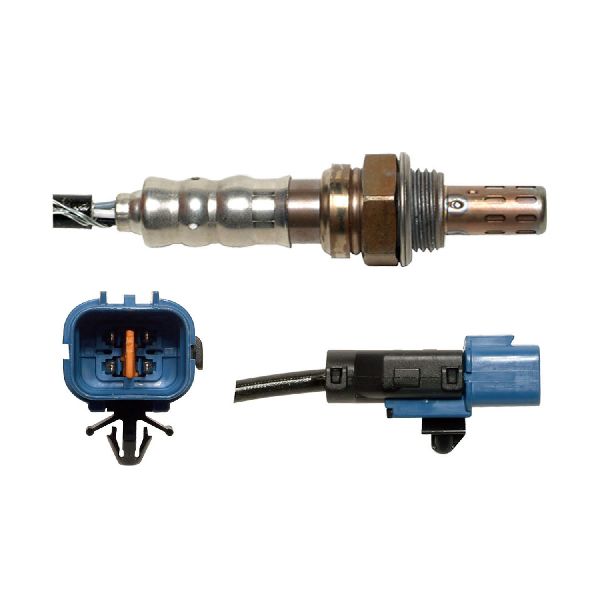
This code almost always means the front oxygen sensor (Bank 1, Sensor 1) has failed and needs replacement. It's a common wear item. On V6 models, this sensor is on the exhaust manifold near the firewall and can be difficult to access. Expect to pay $50-$100 for a quality aftermarket sensor (like NTK/NGK or Denso) and $180-$310 for an OEM part. It's a straightforward but potentially tight-spaced DIY replacement for most home mechanics.
- P0133 on a 2001-2006 Santa Fe is most often caused by a failed upstream oxygen sensor (Bank 1, Sensor 1).
- On V6 models (2.7L, 3.5L), Bank 1 is the cylinder bank near the firewall, and the sensor can be very difficult to access.
- Before replacing the sensor, perform a quick visual inspection of the wiring for damage and the exhaust manifold for obvious leaks, as these are also possible causes.
- Replacing the sensor is a manageable DIY job, but you will need a special O2 sensor socket, extensions, a swivel, and significant patience for V6 models.
- Using a quality aftermarket brand like NTK (the OEM supplier) or Denso is a cost-effective and reliable repair.
What's Unique About the 2001-2006 Hyundai Santa Fe
For the first-generation Hyundai Santa Fe (2001-2006), the P0133 code is a very common and straightforward issue, typically pointing directly to a worn-out oxygen sensor due to age and heat cycles. Unlike some vehicles where this code might be triggered by complex software or vacuum leak issues, the Santa Fe's system is more direct. The key difference between engines is the location of Bank 1: on the 2.4L 4-cylinder, there is only one bank, making the upstream sensor easy to identify. On the V6 engines (2.7L Delta and 3.5L Sigma), Bank 1 is the cylinder bank closer to the firewall (rear of the engine bay), making the sensor significantly harder to access.
Symptoms You May Notice
- Check Engine Light is on
- Decreased fuel economy
- Rough or unstable idle
- Engine hesitation or lack of power
- Black smoke from the exhaust under certain conditions.
- Replacing the wrong oxygen sensor (e.g., the downstream Sensor 2 instead of the upstream Sensor 1).
- Replacing the oxygen sensor on the wrong bank (Bank 2, the front/radiator side, instead of Bank 1, the rear/firewall side, on V6 models).
- Replacing the catalytic converter, which is monitored by the downstream sensor (Sensor 2) and is not the cause of a P0133 code.
- Replacing the sensor multiple times with cheap aftermarket parts. Some owners report that only OEM or high-quality NTK/Denso sensors will resolve the code permanently.
Most Likely Causes
- Failed Bank 1, Sensor 1 Oxygen Sensor 🔴 High Probability → Shop Oxygen Sensor Oxygen sensors are wear-and-tear items that degrade over time due to constant exposure to extreme heat and exhaust contaminants. After 15+ years and over 100,000 miles, the sensor's ability to react quickly diminishes, which is a very common failure mode.
How to confirm: Use a scan tool to graph the B1S1 voltage. A healthy sensor will show rapid, frequent fluctuations between approximately 0.1V and 0.9V. A slow sensor will show lazy, infrequent waves, even when the engine RPM is held steady at 2500.
Typical fix: Replace the Bank 1, Sensor 1 oxygen sensor. An O2 sensor socket (often 22mm or 7/8") is required for removal. Penetrating oil is highly recommended, especially for the V6 models where the sensor is in a difficult-to-reach spot.
Est. part cost: $50-$310 - Exhaust Leak 🟡 Medium Probability Corrosion over many years can cause leaks at the exhaust manifold gaskets or cracks in the manifold itself. The flex pipe is also a common failure point. An exhaust leak before the O2 sensor allows outside air to enter, which skews the sensor's readings and can be interpreted by the ECM as a slow response.
How to confirm: Visually inspect the exhaust manifold (especially the rear one on V6 models) and connecting pipes for cracks or black soot trails. Listen for a ticking or hissing sound from the engine bay, especially when the engine is cold. A smoke test is the most definitive way to pinpoint small leaks.
Typical fix: Replace the leaking gasket or repair/replace the cracked exhaust component. In one documented case, a user fixed P0133 only after replacing a broken exhaust manifold stud and gasket.
Est. part cost: $20-$300 - Damaged Wiring or Connector ⚪ Low Probability The wiring harness for the Bank 1 sensor on V6 models is routed in a hot, tight area near the firewall. Over time, the plastic loom and wire insulation can become brittle, melt, or chafe against other components, leading to a short or open circuit.
How to confirm: Visually inspect the wiring and connector leading to the O2 sensor for any signs of melting, chafing, or corrosion in the pins. Check for continuity and voltage at the connector with a multimeter, referencing a wiring diagram for correct pinouts.
Typical fix: Repair the damaged section of the wiring harness or replace the connector pigtail.
Est. part cost: $15-$50
Rare But Worth Checking
- Blown O2 Sensor Fuse: → Shop Oxygen Sensor The oxygen sensor heater circuit is powered by a fuse. If this fuse blows, the sensor won't heat up to operating temperature quickly, causing a slow response code, especially on cold starts. Check the fuse box in the engine compartment for a fuse labeled 'SENSOR 1' or similar.
- Engine Vacuum Leak: A significant vacuum leak from a cracked hose or bad intake gasket can introduce unmetered air, causing the engine to run lean. This can sometimes be misinterpreted by the ECM as a slow sensor. This is usually accompanied by other codes like P0171 (System Too Lean).
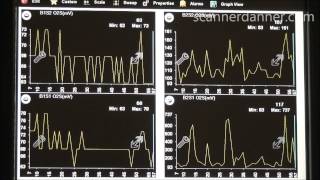
- Reversed Upstream/Downstream Sensor Connectors: On Bank 1 (V6 models), the connectors for the upstream and downstream O2 sensors are sometimes physically close and can be identical. If they are accidentally swapped during a previous repair (like a transmission or exhaust replacement), the ECM will receive the wrong signals, leading to a P0133. This was documented in a detailed diagnostic video by ScannerDanner on a Hyundai. 🎬 See how swapped connectors can cause a P0133 code
Diagnosis Steps
- Read the code with an OBD-II scanner to confirm P0133 is the primary code.
- Determine your engine type (2.4L I4, 2.7L V6, or 3.5L V6) to correctly locate Bank 1. For V6 engines, Bank 1 is the rear bank, near the firewall.
- Visually inspect the Bank 1, Sensor 1 (upstream) oxygen sensor's wiring and connector for any obvious damage, melting, or corrosion.
- Inspect the exhaust manifold and downpipe for any signs of cracks or leaks (soot marks, audible ticking). Pay close attention to the manifold-to-head gasket.
- With a scan tool capable of live data, monitor the voltage of the Bank 1 Sensor 1. At operating temperature and a steady 2500 RPM, the voltage should switch rapidly between ~0.1V and ~0.9V. If the graph shows slow, lazy waves, the sensor is the primary suspect.
- If the sensor signal appears normal, check for a blown O2 sensor heater fuse in the engine bay fuse box, often labeled 'SENSOR 1'.
- If other lean codes (P0171) are present, perform a smoke test to check for vacuum leaks from intake hoses or gaskets.
- If any recent major repairs were performed, physically trace the wiring to confirm the upstream and downstream O2 sensor connectors on Bank 1 are not swapped.
- If all other checks pass, the most probable cause is a failing oxygen sensor.
Parts You'll Likely Need
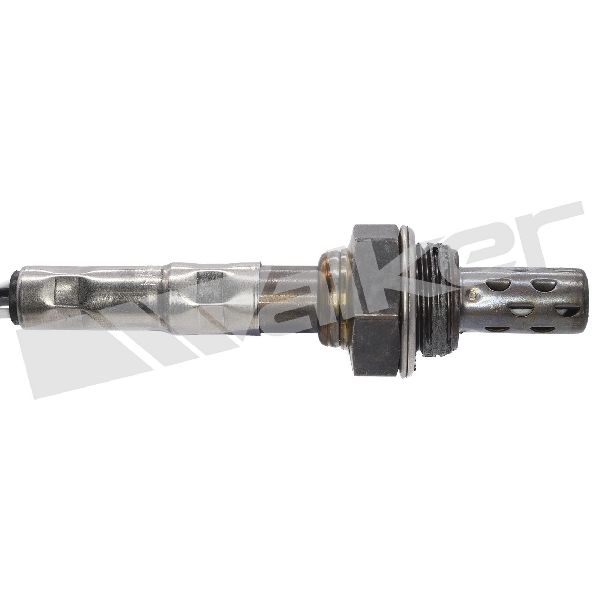
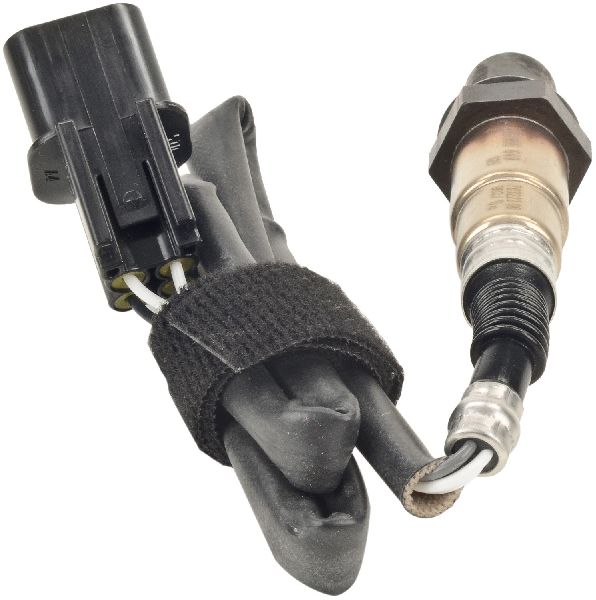
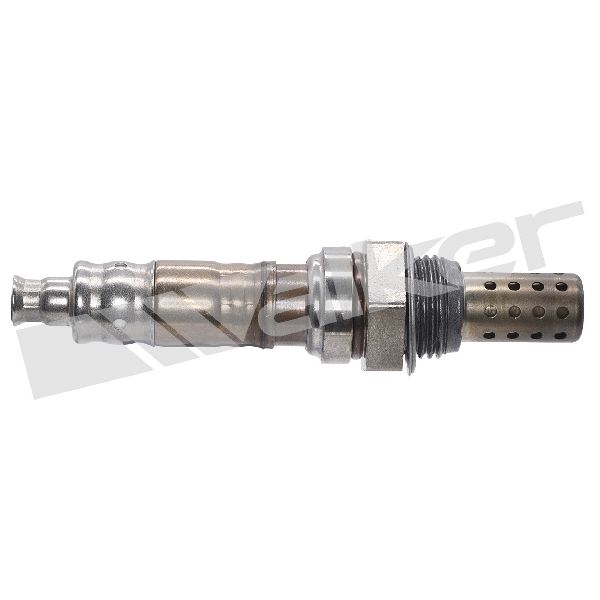
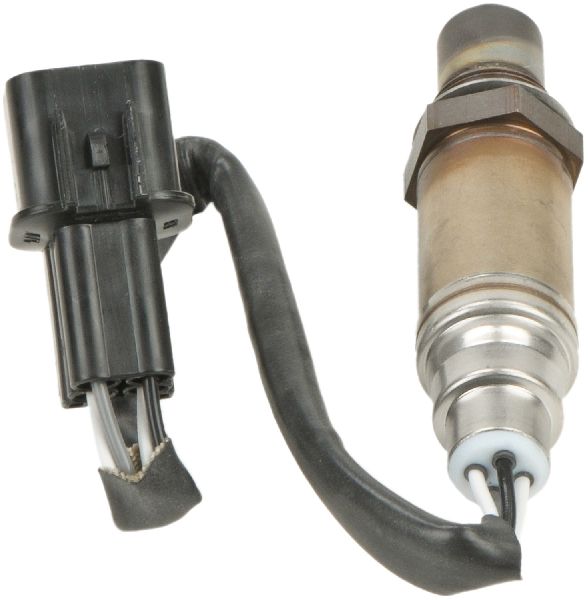
- Oxygen Sensor (Bank 1, Sensor 1 / Upstream)
(OEM #2.4L I4: 39210-38005; 2.7L V6: 39210-37530; 3.5L V6: 39210-39600)— This is the component that has failed according to the code definition. It is a common wear item and the most frequent fix for P0133.
Trusted brands: Hyundai (OEM), NTK (OEM supplier), Denso, Bosch
OEM price range: $180-$310
Aftermarket price range: $50-$100
Related Codes That Often Appear With This One
- P0153: O2 Sensor Circuit Slow Response (Bank 2, Sensor 1) - If both upstream sensors are failing simultaneously.
- P0171: System Too Lean (Bank 1) - If the slow sensor is causing poor fuel control or if an exhaust/vacuum leak is the root cause.
Technical Service Bulletins (TSBs) & Recalls
- TSB 04-36-009 (June 2004): Addresses MIL ON with DTC P0133 and/or P0153 on 2004 Hyundai Sonata with the 2.7L engine, indicating this is a known issue on the shared Delta V6 platform.
Platform-Specific Known Issues
- Access to the Bank 1 (rear) upstream O2 sensor on the 2.7L and 3.5L V6 engines is notoriously difficult. It is located on the exhaust manifold between the engine and the firewall. Access is typically from above, requiring removal of the engine cover and potentially other components for clearance. Long extensions and a swivel joint for your O2 sensor socket are highly recommended.
- Due to the high heat in this location, the sensor is often seized in the exhaust manifold. Liberal use of a high-quality penetrating oil (like PB Blaster or Kroil) applied when the manifold is warm (not hot) and allowed to soak is critical for successful removal without damaging the threads. 🎬 Watch: Step-by-step guide to replacing the upstream O2 sensor
Mechanic-Grade Diagnostic Values
- O2 Sensor Heater Circuit Resistance — expected: Generally between 2 and 10 Ohms, with some sources citing around 4 Ohms as a calculated ideal and others measuring new sensors at 2.9 Ohms.. Failure: An open circuit (infinite resistance) or a value significantly outside the expected range indicates a failed heater element within the sensor.
- O2 Sensor Signal Voltage (Live Data) — expected: Rapidly fluctuating between approximately 0.1V (lean) and 0.9V (rich) when the engine is in closed loop at operating temperature.. Failure: A slow, lazy waveform that does not switch frequently, or a signal that is biased high (stuck rich) or low (stuck lean).
- Mode 6, Test ID $81 (O2 Sensor Response Rate B1S1) — expected: The measured value should be below the maximum threshold value stored in the PCM. This value is manufacturer-specific.. Failure: If the test value exceeds the maximum limit, it confirms the PCM's diagnosis of a slow-responding sensor. A user on a diagnostic forum noted this data was helpful in their P0133 diagnosis.
- O2 Sensor Heater Circuit Voltage — expected: Battery voltage (approximately 12V) should be present at the heater circuit power wire with the key on.. Failure: Lack of voltage points to a wiring issue, a blown fuse (often labeled 'SENSOR 1'), or a problem with the PCM driver circuit.
Scan Tool Commands That Help
- Hyundai GDS (Global Diagnostic System) or equivalent advanced scan tool: Clear KAM (Keep Alive Memory) and Reset Adaptations — After replacing a component like an O2 sensor or fixing an exhaust/vacuum leak, it is critical to reset the learned fuel trim adaptations. Failure to do so can cause the old, incorrect learned values to persist, potentially causing the P0133 code to return even with a good part. A forum user highlighted this as a very important step.
Wiring & Ground Locations
- C139 — The harness connector for the Bank 1, Sensor 1 (B1/S1) oxygen sensor on V6 models.. This is the primary connector to inspect for damage, corrosion, or being swapped with the downstream sensor connector. All voltage and resistance tests for the sensor and its circuit are performed at this connector.
- G104 (3.5L) / G02 (2.7L) — A primary ground point located under the center console.. While not the direct ground for the O2 sensor signal (which is typically grounded through the PCM), poor chassis grounds can introduce electrical noise and voltage offsets that can affect various sensor readings, including the O2 sensor. This is a key ground point to check if multiple, seemingly unrelated electrical issues are present.
- O2 Sensor Heater Fuse ('SENSOR 1') — Located in the engine compartment junction block (fuse box).. This fuse supplies power to the O2 sensor's internal heater. If it blows, the sensor will not heat up quickly, directly causing a slow response time and triggering P0133, especially during cold starts.
Real Owner Repair Stories
- ScannerDanner Forum (2003 Hyundai Elantra GLS (Shares powertrain characteristics with Santa Fe)) — Persistent P0133 code.
❌ Tried (didn't work) Replacing the O2 sensor twice., Replacing a missing exhaust manifold stud and gasket.
✅ What actually fixed it The user eventually found a crack in the exhaust manifold itself. Even though a missing stud and gasket were replaced, the underlying crack was still allowing air to leak in, causing the slow response code. Replacing the manifold resolved the issue. - YouTube user 'Junkyard Dave' (2002 Hyundai Elantra) — Dreaded P0133 code.
❌ Tried (didn't work) Replacing the Bank 1 Sensor 1 O2 sensor.
✅ What actually fixed it After replacing the sensor didn't work, a thorough inspection revealed a significant exhaust leak from a cracked flex pipe. The technician noted that these Hyundai models are extremely sensitive to any exhaust leaks near the O2 sensor. Sealing the leak (and ultimately replacing the flex pipe) was the final fix. - RepairPal Forum Question (2004 Hyundai Santa Fe) — P0133 code returns after repair attempts.
❌ Tried (didn't work) Replacing the O2 sensor twice., Checking for vacuum leaks and dry rotted hoses.
✅ What actually fixed it The story is unresolved, but it is a classic example of the P0133 pattern where replacing the sensor does not fix the issue, strongly pointing towards an underlying cause like a hairline exhaust leak or wiring problem that was missed in the initial diagnosis. - NHTSA ODI #11415689 (Hyundai Tucson - shared manufacturer platform) — An owner reported that their vehicle presented with various check engine light codes including P0133, alongside codes for the mass air flow sensor and oxygen sensors, despite having passed emissions previously.
When the Usual Fixes Don't Work
- While the vast majority of P0133 cases are a failed sensor, there are numerous documented instances in forums and repair videos where the code persisted after one or even multiple sensor replacements. In these cases, the root cause was almost always an overlooked exhaust leak, either from a cracked manifold, a failed gasket (often due to a broken stud), or a leaking flex pipe. One technician with dealership experience noted that these specific Hyundai platforms are exceptionally sensitive to even minor exhaust leaks, which can fool the PCM into reporting a slow sensor. Another high-value, but less common, counter-example is swapped upstream/downstream sensor connectors after a previous repair, which produces the same code.
OEM Part Supersession History
39210-37530→This part number appears to be stable for the 2.7L V6 throughout the generation.— N/A
Heads up: This part number is specific to the 2.7L V6 Bank 1 (Left/Firewall side) upstream sensor. It is also used on other Hyundai models like the Tiburon and Sonata with the same engine. Using a sensor for a different engine or bank will likely result in failure.
Model Year Variations Within This Range
- 2001-2004: The 2.4L four-cylinder engine was available during these years. For this engine, there is only one bank, so identifying 'Bank 1' is straightforward.
- 2005-2006: For the 2005 model year facelift, the 2.4L four-cylinder engine was dropped from the Santa Fe lineup in the U.S. market, making the 2.7L V6 the standard base engine. All Santa Fes from these years will be V6 models (2.7L or 3.5L), meaning P0133 will always refer to the sensor on the rear (firewall side) bank.
Diagnostic Flowchart
Real Owner Stories
Aggregated from forums and TSBs cited above. Mileages and costs reflect what owners reported in those sources.
2004 Hyundai Santa Fe V6 2.7
Symptoms: Check engine light with multiple O2 sensor codes, including P0133, P0036, P1167, P1166, P0137.
What fixed it: The user was asking for advice prior to the repair and did not post a follow-up confirming the fix. Another user advised that NTK makes the OEM sensor and that replacing the upstream sensor (NTK 25180) is a good start.
Source hint: reddit r/MechanicAdvice
2004 Hyundai Santa Fe
Symptoms: Check engine light with code P0133 that persists after sensor replacement.
What fixed it: Unresolved in the initial post; the owner had already replaced the O2 sensor twice and ruled out vacuum leaks and dry rotted hoses.
Source hint: RepairPal
Hyundai Santa Fe
Symptoms: Persistent P0133 code that returned even after replacing the oxygen sensor.
What fixed it: Replaced a broken exhaust manifold stud and gasket that were causing an exhaust leak.
Source hint: ScannerDanner Forum - '[FIXED] Pesky P0133 DTC'
2001-2006 Hyundai Santa Fe V6
Symptoms: P0133 code triggered by a failing Bank 1, Sensor 1 O2 sensor.
What fixed it: Replaced the Bank 1, Sensor 1 O2 sensor. Users emphasized using quality aftermarket brands like NTK if OEM is too expensive.
Source hint: Hyundai Forums - (https://www.hyundai-forums.com/forums/santa-fe-forums-sm-2001-2006.57/)
Related OBD-II Codes
Frequently Asked Questions
Is the Bank 1 Sensor 1 difficult to replace on the V6 Santa Fe?
Does TSB 04-36-009 apply to my 2001-2006 Santa Fe?
I replaced the O2 sensor on my Santa Fe but P0133 came back. What else could it be?
Which brand of oxygen sensor should I use for my Santa Fe?
Where is the O2 sensor heater fuse located on the Santa Fe?
Can a broken exhaust manifold stud cause a P0133 code on my Santa Fe?
Helpful Videos

We Have This Part in Stock


The information in this article is provided for general reference and educational purposes only. Vehicle specifications, procedures, and part compatibility can vary by production date, trim level, and region. Always consult your vehicle's factory service manual and verify part numbers before purchasing or performing repairs. Safety-critical components such as airbags, seat belts, and braking systems should be installed by a qualified professional.
- Hyundai Santa Fe:
- 🧭 Diagnostic Flowchart
- 🎬 Helpful Videos
- 🛍️ Shop This Part
- What's Unique About the 2001-2006 Hyundai Santa Fe
- Symptoms You May Notice
- Most Likely Causes
- Rare But Worth Checking
- Diagnosis Steps
- Parts You'll Likely Need
- Related Codes That Often Appear With This One
- Technical Service Bulletins (TSBs) & Recalls
- Platform-Specific Known Issues
- Mechanic-Grade Diagnostic Values
- Scan Tool Commands That Help
- Wiring & Ground Locations
- Real Owner Repair Stories
- When the Usual Fixes Don't Work
- OEM Part Supersession History
- Model Year Variations Within This Range
- Real Owner Stories
- 2004 Hyundai Santa Fe V6 2.7
- 2004 Hyundai Santa Fe
- Hyundai Santa Fe
- 2001-2006 Hyundai Santa Fe V6
- Related OBD-II Codes
- Frequently Asked Questions
- 🎟️ Get 5% Off