

P0133 on 2003-2007 Infiniti G35: O2 Sensor Slow Response Causes and Fixes
This code almost always points to a failing upstream oxygen sensor on the passenger side (Bank 1). Before replacing it, check for exhaust leaks, especially at the Y-pipe's flex sections, as this is a common failure point on the G35. Using a quality OEM-brand sensor like Denso or NTK is critical.
- P0133 on a G35 points to a slow upstream oxygen sensor on the passenger side (Bank 1).
- **ALWAYS** check for exhaust leaks before replacing the sensor. The Y-pipe flex joints are a known weak spot on this car and its 350Z sibling.
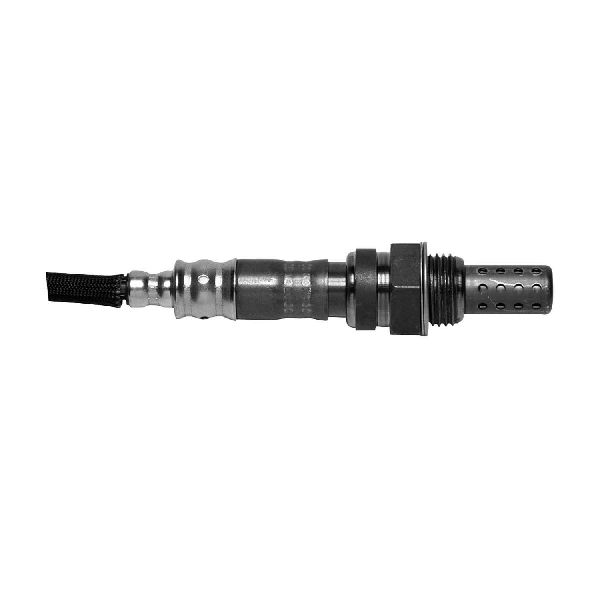
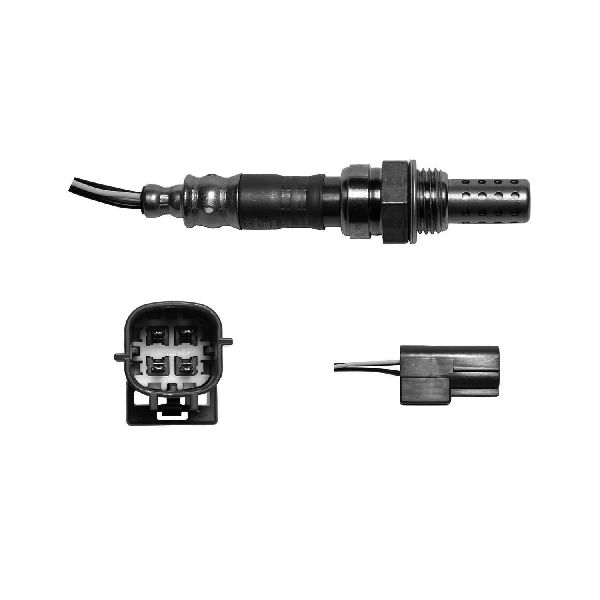
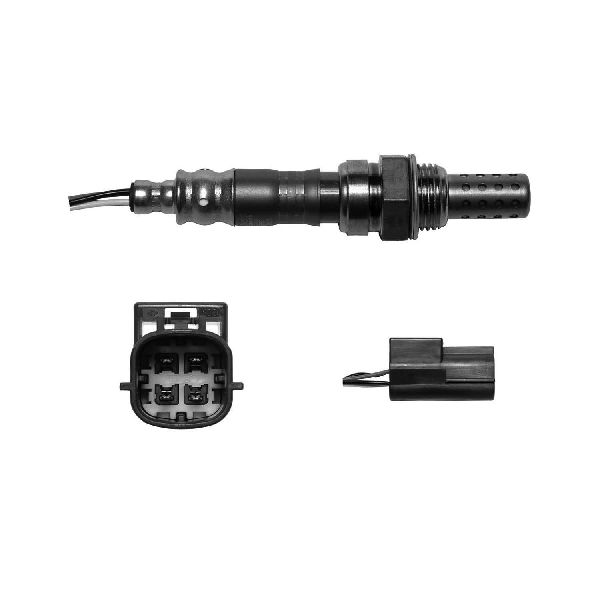
- The correct replacement part is an Air/Fuel Ratio sensor, not a standard O2 sensor. Denso is a trusted OEM supplier.
- If you have both P0133 and P0171, an exhaust or vacuum leak is the most likely culprit.
- This is a DIY-friendly repair if the sensor is not seized and no major exhaust work is needed. Use a 22mm or 7/8" O2 sensor socket and penetrating oil.
What's Unique About the 2003-2007 Infiniti G35
The VQ35DE engine in the G35 is generally reliable, but this code often appears due to one of two main reasons: either the sensor itself has aged and failed, or an exhaust leak is throwing off its readings. G35s and their platform-mate, the Nissan 350Z, are particularly known for developing leaks at the flexible mesh sections of the exhaust Y-pipe. These leaks introduce outside air, making a perfectly good O2 sensor appear 'slow'. Owners should always inspect for these leaks before spending money on a new sensor.
Generation note: The 2003-2007 year range covers the entire first generation (V35) G35. This guide primarily covers the VQ35DE engine found in 2003-2006 sedans/coupes and 2007 coupes. The 2007 G35 sedan uses the newer VQ35HR engine, which has different exhaust manifolds, sensor locations, and part numbers. The VQ35HR is more prone to throwing lean codes (P0171/P0174) from intake-side vacuum leaks, but P0133 can still occur.
Symptoms You May Notice
- Check Engine Light is on
- Reduced fuel economy
- Rough or unstable idle
- Engine hesitation or sluggish acceleration
- Failing an emissions test
- In some cases, a rotten egg or sulfur smell if the condition persists and damages the catalytic converter.
- Replacing the oxygen sensor without first thoroughly checking for exhaust leaks. An exhaust leak will make a new sensor produce the same P0133 code, leading to frustration and wasted money.
Most Likely Causes
- Failing Bank 1, Sensor 1 (A/F Sensor) 🔴 High Probability Oxygen sensors are wear items that degrade over time and with mileage (typically 80k-100k miles). Contamination from oil, carbon, or coolant can slow their response. Many owners on forums like G35Driver report simply replacing the sensor solved the issue after a visual exhaust inspection.
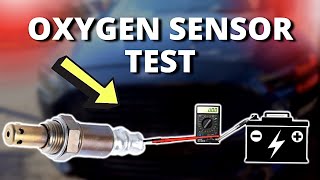
How to confirm: Use a scan tool to graph the voltage of Bank 1 Sensor 1. It should fluctuate rapidly. If it's slow, lazy, or flat compared to Bank 2 Sensor 1 🎬 Watch: How to test an oxygen sensor using live data. (the driver's side), the sensor has likely failed. A healthy sensor's graph will have sharp peaks and valleys, while a failing one will look like a slow, rolling wave.
Typical fix: Replace the Bank 1 (passenger side) upstream Air/Fuel ratio sensor. It is highly recommended to use an OEM or Denso/NTK branded sensor, as some aftermarket sensors are known to cause issues.
Est. part cost: $80-$210 - Exhaust Leak Before the Sensor 🟡 Medium Probability The flexible joints on the factory Y-pipe are a well-documented failure point, prone to cracking and leaking with age and mileage. This is one of the most discussed topics for this code on G35 and 350Z forums.
How to confirm: Visually inspect the exhaust manifolds and the Y-pipe for cracks or black soot trails. A common method is to have a helper briefly block the tailpipe with a rag while the engine is running and listen for hissing sounds from the front of the exhaust system. A shop can perform a smoke test to definitively pinpoint the leak.
Typical fix: If the leak is at the flex pipe, the Y-pipe section needs to be replaced or a new flex section welded in by a muffler shop. If a gasket has failed, replace the gasket.
Est. part cost: $5-$25 for a gasket, $150-$400 for a new Y-pipe. - Damaged Sensor Wiring or Connector ⚪ Low Probability The wiring harness is located under the vehicle and can be damaged by road debris or melt if it comes into contact with hot exhaust components. The connector itself can also accumulate corrosion.
How to confirm: Visually inspect the wiring harness leading to the Bank 1 Sensor 1 for any signs of melting, chafing, or corrosion at the connector pins. Check for continuity with a multimeter. A high resistance reading (>0.5 Ohms) in the harness can dampen the signal and trigger the code.
Typical fix: Repair the damaged section of the harness or clean/replace the connector.
Est. part cost: $10-$50
Rare But Worth Checking
- Vacuum Leak: A large unmetered air leak from a cracked intake hose or bad gasket can lean out the air-fuel mixture enough to affect O2 sensor readings and trigger a P0133 code. This is often accompanied by a P0171 (System Too Lean) code.
- Low Fuel Pressure: A weak fuel pump or clogged filter can cause a lean condition, which may manifest as a slow sensor response. This would typically affect both engine banks, not just one, and may be accompanied by other codes.
- Failing Mass Airflow (MAF) Sensor: → Shop Fuel Injection Air Flow Meter A dirty or failing MAF sensor can provide incorrect airflow data to the ECU, leading to improper fueling that the O2 sensor struggles to read correctly. This usually affects both banks.
- Faulty Engine Control Module (ECU/PCM): → Shop Engine Control Module (ECM) In very rare cases, the ECU itself can be the problem. If the module's internal components develop excessive latency, a perfectly good sensor signal can be perceived as 'slow', triggering P0133. This should only be considered after all other possibilities are exhausted.
Diagnosis Steps
- Read the code with an OBD-II scanner and confirm P0133 is present. Note any other codes, especially P0171.
- Critical First Step: Perform a thorough visual inspection of the exhaust system from the passenger side exhaust manifold to the Y-pipe. Look for cracks, black soot, and pay close attention to the braided flex-pipe sections on the Y-pipe, as this is the most common leak point.
- Inspect the wiring and connector for the Bank 1, Sensor 1 (passenger side, upstream) for any signs of melting, corrosion, or damage. The connector is typically mounted on the engine or firewall.
- If no leaks or wiring damage are found, use a scan tool with live data graphing capabilities. Warm the engine to operating temperature. Observe the voltage signal from Bank 1 Sensor 1 and compare it to Bank 2 Sensor 1 at a steady 2000 RPM.
- A healthy sensor's voltage should switch rapidly and frequently. If the Bank 1 sensor's graph is a slow, lazy wave compared to the sharp, fast wave of the Bank 2 sensor, the Bank 1 sensor itself is faulty.
- If an exhaust leak is suspected but not visible, a smoke test is the most effective way to confirm its location.
- To replace the sensor, disconnect the battery. Access the sensor from under the car or from the top, depending on clearance. 🎬 See this walkthrough for the easiest sensor replacement method. Use a 22mm or 7/8" slotted oxygen sensor socket. The sensor can be very tight; liberal use of a penetrating oil like PB Blaster beforehand is highly recommended.
- If both sensors appear slow, investigate shared causes like vacuum leaks or fuel pressure issues.
Parts You'll Likely Need
- Air/Fuel Ratio Sensor (Bank 1, Sensor 1)
(OEM #22693-CD700 (Superseded by 22693-7S000))— This is the most common part to fail and cause a P0133 code. It is a wear-and-tear item.
Trusted brands: Denso (OEM supplier), NTK, Bosch
OEM price range: $200-$220
Aftermarket price range: $80-$150 - Exhaust Y-Pipe
(OEM #20020-CF40A (example, verify with VIN))— Needed if the flex joints have cracked and are leaking, a very common issue on the G35/350Z.
Trusted brands: Walker, AP Exhaust, Megan Racing (performance)
OEM price range: $400-$600
Aftermarket price range: $150-$350 - Exhaust Gasket (Y-Pipe to Manifold)
(OEM #20692-65J00 (Ring Gasket))— Should be replaced whenever the Y-pipe is removed to prevent leaks.
Trusted brands: Nissan OEM, Fel-Pro
OEM price range: $15-$25
Aftermarket price range: $5-$15
Related Codes That Often Appear With This One
- P0171 — This code for 'System Too Lean (Bank 1)' often appears with P0133 because an exhaust or vacuum leak is a common cause for both. The leak introduces extra, unmetered air, which the sensor reads as a lean condition and also slows its response time as it tries to compensate.
- P0153 — This is the equivalent code for Bank 2 (driver's side). If both P0133 and P0153 are present, it points towards a problem common to both banks, such as low fuel pressure, a faulty MAF sensor, or major vacuum/exhaust leaks affecting the whole system.
Technical Service Bulletins (TSBs) & Recalls
- {'id': 'ITB13-001', 'title': 'MIL ON WITH A/F SENSOR RELATED DTC STORED', 'description': 'For some 2011-2013 models, Infiniti acknowledged that certain A/F sensor codes (including P0133) could be stored. The official action is to replace the affected A/F sensor and, if applicable, reprogram the ECM. While the G35 is older than the vehicles listed, this TSB shows a history of sensor issues being addressed by
- TSB Bulletin #ITB11054A: This manufacturer bulletin addresses instances where P0133 or P0153 are stored in the ECM as a result of one of the A/F sensors. It confirms that these specific DTCs are recognized by Infiniti as indicators of sensor-related faults.
Platform-Specific Known Issues
- The flexible mesh joints on the factory exhaust Y-pipe are a common point of failure, leading to exhaust leaks that directly cause the P0133 code. Many owners on forums like G35Driver and My350z have documented this failure with pictures and repair logs.
Mechanic-Grade Diagnostic Values
- A/F Sensor Heater Circuit Resistance — expected: 5 to 6 Ohms at 20°C (68°F) for upstream sensors. Some aftermarket sensors may differ, for example, showing 2.5 Ohms vs. a faulty one at 4.0 Ohms.. Failure: A reading of 0 Ohms or infinite resistance (OL) indicates a failed heater circuit within the sensor. A significant deviation from the specification or a large difference between the old and new sensor's resistance can also indicate a fault.
- A/F Sensor 1 Live Data Voltage (Generic OBD-II) — expected: On many Nissan/Infiniti vehicles of this era, Bank 1 Sensor 1 (B1S1) typically reads around 0.3V, while Bank 2 Sensor 1 (B2S1) reads around 0.6V during normal cruising. This is a known quirk.. Failure: While P0133 is about response time, not just voltage, a flat or non-responsive voltage reading on B1S1 when compared to a rapidly fluctuating B2S1 points to a bad sensor. A slow, 'lazy' wave instead of sharp peaks and valleys is the key indicator.
- Short Term Fuel Trim (STFT) — expected: Should fluctuate close to 0%, typically within +/- 10%.. Failure: A consistently high positive fuel trim (e.g., +25%) on Bank 1 can indicate the ECU is adding fuel to compensate for a lean condition, which could be caused by an exhaust leak before the sensor, making the sensor appear slow.
Scan Tool Commands That Help
- Manual Procedure (No Scan Tool): ECU Reset / Clear SES Light ('Pedal Dance') — This procedure can be used to clear diagnostic trouble codes after a repair has been made, without needing a scan tool. It involves a specific sequence of turning the ignition on and pressing the accelerator pedal. It's also used for Idle Air Volume Learning and Throttle Valve Closed Position Learning.
- Nissan CONSULT-II/III: A/F Sensor Heater Test — The dealer-level scan tool can actively command the A/F sensor heater circuit to turn on and off, allowing a technician to monitor the current draw and confirm if the heater and its circuit are functioning correctly, which is integral to the sensor's response time.
Wiring & Ground Locations
- ECM Pin 16 — At the main Engine Control Module (ECM) connector.. This is the pin for the Heated Oxygen Sensor 1 (Bank 1) signal. A technician can back-probe this pin to check for a proper signal directly at the ECM, ruling out any wiring issues between the sensor and the computer.
- ECM Pin 75 — At the main Engine Control Module (ECM) connector (for 2005-2006 models).. On later VQ35DE models, the A/F Sensor 1 Bank 1 signal may be located at pin 75. Verifying the correct pinout for the specific model year is crucial for accurate diagnosis.
- A/F Sensor Connector (F24) — Located on the passenger side of the engine bay, connected to the upstream A/F sensor.. This is the primary connection point to inspect for corrosion, damage, or melting. Resistance and voltage tests are performed at this connector. The heater circuit wires are typically the two wires of the same color (e.g., two black wires).
Real Owner Repair Stories
- G35Driver Forum User (2007 G35 Coupe 6MT) — SES light with code P0133.
❌ Tried (didn't work) Started car briefly without the main intake snorkel attached after replacing drive belts.
✅ What actually fixed it The user reset the ECU after the code appeared. The code did not return after 500+ miles, leading to the conclusion that running the engine even for a moment with a disconnected intake piece was enough to trigger the 'slow response' logic, but there was no actual fault with the sensor. - G35Driver Forum User (2005 G35x) — Intermittent CEL for P1283 (A/F Sensor Lean Shift, Bank 2), but diagnostic process is relevant. User noted voltage differences between Bank 1 and Bank 2 A/F sensors.
❌ Tried (didn't work) Switching gasoline brands (initially suspected bad gas from Sam's Club).
✅ What actually fixed it The user graphed both upstream A/F sensors and noted Bank 1 read ~0.3V while Bank 2 read ~0.5V at cruise. This voltage discrepancy between banks is a known characteristic on these cars and not necessarily an indicator of a fault on its own. The actual fix for the user's P1283 was not posted, but the data is valuable for anyone diagnosing P0133 by comparing the two banks.
OEM Part Supersession History
22693-CD700→22693-7S000— Part consolidation and potential minor revisions by Nissan/Infiniti over the years.
Heads up: While 22693-7S000 is the official replacement, it was originally for the Titan truck. Forum users and parts suppliers confirm it is compatible with the G35. It is critical to use a Denso or NTK sensor designed for the VQ35DE, as generic or incorrect sensors can cause persistent issues even if they physically fit.
Model Year Variations Within This Range
- 2005-2007 (6MT models): Models with the 'Rev-Up' version of the VQ35DE engine (identified by dual variable exhaust cam timing) have a higher redline and slightly different powerband. While the P0133 diagnosis is largely the same, these engines are known for higher oil consumption, which can potentially lead to faster contamination and failure of O2 sensors.
- 2005-2006 vs 2003-2004: The mid-pipe section of the exhaust was revised for the 2005-2006 models to be lighter and less restrictive. The Y-pipes, where leaks often cause P0133, remained the same from 2003-2006. This means a Y-pipe from any of these years is interchangeable.
Diagnostic Flowchart
Real Owner Stories
Aggregated from forums and TSBs cited above. Mileages and costs reflect what owners reported in those sources.
2007 G35 Coupe 6MT
Symptoms: SES light came on, P0133 code appeared shortly after doing maintenance including replacing the air filter, cabin filter, and drive belts.
What fixed it: The owner realized they had started the car without attaching the long flat rectangular air intake attachment. Resetting the code resolved the issue, and it did not return after 500+ miles of driving.
Source hint: G35Driver thread 'P0133 code after replacing air filter'
2008 G35XS — 220000 miles
Symptoms: Persistent O2 sensor codes (Bank 1, Sensor 1) for about a year. Car runs fine, no roughness or noise. Fuel economy is around 14L/100 km.
What fixed it: The owner replaced the sensors but the code returned more frequently. The mechanic noted the engine was running lean, indicating a potential unmetered air leak rather than a sensor failure.
Source hint: Reddit r/G35
2003-2007 Infiniti G35
Symptoms: P0133 code triggered alongside a suspected exhaust leak.
What fixed it: Visual inspection revealed a failed flex pipe on the factory Y-pipe, which is a classic and highly documented cause for this code on the G35 platform.
Source hint: g35driver.com thread titled 'Exhaust y-pipe leaking! What to do?'
Related OBD-II Codes
Frequently Asked Questions
Is the factory Y-pipe a common cause for P0133 on my 2003-2007 G35?
Which brand of oxygen sensor should I use to replace Bank 1 Sensor 1 on my VQ35DE engine?
Does Infiniti TSB ITB13-001 apply to my 2003-2007 G35?
Where exactly is Bank 1 Sensor 1 located on the G35?
I have both P0133 and P0171 codes on my G35. What does this mean?
How difficult is it to remove the upstream O2 sensor on the G35?
Helpful Videos
We Have This Part in Stock


The information in this article is provided for general reference and educational purposes only. Vehicle specifications, procedures, and part compatibility can vary by production date, trim level, and region. Always consult your vehicle's factory service manual and verify part numbers before purchasing or performing repairs. Safety-critical components such as airbags, seat belts, and braking systems should be installed by a qualified professional.
- Infiniti G35:
- 🧭 Diagnostic Flowchart
- 🎬 Helpful Videos
- 🛍️ Shop This Part
- What's Unique About the 2003-2007 Infiniti G35
- Symptoms You May Notice
- Most Likely Causes
- Rare But Worth Checking
- Diagnosis Steps
- Parts You'll Likely Need
- Related Codes That Often Appear With This One
- Technical Service Bulletins (TSBs) & Recalls
- Platform-Specific Known Issues
- Mechanic-Grade Diagnostic Values
- Scan Tool Commands That Help
- Wiring & Ground Locations
- Real Owner Repair Stories
- OEM Part Supersession History
- Model Year Variations Within This Range
- Real Owner Stories
- 2007 G35 Coupe 6MT
- 2008 G35XS — 220000 miles
- 2003-2007 Infiniti G35
- Related OBD-II Codes
- Frequently Asked Questions
- 🎟️ Get 5% Off