

P0133 on 2016-2022 Jeep Cherokee: O2 Sensor Slow Response Causes & Fixes
P0133 on a Jeep Cherokee most often means the upstream oxygen sensor (Bank 1, Sensor 1) is failing. Before replacing it, check for exhaust leaks and crucial PCM software updates mentioned in manufacturer bulletins, especially on 2.4L models. A new sensor costs between $60 and $150 for the part, but access on the 3.2L V6 is difficult.
- P0133 means the upstream O2 sensor on Bank 1 (the rear bank on the V6, or the only bank on the I4) is responding too slowly.
- The most likely cause is a failing O2 sensor, which is a common wear-and-tear item.
- **Crucially**, check for Jeep Technical Service Bulletins (TSBs) related to PCM software updates before replacing any parts, as software glitches are a known cause for this code on Cherokees.
- Always inspect for exhaust leaks between the engine and the sensor, as this can mimic a faulty sensor.
- Use a scan tool to watch the sensor's live data to confirm a slow response before spending money on a replacement part.
What's Unique About the 2016-2022 Jeep CHEROKEE
For the 2016-2022 Jeep Cherokee (KL generation), a P0133 code is not always a straightforward case of a bad sensor. Jeep has issued multiple Technical Service Bulletins (TSBs) indicating that this code can be triggered by software glitches in the Powertrain Control Module (PCM). These TSBs show P0133 appearing alongside a variety of other seemingly unrelated codes, which often points to a need for a PCM software update rather than a part replacement. This issue is particularly well-documented for the 2.4L Tigershark engine and is also seen in platform mates like the Dodge Dart and Chrysler 200, confirming a systemic software sensitivity issue across FCA products. Therefore, checking for available updates with a dealer is a critical and unique diagnostic step for this vehicle.
Diagnostic Flowchart
Tap your situation to follow the diagnostic path that matches what you're seeing on this vehicle.
Symptoms You May Notice
- Check Engine Light is on
- Reduced fuel economy
- Rough or poor idle
- Engine hesitation or lack of power
- Black smoke from the exhaust in some cases
- Failing a vehicle emissions test
- Replacing the catalytic converter. A P0133 code points to the sensor *before* the converter. The sensor is the monitoring device, and it is far more likely to fail than the converter itself for this specific code.
- Replacing the wrong O2 sensor. P0133 is for Bank 1, Sensor 1 (upstream). Do not replace the downstream sensor (Sensor 2).
- Using a cheap, incompatible aftermarket O2 sensor. Owners on multiple platforms report that FCA vehicles can be picky, and using non-OEM or non-OEM-equivalent (NTK, Denso) sensors can cause the code to return.
Most Likely Causes
- Failing or Contaminated Upstream Oxygen Sensor (Bank 1, Sensor 1) 🔴 High Probability → Shop Oxygen Sensor Over time, oxygen sensors become contaminated with carbon, soot, or oil, or simply wear out, which slows their response time. On the 3.2L V6, a common source of oil contamination is a leaking rear valve cover gasket, which can drip oil directly onto the Bank 1 O2 sensor.
How to confirm: Use a scan tool with live data graphing capabilities. Observe the voltage of the Bank 1 Sensor 1 O2 sensor. A healthy sensor's voltage will fluctuate rapidly between approximately 0.1 and 0.9 volts. A slow, lazy, or rounded waveform indicates a failing sensor. For the 3.2L V6, visually inspect the area around the rear O2 sensor for signs of oil leaking from the valve cover above it.
Typical fix: Replace the Bank 1, Sensor 1 oxygen sensor. On the 2.4L I4 engine, this sensor is easily accessible at the front in the exhaust manifold. On the 3.2L V6 engine, Bank 1 is the rear bank (closer to the firewall), and the sensor is significantly harder to access.
Est. part cost: $60-$150 - Outdated Powertrain Control Module (PCM) Software 🔴 High Probability → Shop Engine Control Module (ECM) Jeep has released several TSBs that address P0133 being set due to software sensitivity. TSB 18-014-16 REV. A specifically applies to 2.4L models built on or before February 1, 2016, where the PCM may misinterpret a normal sensor signal as a slow one. This is a very common issue across similar FCA vehicles.
How to confirm: A Jeep dealership or a qualified independent shop with access to OEM software (like wiTECH) can check your vehicle's VIN against available TSBs and determine if a PCM update is available.
Typical fix: Update or 'reflash' the PCM with the latest software version. This is often the first step a dealer will perform.
Est. part cost: $0-$200 - Exhaust System Leak 🟡 Medium Probability Leaks in the exhaust manifold or the pipework before the O2 sensor can allow outside air to enter the exhaust stream. This extra oxygen skews the sensor's readings, making it appear slow to respond to actual changes in combustion.
How to confirm: Visually inspect the exhaust manifold and downpipe for cracks or loose bolts. A smoke machine test is effective. A great DIY method is to use a shop-vac: connect the hose to the blower outlet, stick it in the tailpipe, and turn it on. This will pressurize the system, making it easy to feel or hear air escaping from any leaks upstream.
Typical fix: Repair the leak by replacing the faulty gasket, tightening bolts, or welding the cracked component.
Est. part cost: $20-$200 - Damaged Wiring or Connectors ⚪ Low Probability
How to confirm: Visually inspect the wiring harness and connector for the Bank 1, Sensor 1 O2 sensor. Look for any signs of melting, chafing, corrosion, or loose pins. Use a multimeter to check for continuity and proper voltage at the connector, referencing a wiring diagram for your specific engine.
Typical fix: Repair the damaged section of the wiring harness or replace the connector.
Est. part cost: $10-$50
Rare But Worth Checking
- Engine Vacuum Leak: A significant vacuum leak (e.g., from an intake manifold gasket) can introduce unmetered air into the engine, creating a lean condition that can sometimes manifest as a slow O2 sensor response code.
- Low Fuel Pressure: Incorrect fuel pressure can also affect the air-fuel ratio in a way that might confuse the O2 sensor's readings and trigger a P0133 code.
Diagnosis Steps
- Read all diagnostic trouble codes stored in the PCM. Note any other codes that appear alongside P0133, as they are crucial clues (see 'Often Seen With Codes').
- Check for applicable Technical Service Bulletins (TSBs) for your vehicle's VIN. If a PCM update related to P0133 is available (especially for 2.4L engines), this should be performed before replacing parts.
- Inspect the Bank 1 Sensor 1 O2 sensor's wiring harness and connector for any visible damage, melting, or corrosion.
- Thoroughly inspect the exhaust system for leaks between the cylinder head and the O2 sensor. Use a smoke machine or the shop-vac method. Pay close attention to the exhaust manifold and any gaskets.
- Using a scan tool, monitor the live data stream for the Bank 1 Sensor 1 O2 sensor. Graph the voltage and confirm it is switching slowly compared to a known good sensor (or Bank 2 Sensor 1 on V6 models). The switch rate should be under 100ms.
- If no software issues, leaks, or wiring problems are found, and the sensor's waveform is confirmed to be slow, replace the Bank 1, Sensor 1 oxygen sensor.
Parts You'll Likely Need
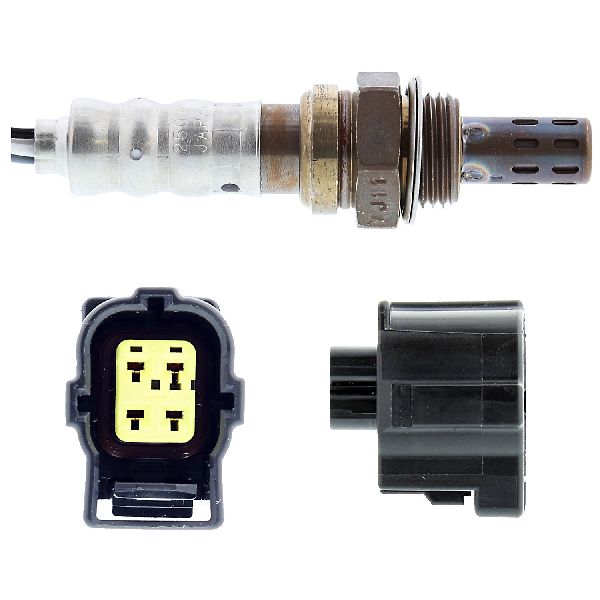
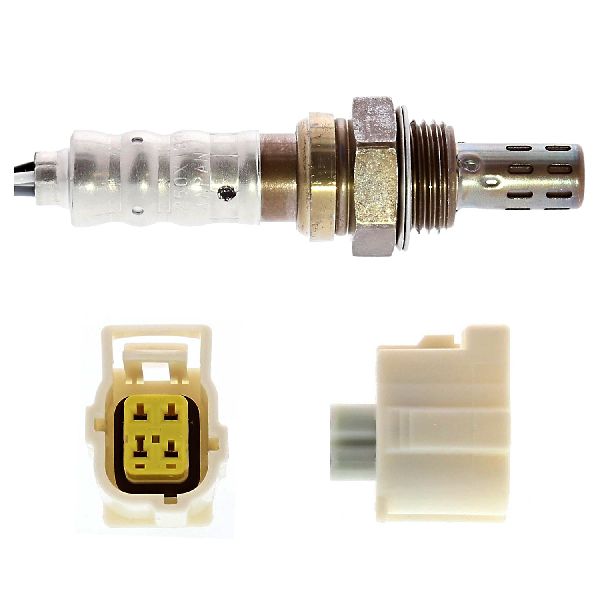
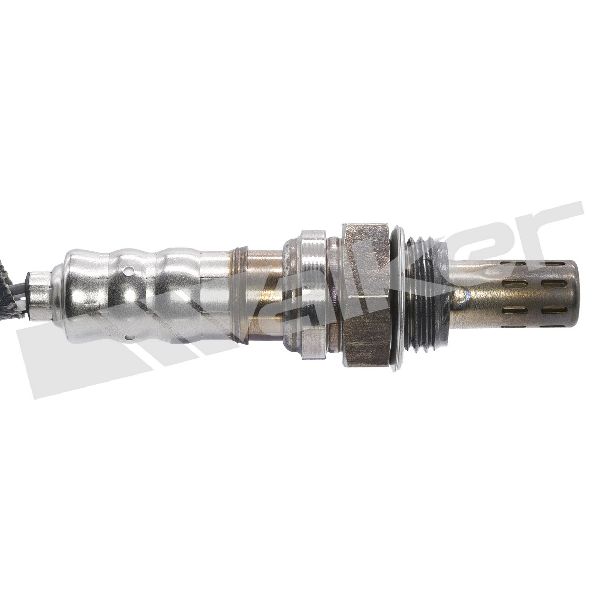
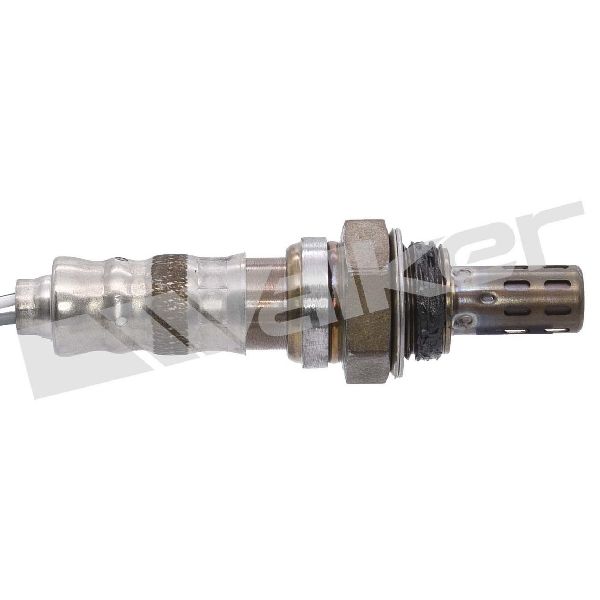
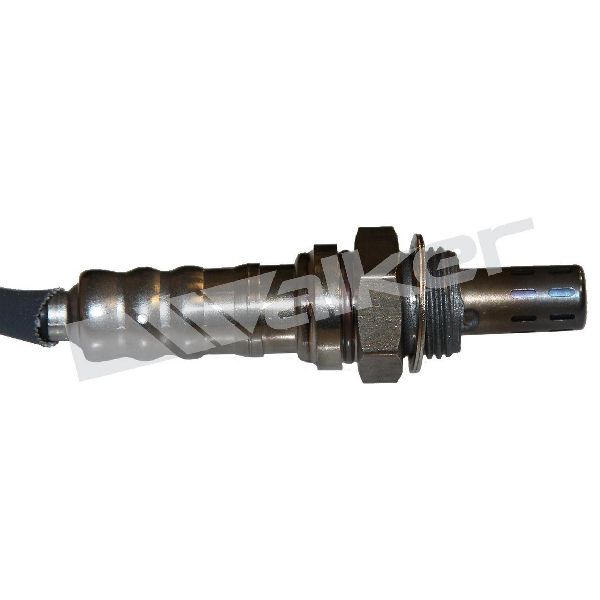
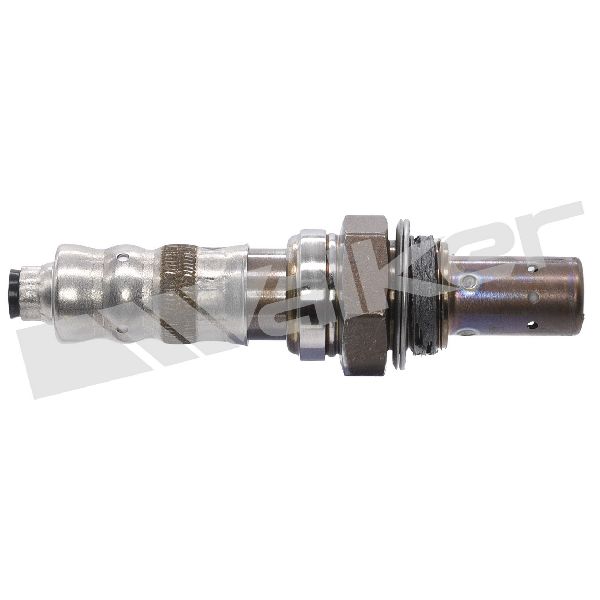
- Upstream Oxygen Sensor (Bank 1, Sensor 1)
(OEM #Varies by specific year and engine; confirm with VIN. No single part number covers all models.)— This is the sensor that the code directly identifies as having a slow response. It is the most common component to fail and cause a P0133 code.
Trusted brands: Mopar (OEM), NTK (Often the OEM supplier), Denso
OEM price range: $100-$180
Aftermarket price range: $60-$120
Related Codes That Often Appear With This One
- P0153 — This is the same 'slow response' code but for Bank 2, Sensor 1. Seeing both P0133 and P0153 together (on V6 models) strongly suggests a systemic issue like a software problem (per TSB S2225000002), vacuum leak, or fuel delivery issue rather than two failed sensors at once.
- P0101, P0335, P1607, P2610, B104D — TSB 18-014-16 REV. A lists these exact codes appearing with P0133 on 2.4L models. This combination of seemingly unrelated codes (Mass Air Flow, Crankshaft Position, PCM timers) is a very strong indicator of a PCM software issue that requires a reflash.
Technical Service Bulletins (TSBs) & Recalls
- S2225000002: Mentions P0133-O2 Sensor Circuit Slow Response 1/1 may be present in a pending status.
- 18-014-16 REV. A: Lists P0133 as one of several DTCs on 2.4L models (built on/before Feb 1, 2016) that can be resolved with a PCM software update.
Platform-Specific Known Issues
- Engine-Specific Sensor Location and Difficulty: On the 2.4L I4 engine, the Bank 1 Sensor 1 is located on the front exhaust manifold and is relatively easy to access. On the 3.2L V6 engine, Bank 1 is the rear bank (closer to the firewall). The Sensor 1 in this location is significantly more difficult to access and may require removal of other components for clearance, increasing labor time and difficulty.
- Valve Cover Gasket Leaks (3.2L V6): → Shop Engine Valve Cover A known issue on the 3.2L Pentastar V6 is a leaking valve cover gasket on the rear bank. Oil can drip directly onto the Bank 1 O2 sensor and its wiring, causing contamination, electrical shorts, and eventual failure, triggering a P0133 code.
- TSB Software Update for 2.4L Engine: TSB #18-014-16 REV. A specifically calls for a PCM software update on 2016 models with the 2.4L engine built on or before February 1, 2016, to fix P0133 when it appears with a cluster of other codes.
Mechanic-Grade Diagnostic Values
- O2 Sensor Heater Element Resistance — expected: Between 2.0 and 30.0 ohms at 70°F (21.1°C).. Failure: A reading of 0 ohms (short circuit) or infinite/OL (open circuit) indicates a failed heater element within the sensor.
- O2 Sensor Signal Voltage Fluctuation — expected: Rapidly and consistently switching between approximately 0.1V (lean) and 0.9V (rich).. Failure: A slow, lazy, or flat-lined voltage reading that does not switch quickly (e.g., takes more than 1-2 seconds) indicates a slow sensor. The switch should ideally occur in under 100ms.
- O2 Sensor Signal Harness Resistance — expected: Less than 0.5 Ω.. Failure: Resistance greater than 0.5 Ω can dampen the voltage signal, slowing its response time and triggering P0133 even if the sensor itself is good.
Scan Tool Commands That Help
- wiTECH (or equivalent professional scanner): O2 Heater Test — Use this bidirectional command with the ignition on and engine off to force the O2 sensor's heater circuit on. While actuating the test, you can monitor the sensor voltage and current draw to confirm the heater, its wiring, and the PCM driver are all functioning correctly.
Wiring & Ground Locations
- O2 Sensor Heater Circuit — Within the 4-wire connector for the O2 sensor. The two heater wires are often the same color (e.g., both black or both white).. A malfunctioning heater circuit is a primary cause of a slow sensor response, as the sensor must reach a specific temperature (around 600°F) to function correctly. Testing for power and ground at these specific wires is crucial before condemning the sensor.
- Engine to Chassis Ground Straps — Locations vary by engine, but typically found from the cylinder head or engine block to the firewall or frame rail.. A poor engine ground can create a voltage offset and interfere with the low-voltage signal from the O2 sensor to the PCM, potentially causing incorrect readings or slow response codes. Ensuring all main grounds are clean and tight is a fundamental diagnostic step.
Real Owner Repair Stories
- Jeep Cherokee Forum (1999 Jeep Cherokee XJ 4.0L (Note: Older generation, but diagnostic principle is identical)) — Check Engine Light with code P0138 (O2 Sensor Circuit High Voltage), a related sensor fault.
❌ Tried (didn't work) Initial diagnosis
✅ What actually fixed it The user tested the downstream O2 sensor's heater circuit and found no resistance (a short), when it should have been 4-7 ohms. Replacing the sensor with a new Denso part resolved the code. - Jeepz.com Forum (Jeep (model not specified, likely JK Wrangler based on forum context)) — P0133 error code.
❌ Tried (didn't work) User was considering if it was an exhaust leak.
✅ What actually fixed it Expert advice in the thread was to check wiring first, then check for exhaust leaks at the manifold. If those are clear, replace the sensor but specifically use an OEM or NTK brand sensor, as Jeeps can be sensitive to aftermarket brands.
Model Year Variations Within This Range
- 2019-2022: A major facelift occurred for the 2019 model year, introducing revised exterior styling and an optional 2.0L direct-injection turbocharged engine alongside the existing 2.4L I4 and 3.2L V6. This adds another engine platform to consider for diagnosis, with different part numbers and potential software calibrations for P0133.
- 2016 (and potentially others): TSB #18-014-16 REV. A is specific to 2.4L models built on or before February 1, 2016. This highlights that software calibrations are not uniform across all years and that early-production models of this generation were more prone to this specific software-induced fault.
We Have This Part in Stock

The information in this article is provided for general reference and educational purposes only. Vehicle specifications, procedures, and part compatibility can vary by production date, trim level, and region. Always consult your vehicle's factory service manual and verify part numbers before purchasing or performing repairs. Safety-critical components such as airbags, seat belts, and braking systems should be installed by a qualified professional.
- Jeep CHEROKEE:
- 🧭 Diagnostic Flowchart
- 🛍️ Shop This Part
- What's Unique About the 2016-2022 Jeep CHEROKEE
- Symptoms You May Notice
- Most Likely Causes
- Rare But Worth Checking
- Diagnosis Steps
- Parts You'll Likely Need
- Related Codes That Often Appear With This One
- Technical Service Bulletins (TSBs) & Recalls
- Platform-Specific Known Issues
- Mechanic-Grade Diagnostic Values
- Scan Tool Commands That Help
- Wiring & Ground Locations
- Real Owner Repair Stories
- Model Year Variations Within This Range
- 🎟️ Get 5% Off