

P0133 on 2010-2013 Kia Forte: O2 Sensor Slow Response Causes and Fixes
On a 2010-2013 Kia Forte, code P0133 is almost always caused by a worn-out upstream oxygen sensor (Bank 1, Sensor 1). Replacing this sensor is the most common fix, costing between $60 and $200 for the part. It's a DIY-friendly job for many. Before replacing, check for exhaust leaks and wiring damage.
- P0133 on your Forte points directly to a slow-reacting upstream oxygen sensor (Bank 1, Sensor 1).
- The most likely fix is to replace the sensor. This is a manageable DIY job for many, but requires a special 22mm (7/8") O2 sensor socket.
- Before buying a new sensor, always perform a quick visual inspection for exhaust leaks (soot marks) and check the sensor's wiring for any damage, as these are common secondary causes.
- Use a quality aftermarket brand like Denso, NTK, or Bosch, as these vehicles can be sensitive to cheap, universal sensors.
What's Unique About the 2010-2013 Kia Forte
The 2010-2013 Kia Forte, whether equipped with the 2.0L or 2.4L Theta II engine, uses a straightforward inline-four cylinder design, meaning it only has one exhaust bank (Bank 1). This simplifies diagnosis as there's only one upstream O2 sensor to check. The issue is typically a standard wear-and-tear failure of the sensor itself rather than a more complex systemic problem. Owners and technicians on forums frequently report that these engines are sensitive to sensor quality, making it important to use reputable OEM-equivalent brands like Denso or NTK for a lasting repair.
Symptoms You May Notice
- Check Engine Light is on
- Decreased fuel economy
- Rough or unstable idle
- Hesitation during acceleration
- Failing an emissions test
- Sulfur or "rotten egg" smell from the exhaust
- Replacing the downstream (Bank 1, Sensor 2) oxygen sensor. Code P0133 specifically points to the upstream sensor (Sensor 1).
- Replacing the catalytic converter. A slow O2 sensor is a far more common and less expensive failure. The sensor should always be diagnosed and replaced first.
- Ignoring an exhaust leak. If a small crack or bad gasket is letting in fresh air, a new O2 sensor will not fix the code.
Most Likely Causes
- Failing Upstream Oxygen (O2) Sensor 🔴 High Probability → Shop Oxygen Sensor Oxygen sensors are wear-and-tear items that degrade over time from heat and contaminants. It's the most common point of failure for this code, often failing between 60,000 and 100,000 miles.
How to confirm: Use an OBD-II scanner with live data to graph the Bank 1 Sensor 1 voltage. A healthy sensor will show rapid, frequent fluctuations between ~0.1V and ~0.9V. A slow sensor will have lazy, delayed switches or get stuck at a certain voltage.
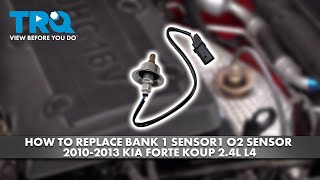
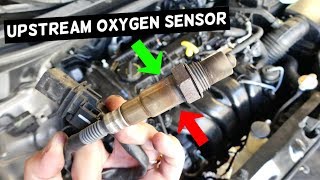
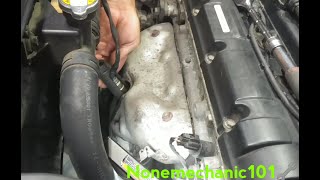
Typical fix: Replace the Bank 1, Sensor 1 oxygen sensor. The sensor is located on the exhaust manifold at the back of the engine, accessible from the top of the engine bay. 🎬 Watch: Step-by-step 2.4L upstream O2 sensor replacement guide. A special 22mm (or 7/8") O2 sensor socket is often requ 🎬 See how to swap the upstream sensor on a Forte.ired.
Est. part cost: $60-$220 - Exhaust System Leak 🟡 Medium Probability Rust can cause cracks or gasket failures in the exhaust manifold or flex pipe, allowing outside air to enter the exhaust stream before the sensor, which slows its perceived response.
How to confirm: Visually inspect the exhaust manifold for cracks or black soot marks indicating a leak. Listen for a 'ticking' or 'puffing' noise from the engine bay, especially when the engine is cold. A shop can perform a smoke test to pinpoint the leak.
Typical fix: Repair the leak. This may involve replacing the exhaust manifold gasket or the entire manifold if it is cracked. One owner on a forum found that a missing stud on the exhaust manifold was the root cause of a persistent P0133 code, even after replacing the sensor twice.
Est. part cost: $20-$300 - Damaged Sensor Wiring or Connector ⚪ Low Probability The wiring harness is close to hot exhaust components and can become brittle, melted, or frayed over time. The connector pins can also corrode.
How to confirm: Visually inspect the O2 sensor's wiring harness and connector for any signs of melting, chafing, or corrosion. Use a multimeter to check for continuity and proper voltage at the connector, referencing a wiring diagram for your vehicle.
Typical fix: Repair the damaged section of the wiring harness or replace the connector pigtail.
Est. part cost: $15-$50
Rare But Worth Checking
- Engine Vacuum Leak: A significant vacuum leak from a cracked hose or bad intake gasket can throw off the air-fuel mixture enough to trigger O2 sensor codes. This would typically be accompanied by other symptoms like a high, erratic idle or a hissing sound.
- Contaminated Sensor: An internal engine issue causing excessive oil or coolant to burn can foul the tip of the oxygen sensor, causing it to fail prematurely. If you replace the sensor and the code returns quickly, investigate for signs of oil consumption or a head gasket leak.
- ECM Software Glitch: While not common for this specific code on this model, some Kia vehicles have had service actions for ECM software updates to address other DTCs. It's a remote possibility that an outdated software version could be overly sensitive.
Diagnosis Steps
- Scan the vehicle for any other stored trouble codes to see if P0133 is appearing alone or with other codes, like P0135 or P0171.
- Use a scan tool's live data feature to observe the Bank 1 Sensor 1 voltage graph. A healthy sensor's voltage should fluctuate rapidly and consistently between approximately 0.1V and 0.9V. A slow, lazy waveform indicates a problem. 🎬 Watch this P0133 diagnosis and sensor replacement on a platform mate.
- Perform a thorough visual inspection of the exhaust system from the manifold to the catalytic converter. Look for black soot marks, cracks, or listen for audible ticking sounds that would indicate an exhaust leak.
- Inspect the O2 sensor's wiring harness and connector for any signs of melting, corrosion, or physical damage. Ensure the connector is securely plugged in.
- If the sensor signal is slow and no leaks or wiring damage are found, the sensor itself is the most likely culprit.
- Before replacing the sensor, check for any engine-related Technical Service Bulletins (TSBs) or recalls for your vehicle's VIN, as underlying engine issues can sometimes be misdiagnosed as sensor problems.
Parts You'll Likely Need
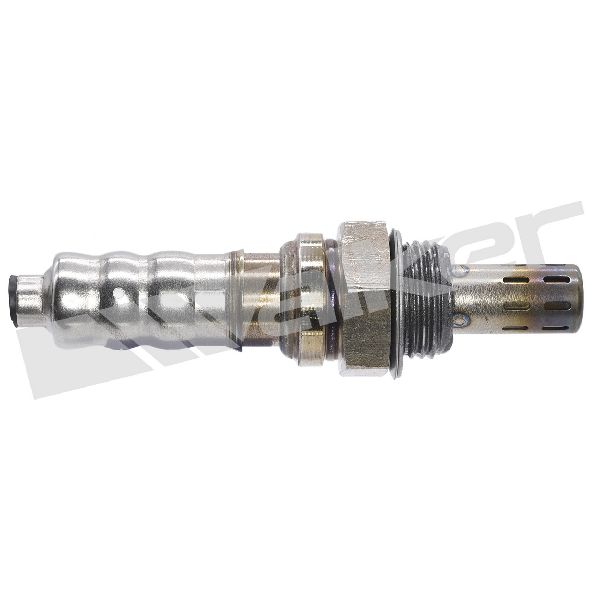
- Upstream Oxygen Sensor (Bank 1, Sensor 1)
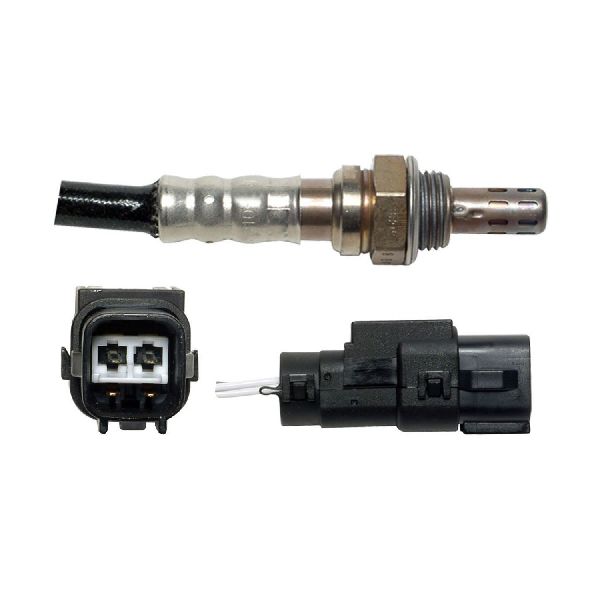
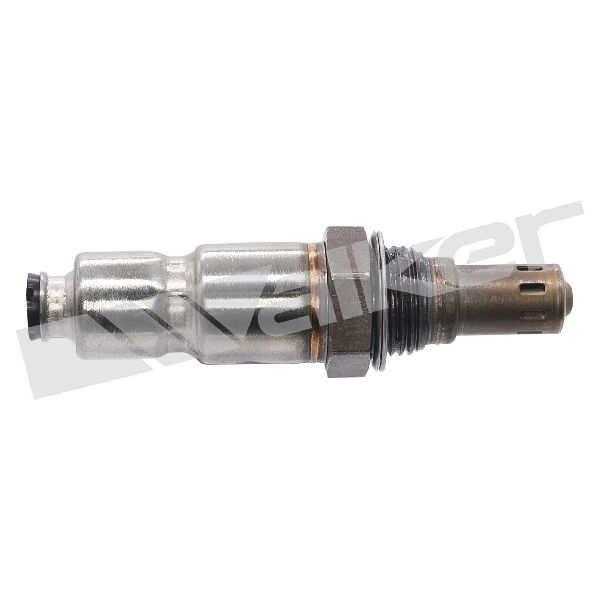
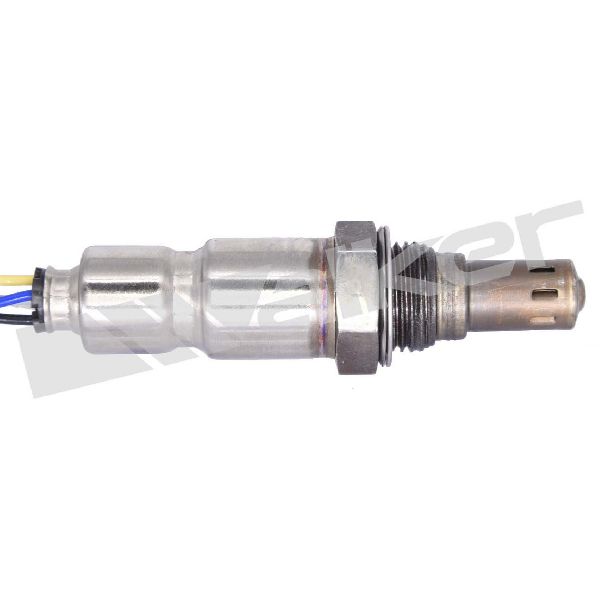
(OEM #39210-2B110 (For 2.0L & 2.4L Theta II engines, verify by VIN))— This is the primary component responsible for the measurement that triggers code P0133. It is a common wear item that fails with age and mileage.
Trusted brands: Denso (e.g., 234-4117), NGK/NTK (e.g., 25160), Bosch
OEM price range: $150-$220
Aftermarket price range: $60-$120
Related Codes That Often Appear With This One
- P0135 — This code indicates a fault in the O2 sensor's internal heater circuit. A failed heater will prevent the sensor from warming up quickly, almost always causing a P0133 slow response code to appear as well.
- P0171 — This code indicates the engine is running too lean. An exhaust leak before the O2 sensor can cause both a lean condition and be interpreted as a slow sensor response, triggering both codes.
- P0300-P0304 — Misfire codes can sometimes appear if the slow O2 sensor is causing a poor air-fuel mixture, leading to incomplete combustion.
Technical Service Bulletins (TSBs) & Recalls
- TSB CHA-074: Describes the repair procedure for a worn MDPS (Motor Driven Power Steering) flexible coupler, a very common issue on 2012-2013 Fortes that causes a clicking noise in the steering column. This is unrelated to P0133 but a key platform issue.
Platform-Specific Known Issues
- Persistent P0133 after sensor replacement is often due to an overlooked exhaust manifold leak. One owner on a Hyundai forum (platform mate) found cracks and a missing stud on the manifold which caused the issue.
Mechanic-Grade Diagnostic Values
- Upstream O2 Sensor (HO2S B1S1) Heater Resistance — expected: 2.5 ~ 4.0 Ω at 20°C (68°F). Failure: A reading outside this range indicates a faulty internal heater, which will cause slow sensor warm-up and trigger P0133.
- Live Data O2 Sensor Voltage (B1S1) — expected: Constantly fluctuating between 0.1V and 0.9V on a warm engine.. Failure: A lazy, slow-moving waveform or a voltage that is stuck indicates a failing sensor.
- O2 Sensor Installation Torque — expected: 30 ~ 35 lb-ft (45 ~ 49 N.m). Failure: Improper torque can lead to exhaust leaks (if too loose) or damaged threads (if too tight).
Scan Tool Commands That Help
- iCarsoft CR Max/CR Eagle (or similar professional scanner): Bidirectional Control / Actuation Test for O2 Sensor — This function allows the technician to command the fuel mixture rich or lean and observe the O2 sensor's reaction time directly on the scan tool's live data graph. This is a definitive way to confirm if the sensor is truly slow to respond, isolating it from other potential causes.
Wiring & Ground Locations
- Engine Ground Strap — Connects the engine block/transmission to the vehicle's chassis, typically near a motor mount or on the transmission housing.. A corroded or loose engine ground strap can create electrical noise and voltage drop issues, affecting the reference ground for sensors like the O2 sensor. This can lead to erratic or biased readings that the ECM may interpret as a slow response. The OEM part number for the transmission ground cable on automatic models is 91860-1M140.
- B1S1 Connector — Located at the back of the engine towards the driver's side. The connector for the upstream sensor has a distinct yellow locking tab.. This is the primary connection point to inspect for corrosion, backed-out pins, or harness damage from heat before condemning the sensor itself.
Real Owner Repair Stories
- Kia-Forums user (2010 Kia Forte 2.0L) — P0133 code returned immediately after replacing the upstream O2 sensor.
❌ Tried (didn't work) Replaced upstream O2 sensor (Bosch brand), Checked for exhaust leaks
✅ What actually fixed it The user was advised that Bosch sensors can be problematic on these cars and to use an OEM or NTK/Denso sensor. The final fix was replacing a faulty MAP (Manifold Absolute Pressure) sensor, which was causing an incorrect air-fuel mixture that the ECM interpreted as a slow O2 sensor response. - NHTSA ODI #11513767 — An owner of a similar Kia model reported that P0133 appeared alongside a long list of other codes including P0087, P0506, P2096, and misfire codes P0300 through P0306, suggesting that systemic engine issues can sometimes trigger this sensor response code.
When the Usual Fixes Don't Work
- In one documented case for a 2010 Forte, replacing the upstream O2 sensor did not fix the P0133 code. After confirming no exhaust leaks were present, the actual cause was determined to be a faulty Manifold Absolute Pressure (MAP) sensor. This highlights that while the O2 sensor is the most common cause, other sensors influencing the air-fuel mixture can mislead the ECU and trigger this code.
Diagnostic Flowchart
Other Known Issues on This Vehicle
Issues unrelated to this code that are worth knowing about as an owner of this generation:
- MDPS Flexible Coupler Failure 🟠 Medium — Very common on 2012-2013 models. Causes a distinct clicking or knocking sound in the steering column when turning at low speeds. (Ref: TSB CHA-074)
- Brake Light Switch Failure 🔴 High — Widespread enough to trigger a recall. Can cause brake lights to fail to illuminate (or stay on), prevent shifting out of Park, and disable cruise control. (Ref: NHTSA Recall 13V-114000 (Kia Campaign SC098))
- Air Bag Control Unit (ACU) Short Circuit 🔴 High — Subject of a major recall. In a crash, the ACU could short circuit, preventing frontal airbags and seatbelt pretensioners from deploying. (Ref: NHTSA Recall 18V-363 (Kia Campaign SC165))
- Engine Compartment Fire Risk (HECU) 🔴 High — Part of a large recall involving the Hydraulic Electronic Control Unit (HECU), which can short circuit and cause a fire, even when the vehicle is parked. (Ref: NHTSA Recall (number varies by specific production date, but affects 2010-2013 models))
Used vs. New Parts: Buying Guide for This Vehicle
When a used part is the smart pick: For this repair, using a used part is generally not recommended for the oxygen sensor itself. However, if the cause is a cracked exhaust manifold, a used manifold from a low-mileage, rust-free donor vehicle is a perfectly acceptable and cost-effective repair.
Donor-vehicle mileage cap: roughly under 80000 miles for the part to have meaningful remaining life.
What to inspect on the donor part:
- For an exhaust manifold, check for hairline cracks, especially around the welds and flange.
- Ensure all mounting studs are present and not broken off.
- Look for a donor vehicle from a dry, non-salt-belt region to minimize rust and corrosion.
Aftermarket brands forum-validated for this vehicle:
- NTK (often the OEM supplier)
- Denso
- Mando
Brands owners have reported issues with on this vehicle:
- Bosch (Some forum users report compatibility issues and premature failures on this specific platform).
- Unbranded or 'white-box' sensors from online marketplaces.
Real Owner Stories
Aggregated from forums and TSBs cited above. Mileages and costs reflect what owners reported in those sources.
2010 Hyundai Genesis coupe 2.0T — 80157 miles
Symptoms: Check Engine Light with code P0133. No adverse effects noticed, car runs great, idles well, and gets the same gas mileage.
What fixed it: The issue was not resolved after replacing the Bank 1 Sensor 1 with a new OEM sensor and replacing the downstream O2 sensor.
Source hint: reddit r/MechanicAdvice
2003 Hyundai Elantra (platform mate)
Symptoms: Persistent P0133 DTC after replacing the oxygen sensor twice.
What fixed it: The owner suspected an exhaust manifold leak (cracks and a missing stud) was the root cause.
Source hint: scannerdanner.com/forum thread 'Pesky P0133 DTC'
2010 Kia Soul (platform mate)
Symptoms: The P0133 code returned immediately after replacing the upstream O2 sensor.
What fixed it: Suggestions were made to check for exhaust leaks or faulty new parts.
Source hint: reddit.com/r/MechanicAdvice '2010 kia soul 2.0 code p0133'
Related OBD-II Codes
Frequently Asked Questions
Does TSB CHA-074 for the 2012-2013 Kia Forte address the P0133 engine code?
I replaced the O2 sensor on my Kia Forte but P0133 returned. What else should I check?
Is there a specific tool I need to change the Bank 1 Sensor 1 O2 sensor on my Forte?
Could a recall be responsible for my Kia Forte's P0133 code?
At what mileage does the upstream O2 sensor typically fail on the 2010-2013 Forte?
Can I use a scan tool to confirm if my Forte's O2 sensor is actually bad?
Helpful Videos
We Have This Part in Stock


The information in this article is provided for general reference and educational purposes only. Vehicle specifications, procedures, and part compatibility can vary by production date, trim level, and region. Always consult your vehicle's factory service manual and verify part numbers before purchasing or performing repairs. Safety-critical components such as airbags, seat belts, and braking systems should be installed by a qualified professional.
- Kia Forte:
- 🧭 Diagnostic Flowchart
- 🎬 Helpful Videos
- 🛍️ Shop This Part
- What's Unique About the 2010-2013 Kia Forte
- Symptoms You May Notice
- Most Likely Causes
- Rare But Worth Checking
- Diagnosis Steps
- Parts You'll Likely Need
- Related Codes That Often Appear With This One
- Technical Service Bulletins (TSBs) & Recalls
- Platform-Specific Known Issues
- Mechanic-Grade Diagnostic Values
- Scan Tool Commands That Help
- Wiring & Ground Locations
- Real Owner Repair Stories
- When the Usual Fixes Don't Work
- Other Known Issues on This Vehicle
- Used vs. New Parts: Buying Guide for This Vehicle
- Real Owner Stories
- 2010 Hyundai Genesis coupe 2.0T — 80157 miles
- 2003 Hyundai Elantra (platform mate)
- 2010 Kia Soul (platform mate)
- Related OBD-II Codes
- Frequently Asked Questions
- 🎟️ Get 5% Off