

P0133 on 2011-2015 Kia Optima: O2 Sensor Slow Response Causes and Fixes
For a 2011-2015 Kia Optima with the 2.4L or 2.0T engine, code P0133 is almost always caused by a failing upstream oxygen sensor (Bank 1, Sensor 1). Replacing this sensor is the most common fix. Owners recommend using OEM-equivalent brands like Denso or NTK. While a straightforward DIY job for many, ensuring no exhaust leaks and checking wiring is crucial before replacement.
- P0133 on a 2011-2015 Optima points to a slow upstream oxygen sensor (Bank 1, Sensor 1).
- The most likely fix is replacing the sensor, which is a very common maintenance item. Using an OEM-equivalent brand like Denso or NTK is recommended.
- Before replacing the sensor, always perform a quick visual inspection of the wiring for melting and check for exhaust leaks near the sensor, as these are also common causes.
- Do not immediately suspect the catalytic converter; a slow O2 sensor is a far more common and cheaper fix that should be addressed first.
What's Unique About the 2011-2015 Kia Optima
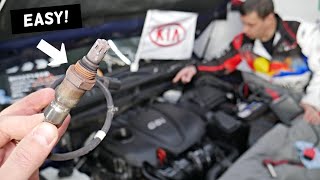
The 2011-2015 Kia Optima (TF generation) primarily uses four-cylinder Theta II engines (2.4L GDI, 2.0L Turbo GDI) where Bank 1 is the only bank. Sensor 1, the upstream O2 sensor, is conveniently located on the exhaust manifold, often accessible from the top rear of the engine bay 🎬 Watch: See the exact location of the upstream sensor here. after removing a heat shield. While the code itself is standard, the high accessibility of the sensor on these models makes diagnosis and replacement a more manageable task compared to V6 engines where it might be tucked against the firewall.
Symptoms You May Notice
- Check Engine Light is on
- Decreased fuel economy
- Rough idling or engine hesitation
- Slower acceleration or sluggish performance
- Black exhaust fumes or a sulfur/rotten egg smell from the exhaust
- Replacing the catalytic converter. A slow O2 sensor can cause the PCM to incorrectly flag the catalytic converter. Always resolve P0133 before addressing any catalyst efficiency codes.
- Replacing the downstream O2 sensor (Sensor 2). P0133 specifically points to Sensor 1, the upstream sensor. The downstream sensor monitors the catalytic converter and will not fix this code.
Most Likely Causes
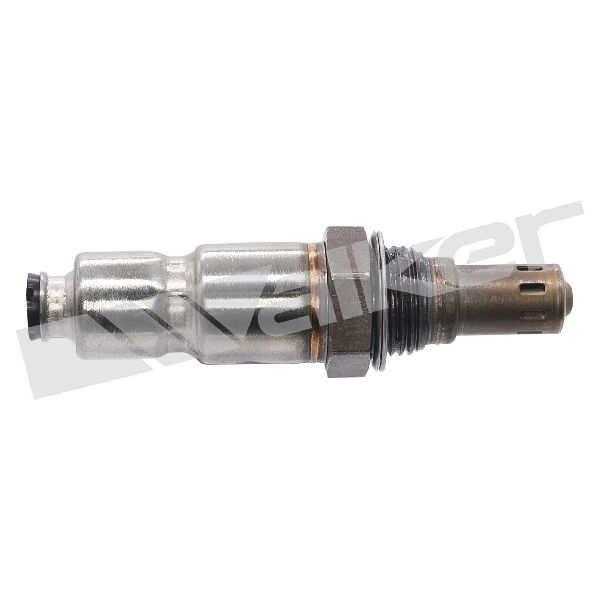
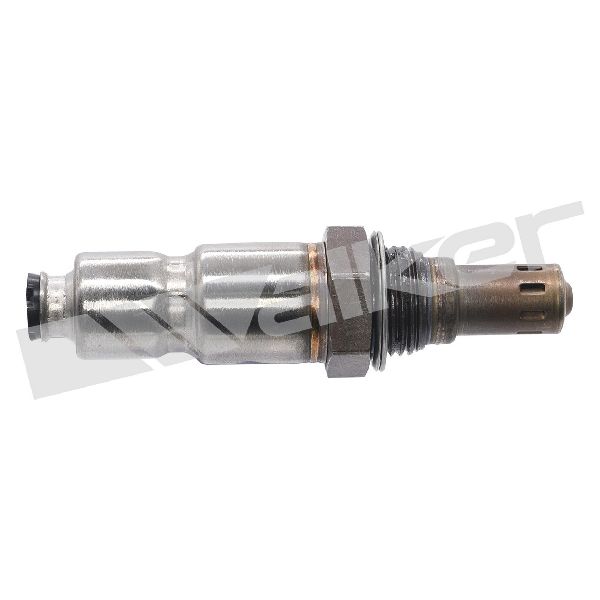
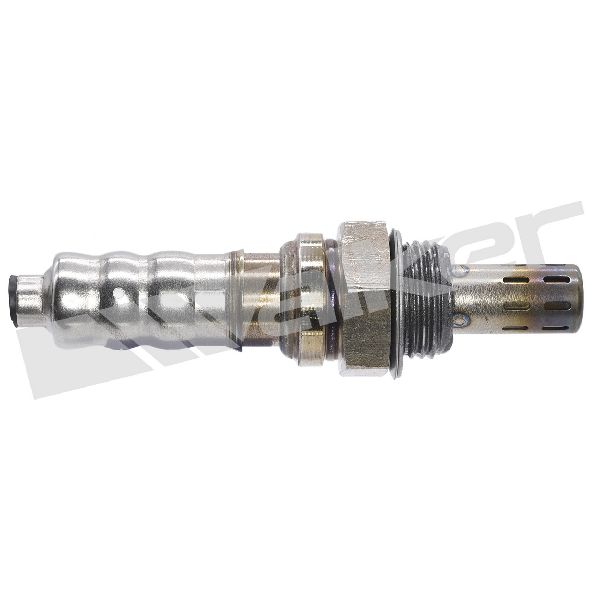
- Failing Upstream Oxygen Sensor (Bank 1, Sensor 1) 🔴 High Probability → Shop Oxygen Sensor Oxygen sensors are wear items that degrade over time from heat and contaminants. After 60,000-100,000 miles, their response naturally slows down. GDI engines, like the Theta II, can also contribute to faster contamination from carbon and oil byproducts.
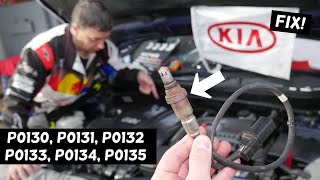
How to confirm: Use a scan tool to monitor the live data for the B1S1 O2 sensor. The voltage should fluctuate rapidly between approximately 0.1 and 0.9 volts. A slow, lazy waveform that takes more than a second to switch confirms a bad sensor. The heater element resistance can also be tested 🎬 Watch: This video shows how to fix P0133 and related codes.; it should be between 2.5 and 4.0 Ohms at room temperature.
Typical fix: Replace the upstream oxygen sensor (Bank 1, Sensor 1). It is highly recommended to use an OEM or OEM-supplier part (like Denso or NTK) as some aftermarket sensors may have different heater characteristics, leading to persistent or new codes.
Est. part cost: $50-$180 - Exhaust Leak 🟡 Medium Probability Leaks can develop at the exhaust manifold gasket or the flex pipe due to heat cycles and vibration. This allows outside air to enter the exhaust stream before the sensor. This unmetered air skews the sensor's readings, making it appear slow or biased lean.
How to confirm: Visually inspect the exhaust manifold and nearby components for black soot trails, which indicate a leak. Listen for ticking or hissing noises that increase with engine RPM. A smoke test is the most effective way to pinpoint the exact location of a leak.
Typical fix: Repair the leak by replacing the faulty gasket or exhaust component. A common failure point is the exhaust manifold gasket.
Est. part cost: $20-$300 - Wiring or Connector Issue ⚪ Low Probability The sensor wiring is routed near the hot exhaust manifold. The plastic loom and wire insulation can become brittle and melt or break over time, causing a short or open circuit. A clip holding the harness away from the exhaust can break, allowing the wires to make contact.
How to confirm: Visually inspect the wiring harness and connector leading to the O2 sensor for any signs of melting, chafing, corrosion, or loose pins. Check for continuity and shorts between the sensor connector and the ECM using a multimeter and wiring diagram.
Typical fix: Repair the damaged wiring or clean/replace the connector. Secure the harness away from heat sources.
Est. part cost: $5-$50
Rare But Worth Checking
- Blown Fuse: The oxygen sensor heater circuit is protected by a fuse, often labeled 'SNSR' or 'O2' in the engine bay fuse box. A blown fuse will prevent the sensor from heating up quickly, which can trigger a P0133 slow response code, often alongside a heater circuit code like P0135.
- Contaminated Sensor: An internal engine issue, such as excessive oil consumption common in some GDI engines, can cause oil to enter the exhaust and contaminate the tip of the oxygen sensor, causing it to fail prematurely. If you replace the sensor and it fails again quickly, investigate for underlying engine problems.
- Faulty Powertrain Control Module (PCM) or Outdated Software: → Shop Engine Control Module (ECM) This is extremely rare. In some vehicle models, manufacturers have issued TSBs for P0133 caused by overly sensitive PCM logic, fixed with a software update. While no specific TSB for this Optima is widely reported, it remains a last-resort possibility after all other hardware and wiring have been exhaustively checked.
- Intake or Vacuum Leaks: A significant vacuum leak can lean out the air-fuel mixture to a point where the O2 sensor's readings are affected, potentially being misinterpreted as a slow response. This would typically be accompanied by other lean codes (e.g., P0171).
Diagnosis Steps
- Connect an OBD-II scanner and confirm that P0133 is the primary code. Note any other codes present, especially heater circuit (P0135) or lean/rich codes.
- Inspect the Bank 1 Sensor 1 oxygen sensor's wiring and connector for any visible damage, melting, or corrosion. Ensure the harness is securely clipped away from the exhaust manifold.
- Check the fuse for the O2 sensor heater circuit in the engine compartment fuse box. It may be labeled 'SENSOR' or 'SNSR'.
- With the engine running, inspect the exhaust manifold and the area around the sensor for signs of an exhaust leak (soot marks, audible ticking). A smoke test is the definitive method.
- Use a scan tool with live data capabilities to graph the voltage of Bank 1 Sensor 1. At operating temperature and a steady 2500 RPM, the voltage should switch rapidly and repeatedly between ~0.1V and ~0.9V. If the waveform is slow, lazy, or biased, the sensor is likely faulty.
- If the sensor signal is erratic or flat, test the wiring for continuity and shorts from the sensor connector to the PCM.
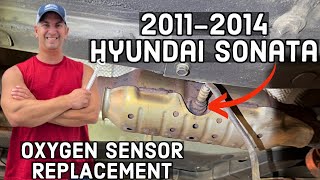
- If wiring and exhaust are confirmed to be good, and the sensor's response is slow, replace the Bank 1, Sensor 1 oxygen sensor. An O2 sensor socket is required for removal. 🎬 Watch: Follow this step-by-step guide to replace the sensor.
- After repair, clear the codes and perform a drive cycle to confirm the fix.
Parts You'll Likely Need
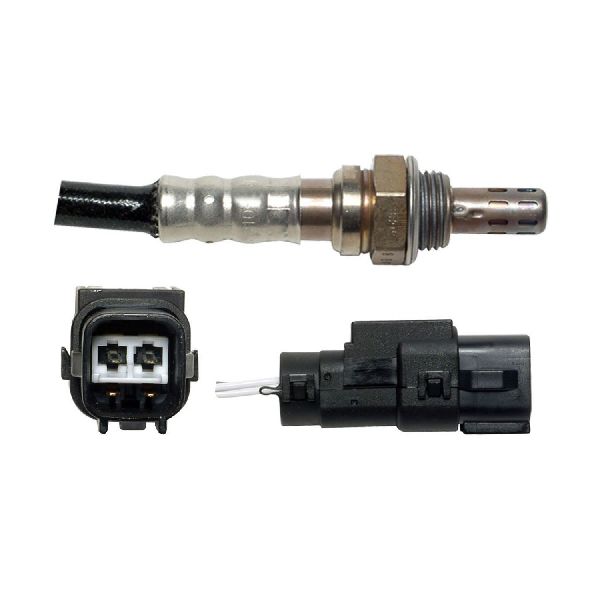
- Upstream Oxygen Sensor (Bank 1, Sensor 1)
(OEM #39210-2G200 (may be superseded by 39210-2G600))— This is the most common failure point for code P0133. The sensor becomes contaminated or aged and can no longer respond quickly to exhaust gas changes.
Trusted brands: Denso (OEM supplier), NGK/NTK (OEM supplier), Bosch
OEM price range: $130-$180
Aftermarket price range: $50-$100
Related Codes That Often Appear With This One
- P0135 — P0135 indicates a fault in the O2 sensor's heater circuit. A failed heater will prevent the sensor from reaching operating temperature quickly, which will almost always cause a P0133 slow response code. If you have both, the heater circuit is the primary fault.
- P0171 or P0174 — These codes indicate a lean condition. An exhaust leak before the O2 sensor can cause both a lean reading and be interpreted as a slow response, triggering multiple codes.
Technical Service Bulletins (TSBs) & Recalls
- While no specific TSB for P0133 on the 2011-2015 Optima is prominent, Kia has issued TSBs for other models (e.g., FUE043 for the Rio) involving ECU logic updates to correct fuel system and emissions monitoring parameters. This establishes a precedent for software-related fixes, though it remains a rare cause for this specific issue.
Platform-Specific Known Issues
- Some owners have reported that using certain aftermarket O2 sensors, even reputable brands like Bosch, can cause issues. This may be due to different heater warm-up times compared to the original Denso/NTK sensors, leading to cold-start issues or persistent codes. Sticking to OEM or Denso/NTK is often recommended for this platform.
Mechanic-Grade Diagnostic Values
- Upstream O2 Sensor (B1S1) Heater Resistance — expected: 2.5 - 4.0 Ω at 20°C (68°F). Failure: An open circuit (infinite resistance) or a reading outside of the specified range indicates a failed heater element within the sensor.
- Upstream O2 Sensor (B1S1) Live Data Voltage — expected: Rapidly fluctuating between approximately 0.1V and 0.9V at operating temperature.. Failure: A slow, lazy waveform that takes more than 100-300 milliseconds to switch, or a voltage that is stuck high or low, indicates a failing sensor.
Scan Tool Commands That Help
- Kia GDS (Global Diagnostic System): Live Data Graphing / Actuation Test — The GDS is the OEM-level tool. Use its live data function to graph the B1S1 voltage to visually confirm a slow response. While direct bidirectional control of the O2 sensor itself is limited, the tool allows for actuation of other components (like injectors) to force rich/lean conditions, which should show an immediate response on a healthy O2 sensor graph.
Wiring & Ground Locations
- Engine Ground Wiring Assembly — One of the primary engine ground straps connects the engine block to the chassis, often near the passenger side motor mount or on the transmission.. A poor ground can introduce electrical noise and voltage offsets, potentially affecting the O2 sensor's signal and heater circuit performance. The OEM part number for the main ground wire on some 2011-2013 models is 918602T011.
- Engine Compartment Fuse Box — Located in the engine bay, typically on the driver's side.. This box contains the fuse for the O2 sensor heater circuit, often labeled 'SNSR' or 'SENSOR'. A blown fuse here will cause a slow response code, usually with a P0135 heater circuit code.
Real Owner Repair Stories
- Forum user discussion (2013 Kia Optima) — P0133 code returned shortly after replacing the upstream O2 sensor with a new part.
❌ Tried (didn't work) Replaced Bank 1 Sensor 1 O2 sensor
✅ What actually fixed it After a smoke test revealed no leaks, a very close visual inspection found a hairline crack in the exhaust manifold near the O2 sensor bung. The crack would open up when hot, allowing just enough air in to slow the sensor's reading but not enough to set a lean code (P0171). Replacing the exhaust manifold resolved the P0133 code.
"I Checked Everything" — The Actual Cause
- A technician reported a case on a GDI engine where P0133 persisted after a new sensor and a clean smoke test. The root cause was found to be a partially clogged fuel injector on one cylinder. The slight lean condition it created wasn't severe enough to trigger a P0171 lean code, but it was enough to alter the exhaust chemistry and make the O2 sensor's switching pattern appear 'slow' to the PCM's specific monitoring logic for that code.
OEM Part Supersession History
39210-2G200→39210-2G600— Likely a revision for improved durability, material changes, or compatibility with updated ECU software. Both part numbers are often listed for the same applications.
Heads up: While generally interchangeable for the 2011-2015 Optima, it is best practice to use the part number specified for the vehicle's VIN. Using the older -2G200 part on a vehicle that originally came with the -2G600 could potentially cause issues if there was a corresponding logic change in the PCM.
Model Year Variations Within This Range
- 2011-2013 vs 2014-2015: The Kia Optima received a facelift for the 2014 model year which included cosmetic changes and some interior updates. However, the primary 2.4L GDI and 2.0L Turbo GDI Theta II engines and associated exhaust/emissions components remained fundamentally the same. The diagnosis for P0133 is identical across the entire 2011-2015 range.
Diagnostic Flowchart
Real Owner Stories
Aggregated from forums and TSBs cited above. Mileages and costs reflect what owners reported in those sources.
2012 Kia Optima EX
Symptoms: Experienced both P0133 and P0135 codes simultaneously.
What fixed it: Replacing the upstream (Bank 1, Sensor 1) O2 sensor successfully resolved the codes.
Source hint: optimaforums.com thread titled 'P0133 and P0135 O2 sensor codes'
2011-2015 Kia Optima
Symptoms: The P0133 code kept returning even after replacing the O2 sensors.
What fixed it: The discussion highlighted that the persistent code was likely due to an exhaust leak or receiving a faulty aftermarket part, rather than the sensor itself.
Source hint: Reddit r/AskMechanics thread 'P0133 code showing after replacing O2 sensors'
2015 Kia Optima
Symptoms: A shop replaced the O2 sensors, but the new sensors shorted out shortly after installation.
What fixed it: The shorted sensors led to a recommendation to replace the PCM, serving as a warning about potential wiring damage during repair.
Source hint: Reddit r/kia thread 'Took my car in to get O2 sensors replaced now its...'
Documented NHTSA Reports
Kia Platform Technical Report
Symptoms: A vehicle owner reported a series of fault codes appearing, including P0133 and P0137, alongside misfire and fuel system codes.
Observations: NHTSA ODI #11513767 describes a scenario where P0133 appeared with multiple other codes such as P0087, P0506, and P2096, noting that these issues are often related to broader engine and fuel propulsion system problems documented on the NHTSA website.
Source: NHTSA ODI #11513767
Related OBD-II Codes
Frequently Asked Questions
Is there a specific TSB for the P0133 code on my 2011-2015 Kia Optima?
Can I use an aftermarket Bosch oxygen sensor to fix P0133 on my Optima?
Why is my Optima's GDI engine more prone to failing oxygen sensors?
I replaced the O2 sensor on my Optima but the P0133 code came back. What else could it be?
Which fuse should I check for the oxygen sensor on my 2011-2015 Optima?
Are other Kia or Hyundai models affected by this same P0133 issue?
Helpful Videos
We Have This Part in Stock



The information in this article is provided for general reference and educational purposes only. Vehicle specifications, procedures, and part compatibility can vary by production date, trim level, and region. Always consult your vehicle's factory service manual and verify part numbers before purchasing or performing repairs. Safety-critical components such as airbags, seat belts, and braking systems should be installed by a qualified professional.
- Kia Optima:
- 🧭 Diagnostic Flowchart
- 🎬 Helpful Videos
- 🛍️ Shop This Part
- What's Unique About the 2011-2015 Kia Optima
- Symptoms You May Notice
- Most Likely Causes
- Rare But Worth Checking
- Diagnosis Steps
- Parts You'll Likely Need
- Related Codes That Often Appear With This One
- Technical Service Bulletins (TSBs) & Recalls
- Platform-Specific Known Issues
- Mechanic-Grade Diagnostic Values
- Scan Tool Commands That Help
- Wiring & Ground Locations
- Real Owner Repair Stories
- "I Checked Everything" — The Actual Cause
- OEM Part Supersession History
- Model Year Variations Within This Range
- Real Owner Stories
- 2012 Kia Optima EX
- 2011-2015 Kia Optima
- 2015 Kia Optima
- Documented NHTSA Reports
- Kia Platform Technical Report
- Related OBD-II Codes
- Frequently Asked Questions
- 🎟️ Get 5% Off