

P0133 on 2010-2015 Kia Sportage: O2 Sensor Slow Response Causes and Fixes
For a 2010-2015 Kia Sportage, code P0133 almost always means the upstream oxygen sensor (Bank 1, Sensor 1) is failing. This sensor becomes 'lazy' with age. Replacing it is the most common fix, costing around $60-$120 for a quality aftermarket part (Denso or NGK/NTK are recommended) and is a DIY-friendly job for most. Before replacing, a quick check for exhaust leaks at the manifold is wise, as this is another known cause.
- The P0133 code on a 2010-2015 Sportage almost always points to a failing upstream oxygen sensor (Bank 1, Sensor 1).
- Before replacing the sensor, perform a quick visual check for obvious exhaust leaks (soot marks) and inspect the sensor's wiring for any signs of melting or damage.
- Use a high-quality OEM, Denso, or NTK replacement sensor. These vehicles are known to be sensitive, and cheap universal sensors may not fix the problem.
- This is a DIY-friendly repair for many, requiring an O2 sensor socket and potentially some penetrating oil for a rusted sensor. It can save you significant labor costs.
- Do not ignore this code. It will cause you to fail an emissions test and can lead to reduced fuel economy and potential damage to the catalytic converter over time.
What's Unique About the 2010-2015 Kia Sportage
The 2010-2015 Kia Sportage (SL generation) uses reliable but standard oxygen sensor technology. There are no widespread, unique design flaws that cause this code. However, like many vehicles from this era, they are sensitive to the quality of the replacement sensor. Forum discussions and mechanic reports frequently advise against using cheap, universal O2 sensors, as they often fail to resolve the P0133 code and can even introduce new issues. Sticking to OEM or reputable OE-equivalent brands like Denso or Bosch is highly recommended to ensure compatibility and proper function. One user on Reddit reported replacing their sensor twice with aftermarket NTK parts to no avail before a shop advised only an OEM sensor would work.
Symptoms You May Notice
- Check Engine Light is on
- Decreased fuel economy
- Rough or unstable idle
- Hesitation or slower than normal acceleration
- Black smoke from the exhaust if the engine runs too rich
- Failure to pass an emissions test
- Replacing the downstream (Sensor 2) oxygen sensor. The code P0133 specifically refers to Sensor 1, the upstream sensor. Replacing the wrong sensor will not fix the issue.
- Assuming the catalytic converter is bad. While a failing O2 sensor can eventually harm the converter, the P0133 code itself points to the sensor, not the converter. Always address the sensor code first.
- Replacing the O2 sensor immediately after a battery disconnect. An ECU reset erases learned fuel trims, causing the system to run strict self-tests. A minor exhaust leak that was previously compensated for might now trigger a P0133. Always check for leaks first in this scenario.
Most Likely Causes
- Failing Upstream Oxygen Sensor (Bank 1, Sensor 1) 🔴 High Probability → Shop Oxygen Sensor Oxygen sensors are a normal wear-and-tear item. They are exposed to extreme heat and contaminants in the exhaust stream, causing them to degrade and slow down over a typical lifespan of 60,000 to 90,000 miles. Carbon and oil deposits can also foul the sensor tip.
How to confirm: Graph the Bank 1 Sensor 1 voltage on a capable OBD-II scan tool. A healthy sensor will show rapid switching between ~0.1V and ~0.9V, typically multiple times per second 🎬 See how to diagnose a slow response code with live data. at a steady 2,000 RPM. A slow sensor will have lazy, rounded peaks and valleys with a delayed response time (over 100-200ms). Given the high failure rate, many technicians replace the sensor if it's high-mileage and other causes are ruled out.
Typical fix: Replace the upstream oxygen sensor (Bank 1, Sensor 1). An O2 sensor socket is often required for removal and installation.
Est. part cost: $60-$180 - Exhaust Leak 🟡 Medium Probability Exhaust manifold gaskets can degrade over time, and flex pipes can crack, creating leaks. These leaks are more common on higher-mileage vehicles and can introduce outside oxygen into the exhaust stream, which the ECM interprets as a slow sensor response.
How to confirm: Visually inspect the exhaust manifold and downpipe for black soot trails, which indicate a leak. This is best done when the engine is cold. A ticking or puffing sound from the engine bay, especially when cold, is also a strong sign of a manifold leak. A professional can perform a smoke test to pinpoint the exact source of the leak.
Typical fix: Replace the leaking gasket or repair/replace the cracked exhaust component. One owner on a forum found a missing stud on the exhaust manifold was the cause.
Est. part cost: $20-$200 - Damaged Wiring or Connector ⚪ Low Probability
How to confirm: Visually inspect the oxygen sensor's wiring harness and connector for any signs of melting, chafing, corrosion, or loose pins. The harness can sometimes make contact with hot exhaust components, causing damage. Check for oil saturation on the connector, which can also interfere with the signal.
Typical fix: Repair the damaged section of the wiring harness or clean/replace the connector.
Est. part cost: $10-$50
Rare But Worth Checking
- Blown O2 Sensor Heater Fuse: → Shop Oxygen Sensor If the sensor's internal heater doesn't work, it will be slow to reach its required operating temperature of around 600°F, triggering a P0133 code. This is often accompanied by a P0135 heater circuit code. Always check for other codes. The fuse is typically in the under-hood fuse box labeled 'SENSOR 1' or similar.
- Contaminated Sensor from Oil Consumption: The Theta II GDI engines in these Sportage models are known for potential oil consumption issues. This oil can enter the exhaust and foul the tip of the oxygen sensor with soot and other deposits, causing it to fail prematurely. If you replace a sensor and the code returns quickly, investigate for underlying oil consumption problems.
- Failing Powertrain Control Module (PCM): → Shop Engine Control Module (ECM) This is extremely rare and should only be considered after all other possibilities have been exhaustively ruled out by a professional. Sometimes a PCM software update (reflash) from a dealer can solve persistent, otherwise unexplainable P0133 codes. One technician noted that for some Kia vehicles, a specific reset procedure using the dealer GDS scan tool is required after sensor replacement, as simply clearing codes is not enough.
Diagnosis Steps
- Read Codes: Use an OBD-II scanner to confirm P0133 is the active code. Note any other codes that are present, especially P0135 (heater circuit) or P0171 (lean condition).
- Visual Inspection (Exhaust): With the engine cold, carefully inspect the exhaust manifold and the area around the O2 sensor for black soot marks, which indicate an exhaust leak. Listen for ticking or puffing noises on a cold start.
- Visual Inspection (Wiring): Carefully inspect the wiring harness leading to the upstream O2 sensor. Look for signs of melting, chafing, or corrosion on the wires and at the connector.
- Check Fuses: Locate and check the fuse related to the oxygen sensor heater circuit. This is often labeled 'SENSOR 1' or similar in the fuse box under the hood.
- Analyze Sensor Data: Using a scan tool with live data capabilities, graph the voltage for 'O2 Bank 1 Sensor 1'. At operating temperature and a steady 2,000 RPM, the voltage should switch rapidly between approximately 0.1V and 0.9V. If the graph shows slow, lazy waves or gets stuck, the sensor is likely faulty.
- Test Heater Circuit (Optional): With a multimeter, you can test the resistance of the sensor's heater circuit. A reading outside of the manufacturer's specification (typically 2.5-4.0 Ohms) indicates a failed heater, necessitating sensor replacement.
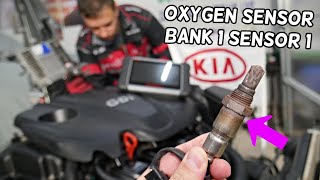
- Replace the Sensor: If the wiring, fuses, and exhaust system are okay, the most probable cause is the sensor itself. Replace the Bank 1, Sensor 1 oxygen sensor using an O2 sensor socket. 🎬 Watch: This video shows the exact location and replacement steps.
- Clear Codes and Test Drive: After replacement, clear the codes and perform a test drive, including varied speeds and idle, to ensure the Check Engine Light does not return.
Parts You'll Likely Need
- Upstream Oxygen Sensor (Air/Fuel Ratio Sensor)
(OEM #39210-2G100)— This is the primary component identified by the P0133 code and is a common wear-and-tear item that fails due to age and contamination. This part number fits many 2.4L and 2.0L Kia/Hyundai models from this era, but always verify with VIN.
Trusted brands: Denso (OEM Supplier), Bosch, NGK/NTK
OEM price range: $130-$220
Aftermarket price range: $60-$120
Related Codes That Often Appear With This One
- P0135 — This code indicates a fault in the O2 sensor's heater circuit. A failed heater prevents the sensor from warming up quickly, which will almost always cause a P0133 slow response code. If you have both, the heater circuit is the primary fault.
- P0171 — This code indicates a 'System Too Lean' condition. A pre-sensor exhaust leak can cause both a lean reading (P0171) and be interpreted by the ECM as a slow sensor response (P0133) because the extra oxygen fools the sensor.
- P0134 — This code means 'O2 Sensor Circuit No Activity Detected'. It can appear alongside P0133 if the sensor is completely dead or disconnected, rather than just slow.
Platform-Specific Known Issues
- Sensitivity to Aftermarket Sensors: Multiple owner reports, particularly on forums like Reddit, indicate that these vehicles can be sensitive to non-OEM oxygen sensors. Even reputable aftermarket brands like NTK have sometimes failed to resolve the P0133 code, with a genuine Kia/Hyundai part being the ultimate solution.
- Exhaust Manifold Leaks: → Shop Exhaust Manifold While not unique to this car, a small exhaust leak from a failed manifold gasket or a hairline crack in the manifold itself is a common secondary cause for P0133 on Theta II engines. These leaks can be hard to spot and are often misdiagnosed as a bad sensor.
Mechanic-Grade Diagnostic Values
- Upstream O2 Sensor (B1S1) Heater Resistance — expected: 2.5 - 4.0 Ω at 20°C (68°F). Failure: An open circuit (infinite resistance) or a reading outside this range indicates a failed heater element.
- Upstream O2 Sensor (B1S1) Live Data Voltage — expected: Rapidly fluctuating between approx. 0.1V and 0.9V at operating temperature.. Failure: A slow, lazy waveform that takes more than 100-300ms to switch, or a voltage that is stuck.
- Continuity between ECM connector and O2 sensor connector — expected: 1 Ω or less. Failure: Higher resistance indicates a problem in the wiring harness.
Scan Tool Commands That Help
- Kia GDS (Global Diagnostic System): DTC Analysis / Data Analysis — Used to read manufacturer-specific codes, view live sensor data streams (like O2 sensor voltage graphs), and access detailed troubleshooting guides based on the fault code.
- Kia GDS (Global Diagnostic System): Actuation Test — Allows the technician to manually activate components like the fuel pump relay to rule out other system faults that could indirectly cause a P0133.
- Kia GDS or equivalent (G-Scan): ECU Update / Reset Procedure — In some cases, particularly after replacing a sensor, a simple code clear is insufficient. A specific reset or software update (reflash) procedure may be required to make the ECU recognize the new sensor correctly and resolve a persistent P0133 code.
Wiring & Ground Locations
- ECM Pin for O2 Sensor (Up) Ground — On a 2014 Sportage 2.4L MPI, this is Pin 47 on the ECM connector.. A bad ground connection at the ECM pin can cause erratic or slow sensor readings, mimicking a failed sensor. This pin should be checked for corrosion or damage if a new sensor doesn't fix the code.
- ECM Pin for O2 Sensor (Up) Heater — On a 2023 Sportage (for reference), this is Pin 75 (Connector C100-A) on the ECM. While the year is different, it indicates a dedicated pin for the heater circuit that can be tested.. If a P0135 (Heater Circuit Fault) is also present, testing for voltage at this specific ECM pin can determine if the fault is in the ECM, the wiring, or the sensor's internal heater.
- Engine/Chassis Ground Points — General ground points are located on the engine block, firewall, and near the battery. Specific diagrams for the 2010-2015 model are required for exact locations.. A corroded or loose main engine or chassis ground can introduce electrical noise and resistance into the entire system, potentially affecting the sensitive O2 sensor signal and causing a slow response code.
Real Owner Repair Stories
- Reddit user in r/kia (2009 Kia Sportage (similar generation and issue)) — Persistent P0133 code.
❌ Tried (didn't work) Replaced the Bank 1 Sensor 1 oxygen sensor twice with aftermarket NTK parts., Fixed an exhaust leak.
✅ What actually fixed it The owner was advised by a repair shop that only a genuine OEM Kia oxygen sensor would resolve the issue. The user refused the shop's $800 quote, but the story highlights the platform's known sensitivity to aftermarket sensors. - YouTube video by 'Servicios Automotrices JD' (2010 Kia Sportage 2.0L) — Check Engine Light with code P0133.
❌ Tried (didn't work) Replacing the O2 sensor with an aftermarket part (which sometimes caused new heater circuit codes)., Replacing the sensor with an OEM part., Replacing the downstream O2 sensor., Replacing the catalytic converter.
✅ What actually fixed it The technician states that in many cases on this vehicle, the issue is not the sensor itself but requires a specific ECU reset procedure performed with a dealer-level scan tool (Kia GDS or G-Scan). Simply clearing the code with a standard OBD-II reader was not sufficient to fix the problem.
"I Checked Everything" — The Actual Cause
- A common scenario for a persistent P0133 after a smoke test comes back clean is an intake manifold vacuum leak. A small, unmetered air leak after the MAF sensor can lean out the mixture, causing the O2 sensor's readings to behave in a way the ECU interprets as 'slow'. A technician might find this by spraying brake cleaner around the intake manifold gasket with the engine running and listening for a change in engine RPM.
Model Year Variations Within This Range
- 2014-2015: For the 2014 model year, the standard 2.4L Theta II engine was updated with Gasoline Direct Injection (GDI), which increased horsepower to 182. The pre-2014 2.4L engines used Multi-Port Injection (MPI). While the P0133 code applies to both, GDI engines can be more prone to carbon buildup, which may lead to faster O2 sensor contamination.
- 2014: The 2014 model year marked a mid-generation facelift which included refreshed exterior styling (new grille, LED lights) and some interior feature updates. These changes are primarily cosmetic and do not fundamentally alter the diagnosis for a P0133 code, but part numbers for unrelated components may differ.
Diagnostic Flowchart
Other Known Issues on This Vehicle
Issues unrelated to this code that are worth knowing about as an owner of this generation:
- Theta II Engine Failure (Rod Bearing Failure) 🔴 High — Widespread across 2.0L and 2.4L GDI engines from 2011-2014 model years. Can occur at various mileages, often between 60,000-120,000 miles. A knocking noise is the primary warning sign. (Ref: Multiple recalls (e.g., NHTSA 17V224000) and a class-action lawsuit settlement led to extended warranties and engine replacement programs for affected vehicles. A Knock Sensor Detection System (KSDS) software update was also issued to detect early signs of failure.)
- Excessive Oil Consumption 🟠 Medium — Common on Theta II GDI engines, often starting around 60,000-80,000 miles. Caused by carbon buildup on piston rings. Can lead to sludge and eventual engine damage if oil levels are not monitored closely. (Ref: Kia issued TSB ENG200 in 2020 addressing oil consumption testing procedures for various models, including the Sportage.)
- Carbon Buildup on Intake Valves 🟡 Low — A common characteristic of all Gasoline Direct Injection (GDI) engines, including the Theta II. Over time, this can cause rough idle, misfires, or reduced performance. Typically requires manual cleaning (walnut blasting) every 60,000-100,000 miles.
- Suspension Noises (Creaks and Knocks) 🟡 Low — Owners report various noises from the suspension. A common source is dirt getting into the rear lower silent blocks, causing a creaking sound, which can be fixed by cleaning and lubrication. Stabilizer links are also a common wear item.
- ISG (Idle Stop & Go) System Faults 🟡 Low — Some owners report issues with the stop-start system behaving erratically or failing to engage. This can be caused by a number of factors, including battery state of charge, but is a recurring minor complaint.
Used vs. New Parts: Buying Guide for This Vehicle
When a used part is the smart pick: For this repair, a used part only makes sense for a component like the exhaust manifold if it has failed (cracked). A used manifold from a low-mileage, non-corroded donor vehicle is a viable, cost-effective option. Never buy a used oxygen sensor.
Donor-vehicle mileage cap: roughly under 70000 miles for the part to have meaningful remaining life.
What to inspect on the donor part:
- For an exhaust manifold, check for hairline cracks, especially around the welds and flange.
- Ensure all mounting studs are present and intact.
- Look for severe rust or pitting, particularly in vehicles from the salt belt, as this indicates a shortened lifespan.
OEM-only on this vehicle (don't cheap out):
- Oxygen Sensor: Due to widespread reports of incompatibility with aftermarket sensors on this platform, using a genuine Kia/Hyundai OEM sensor (Part No. 39210-2G100) is strongly recommended to avoid repeat repairs.
Aftermarket brands forum-validated for this vehicle:
- Denso (often the OEM supplier)
- NGK/NTK (generally reliable, but some owner reports still indicate issues vs. OEM)
Brands owners have reported issues with on this vehicle:
- Generic, unbranded, or 'universal' oxygen sensors are notorious for failing quickly or not working at all on this vehicle.
Real Owner Stories
Aggregated from forums and TSBs cited above. Mileages and costs reflect what owners reported in those sources.
2009 Kia Sportage
Symptoms: The owner replaced the O2 sensor twice with NTK parts and fixed an exhaust leak, but the P0133 code remained.
What fixed it: A repair shop advised that only an OEM sensor would fix it due to the platform's sensitivity to non-OEM parts.
Source hint: reddit.com/r/kia/comments/16j05jw/2009_sportage_p0133/
Kia Sportage with Theta II engine
Symptoms: Persistent P0133 DTC; owner initially suspected the O2 sensor.
What fixed it: Found a missing exhaust manifold stud; replacing the stud and gasket resolved the issue.
Source hint: scannerdanner.com/forum/post-your-repair-questions-here/11381-fixed-pesky-p0133-dtc.html
2008 Kia Sportage — ~62 miles
Symptoms: Recurring P0133 code even after replacing the O2 sensor. The car runs fine but the light returns after about 100km.
What fixed it: The owner mentioned some shops resort to reprogramming the ECU, though the source notes this is not a true fix.
Source hint: youtube.com/watch?v=sO7LhC59iWc
Documented NHTSA Reports
Kia Owner Report
Symptoms: An owner reported a variety of codes appearing, including P0133, P0087, P0506, P2096, and multiple misfire codes (P0300-P0306).
Details: NHTSA ODI #11513767 describes a situation where these codes appeared intermittently, and the owner noted reading about widespread engine problems on the NHTSA website.
Source hint: NHTSA ODI #11513767
Related OBD-II Codes
Frequently Asked Questions
I replaced my Sportage's O2 sensor with an NTK brand part, but P0133 is still there. Why?
Could my Sportage's P0133 code be related to the ticking sound I hear when the engine is cold?
Is there a TSB for the oil consumption I'm noticing alongside this code?
My Sportage has the Theta II engine; is the P0133 code related to the major engine recalls?
How long do the oxygen sensors typically last on a 2010-2015 Sportage?
Can a missing bolt on the exhaust manifold cause a P0133 code on my Kia?
Helpful Videos


The information in this article is provided for general reference and educational purposes only. Vehicle specifications, procedures, and part compatibility can vary by production date, trim level, and region. Always consult your vehicle's factory service manual and verify part numbers before purchasing or performing repairs. Safety-critical components such as airbags, seat belts, and braking systems should be installed by a qualified professional.
- Kia Sportage:
- 🧭 Diagnostic Flowchart
- 🎬 Helpful Videos
- What's Unique About the 2010-2015 Kia Sportage
- Symptoms You May Notice
- Most Likely Causes
- Rare But Worth Checking
- Diagnosis Steps
- Parts You'll Likely Need
- Related Codes That Often Appear With This One
- Platform-Specific Known Issues
- Mechanic-Grade Diagnostic Values
- Scan Tool Commands That Help
- Wiring & Ground Locations
- Real Owner Repair Stories
- "I Checked Everything" — The Actual Cause
- Model Year Variations Within This Range
- Other Known Issues on This Vehicle
- Used vs. New Parts: Buying Guide for This Vehicle
- Real Owner Stories
- 2009 Kia Sportage
- Kia Sportage with Theta II engine
- 2008 Kia Sportage — ~62 miles
- Documented NHTSA Reports
- Kia Owner Report
- Related OBD-II Codes
- Frequently Asked Questions
- 🎟️ Get 5% Off