

P0133 on 2004-2009 Mazda 3: O2 Sensor Slow Response Causes and Fixes
On a 2004-2009 Mazda 3, code P0133 is almost always a worn-out upstream oxygen (O2) sensor. Before replacing it, check for exhaust leaks, particularly cracks in the exhaust manifold. Expect to pay $60-$120 for a quality aftermarket sensor (like Denso or NTK) and $150+ for OEM. DIY replacement is straightforward with the right tool.
- P0133 on your Mazda 3 almost always means the front (upstream) oxygen sensor is failing.
- Before buying any parts, perform a careful visual inspection for exhaust leaks, especially cracks or soot marks on the exhaust manifold.
- Replacing the sensor is a DIY-friendly job with an O2 sensor socket, but it won't fix the code if an exhaust leak is the real problem.
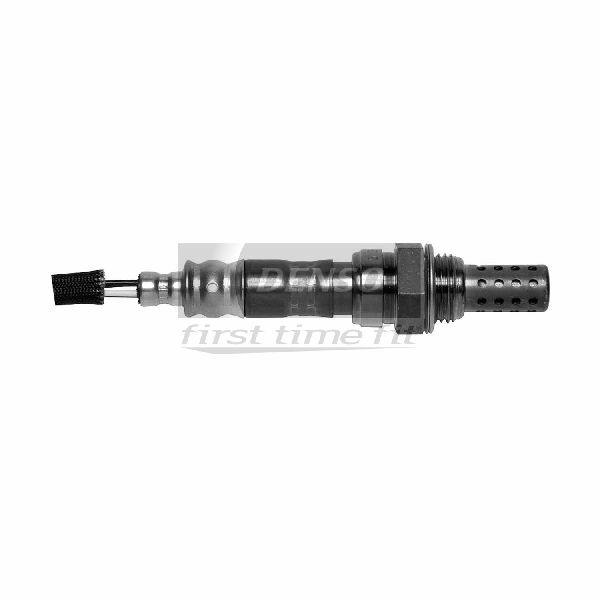
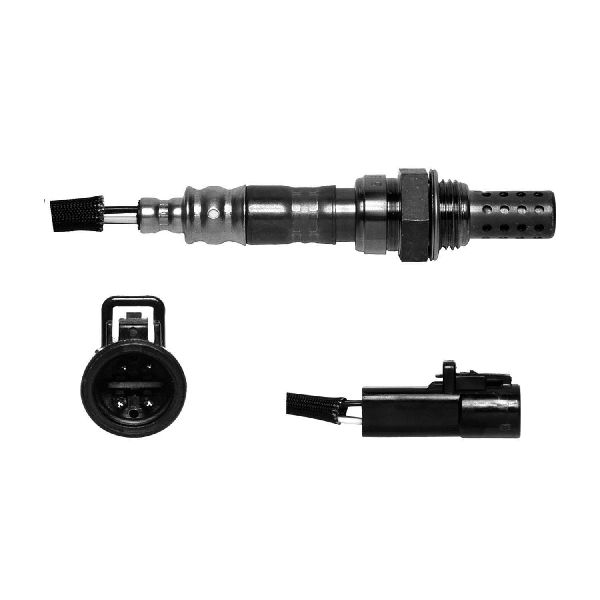
- Use a quality replacement sensor from a brand like Denso (p/n 234-9085) or NGK for best results and longevity.
- Ignoring the code will hurt your gas mileage and could eventually lead to a much more expensive catalytic converter failure.
What's Unique About the 2004-2009 Mazda 3
For the first-generation Mazda 3 (2004-2009), the P0133 code is a very common issue related to the aging of the front oxygen sensor. The 2.0L and 2.3L MZR engines are sensitive to the sensor's response time for proper fuel trim. While the sensor itself is the most frequent failure point, these cars can also develop small, hard-to-see cracks in the exhaust manifold, creating leaks that mimic a slow sensor. Owners often solve this code by replacing the sensor, but it's a known 'gotcha' on this platform to skip checking for exhaust leaks first. A forum user on ScannerDanner's forum chased the code after replacing the sensor, only to find a broken exhaust manifold stud was causing a leak.
Generation note: This range covers the first generation (BK, 2004-2008) and the first year of the second generation (BL, 2009). The causes, diagnosis, and fix for P0133 are consistent for the naturally aspirated 2.0L and 2.3L engines across these years.
Symptoms You May Notice
- Check Engine Light is on
- Decreased fuel economy
- Rough or unstable idle
- Slight hesitation during acceleration
- Engine may stall or misfire in some cases
- Replacing the oxygen sensor without first checking for exhaust leaks. An exhaust leak will cause the P0133 code to return even with a new sensor.
- Replacing the downstream (post-catalytic converter) oxygen sensor. P0133 specifically refers to Sensor 1, which is the upstream sensor.
Most Likely Causes
- Failing Upstream Oxygen (A/F) Sensor 🔴 High Probability → Shop Oxygen Sensor The sensor is a wear-and-tear item that degrades over time and with mileage, becoming less responsive. Contamination from soot or oil can also clog the sensor's ports, slowing its readings. This is the most common reason for P0133 on a vehicle of this age.
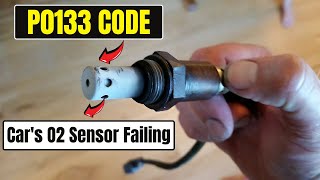
How to confirm: Use a scan tool to graph the live data for 'Bank 1 Sensor 1'. A healthy sensor's voltage will fluctuate rapidly (a quick sine wave pattern). A failing sensor will show a slow, lazy wave or a nearly flat line. The sensor should switch between rich and lean states in under 100ms. 🎬 Watch: A guide to diagnosing and fixing slow sensor response.
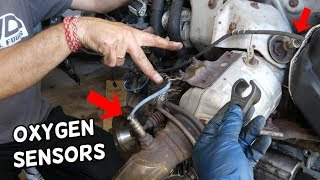
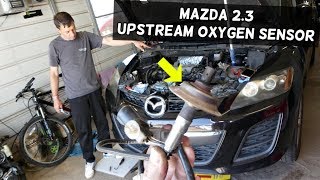
Typical fix: Replace the upstream (pre-catalytic converter) oxygen sensor. Use of an O2 sensor socket is highly recommended. 🎬 Watch: How to locate and replace your upstream oxygen sensor. Denso and NGK/NTK are OEM suppliers and highly recommended brands.
Est. part cost: $60 - $180 - Exhaust Leak Before the Sensor 🟡 Medium Probability Exhaust manifold gaskets can fail, or the manifold itself can develop small cracks over many heat cycles. This is a known issue on this platform. This allows outside air to be pulled into the exhaust stream, skewing the sensor's readings and making it appear slow.
How to confirm: With the engine cold, start it and listen for a ticking or hissing noise from the engine bay that gets louder with acceleration. Visually inspect the exhaust manifold and the gasket area for black soot trails, which indicate a leak. You can also use a smoke machine to pressurize the exhaust and look for smoke escaping.
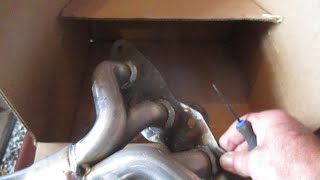
Typical fix: Replace the leaking exhaust manifold gasket 🎬 See this walkthrough on how to replace an exhaust manifold. or, if cracked, the exhaust manifold itself. In some cases, a broken manifold stud can be the cause.
Est. part cost: $20 - $300 - Damaged Wiring or Corroded Connector ⚪ Low Probability The wiring harness for the O2 sensor is located in the engine bay and can be exposed to heat and debris, potentially causing damage over time. High resistance from corrosion or frayed wires can dampen the voltage signal, making it appear slow to the ECU.
How to confirm: Visually inspect the wiring harness and connector leading to the upstream O2 sensor for any signs of melting, chafing, corrosion in the pins, or loose connections. Use a multimeter to check for high resistance in the harness.
Typical fix: Repair the damaged section of wire or clean/replace the connector.
Est. part cost: $5 - $50
Rare But Worth Checking
- Intake/Vacuum Leak: A significant vacuum leak (e.g., from an intake manifold gasket) can cause the engine to run lean, which can sometimes be misinterpreted by the PCM and contribute to setting this code. A Toyota TSB noted this as a cause for P0133 in cold weather. This is less direct but worth checking if other fixes fail.
- Low Fuel Pressure: Incorrect fuel pressure can affect the air/fuel ratio and potentially trigger a slow response code as a secondary fault.
- Contaminated Mass Air Flow (MAF) Sensor: → Shop Fuel Injection Air Flow Meter A dirty MAF sensor can provide incorrect airflow data, leading to an improper air/fuel mixture that can cause the O2 sensor readings to appear abnormal or slow.
- Software/Logic Errors: While less common on older models, manufacturer service bulletins for other Mazda vehicles, such as TSB Bulletin #01-009-23, have noted that DTC P0133:00 can sometimes be caused by a false error detected due to improper error detection logic in the PCM.
Diagnosis Steps
- Read the code with an OBD-II scanner and confirm P0133 is the primary code. Address any other codes first, especially MAF or fuel pressure codes.
- Inspect the exhaust manifold and gasket area for any black soot trails indicating an exhaust leak. Listen for a ticking noise from the manifold area. This is a critical first step for this vehicle.
- Inspect the O2 sensor's wiring harness and connector for any visible damage, melting, or corrosion. Ensure the connector is securely fastened.
- If no leaks or wiring damage are found, use a scan tool with live data capability to monitor the Bank 1 Sensor 1 voltage.
- With the engine fully warmed up, observe the sensor's waveform at idle and at a steady 2,500 RPM. A healthy sensor switches rapidly between ~0.1V and ~0.9V. A slow, lazy, or flat signal indicates a failed sensor.
- If the sensor signal is slow, replace the upstream oxygen sensor. Use a quality OEM-equivalent part.
- If the sensor signal appears normal, the issue may be an intermittent exhaust leak or wiring problem. A smoke test on the exhaust system is the most definitive way to find small leaks.
- After repairs, clear the code and perform a drive cycle to ensure the fix was successful.
Parts You'll Likely Need
- Upstream Oxygen Sensor / Air-Fuel Ratio Sensor
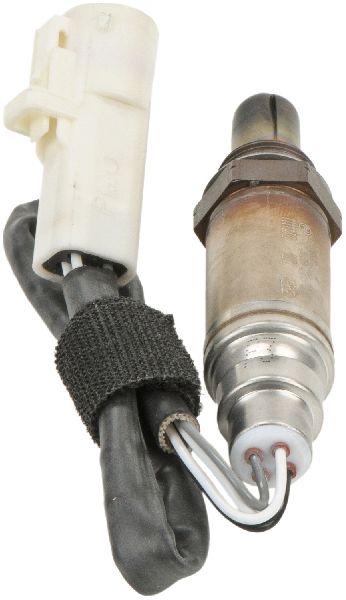
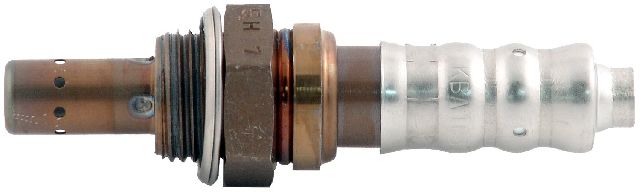
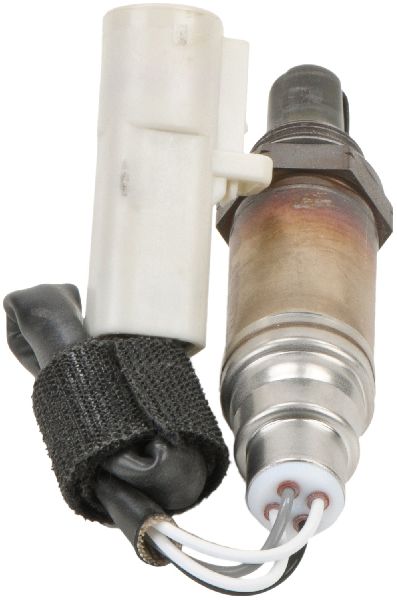
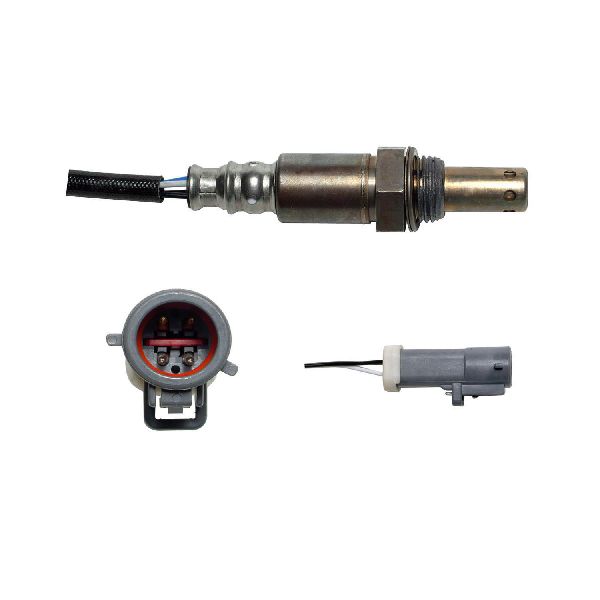
(OEM #Z601-18-861A, LF63-18-8G1B)— This is the most common failure point for code P0133. The sensor's ability to react quickly degrades with age and contamination.
Trusted brands: Denso (Part #234-9085), NGK/NTK
OEM price range: $150-$220
Aftermarket price range: $60-$120
Related Codes That Often Appear With This One
- P0171 (System Too Lean): Often seen if an exhaust or vacuum leak is the root cause.
- P0140 (O2 Sensor Circuit No Activity Detected Bank 1 Sensor 2): Can appear alongside P0133 if there are broader sensor or wiring issues.
- P0420 (Catalyst System Efficiency Below Threshold): A slow O2 sensor can lead to an incorrect air/fuel mix that eventually degrades catalytic converter performance.
Technical Service Bulletins (TSBs) & Recalls
- No specific TSB for P0133 on this model was found during research. However, general diagnostic procedures from Mazda for this code emphasize checking for exhaust leaks before sensor replacement.
- As a cross-manufacturer reference, Mazda TSB Bulletin #01-009-23 for newer models notes that DTC P0133 (A/F sensor system: Slow response) can be caused by improper error detection logic, leading to a false error being stored in memory.
Platform-Specific Known Issues
- Exhaust Manifold Cracks: → Shop Exhaust Manifold Multiple owner accounts on forums like Mazdas247 confirm that the stock exhaust manifold is prone to cracking, causing leaks that trigger P0133 or P0171. One user noted, 'I had a crack in my manifold. It was about 5 inches long and went down to the O2 sensor. This is a common problem.' Another user diagnosed a leak by finding 'HUGE black carbon deposits on the back of my heat shield where my stock manifold had cracks.'
- Owner Experience: Sensor vs. Exhaust Leak: On the Volvo Owners Club Forum (for a car with a similar engine management logic), a user replaced the front O2 sensor to fix P0133, which improved performance, but the code returned. This highlights the importance of checking for underlying issues like exhaust leaks even after a seemingly successful sensor replacement. This scenario is very common among Mazda 3 owners as well.
Mechanic-Grade Diagnostic Values
- Upstream O2 Sensor Heater Resistance — expected: 5-8 Ohms at 20°C (68°F). Some sources state a wider range of 3-20 Ohms is acceptable.. Failure: A multimeter reading of infinite resistance (OL) indicates an open/failed heater circuit. A reading of 0 Ohms indicates a short circuit.
- Short Term Fuel Trim (STFT) & Long Term Fuel Trim (LTFT) — expected: At a steady RPM (idle or 2500 RPM), the combined total of STFT + LTFT should be within +/- 10%. Ideally, LTFT should be close to 0%.. Failure: If LTFT is consistently high (e.g., +15% or more), it indicates the PCM is constantly adding fuel to compensate for a condition it perceives as lean, which can be caused by an exhaust leak fooling the O2 sensor.
- Mode $06, Test ID $83, Component ID $11 — expected: The measured value should be below the maximum threshold set by the manufacturer.. Failure: A value that exceeds the maximum threshold indicates the sensor's response rate has failed the PCM's internal diagnostic test, directly confirming the P0133 fault condition.
- O2 Sensor Heater Circuit Voltage — expected: Approximately 12V (battery voltage) should be present at the power pin on the harness-side of the connector with the key on, engine off (KOEO).. Failure: Little to no voltage points to a blown fuse (check the 10A 'ENG BAR 3' fuse in the under-hood fuse box), a bad relay, or a break in the power wire.
Scan Tool Commands That Help
- Mazda M-MDS or FORScan: KAM (Keep Alive Memory) Reset — This should be performed after replacing the O2 sensor. It forces the PCM to clear all learned fuel trim adjustments and start fresh with the new sensor's data, preventing the old, incorrect learned values from causing issues.
Wiring & Ground Locations
- G1 / G2 — Located behind the left (driver's side) headlight assembly.. These are primary chassis ground points. A corroded or loose connection here can create a poor ground path for various engine sensors, including the O2 sensor, potentially causing erratic readings.
- G4 — Located on the right side of the engine block.. This is a main engine ground. The O2 sensor circuit relies on a solid engine ground reference. High resistance at this point can introduce noise and voltage offsets into the sensor signal, mimicking a slow sensor.
- PCM Pins (Upstream O2 Sensor) — At the Powertrain Control Module (PCM) connector. Specific pins can vary, but common documentation shows pins like 2Z, 2AD, and 2BG are related to the front O2 sensor.. For advanced diagnosis, checking for continuity and voltage directly at the PCM pins confirms the integrity of the entire wiring harness between the sensor and the computer, ruling out a wiring break as the cause.
- Upstream O2 Sensor Connector Wires — On the sensor pigtail itself.. On many Mazda 4-wire sensors, the two same-colored wires (often black or white) are for the heater circuit. The other two (e.g., black and gray) are for signal and ground. Knowing this allows for correct resistance and voltage testing at the connector.
Real Owner Repair Stories
- Reddit r/AskMechanics (Vehicle not specified, but common P0133 scenario) — Check Engine Light with P0133, slight lag on acceleration.
❌ Tried (didn't work) Replaced the upstream (Bank 1, Sensor 1) oxygen sensor., Cleared the code.
✅ What actually fixed it The code returned within 20 minutes of driving. The confirmed fix was not posted in the thread, but the top-voted community advice was to immediately check for an exhaust leak at the manifold and to verify engine grounds, as these are the most common reasons for the code to return after a sensor replacement.
OEM Part Supersession History
Z601-18-861→Z601-18-861A, Z601-18-861B— Standard part revision and improvement by the manufacturer.
Heads up: The 'A' and 'B' revisions are generally interchangeable for the 2004-2009 Mazda 3 models (1.4L, 1.6L, 2.0L, 2.3L). However, always verify fitment with the vehicle's VIN, especially for PZEV (Partial Zero Emission Vehicle) models which may have different sensor requirements.
Model Year Variations Within This Range
- 2004-2009: Some Mazda 3 models sold in California and other states following CARB emissions standards were designated as PZEV (Partial Zero Emission Vehicle). These vehicles often use a wideband Air/Fuel Ratio sensor instead of a conventional Zirconia oxygen sensor. While they perform the same function, they are not interchangeable. Using a standard O2 sensor on a PZEV car (or vice-versa) will not work and may cause additional codes. It is critical to order the sensor that matches the vehicle's specific emissions designation.
Diagnostic Flowchart
Other Known Issues on This Vehicle
Issues unrelated to this code that are worth knowing about as an owner of this generation:
- Passenger-Side Engine Mount Failure 🔴 High — Very common, especially over 80,000 miles. The hydraulic mount fails, leaking fluid and causing excessive engine vibration at idle and clunking noises.
- Rear Wheel Arch and Rocker Panel Rust 🔴 High — Extremely common, especially in regions that use road salt. Often called 'Mazda rust.' Foam in the rear fender wells traps moisture, causing rust to form from the inside out.
- Automatic Transmission (AT) Shifting Issues / TCM Failure 🟠 Medium — Fairly common at higher mileage. Can manifest as harsh shifts, slipping between gears, or getting stuck in a gear, often accompanied by the 'AT' light. Can be caused by failed shift solenoids, a faulty Transmission Control Module (TCM), or old/burnt fluid.
- Leaking/Failing Rear Shock Absorbers 🟡 Low — Common at higher mileage. Leads to a bouncy or 'loose' feeling rear end. The top shock mounts can also break. It's a relatively inexpensive and easy repair.
- Stuck Open Thermostat (Code P0128) 🟡 Low — A common issue where the thermostat fails in the open position, preventing the engine from reaching full operating temperature and triggering a P0128 code.
Used vs. New Parts: Buying Guide for This Vehicle
When a used part is the smart pick: A used exhaust manifold from a junkyard can be a cost-effective solution if yours is cracked, as it is a simple piece of cast iron. It is not a high-tech or major wear item.
Donor-vehicle mileage cap: roughly under 120000 miles for the part to have meaningful remaining life.
What to inspect on the donor part:
- For a used exhaust manifold, inspect it meticulously for hairline cracks, especially around the collector and flange welds.
- Ensure all mounting studs are intact and not broken off in the manifold.
- Check for severe rust or pitting on the gasket surfaces that could prevent a good seal.
OEM-only on this vehicle (don't cheap out):
- Oxygen Sensor
Aftermarket brands forum-validated for this vehicle:
- Denso (OEM supplier)
- NGK / NTK (OEM supplier)
Brands owners have reported issues with on this vehicle:
- Universal-fit sensors requiring wire splicing
- Unbranded, 'white-box' sensors from online marketplaces. Forum discussions frequently mention that using cheap aftermarket sensors, particularly Bosch on Japanese vehicles, can lead to the code returning quickly or other performance issues.
Real Owner Stories
Aggregated from forums and TSBs cited above. Mileages and costs reflect what owners reported in those sources.
2008 Mazda 3
Symptoms: Owner found huge black carbon deposits on the back of the heat shield.
What fixed it: Identified a 5-inch crack in the stock exhaust manifold that went down to the O2 sensor.
Source hint: mazdas247.com - Thread titled 'Exhaust manifold' (2008)
2004-2009 Mazda 3 (Platform Mate)
Symptoms: P0133 DTC was present; owner initially suspected the oxygen sensor.
What fixed it: The fix was a broken exhaust manifold stud causing a leak.
Source hint: scannedanner.com/forum - Thread titled '[FIXED] Pesky P0133 DTC' (2017)
2004.5-2010 Volvo S40 (Platform Mate)
Symptoms: P0133 code; performance improved after sensor replacement but the code returned.
What fixed it: The situation required checking for underlying exhaust leaks even after the sensor was replaced.
Source hint: Volvo Owners Club Forum
Related OBD-II Codes
Frequently Asked Questions
Is there a specific Mazda TSB for the P0133 code on my 2004-2009 Mazda 3?
Which brand of oxygen sensor should I use for my Mazda 3 to fix P0133?
I see soot on my heat shield; could this be related to the P0133 code?
Can a bad engine mount cause an O2 sensor code on this car?
Should I replace the sensor immediately if I get a P0133?
Helpful Videos
We Have This Part in Stock

The information in this article is provided for general reference and educational purposes only. Vehicle specifications, procedures, and part compatibility can vary by production date, trim level, and region. Always consult your vehicle's factory service manual and verify part numbers before purchasing or performing repairs. Safety-critical components such as airbags, seat belts, and braking systems should be installed by a qualified professional.
- Mazda 3:
- 🧭 Diagnostic Flowchart
- 🎬 Helpful Videos
- 🛍️ Shop This Part
- What's Unique About the 2004-2009 Mazda 3
- Symptoms You May Notice
- Most Likely Causes
- Rare But Worth Checking
- Diagnosis Steps
- Parts You'll Likely Need
- Related Codes That Often Appear With This One
- Technical Service Bulletins (TSBs) & Recalls
- Platform-Specific Known Issues
- Mechanic-Grade Diagnostic Values
- Scan Tool Commands That Help
- Wiring & Ground Locations
- Real Owner Repair Stories
- OEM Part Supersession History
- Model Year Variations Within This Range
- Other Known Issues on This Vehicle
- Used vs. New Parts: Buying Guide for This Vehicle
- Real Owner Stories
- 2008 Mazda 3
- 2004-2009 Mazda 3 (Platform Mate)
- 2004.5-2010 Volvo S40 (Platform Mate)
- Related OBD-II Codes
- Frequently Asked Questions
- 🎟️ Get 5% Off