

P0133 on 2013-2024 Mazda CX-5 SKYACTIV-G: Slow O2 Sensor Causes and Fixes
For the 2013-2024 Mazda CX-5 with a gasoline engine, code P0133 is almost always a failing upstream oxygen sensor (Bank 1, Sensor 1). The fix is typically replacing this sensor, which costs around $100-$200 for an aftermarket part and is a straightforward DIY job (2/5 difficulty). Before replacing, a quick check for exhaust leaks is recommended.
- P0133 on your CX-5 almost always means the upstream oxygen sensor (Bank 1, Sensor 1) has failed.
- Before replacing the sensor, it is critical to check for exhaust leaks between the engine and the sensor, as a leak can cause the same code.
- You can continue driving, but you'll get poor gas mileage and risk damaging your catalytic converter over time.
- This is a DIY-friendly repair for those with basic tools, an O2 sensor socket, and the ability to safely access the exhaust manifold.
- Use a quality replacement sensor from OEM-supplier brands like Denso or NGK/NTK to avoid the code returning.
What's Unique About the 2013-2024 Mazda CX-5
On the SKYACTIV-G gasoline engines, this code is a very common and straightforward issue, typically pointing directly to the upstream A/F sensor wearing out over time. Unlike the SKYACTIV-D (diesel) engines where this code is often complicated by soot buildup and DPF regeneration issues, the diagnosis on the gasoline models is much simpler. The SKYACTIV-G platform relies heavily on immediate sensor feedback for its high-compression, efficient combustion cycle. Therefore, a sensor that has even slightly degraded in response time is quickly flagged by the sensitive PCM logic, making P0133 a frequent code as these vehicles age.
Generation note: The 2013-2024 year range covers two generations of the Mazda CX-5: the first generation (KE, 2013-2016) and the second generation (KF, 2017-2024). Both generations use the SKYACTIV-G engines and share the same fundamental design for the emissions system. The causes, diagnosis, and repair for code P0133 are consistent across both generations.
Symptoms You May Notice
- Check Engine Light is on
- Reduced fuel economy
- Rough or unstable idle
- Hesitation or sluggish acceleration
- Possible black smoke from exhaust if running very rich
- Replacing the downstream (Bank 1, Sensor 2) oxygen sensor. P0133 is specific to the upstream sensor (Sensor 1). 🎬 See this video to correctly identify the sensor locations.
- Replacing the catalytic converter. This code points to a sensor issue, not a converter failure. However, ignoring a bad sensor can eventually damage the converter.
Most Likely Causes
- Deteriorated Upstream Air/Fuel (O2) Sensor (Bank 1, Sensor 1) 🔴 High Probability Oxygen sensors are wear-and-tear items that degrade over time due to constant exposure to extreme heat and exhaust contaminants. After 60,000-90,000 miles, their chemical reactivity slows down, leading to this code.
How to confirm: Use an OBD-II scanner to graph the live data for 'O2S11' or 'A/F Sensor 1'. A healthy sensor's voltage will fluctuate rapidly. A sensor causing P0133 will show slow, lazy waves or a delayed reaction when the throttle is snapped from idle to 2500 RPM.
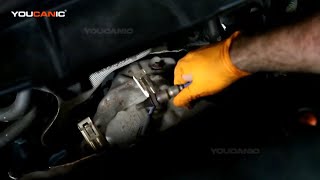
Typical fix: Replace the upstream oxygen sensor (Bank 1, Sensor 1). It is located on the exhaust manifold before the catalytic converter, easily accessible from the top of the engine bay. 🎬 Watch this step-by-step guide to replacing the upstream sensor.
Est. part cost: $100-$280 - Exhaust Leak Before the Sensor 🟡 Medium Probability Gaskets at the exhaust manifold-to-head flange or the manifold-to-downpipe connection can fail over time. Heat cycles can also cause cracks in the exhaust manifold itself.
How to confirm: Visually inspect the exhaust manifold and downpipe for black soot trails or obvious cracks. A definitive method is to use a smoke machine to introduce smoke into the exhaust system (with the engine off) and watch for leaks before the upstream O2 sensor. You can also sometimes hear a 'ticking' or 'puffing' sound from the engine bay on a cold start that goes away as the metal expands.
Typical fix: Replace the leaking gasket or repair/replace the cracked exhaust component.
Est. part cost: $20-$300 - Damaged Wiring or Connector ⚪ Low Probability The wiring harness is close to hot exhaust components and can become brittle, melt, or suffer from corrosion over time. The connector itself can also accumulate dirt or moisture.
How to confirm: Visually inspect the sensor's wiring harness and connector for any signs of melting, chafing, corrosion, or loose pins. Use a multimeter to check for continuity and proper voltage at the connector per the factory service manual.
Typical fix: Repair the damaged section of the wiring harness or replace the connector pigtail.
Est. part cost: $15-$50
Rare But Worth Checking
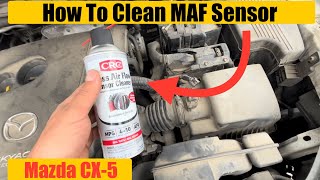
- Dirty or Failing Mass Air Flow (MAF) Sensor: → Shop Fuel Injection Air Flow Meter An incorrect airflow reading from a dirty MAF sensor can cause the PCM to make fuel adjustments that lead to O2 sensor codes. Before replacing the O2 sensor, it's worth cleaning the MAF sensor with a dedicated cleaner as a cheap and easy diagnostic step, especially if you are also experiencing stalling or jerky driving.
- Incorrect Fuel Pressure: A failing fuel pump or clogged fuel injector can alter the air-fuel mixture in a way that the O2 sensor struggles to read, potentially contributing to a slow response code. This is less common and would typically be accompanied by other fuel system codes.
Diagnosis Steps
- Connect an OBD-II scanner and confirm that P0133 is the primary code. Note any other codes present, such as P0171 or P2097.
- Access the live data stream on the scanner. Graph the voltage or current for the Bank 1 Sensor 1 (upstream) oxygen sensor, often labeled 'O2S11' or 'A/F Sensor 1'.
- Warm the engine to full operating temperature. Observe the sensor's graph at idle. It should show rapid fluctuations. A slow, lazy waveform confirms a slow response issue.
- While watching the graph, snap the throttle (quickly rev to ~2500 RPM and release). The sensor's reading should change almost instantly. A significant delay confirms a bad sensor.
- Perform a thorough visual inspection of the exhaust system from the engine block to the catalytic converter. Look for black soot marks at flanges or cracks in the manifold, which indicate a leak.
- If an exhaust leak is suspected but not visible, confirm with a smoke test.
- Inspect the oxygen sensor's wiring harness and connector for any signs of melting, chafing, or corrosion. Ensure the connector is securely clipped.
- As a low-cost preliminary step, consider cleaning the Mass Air Flow (MAF) sensor located in the intake tube after the air filter. 🎬 Follow this quick walkthrough to clean your MAF sensor.
- If no exhaust leaks or wiring issues are found, and the live data confirms a slow response, the upstream oxygen sensor is faulty and should be replaced.
Parts You'll Likely Need
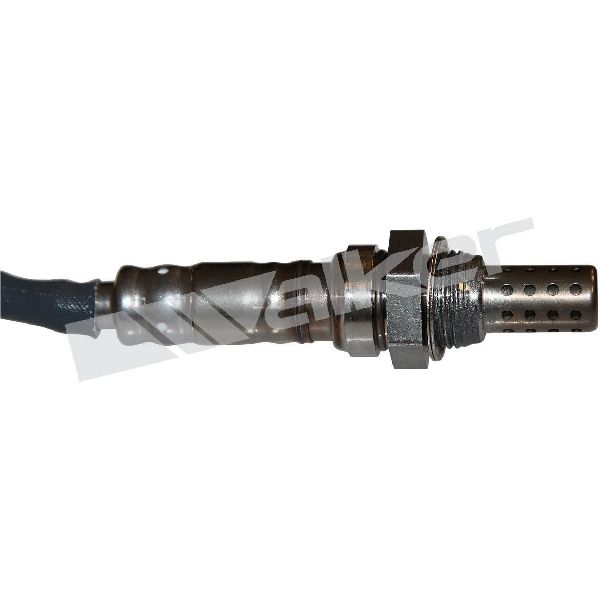
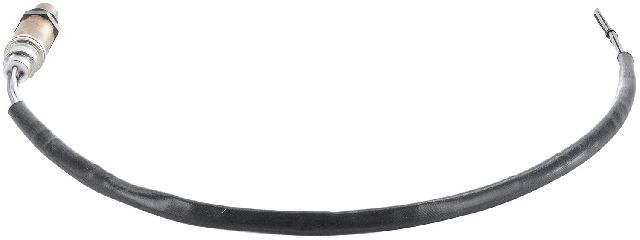
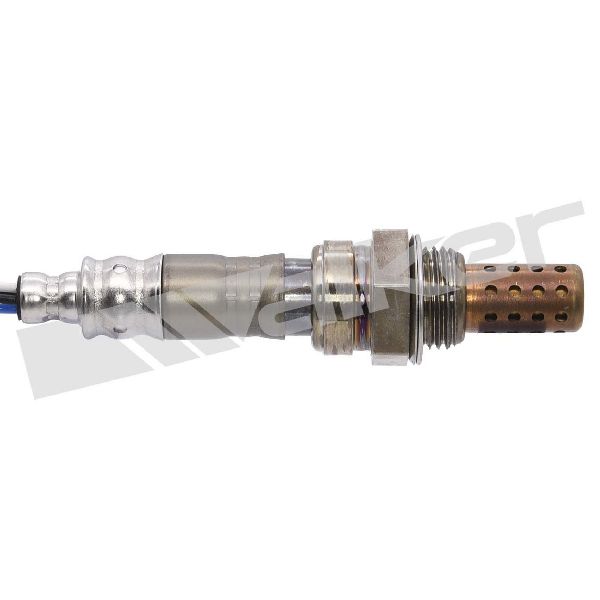
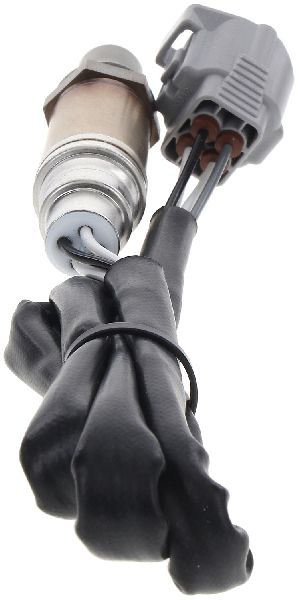
- Upstream Air/Fuel Ratio Sensor (Bank 1, Sensor 1)
(OEM #PE01-18-8G1A (for 2.0L/2.5L non-turbo, approx. 2013-2018) or PY8V-18-8G1 (for 2.5L Turbo))— This is the most common failure part for code P0133. It is a wear item that degrades over time, causing its response to slow down.
Trusted brands: Denso (OEM supplier, e.g., 234-5059), NGK / NTK (OEM supplier, e.g., 24369), Bosch
OEM price range: $180-$330
Aftermarket price range: $100-$200
Related Codes That Often Appear With This One
- P0171 — System Too Lean. An exhaust leak before the sensor will draw in outside air, causing the A/F sensor to read a false lean condition. A failing sensor can also incorrectly report a lean state, causing the PCM to trigger both codes.
- P2097 — Post Catalyst Fuel Trim System Too Rich. A sluggish upstream sensor can cause the PCM to over-enrich the fuel mixture to compensate for what it thinks is a lean condition. This overly rich exhaust is then detected by the downstream sensor, triggering P2097.
Technical Service Bulletins (TSBs) & Recalls
- No specific Technical Service Bulletin (TSB) for P0133 on the SKYACTIV-G engine is widely reported. The issue is typically handled as a standard diagnosis and part replacement. However, some TSBs for other models suggest a PCM software update can sometimes resolve false P0133 codes by adjusting sensor monitoring sensitivity.
- A manufacturer service bulletin for related Mazda models, TSB Bulletin #01-009-23, notes that some vehicles may exhibit the check engine light with DTC P0133:00 (A/F sensor system: Slow response) due to a false error detected by improper error detection logic.
Platform-Specific Known Issues
- Owner Experience: P0133 at 50k Miles on 2019 Mazda 3: A user on a Reddit forum for the Mazda 3 (which shares the SKYACTIV-G engine) reported a P0133 code at less than 50,000 miles. The Check Engine Light appeared but then turned off by itself after a day, indicating an intermittent fault as the sensor was beginning to fail. This highlights that the code may not stay on constantly in the early stages of sensor degradation.
- DIY Replacement is Common: Multiple YouTube videos and forum posts detail the DIY replacement process for the upstream sensor on the CX-5 and related models. The sensor is located at the front of the engine on the exhaust manifold, making it accessible from above without needing to lift the vehicle, which contributes to the low DIY difficulty rating.
Mechanic-Grade Diagnostic Values
- A/F Sensor Heater Circuit Resistance — expected: 1.1 - 1.8 Ω at 20°C (68°F). Failure: A resistance reading outside this range (open or shorted) indicates a faulty internal heater, requiring sensor replacement.
- A/F Sensor Live Data Current (PID: O2S11) — expected: Approximately -59 µA at idle after warm-up.. Failure: A signal that is slow to change or does not respond to throttle changes indicates a lazy sensor.
- A/F Sensor Response Time (PCM Threshold) — expected: The sensor's rich-to-lean (or lean-to-rich) switch time should be less than 1.0 second.. Failure: If the PCM detects the switching period is greater than 1.0 second, it will trigger P0133.
Scan Tool Commands That Help
- Mazda M-MDS, FORScan: KAM (Keep Alive Memory) Reset — This is critical after replacing the A/F sensor. It clears all learned fuel trim adaptations, forcing the PCM to relearn values with the new sensor. Failing to do this can cause the P0133 code to return as the PCM's old data conflicts with the new sensor's readings.
- Mazda M-MDS: HO2S Self-Test — This function commands the PCM to run its internal monitor for the O2 sensor response on demand. It provides immediate feedback in the service bay to verify if a repair has resolved the 'slow response' condition without needing a full drive cycle.
- Mazda M-MDS (MDARS or IDS software): PCM Reprogramming — In some cases, particularly on related models, a false P0133 has been resolved by a dealer-performed PCM software update that recalibrates the sensitivity of the A/F sensor monitoring logic. This should be considered if a new, high-quality sensor does not fix the code.
Wiring & Ground Locations
- G1 (Engine Ground) — On the left side of the cylinder head (driver's side for LHD models).. This is a primary ground point for the PCM and its sensors. A loose or corroded connection here can introduce electrical noise or a voltage offset into the A/F sensor circuit, which the PCM may misinterpret as a slow or erratic signal, leading to a false P0133 code.
- A/F Sensor Connector (C-05) — At the end of the sensor pigtail, typically clipped to a bracket on the engine block or firewall near the back of the engine.. Allows for direct testing of the sensor and harness. Pinout is typically: Pin A - Heater Control (from PCM), Pin B - Heater Power (from Main Relay, battery voltage with key on), Pin C - Sensor Signal (-), Pin D - Sensor Signal (+). Testing at these pins can differentiate between a bad sensor, a heater circuit fault, or a wiring issue.
Real Owner Repair Stories
- mazda3revolution.com forum user (2020 Mazda 3, ~60,000 miles (shares SKYACTIV-G engine and logic)) — P0133 Check Engine Light
❌ Tried (didn't work) Replacing the upstream A/F sensor with a new Denso (OEM-quality) part.
✅ What actually fixed it A dealer-performed PCM software update. A Technical Service Bulletin (TSB) existed to recalibrate the sensitivity of the A/F sensor monitoring logic, which resolved the false P0133 code.
OEM Part Supersession History
PE01-18-8G1, PEDD-18-8G1→PE01-18-8G1A— Standard part revision and consolidation.
Heads up: PE01-18-8G1A is the correct and most current part for most 2013-2018 non-turbo models. Using older stock or cross-referencing incorrectly can lead to issues. Always verify fitment with VIN.
Model Year Variations Within This Range
- 2013-2020 vs 2021+: The diagnostic software used by Mazda dealers for PCM reprogramming changed. Models up to ~2020 use the Mazda Integrated Diagnostic System (IDS), while newer models use the Mazda Diagnostic and Repair Software (MDARS). This is relevant if a PCM software update is required to fix a persistent P0133 code.
Diagnostic Flowchart
Other Known Issues on This Vehicle
Issues unrelated to this code that are worth knowing about as an owner of this generation:
- LED Daytime Running Light (DRL) Failure 🟠 Medium — Very common on the 2016 model year, but can occur on others. A sealing gasket releases sulfur, corroding the LED circuit, causing flickering then failure. (Ref: NHTSA Recall 20V063000 (Mazda recall 4320A) was issued for 2016 models.)
- Infotainment 'Ghost Touch' and Delamination 🟡 Low — Common across many 2014+ models. The screen registers phantom touches, causing random station changes or navigation inputs. It often happens when the vehicle is stopped, as the touchscreen is disabled while in motion. (Ref: No official recall, but it is a widely known issue. The common DIY fix is to disconnect the touchscreen's ribbon cable, forcing reliance on the commander knob.)
- Intake Valve Carbon Buildup 🟠 Medium — A known consequence of all direct-injection (GDI) engines, including SKYACTIV-G. Oil vapors from the PCV system bake onto the intake valves over time. Onset is typically after 60,000-100,000 miles and can be accelerated by frequent short trips.
- Prematurely Cracked Windshields 🟡 Low — Some owners of early models (approx. 2014-2016) reported windshields cracking spontaneously or from very minor impacts, suggesting they may be unusually fragile.
- Accessory Power Stays On (Parking Sensor Issue) 🟡 Low — Reported on early models (approx. 2013-2014), a faulty parking sensor prevents the vehicle from recognizing it is in 'Park', leaving accessory power on and draining the battery.
Used vs. New Parts: Buying Guide for This Vehicle
When a used part is the smart pick: For this specific P0133 repair, using a used part is strongly discouraged. The primary cause is the Air/Fuel sensor, which is a wear-and-tear item. A used sensor has unknown remaining life and is very likely to fail soon, if it works at all.
Donor-vehicle mileage cap: roughly under 10000 miles for the part to have meaningful remaining life.
What to inspect on the donor part:
- Not applicable for the sensor itself. If buying related hardware like an exhaust manifold, check for cracks, warping on the flange, and broken studs.
OEM-only on this vehicle (don't cheap out):
- Air/Fuel Ratio Sensor (Bank 1, Sensor 1)
Aftermarket brands forum-validated for this vehicle:
- Denso (often the original OEM manufacturer for Mazda)
- NTK / NGK (often the original OEM manufacturer for Mazda)
Brands owners have reported issues with on this vehicle:
- Generic, unbranded, or 'white-box' sensors from online marketplaces. Forum users frequently report that these parts either don't work out of the box, fail quickly, or don't have the correct response characteristics, causing the P0133 code to return.
Real Owner Stories
Aggregated from forums and TSBs cited above. Mileages and costs reflect what owners reported in those sources.
2019 Mazda 3 SKYACTIV-G — 50000 miles
Symptoms: The Check Engine Light appeared but then turned off by itself after a day, indicating an intermittent fault as the sensor was beginning to fail.
What fixed it: Replacement of the upstream oxygen sensor (Bank 1, Sensor 1).
Source hint: reddit.com/r/mazda3 thread titled 'P0133'
Mazda CX-5 SKYACTIV-G
Symptoms: The user first replaced the sensor with a lower-quality aftermarket part which failed to resolve the issue.
What fixed it: Replacing the sensor with a higher-quality brand.
Source hint: MazdaKlan.cz Forum thread titled 'Chyba P0133 (Error P0133)'
Related OBD-II Codes
Frequently Asked Questions
Is there a specific TSB for the P0133 code on my SKYACTIV-G engine?
Can I replace the Bank 1 Sensor 1 oxygen sensor myself on my CX-5?
Should I use an aftermarket sensor to fix the P0133 error?
Could an exhaust leak be causing this code on my Mazda?
Will cleaning the Mass Air Flow (MAF) sensor help with P0133?
Does the P0133 code always stay on constantly?
Helpful Videos
We Have This Part in Stock

The information in this article is provided for general reference and educational purposes only. Vehicle specifications, procedures, and part compatibility can vary by production date, trim level, and region. Always consult your vehicle's factory service manual and verify part numbers before purchasing or performing repairs. Safety-critical components such as airbags, seat belts, and braking systems should be installed by a qualified professional.
- Mazda CX-5:
- 🧭 Diagnostic Flowchart
- 🎬 Helpful Videos
- 🛍️ Shop This Part
- What's Unique About the 2013-2024 Mazda CX-5
- Symptoms You May Notice
- Most Likely Causes
- Rare But Worth Checking
- Diagnosis Steps
- Parts You'll Likely Need
- Related Codes That Often Appear With This One
- Technical Service Bulletins (TSBs) & Recalls
- Platform-Specific Known Issues
- Mechanic-Grade Diagnostic Values
- Scan Tool Commands That Help
- Wiring & Ground Locations
- Real Owner Repair Stories
- OEM Part Supersession History
- Model Year Variations Within This Range
- Other Known Issues on This Vehicle
- Used vs. New Parts: Buying Guide for This Vehicle
- Real Owner Stories
- 2019 Mazda 3 SKYACTIV-G — 50000 miles
- Mazda CX-5 SKYACTIV-G
- Related OBD-II Codes
- Frequently Asked Questions
- 🎟️ Get 5% Off