

P0133 on 2004-2011 Mazda RX-8: Slow Front O2 Sensor Causes and Fixes
For the 2004-2011 Mazda RX-8, code P0133 almost always indicates a failing front oxygen sensor (also called an A/F or wideband sensor). Due to the rotary engine's nature, these sensors can get contaminated by carbon and oil or simply wear out. Replacing the front O2 sensor is the most common fix, costing around $150-$250 for a quality part. It is crucial to use the correct OEM or equivalent part for your specific model year.
- P0133 on an RX-8 points directly to a slow-responding front (upstream) oxygen sensor.
- The most likely fix is replacing the front O2 sensor with a high-quality, direct-fit wideband unit from a brand like Denso or NGK/NTK.
- Before replacing the sensor, perform a quick visual inspection for obvious exhaust leaks or wiring damage.
- Do not use a cheap or universal O2 sensor, as it will not work correctly with the RX-8's ECU.
- Ignoring this code will lead to poor fuel mileage and can cause expensive damage to the catalytic converter.
What's Unique About the 2004-2011 Mazda RX-8
The 13B-MSP Renesis rotary engine has a unique exhaust signature, higher operating temperatures, and injects a small amount of oil for apex seal lubrication. This environment leads to faster contamination of the front O2 sensor with carbon and oil deposits, degrading its performance. The front O2 sensor on an RX-8 is a more sensitive and expensive wideband type, which provides detailed air-fuel ratio information. This sensitivity, combined with the harsh exhaust environment, gives it a finite life and makes it a common failure point.
Generation note: The 2004-2011 range covers two series: Series I (2004-2008) and Series II (2009-2011). While the P0133 code has the same meaning for both, the front oxygen sensor part numbers are different. Always verify the correct part for your specific model year before purchasing, as they are not interchangeable.
Symptoms You May Notice
- Illuminated Check Engine Light
- Decreased fuel economy
- Hesitation or stumbling during acceleration
- Rough or unstable idle
- Noticeable lean running condition or surging
- Black smoke from the exhaust if running excessively rich
- Replacing the rear (downstream) O2 sensor. P0133 specifically refers to Sensor 1, which is the front/upstream sensor. The rear sensor monitors catalytic converter efficiency and does not affect air-fuel mixture control.
- Replacing the MAF sensor without diagnosis. While a MAF can be a contributing factor, it's far less likely to be the direct cause of a P0133 code compared to the O2 sensor itself.
Most Likely Causes
- Failing Front Oxygen Sensor 🔴 High Probability → Shop Oxygen Sensor The front O2 sensor is a wear item. On the Renesis engine, high exhaust heat, carbon, and oil byproducts from apex seal lubrication contaminate the sensor over time, degrading its ability to respond quickly.
How to confirm: Use an OBD-II scanner to monitor the live data for the Bank 1 Sensor 1 Air/Fuel Ratio. A healthy sensor will show rapid fluctuations 🎬 Watch: How to test your upstream wideband sensor with a multimeter. in response to throttle inputs. A slow sensor will have lazy, delayed changes. A response time slower than the PCM's calibrated expectation (often in the 100-200ms range) is a strong indicator of failure. On the RX-8, this PID is often displayed as a current in milliamps (mA); a stuck or non-responsive value (e.g., -128mA) indicates a failed sensor.
Typical fix: Replace the front (upstream) oxygen sensor. It is critical to use a high-quality OEM (Mazda) or OEM-equivalent (Denso, NGK/NTK) wideband sensor. Using cheap or incorrect universal sensors will not resolve the issue.
Est. part cost: $150-$250 - Exhaust Leak 🟡 Medium Probability Exhaust gaskets, particularly the one between the engine and exhaust manifold, can fail from high temperatures and vibration. A leak before the O2 sensor can introduce outside air, skewing the sensor's readings and causing the PCM to interpret it as a slow response.
How to confirm: Visually inspect the exhaust manifold and all connections for black soot trails, which indicate a leak. You can also use a smoke machine or listen for a ticking/hissing sound 🎬 See this quick trick to find any exhaust leak in minutes. from the manifold area, especially when the engine is cold.
Typical fix: Replace the leaking gasket or tighten the loose connection. The most common leak point is the gasket between the engine block and the exhaust manifold.
Est. part cost: $20-$50 - Damaged Wiring or Connectors ⚪ Low Probability The wiring harness for the front O2 sensor is in a hot, tight area of the engine bay. The connector is located at the top of the transmission bellhousing and can be difficult to reach. Wires can become brittle, melt, or chafe over time.
How to confirm: Visually inspect the wiring harness from the sensor to the main engine harness. Look for any signs of melting, chafing, or corrosion on the connector pins. A multimeter can be used to check for continuity and shorts in the wiring.
Typical fix: Repair the damaged section of wire or clean/replace the connector.
Est. part cost: $10-$30
Rare But Worth Checking
- Failing Catalytic Converter: While a failing catalytic converter usually sets other codes (like P0420), a partially clogged or internally damaged cat can alter exhaust flow and temperature, affecting the front O2 sensor's operation and potentially triggering P0133.
- MAF Sensor Issues: → Shop Fuel Injection Air Flow Meter A dirty or failing Mass Airflow (MAF) sensor can provide incorrect airflow data, causing the ECU to create an improper fuel mixture. The O2 sensor will try to correct this, and the resulting conflict in data can sometimes be interpreted as a slow sensor response.
- PCM Software Issue: In some cases, the PCM's software may have overly sensitive parameters for the O2 sensor response time. Checking for any available PCM updates (like the MSP16 flash for early models) from a Mazda dealer could be a final step if all hardware is confirmed to be working correctly.
Technical Service Bulletins (TSBs) & Recalls
While the RX-8 is known for hardware-related sensor failure, it is worth noting that Mazda has addressed similar logic issues across its lineup. For example, TSB Bulletin #01-009-23 notes that some vehicles may exhibit the Check Engine light turning on with DTC P0133:00 (A/F sensor system: Slow response) due to a false error detected by improper error detection logic.
Diagnosis Steps
- Verify the code: Use an OBD-II scanner to confirm P0133 is active. Check for any other codes that could provide more context.
- Inspect for exhaust leaks: With the engine cold, carefully inspect the exhaust manifold and the connection to the catalytic converter for any signs of leaks (soot, cracks).
- Inspect wiring: Visually inspect the front O2 sensor's wiring harness and connector. The connector is notoriously hard to reach, located at the top of the transmission bellhousing. Look for melting, chafing, or corrosion.
- Analyze live data: Use a scan tool to view the live data stream for 'Bank 1 Sensor 1'. For an RX-8, monitor the Air/Fuel Ratio Equivalence Ratio (Lambda) or current (mA). A healthy sensor will respond almost instantly to throttle blips. A slow sensor will show delayed or lazy responses.
- Test the sensor: Given the high failure rate and difficulty of advanced testing on a wideband sensor without an oscilloscope, if steps 2 and 3 show no issues, the sensor itself is the most likely culprit.
- Replace the sensor: If the sensor is deemed faulty, replace it. The sensor can be very tight; use a 22mm (or 7/8") O2 sensor socket, often a crow's foot or offset wrench style, for removal. Applying penetrating oil beforehand can help. 🎬 Watch: A step-by-step walkthrough for replacing the front O2 sensor.
- Clear codes and test drive: After replacement, clear the codes using the scanner and perform a test drive, including varied throttle inputs, to ensure the code does not return. Note that the '20 brake stomp' method does not clear CELs.
Parts You'll Likely Need
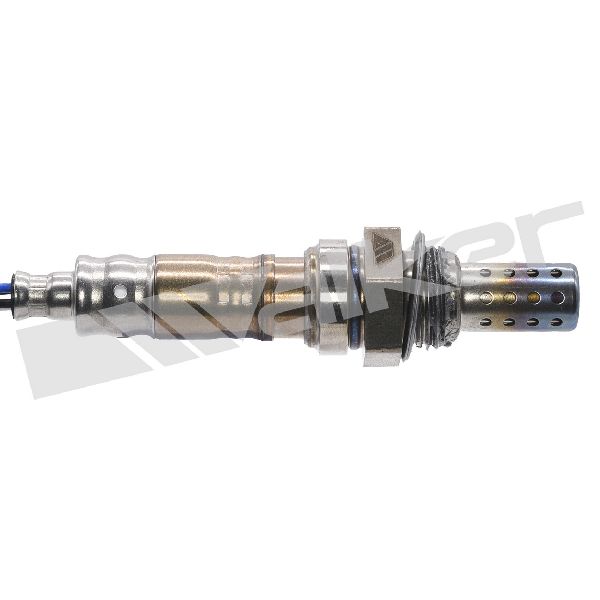
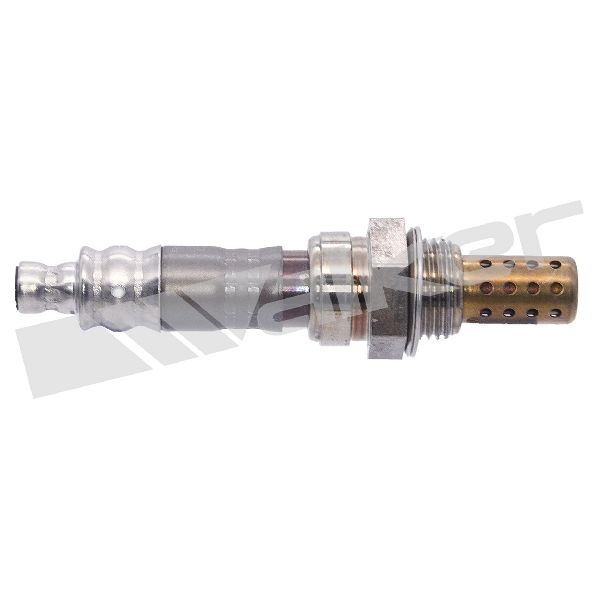
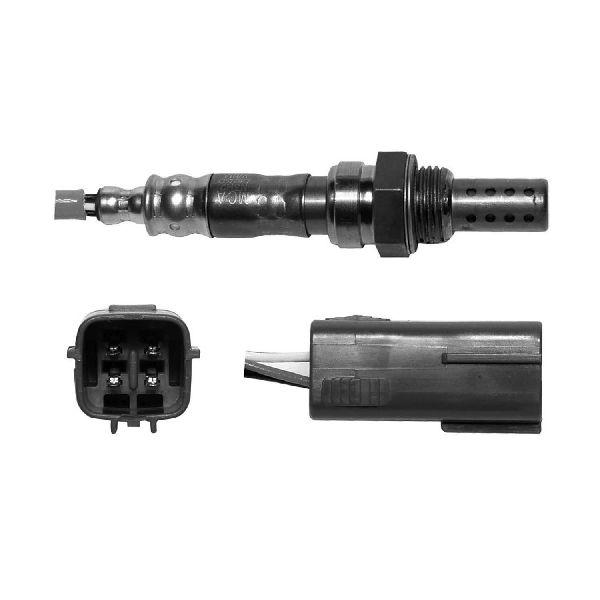
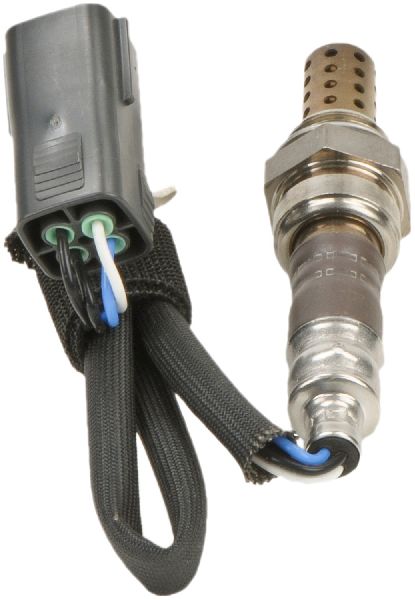
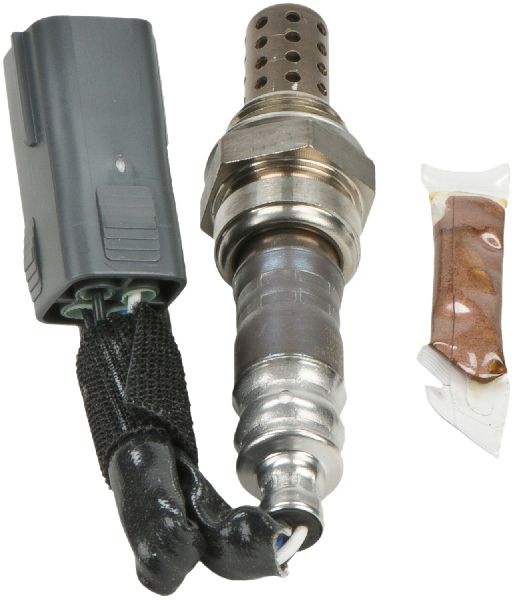
- Front Oxygen Sensor (Air/Fuel Ratio Sensor)
(OEM #Series I (2004-2008 MT): N3H3-18-8G1A or N3H1-18-861B. Series I (2004-2008 AT): N3H2-18-8G1B. Series II (2009-2011): N3R1-18-8G1. VERIFY before purchase.)— This is the most common failure point for code P0133 on the RX-8. It is a critical sensor for fuel control and is considered a maintenance item that wears out over time.
Trusted brands: Denso (e.g., 234-9091 for S1 MT, which interchanges with N3H3-18-8G1A), NGK/NTK
OEM price range: $210-$345
Aftermarket price range: $150-$250
Related Codes That Often Appear With This One
- P2096 — P2096 (Target A/F Feedback System Too Lean) can appear if the slow O2 sensor is providing inaccurate lean readings, causing the PCM to attempt corrections that go beyond its normal range.
- P0171 — P0171 (System Too Lean) can be triggered for similar reasons as P2096, where the slow or failing sensor incorrectly reports a lean condition.
Platform-Specific Known Issues
- The front O2 sensor on the RX-8 is notoriously difficult to access, especially its electrical connector which is on top of the bellhousing.
- Using a cheap, incorrect (narrowband instead of wideband), or universal oxygen sensor will not work and will cause persistent codes and running issues. It is essential to use a direct-fit wideband sensor from a reputable brand like Denso or NGK/NTK.
Mechanic-Grade Diagnostic Values
- Front A/F Sensor Live Data (Current) — expected: Rapidly fluctuating current in milliamps (mA) that responds instantly to throttle changes.. Failure: Value is stuck, lazy, or shows a static reading like -128mA, even when the sensor is disconnected.
- Front A/F Sensor Heater Circuit Resistance — expected: Approximately 1.1 - 1.8 Ω at 68°F (20°C). (Value from similar Mazda application, likely very close for RX-8).. Failure: Open circuit (infinite resistance) or a value significantly outside the expected range.
- Long Term Fuel Trim (LTFT) at Idle/Cruise — expected: While 0% is ideal, values between 5-10% are not uncommon on the RX-8 and may not indicate a significant issue on their own.. Failure: Consistently high positive trims (>15%) may indicate a vacuum leak, while high negative trims can indicate a rich condition that could be fouling the sensor.
Hidden / Shadow Codes Worth Checking
- Mode 6, Test ID $83, Component ID $11: This is the diagnostic monitoring test result for the A/F sensor response time. A failing result here is a direct confirmation from the PCM that the sensor is not meeting its performance criteria. (Test ID from similar Mazda, highly likely to apply). (see via Advanced OBD-II scan tool capable of displaying Mode $06 test results.)
- Pending Trouble Code: The PCM will store a 'pending code' on the first drive cycle a fault is detected. If the fault is present on a second consecutive drive cycle, the code becomes a stored DTC and the CEL is illuminated. Checking for pending codes can help catch an intermittent issue early. (see via Most modern OBD-II scanners can read pending codes. Mazda's dealer tool is the WDS (Worldwide Diagnostic System).)
Wiring & Ground Locations
- Front O2 Sensor ECU Pins — At the main Powertrain Control Module (PCM) connector.. Allows for testing continuity from the sensor connector to the PCM. The pins are: 1V (Front O2 Power Ground), 2B (Front O2 Signal Ground), and 2C (Front O2 A/F Signal).
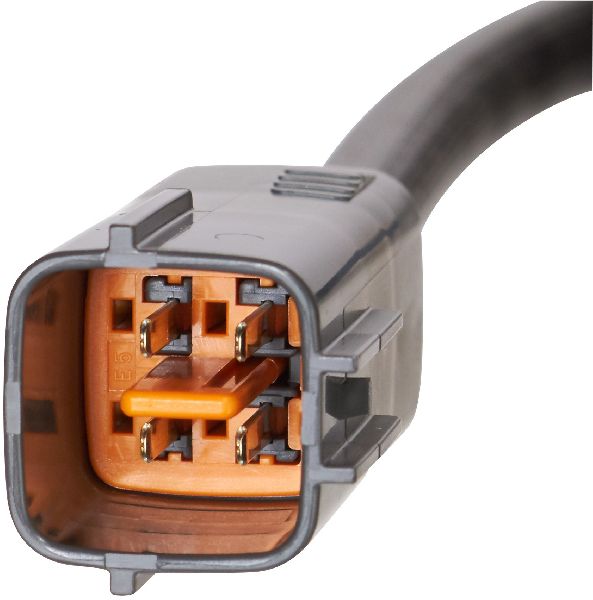
- Front O2 Sensor Harness Wires — At the sensor-side of the electrical connector, on top of the transmission bellhousing.. Knowing the wire functions is critical for diagnosis. The colors correspond to: Y (Signal), BR (Signal Ground), W/R (Heater +12V), R (Heater Ground).
- Engine Bay Ground Points — Key grounds include one on the lower intake manifold to the chassis, two on the crossmember under the battery/airbox, and two on the passenger side harness near the strut tower.. A poor ground connection for the engine or PCM can introduce electrical noise and cause incorrect sensor readings, potentially mimicking a sensor failure.
Real Owner Repair Stories
- RX8Club.com user 'Davey's RX-8' (Mazda RX-8 (year not specified)) — P0133 code and lean running hesitation after replacing a clogged cat, MAF, and throttle body.
❌ Tried (didn't work) Replacing the front O2 sensor., Performing the '20 brake pedal stomp' to reset the ECU.
✅ What actually fixed it The code persisted because the '20 brake stomp' method does not clear Check Engine Lights. The underlying issue was resolved by the new sensor, but the code needed to be cleared with a proper OBD-II scan tool. - Reddit r/RX8 user (2009 Mazda RX-8 GT (Manual)) — Multiple O2 sensor codes (P0134, P0030, P0031) after replacing a seized front sensor.
❌ Tried (didn't work) Installing a new, non-OEM oxygen sensor., Continuity testing the wiring harness to the PCM, which checked out fine.
✅ What actually fixed it The owner realized the car requires a wideband (A/F) sensor for the front position, but they had likely installed a cheaper narrowband sensor. The key clue was the scan tool displaying 'current' for the front sensor, while the narrowband sensor they tested with a torch produced a simple voltage swing. The fix was to install the correct type of wideband sensor.
"I Checked Everything" — The Actual Cause
- While no specific stories were found, a common pattern on forums is a hairline crack in the exhaust manifold. This type of leak may not show up during a cold smoke test but can open up when the manifold heats up under load, introducing unmetered air and triggering P0133. This is often missed because the standard smoke test passes, leading the technician to believe there is no exhaust leak.
OEM Part Supersession History
N3H3-18-8G1A→N3H1-18-861B (often cited as an interchange)— Standard part evolution and supplier changes.
Heads up: Denso aftermarket part 234-9102 is a direct replacement for N3H3-18-8G1A. It is critical not to use a Series 2 sensor (N3R1-18-8G1) on a Series 1 car, or vice-versa, as they are calibrated differently.
Model Year Variations Within This Range
- 2004-2008 (Series 1) vs 2009-2011 (Series 2): The front A/F sensor and rear O2 sensor part numbers are different and not interchangeable. The Series 2 engine features significant revisions, including a third oil injector and higher oil pressure, which changes the operating environment.
- 2009-2011 (Series 2): The Series 2 PCM is not tunable by common aftermarket software, unlike the Series 1. This limits diagnostic and troubleshooting options that involve software modification.
Diagnostic Flowchart
Other Known Issues on This Vehicle
Issues unrelated to this code that are worth knowing about as an owner of this generation:
- Premature Engine Failure / Apex Seal Wear 🔴 High — Common, especially on earlier (2004-2005) models and engines not maintained meticulously. Onset can be as early as 50,000-80,000 miles. Symptoms include hard starting when hot, rough idle, and a distinctive 'galloping' sound during cranking.
- Ignition Coil Failure 🔴 High — Very common wear item. Coils are subjected to high heat and often fail between 30,000-50,000 miles, leading to misfires, poor performance, and potential catalytic converter damage. Mazda produced several revisions, with 'Rev. C' being the most reliable.
- Weak/Slow Starter Motor 🟠 Medium — Early models (pre-2006) had a slower, less powerful starter motor which struggled to start the engine, especially when warm or slightly flooded. An upgraded, faster starter was available and is a common reliability modification.
- Engine Flooding 🟠 Medium — Common if the car is started and shut off before reaching operating temperature. Excess fuel washes oil from the rotor housings, causing a temporary loss of compression and preventing the engine from starting.
- Catalytic Converter Failure 🟠 Medium — Often a secondary failure caused by failing ignition coils leading to unburnt fuel entering the exhaust and overheating the catalyst. This can cause a blockage and significant power loss.
Used vs. New Parts: Buying Guide for This Vehicle
When a used part is the smart pick: For this specific code (P0133), buying a used oxygen sensor is never recommended. However, if the cause is determined to be a cracked exhaust manifold, a used manifold from a low-mileage donor car is a viable and cost-effective option.
Donor-vehicle mileage cap: roughly under 80000 miles for the part to have meaningful remaining life.
What to inspect on the donor part:
- For a used exhaust manifold, inspect thoroughly for any hairline cracks, especially around the welds and flanges.
- Ensure all mounting studs are intact and not stripped.
- Check for excessive rust that could compromise the integrity of the metal.
OEM-only on this vehicle (don't cheap out):
- Front Air/Fuel Ratio Sensor: While not strictly 'OEM-only', it MUST be a direct-fit wideband sensor from an OEM supplier like Denso or NGK/NTK. Universal or incorrect-type sensors will not work.
Aftermarket brands forum-validated for this vehicle:
- Denso (OEM supplier)
- NGK/NTK (OEM supplier)
Brands owners have reported issues with on this vehicle:
- Unbranded 'universal' oxygen sensors.
- Any sensor not explicitly listed as a wideband/Air-Fuel Ratio sensor for the specific RX-8 model year and transmission type.
Real Owner Stories
Aggregated from forums and TSBs cited above. Mileages and costs reflect what owners reported in those sources.
Mazda RX-8 (13B-MSP Renesis 1.3L Rotary)
Symptoms: Check Engine Light (CEL) with code P0133 and lean running hesitation. This followed a period of running rich with an erratic idle.
What fixed it: The owner replaced the front O2 sensor, but the code remained until a proper tool was used to clear the CEL, as the brake pedal stomp method was ineffective.
Source hint: RX8Club.com thread titled 'Code P0133 - RX8Club.com'
2004-2011 Mazda RX-8
Symptoms: Persistent codes and running issues after attempting a repair with an incorrect sensor type.
What fixed it: Replacing the cheap or incorrect narrowband sensor with a proper Denso or NTK wideband sensor.
Source hint: Reddit r/RX8
Related OBD-II Codes
Frequently Asked Questions
Can I use the '20 brake stomp' method to clear the P0133 code on my RX-8?
Where is the front O2 sensor connector located on the 13B-MSP Renesis?
Can I use a universal oxygen sensor to save money on my 2004-2011 Mazda RX-8?
Why does the RX-8 front O2 sensor fail so frequently compared to other cars?
What specific live data values should I look for to confirm a bad sensor on my RX-8?
Is there a specific tool recommended for removing the front O2 sensor on this vehicle?
Helpful Videos
We Have This Part in Stock

The information in this article is provided for general reference and educational purposes only. Vehicle specifications, procedures, and part compatibility can vary by production date, trim level, and region. Always consult your vehicle's factory service manual and verify part numbers before purchasing or performing repairs. Safety-critical components such as airbags, seat belts, and braking systems should be installed by a qualified professional.
- Mazda RX-8:
- 🧭 Diagnostic Flowchart
- 🎬 Helpful Videos
- 🛍️ Shop This Part
- What's Unique About the 2004-2011 Mazda RX-8
- Symptoms You May Notice
- Most Likely Causes
- Rare But Worth Checking
- Technical Service Bulletins (TSBs) & Recalls
- Diagnosis Steps
- Parts You'll Likely Need
- Related Codes That Often Appear With This One
- Platform-Specific Known Issues
- Mechanic-Grade Diagnostic Values
- Hidden / Shadow Codes Worth Checking
- Wiring & Ground Locations
- Real Owner Repair Stories
- "I Checked Everything" — The Actual Cause
- OEM Part Supersession History
- Model Year Variations Within This Range
- Other Known Issues on This Vehicle
- Used vs. New Parts: Buying Guide for This Vehicle
- Real Owner Stories
- Mazda RX-8 (13B-MSP Renesis 1.3L Rotary)
- 2004-2011 Mazda RX-8
- Related OBD-II Codes
- Frequently Asked Questions
- 🎟️ Get 5% Off