

P0133 on 2001-2006 Mazda Tribute 3.0L V6: Slow O2 Sensor Causes and Fixes
On the 3.0L V6 Tribute, P0133 is most often a failing upstream oxygen sensor on the rear cylinder bank (Bank 1). This sensor is difficult to access. Before replacing it, check for exhaust leaks and, more importantly, vacuum leaks from intake gaskets or PCV hoses, which are extremely common on this engine and can trigger this code. Expect to pay $40-$90 for a quality aftermarket sensor.
- P0133 on your Tribute points to the upstream O2 sensor on the rear cylinder bank, which is very difficult to access.
- The most likely cause is simply an old, worn-out sensor that needs to be replaced.
- Before replacing the sensor, it is critical to check for exhaust leaks (at the manifold gasket) and vacuum leaks (especially PCV hoses), as these are common issues on this engine that can also cause this code.
- Using a scan tool to watch the sensor's live voltage data is the best way to confirm if it is truly 'slow'.
- If you also have codes P0171 or P0174, suspect a vacuum or exhaust leak as the primary problem.
What's Unique About the 2001-2006 Mazda Tribute
The 2001-2006 Mazda Tribute is a rebadged Ford Escape, sharing the same Ford Duratec 3.0L V6 engine (re-named AJ by Mazda). Therefore, issues common to the Ford Escape apply directly. For this P0133 code, the key challenge is that the affected sensor (Bank 1, Sensor 1) is on the rear cylinder bank, tucked against the firewall, making access notoriously difficult. While the sensor itself is a common failure point, this engine family is exceptionally known for vacuum leaks from brittle PCV hoses (especially an elbow under the intake manifold) and dried-out intake manifold gaskets. These leaks introduce unmetered air, causing lean conditions (P0171/P0174) that are often the true root cause of the slow sensor response code.
Symptoms You May Notice
- Check Engine Light is on
- Reduced fuel economy
- Rough or unstable idle
- Engine hesitation or sluggish acceleration
- Black smoke from the exhaust in some cases
- Replacing the oxygen sensor without first performing a smoke test for exhaust or vacuum leaks. On this engine, a vacuum leak is a highly probable cause and must be ruled out first.
- Replacing the wrong oxygen sensor. P0133 is for Bank 1 (rear bank), Sensor 1 (upstream). Do not replace the front bank sensor or the downstream sensor.
- Replacing the Mass Airflow (MAF) sensor. While a faulty MAF can cause fuel trim issues, it is not a direct cause of a slow O2 sensor response code, though some general guides mention it as a possibility.
Most Likely Causes
- Failing or Aged Bank 1, Sensor 1 Oxygen Sensor 🔴 High Probability → Shop Oxygen Sensor Oxygen sensors have a finite lifespan and degrade over time from constant exposure to heat and exhaust gases. After 100,000+ miles, their ability to switch quickly is significantly reduced, a well-documented issue on this platform.
How to confirm: Use a scan tool with live data graphing capabilities. Observe the voltage for Bank 1, Sensor 1. A healthy sensor will fluctuate rapidly and consistently between approximately 0.1V and 0.9V. A slow sensor will have lazy, delayed, or flattened-out voltage waves. A 'snap throttle' test (quickly revving the engine in park) should show an immediate response; a delay confirms a slow sensor. 🎬 Watch: How to diagnose and fix a P0133 slow response code.
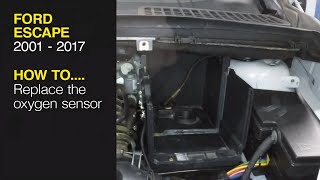
Typical fix: Replace the upstream oxygen sensor on the rear cylinder bank (Bank 1). This is a difficult-to-access location against the firewall, often requiring a specialized 22mm (7/8") offset oxygen sensor socket.
Est. part cost: $40-$90 - Vacuum Leak 🟡 Medium Probability The 3.0L Duratec/AJ V6 engine is notorious for developing vacuum leaks from brittle plastic hoses and dried-out intake manifold gaskets, particularly the PCV hose assembly and a specific rubber elbow under the upper intake manifold. These leaks are a very common root cause for P0133, often accompanied by lean codes. 🎬 See how to troubleshoot common P0171 and P0174 lean conditions.
How to confirm: A vacuum leak will often be accompanied by lean codes (P0171, P0174). The best way to confirm is with a smoke test of the intake system. You can also listen for hissing noises around the intake manifold at idle. Visually inspecting the rubber hoses for cracks is essential.
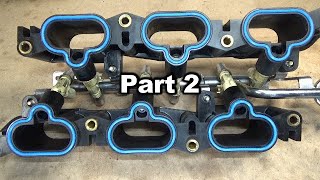
Typical fix: Identify and replace the cracked hose, leaking gasket, or failed O-ring. The PCV hose and upper/lower intake manifold gaskets are common repair items that often require removing the upper intake manifold for access. 🎬 Watch: Step-by-step guide to replacing upper and lower intake gaskets.
Est. part cost: $20-$150 - Exhaust Leak Before the Sensor ⚪ Low Probability Gaskets on the exhaust manifold and flanges can fail over time due to corrosion and constant heat cycles, allowing outside air to be drawn into the exhaust stream, which skews the sensor's readings.
How to confirm: Visually inspect the exhaust manifold and downpipe for black soot marks, which indicate a leak. You can also perform a smoke test on the exhaust system to pinpoint the source of the leak. A hissing or ticking sound from the engine bay, especially when cold, can also be a sign.
Typical fix: Replace the leaking gasket or repair the cracked exhaust component. The exhaust manifold gasket is a common culprit.
Est. part cost: $10-$50
Rare But Worth Checking
- Damaged Sensor Wiring or Connector: The wiring harness for the rear O2 sensor can sometimes make contact with hot exhaust components, causing it to melt and short circuit. Always inspect the wiring thoroughly before replacing the sensor.
- Failing Powertrain Control Module (PCM): → Shop Engine Control Module (ECM) This is extremely rare but a known issue on this platform, often caused by a shorted ignition coil damaging the internal driver circuit. The PCM should only be considered after all other possibilities, including the sensor, wiring, and all potential leaks, have been definitively ruled out by a professional.
- Software Logic Errors: While rare on older models, manufacturer service bulletins such as TSB Bulletin #01-009-23 for other Mazda models note that P0133 can sometimes be caused by a false error detected due to improper error detection logic in the PCM.
Diagnosis Steps
- Connect an OBD-II scanner and confirm P0133 is the active code. Check for any other codes, especially P0171, P0174, or P0135, as they provide critical diagnostic clues pointing towards vacuum leaks or a failed sensor heater.
- Use the scanner's live data feature to monitor the Bank 1, Sensor 1 voltage. At a steady 2500 RPM, the voltage should switch rapidly between below 0.4V and above 0.5V. Perform a 'snap throttle' test; a delayed or 'lazy' response indicates a slow sensor.
- Perform a smoke test on the intake system. This is the most effective way to find the common vacuum leaks (PCV hoses, intake gaskets) that plague this engine and frequently cause P0133.
- Visually inspect the exhaust manifold on the rear bank (against the firewall) for cracks or black soot trails indicating a gasket leak. An exhaust smoke test can also be performed.
- Inspect the wiring harness and connector for the Bank 1, Sensor 1 O2 sensor. Look for any signs of melting, corrosion, or physical damage to the wires, especially where it may contact the exhaust.
- If no leaks or wiring issues are found, and the live data confirms a slow response, the oxygen sensor is the most probable cause of the fault and should be replaced.
Parts You'll Likely Need
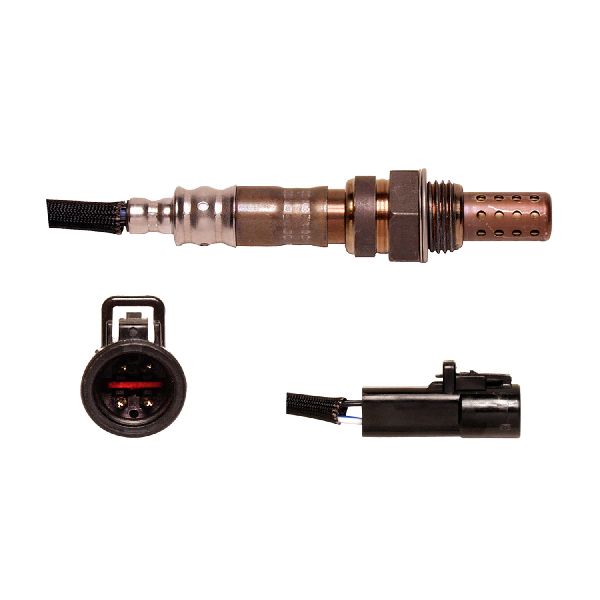
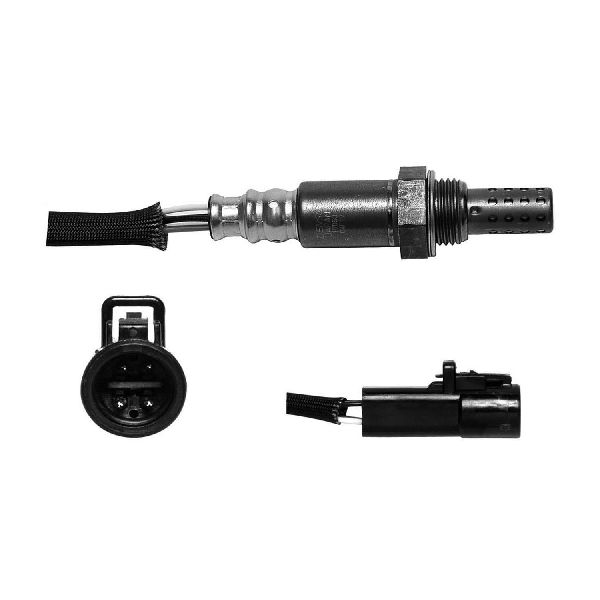
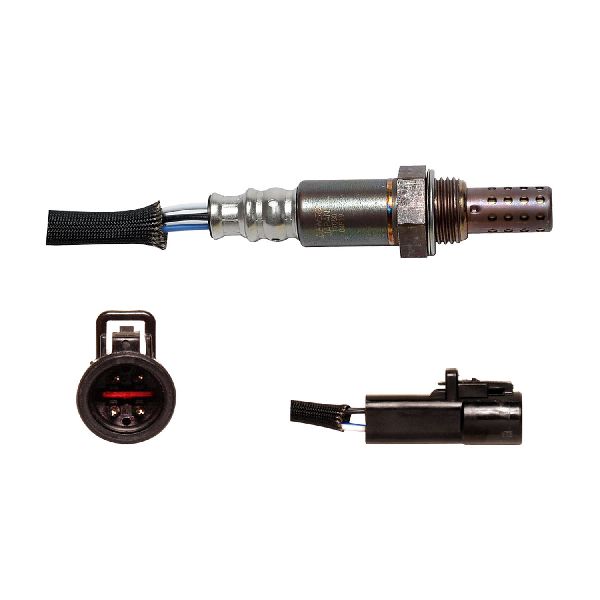
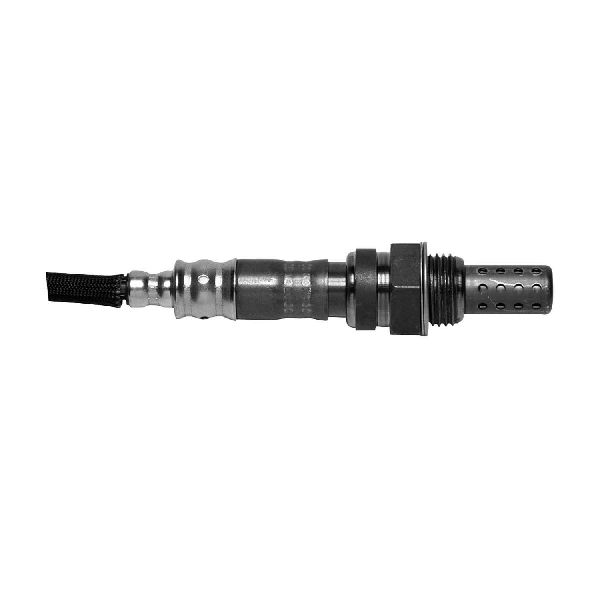
- Upstream Oxygen Sensor (Bank 1)
(OEM #Mazda: AJ0418861B; Motorcraft: DY1047)— This is the sensor being monitored by the PCM for code P0133. Due to age and heat cycles, it is the most common component to fail and cause this specific code.
Trusted brands: Motorcraft, NTK, Denso, Bosch
OEM price range: $100-$150
Aftermarket price range: $40-$90 - Intake Manifold Gasket Set — Often required when fixing the common vacuum leaks that can trigger P0133. If a smoke test indicates a leak at the intake manifold, these must be replaced.
Trusted brands: Fel-Pro, Mahle, Victor Reinz
OEM price range: $50-$80
Aftermarket price range: $20-$40
Related Codes That Often Appear With This One
- P0171 — System Too Lean (Bank 1). A vacuum leak or exhaust leak is the most common reason for these codes to appear together, as the unmetered air causes both a lean condition and confuses the O2 sensor.
- P0174 — System Too Lean (Bank 2). If a significant vacuum leak is present at the intake manifold (like the PCV hose elbow), it will affect both banks, often triggering P0171 and P0174 along with P0133.
- P0135 — O2 Sensor Heater Circuit Malfunction (Bank 1, Sensor 1). This code points to a failure in the internal heater of the same sensor. If you see both codes, it's a very strong indication that the sensor itself has failed and needs replacement.
Platform-Specific Known Issues
- The location of the Bank 1 (rear bank) upstream O2 sensor is extremely tight against the firewall, making removal and replacement difficult without specialized tools like swivel sockets, multiple extensions, and a 22mm offset O2 sensor socket.
- The 3.0L V6 engine is highly prone to vacuum leaks from the intake manifold gaskets and PCV hoses. Owners often chase P0133 by replacing the sensor, only for the code to return because the root cause was a vacuum leak that also set P0171/P0174.
Technical Service Bulletins (TSBs) & Recalls
- TSB Bulletin #01-009-23: Although issued for the CX-90, this bulletin highlights that some Mazda vehicles may exhibit the Check Engine light with DTC P0133:00 (A/F sensor system: Slow response) due to improper error detection logic in the software.
Mechanic-Grade Diagnostic Values
- O2 Sensor Heater Element Resistance — expected: Between 3 and 30 Ohms. Failure: A reading of infinity (OL) indicates a burned-out heater element inside the sensor.
- Mode $06, TID $05, CID $01/$02 — expected: Value below the maximum threshold specified by the PCM (varies slightly by software calibration).. Failure: A test value exceeding the specified maximum limit indicates the sensor's switch time is too slow, confirming the P0133 fault condition.
- Bank 1 Sensor 1 Heater Circuit Voltage (at connector, KOEO) — expected: Approximately 12 Volts (battery voltage).. Failure: 0V or significantly low voltage indicates a problem with the power supply, likely the HEGO fuse or wiring.
Hidden / Shadow Codes Worth Checking
- Mode $06, TID $05: This Test ID relates to the Oxygen Sensor Monitor. Specifically, Component IDs (CID) $01 and $02 will show the rich-to-lean and lean-to-rich response times for Bank 1, Sensor 1. These are the direct measurements the PCM uses to determine if the sensor is slow. (see via An advanced OBD-II scanner or a scan tool app (like Torque Pro, FORScan) that can display Mode $06 data.)
Wiring & Ground Locations
- G9 — At the rear of the engine.. This is a primary engine ground. A poor connection here can introduce electrical noise and voltage offsets, potentially affecting the PCM's interpretation of the sensitive O2 sensor signal.
- G104 — Located on the engine, providing a ground path for multiple sensors via the harness.. This ground is shared by several components, including the shielding for the Crankshaft Position (CKP) and Camshaft Position (CMP) sensors. While not directly for the O2 sensor, a fault here can create system-wide electrical issues that could manifest as sensor performance codes.
- Bank 1 Sensor 1 Connector — On a bracket attached to the firewall, near the rear cylinder bank. The connector is typically grey and has 4 pins.. This is the connection point for all electrical tests of the sensor and its circuit. For the heater circuit, one wire provides 12V power and the other (often RED/WHT) is the ground provided by the PCM.
Real Owner Repair Stories
- escape-city.com forum user (2005 Ford Escape 3.0L V6) — Persistent P0133 code, sometimes accompanied by P0171 and P0174 (lean codes).
❌ Tried (didn't work) Replaced the Bank 1, Sensor 1 oxygen sensor twice, with the code returning each time.
✅ What actually fixed it The root cause was found to be leaking lower intake manifold gaskets. After performing a smoke test, smoke was seen billowing from the area where the lower intake meets the cylinder head. Replacing the upper and lower intake manifold gaskets resolved the P0133 and the associated lean codes permanently.
OEM Part Supersession History
AJ0418861B (Mazda)→No direct supersession found, but the equivalent Motorcraft part is DY1047.— N/ADY-1047 (Motorcraft)→No official supersession found for this part number within the specified vehicle range. It remains the standard service part.— N/A
Heads up: This part number is widely cross-referenced by aftermarket brands.
Model Year Variations Within This Range
- 2005-2006: For the 2005 model year, Ford/Mazda introduced a minor refresh which included some updates to the PCM software and potentially different PCV components. Some owners have reported that certain emissions-related issues on these later models were only resolved after a PCM reflash by a dealer to the latest calibration, though this is not a common fix for a simple P0133 code.
Diagnostic Flowchart
Other Known Issues on This Vehicle
Issues unrelated to this code that are worth knowing about as an owner of this generation:
- CD4E Automatic Transmission Failure 🔴 High — Very common, especially after 100,000 miles. Symptoms include harsh shifting, slipping, loss of gears, or complete failure. Burnt fluid is a key indicator.
- Alternator Failure 🔴 High — Extremely common due to its location near the hot exhaust manifold, leading to premature failure. Replacement is a very difficult, labor-intensive job that often requires removing the front passenger-side axle shaft.
- Ignition Coil-on-Plug (COP) Failure 🟠 Medium — Coils are a frequent failure item, leading to misfire codes (P0300-P0306). A failed coil can sometimes short and damage the PCM driver circuit, requiring PCM repair.
- Intake Manifold Gasket & PCV Hose Vacuum Leaks 🟠 Medium → Shop Engine Intake Manifold — The upper and lower intake manifold gaskets and a small PCV hose elbow under the intake manifold are notorious for drying out and cracking, causing significant vacuum leaks. This is a primary cause of lean codes P0171/P0174.
- Sticking Throttle Cable 🔴 High — A recall was issued (NHTSA Campaign ID: 12V353000) because the engine cover could interfere with the cruise control cable, causing the throttle to stick open. (Ref: 12V353000)
- DPFE Sensor Failure 🟡 Low — The DPFE (Differential Pressure Feedback EGR) sensor is a common failure point, leading to EGR code P0401. The original plastic sensors were prone to failure.
Used vs. New Parts: Buying Guide for This Vehicle
When a used part is the smart pick: For this specific code, used parts are generally not recommended for the sensor itself. However, if the root cause is a cracked intake manifold (a rare but possible cause of vacuum leaks), a used manifold from a reputable salvage yard can be a cost-effective solution. Other related hard parts like exhaust manifolds could also be sourced used.
Donor-vehicle mileage cap: roughly under 100000 miles for the part to have meaningful remaining life.
What to inspect on the donor part:
- For an intake manifold, inspect all plastic surfaces for hairline cracks, especially around bolt holes and hose connections.
- Ensure all threaded inserts are intact and not stripped.
- Check for any signs of warping by placing it on a known flat surface.
- Avoid parts from vehicles that show signs of overheating or engine fire.
OEM-only on this vehicle (don't cheap out):
- While not strictly 'OEM-only', it is highly recommended to use the OEM Motorcraft PCV valve and associated hoses. Aftermarket PCV components for this engine have a reputation for poor fitment and premature failure, leading to a quick return of vacuum-related codes.
Aftermarket brands forum-validated for this vehicle:
- NTK (often the original equipment manufacturer)
- Denso
- Bosch (ensure it is the vehicle-specific fit, not a universal type)
Brands owners have reported issues with on this vehicle:
- Unnamed, 'white-box' or generic eBay/Amazon sensors. These often have a high failure rate, incorrect response characteristics, or short lifespans, leading to the code returning.
Real Owner Stories
Aggregated from forums and TSBs cited above. Mileages and costs reflect what owners reported in those sources.
2003 Mazda Tribute 3.0L V6
Symptoms: Idles rough, acts as if it can't pull its own weight, misfires, and stalls, especially when wet and rainy. The engine light flashes with codes P0305, P0316, P2195, and P0133.
What fixed it: The report indicates these symptoms and codes (including P0133) occurred together during wet weather, pointing toward ignition and sensor circuit issues.
Source hint: 2CarPros owner report
2002 Ford Escape 3.0L V6
Symptoms: Repeated ignition coil failures.
What fixed it: Replacing failed ignition coils; however, the user noted that a bad coil can sometimes damage the PCM driver circuit.
Source hint: reddit.com/r/MechanicAdvice
Related OBD-II Codes
Frequently Asked Questions
Where is the Bank 1, Sensor 1 oxygen sensor located on my 3.0L V6 Tribute?
My Tribute has P0133 and P0171/P0174 codes. Should I replace the O2 sensor first?
Is there a recall for the sticking throttle issue on the 2001-2006 Mazda Tribute?
Can a failing alternator cause electrical issues or lights on my 2001-2006 Tribute?
Why does my Tribute misfire and show P0133 when it rains?
What specific vacuum hoses should I check for a P0133 code on this engine?
Helpful Videos
We Have This Part in Stock


The information in this article is provided for general reference and educational purposes only. Vehicle specifications, procedures, and part compatibility can vary by production date, trim level, and region. Always consult your vehicle's factory service manual and verify part numbers before purchasing or performing repairs. Safety-critical components such as airbags, seat belts, and braking systems should be installed by a qualified professional.
- Mazda Tribute:
- 🧭 Diagnostic Flowchart
- 🎬 Helpful Videos
- 🛍️ Shop This Part
- What's Unique About the 2001-2006 Mazda Tribute
- Symptoms You May Notice
- Most Likely Causes
- Rare But Worth Checking
- Diagnosis Steps
- Parts You'll Likely Need
- Related Codes That Often Appear With This One
- Platform-Specific Known Issues
- Technical Service Bulletins (TSBs) & Recalls
- Mechanic-Grade Diagnostic Values
- Hidden / Shadow Codes Worth Checking
- Wiring & Ground Locations
- Real Owner Repair Stories
- OEM Part Supersession History
- Model Year Variations Within This Range
- Other Known Issues on This Vehicle
- Used vs. New Parts: Buying Guide for This Vehicle
- Real Owner Stories
- 2003 Mazda Tribute 3.0L V6
- 2002 Ford Escape 3.0L V6
- Related OBD-II Codes
- Frequently Asked Questions
- 🎟️ Get 5% Off