

P0133 on 2007-2013 MINI Cooper: Causes and Fixes for Slow O2 Sensor Response
On a 2007-2013 MINI Cooper, code P0133 almost always points to a failing upstream oxygen (O2) sensor. The sensor is a normal wear item, and replacement is the most common fix. An aftermarket part costs around $70-$150, while an OEM part from NTK or Bosch is $200-$280. It's a manageable DIY job with a special 22mm O2 sensor socket. Before replacing, a quick check for exhaust leaks is crucial.
- P0133 on a 2007-2013 MINI Cooper almost always means the upstream O2 sensor is old and needs replacement.
- Before replacing the sensor, always perform a quick visual inspection of the exhaust manifold and wiring to rule out obvious leaks or damage.
- A special slotted 22mm (7/8") socket is highly recommended for DIY replacement to avoid damaging the sensor's wire.
- Always check for exhaust leaks, especially from the flex pipe, as this is a common secondary cause that will make the code return even with a new sensor.
- Use a high-quality OEM brand sensor (NTK or Bosch) to prevent compatibility issues.
What's Unique About the 2007-2013 MINI Cooper
While P0133 is a standard OBD-II code, on the second-generation (R56) MINI Cooper, the issue is straightforward. These engines are not known for unusual electrical problems that trigger this specific code. The most frequent cause is simply the O2 sensor reaching the end of its service life, which is typically between 60,000 and 100,000 miles. However, owners should be aware that exhaust leaks, particularly from the exhaust manifold or the flex pipe on the downpipe, are a common secondary cause that can be mistaken for a bad sensor. The high heat environment, especially in the turbocharged N14/N18 engines, contributes to the finite lifespan of these components.
Symptoms You May Notice
- Check Engine Light (Malfunction Indicator Lamp) is on
- Reduced fuel economy
- Rough or uneven idle
- Slight hesitation or lag during acceleration
- Engine misfires in some cases
- Failing an emissions test
- Replacing the O2 sensor without checking for exhaust leaks. An exhaust leak before the sensor will cause the new sensor to report the same slow response, making the code return.
- Using a cheap, no-name universal O2 sensor. Many owners report that non-OEM sensors (Bosch or NTK are OEM suppliers) can cause the code to return or create other drivability issues.
Most Likely Causes
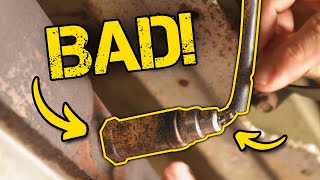
- Failing Upstream Oxygen (O2) Sensor 🔴 High Probability → Shop Oxygen Sensor O2 sensors are a normal wear-and-tear item with a finite lifespan, typically failing due to age and constant exposure to extreme heat and exhaust gases. On the turbocharged N14/N18 engines, the intense heat can shorten the sensor's life.
How to confirm: Use an OBD-II scanner with live data capability. Observe the 'O2 Bank 1 Sensor 1' voltage. A healthy sensor will show voltage fluctuating rapidly and frequently between approximately 0.1V and 0.9V. A slow sensor will show lazy, infrequent fluctuations or a signal that is slow to respond after a throttle snap.
Typical fix: Replace the upstream (pre-catalyst) oxygen sensor. It is highly recommended to use an OEM-branded sensor like NTK or Bosch to avoid compatibility issues.
Est. part cost: $70-$280 - Exhaust Leak 🟡 Medium Probability Cracks in the exhaust manifold or, more commonly, leaks from the downpipe's flex pipe can occur. These leaks allow outside air into the exhaust stream before the sensor. This unmetered oxygen 'fools' the sensor, diluting the exhaust gas and causing it to give a slow or biased reading that the DME interprets as a fault.
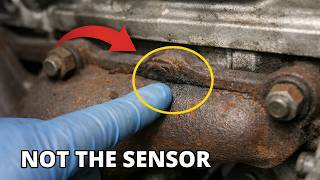
How to confirm: Perform a visual inspection of the exhaust manifold and downpipe for cracks or black soot trails indicating a leak. A common failure point is the woven metal flex pipe section. 🎬 See how to distinguish an exhaust leak from a bad sensor. You can also use a smoke machine to pressurize the exhaust system (when cold) and look for smoke escaping from leaks.
Typical fix: Repair or replace the leaking exhaust component. This may involve welding a crack, replacing the exhaust manifold gasket, or replacing the entire downpipe if the flex pipe has failed.
Est. part cost: $20-$500 - Damaged Wiring or Connectors ⚪ Low Probability The O2 sensor wiring harness is routed near hot engine components. Over time, the plastic conduit and wire insulation can become brittle and break, or the harness can be damaged by oil leaks from the valve cover, leading to high resistance or a short.
How to confirm: Visually inspect the wiring harness from the O2 sensor to its connection point near the top of the engine. Look for any signs of melting, chafing, or corrosion on the connector pins. Use a multimeter to check for continuity and resistance in the wiring, comparing it to factory specifications.
Typical fix: Repair the damaged section of the wiring harness or clean the connectors. In severe cases, the harness pigtail may need to be replaced.
Est. part cost: $10-$50
Rare But Worth Checking
- Engine Control Module (DME) Issue: → Shop Engine Control Module (ECM) This is extremely rare. A software glitch or internal failure of the DME's analog-to-digital converter could cause it to perceive a slow signal from a perfectly good sensor. Before suspecting the DME, all other possibilities must be exhaustively ruled out.
- Contaminated Sensor: If the engine is burning a significant amount of oil or coolant due to other issues (like worn piston rings or a failed head gasket), the deposits can coat the O2 sensor tip. This contamination insulates the sensing element and slows its response time. This would usually be accompanied by other symptoms like visible smoke from the exhaust and significant fluid consumption.
Diagnosis Steps
- Connect an OBD-II scanner and confirm that P0133 is the only code present. If other codes are stored (e.g., for misfires, fuel pressure), address them first as they can influence the O2 sensor readings.
- Using the scanner's live data function, monitor the voltage of 'O2 Bank 1 Sensor 1' at full operating temperature and idle. The voltage should fluctuate rapidly several times per second. If it changes slowly or stays fixed, the sensor is likely faulty.
- Perform a 'throttle snap test': Rev the engine from idle to ~2500 RPM and release. A healthy sensor's voltage will drop low and then spike high very quickly. A slow sensor will show a lazy, delayed reaction.
- Perform a thorough visual inspection of the engine bay. Look at the O2 sensor's wiring harness for any signs of melting, chafing, or oil saturation. Ensure it is properly secured in its clips.
- Carefully inspect the exhaust manifold and the downpipe/flex pipe for any signs of cracks or black soot, which indicate an exhaust leak. Listen for any unusual ticking or hissing sounds from the exhaust when the engine is running.
- If an exhaust leak is suspected, use a smoke machine to confirm its location.
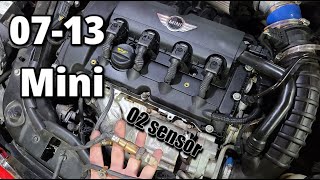
- If no visual faults are found and the live data points to a slow sensor, the most likely cause is the sensor itself. Replace it with a quality OEM-equivalent part. 🎬 Follow this step-by-step guide to replace your upstream oxygen sensor.
- If you replace the sensor and the code returns, re-investigate for a subtle exhaust leak or a wiring issue. Check for high resistance in the signal wire.
Parts You'll Likely Need
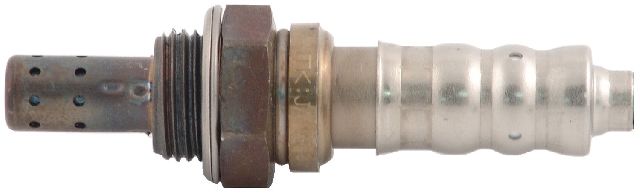
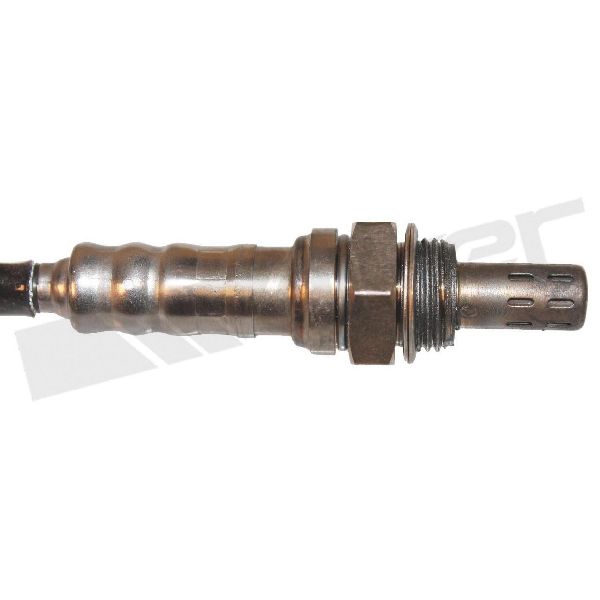
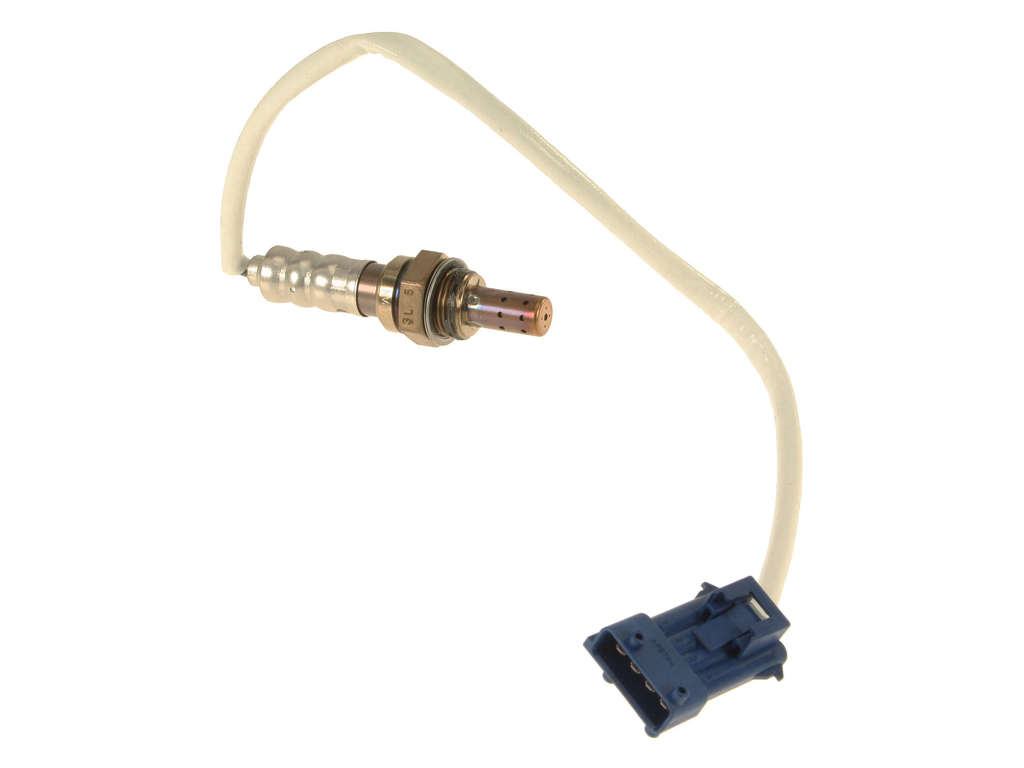
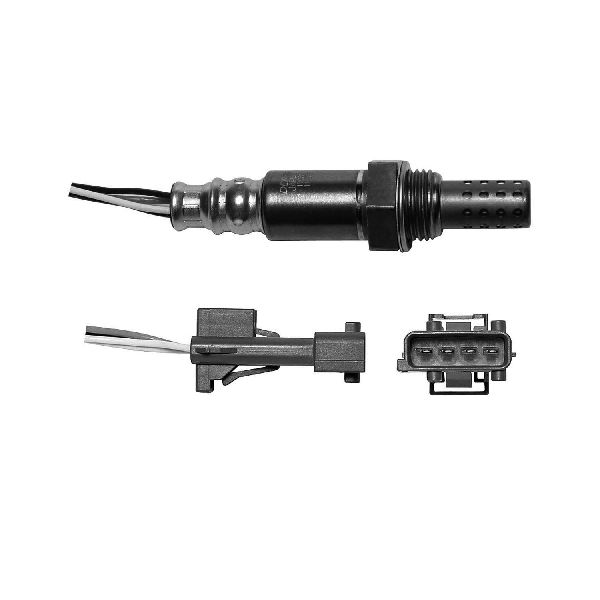
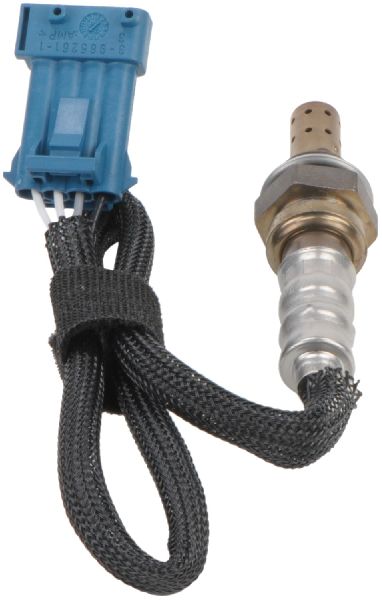
- Upstream Oxygen Sensor (Pre-Catalyst)
(OEM #11787590713 (for N12), 11787599942, 11787548961, 11780872674)— This is the sensor that measures the exhaust gas composition for fuel trim adjustments. It is a common wear item and the most frequent cause of code P0133.
Trusted brands: Bosch (e.g., 17212, 17112), NTK (e.g., 25198, 24331), Denso (e.g., 234-4457)
OEM price range: $200-$280
Aftermarket price range: $70-$150
Platform-Specific Known Issues
- Brand Sensitivity: The MINI DME can be sensitive to the brand of oxygen sensor used. Many owners and mechanics on forums strongly recommend using an OEM supplier like NTK or Bosch for the upstream sensor to avoid persistent codes, even with a new part.
- Exhaust Flex Pipe Failure: A common point of failure on the R56 exhaust system is the woven metal flex pipe located on the a downpipe. A leak here is a very common cause for P0133 that can be misdiagnosed as a bad sensor.
Mechanic-Grade Diagnostic Values
- Upstream O2 Sensor Heater Circuit Resistance — expected: 2.5 - 10 Ohms when measured cold across the two same-colored wires on the sensor connector.. Failure: An open circuit (infinite resistance/'OL') or a value significantly outside the expected range indicates a failed internal heater.
- O2 Sensor Signal Wire Harness Resistance — expected: < 0.5 Ohms from the sensor connector to the DME pin.. Failure: Resistance greater than 0.5 Ohms can dampen the voltage signal enough to trigger a P0133 code, even with a good sensor.
- O2 Sensor Response Time (Live Data) — expected: Voltage should swing from <0.2V to >0.8V in under 1 second.. Failure: A swing that takes longer than 2 seconds is flagged by the DME as a slow response.
- Upstream O2 Sensor Installation Torque — expected: 50 Nm (37 ft-lb).. Failure: Under-torquing can cause exhaust leaks that mimic a bad sensor. Over-torquing can damage the new sensor or the exhaust manifold/turbo threads.
Hidden / Shadow Codes Worth Checking
- 0x2C9C: This is a common manufacturer-specific hex code for 'Lambda probe heating before catalyst, activation'. While P0133 is for slow response, the DME can interpret this as a heating issue, as the sensor needs to be hot to respond quickly. This code often points to a failed heater circuit within the O2 sensor itself. (see via A BMW/MINI specific scan tool like ISTA, or a high-end scanner (Foxwell, Autel) capable of reading manufacturer codes.)
Scan Tool Commands That Help
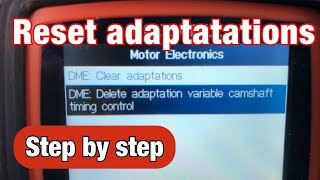
- ISTA or capable scanner (e.g., Foxwell NT510): Clear/Reset Engine Adaptations (or Lambda/Mixture Adaptations) — This is CRITICAL after replacing an O2 sensor, especially if the P0133 code returns. The DME stores learned values for the old, failing sensor. Resetting forces the DME to re-learn the values for the new, faster-switching sensor. Failure to do this is a very common reason for the code to come back.
Wiring & Ground Locations
- DME Connector X60004 — The Digital Motor Electronics (DME) unit is in the electronics box (E-box) at the right rear of the engine compartment. X60004 is one of the large multi-pin connectors on the DME.. The signal, power, and ground wires for the upstream O2 sensor terminate at this connector. When diagnosing a persistent P0133, checking for voltage, ground, and continuity at the specific pins on this connector is the final step to rule out a wiring problem.
- Valve Cover Ground Strap — A primary engine ground strap is bolted directly to the valve cover.. On N14/N18 engines, this ground is critical for the ignition coils. If it's loose or corroded, it can cause erratic combustion and misfires, which can create exhaust conditions that confuse the O2 sensor and potentially set mixture or response codes. While not a direct cause, ensuring this ground is clean and tight is a key step in any engine-related electrical diagnosis on this platform.
Real Owner Repair Stories
- Reddit user on r/AskMechanics (MINI Cooper (model year not specified)) — Check engine light with P0133, slight lag on acceleration.
❌ Tried (didn't work) Replaced the upstream O2 sensor., Cleared the code, but it returned within 20 minutes of driving.
✅ What actually fixed it The final fix was clearing the Keep Alive Memory (KAM) and engine adaptations using a capable scan tool. The commenter noted that this step is 'VERY IMPORTANT' after sensor replacement. - North American Motoring forum user (2011 MINI Clubman JCW (N14 Engine), 62k miles) — Check Engine Light with P0141 (heater circuit code), but logic applies to P0133.
❌ Tried (didn't work) Replacing the O2 sensor with a new Bosch/NTK part., The code returned immediately.
✅ What actually fixed it The user had to use a scan tool with MINI-specific software to 'RESET ALL ADAPTATIONS'. After resetting adaptations, clearing the code, and letting the car 'sleep', the code did not return. This highlights that the DME had adapted to the old, failing sensor and couldn't properly read the new one without a reset.
"I Checked Everything" — The Actual Cause
- A smoke test checks for exhaust leaks, but P0133 can be caused by issues on the intake side. An unmetered air leak from a cracked intake hose, faulty PCV system, or bad intake manifold gasket after the Mass Airflow (MAF) sensor will cause a lean condition. The DME will try to compensate by adding fuel, and this constant, skewed state can be misinterpreted as a slow sensor response.
- On direct-injected N14/N18 engines, a failing High-Pressure Fuel Pump (HPFP) can cause incorrect fuel pressure. This leads to an improper air-fuel mixture that the O2 sensor reports, but the root cause is the fuel system, not the sensor itself. The DME may log a P0133 before a specific fuel pressure code appears.
When the Usual Fixes Don't Work
- In multiple documented cases, owners have replaced the upstream O2 sensor with a new, high-quality part (Bosch or NTK) only to have the P0133 code return almost immediately. The ultimate solution was not another part, but using a MINI-specific scan tool (like ISTA or a Foxwell) to perform a 'Reset All Adaptations' service function. This forces the engine computer to clear its learned memory from the old, slow sensor and re-learn the characteristics of the new, properly functioning sensor. This strongly suggests that for this specific platform, resetting adaptations is a mandatory step in the repair, not an optional one.
OEM Part Supersession History
11787560957→11787590713— Standard part revision and update by the manufacturer.
Heads up: While 11787590713 is listed for the N12 engine, it is often cited as the replacement for the earlier part used on multiple engines. Always verify the correct part number for your specific engine (N12, N14, N16, or N18) and model year using a VIN decoder, as there are subtle differences.
Model Year Variations Within This Range
- 2007-2010 (N12/N14 Engines): These earlier 'Prince' engines, especially the turbocharged N14, are more susceptible to timing chain issues, carbon buildup, and HPFP failures. These underlying conditions can all indirectly cause a P0133 code by creating an abnormal air-fuel mixture.
- 2011-2013 (N16/N18 Engines): The updated N16/N18 engines are generally more reliable. While P0133 can still occur due to a failed sensor or exhaust leak, it is less likely to be a symptom of a more severe underlying engine problem like carbon buildup compared to the N14.
Diagnostic Flowchart
Other Known Issues on This Vehicle
Issues unrelated to this code that are worth knowing about as an owner of this generation:
- Timing Chain Tensioner Failure ('Death Rattle') 🔴 High — Very common on N14 engines (2007-2010 Cooper S), especially on cold starts. Less common but still possible on N12/N16/N18. Often occurs from 50,000 miles onward. (Ref: A class-action lawsuit settlement extended the warranty for this issue on some N14 models.)
- High-Pressure Fuel Pump (HPFP) Failure 🔴 High — Common on turbocharged N14 and early N18 engines. Failure can occur as early as 40,000 miles, causing long cranks, rough idle, and sudden loss of power. Later N18 engines (post-3/2012 build date) use a more reliable Bosch pump. (Ref: MINI issued a service bulletin and extended warranty coverage for this part on many affected vehicles.)
- Intake Valve Carbon Buildup 🟠 Medium — A universal issue for all direct-injection engines (N14/N18). Significant buildup can occur every 40,000-60,000 miles, causing hesitation, misfires, and reduced performance. Requires walnut shell blasting to clean.
- Plastic Thermostat Housing Leak 🟠 Medium — Extremely common across all N12/N14/N16/N18 engines. The plastic housing becomes brittle with heat cycles and cracks, leading to coolant leaks. Often fails between 60,000-100,000 miles.
- Turbo Oil Feed Line Leak/Coking 🟠 Medium — Common on N14/N18 turbo engines. The oil line banjo bolt seals leak, and the line itself can become internally clogged (coked) with carbon deposits, starving the turbo of oil and leading to premature turbo failure.
- High Oil Consumption 🟠 Medium — Particularly prevalent on the N14 engine, which can consume up to a quart of oil every 2,000-3,000 miles. This is due to piston ring and valve stem seal design. Owners must check oil levels frequently to prevent engine damage.
Used vs. New Parts: Buying Guide for This Vehicle
When a used part is the smart pick: For this code, a used part only makes sense for the exhaust components that might cause it, such as the exhaust manifold or the downpipe. If your original manifold is cracked or the downpipe's flex pipe has failed, a used part from a low-mileage donor car is a cost-effective option.
Donor-vehicle mileage cap: roughly under 80000 miles for the part to have meaningful remaining life.
What to inspect on the donor part:
- For an exhaust manifold, inspect it meticulously for hairline cracks, especially around the turbo flange and collector.
- For a downpipe, check the woven metal flex pipe for any signs of fraying, looseness, or black soot that indicates a leak. Bend it slightly to ensure it's still robust.
- Ensure the donor vehicle was not in a severe front-end collision that could have stressed the exhaust components.
OEM-only on this vehicle (don't cheap out):
- Upstream Oxygen Sensor
Aftermarket brands forum-validated for this vehicle:
- NTK (OEM Supplier)
- Bosch (OEM Supplier)
Brands owners have reported issues with on this vehicle:
- Cheap, unbranded 'universal' oxygen sensors. Forum consensus is strong that these often fail quickly, do not respond correctly for the MINI's sensitive DME, and cause the code to return.
Real Owner Stories
Aggregated from forums and TSBs cited above. Mileages and costs reflect what owners reported in those sources.
2007 MINI Cooper S R56 N14
Symptoms: User was looking to replace O2 sensors and concerned about brand compatibility.
What fixed it: Installation of an NTK pre-cat oxygen sensor, as Bosch sensors were reported to sometimes throw codes on this specific platform.
Source hint: NorthAmericanMotoring.com: '07 R56 O2 Sensor Replacement
2007-2013 MINI Cooper R56
Symptoms: The owner replaced the O2 sensor, but the P0133 code returned immediately.
What fixed it: Repairing the exhaust flex pipe; it is a very common failure point that causes a slow response reading.
Source hint: Reddit r/MechanicAdvice: How to fix P0133
2007-2013 MINI Cooper R56
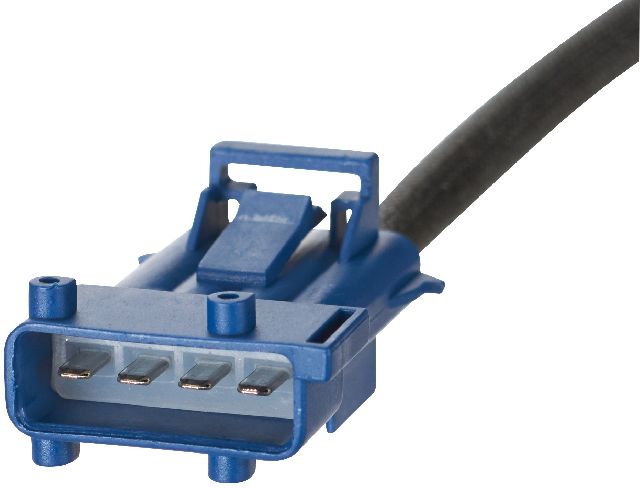
Symptoms: Difficulty with the wiring harness routing and connector access during sensor replacement.
What fixed it: Careful navigation of the wiring harness routing near the top of the engine and ensuring proper connection.
Source hint: NorthAmericanMotoring.com: R56 Oxygen sensor replacement - trouble with harness
Related OBD-II Codes
Frequently Asked Questions
Which brand of oxygen sensor should I use for my R56 MINI Cooper to fix P0133?
Can a leak in the exhaust flex pipe cause a P0133 code on my MINI?
Is there a TSB or extended warranty for the P0133 sensor issue on the N14 engine?
How can I tell if my O2 sensor is actually slow versus just having a wiring problem?
Does the turbocharged N14/N18 engine affect O2 sensor lifespan?
Helpful Videos
We Have This Part in Stock

The information in this article is provided for general reference and educational purposes only. Vehicle specifications, procedures, and part compatibility can vary by production date, trim level, and region. Always consult your vehicle's factory service manual and verify part numbers before purchasing or performing repairs. Safety-critical components such as airbags, seat belts, and braking systems should be installed by a qualified professional.
- MINI Cooper:
- 🧭 Diagnostic Flowchart
- 🎬 Helpful Videos
- 🛍️ Shop This Part
- What's Unique About the 2007-2013 MINI Cooper
- Symptoms You May Notice
- Most Likely Causes
- Rare But Worth Checking
- Diagnosis Steps
- Parts You'll Likely Need
- Platform-Specific Known Issues
- Mechanic-Grade Diagnostic Values
- Hidden / Shadow Codes Worth Checking
- Scan Tool Commands That Help
- Wiring & Ground Locations
- Real Owner Repair Stories
- "I Checked Everything" — The Actual Cause
- When the Usual Fixes Don't Work
- OEM Part Supersession History
- Model Year Variations Within This Range
- Other Known Issues on This Vehicle
- Used vs. New Parts: Buying Guide for This Vehicle
- Real Owner Stories
- 2007 MINI Cooper S R56 N14
- 2007-2013 MINI Cooper R56
- 2007-2013 MINI Cooper R56
- Related OBD-II Codes
- Frequently Asked Questions
- 🎟️ Get 5% Off