

P0133 on 2015-2021 Ram ProMaster City 2.4L: Slow O2 Sensor Causes and Fixes
On a 2015-2021 ProMaster City, P0133 is most often caused by outdated engine computer (PCM) software. Before replacing any parts, have a Ram dealer check for software updates mentioned in TSBs like 18-063-17 REV. A. A dealer flash costs $150-$250. If the software is current, the upstream oxygen sensor is the likely culprit, costing $40-$90 for an aftermarket part.
- Your first step for a P0133 code on a ProMaster City should always be to check with a dealer if your vehicle needs a PCM software update.
- Do not replace the oxygen sensor until you have confirmed the software is up-to-date, as this is the most common misdiagnosis and will not fix the issue.
- If the software is current, the upstream O2 sensor (Bank 1, Sensor 1) is the next likely cause. This is a DIY-friendly replacement with the correct O2 sensor socket.
- This code often appears with other unrelated codes; this is a strong sign that the software update is the required fix.
What's Unique About the 2015-2021 Ram ProMaster City
For the Ram ProMaster City with the 2.4L MultiAir engine, this code has a unique and well-documented history. Ram issued multiple Technical Service Bulletins (TSBs) because the original PCM software was overly sensitive and would incorrectly trigger P0133, often along with a cluster of other unrelated codes. Unlike most other vehicles where P0133 almost always points to a bad sensor, on this specific platform, an outdated software calibration is the primary suspect and must be investigated first to avoid unnecessary repairs. This software sensitivity is a known issue across many FCA vehicles sharing the 2.4L engine, including the Jeep Cherokee and Chrysler 200.
Symptoms You May Notice
- Check Engine Light is on
- Reduced fuel economy
- Rough or poor idle
- Hesitation during acceleration
- Black smoke from the exhaust
- Replacing the oxygen sensor immediately without first checking if a PCM software update is required. Given the numerous TSBs for this vehicle, the software should be the first check.
- Replacing the wrong sensor. P0133 is for Bank 1, Sensor 1, which is the upstream sensor before the catalytic converter.
Most Likely Causes
- Outdated Powertrain Control Module (PCM) Software 🔴 High Probability → Shop Engine Control Module (ECM) Multiple manufacturer TSBs (#18-063-17 REV. A, #18-008-16 REV. B, #18-030-16) were released to correct overly sensitive diagnostic parameters that cause this code to set improperly, often with other codes like P0171, P0335, and P0456. This was a widespread issue affecting many 2.4L MultiAir platforms.
How to confirm: Contact a Ram dealership or a qualified shop with your vehicle's VIN. They can use a wiTECH scan tool to check if the software has been updated per the relevant TSBs.
Typical fix: The PCM must be reprogrammed (or 'flashed') with the latest software. This is a dealer-level or professional shop repair that typically costs between $150 and $250.
Est. part cost: $0 - Failing Upstream Oxygen Sensor (Bank 1, Sensor 1) 🟡 Medium Probability → Shop Oxygen Sensor Oxygen sensors are consumable parts that degrade over time, typically having a service life of 60,000 to 100,000 miles. Contamination from engine byproducts, such as from the known oil consumption issues on some 2.4L engines, can accelerate failure.
How to confirm: After confirming the PCM software is up-to-date, use a scan tool to graph the Bank 1 Sensor 1 voltage at operating temperature. A healthy sensor's voltage should fluctuate rapidly between approximately 0.1V and 0.9V. A slow, lazy waveform confirms a failing sensor.
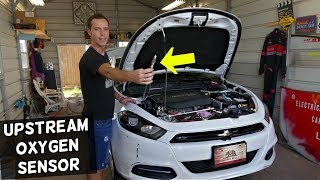
Typical fix: Replace the Bank 1, Sensor 1 oxygen sensor. It is located on the exhaust manifold and is accessible from the top of the engine bay. 🎬 Watch: Step-by-step guide to replacing the upstream O2 sensor. An O2 sensor socket (22mm or 7/8") is recommended for removal. Let the engine cool completely before attempting.
Est. part cost: $40-$150 - Exhaust Leak ⚪ Low Probability Exhaust manifold gaskets or cracks in the manifold itself can allow outside air to enter the exhaust stream, skewing the O2 sensor's readings and making it appear slow or biased.
How to confirm: Visually inspect the exhaust manifold and downpipe for cracks or black soot trails. Listen for a 'ticking' or 'puffing' noise, especially when the engine is cold, which would indicate a leak. A smoke test can also be used to pinpoint small leaks. 🎬 Watch: How to find hidden exhaust leaks for a cheap fix.
Typical fix: Repair the leak by replacing the cracked component or a failed gasket.
Est. part cost: $20-$300
Rare But Worth Checking
- Damaged O2 Sensor Wiring or Connector: → Shop Oxygen Sensor The wiring harness is close to hot exhaust components and can become melted, brittle, or frayed, causing a poor signal. Always inspect the wiring before replacing the sensor itself.
- Vacuum Leak: A significant vacuum leak from a cracked hose or faulty intake manifold gasket can introduce unmetered air, affecting the air-fuel ratio and potentially triggering P0133, though it would more commonly set a P0171 (System Too Lean) code first.
Diagnosis Steps
- Connect an OBD-II scanner to confirm P0133 is the active code and check for any other stored codes. Note if codes like P0171, P0456, or P0335 are also present, as this strongly suggests a software issue.
- CRITICAL FIRST STEP: Contact a Ram dealership with your VIN. Ask them to verify if software updates from TSBs #18-063-17 REV. A, #18-008-16 REV. B, or #18-030-16 are available and have not been performed. If an update is needed, this is the most likely fix.
- If the software is confirmed to be up-to-date, use the scanner's live data function to monitor the Bank 1 Sensor 1 voltage at operating temperature. Graph the sensor's output; a slow, lazy waveform that doesn't switch quickly between ~0.1V and ~0.9V confirms a slow response. 🎬 See how to diagnose slow response codes and sensor waveforms.
- Inspect the exhaust system from the engine to the catalytic converter for any signs of black soot, cracks, or audible leaks, especially when the engine is cold.
- Inspect the O2 sensor's wiring harness and connector for any physical damage, such as melting from contact with the exhaust, corrosion in the connector, or frayed wires.
- If the PCM software is current, there are no exhaust leaks, the wiring is intact, and the sensor waveform is slow, the oxygen sensor itself is faulty and should be replaced.
Parts You'll Likely Need
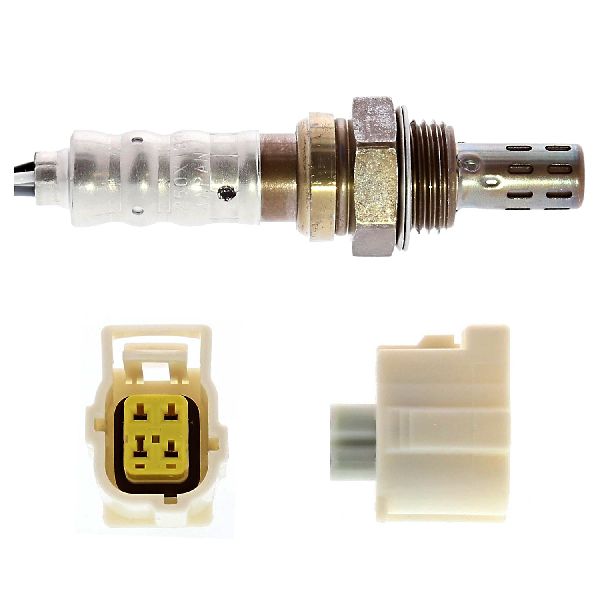
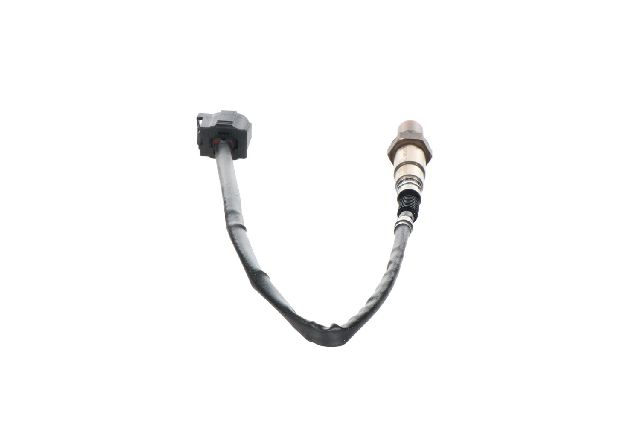
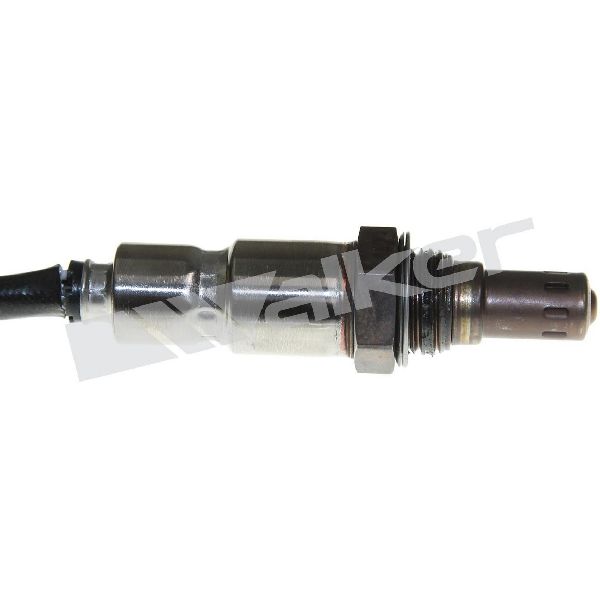
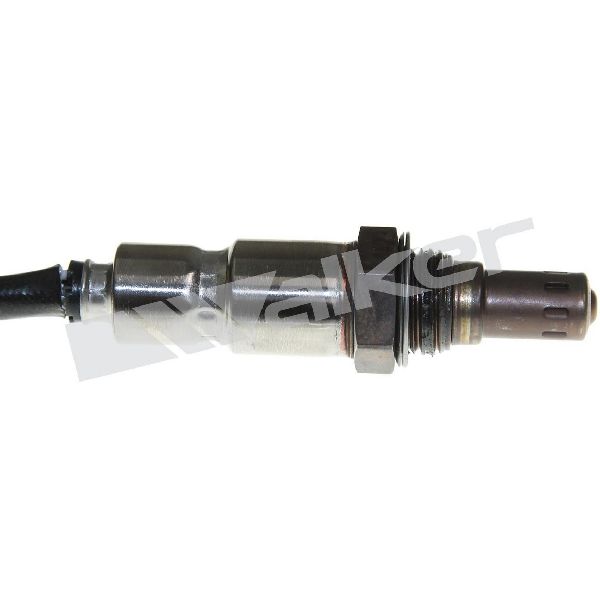
- Upstream Oxygen Sensor (Bank 1, Sensor 1)
(OEM #68195741AA, 68492338AA)— If the PCM software is current, the sensor itself is the most common component to fail, as it is a standard wear item. Note: Part numbers may vary by model year; 68195741AA is cited for earlier models (e.g., 2015-2017) and 68492338AA for later models (e.g., 2021-2022). Always verify with VIN.
Trusted brands: Mopar, Denso (e.g., 234-5150), Bosch, NGK/NTK
OEM price range: $95-$180
Aftermarket price range: $40-$90
Related Codes That Often Appear With This One
- P0171 — System Too Lean. This code is frequently listed alongside P0133 in TSB #18-063-17 REV. A, suggesting the PCM software update addresses both.
- P0456 — EVAP System Small Leak. This code is also mentioned in the same TSBs as P0133, indicating a potential software fix for multiple codes at once.
- P0335 — Crankshaft Position Sensor Circuit. Also mentioned in TSBs #18-063-17 REV. A and #18-008-16 REV. B, pointing to a software glitch triggering multiple codes.
- P2610 — PCM Internal Engine Off Timer Performance. Another code often resolved by the same PCM flash that fixes P0133, as noted in TSB #18-008-16.
- P1607 — PCM Internal Shutdown Timer Rationality. This code is specifically identified in Bulletin #18-008-16 REV. B as a DTC that may be set alongside P0133.
- P0506 — Idle Speed Performance Lower Than Expected. This code is listed in Bulletin #18-030-16 as one of the diagnostic trouble codes that may be set in conjunction with P0133.
Technical Service Bulletins (TSBs) & Recalls
- 18-063-17 REV. A: Mentions P0133 with a large cluster of other codes (P0171, P0441, P050D, P0335, P0456, etc.) resolved by a PCM software update. Also includes enhancements to allow the catalytic converter to operate cooler.
- 18-008-16 REV. B: Lists P0133 as one of several DTCs (P0335, P0456, P2610, etc.) addressed by a PCM re-flash for powertrain improvements.
- 18-030-16: Cites P0133 among a list of codes that may be set, with the solution being a software update for powertrain diagnostic and system improvements.
- Bulletin #18-008-16: Notes that upon further investigation, a technician may find P0133 - O2 Sensor 1/1 Slow Response has been set along with P2610 and P1607.
- Bulletin #1801416REVA: Describes a scenario where a technician may find P0133 set alongside P0456 and P2610, requiring a PCM update.
Platform-Specific Known Issues
- A pattern of multiple, seemingly unrelated fault codes appearing alongside P0133 is a strong indicator of the need for a PCM software update, as documented in multiple TSBs.
- Owners on forums frequently report that the dealer PCM flash is the only permanent fix, often after they have already replaced the O2 sensor without success.
Mechanic-Grade Diagnostic Values
- O2 Sensor Heater Circuit Resistance — expected: 4 to 6 Ohms at 20°C (68°F). Failure: Infinite resistance (open circuit) or zero resistance (short circuit) indicates a failed heater element.
- O2 Sensor Heater Circuit Voltage Supply — expected: Battery voltage (~12V). Failure: No voltage or low voltage at the harness connector (with key on) points to a problem with the fuse, relay, or wiring, not the sensor itself.
- Wiring Harness Resistance (Signal to PCM) — expected: Less than 0.5 Ω. Failure: Resistance greater than 0.5 Ω can dampen the signal, causing the PCM to register a slow response even with a good sensor.
Scan Tool Commands That Help
- wiTECH or equivalent professional scan tool: O2 Sensor Heater Actuation Test — This bidirectional command allows a technician to manually force the O2 sensor's internal heater on and off. It is used to definitively test the integrity of the heater power and control circuit (wiring, fuse, PCM driver) independently from the sensor's response readings. If the heater can be commanded on and off, the circuit is good, and the fault likely lies within the sensor itself.
Wiring & Ground Locations
- Primary Engine Ground Strap — A braided ground strap connecting the transmission case to a bolt on the top of the driver's side transmission mount, near the chassis. It is accessible after removing the driver's side headlight assembly.. This is the main ground reference for the entire powertrain. Corrosion or a loose connection here can create an unstable ground for all engine sensors, including the O2 sensor. This can cause erratic voltage readings and data corruption, leading to codes like P0133 that are difficult to trace.
Real Owner Repair Stories
- RamForum.com user (2022 Ram ProMaster 3500 (similar electrical architecture)) — Check Engine Light with multiple, seemingly unrelated codes.
❌ Tried (didn't work) Initial diagnosis was inconclusive due to the number of codes.
✅ What actually fixed it The dealer identified and repaired a bad ground connection. The repair took 7 days to diagnose but resolved all codes.
OEM Part Supersession History
68087364AA (or other earlier numbers)→68195741AA— Standard part evolution and supplier changes.
Heads up: Using a non-OEM sensor before performing the required PCM software update is not recommended. The updated software is calibrated for the specific response characteristics of the genuine Mopar (NTK manufactured) sensor. An aftermarket sensor might not respond in the way the updated software expects, potentially causing the code to persist.
Model Year Variations Within This Range
- 2015-2021: There are no significant mechanical or electrical differences within this model year range that would fundamentally change the diagnosis for P0133. All years use the 2.4L MultiAir engine and are subject to the same software sensitivity and TSBs.
Diagnostic Flowchart
Real Owner Stories
Aggregated from forums and TSBs cited above. Mileages and costs reflect what owners reported in those sources.
2016 Ram ProMaster City
Symptoms: Check Engine Light on with code P0133. Sometimes accompanied by other codes like P0456.
What fixed it: Taking the vehicle to a Ram dealership to have the Powertrain Control Module (PCM) software updated ('flashed') as per a Technical Service Bulletin. Replacing the upstream O2 sensor first was a dead end, as the code returned shortly after.
Source hint: promasterforum.com
Related OBD-II Codes
Frequently Asked Questions
Does TSB #18-063-17 REV. A apply to my 2015-2021 Ram ProMaster City for code P0133?
Should I replace the oxygen sensor first if I get a P0133 on my 2.4L MultiAir engine?
How much does the PCM flash cost at a Ram dealership to fix P0133?
Why does my ProMaster City have P0133 along with P0456 and P0335?
Where is the Bank 1 Sensor 1 oxygen sensor located on the 2.4L MultiAir?
Can engine oil consumption cause P0133 on the 2.4L Tigershark engine?
Helpful Videos

We Have This Part in Stock

The information in this article is provided for general reference and educational purposes only. Vehicle specifications, procedures, and part compatibility can vary by production date, trim level, and region. Always consult your vehicle's factory service manual and verify part numbers before purchasing or performing repairs. Safety-critical components such as airbags, seat belts, and braking systems should be installed by a qualified professional.
- Ram ProMaster City:
- 🧭 Diagnostic Flowchart
- 🎬 Helpful Videos
- 🛍️ Shop This Part
- What's Unique About the 2015-2021 Ram ProMaster City
- Symptoms You May Notice
- Most Likely Causes
- Rare But Worth Checking
- Diagnosis Steps
- Parts You'll Likely Need
- Related Codes That Often Appear With This One
- Technical Service Bulletins (TSBs) & Recalls
- Platform-Specific Known Issues
- Mechanic-Grade Diagnostic Values
- Scan Tool Commands That Help
- Wiring & Ground Locations
- Real Owner Repair Stories
- OEM Part Supersession History
- Model Year Variations Within This Range
- Real Owner Stories
- 2016 Ram ProMaster City
- Related OBD-II Codes
- Frequently Asked Questions
- 🎟️ Get 5% Off