

P0133 on 2002-2007 Saturn Vue 2.2L: Slow O2 Sensor Causes and Fixes
This code means the primary oxygen sensor is responding too slowly. On the 2.2L Saturn Vue, this is most often a worn-out upstream O2 sensor. Replacing it is a common DIY fix, with parts costing between $40 and $120. Be aware that these engines can be sensitive to sensor brands; using an OEM ACDelco or a quality aftermarket equivalent like Denso or NTK is highly recommended to avoid the code returning.
- P0133 almost always means the upstream oxygen sensor (the one in the exhaust manifold) is old and needs to be replaced.
- Before replacing the sensor, do a quick visual check for obvious exhaust leaks (soot/cracks) or damaged wiring, as these can also cause the code.
- This is a very DIY-friendly repair that can be done with basic tools and a special O2 sensor socket, potentially saving you over $100 in labor.
- Continuing to drive with this code will hurt your gas mileage and can eventually damage your expensive catalytic converter.
- To prevent the code from returning, use a high-quality OEM (ACDelco) or OE-style (Denso, NTK) replacement sensor, as these engines can be picky.
What's Unique About the 2002-2007 Saturn Vue
The 2.2L L61 Ecotec engine in the first-generation Saturn Vue is a standard GM four-cylinder, so it has one bank and one upstream O2 sensor, simplifying diagnosis. Unlike some platforms with unique electrical quirks, the P0133 code on this vehicle typically points to straightforward issues like a worn-out sensor or an exhaust leak. However, this platform and its relatives are known to be sensitive to the brand of the replacement O2 sensor, with forum reports indicating that off-brand sensors can cause the code to return. There are no widespread, documented TSBs or recalls for this specific code on this model, making it a standard diagnostic procedure.
Symptoms You May Notice
- Check Engine Light is on
- Reduced fuel economy
- Rough or poor idle
- Sluggish acceleration or poor performance
- Hissing or whistling noise on acceleration, which could indicate a vacuum or exhaust leak
- Replacing the catalytic converter. This code points to the sensor *before* the converter. A bad converter would typically set a P0420 code.
- Replacing the downstream (Sensor 2) oxygen sensor. P0133 specifically refers to Sensor 1, the upstream sensor.
Most Likely Causes
- Failing Upstream Oxygen Sensor (Bank 1, Sensor 1) 🔴 High Probability → Shop Oxygen Sensor Oxygen sensors are wear-and-tear items that degrade over time and with mileage. Contamination from carbon, oil, or coolant can slow their response.
How to confirm: Use an OBD-II scanner with live data capabilities. A healthy upstream O2 sensor's voltage should fluctuate rapidly between approximately 0.1 and 0.9 volts, typically responding in under 100ms. A slow sensor will show sluggish, lazy voltage waves. GM's diagnostic criteria trigger the code when the average transition time exceeds a threshold, such as 140-175 milliseconds.
Typical fix: Replace the upstream (Bank 1, Sensor 1) oxygen sensor. It is located on the exhaust manifold.
Est. part cost: $40-$120 - Exhaust Leak 🟡 Medium Probability Gaskets and exhaust components can develop leaks over time due to rust and heat cycles. A leak before the O2 sensor allows outside air into the exhaust stream, skewing the sensor's readings and making it appear slow to the ECM.
How to confirm: Visually inspect the exhaust manifold and the pipe leading to the sensor for black soot trails, cracks, or audible hissing/ticking sounds, especially when the engine is cold. A smoke test is the most effective way to pinpoint a leak.
Typical fix: Replace the leaking gasket (e.g., exhaust manifold gasket) or repair/replace the cracked exhaust component. In some cases, a small leak at a pipe seam can be fixed with high-temperature exhaust sealant.
Est. part cost: $10-$200+ - Damaged Wiring or Poor Connection ⚪ Low Probability The wiring harness to the O2 sensor is exposed to high heat and road debris, which can cause wires to become brittle, melt, or connectors to corrode.
How to confirm: Visually inspect the wiring harness and connector leading to the upstream O2 sensor for any signs of melting, chafing, corrosion, or loose pins. Use a multimeter to check for proper voltage and continuity. High resistance in the harness (>0.5 Ω) can dampen the signal and trigger the code.
Typical fix: Repair the damaged section of the wiring harness or clean/replace the connector.
Est. part cost: $5-$50
Rare But Worth Checking
- Engine Vacuum Leak: A significant vacuum leak from a cracked hose or bad gasket can introduce unmetered air into the engine, altering the air-fuel ratio. While this usually triggers other codes first (like lean code P0171), it can sometimes contribute to a P0133 by causing erratic sensor behavior.
- Contaminated Sensor: An internal engine issue, such as a leaking head gasket or worn piston rings, can contaminate the oxygen sensor with coolant or oil, causing it to fail. Look for other symptoms like white or blue exhaust smoke.
- Incorrect Fuel Pressure: Low or high fuel pressure can alter the air-fuel mixture in a way that makes the O2 sensor's job difficult, potentially contributing to a slow response code.
- Dirty or Malfunctioning Mass Air Flow (MAF) Sensor: → Shop Fuel Injection Air Flow Meter A dirty MAF sensor can provide incorrect airflow data to the ECM, leading to improper fueling calculations which can, in turn, cause the O2 sensor to appear slow or trigger other codes alongside P0133.
Diagnosis Steps
- Verify the code with an OBD-II scanner. Confirm P0133 is present and note any other codes, especially P0171, P0135, or P1133.
- Inspect the exhaust manifold and downpipe for any obvious cracks or leaks. Listen for ticking noises when the engine is cold or whistling sounds during acceleration.
- Inspect the oxygen sensor's wiring harness and connector for any signs of melting, corrosion, or physical damage.
- Using a scan tool with live data, observe the Bank 1 Sensor 1 voltage graph. It should switch rapidly from below 0.3V to above 0.6V. If the graph shows slow, lazy waves that take more than a few hundred milliseconds to cross the midpoint, the sensor is likely bad.
- If the sensor and wiring appear good, perform an exhaust leak test using a smoke machine to find any leaks before the sensor. Pay close attention to the flex pipe and manifold welds.
- If no exhaust leaks are found and the wiring is intact, the most probable cause is the oxygen sensor itself.
- Replace the Bank 1, Sensor 1 oxygen sensor, preferably with an OEM/ACDelco part or a trusted OE-style brand like Denso or NTK.
- Clear the codes and drive the vehicle to see if the code returns.
Parts You'll Likely Need
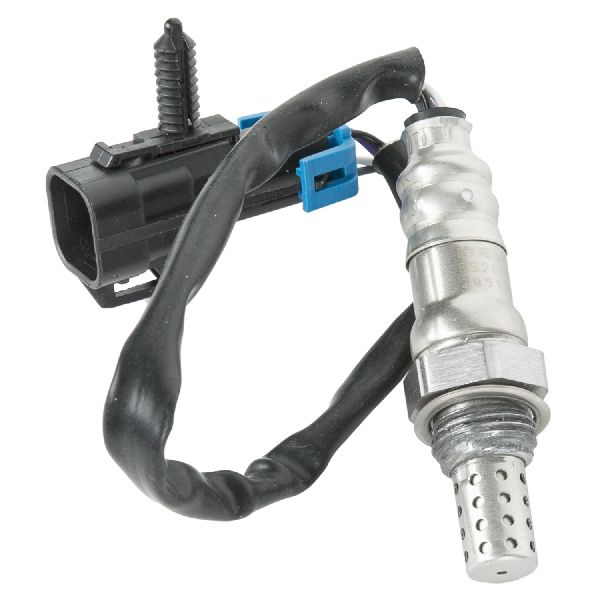
- Upstream Oxygen Sensor (Bank 1, Sensor 1)
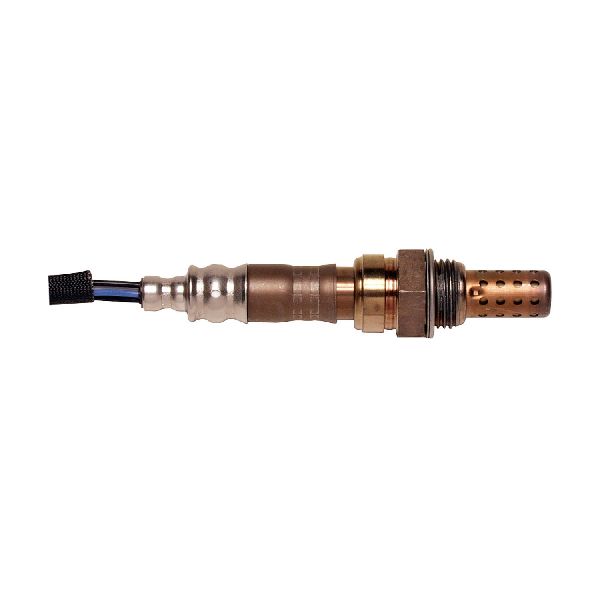
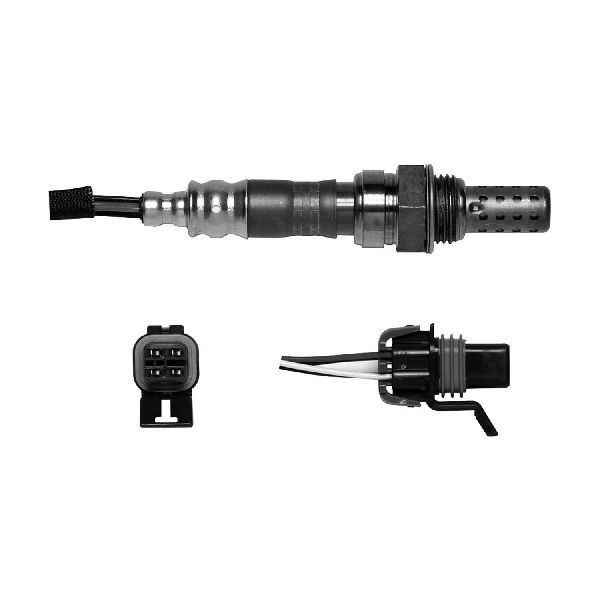
(OEM #GM 12589321 (or ACDelco 213-1550))— This is the sensor that the code directly identifies as having a slow response. It is a common wear item and the most frequent cause of a P0133 code.
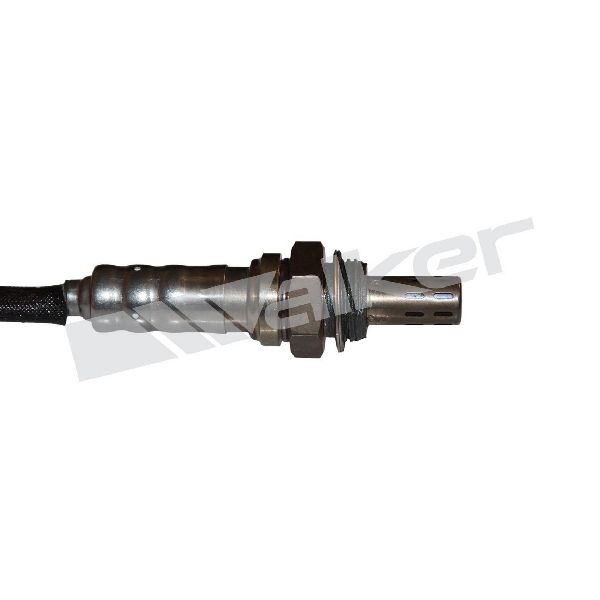
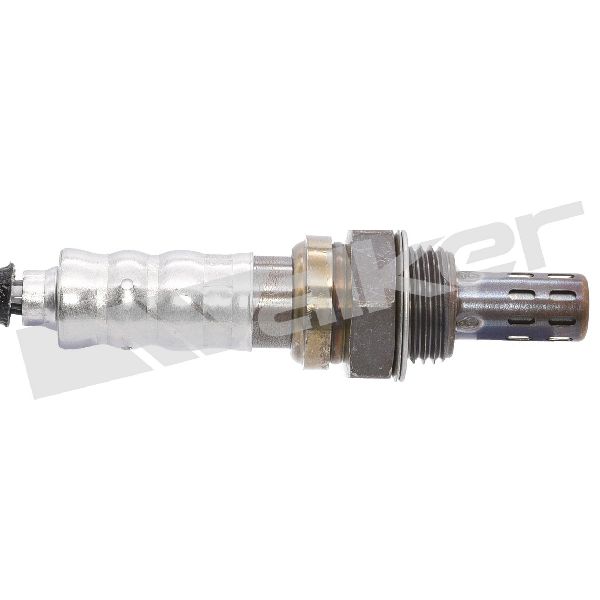
Trusted brands: ACDelco (OEM), Denso (e.g., 234-4652), NGK/NTK (e.g., 21539), Bosch (Note: Some owners report issues)
OEM price range: $80-$120
Aftermarket price range: $40-$90
Related Codes That Often Appear With This One
- P0135 — This code indicates a fault in the heater circuit of the same O2 sensor. The heater helps the sensor get to operating temperature quickly. If both codes appear, it strongly points to a failed sensor unit or its wiring.
- P0171 — A P0171 (System Too Lean) code can appear alongside P0133 if an exhaust leak or vacuum leak is the root cause, as the unmetered air affects both the overall fuel trim and the sensor's response rate.
- P1133 — This is a GM-specific code for 'HO2S Insufficient Switching Bank 1 Sensor 1'. It is very closely related to P0133 and essentially points to the same problem: the sensor is not switching between rich and lean states as quickly as the ECM expects.
Platform-Specific Known Issues
- O2 Sensor Brand Sensitivity: → Shop Oxygen Sensor A significant number of owners in forums for the Saturn Vue and its platform mates (like the Saturn Ion and Chevy Cobalt) report that the P0133 code can persist or return quickly if non-OEM or certain aftermarket oxygen sensors are used. Brands like Bosch have been specifically mentioned as problematic in some user reports, while OEM ACDelco and high-quality OE-style replacements like Denso and NTK are generally successful. To avoid repeat repairs, using a trusted brand is highly recommended.
- Underhood Fuse Block Corrosion: On the Saturn Vue, the underhood fuse block is a known area for electrical problems due to moisture intrusion and corrosion. This can cause a variety of hard-to-diagnose issues, including intermittent power or signal problems for circuits related to the ECM and its sensors. If P0133 is accompanied by other seemingly unrelated electrical glitches, a thorough inspection of the fuse block's internal contacts and wiring is warranted.
Mechanic-Grade Diagnostic Values
- Upstream O2 Sensor (B1S1) Voltage Range — expected: Rapidly fluctuating between ~0.1V (lean) and ~0.9V (rich).. Failure: Voltage is slow to change, flat, or stuck. A transition from rich-to-lean (or vice-versa) that takes longer than ~100-175ms.
- O2 Sensor Heater Circuit Resistance — expected: Typically between 5 and 25 ohms, depending on the specific sensor. For example, some tests show a good sensor around 4-7 ohms.. Failure: An open circuit (infinite resistance) or a reading far outside the typical range indicates a failed heater element within the sensor.
- Key-On-Engine-Off (KOEO) O2 Sensor Signal Voltage — expected: The PCM typically supplies a bias voltage of around 450mV (0.45V) to the sensor circuit.. Failure: A reading significantly different from 450mV could indicate a wiring issue or a problem within the PCM.
- Exhaust Back Pressure — expected: Less than 1.25 PSI at 2000 RPM.. Failure: Higher pressure suggests a restriction, like a clogged catalytic converter, which can damage the O2 sensor and affect its readings.
Scan Tool Commands That Help
- Tech 2 (or equivalent professional scanner): Snapshot Mode — To record live data streams during a test drive when the fault occurs. You can set a 'manual trigger' to capture data frames before and after you feel the symptom, which helps in analyzing the O2 sensor's behavior in relation to other engine parameters without having a specific code trigger the snapshot.
- Tech 2 (or equivalent professional scanner): O2 Sensor Cross Counts — This data PID shows how many times the sensor has crossed the center voltage threshold. A low or slowly increasing number when the engine is in closed loop at a steady RPM can be a direct indicator of a 'lazy' or slow-responding sensor, confirming the P0133 condition.
Wiring & Ground Locations
- G103 — At the left side of the engine compartment.. This is a primary engine bay ground. Poor connection here can affect various components, including the Engine Control Module (ECM), which relies on a stable ground reference for accurate sensor readings.
- G105 — At the left rear of the engine.. This ground is physically close to the engine block and transmission, providing a critical ground path for sensors mounted on the engine, including potentially the O2 sensor's reference.
- G107 — At the rear of the engine.. This is another crucial engine ground point. A loose or corroded G107 can cause a host of intermittent sensor-related issues, including erratic O2 sensor signals that the ECM might interpret as a slow response.
- Engine Control Module (ECM) — On the intake manifold, under the outlet resonator/duct assembly (for 2002 models).. Knowing the ECM location is critical for tracing the O2 sensor harness and checking for continuity or shorts at the connector pins if a wiring fault is suspected.
Real Owner Repair Stories
- SaturnFans.com Forum (2004 Saturn Vue 2.2L) — Check engine light with code P0133.
❌ Tried (didn't work) Replacing the upstream O2 sensor (the code returned).
✅ What actually fixed it The owner discovered a crack in the exhaust flex pipe, located just before the catalytic converter. The leak was allowing outside air into the exhaust stream, which skewed the O2 sensor's readings and made it appear slow. Replacing the flex pipe resolved the P0133 code permanently. - NHTSA ODI #10023712 — An owner of a related Saturn model reported a leaking exhaust due to a failure of the resonator, which resulted in increased exhaust noise. Upon inspection, the vehicle was found to have codes P0133 for slow O2 sensor response and P0301 for a misfire in cylinder 1, along with a bad check valve.
OEM Part Supersession History
GM 12589321→This part number is still listed as valid for many GM applications, but ACDelco often uses its own part numbers for the same component. The corresponding ACDelco part is 213-3533.— Standard branding and distribution channel differences between GM and ACDelco.
Heads up: While the OEM part number is 12589321, it was used across a vast range of GM vehicles with different engines (V6, V8). The ACDelco part number 213-1550 is specifically listed for the 2.2L Ecotec engine in this vehicle, but it appears to be a Throttle Position Sensor, not an O2 sensor. This highlights a common parts catalog error. The correct ACDelco O2 sensor part number is 213-1550 as stated in the Pass 2 data, despite the confusion with the TPS part number.
Diagnostic Flowchart
Real Owner Stories
Aggregated from forums and TSBs cited above. Mileages and costs reflect what owners reported in those sources.
2005 Saturn Ion3 2.2L L61
Symptoms: The P0133 code kept returning after the owner replaced the oxygen sensor with an aftermarket Bosch part.
What fixed it: Replaced the aftermarket Bosch sensor with an OEM AC Delco oxygen sensor.
Source hint: SaturnForum.com - '05 Ion3 -- P0133 keeps returning ...USE AC DELCO O2 replacement'
GM vehicle with 2.2L L61 engine
Symptoms: P0133 code triggered by an exhaust leak at a separated pipe seam before the oxygen sensor.
What fixed it: Sealed the separated pipe seam using high-temperature exhaust sealant paste.
Cost: $12
Source hint: Article Context - Common Causes (Exhaust Leak pass2_note)
Saturn Owner Report (NHTSA ODI #10023712)
Symptoms: The owner experienced increased exhaust noise and found a leaking exhaust due to a failed resonator.
What fixed it: Diagnostic codes P0133 and P0301 were identified, along with a bad check valve. The owner replaced the spark plugs as part of the repair process.
Related OBD-II Codes
Frequently Asked Questions
Does the 2002-2007 Saturn Vue 2.2L require a specific brand of oxygen sensor to fix P0133?
My Saturn Vue has a P0133 code and makes a whistling noise when I accelerate. Are these related?
Can electrical problems or a bad fuse block cause a P0133 on my Saturn Vue?
How can I test if the upstream O2 sensor is actually slow on my 2.2L Ecotec?
Where are the most common exhaust leaks located on this vehicle that could trigger P0133?
We Have This Part in Stock


The information in this article is provided for general reference and educational purposes only. Vehicle specifications, procedures, and part compatibility can vary by production date, trim level, and region. Always consult your vehicle's factory service manual and verify part numbers before purchasing or performing repairs. Safety-critical components such as airbags, seat belts, and braking systems should be installed by a qualified professional.
- Saturn Vue:
- 🧭 Diagnostic Flowchart
- 🛍️ Shop This Part
- What's Unique About the 2002-2007 Saturn Vue
- Symptoms You May Notice
- Most Likely Causes
- Rare But Worth Checking
- Diagnosis Steps
- Parts You'll Likely Need
- Related Codes That Often Appear With This One
- Platform-Specific Known Issues
- Mechanic-Grade Diagnostic Values
- Scan Tool Commands That Help
- Wiring & Ground Locations
- Real Owner Repair Stories
- OEM Part Supersession History
- Real Owner Stories
- 2005 Saturn Ion3 2.2L L61
- GM vehicle with 2.2L L61 engine
- Saturn Owner Report (NHTSA ODI #10023712)
- Related OBD-II Codes
- Frequently Asked Questions
- 🎟️ Get 5% Off