

P0133 on 2010-2014 Subaru Legacy 2.5L: Slow O2 Sensor Response Causes and Fixes
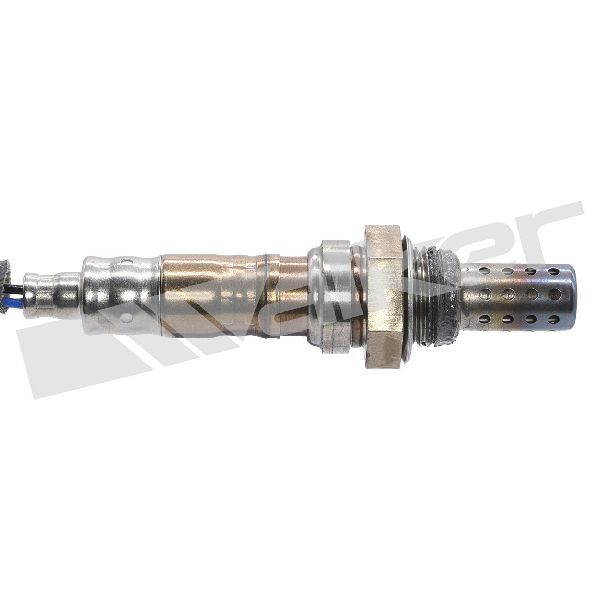
This code almost always points to a failing front oxygen (Air/Fuel ratio) sensor. An exhaust leak before the sensor is the second most likely cause. Replacing the front A/F sensor is the typical fix, costing around $100-$180 for the part. The correct OEM part is Subaru #22641AA51A, with Denso being a common OEM supplier.
- P0133 on a 2010-2014 Legacy almost always means the front Air/Fuel ratio sensor is failing.
- Before buying a new sensor, perform a thorough visual inspection of the exhaust manifold for leaks, which is a common secondary cause.
- Use a scan tool to watch the live sensor data; a slow, lazy signal confirms a bad sensor.
- This is a DIY-friendly repair for those with basic tools, but the sensor can be difficult to remove if it's seized in the exhaust.
- Always use a quality replacement sensor from a brand like Denso or NTK, as cheap sensors can fail quickly or not perform correctly.
What's Unique About the 2010-2014 Subaru Legacy
On the EJ253 engine, the front oxygen sensor (Bank 1, Sensor 1) is a wideband Air/Fuel ratio sensor, which is more sensitive and provides more detailed information than a conventional O2 sensor. While reliable, they are a very common failure item as the car ages. Additionally, Subaru's boxer engine exhaust manifold design, with its multiple gaskets before the sensor, makes these cars somewhat prone to small exhaust leaks that can introduce oxygen and trick the sensor, causing a P0133 code. This platform's tendency for some oil consumption can also lead to premature sensor fouling from oil contaminants in the exhaust stream.
Symptoms You May Notice
- Check Engine Light is on
- Decreased fuel economy
- Slight hesitation or lag during acceleration
- Rough idling
- Engine running slightly rich or lean
- Replacing the rear O2 sensor. The code specifically points to Sensor 1, which is the front sensor before the catalytic converter.
- Replacing the catalytic converter. A P0133 code by itself does not indicate a bad converter. A failing converter would typically set a P0420 code.
- Replacing the sensor without checking for exhaust leaks first. An exhaust leak will cause the new sensor to report slow response as well, leading to the code returning.
- Using a non-Denso or non-OEM sensor. Subarus are notoriously sensitive to the brand of A/F sensor used; using other brands like Bosch often leads to the code returning.
Most Likely Causes
- Failing Front Oxygen (A/F) Sensor 🔴 High Probability → Shop Oxygen Sensor The sensor is a high-wear item that degrades over time from heat and exhaust contaminants. On EJ253 engines with minor oil consumption, oil ash can foul the sensor, slowing its response. Coolant contamination after head gasket work has also been reported as a cause.
How to confirm: Use a scan tool with live data graphing capabilities. Observe the Bank 1, Sensor 1 voltage or A/F value. A healthy sensor will show rapid, clean sine-wave fluctuations. A slow, lazy, or jagged waveform confirms the sensor is failing.
Typical fix: Replace the front oxygen sensor (Bank 1, Sensor 1). Using an O2 sensor socket is highly recommended. Apply anti-seize compound to the threads of the new sensor. After replacement, perform an 'A/F Sensor Learning Value Reset' with a capable scan tool.
Est. part cost: $90-$180 - Exhaust Leak Before the Sensor 🟡 Medium Probability The exhaust manifold and the donut gaskets between the manifold and cylinder heads can develop leaks over time. Outside air gets pulled into the exhaust stream via the venturi effect, which skews the sensor's readings and makes it appear slow to respond.
How to confirm: Visually inspect the exhaust manifold and gaskets for black soot trails, which are definitive proof of a leak. This is best done when the engine is cold. You may also hear a 'ticking' sound from the engine bay on a cold start that goes away as the metal expands. A professional can use a smoke machine to find leaks that aren't visually obvious.
Typical fix: Replace the leaking exhaust gasket(s) and any cracked components. The manifold-to-head gaskets are common culprits.
Est. part cost: $20-$60 - Damaged Wiring or Connector ⚪ Low Probability The wiring harness for the sensor is located in the engine bay and can be susceptible to heat damage, or damage from contact with moving parts like a CV axle if not secured properly. Wires can also become brittle and break with age.
How to confirm: Visually inspect the wiring harness from the sensor to the main engine harness for any signs of melting, chafing, or corrosion on the connector pins. Check for continuity with a multimeter if visual inspection is inconclusive. A high resistance of even >0.5 Ohms in the harness can trigger the code.
Typical fix: Repair the damaged section of the harness or clean/replace the connector.
Est. part cost: $10-$50
Rare But Worth Checking
- Vacuum Leak: A significant vacuum leak can cause the engine to run lean, and the O2 sensor may struggle to respond, potentially triggering a P0133. This would usually be accompanied by other codes and noticeable idling issues.
- Low Fuel Pressure or Leaking Injectors: If the fuel system isn't delivering the correct amount of fuel, the air-fuel ratio will be off, which can sometimes manifest as a slow sensor response. This is uncommon and would likely set other fuel-related codes first.
- ECM Software Issue: In some cases, the logic within the Engine Control Module may be too sensitive. While no specific TSB for this was found for the Legacy, it has been a documented issue on other manufacturers that was fixed with a software update. A P0133 appearing immediately after a battery disconnect can sometimes be a false positive as the ECM re-learns.
Diagnosis Steps
- Read the codes with an OBD-II scanner and confirm P0133 is the primary code.
- With the engine cold, start it and listen for any exhaust 'ticking' noises from the engine bay that may disappear as it warms up.
- Perform a thorough visual inspection of the exhaust manifolds where they meet the cylinder heads. Look for fine black soot trails indicating a gasket leak.
- Inspect the oxygen sensor's wiring harness and connector for any visible damage, melting, or corrosion. Pay close attention to its proximity to the CV axle, as improper routing can cause chafing.
- Use a scan tool to view live data for 'Bank 1, Sensor 1'. At operating temperature and a steady 2000 RPM, the A/F sensor's signal should fluctuate rapidly in a clean wave pattern. If the graph shows slow, lazy, or flat waves, the sensor is likely bad. A healthy sensor should switch from lean (<0.3V) to rich (>0.7V) in under 100 milliseconds.
- If an exhaust leak is suspected but not visible, a smoke test is the most effective way to confirm its location.
- If the sensor waveform is slow AND an exhaust leak has been ruled out, replace the front A/F sensor with a Denso or OEM part.
- After replacement, use a scan tool to perform the 'A/F Sensor Learning Value Reset' function to clear the old sensor's learned data from the ECM.
- If all other possibilities are exhausted, check for vacuum leaks and proper fuel pressure, though these are less likely causes for an isolated P0133.
Parts You'll Likely Need
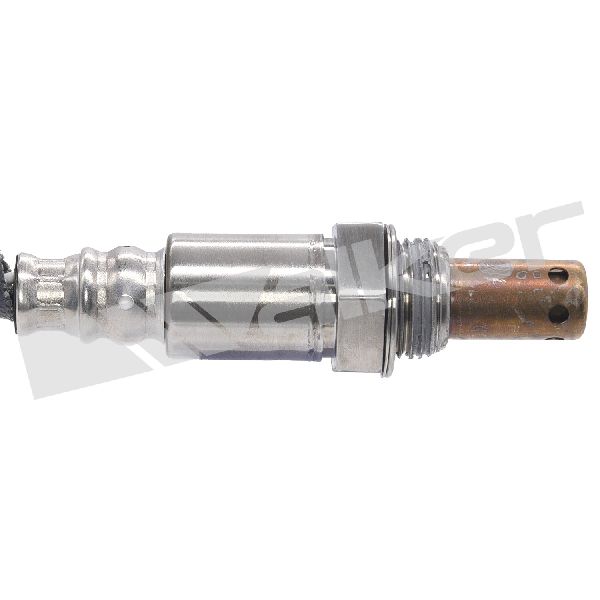
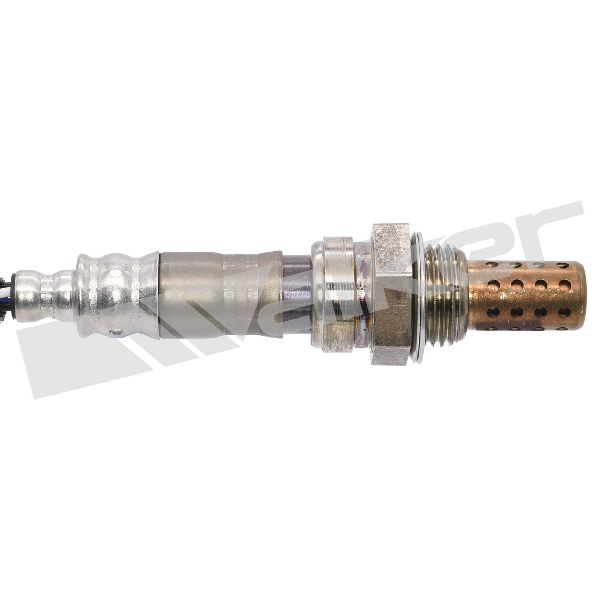
- Front Air/Fuel Ratio Sensor (Bank 1, Sensor 1)
(OEM #22641AA51A (Verify by VIN, may differ for CA PZEV models))— This is the most common failure part for a P0133 code. It directly measures the exhaust gases and is prone to wear and contamination over time.
Trusted brands: Denso (OEM supplier, part #234-9109 is a common cross-reference), NTK (part #24746 is a common cross-reference)
OEM price range: $150-$220
Aftermarket price range: $90-$165 - Exhaust Manifold Gasket
(OEM #14038AA000 (Quantity: 2))— If an exhaust leak at the head-to-manifold connection is the cause of the code, these multi-layer steel gaskets must be replaced to create a proper seal.
Trusted brands: Subaru OE, Fel-Pro
OEM price range: $15-$30
Aftermarket price range: $10-$20
Related Codes That Often Appear With This One
- P0131 — This code for 'O2 Sensor Circuit Low Voltage' can appear with P0133 if the sensor is failing electrically.
- P0132 — This code for 'O2 Sensor Circuit High Voltage' can also appear if the sensor is failing or has a wiring short.
- P0030 / P0031 / P0032 — These codes relate to the sensor's internal heater circuit. A faulty heater will prevent the sensor from reaching operating temperature quickly, causing a slow response.
Platform-Specific Known Issues
- The EJ253 engine in this generation can consume oil, which can foul the front A/F sensor with deposits, leading to a P0133 code. If you are adding oil between changes, this is a likely contributor.
- A P0133 code appearing after recent head gasket work can be a sign of coolant contamination on the old sensor, which ruins it. It's often recommended to replace the front O2 sensor as a preventative measure during a head gasket job.
Mechanic-Grade Diagnostic Values
- A/F Sensor (B1S1) Signal Response Time — expected: Switches from lean (<0.3V) to rich (>0.7V) in less than 100 milliseconds.. Failure: A response time significantly longer than 100ms, appearing as a 'lazy' or slow-moving wave on a graphing scan tool.
- A/F Sensor Heater Circuit Resistance — expected: 0 to 50 Ohms. Failure: An open circuit (infinite resistance) or a value outside the specified range indicates a failed heater, which will cause a slow response.
- A/F Sensor Harness Voltage (Key On, Engine Off) — expected: One wire should have 3.0V and another should have 3.3V (measured at the harness connector with sensor disconnected).. Failure: Missing or incorrect voltages point to a problem with the wiring or the ECM, not the sensor itself.
- Short-Term Fuel Trim (STFT) at Idle — expected: Should fluctuate close to 0%, typically within +/- 10%.. Failure: A consistently high positive value (e.g., +20% or more) indicates the ECU is adding fuel to compensate for a perceived lean condition, which can be caused by an exhaust or vacuum leak tricking the sensor.
Hidden / Shadow Codes Worth Checking
- Mode $06, Test ID $44: This is not a trouble code, but a test monitor for the O2 sensor circuit (Bank 1, Sensor 1). Advanced scan tools can read this data to see the raw test results and limits from the ECU's non-continuous self-tests, potentially showing a marginal failure before a DTC is set. (see via An advanced OBD-II scanner that supports Mode $06 data display.)
Scan Tool Commands That Help
- Subaru Select Monitor (SSM) or equivalent (Launch, Autel, etc.): A/F Sensor Learning Value Reset (or similar wording) — This is critical to perform immediately after replacing the front A/F sensor. The ECM stores long-term learned values from the old, failing sensor. Failing to clear this memory can cause the new sensor to perform poorly or may cause the P0133 code to return incorrectly.
Wiring & Ground Locations
- Main Engine Ground — Bolts to the engine block via the top starter motor mounting bolt.. A poor engine ground can create a floating reference voltage, causing erratic and slow readings from all engine sensors, including the front A/F sensor. Ensuring this connection is clean and tight is a crucial step in diagnosing any electrical issue.
- E23 (Front A/F Sensor Connector) — In the engine bay, on the passenger side, typically clipped to a bracket near the firewall/strut tower.. This is the primary connection point to inspect for corrosion, bent pins, or damage. The harness from this connector to the sensor can be mis-routed and get damaged by heat or moving parts.
- ECM (Engine Control Module) — Located behind the glove box, on the right side of the dash.. This is the destination for the sensor's signal. While rare, issues at the ECM connector or the module itself can mimic a sensor failure.
Real Owner Repair Stories
- YouTube channel 'sirobu' (2002 Subaru Forester (similar EJ engine and diagnosis principle)) — Check Engine Light with codes P0133 and P1137.
❌ Tried (didn't work) The mechanic immediately suspected the sensor but performed a visual inspection before replacing any parts.
✅ What actually fixed it A visual inspection revealed the A/F sensor's wiring harness had not been properly secured in its clip. It was resting on the front CV axle, which had ground through the insulation on all four wires, causing a short. Replacing the damaged sensor and properly routing the new harness fixed the issue. - Common Reddit & Subaru Forum Experience (Various Subaru models including 2010-2014 Legacy/Outback) — P0133 code returns shortly after replacing the front A/F sensor.
❌ Tried (didn't work) Replacing the front A/F sensor with a Bosch brand or other generic, non-OEM equivalent part.
✅ What actually fixed it The problem was resolved only after replacing the sensor again, this time using a genuine Subaru part or a Denso-branded sensor (the OEM supplier). The Subaru ECU is known to be incompatible with the electrical characteristics of many other aftermarket brands, even if they are listed as 'direct fit'. - NHTSA ODI #756389 — An owner reported the engine light came on with code P0133 at the time of the first service.
❌ Tried (didn't work) Replacing the A/F sensor did not fix the problem in this instance. The owner noted they were advised to warm the engine prior to use and use a higher grade of gasoline.
"I Checked Everything" — The Actual Cause
- A common scenario is that an exhaust smoke test reveals no leaks, and live data confirms a slow sensor. The technician replaces the sensor, but the code returns. The actual cause was the use of an incompatible aftermarket sensor brand (like Bosch) instead of the required OEM/Denso part, which the Subaru ECU rejects.
- The code was present, but there were no exhaust leaks. A detailed visual inspection of the wiring harness found that it had been rubbing against the CV axle, chafing the wires and causing a signal short. The root cause was improper harness routing, not a part failure or leak.
Model Year Variations Within This Range
- 2010-2014: Vehicles sold as PZEV (Partial Zero-Emission Vehicle), originally for California and other states that follow its standards, use different emissions components, including a different front A/F sensor and potentially different ECU logic. The standard OEM part number (22641AA51A) is for Federal emissions models. It is critical to verify the correct part number by VIN, as installing the wrong type of sensor will not work.
Diagnostic Flowchart
Other Known Issues on This Vehicle
Issues unrelated to this code that are worth knowing about as an owner of this generation:
- Excessive Oil Consumption 🔴 High — Common, particularly in 2013-2014 models with the FB25 engine, but also noted in the late EJ253s. Can start as early as 30-60k miles. Consumption rates can exceed 1 quart per 1200-2000 miles. (Ref: Subaru TSB 02-157-14R outlines an oil consumption test and, if failed, replacement of the engine short block for affected vehicles.)
- CVT Transmission Reliability (TR580) 🔴 High — Widespread reports of shuddering, hesitation, and outright failure, especially in 2010-2012 models. (Ref: Subaru extended the CVT warranty to 10 years/100,000 miles for many vehicles due to these issues, as detailed in bulletins like 16-115-18.)
- Prematurely Burnt-Out Headlights 🟡 Low — Very common complaint for 2010-2011 models, with owners reporting headlight bulbs lasting only a few months.
- External Oil Leaks from Head Gaskets 🟠 Medium — While the major internal head gasket failures of older EJ25s are less common, the EJ253 in this generation is still known for external oil seepage from the head gaskets, often visible at the bottom corners of the engine.
Used vs. New Parts: Buying Guide for This Vehicle
When a used part is the smart pick: For this repair, a used part is almost never a smart choice for the sensor itself. However, if the cause is a cracked exhaust manifold, a used manifold from a junkyard is a perfectly acceptable and cost-effective repair.
Donor-vehicle mileage cap: roughly under 100000 miles for the part to have meaningful remaining life.
What to inspect on the donor part:
- For a used exhaust manifold, inspect thoroughly for hairline cracks, especially around the collector and flanges.
- Ensure all mounting studs are intact and not broken off.
- Check for excessive rust or pitting that could prevent a good gasket seal.
OEM-only on this vehicle (don't cheap out):
- Front Air/Fuel Ratio Sensor: While not strictly 'OEM-only', the community consensus is overwhelmingly to use either a Genuine Subaru part or a Denso-branded part, as Denso is the original equipment manufacturer.
Aftermarket brands forum-validated for this vehicle:
- Denso (for the A/F sensor)
- NTK (also a reputable sensor manufacturer, often OEM for other brands)
Brands owners have reported issues with on this vehicle:
- Bosch: Frequently reported by Subaru owners and technicians to cause persistent or returning codes on this platform.
- Generic 'no-name' sensors from online marketplaces like Amazon or eBay are a significant gamble and often fail quickly.
Real Owner Stories
Aggregated from forums and TSBs cited above. Mileages and costs reflect what owners reported in those sources.
2006 Subaru Legacy GT
Symptoms: Check Engine Light for P0133 O2 Sensor Slow Response (Bank 1 Sensor 1).
What fixed it: Replacement of the front oxygen sensor.
Source hint: LegacyGT.com - CEL: P0133 O2 Sensor Slow Response (Bank 1 Sensor 1)
Subaru Legacy
Symptoms: P0133 code appeared shortly after dealing with head gasket issues.
What fixed it: Replacing the O2 sensor which was likely ruined by coolant contamination from the head gasket failure.
Source hint: Subaru Legacy International Forum - P0133 [Archive]
Subaru Legacy GT
Symptoms: Hard shudder issues and a cascade of multiple O2 sensor codes including P0133.
What fixed it: The owner identified sensor degradation over time as the cause for the multiple fault codes.
Source hint: LegacyGT.com - O2 Sensor/hard shudder issues
Related OBD-II Codes
Frequently Asked Questions
Can oil consumption in my EJ253 engine cause the P0133 code?
I just had my head gaskets replaced and now I have a P0133 code. Are they related?
Is there a specific brand of sensor I should use for my Legacy?
Could an exhaust leak be causing this code instead of a bad sensor?
What is the 'A/F Sensor Learning Value Reset' mentioned for this repair?
Does the TSB 02-157-14R for oil consumption apply to my P0133 issue?
Helpful Videos


![How to Fix P0133 Engine Code in 3 Minutes [2 DIY Methods / Only $8.35]](https://img.youtube.com/vi/Qk7iEApm11M/mqdefault.jpg)
We Have This Part in Stock


The information in this article is provided for general reference and educational purposes only. Vehicle specifications, procedures, and part compatibility can vary by production date, trim level, and region. Always consult your vehicle's factory service manual and verify part numbers before purchasing or performing repairs. Safety-critical components such as airbags, seat belts, and braking systems should be installed by a qualified professional.
- Subaru Legacy:
- 🧭 Diagnostic Flowchart
- 🎬 Helpful Videos
- 🛍️ Shop This Part
- What's Unique About the 2010-2014 Subaru Legacy
- Symptoms You May Notice
- Most Likely Causes
- Rare But Worth Checking
- Diagnosis Steps
- Parts You'll Likely Need
- Related Codes That Often Appear With This One
- Platform-Specific Known Issues
- Mechanic-Grade Diagnostic Values
- Hidden / Shadow Codes Worth Checking
- Scan Tool Commands That Help
- Wiring & Ground Locations
- Real Owner Repair Stories
- "I Checked Everything" — The Actual Cause
- Model Year Variations Within This Range
- Other Known Issues on This Vehicle
- Used vs. New Parts: Buying Guide for This Vehicle
- Real Owner Stories
- 2006 Subaru Legacy GT
- Subaru Legacy
- Subaru Legacy GT
- Related OBD-II Codes
- Frequently Asked Questions
- 🎟️ Get 5% Off