

P0133 on 2005-2009 Subaru Outback 2.5L: Slow O2 Sensor Response Causes and Fixes
On a 2005-2009 Subaru Outback, the P0133 code is almost always caused by a failing front oxygen sensor (A/F sensor). Before replacing it, check for exhaust leaks, which are the second most common cause. Expect to pay $70-$150 for a quality aftermarket sensor (Denso is OEM) and $180-$250 for an OEM part from Subaru. Using the correct Denso part (234-9123) is critical to resolving the issue permanently.
- P0133 on your Outback means the front oxygen sensor is responding too slowly.
- The most likely fix is replacing the front oxygen (A/F) sensor with a quality Denso or OEM part.
- Before replacing the sensor, always inspect thoroughly for exhaust leaks at the manifold gaskets, as this is a common secondary cause.
- Check the sensor's wiring harness for any signs of heat damage or physical contact with other components.
- This is a DIY-friendly repair for most home mechanics, but rusted exhaust bolts can sometimes make it challenging.
What's Unique About the 2005-2009 Subaru Outback
On the EJ253 engine, this code is straightforward and almost always points to the front A/F sensor itself having aged and become lazy. While other causes exist, the sensor is the primary failure point. Owners on forums like subaruoutback.org consistently report that using a direct OEM replacement from Denso (part number 234-9123) is crucial, as some universal or budget aftermarket sensors can fail to resolve the code or cause it to return quickly. Additionally, the boxer engine's exhaust manifold gaskets can be a source of leaks that trigger this code, so a thorough inspection is warranted before replacing parts.
Symptoms You May Notice
- Check Engine Light is on
- Decreased fuel economy
- Rough or unstable idle
- Hesitation during acceleration
- Failing an emissions test
- Foul or sweet smell from exhaust
- Replacing the rear (downstream) oxygen sensor. This code specifically points to Sensor 1, the upstream sensor responsible for fuel control.
- Replacing the catalytic converter. A P0133 code should be resolved first, as a faulty sensor can lead to other codes (like P0420) that incorrectly suggest a bad converter.
- Using a cheap, universal oxygen sensor. Many owners on forums like subaruoutback.org and Reddit report that the P0133 code returns unless an OEM or Denso-branded sensor is used.
Most Likely Causes
- Failing Front Oxygen (A/F) Sensor 🔴 High Probability → Shop Oxygen Sensor Oxygen sensors are wear items that degrade over time from heat and contaminants. After 100,000+ miles, the sensor's ability to react quickly diminishes, which is the direct trigger for this code. They are a very common failure point on this platform.
How to confirm: Use a scan tool with live data capability to graph the Bank 1, Sensor 1 voltage or current. A healthy sensor will show rapid fluctuations. A slow sensor will have lazy, rounded-off peaks and valleys or get stuck. A healthy sensor should respond to changes in the air-fuel mixture in under 100-200 milliseconds.
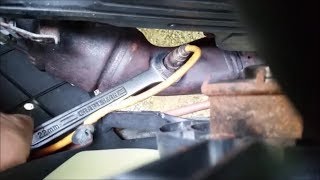
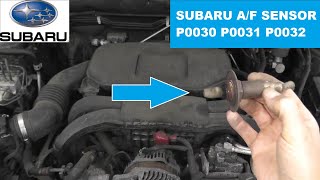
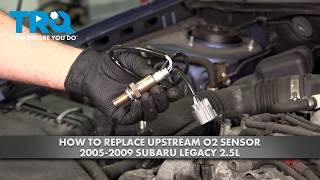
Typical fix: Replace the front oxygen (A/F) sensor. 🎬 Watch this step-by-step guide to replacing the upstream sensor. It is highly recommended to use an OEM (Subaru) or Denso branded sensor (Part No. 234-9123). Many owners report that other brands do not work reliably.
Est. part cost: $70-$150 - Exhaust Leak Before the Sensor 🟡 Medium Probability The gaskets on the exhaust manifold and the connection to the catalytic converter can degrade over time, allowing outside air to be drawn into the exhaust stream. This unmetered oxygen fools the sensor and makes its readings appear slow or biased lean.
How to confirm: Visually inspect the exhaust manifold and all gasket connections for black soot trails, which indicate a leak. You can also perform a smoke test on the exhaust system to pinpoint the source of the leak. A ticking noise from the engine bay that gets louder with acceleration is also a common sign.
Typical fix: Replace the leaking gasket(s). This may involve the exhaust manifold gaskets or the donut gasket between the manifold and the mid-pipe.
Est. part cost: $20-$60 - Damaged Sensor Wiring or Connector ⚪ Low Probability
How to confirm: Visually inspect the wiring harness leading to the front O2 sensor for any signs of melting, chafing, corrosion, or physical damage. In one documented case on a Subaru Forester with the same engine, the harness was left unclipped and rubbed through on the CV axle, causing P0133. Check the connector for bent or corroded pins.
Typical fix: Repair the damaged section of the wiring harness or clean/replace the connector.
Est. part cost: $10-$50
Rare But Worth Checking
- Intake Air (Vacuum) Leak: A significant vacuum leak from a cracked hose or bad intake gasket can lean out the air-fuel mixture to a point that it affects O2 sensor readings, potentially triggering a P0133 code. This is usually accompanied by a P0171 (System Too Lean) code.
- Dirty or Failing Mass Airflow (MAF) Sensor: → Shop Fuel Injection Air Flow Meter If the MAF sensor is dirty and under-reporting airflow, the engine may run rich. The ECM's attempts to correct this can sometimes manifest as a slow sensor response. Cleaning the MAF sensor with a dedicated cleaner is a simple diagnostic step.
- Contaminated or Failing Fuel Injector: A fuel injector that is partially clogged or failing can deliver an improper amount of fuel to one or more cylinders. This creates an inconsistent air/fuel mixture in the exhaust that can confuse the O2 sensor and may be interpreted by the ECM as a slow response.
Diagnosis Steps
- Read the codes with an OBD-II scanner to confirm P0133 is the primary code. Check for other related codes like P0171 or P0135.
- Visually inspect the exhaust system from the engine manifold to the catalytic converter for signs of leaks (soot, cracks, audible ticking). Pay close attention to the manifold-to-head gaskets and the donut gasket.
- Inspect the oxygen sensor wiring and connector for any signs of melting, corrosion, or physical damage. Ensure the harness is properly secured and not not rubbing against moving parts like the CV axle. 🎬 See how a loose harness causes these specific codes.
- Using a scan tool with live data, observe the graph for Bank 1 Sensor 1. It should switch rapidly between rich and lean. If the waveform is slow, lazy, or flat, the sensor is highly suspect.
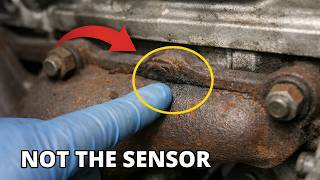
- If the sensor signal appears normal, check for intake vacuum leaks using a smoke machine or by carefully spraying brake cleaner around intake gaskets 🎬 Watch a mechanic diagnose exhaust leaks versus sensor failure. and hoses while listening for a change in engine RPM.
- Inspect and clean the Mass Airflow (MAF) sensor if it appears dirty.
- If all other checks pass, the most likely cause is the oxygen sensor itself. Replace it with a Denso or OEM part.
Parts You'll Likely Need
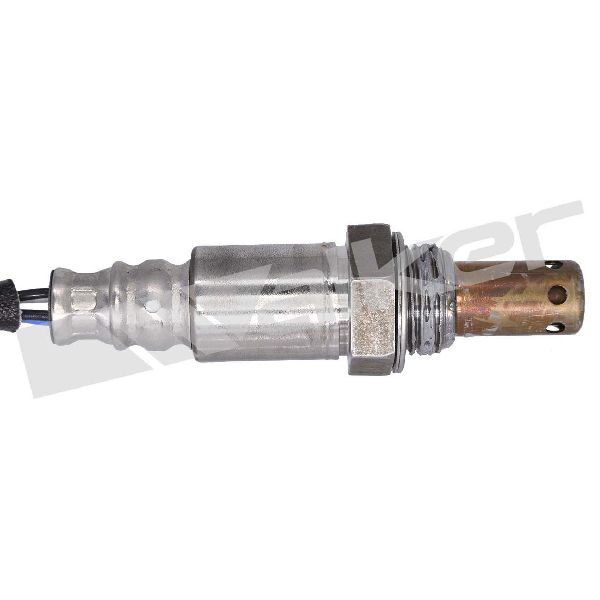
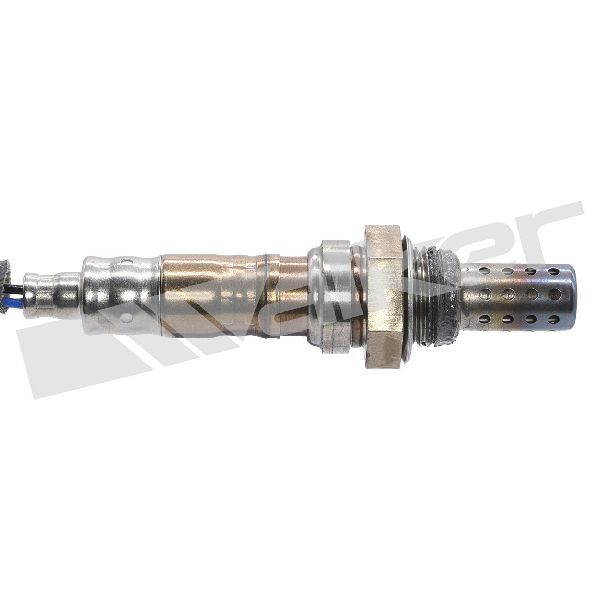
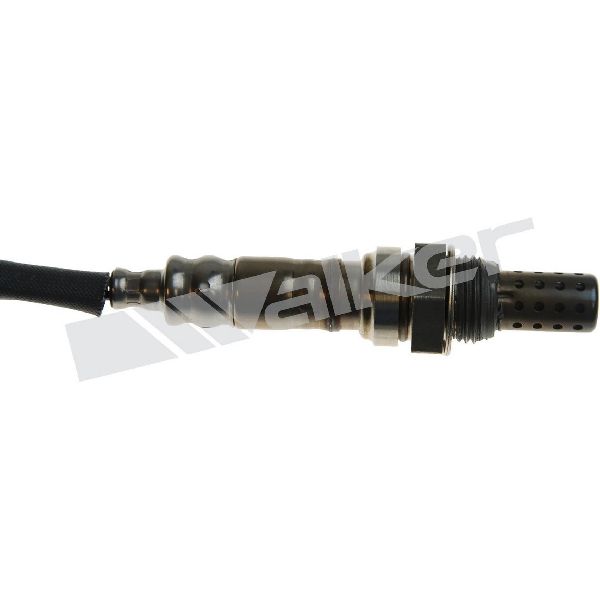
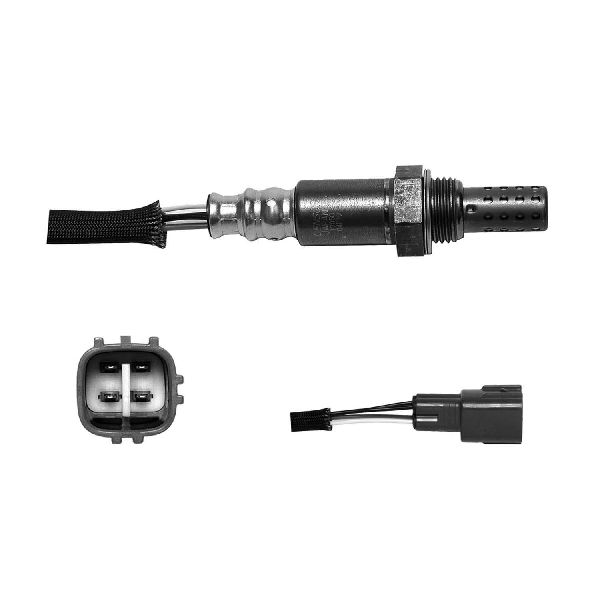
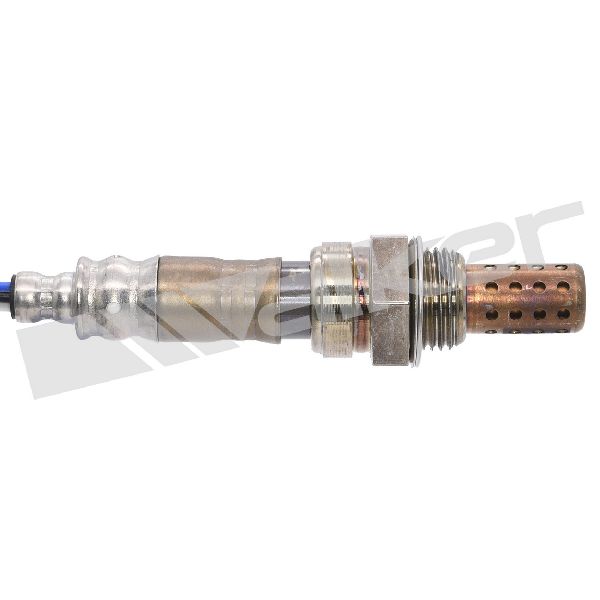
- Front Air/Fuel Ratio Sensor
(OEM #22641AA280)— This is the most common failure item for code P0133. The sensor degrades over time and loses its ability to respond quickly.
Trusted brands: Denso (OEM Manufacturer, Part #234-9123), NTK
OEM price range: $180-$250
Aftermarket price range: $70-$150
Related Codes That Often Appear With This One
- P0171 — If an exhaust or vacuum leak is the root cause, the system will run lean, often triggering a P0171 (System Too Lean) code alongside P0133.
- P0135 — This code indicates a fault in the O2 sensor's internal heater circuit. A failed heater will prevent the sensor from reaching operating temperature quickly, which will almost always cause a P0133 slow response code to be set as well.
- P1137 — This is a manufacturer-specific code for 'Oxygen Sensor Circuit Range/Performance Problem'. It is often seen with P0133 and points to the same set of wiring or sensor issues.
Technical Service Bulletins (TSBs) & Recalls
- TSB 11-81-07: While not for this specific code, this TSB involved an ECM logic reprogramming to address certain oxygen sensor codes on other models, showing a precedent for Subaru resolving sensor-related CELs with software updates.
Platform-Specific Known Issues
- Subaru issued a service program (WXW-80) for some models due to front oxygen sensors developing cracks, which could lead to failure. While not a formal recall for this specific vehicle, it highlights a known potential for sensor issues.
- A documented failure mode involves the A/F sensor wiring harness being improperly routed or coming loose from its clips, allowing it to rub against the front passenger-side CV axle until the wires are severed, triggering P0133 and P1137.
Mechanic-Grade Diagnostic Values
- Front A/F Sensor (Wideband) Live Data Voltage — expected: A healthy sensor's voltage will fluctuate rapidly. Unlike a traditional O2 sensor (0.1-0.9V), a wideband A/F sensor's voltage should stay relatively stable near 2.2V-3.3V at stoichiometric (ideal) air-fuel ratio, and change smoothly with throttle input.. Failure: A slow or lazy sensor will show very slow, delayed voltage changes in response to throttle snaps, or a voltage that is stuck and unresponsive. The key failure is the *rate of change*, not the voltage itself.
- Front A/F Sensor Heater Circuit Resistance — expected: Between 1.8 and 3.4 ohms when measured across the two heater pins on the sensor itself at room temperature.. Failure: A reading of infinity (open circuit) or zero (short circuit) indicates a failed heater element, which will prevent the sensor from warming up quickly and will almost certainly trigger a P0133.
- Forced Rich/Lean Test Voltage Response — expected: When forcing the engine rich (e.g., adding propane to the intake), the A/F sensor voltage should respond quickly and drop. When forcing it lean (e.g., creating a small vacuum leak), the voltage should rise quickly. A healthy sensor responds in under 100-200 milliseconds.. Failure: A response time greater than ~500ms indicates a slow, failing sensor.
- Subaru-Specific ECM Trigger Condition — expected: The ECM sets P0133 if the time needed for the sensor to respond under specific conditions is greater than or equal to 1024 milliseconds.. Failure: The code is set when the response time exceeds the ECM's calibrated threshold of 1024 ms.
Scan Tool Commands That Help
- Subaru Select Monitor (SSM) or equivalent advanced scan tool: A/F Sensor #1 Live Data Graphing — This is the primary diagnostic function. It allows a technician to visually inspect the sensor's response rate. A healthy sensor's graph will be active and responsive, while a failing sensor will show a lazy, rounded, or flat-lined waveform.
- Subaru Select Monitor (SSM) or equivalent advanced scan tool: Read Freeze Frame Data — When P0133 is triggered, the ECM stores a snapshot of all sensor values at that moment. This data is critical for understanding the engine's operating conditions (load, RPM, temperature) when the fault occurred, which can help differentiate between a sensor failure and a leak.
Wiring & Ground Locations
- E23 (or E24, B18, B262, B379 depending on diagram) — The main connector for the Front Oxygen (A/F) Sensor. It is a 4-pin connector located on the top right (passenger) side of the engine, clipped to the engine wiring harness near the firewall.. This is the primary point for testing voltage, ground, and signal integrity from the ECM to the sensor. Corrosion or damage at this connector can cause the P0133 code.
- Engine Ground Points — Key engine grounds for the EJ253 are typically located on the intake manifold, secured by bolts. Another critical ground is the main battery-to-chassis ground strap.. A poor engine ground can introduce electrical noise and voltage drops into sensor circuits, including the A/F sensor, potentially causing slow or erratic readings that mimic a sensor failure.
Real Owner Repair Stories
- Reddit user post in r/AskAMechanic (Subaru (model not specified, but behavior is typical)) — P0133 code returned repeatedly.
❌ Tried (didn't work) Replaced the Bank 1 Sensor 1 O2 sensor with a part from Autozone., Replaced the sensor a second time with a part from O'Reillys.
✅ What actually fixed it The problem is almost certainly the use of aftermarket sensors from chain auto parts stores. The consensus for Subarus is that only OEM or OEM-supplier (Denso) sensors should be used for A/F and O2 sensors to permanently resolve these codes. The user was advised to get the specific Denso part. - YouTube video by 'T-TEN's Auto' (Subaru Forester (with same EJ25 engine family)) — P0133 and P1137 codes.
❌ Tried (didn't work) Initial diagnosis pointed towards a bad sensor.
✅ What actually fixed it A visual inspection revealed the sensor's wiring harness was not secured in its clips. It had fallen and was rubbing against the passenger-side CV axle, which ground through the insulation and destroyed all four wires. The fix was to replace the entire A/F sensor assembly, as the wiring is integrated, and properly secure the new harness away from the axle. - NHTSA ODI #756389 (Subaru Legacy) — An owner reported the check engine light came on with code P0133 at the time of first service.
❌ Tried (didn't work) Replacing the A/F sensor did not fix the problem. The owner was advised to warm the engine prior to use and burn a higher grade of gasoline.
OEM Part Supersession History
22641AA140→22641AA280— Part number consolidation and potential minor revisions by Subaru over the years.
Heads up: 22641AA280 is the correct and final OEM part number for this application and is backward compatible, replacing 22641AA140 and 22641AA230.
Model Year Variations Within This Range
- 2005-2009: There are no significant variations for this specific code within this year range and for the non-PZEV EJ253 engine. The diagnosis and repair are consistent. However, it's important to distinguish between the Federal (FED) emissions EJ253 and the California (PZEV) version, as they may use different sensors. The Denso 234-9123 is specified for the standard non-turbo models in this range.
Diagnostic Flowchart
Other Known Issues on This Vehicle
Issues unrelated to this code that are worth knowing about as an owner of this generation:
- Head Gasket Failure 🔴 High — Very common, typically between 80,000 and 150,000 miles. The single overhead cam (SOHC) EJ253 is known for external oil and coolant leaks from the head gaskets.
- Leaking Oil Pressure Switch/Sensor 🟠 Medium → Shop Engine Oil Pressure Switch — A frequent and well-documented source of oil leaks. The sensor, located on the top of the engine block near the alternator, is known to fail and leak oil down the back of the engine.
- Exhaust Heat Shield Rattle 🟡 Low — Extremely common. The clamps and spot welds holding the heat shields onto the catalytic converters and exhaust pipes rust and fail, causing a metallic rattle, especially at certain RPMs.
- AVLS Oil Pressure Switch Leak 🟠 Medium → Shop Engine Oil Pressure Switch — The oil pressure switch for the Active Valve Lift System (AVLS) can leak, often mistaken for a valve cover gasket leak.
- Rear Suspension "Ghostwalking" 🟠 Medium — Worn rear trailing arm bushings can cause the rear of the car to feel unstable or 'walk' side-to-side, particularly on uneven surfaces.
Used vs. New Parts: Buying Guide for This Vehicle
When a used part is the smart pick: For this specific repair (P0133), using a used part is NEVER recommended. Oxygen/Air-Fuel sensors are wear items with a finite lifespan, similar to spark plugs or brake pads. A used sensor from a junkyard has unknown age and wear, and is very likely to fail quickly or be non-functional from the start, wasting time and money.
What to inspect on the donor part:
- Not applicable. Do not buy a used A/F sensor.
OEM-only on this vehicle (don't cheap out):
- Front Air/Fuel Ratio Sensor
Aftermarket brands forum-validated for this vehicle:
- Denso (Part #234-9123) is the original equipment manufacturer for Subaru and is the most highly recommended replacement.
- NTK is also a reputable OEM supplier for many Japanese brands and is considered a reliable alternative if Denso is unavailable.
Brands owners have reported issues with on this vehicle:
- Bosch (While a quality brand for European cars, many Subaru owners report persistent codes and incompatibility issues with their sensors on this platform).
- Unbranded or generic 'store brand' sensors from large chain auto parts stores are frequently reported to fail quickly or not work at all, leading to the code returning.
Real Owner Stories
Aggregated from forums and TSBs cited above. Mileages and costs reflect what owners reported in those sources.
2008 Subaru Outback BP 2.5i 127kw — 300000 miles
Symptoms: Check engine light (referred to as 'the chicken') appeared during a quiet drive, though the car continued to drive normally. Diagnostics confirmed a slow response from the control lambda sensor.
What fixed it: The owner identified the need for a Denso replacement sensor, as only Denso is considered compatible with Subaru systems.
Source hint: SubaruFanClub.cz
2007 Subaru Outback 2.5L H4
Symptoms: Check Engine Light on with P0133 code; confirmed sensor location and slow response via video walkthrough.
What fixed it: Replacement of the front oxygen sensor with a Denso brand OEM replacement.
Source hint: The DIY Guy (.net)
2006-2010 Subaru Forester 2.5L H4
Symptoms: P0133 and P1137 codes triggered after the sensor wiring harness was left unclipped and rubbed through by the CV axle.
What fixed it: Repairing the damaged section of the wiring harness that had been severed by the moving CV axle.
Source hint: Reddit (r/subaru and r/subaruoutback)
Subaru Legacy (EJ Engine Platform)
Symptoms: According to NHTSA ODI #756389, an owner reported the engine light came on at the time of first service with code P0133.
What fixed it: Replacing the A/F sensor did not fix the problem in this instance; the dealer recommended warming the engine prior to use and using a higher grade of gasoline.
Source hint: NHTSA ODI #756389
Related OBD-II Codes
Frequently Asked Questions
Which brand of front oxygen sensor should I use for my 2005-2009 Subaru Outback to fix P0133?
Could a ticking noise in my engine bay be related to the P0133 code?
Is there a specific Subaru service program related to oxygen sensor failure on this model?
Can a mechanical issue like a CV axle cause a P0133 code on my Outback?
How can I confirm if my front A/F sensor is actually 'slow' before replacing it?
Helpful Videos

We Have This Part in Stock


The information in this article is provided for general reference and educational purposes only. Vehicle specifications, procedures, and part compatibility can vary by production date, trim level, and region. Always consult your vehicle's factory service manual and verify part numbers before purchasing or performing repairs. Safety-critical components such as airbags, seat belts, and braking systems should be installed by a qualified professional.
- Subaru Outback:
- 🧭 Diagnostic Flowchart
- 🎬 Helpful Videos
- 🛍️ Shop This Part
- What's Unique About the 2005-2009 Subaru Outback
- Symptoms You May Notice
- Most Likely Causes
- Rare But Worth Checking
- Diagnosis Steps
- Parts You'll Likely Need
- Related Codes That Often Appear With This One
- Technical Service Bulletins (TSBs) & Recalls
- Platform-Specific Known Issues
- Mechanic-Grade Diagnostic Values
- Scan Tool Commands That Help
- Wiring & Ground Locations
- Real Owner Repair Stories
- OEM Part Supersession History
- Model Year Variations Within This Range
- Other Known Issues on This Vehicle
- Used vs. New Parts: Buying Guide for This Vehicle
- Real Owner Stories
- 2008 Subaru Outback BP 2.5i 127kw — 300000 miles
- 2007 Subaru Outback 2.5L H4
- 2006-2010 Subaru Forester 2.5L H4
- Subaru Legacy (EJ Engine Platform)
- Related OBD-II Codes
- Frequently Asked Questions
- 🎟️ Get 5% Off