

P0133 on 2019 Volkswagen Beetle Convertible: Slow O2 Sensor Response Causes and Fixes
On a 2019 VW Beetle with the 2.0L TSI engine, code P0133 almost always points to a failing upstream oxygen sensor (Bank 1, Sensor 1). Before replacing the sensor, it is critical to check for exhaust leaks, especially at the turbocharger V-band clamp and the downpipe's braided flex pipe, as this is a common failure point on the platform that can mimic a bad sensor. A new OEM-quality sensor costs between $80 and $250.
- P0133 on a 2019 VW Beetle indicates the upstream oxygen sensor (Bank 1, Sensor 1) is responding too slowly.
- The most common cause is a failing oxygen sensor, which is a standard wear-and-tear part.
- Before replacing the sensor, it is crucial to inspect for exhaust leaks, particularly around the downpipe's flex pipe, as this is a common issue that can trigger the same code.
- Ignoring this code will result in poor fuel economy, failed emissions tests, and can eventually damage the catalytic converter.
What's Unique About the 2019-2019 Volkswagen BEETLE CONVERTIBLE
The 2019 Beetle uses the well-known 2.0L TSI EA888 Gen 3 engine, shared with many other VW and Audi models like the GTI, Jetta, and Audi A3. While P0133 is a generic code, on this specific engine family it's frequently a simple case of the original Bosch sensor reaching the end of its life. However, these engines are also known for developing exhaust leaks at the downpipe's flex pipe or the turbo V-band clamp, which allows outside air into the exhaust stream and causes a slow response reading. The provided TSBs (VIN4APIN20190628, VIN4APIN20190617) list P0133 among a wide array of other codes, suggesting that in some dealer-level diagnostics, it may be flagged as part of a more complex electrical or software issue, rather than a standalone sensor failure.
Diagnostic Flowchart
Tap your situation to follow the diagnostic path that matches what you're seeing on this vehicle.
Symptoms You May Notice
- Check Engine Light illuminated
- Reduced fuel economy
- Rough or erratic idle
- Engine hesitation or sluggish acceleration
- Failed emissions test
- Black smoke from the tailpipe in some cases
- Replacing the downstream (Bank 1, Sensor 2) oxygen sensor instead of the upstream (Bank 1, Sensor 1).
- Replacing the oxygen sensor without first checking for exhaust leaks, leading to the code returning. This is a very common mistake.
- Replacing the catalytic converter when it is not faulty. A failing converter would typically trigger a P0420 code, not P0133.
Most Likely Causes
- Failing Upstream Oxygen Sensor (Bank 1, Sensor 1) 🔴 High Probability → Shop Oxygen Sensor Oxygen sensors are wear-and-tear items that degrade over time from heat and exhaust contaminants like carbon, oil, or coolant. Their internal heating element can also fail, preventing the sensor from reaching operating temperature quickly enough, which directly causes a slow response code.
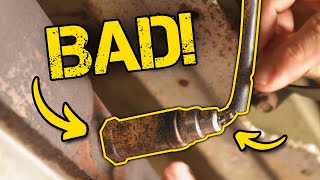
How to confirm: Use a scan tool to graph the live data from the Bank 1, Sensor 1. A healthy sensor's voltage should switch rapidly between approximately 0.1V and 0.9V (or show quick Lambda value changes on a wideband sensor). A slow sensor will show lazy, rounded-off peaks and valleys, with a response time exceeding the typical 100-200 millisecond threshold. 🎬 See how to test an oxygen sensor with a scan tool
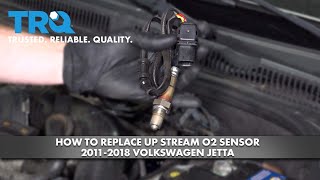
Typical fix: Replace the upstream oxygen sensor. It is also referred to as the pre-catalyst sensor or air-fuel ratio sensor. Using a special slotted O2 sensor socket is highly recommended 🎬 Watch: Step-by-step walkthrough for replacing the upstream O2 sensor for removal.
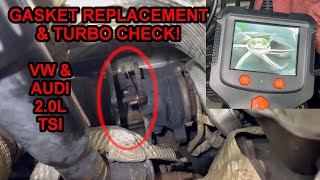
Est. part cost: $80-$250 - Exhaust Leak 🟡 Medium Probability The braided flex pipe section of the downpipe on the EA888 engine is a known weak point. It endures significant heat and vibration, leading to cracks that allow unmetered oxygen into the exhaust stream, tricking the PCM into thinking the sensor is slow. Leaks at the turbo-to-downpipe V-band clamp are also common.
How to confirm: Visually inspect the exhaust manifold, turbocharger connections, and downpipe for black soot marks, which are a clear sign of a leak. Listen for a ticking or hissing noise from the engine bay that increases with RPM. A smoke test is the most definitive way to find small leaks.
Typical fix: Repair or replace the leaking section of the exhaust. This often involves replacing the entire downpipe assembly if the flex pipe has failed.
Est. part cost: $50-$500 - Damaged Wiring or Connector ⚪ Low Probability The O2 sensor wiring harness is routed near hot exhaust components and can become brittle, melted, or frayed. High resistance from corroded pins in the connector can also dampen the signal, causing a slow response reading.
How to confirm: Visually inspect the wiring and connector for the upstream O2 sensor for any signs of melting, corrosion, or physical damage. Use a multimeter to check for continuity and resistance in the harness; high resistance can indicate a problem.
Typical fix: Repair the damaged wiring or replace the connector pigtail.
Est. part cost: $20-$50
Rare But Worth Checking
- Intake/Vacuum Leak: A significant leak in the intake system, often from a failed PCV valve (a known issue on TSI engines), can lean out the air-fuel mixture. This forces the sensor to read at the edge of its range and can sometimes be misinterpreted by the ECU as a slow response, often triggering a P0171 (System Too Lean) code alongside P0133.
- Low Fuel Pressure: A weak fuel pump or clogged filter can cause a lean running condition, which may affect O2 sensor readings. This would typically be accompanied by other drivability issues and potentially other fuel-related codes.
- Failing Mass Air Flow (MAF) Sensor: → Shop Fuel Injection Air Flow Meter A dirty or failing MAF sensor can provide incorrect airflow data, leading to an improper air-fuel mixture that can trigger a P0133 code.
- ECM Software Issue: In rare cases, the ECM's calibration for evaluating sensor response time may be too sensitive or corrupted. A dealer can check if any software updates (re-flashes) are available for the vehicle's VIN to address this.
Diagnosis Steps
- Connect an OBD-II scanner to confirm P0133 is the active code and check for any other stored codes. Note the freeze frame data to see the engine conditions when the code was set.
- Inspect the wiring and connector for the upstream oxygen sensor (Bank 1, Sensor 1) for any visible damage, melting, or corrosion. Ensure the connector is securely clipped.
- Thoroughly inspect the exhaust system from the cylinder head to the upstream O2 sensor for any signs of leaks, such as soot trails or cracks. Pay close attention to the downpipe flex pipe and turbo V-band clamp.
- Use a scan tool to view and graph the live data for the Bank 1, Sensor 1 voltage or Lambda value. At a steady 2500 RPM, observe if the sensor is switching slowly compared to a known good waveform. A healthy sensor switches rapidly, while a lazy one will show slow, rolling waves.
- If an exhaust leak is suspected but not visible, perform a smoke test to definitively identify the source.
- If no exhaust leaks or wiring issues are found and the sensor data confirms a slow response, replace the Bank 1, Sensor 1 oxygen sensor. An O2 sensor socket is highly recommended.
- After the repair, clear the codes and perform a drive cycle to ensure the code does not return.
Parts You'll Likely Need
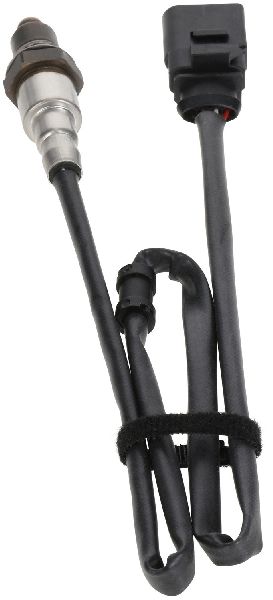
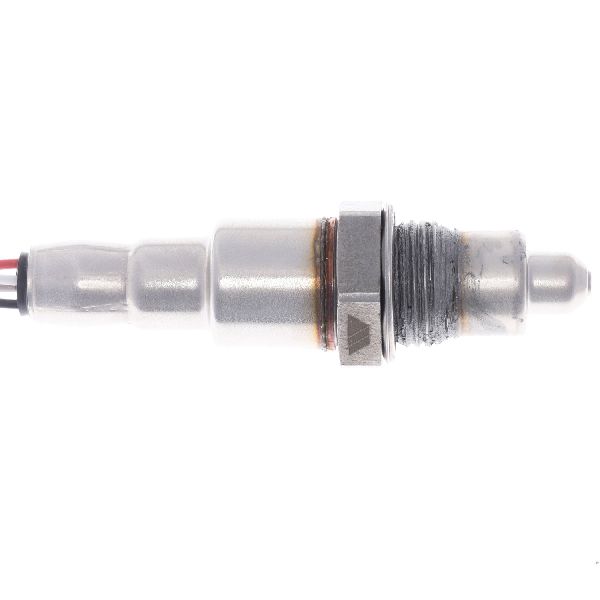
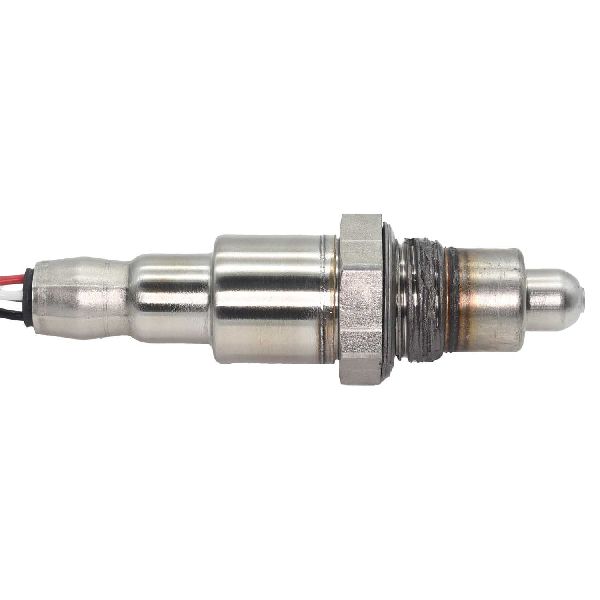
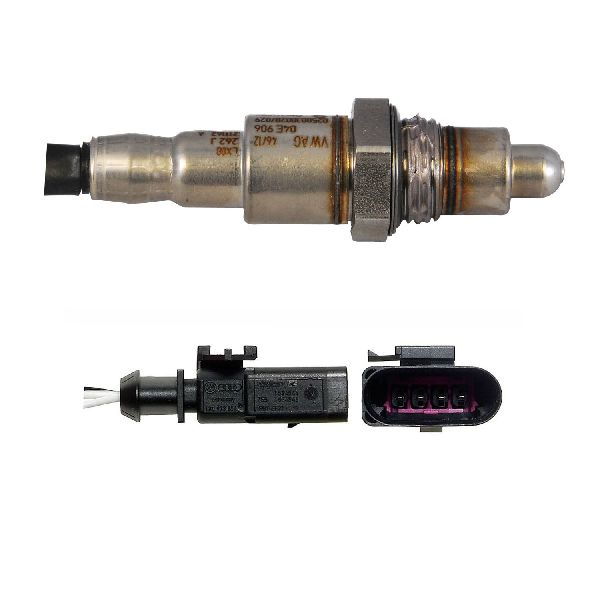
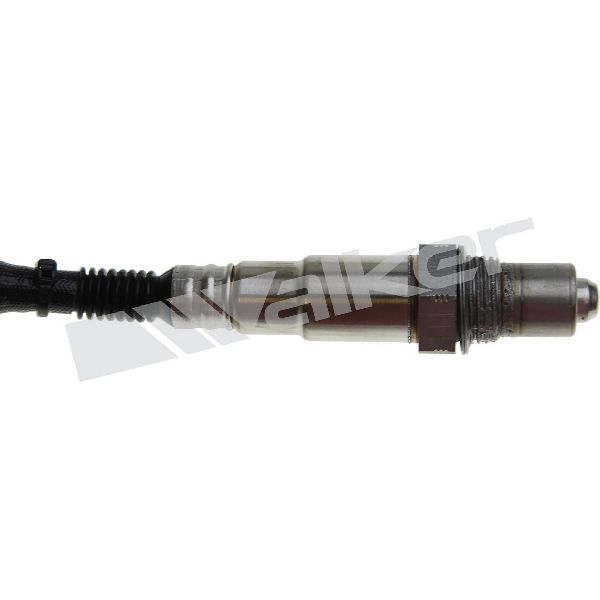
- Upstream Oxygen Sensor
(OEM #06K906262N, superseded by 06K906262D)— This is the primary sensor for air-fuel ratio control and is the most common component to fail, causing a P0133 code. It is a standard wear item.
Trusted brands: Bosch (OEM supplier), NGK/NTK, Denso
OEM price range: $180-$250
Aftermarket price range: $80-$150
Related Codes That Often Appear With This One
- P0171 — An exhaust or vacuum leak that causes P0133 can also allow unmetered air into the system, leading to a lean condition and triggering a P0171 code.
- P2097 — As noted in VW TSB #VIN4APIN20190628, P0133 can appear alongside P2097 (Post Catalyst Fuel Trim System Too Rich), indicating a complex fuel trim issue that the ECU is trying to correct, possibly due to a failing upstream sensor.
- P0131/P0132 — These codes for O2 sensor circuit low or high voltage can appear with P0133 if there are wiring issues or the sensor is failing electrically.
Technical Service Bulletins (TSBs) & Recalls
- VIN4APIN20190628: Customer states MIL-on with P0133 (among other codes).
- VIN4APIN20190617: Customer states MIL-on with P0133 (among other codes).
Platform-Specific Known Issues
- Volkswagen Technical Service Bulletins VIN4APIN20190628 and VIN4APIN20190617 list P0133 in conjunction with a variety of other unrelated trouble codes. This indicates that in some cases, the code may be triggered as part of a broader electrical or software-related fault that requires more in-depth diagnostics at a dealership, rather than a simple component failure.
- The PCV (Positive Crankcase Ventilation) system on the 2.0L TSI engine is a known failure point. A bad PCV valve can create a vacuum leak, which can indirectly lead to a P0133 code, often accompanied by a P0171 lean code.
Mechanic-Grade Diagnostic Values
- O2 Sensor Heater Circuit Resistance (Cold) — expected: Approximately 1-15 Ohms. Failure: A reading significantly higher than 15 Ohms, or an open circuit (infinite resistance), indicates a failed heater element within the sensor.
- Mode 6, O2 Sensor Monitor (Bank 1 Sensor 1) Response Time — expected: Varies by specific test ID (TID/MID), but the measured value should be below the maximum threshold specified by the manufacturer in the scan tool data.. Failure: If the test value is at or exceeds the maximum limit, it indicates the sensor is failing the ECU's internal response time test, even if it hasn't triggered a code yet.
Scan Tool Commands That Help
- VCDS (VAG-COM): Engine -> Basic Settings -> Group 034 (Lambda Control) — To initiate the ECU's self-test for the upstream O2 sensor. The tool will display 'Test ON' and then 'B1-S1 OK' if the sensor's response and heater function are normal. This is a quick way to verify sensor operation without a full drive cycle.
- VCDS (VAG-COM): Engine -> Adaptation -> Channel 00 -> Read, Save — After replacing the upstream O2 sensor, performing this function resets all learned adaptations, including fuel trims and old sensor values. This forces the ECU to create a new baseline with the new sensor, preventing it from using incorrect, stored data.
- VCDS (VAG-COM): Engine -> Basic Settings -> IDE00466 (Resetting of oxygen sensor adaptation values) — For newer UDS-based engine controllers like the one in the 2019 Beetle, this is the more specific and correct procedure to reset only the O2 sensor's learned values after replacement.
Wiring & Ground Locations
- GND 15 (1.8L/2.0L) — On top of the cylinder head, near the ignition coils.. This is a primary ground point for engine sensors. A loose or corroded connection here can introduce electrical noise or incorrect ground reference for multiple components, including the O2 sensor circuit, potentially causing erratic readings that could be misinterpreted as a slow response.
- GND 1 — In the engine compartment on the left side, below the battery tray (battery-to-body ground).. This is the main chassis ground. While less direct, a poor main ground can cause widespread, intermittent electrical issues across the entire vehicle, affecting the stability of power and ground supplied to the ECM and its sensors.
- GND 32 (ECM) — Located in the center plenum chamber at the base of the windshield, below the ECM itself.. This is the direct ground connection for the Engine Control Module. Any corrosion or looseness at this specific point can directly impact the ECM's ability to accurately process sensor inputs, including the sensitive voltage signals from the O2 sensor.
OEM Part Supersession History
06K906262N→06K906262D— Standard part revision by the manufacturer, likely for improved durability, material changes, or to resolve a known minor issue with the original design.
Helpful Videos

We Have This Part in Stock


The information in this article is provided for general reference and educational purposes only. Vehicle specifications, procedures, and part compatibility can vary by production date, trim level, and region. Always consult your vehicle's factory service manual and verify part numbers before purchasing or performing repairs. Safety-critical components such as airbags, seat belts, and braking systems should be installed by a qualified professional.
- Volkswagen BEETLE CONVERTIBLE:
- 🧭 Diagnostic Flowchart
- 🎬 Helpful Videos
- 🛍️ Shop This Part
- What's Unique About the 2019-2019 Volkswagen BEETLE CONVERTIBLE
- Symptoms You May Notice
- Most Likely Causes
- Rare But Worth Checking
- Diagnosis Steps
- Parts You'll Likely Need
- Related Codes That Often Appear With This One
- Technical Service Bulletins (TSBs) & Recalls
- Platform-Specific Known Issues
- Mechanic-Grade Diagnostic Values
- Scan Tool Commands That Help
- Wiring & Ground Locations
- OEM Part Supersession History
- 🎟️ Get 5% Off