

P0134 on 2011-2018 Audi A6 3.0L TFSI: Causes and Fixes for O2 Sensor No Activity
On the 2011-2018 Audi A6 3.0T, code P0134 almost always means the front (pre-catalyst) oxygen sensor on the passenger side has failed. This is a common wear item, and replacement with a quality part like a Bosch sensor is the typical fix. A new sensor can also fail if the wiring is damaged, often by a leaking oil filter housing gasket dripping oil onto the harness. Expect to pay $80-$150 for an aftermarket sensor or $180-$250 for an OEM part.
- P0134 on your A6 3.0T points to the front oxygen sensor on the passenger side.
- The most likely cause is a failed sensor, which is a common maintenance item.
- Before replacing the sensor, inspect its wiring for oil damage from a potential oil filter housing leak and check the O2 sensor heater fuse.
- Using a quality OEM-equivalent brand like Bosch for the replacement sensor is highly recommended for a lasting repair.
- Ignoring this code will hurt your fuel economy and can lead to more expensive catalytic converter damage over time.
What's Unique About the 2011-2018 Audi A6
The 3.0L TFSI V6 engine is used across many Audi models, and its issues are well-documented. For code P0134, the primary issue is often the oxygen sensor itself failing due to age and heat cycles. However, a notable issue on this platform is the potential for oil leaks from the oil filter housing gasket. This gasket can degrade and drip oil directly onto the Bank 1 oxygen sensor's wiring harness, causing insulation damage, short circuits, and eventual sensor failure. Always inspect for oil residue around the sensor and its connector during diagnosis. Access to the sensor is from the top of the engine bay after removing some intake components.
Symptoms You May Notice
- Check Engine Light is on
- Reduced fuel economy
- Rough or unstable idle
- Hesitation during acceleration
- Failing a vehicle emissions test
- Black smoke from the exhaust in some cases.
- Replacing the wrong oxygen sensor (e.g., the driver's side sensor, which is Bank 2, or the post-catalyst sensor, which is Sensor 2).
- Replacing the oxygen sensor without first checking for a blown fuse or damaged wiring. A new sensor won't fix a power supply issue.
- Replacing the O2 sensor without fixing the oil filter housing gasket leak that caused the original sensor's wiring to fail.
Most Likely Causes
- Failed Bank 1, Sensor 1 Oxygen Sensor 🔴 High Probability → Shop Oxygen Sensor The internal heating element of the O2 sensor is a common failure point due to constant exposure to extreme heat cycles. This is a standard wear-and-tear item, and a failed heater will prevent the sensor from sending a signal, triggering P0134.
How to confirm: Using a scan tool, observe the live data for 'O2 Sensor Voltage B1S1'. A healthy sensor will show voltage fluctuating rapidly between approximately 0.1V and 0.9V. A failed sensor will often show a flat, unchanging voltage (e.g., stuck at 0.45V) or no reading at all. You can also test the resistance of the heater circuit with a multimeter; a healthy sensor should read between 5-20 ohms, while a failed one will show an open circuit.
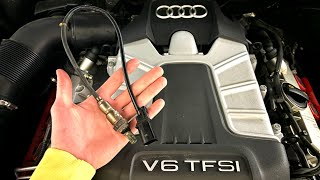
Typical fix: Replace the Bank 1, Sensor 1 oxygen sensor. It is located on the passenger side, before the catalytic converter. 🎬 Watch: How to locate the Bank 1 Sensor 1 oxygen sensor. An O2 sensor socket is required. 🎬 See this walkthrough for replacing the upstream O2 sensor. Soaking the sensor in penetrating oil overnight is recommended to ease removal.
Est. part cost: $80-$250 - Damaged Wiring or Connector 🟡 Medium Probability A leaking oil filter housing gasket is a known issue that can drip oil directly onto the O2 sensor harness, degrading the wires and causing a short. The harness can also be damaged by heat from the exhaust if its retaining clips break and it makes direct contact.
How to confirm: Visually inspect the entire wiring harness from the O2 sensor to its connection point. Look for signs of melted plastic, chafed or broken wires, and oil saturation. Unplug the connector and check for corrosion or oil inside.
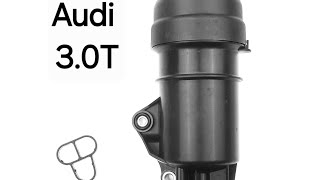
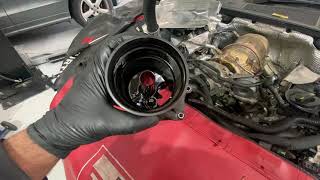
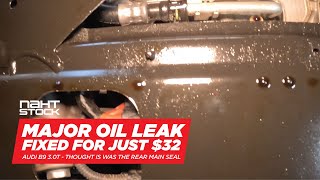
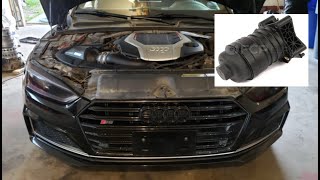
Typical fix: Repair the damaged section of wire with high-temperature-rated materials. If the connector is corroded or full of oil, clean it with electrical contact cleaner or replace the connector pigtail. If the oil leak is from the filter housing, that gasket must be replaced 🎬 Watch: Step-by-step guide to replacing the oil filter housing seal. to prevent repeat failure.
Est. part cost: $10-$50 for wiring repair, plus gasket cost if needed. - Blown Fuse for O2 Sensor Heater ⚪ Low Probability → Shop Oxygen Sensor A short circuit in the sensor's heater element or its wiring can blow the fuse that powers it. Without the heater, the sensor won't reach operating temperature and will not send a signal, triggering P0134.
How to confirm: Check the fuse box in the engine bay (often in the plenum area near the windshield). On similar C7 platforms, a 15A fuse in the engine bay fuse box may power both pre-cat O2 sensors. Visually inspect and test for continuity.
Typical fix: Replace the blown fuse. If it blows again immediately, a short circuit exists in the wiring or the sensor itself which must be found and fixed.
Est. part cost: $1-$5 - Exhaust Leak ⚪ Low Probability Gaskets at the exhaust manifold or the flex pipes in the downpipes can fail over time, allowing fresh air to be drawn into the exhaust stream, which can confuse the sensor.
How to confirm: Listen for a ticking or puffing sound from the engine bay, especially on a cold start. Visually inspect the exhaust manifold and downpipe for black soot trails, which indicate a leak.
Typical fix: Replace the leaking gasket or repair the leaking flex pipe section.
Est. part cost: $20-$100
Rare But Worth Checking
- Faulty Engine Control Module (ECM): → Shop Engine Control Module (ECM) This is extremely rare. The ECM should only be considered after all other possibilities, including the sensor, wiring, and fuses, have been thoroughly tested and ruled out.
Diagnosis Steps
- Read the fault codes with an OBD-II scanner to confirm P0134 is present and note any other codes, such as P0135 or P1196.
- Use the scanner's live data function to monitor 'O2 Sensor Voltage Bank 1 Sensor 1'. Confirm that the voltage is flat and not fluctuating (e.g., stuck near 0.45V).
- Locate Bank 1, Sensor 1. On the 3.0L TFSI, this is the upstream (pre-catalyst) sensor on the passenger side.
- Thoroughly inspect the sensor's wiring harness and connector for any signs of heat damage, chafing, or oil contamination from a potential oil filter housing leak.
- Check the fuse for the oxygen sensor heater circuit. This is often a 15A fuse located in the engine bay fuse box, potentially labeled 'Lambda' or 'Engine Electronics'.
- If wiring and fuse are good, test the sensor's internal heater. Disconnect the sensor and use a multimeter to measure resistance between the two heater pins (often same-colored wires). A reading outside of 5-20 ohms indicates a failed sensor.
- If the sensor tests good but the code persists, check for voltage at the harness connector with the ignition on to ensure power is reaching the sensor.
- After replacing the faulty component (most commonly the sensor), clear the fault codes and perform a drive cycle to ensure the code does not return.
Parts You'll Likely Need
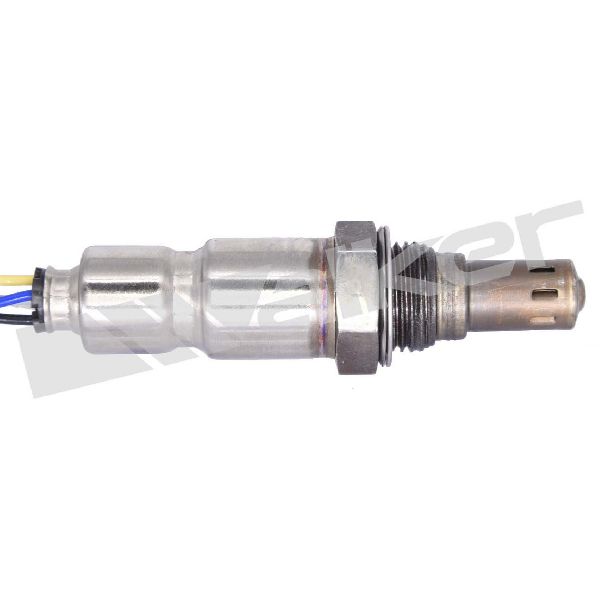
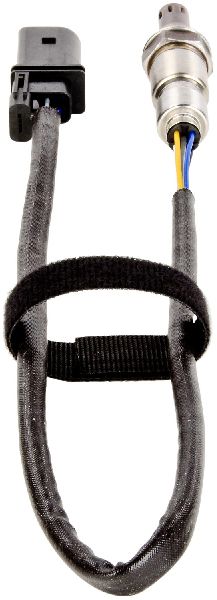
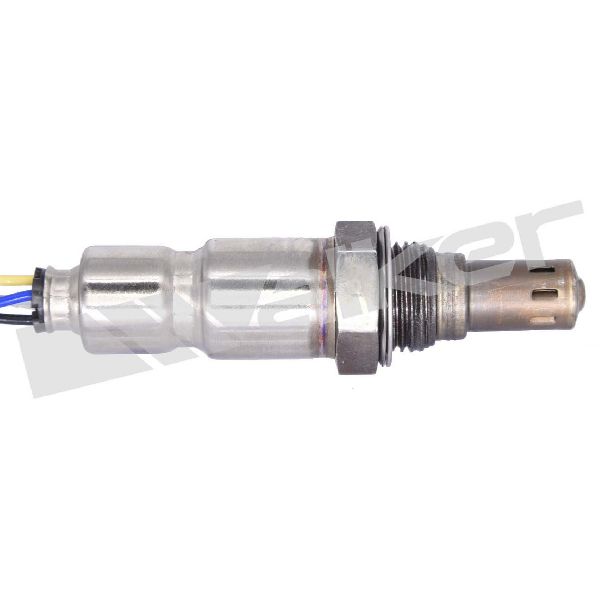
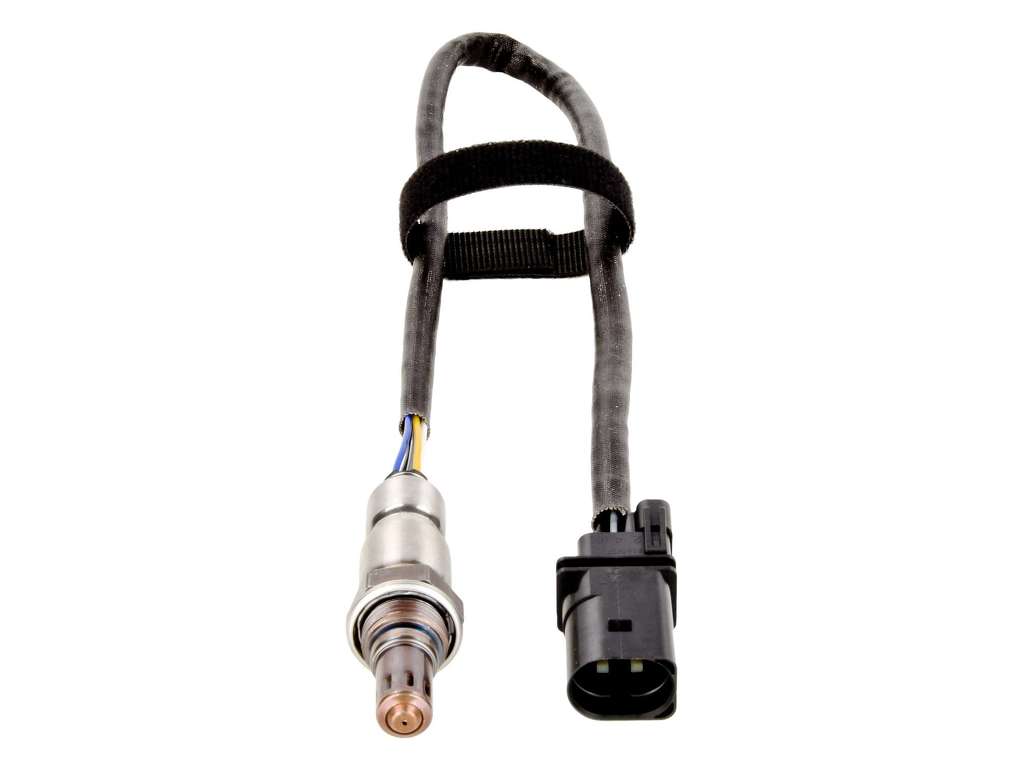
- Bank 1 Sensor 1 Oxygen Sensor
(OEM #06E906265S, 06E906265AJ)— This is the upstream, pre-catalyst oxygen sensor for the passenger side. Its internal heater element commonly fails, leading to a 'no activity' fault. This is the most frequent fix for P0134.
Trusted brands: Bosch (often the OEM supplier), NTK/NGK, Denso
OEM price range: $180-$250
Aftermarket price range: $80-$150 - Oil Filter Housing Gasket — If oil contamination is found on the O2 sensor wiring, the oil filter housing gasket is the likely source of the leak and must be replaced to prevent a recurrence of the P0134 code.
Trusted brands: Audi Genuine, Victor Reinz
OEM price range: $20-$40
Aftermarket price range: $10-$25
Related Codes That Often Appear With This One
- P0135 — This code indicates a fault in the heater circuit for Bank 1, Sensor 1. A failed heater is a very common reason for the sensor to show 'no activity,' so P0135 and P0134 are often caused by the same single failed sensor.
- P1196 — This is an Audi-specific code for 'O2 Sensor Heater Circuit Bank 1 Sensor 1 Electrical Malfunction.' It is functionally very similar to P0135 and points directly to a problem with the same sensor's heater.
- P2251 — This code for 'O2 Sensor Negative Current Control Circuit/Open Bank 1 Sensor 1' points to an electrical fault in the same circuit and can appear alongside P0134.
Technical Service Bulletins (TSBs) & Recalls
- TSB #01139020337671 was issued for the 2010 model year concerning the Check Engine Light (MIL) being on with DTC P1196 (a related heater fault code), confirming the fault is a known issue to Audi.
Platform-Specific Known Issues
- A leaking oil filter housing gasket is a known problem on the 3.0L TFSI engine and can drip oil directly onto the Bank 1 O2 sensor wiring, causing the sensor to fail and trigger this code. This should be inspected whenever P0134 is diagnosed.
Mechanic-Grade Diagnostic Values
- O2 Sensor Heater Circuit Resistance — expected: 5-20 Ohms (when sensor is cold). Failure: An open circuit ('OL' on multimeter) or resistance significantly outside the expected range.
- Voltage at O2 Sensor Harness Connector (Heater Power Pins) — expected: 11-14V (Battery Voltage) with Key On, Engine Off.. Failure: 0V or significantly low voltage, indicating a wiring, fuse, or relay issue upstream.
- ECM Fault Trigger Condition — expected: Sensor voltage should fluctuate rapidly.. Failure: Code P0134 is set if sensor voltage remains between 370mV and 430mV for more than 4 seconds (after initial engine warm-up).
Hidden / Shadow Codes Worth Checking
- VCDS Measuring Block 041, Field 1: Shows the status of the pre-catalyst heater command from the ECM. (see via Using VCDS (VAG-COM), navigate to Engine (01) -> Measuring Blocks -> Group 041. The field should read 'Heater before cat. ON' when commanded. If it's ON but the sensor is cold, the circuit is faulty.)
- VCDS Measuring Blocks 032 & 033: Shows long-term (032) and short-term (033) fuel trims. While not a direct P0134 diagnostic, seeing trims frozen or at extreme values on Bank 1 can corroborate the lack of sensor activity. (see via Using VCDS (VAG-COM), navigate to Engine (01) -> Measuring Blocks -> Groups 032 and 033.)
Scan Tool Commands That Help
- VCDS (VAG-COM) or equivalent: Engine -> Measuring Blocks (Groups 030-049) — This function is used to monitor the live data stream from the oxygen sensors and their heater circuits. It allows a technician to see the sensor's voltage, the heater's status (On/Off), and the ECU's calculated heater resistance, which can confirm a failed sensor or wiring issue without physical testing.
- VCDS (VAG-COM) or equivalent: Readiness Test — After a repair, the Readiness function can be used to run the internal self-diagnostics for all emissions components, including the O2 sensors, to confirm the fix was successful and all monitors are set before an emissions test.
Wiring & Ground Locations
- B1S1 Connector (T6a) — The 6-pin electrical connector for the Bank 1 Sensor 1 O2 sensor is located on a bracket at the rear of the engine, near the firewall.. This is the primary connection point to test for power, ground, and signal continuity. The heater circuit can be tested for resistance across terminals 3 and 5 of the sensor-side connector.
- Ground Point 13 — Main earth point located in the engine compartment on the right (passenger) side frame rail.. A corroded or loose main ground on the passenger side can cause intermittent electrical issues for any component grounded there, including the O2 sensor heater circuit.
- Ground Connection 85 — An earth connection point located within the main engine compartment wiring harness itself.. A failure at this internal harness ground point can be difficult to find and may affect multiple sensors, but could be the root cause if the main chassis ground is good.
Real Owner Repair Stories
- AudiWorld Forum User (Audi Q5 3.0T (B8 platform, shared engine)) — Check Engine Light with codes P1196 (B1S1 Heater Fault) and P1197 (B2S1 Heater Fault).
❌ Tried (didn't work) Initially assumed both upstream O2 sensors had failed at the same time.
✅ What actually fixed it Found and replaced a single blown 15A fuse located in the plenum chamber (under windshield cowl) fuse box. This one fuse powered the heaters for both upstream O2 sensors, and replacing it resolved both codes. - YouTube channel 'Gannon Voegtline' (Audi S4 3.0T (B8 platform, shared engine)) — Check Engine Light for upstream O2 sensor.
❌ Tried (didn't work) The diagnosis was straightforward, no other parts were tried.
✅ What actually fixed it The upstream O2 sensor was found to be completely saturated in oil from a leaking valve cover gasket. The final fix was replacing the failed O2 sensor and replacing the valve cover gasket to prevent a repeat failure.
OEM Part Supersession History
06E906265F→06E906265S— Part revision for improved performance or manufacturing process.
Model Year Variations Within This Range
- 2016-2018: Models from 2016 onward often feature the revised 'CREC' 3.0T engine. Key differences include a dual-injection fuel system (direct and port), a new ECU, and a supercharger with a 4-bolt pulley instead of the earlier press-on style. While the O2 sensor function is the same, diagnostic approaches involving the ECU may differ slightly.
Diagnostic Flowchart
Other Known Issues on This Vehicle
Issues unrelated to this code that are worth knowing about as an owner of this generation:
- PCV Valve Failure 🔴 High — Common failure around 60,000-80,000 miles. Can cause oil consumption, rough idle, and a loud whistling noise. Replacement is labor-intensive as the supercharger must be removed.
- Water Pump & Thermostat Failure 🔴 High — Very common, especially on pre-2013 models. The plastic housings crack, leading to coolant leaks and potential overheating. Often replaced together. Class action lawsuits have been filed regarding this issue. (Ref: Multiple class action lawsuits filed for premature failure.)
- Timing Chain Tensioner Rattle 🟠 Medium — A brief 1-3 second rattle on cold starts is common on pre-2016 engines and considered 'cosmetic' by Audi. A persistent rattle indicates a need for tensioner replacement, which is an engine-out service. (Ref: TSB 2039995/1 exists for replacing upper tensioners with improved parts.)
- Carbon Buildup on Intake Valves 🟠 Medium — A universal issue for direct-injection engines. Typically requires cleaning (walnut blasting) every 60,000-80,000 miles to restore performance and prevent misfires.
- Motor Mount Failure 🟡 Low — The fluid-filled engine mounts can leak and collapse over time, leading to increased vibration in the cabin, especially at idle.
- Supercharger Intercooler Leaks 🟠 Medium → Shop Turbocharger — Less common, but the intercooler cores located within the supercharger housing can develop internal coolant leaks, requiring removal of the supercharger for replacement.
Used vs. New Parts: Buying Guide for This Vehicle
When a used part is the smart pick: A used part is NOT recommended for the oxygen sensor itself, as it is a wear item with a finite lifespan. However, sourcing a used wiring harness pigtail (connector) from a salvage yard is a smart and cost-effective choice if only the connector is damaged by heat or oil.
Donor-vehicle mileage cap: roughly under 70000 miles for the part to have meaningful remaining life.
What to inspect on the donor part:
- For a wiring connector, inspect for any signs of brittle plastic from heat exposure.
- Check the connector pins for any green or white corrosion.
- Ensure the wire insulation is not cracked, melted, or saturated with oil.
- Verify the locking tab on the connector is intact and functional.
OEM-only on this vehicle (don't cheap out):
- While not strictly 'OEM-only', using a cheap, unbranded universal oxygen sensor is a very common cause of repeat failures. Stick to the OEM supplier (Bosch) or other reputable brands like NTK and Denso.
Aftermarket brands forum-validated for this vehicle:
- Bosch
- NTK/NGK
- Denso
Brands owners have reported issues with on this vehicle:
- Generic or unbranded 'universal' sensors that require splicing wires.
- No-name brands from online marketplaces with no warranty or verifiable reviews.
Real Owner Stories
Aggregated from forums and TSBs cited above. Mileages and costs reflect what owners reported in those sources.
2010 Audi A6 3.0L TFSI
Symptoms: Check Engine Light (MIL) was on with a heater fault code.
What fixed it: The issue was identified as a known heater fault, addressed in TSB #01139020337671.
Source hint: TSB #01139020337671
2014 Audi A6 3.0L TFSI — ~70000 miles
Symptoms: Oil consumption, rough idle, and a loud whistling noise.
What fixed it: Replacement of the PCV valve, which required removing the supercharger.
Source hint: Reddit r/Audi: C7 A6 3.0T Reliability
2012 Audi A6 3.0L TFSI
Symptoms: Cold start rattle.
What fixed it: Replacing the upper timing chain tensioners with updated parts as per a TSB.
Source hint: AudiWorld Forums: chain tensioner on 3.0 TFSI
Related OBD-II Codes
Frequently Asked Questions
Where is the Bank 1 Sensor 1 oxygen sensor located on my 3.0L TFSI engine?
Can a leaking oil filter housing cause the P0134 code on my Audi A6?
Does TSB #01139020337671 apply to my vehicle's O2 sensor issues?
What should the resistance be for a healthy O2 sensor heater on this Audi?
Is there a specific fuse I should check for the P0134 code?
Why is my Audi A6 idling roughly and blowing black smoke with P0134?
Helpful Videos
We Have This Part in Stock

The information in this article is provided for general reference and educational purposes only. Vehicle specifications, procedures, and part compatibility can vary by production date, trim level, and region. Always consult your vehicle's factory service manual and verify part numbers before purchasing or performing repairs. Safety-critical components such as airbags, seat belts, and braking systems should be installed by a qualified professional.
- Audi A6:
- 🧭 Diagnostic Flowchart
- 🎬 Helpful Videos
- 🛍️ Shop This Part
- What's Unique About the 2011-2018 Audi A6
- Symptoms You May Notice
- Most Likely Causes
- Rare But Worth Checking
- Diagnosis Steps
- Parts You'll Likely Need
- Related Codes That Often Appear With This One
- Technical Service Bulletins (TSBs) & Recalls
- Platform-Specific Known Issues
- Mechanic-Grade Diagnostic Values
- Hidden / Shadow Codes Worth Checking
- Scan Tool Commands That Help
- Wiring & Ground Locations
- Real Owner Repair Stories
- OEM Part Supersession History
- Model Year Variations Within This Range
- Other Known Issues on This Vehicle
- Used vs. New Parts: Buying Guide for This Vehicle
- Real Owner Stories
- 2010 Audi A6 3.0L TFSI
- 2014 Audi A6 3.0L TFSI — ~70000 miles
- 2012 Audi A6 3.0L TFSI
- Related OBD-II Codes
- Frequently Asked Questions
- 🎟️ Get 5% Off