

P0134 on 2015-2022 Ford Edge 2.0L EcoBoost: Causes and Fixes for O2 Sensor Inactivity
On a 2015-2022 Ford Edge with the 2.0L EcoBoost engine, code P0134 almost always means the upstream oxygen sensor (Bank 1, Sensor 1) has failed. This sensor is critical for air-fuel ratio monitoring. Replacing this sensor is the most common fix, costing around $60-$120 for an aftermarket part (NTK is a known OEM supplier) or $150+ for a Motorcraft part. DIY difficulty is moderate to high due to the sensor's tight location behind the engine near the firewall.
- P0134 on your Edge almost certainly points to a bad upstream oxygen sensor (Bank 1, Sensor 1).
- Before buying parts, use a scan tool to watch the sensor's live data. A flat-line voltage reading confirms the sensor is dead.
- The sensor is on the back of the engine and hard to reach. Plan for extra time or consider professional installation if you are not comfortable working in tight spaces.
- Always inspect the wiring and check the relevant fuse before replacing the sensor, as this can save you the cost of a new part.
What's Unique About the 2015-2022 Ford Edge
For the 2.0L EcoBoost engine in the second-generation Ford Edge, the key challenge with a P0134 code is physical access to the sensor. Bank 1 Sensor 1 is located on the rear side of the engine in the exhaust manifold, tucked in a tight space near the firewall. While the cause is typically a straightforward sensor failure, the replacement job is more involved than on many other vehicles. Mechanics and DIYers report needing to remove the air filter box assembly and sometimes the battery and its tray to gain adequate clearance to use an O2 sensor socket and wrench.
Symptoms You May Notice
- Check Engine Light is on
- Reduced fuel economy
- Rough or unstable idle
- Hesitation or poor engine performance
- Failing a vehicle emissions test
- Strong exhaust smell or rotten egg odor
- Replacing the downstream (Bank 1, Sensor 2) oxygen sensor instead of the upstream one. P0134 specifically refers to Sensor 1.
- Replacing the catalytic converter. A bad O2 sensor can cause converter issues long-term, but it is not the root cause of this specific code.
- Ignoring a blown fuse for the O2 heater circuit, which will prevent the new sensor from working.
Most Likely Causes
- Failed Upstream Oxygen Sensor (Bank 1, Sensor 1) 🔴 High Probability → Shop Oxygen Sensor Oxygen sensors are wear-and-tear items that operate in a harsh exhaust environment. The internal heating element can fail, or the sensing element can become contaminated by carbon, oil, or coolant, eventually ceasing to function.
How to confirm: Use an OBD-II scanner to monitor live data for 'O2S11' or 'B1S1'. A healthy sensor's voltage will fluctuate rapidly between approximately 0.1 and 0.9 volts. If the voltage is flat, stuck (e.g., at 0.45V), or shows no activity, the sensor has likely failed. You can also test the sensor's internal heater resistance with a multimeter; a typical reading is between 4-15 Ohms.
Typical fix: Replace the Bank 1, Sensor 1 oxygen sensor. This sensor is located on the exhaust manifold before the catalytic converter, on the firewall side of the engine. An O2 sensor socket (22mm or 7/8") is requ 🎬 See this general guide on how to replace an O2 sensorired.
Est. part cost: $60-$180 - Damaged Wiring or Connector 🟡 Medium Probability The sensor wiring is located in the hot engine bay, making it susceptible to heat damage, melting on the exhaust manifold, or becoming brittle and cracking. Rodents can also chew on the wires.
How to confirm: Visually inspect the wiring harness leading to the upstream O2 sensor. Look for any signs of burnt, frayed, or disconnected wires. Check the connector pins for corrosion, moisture, or damage.
Typical fix: Repair the damaged section of the wiring harness or clean/replace the connector. Ensure the wiring is properly secured away from heat sources.
Est. part cost: $10-$50 - Exhaust Leak ⚪ Low Probability
How to confirm: Listen for ticking or hissing noises from the exhaust manifold area, especially when the engine is cold. You may also see black soot marks around a crack or leaking gasket. A mechanic can perform a smoke test to pinpoint the leak. An exhaust leak can introduce outside oxygen, which the sensor will read, but it typically causes a 'lean' code (like P0171) rather than a 'no activity' code.
Typical fix: Replace the leaking exhaust manifold gasket or repair the cracked manifold.
Est. part cost: $20-$400 - Blown Fuse ⚪ Low Probability
How to confirm: The O2 sensor's heater circuit is powered by a fuse. Check your owner's manual or the fuse box diagram for a fuse labeled 'HO2S', 'O2 Heater', or similar. Visually inspect the fuse to see if it has blown.
Typical fix: Replace the blown fuse. If the fuse blows again immediately, it indicates a short circuit in the O2 sensor wiring 🎬 Watch: Why O2 sensor codes return after replacement or the sensor itself that must be diagnosed.
Est. part cost: $1-$10
Rare But Worth Checking
- Faulty Powertrain Control Module (PCM): → Shop Engine Control Module (ECM) This is extremely rare. Before suspecting the PCM, all other possibilities, including the sensor, wiring, fuses, and exhaust leaks, must be definitively ruled out. A PCM failure would likely present with other trouble codes as well.
Diagnosis Steps
- Connect an OBD-II scanner and confirm that P0134 is the primary code. Check for any other codes like P0135 (Heater Circuit) which strongly points to a bad sensor.
- Use the scanner's live data function to observe the voltage of the Bank 1 Sensor 1 (B1S1) O2 sensor. With the engine warm, it should fluctuate rapidly between ~0.1V and ~0.9V. If it is a flat line or stuck, the sensor is not working.
- Check the fuse for the O2 sensor heater circuit in the vehicle's fuse box. If it's blown, replace it and see if the code clears. If it blows again, a wiring short is likely.
- Perform a thorough visual inspection of the B1S1 O2 sensor's wiring harness and connector. Look for any signs of melting, chafing, corrosion, or loose connections. The harness is near hot exhaust components and can be damaged.
- Inspect the exhaust manifold and the area around the O2 sensor for signs of an exhaust leak (soot trails or audible ticking).
- If the wiring and fuse are intact and there are no leaks, the O2 sensor itself is the most likely culprit and should be replaced.
- After replacement, clear the codes with the scanner and perform a drive cycle (10-15 minutes of varied driving) to ensure the code does not return.
Parts You'll Likely Need
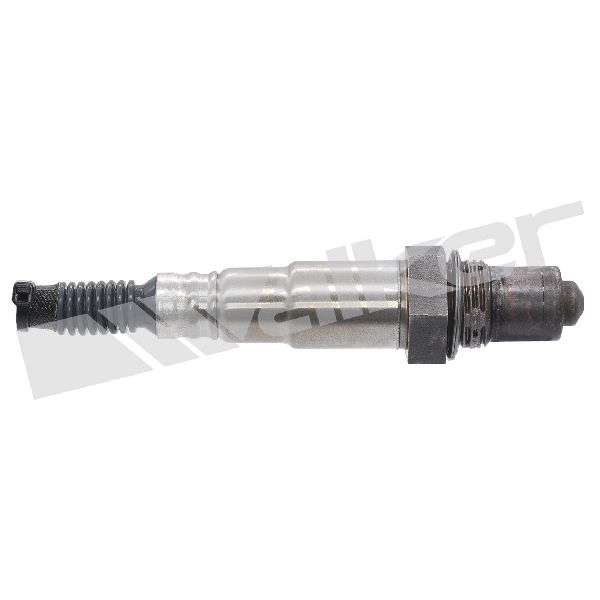
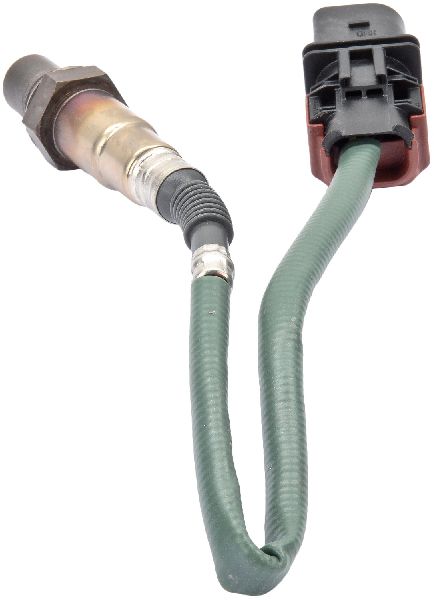
- Upstream Oxygen Sensor (Air/Fuel Ratio Sensor)
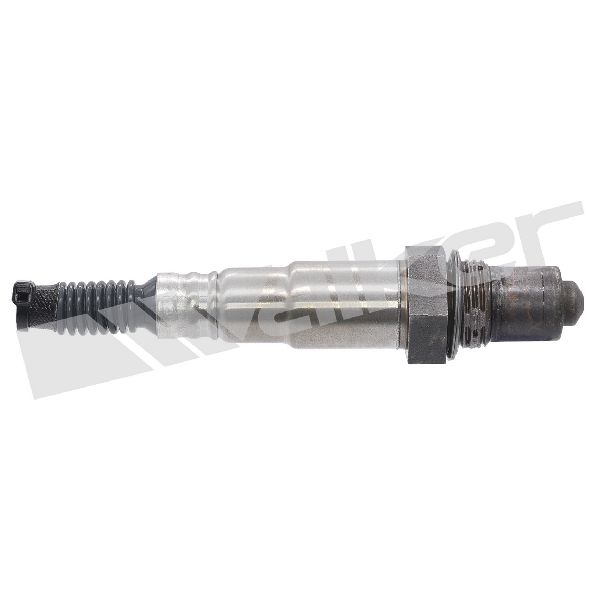
(OEM #DY-1330 (Motorcraft Service #), E1GZ-9F472-C (Ford Engineering #))— This is the sensor (Bank 1, Sensor 1) that the P0134 code identifies as inactive. Its failure is the most direct and common cause of the code. The Motorcraft part DY-1330 is the service part number for the original engineering part E1GZ-9F472-C.
Trusted brands: Motorcraft, NTK, Bosch, Denso
OEM price range: $100-$180
Aftermarket price range: $60-$120
Related Codes That Often Appear With This One
- P0135 — P0135 indicates a fault in the heater circuit of the same O2 sensor. These codes often appear together because a failure of the heater will prevent the sensor from reaching operating temperature and showing activity, directly causing P0134.
- P0171 — If the O2 sensor is failing and incorrectly reporting a lean condition (too much oxygen), the PCM may try to compensate by adding too much fuel, which can sometimes trigger a P0171 (System Too Lean) code as the system struggles to find the right balance.
- P0131 — This code indicates 'O2 Sensor Circuit Low Voltage'. A failing sensor that is unable to generate a proper voltage signal can sometimes trigger P0131 before it becomes completely inactive and triggers P0134.
Platform-Specific Known Issues
- Difficult Access is the Main Complaint: Owners and technicians on forums and in videos consistently cite the difficult location of the B1S1 sensor as the primary challenge. A user on fordedgeforum.com described being unable to get enough torque on the sensor from above due to the awkward angle and tight space behind the 2.0L EcoBoost engine. This often necessitates removing the airbox and battery for better access.
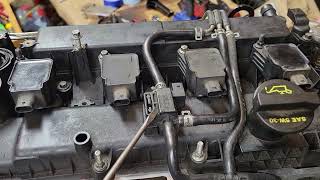
- NTK is the OEM Supplier: A YouTube video performing the replacement on a 2015-2018 Edge shows the original factory sensor with the NTK brand stamped on it. The video recommends using the NTK 27014 as a direct OEM-equivalent replacement part. 🎬 Watch: 2016 Ford Edge Bank 1 Sensor 1 replacement walkthrough
Mechanic-Grade Diagnostic Values
- Upstream O2 Sensor (HO2S11) Heater Circuit Resistance — expected: 4.0 to 15.0 Ohms at room temperature (approx. 68°F/20°C).. Failure: A reading of infinite resistance (OL) indicates a burned-out open heater circuit. A reading near zero indicates a short circuit. Both require sensor replacement.
- PCM 'Active' Voltage Threshold — expected: The PCM expects the sensor voltage to move outside a narrow window of 391-491 mV (0.391-0.491V) within one minute of startup.. Failure: If the sensor voltage remains stuck within this range, the PCM flags it as inactive and sets code P0134.
- Heater Circuit Supply Voltage — expected: Approximately 12V (battery voltage) at the harness connector power pin with the Key On, Engine Off (KOEO).. Failure: 0V or significantly low voltage points to a blown fuse, faulty relay, or a break in the power supply wire from the fuse box.
Wiring & Ground Locations
- G103 — Located at the left rear of the engine compartment on the cowl, often above the brake booster.. This is a major ground point for the Body Control Module (BCM) and the Data Link Connector (DLC). A poor connection here can cause a variety of communication and sensor issues, although it's not the primary ground for the O2 sensor itself.
- G101 / G102 — Located on the engine block, often at the front or rear. On some Edge models, a primary ground connection bolts to the side of the engine block, requiring battery removal for access.. The Engine Control Module (ECM/PCM) and its associated sensors, including the O2 sensors, rely on a solid engine ground. A corroded or loose engine ground strap can cause erratic sensor readings or a complete loss of signal, mimicking a failed sensor.
OEM Part Supersession History
E1GZ-9F472-C→DY-1330— E1GZ-9F472-C is the Ford engineering part number. DY-1330 is the corresponding Motorcraft service part number sold by dealers and parts stores.
Model Year Variations Within This Range
- 2019-2022: For the 2019 model year refresh, the 2.0L EcoBoost engine was updated to produce 250 horsepower (a 5 hp increase) and was paired with a new 8-speed automatic transmission, replacing the previous 6-speed. While the O2 sensor part number appears to remain consistent, PCM software and diagnostic strategies may differ slightly on these later models.
Diagnostic Flowchart
Other Known Issues on This Vehicle
Issues unrelated to this code that are worth knowing about as an owner of this generation:
- 2.0L EcoBoost Coolant Intrusion 🔴 High — Most common in 2015-2018 models, can occur from 30,000 miles onward. A known design flaw in the engine block allows coolant to leak into the cylinders. (Ref: TSB 19-2346)
- 6F35 Transmission Torque Converter Failure 🔴 High — Affects 2015-2018 models with the 6-speed automatic. Shuddering, harsh shifts, and eventual failure are common, sometimes before 100,000 miles, even with regular fluid changes.
- Aluminum Hood/Panel Corrosion 🟠 Medium — Paint bubbling and peeling, typically along the leading edge of the aluminum hood, is a widespread cosmetic issue due to contamination during manufacturing. (Ref: TSB 19-2026, TSB 20-2233)
- Intake Valve Carbon Buildup 🟠 Medium — Common to all direct-injection engines, including the 2.0L EcoBoost. Becomes noticeable after 60,000 miles, causing rough idle, hesitation, and reduced fuel economy.
- Warped Brake Rotors 🟡 Low — Many owners report premature brake rotor warping, leading to pulsation during braking. Rotors may need replacement more frequently than expected, sometimes as early as every 20,000-30,000 miles.
Used vs. New Parts: Buying Guide for This Vehicle
When a used part is the smart pick: For this repair, a used part is almost never a smart choice. Oxygen sensors are wear items with a finite lifespan (typically 50,000-100,000 miles). A used sensor from a junkyard has unknown remaining life and may fail shortly after installation, forcing you to do the difficult replacement job twice.
Donor-vehicle mileage cap: roughly under 15000 miles for the part to have meaningful remaining life.
What to inspect on the donor part:
- If forced to use one in an emergency, source from the lowest-mileage, most recent model year donor vehicle possible.
- Inspect the sensor tip for heavy black carbon fouling, white contamination (from coolant/oil), or physical damage.
- Ensure the wiring and connector are completely intact with no cuts, melting, or corrosion.
OEM-only on this vehicle (don't cheap out):
- While not strictly 'OEM-only', using a Motorcraft (OEM) or NTK (confirmed OEM supplier) sensor is highly recommended to avoid compatibility issues, premature failure, and incorrect readings that can be caused by budget aftermarket sensors.
Aftermarket brands forum-validated for this vehicle:
- NTK (OEM supplier for this vehicle)
- Denso
- Bosch
Brands owners have reported issues with on this vehicle:
- Unnamed, no-brand 'economy' sensors from online marketplaces are frequently reported by mechanics to be dead-on-arrival or fail within a few months.
Real Owner Stories
Aggregated from forums and TSBs cited above. Mileages and costs reflect what owners reported in those sources.
2016 Ford Edge 2.0L EcoBoost
Symptoms: Unable to get enough torque on the sensor from above due to the awkward angle and tight space behind the engine.
What fixed it: Replacement of the upstream oxygen sensor after removing the airbox and battery for better access.
Source hint: Ford Edge Forum: 'Upstream Oxygen Sensor Replacement on 2.0L Edge'
2015-2018 Ford Edge 2.0L EcoBoost
Symptoms: Check Engine Light with P0134; factory sensor identified as an NTK part.
What fixed it: Replacement with an NTK 27014 sensor and removal of the air intake assembly to gain clearance.
Source hint: YouTube: '2015-2018 Ford Edge Bank 1 Sensor 1 O2 Sensor Replacement'
2016 Ford Edge 2.0 Turbo
Symptoms: Difficult access to the Bank 1 Sensor 1 location.
What fixed it: Used an O2 sensor socket on a long extension after removing the airbox and battery for clearance.
Source hint: YouTube: '2016 Ford Edge 2.0 Turbo Bank 1 Sensor 1 replacement and location'
Related OBD-II Codes
Frequently Asked Questions
Which brand of oxygen sensor should I use for my 2015-2022 Ford Edge 2.0L EcoBoost?
Is the P0134 code related to the coolant intrusion issue mentioned in TSB 19-2346?
Where is the Bank 1 Sensor 1 located on the 2.0L EcoBoost engine?
Why is the labor for replacing this sensor on the Ford Edge often reported as difficult?
Can a blown fuse cause a P0134 'no activity' code on my Edge?
What specific tools are needed to change the upstream O2 sensor on this vehicle?
Helpful Videos


We Have This Part in Stock

The information in this article is provided for general reference and educational purposes only. Vehicle specifications, procedures, and part compatibility can vary by production date, trim level, and region. Always consult your vehicle's factory service manual and verify part numbers before purchasing or performing repairs. Safety-critical components such as airbags, seat belts, and braking systems should be installed by a qualified professional.
- Ford Edge:
- 🧭 Diagnostic Flowchart
- 🎬 Helpful Videos
- 🛍️ Shop This Part
- What's Unique About the 2015-2022 Ford Edge
- Symptoms You May Notice
- Most Likely Causes
- Rare But Worth Checking
- Diagnosis Steps
- Parts You'll Likely Need
- Related Codes That Often Appear With This One
- Platform-Specific Known Issues
- Mechanic-Grade Diagnostic Values
- Wiring & Ground Locations
- OEM Part Supersession History
- Model Year Variations Within This Range
- Other Known Issues on This Vehicle
- Used vs. New Parts: Buying Guide for This Vehicle
- Real Owner Stories
- 2016 Ford Edge 2.0L EcoBoost
- 2015-2018 Ford Edge 2.0L EcoBoost
- 2016 Ford Edge 2.0 Turbo
- Related OBD-II Codes
- Frequently Asked Questions
- 🎟️ Get 5% Off