

P0134 on 2019-2024 Genesis G70 3.3T: O2 Sensor Circuit No Activity (Bank 1 Sensor 1) Causes and Fixes
For a G70 3.3T, P0134 means the upstream oxygen sensor on the passenger side isn't sending a signal, most likely due to a failed sensor. Before replacing it, inspect the wiring harness for heat damage from the turbo and check the O2 sensor fuse. An OEM sensor costs $260-$390, while aftermarket is $70-$170.
- P0134 on your G70 3.3T points directly to a problem with the upstream oxygen sensor on the passenger side.
- The most likely cause is a failed oxygen sensor, which is a common wear-and-tear part.
- CRITICAL: Before replacing the sensor, you must inspect the wiring harness for melting or damage due to its proximity to the hot turbocharger.
- Always check the O2 sensor fuse in the engine bay fuse box as a simple first step.
- Driving for an extended period with this code can lead to catalytic converter damage.
What's Unique About the 2019-2024 Genesis G70
On the Genesis G70's twin-turbo 3.3L engine, the oxygen sensors are located in a very high-heat environment close to the turbochargers. This makes the sensor wiring particularly vulnerable to melting or heat-related damage. Forum users have specifically noted that the plastic retaining clips for the wiring harness can become brittle and break, allowing the harness to sag and make direct contact with the hot side of the turbo or exhaust manifold, causing a short circuit. While the sensor itself is a common failure point, a thorough inspection of the wiring harness for damage is critical before replacing parts. This issue is shared with the Kia Stinger GT, which uses the same engine and platform.
Symptoms You May Notice
- Check Engine Light is on
- Reduced fuel economy
- Rough or unstable idle
- Engine hesitation or reduced performance
- Smell of fuel or excessive smoke from the exhaust
- Failing an emissions test
- Replacing the O2 sensor without checking the wiring. On this specific engine, heat damage to the harness is a significant possibility and should be inspected first to avoid the new sensor also failing to work.
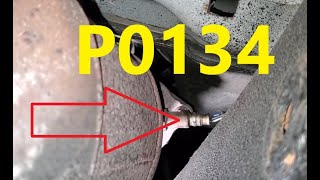
- Replacing the wrong sensor. P0134 is for Bank 1, Sensor 1, which is the upstream (pre-catalytic converter) sensor on the passenger side of the engine.
Most Likely Causes
- Failed Bank 1, Sensor 1 Oxygen Sensor 🔴 High Probability → Shop Oxygen Sensor The sensor's internal heating element or sensing element fails over time, which is a common wear item on all vehicles. High heat from the nearby turbo may accelerate this degradation. The sensor must reach over 600°F to operate, and a heater failure is a primary cause of the 'no activity' code.
How to confirm: Use an OBD-II scanner to monitor live data for the Bank 1 Sensor 1 voltage. If the voltage is flat, unchanging, or stuck at a specific value (e.g., 0.45V) while the engine is running and warm, the sensor is not responding and has likely failed. A healthy upstream sensor's voltage should fluctuate rapidly between approximately 0.1V and 0.9V. You can also test the resistance of the heater circuit in the sensor with a multimeter; an open circuit (infinite resistance) confirms failure.
Typical fix: Replace the Bank 1, Sensor 1 (upstream, passenger side) oxygen sensor. This requires a special 22mm (or 7/8") slotted O2 sensor socket to fit over the wire.
Est. part cost: $70-$390 - Damaged O2 Sensor Wiring or Connector 🟡 Medium Probability → Shop Oxygen Sensor The wiring harness is routed very close to the passenger-side turbocharger and exhaust manifold. The plastic clips holding the harness can fail, allowing wires to sag and melt on hot surfaces, causing a short or open circuit. This is a frequently cited issue for this platform.
How to confirm: Visually trace the wiring harness from the sensor back towards the engine. Look for any signs of melting, chafing, fraying, or corrosion on the wires and inside the connector pins. Pay extremely close attention to the harness routing near the turbo and exhaust.
Typical fix: Repair the damaged section of the wiring harness using heat-shrink butt connectors and secure it away from heat sources with high-temperature zip ties or by replacing the retaining clips. If the connector is damaged, it may need to be replaced.
Est. part cost: $10-$50 - Blown O2 Sensor Heater Fuse ⚪ Low Probability → Shop Oxygen Sensor A short in the sensor's heater element or its wiring can cause the corresponding fuse to blow. The sensor cannot operate correctly without a functional heater.
How to confirm: Locate the fuse box in the engine bay. Check the fuse labeled for the O2 sensors (often marked 'SENSOR' or similar). On the related Kia Stinger, this is the 'SENSOR 3' 15A fuse, which may be at position F24. Visually inspect the fuse or test for continuity with a multimeter.
Typical fix: Replace the blown fuse. If the new fuse blows immediately, it indicates a persistent short circuit in the heater or wiring that must be found and fixed.
Est. part cost: $1-$5
Rare But Worth Checking
- Exhaust Leak: An exhaust leak between the cylinder head and the O2 sensor can introduce outside air, causing incorrect readings. While this usually leads to a lean code (P0171), a very large leak could potentially disrupt sensor readings enough to be interpreted as 'no activity'. Check for soot marks or use a smoke machine to test for leaks.
- Powertrain Control Module (PCM) Fault: → Shop Engine Control Module (ECM) This is extremely rare. The PCM provides a baseline voltage of around 450mV to the sensor circuit. Before condemning the PCM, all other possibilities, including the sensor, wiring, fuses, and grounds, must be exhaustively ruled out by a professional.
Diagnosis Steps
- Connect an OBD-II scanner and confirm P0134 is the active code. Check for any other codes, particularly P0135.
- Inspect the O2 sensor heater circuit fuse in the engine bay fuse panel (potentially 'SENSOR 3' 15A fuse). Replace if blown.
- Perform a thorough visual inspection of the Bank 1 Sensor 1 oxygen sensor's wiring harness and connector. Trace it from the sensor (passenger side, pre-catalytic converter) and look for melting, chafing, or loose connections, paying close attention to areas near the turbocharger and exhaust manifold.
- Using the OBD-II scanner, view live data for 'O2 Sensor Voltage Bank 1 Sensor 1'. Start the engine and let it warm up to operating temperature.
- Observe the voltage. A healthy upstream sensor's voltage should fluctuate rapidly between approximately 0.1V and 0.9V. If the voltage is flat, unchanging, or stuck (often near 0.45V), the sensor is not working.
- If the wiring and fuse are good but the sensor shows no activity in live data, the oxygen sensor itself has failed and needs to be replaced.
- If a new sensor does not resolve the issue, perform advanced electrical checks on the sensor circuit for continuity, shorts, and proper ground connection back to the ECM. Confirm the ECM is providing the ~450mV reference voltage.
Parts You'll Likely Need
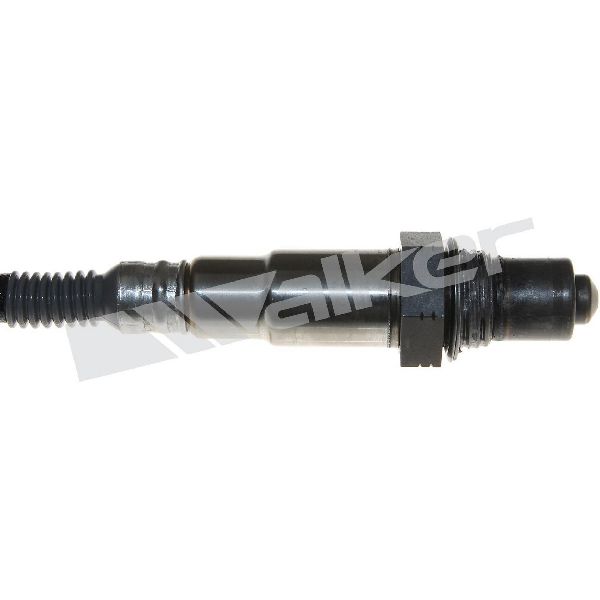
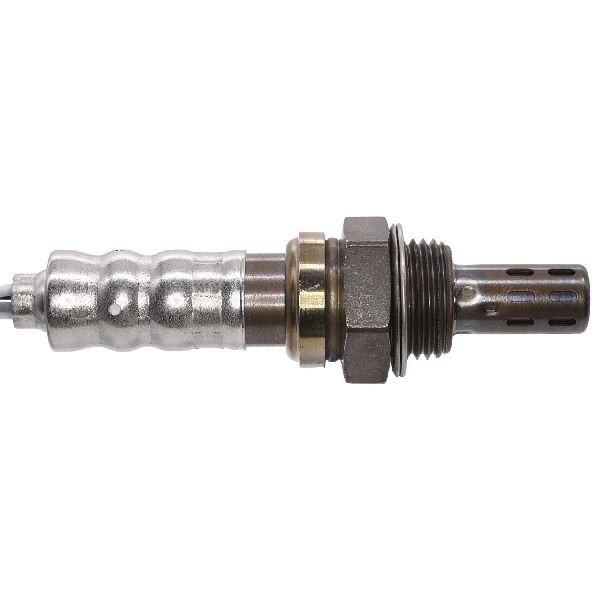
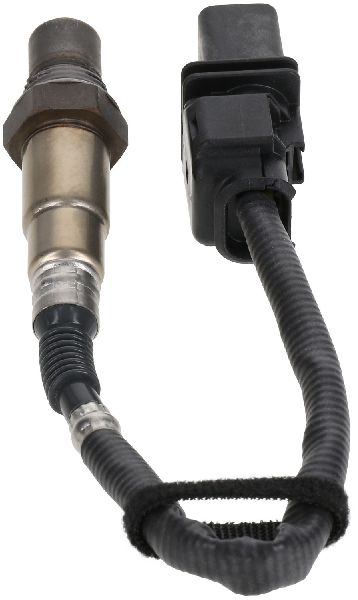
- Oxygen Sensor (Bank 1, Sensor 1)
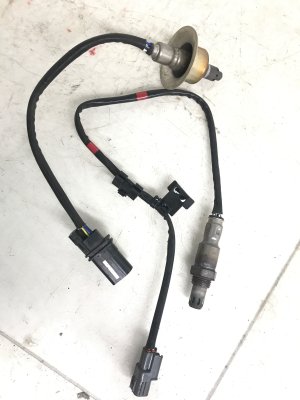
(OEM #39210-3L000)— This is the upstream sensor on the passenger side (RH). It is the most common part to fail, triggering the P0134 code due to internal heater failure or sensor degradation. This part number fits the 3.3T G70, G80, and G90, as well as the Kia Stinger GT.
Trusted brands: Hyundai/Genesis (OEM), NTK (often the OEM supplier), Denso, Bosch
OEM price range: $260-$390
Aftermarket price range: $70-$170 - Oxygen Sensor Socket — A special 22mm (7/8") socket with a slot for the wire is required for removal and installation of the oxygen sensor.
Trusted brands: Lisle, OEMTOOLS, GearWrench
OEM price range: N/A
Aftermarket price range: $10-$30
Related Codes That Often Appear With This One
- P0135 — P0135 indicates a malfunction in the heater circuit for the same sensor (Bank 1, Sensor 1). Since a failed heater is a primary reason for the sensor not becoming active, these two codes often appear together.
- P0171 — If an exhaust or vacuum leak is the root cause of the sensor's incorrect readings, the engine may also run lean, triggering a P0171 (System Too Lean, Bank 1) code.
Platform-Specific Known Issues
- Wiring Harness Retaining Clip Failure: Owners on forums have noted that the plastic clips designed to hold the O2 sensor wiring harness away from heat sources can become brittle and break. This allows the harness to sag and make direct contact with the hot side of the turbocharger or exhaust manifold, causing the wires to melt and short out.
Mechanic-Grade Diagnostic Values
- O2 Sensor Heater Circuit Resistance — expected: 3.3 - 4.1 Ω at 18-20°C (64-82°F). Failure: An Open Loop ('OL') or infinite resistance reading indicates a broken internal heater. A reading near zero ohms indicates a short circuit.
- Live Data O2 Sensor Voltage (B1S1, Warm Engine) — expected: Rapidly fluctuating between ~0.1V and ~0.9V. Failure: A flat, non-fluctuating voltage, often stuck near 0.45V, confirms 'no activity'.
- O2 Sensor Heater Circuit Power Supply (at harness connector) — expected: ~12 Volts (Battery Voltage) with Key On, Engine Off. Failure: Zero or low voltage points to a problem with the fuse or wiring, not the sensor itself.
Hidden / Shadow Codes Worth Checking
- Mode 6 Data: While not a specific code, advanced scan tools can access Mode 6 data. For O2 sensors, this includes test results for the heater circuit and sensor response time. A failed test in this data can confirm the P0134 fault even before the sensor completely fails to respond. (see via Advanced OBD-II scanner with Mode 6 capability.)
Scan Tool Commands That Help
- Hyundai GDS (Global Diagnostic System): Vehicle S/W Management > Resetting adaptive values — After replacing an O2 sensor or fixing a significant wiring or exhaust issue, resetting the long-term fuel trim adaptations forces the ECU to relearn its fuel strategy with the new, functional sensor. This can prevent future fuel-trim-related codes and improve performance.
- Hyundai GDS (Global Diagnostic System): Actuation Test — The GDS tool can perform an actuation test on the O2 sensor heater circuit, which helps to verify if the wiring and fuse are capable of delivering power to the sensor, isolating the fault to the sensor itself.
Wiring & Ground Locations
- Bank 1 Sensor 1 Connector — On the passenger side of the engine, plugged into the upstream O2 sensor located on the exhaust manifold/turbo outlet, before the catalytic converter.. This is the primary connection point to inspect for melting from turbo heat, corrosion, or physical damage. It's where voltage and resistance measurements are taken to test the sensor and circuit.
- GC102 Ground — A main chassis ground point for the Engine Control System, with pins at the ECM connector.. According to wiring diagrams for the Lambda II 3.3L T-GDI, pins 1 and 2 on an ECM connector are chassis grounds labeled GC102. A poor connection at these main ground points can cause a variety of sensor issues, including the 'no activity' fault from the O2 sensor.
- Engine Ground Strap — Main ground strap connecting the engine block to the chassis, often near the alternator or on the driver's side fender.. A poor or corroded main engine ground can cause fluctuating or incorrect voltage readings on various sensors that use the block for a ground reference, potentially contributing to sensor signal faults.
Real Owner Repair Stories
- Reddit user in r/kiastinger (2018 Kia Stinger GT2, 60k miles) — Not specified, but discussing common platform issues.
✅ What actually fixed it A common issue discussed is not with the brake rotors, but with the OEM brake pads causing vibration. The user recommends upgrading to better aftermarket brake pads. While not directly related to P0134, this highlights a known pattern of OEM parts (pads) being the weak link on the platform, similar to the O2 sensor wiring clips.
OEM Part Supersession History
39210-3L000→No supersession found.— N/A
Heads up: This part number appears to be consistent across the 2017-2023 model years for the G70, G80, and G90 with the 3.3T engine.
Model Year Variations Within This Range
- 2019-2021 vs 2022-2024: The G70 received a significant facelift for the 2022 model year, including revised styling and a larger infotainment screen. However, the 3.3T V6 engine, O2 sensor part number (39210-3L000), and the diagnostic procedure for P0134 remained identical. For 2024, the base 2.0T engine was replaced by a 2.5T, but the optional 3.3T V6 was unchanged.
Diagnostic Flowchart
Other Known Issues on This Vehicle
Issues unrelated to this code that are worth knowing about as an owner of this generation:
- Leaking Left Turbocharger Oil Feed Pipe 🔴 High → Shop Turbocharger — Common enough to warrant a safety recall (NHTSA #24V191000 / Genesis Recall 019G) for 2019-2022 models. The pipe can crack from heat, leaking oil onto the hot exhaust and creating a fire risk. (Ref: NHTSA 24V191000 / TSB 24-01-032G)
- Intake Valve Carbon Buildup 🟠 Medium — A known issue with all Gasoline Direct Injection (GDI) engines. Short trips can accelerate buildup. While the Lambda II also uses port injection to help clean valves, periodic induction cleaning services (every 30k-60k miles) are often recommended.
- Brake Rotor Warping / Shudder 🟡 Low — A very common complaint from owners of both the G70 and Kia Stinger. The stock pads and rotors are prone to developing deposits that cause a shudder or vibration when braking. Many owners resolve this by switching to aftermarket pads and rotors.
- High-Pressure Fuel Pump (HPFP) Failure 🔴 High — Sufficiently common to trigger a recall (NHTSA 24V-528 / Hyundai 262/023G). Failure can cause stalling and a sudden loss of power. (Ref: NHTSA 24V-528)
- Panoramic Sunroof Creaking/Rattling 🟡 Low — A common complaint of a creaking or rattling noise coming from the panoramic sunroof assembly. There are dealer remedies available. (Ref: Yes, TSBs exist)
- Oxidation of Window Trim 🟡 Low — The black or chrome trim around the windows can fade, spot, or oxidize. This is a known cosmetic issue with a TSB available for correction. (Ref: Yes, a TSB exists)
Used vs. New Parts: Buying Guide for This Vehicle
When a used part is the smart pick: A used wiring harness pigtail or a section of the engine harness from a low-mileage donor vehicle is a smart choice if your original wiring is melted or damaged. This is often more cost-effective than attempting a complex repair on the original harness or buying a brand new one.
Donor-vehicle mileage cap: roughly under 50000 miles for the part to have meaningful remaining life.
What to inspect on the donor part:
- For a wiring harness, inspect for any signs of melting, brittleness, or previous repairs.
- Ensure all connector locking tabs are intact and not broken.
- Check the donor vehicle's VIN to confirm it did not come from a flood or fire-damaged car.
OEM-only on this vehicle (don't cheap out):
- Oxygen Sensor: While some aftermarket brands are reliable, the extreme heat environment of this engine makes it wise to stick with the OEM or the direct OEM supplier (like NTK) to ensure longevity and correct performance.
Aftermarket brands forum-validated for this vehicle:
- NTK (for O2 sensors, often the OEM supplier)
- Denso (for O2 sensors)
- Bosch (for O2 sensors)
Brands owners have reported issues with on this vehicle:
- Avoid unbranded, 'white-box' oxygen sensors from online marketplaces, as their quality control, internal heaters, and sensor accuracy are often poor, leading to a quick return of the P0134 code.
Real Owner Stories
Aggregated from forums and TSBs cited above. Mileages and costs reflect what owners reported in those sources.
2019 Genesis G70 3.3L T-GDi
Symptoms: P0134 code triggered. The plastic clips holding the O2 sensor wiring harness failed, causing the wires to sag and make direct contact with the hot side of the turbocharger.
What fixed it: Repairing the melted section of the wiring harness and securing it away from heat sources with high-temperature ties.
Source hint: vehicle_specific_issues: Wiring Harness Retaining Clip Failure
2018-2023 Kia Stinger GT (3.3T)
Symptoms: P0134 code appearing as a common issue on the platform; often caused by sensor failure or melted wiring near the turbo.
What fixed it: Replacement of the Bank 1 Sensor 1 oxygen sensor or repair of heat-damaged wiring near the turbocharger.
Source hint: stingerforum.org
Related OBD-II Codes
Frequently Asked Questions
Where is the Bank 1 Sensor 1 oxygen sensor located on my 3.3L T-GDi G70?
Could the P0134 code be related to the recent turbocharger oil feed pipe recall?
Is there a specific fuse I should check for the O2 sensor heater on this platform?
Why does the wiring for the O2 sensor fail so often on the G70 3.3T?
What part number do I need if I have to replace the upstream oxygen sensor?
My G70 is hesitating and smells like fuel; is this consistent with P0134?
Helpful Videos
Used OEM Parts in Stock
New Aftermarket Parts Available

The information in this article is provided for general reference and educational purposes only. Vehicle specifications, procedures, and part compatibility can vary by production date, trim level, and region. Always consult your vehicle's factory service manual and verify part numbers before purchasing or performing repairs. Safety-critical components such as airbags, seat belts, and braking systems should be installed by a qualified professional.
- Genesis G70:
- 🧭 Diagnostic Flowchart
- 🎬 Helpful Videos
- 🛍️ Shop This Part
- What's Unique About the 2019-2024 Genesis G70
- Symptoms You May Notice
- Most Likely Causes
- Rare But Worth Checking
- Diagnosis Steps
- Parts You'll Likely Need
- Related Codes That Often Appear With This One
- Platform-Specific Known Issues
- Mechanic-Grade Diagnostic Values
- Hidden / Shadow Codes Worth Checking
- Scan Tool Commands That Help
- Wiring & Ground Locations
- Real Owner Repair Stories
- OEM Part Supersession History
- Model Year Variations Within This Range
- Other Known Issues on This Vehicle
- Used vs. New Parts: Buying Guide for This Vehicle
- Real Owner Stories
- 2019 Genesis G70 3.3L T-GDi
- 2018-2023 Kia Stinger GT (3.3T)
- Related OBD-II Codes
- Frequently Asked Questions
- 🎟️ Get 5% Off