

P0134 on 2006-2011 Honda Civic Si: Causes and Fixes for A/F Sensor No Activity
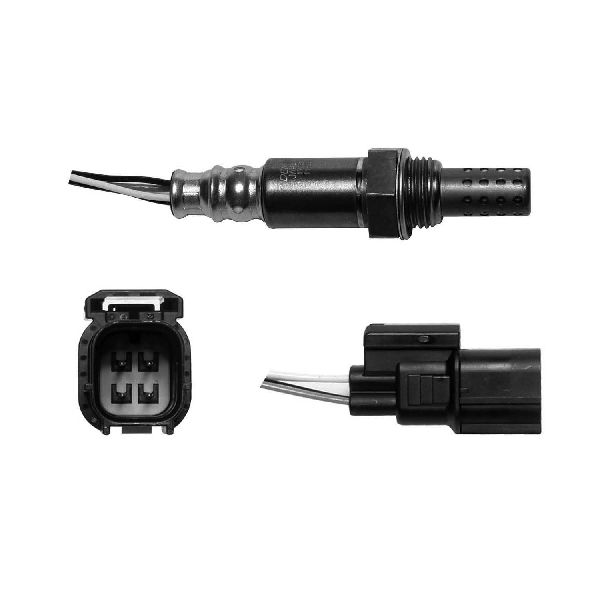
On a 2006-2011 Honda Civic Si, code P0134 almost always means the primary upstream Air/Fuel (A/F) ratio sensor has failed. Replacing it with a quality Denso (part #234-9063) or NTK (part #24328) sensor is the most common fix. Expect to pay around $130-$180 for the part. Before replacing, check fuse #2 (15A) in the under-hood fuse box and inspect the sensor's wiring for damage or grease contamination.
- P0134 on your Civic Si points directly to the upstream Air/Fuel sensor in the exhaust manifold.
- The most probable cause is a failed sensor. Replacing it with a Denso (part #234-9063) is the recommended fix.
- Before buying a new sensor, perform a quick visual inspection of the wiring and connector for any obvious damage, like melting or corrosion.
- For 2006-2008 models, specifically check the sensor connector for any signs of grease contamination.
- Do not ignore this code, as it will decrease fuel economy and can lead to more expensive catalytic converter damage over time.
What's Unique About the 2006-2011 Honda Civic Si
The 2006-2011 Civic Si (8th generation) with the K20Z3 engine is generally reliable, but the primary A/F sensor is a common failure item as the car ages. A notable issue for the 2006-2008 models is a potential for grease to drip from a component above onto the A/F sensor's electrical connector, causing a bad connection and triggering this code. Owners on forums like 8thcivic.com and Reddit strongly recommend using a high-quality Denso or NTK sensor, as the K20Z3's ECU is sensitive and may not operate correctly with cheaper or universal aftermarket parts, sometimes causing the code to return immediately.
Symptoms You May Notice
- Check Engine Light is on
- Noticeably worse fuel economy, potentially a 10-15% reduction
- Rough or unstable idle, sometimes fluctuating high and then dropping low enough to stall
- Hesitation or sluggishness during acceleration
- Failing a state emissions test
- A faint smell of gasoline from running too rich
- Replacing the downstream (post-catalyst) oxygen sensor instead of the upstream (pre-catalyst) A/F sensor.
- Replacing the sensor without first checking for obvious wiring damage, a blown fuse, or exhaust leaks.
- Using a cheap, universal, or incorrect brand of sensor (e.g., Bosch), which is known to cause issues with Honda ECUs.
- Cleaning the Mass Airflow (MAF) sensor; the Civic Si uses a MAP (Manifold Absolute Pressure) sensor, and this system is not the primary cause for a P0134 code.
Most Likely Causes
- Failed Primary Air/Fuel Ratio Sensor 🔴 High Probability → Shop Oxygen Sensor The sensor's internal heating element or sensing element wears out over time, typically after 80,000-100,000 miles. It's a common wear-and-tear item due to constant exposure to extreme heat cycles.
How to confirm: Using a scan tool, monitor the live data for 'Bank 1 Sensor 1'. On a Honda-specific scanner (HDS), the 'AF SENSOR' PID should show a fluctuating current in milliamps (mA) when running. If the reading is flat, stuck, or shows very high internal resistance (e.g., 'AF SENSOR IMPEDANCE' PID), the sensor is likely dead.
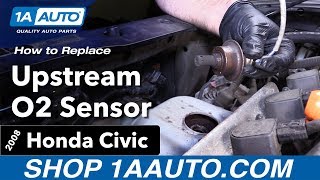
Typical fix: Replace the primary A/F ratio sensor located in the exhaust manifold with a 22mm (or 7/8") O2 sensor so 🎬 See this 60-second guide to replacing the primary sensor.cket.
Est. part cost: $130-$250 - Damaged Wiring or Connector 🟡 Medium Probability The wiring harness is close to hot exhaust components and can become brittle, frayed, or melted over time. The connector itself can also corrode or, on 2006-2008 models, become contaminated with grease from above.
How to confirm: Visually inspect the entire wiring harness from the sensor to where it connects to the main engine harness. Look for melted plastic, frayed wires, or green corrosion inside the connector pins. Unplug the connector and check for grease or other contaminants.
Typical fix: Repair the damaged section of wire with solder and heat-shrink tubing. Clean corroded connectors with electrical contact cleaner. If the connector is broken, it must be replaced.
Est. part cost: $5-$50 - Blown Fuse for Sensor Heater Circuit ⚪ Low Probability
How to confirm: Check the vehicle's under-hood fuse box. Specifically, check fuse #2, a 15A fuse, which protects the A/F sensor heater circuit. Visually inspect the fuse or test for continuity with a multimeter.
Typical fix: Replace the blown fuse with one of the same amperage. If it blows again, there is a short circuit in the heater wiring or the sensor itself that must be found.
Est. part cost: $1-$5 - Exhaust Leak Before the Sensor ⚪ Low Probability The gasket between the cylinder head and the exhaust manifold can fail over time, creating a leak. Aftermarket headers can also be prone to developing leaks at the flange.
How to confirm: Listen for a ticking or puffing noise from the engine bay, especially when the engine is cold. You can also spray soapy water on the manifold gasket area and look for bubbles forming. A leak allows outside oxygen into the exhaust stream, which can prevent the sensor from reading correctly.
Typical fix: Replace the exhaust manifold gasket.
Est. part cost: $20-$40
Rare But Worth Checking
- Contaminated Connector from Grease Drip: A well-documented issue for 2006-2008 models where grease could drip onto the A/F sensor connector, causing a poor connection. If you see grease on the connector, this is a likely cause. The official fix involved replacing the sensor and installing a protective sub-harness kit.
- Faulty Powertrain Control Module (PCM): → Shop Engine Control Module (ECM) This is extremely rare. Before condemning the PCM, all other possibilities (sensor, wiring, fuses, exhaust leaks) must be exhaustively ruled out. One owner on a forum reported replacing the sensor twice (once with OEM at a dealer) and even the PCM, only for the code to persist, indicating how difficult this code can be if it's not the sensor itself.
- Fuel Injector Leaks: While less common on the Civic Si, manufacturer service bulletins for other Honda models, such as TSB Bulletin #A25-044, note that a possible fuel injector leak can cause a rich air/fuel mixture that fouls spark plugs and causes the PCM to misread the A/F sensor, triggering P0134.
Diagnosis Steps
- Connect an OBD-II scanner and confirm P0134 is the active code. Note any other codes, especially P0135.
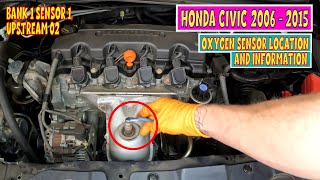
- Turn the vehicle off. Open the hood and locate the primary A/F sensor. It is screwed into the front of the exhaust manifold with a wiring harness leading up.
- Check the fuse for the A/F sensor heater circuit. This is fuse #2 (15A) in the under-hood fuse box.
- Carefully inspect the sensor's wiring harness for any signs of melting, chafing, or breaks. Follow it to the connector and check for corrosion, damage, or contamination like oil or grease.
- If the visual inspection passes, start the engine and use the live data function on your scan tool to monitor 'Bank 1 Sensor 1'.
- A healthy, warm sensor will show rapidly fluctuating current (mA) or voltage readings depending on the scanner. A flat, unchanging reading confirms a lack of activity.
- If the sensor signal is flat, the sensor itself is the most likely culprit. Use a multimeter to check the resistance of the heater circuit on the sensor side of the connector (usually between the two wires of the same color, often black). An open circuit (infinite resistance) or very high resistance (over 200 ohms) indicates a failed heater.
- Before replacing the sensor, listen for a ticking sound from the exhaust manifold that could indicate an exhaust leak, which can also cause this code.
- If replacing the sensor, use a 22mm (7/8") offset oxygen sensor socket for removal and installation. Apply anti-seize compound to the threads of the new sensor if not pre-applied.
Parts You'll Likely Need
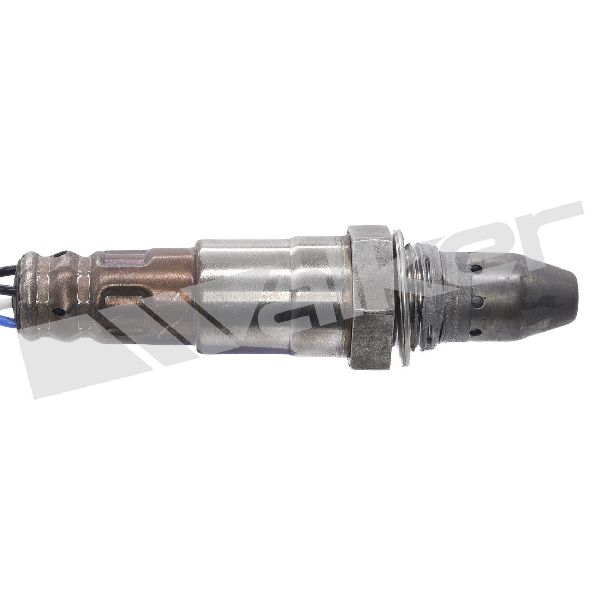
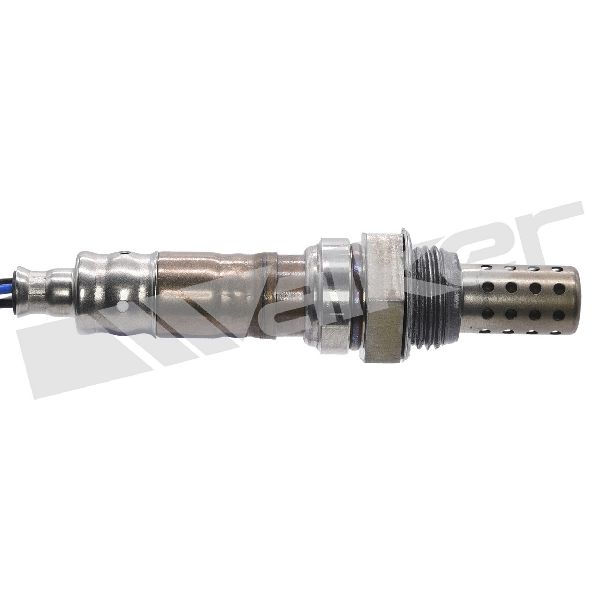
- Primary Air/Fuel Ratio Sensor
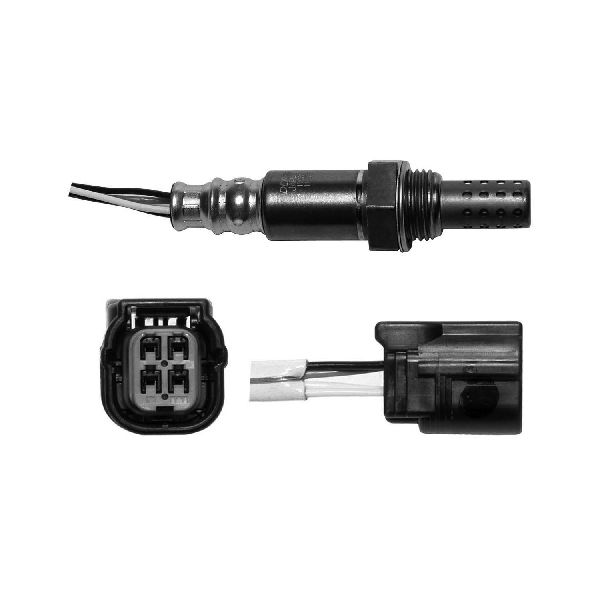
(OEM #36531-RRA-013)— This is the sensor identified by the code P0134. It is a critical component for fuel control and is the most common failure point due to age and heat cycles. The part number 36531-RRA-013 supersedes the earlier 36531-RRA-003.
Trusted brands: Denso (p/n: 234-9063), NTK (p/n: 24328)
OEM price range: $220-$250
Aftermarket price range: $130-$180
Related Codes That Often Appear With This One
- P0135 — P0135 indicates a fault in the same sensor's heater circuit. If the heater fails, the sensor won't warm up and will not show activity, often causing both codes to appear together. 🎬 Watch: Diagnosing the A/F sensor heater circuit malfunction. Manufacturer records like TSB Bulletin #DLR MSG - RFP - describe investigations into the MIL being on with P0134 stored specifically as an Air Fuel Ratio Sensor Heater System Malfunction.
Technical Service Bulletins (TSBs) & Recalls
- While the grease drip issue is a widely known problem for 2006-2008 models, a specific, publicly available TSB number for it is elusive. Repair databases confirm the problem and the fix. Other TSBs for this generation, like 09-071, address unrelated issues such as the drive belt auto-tensioner.
- Manufacturer records for other Honda platforms, such as TSB Bulletin #ENG REQ - AER141 and TSB Bulletin #DLR MSG - RFP - (dated 2014-10-24), show that American Honda has investigated P0134 as a heater system malfunction to fully understand the cause of the condition.
Platform-Specific Known Issues
- A Honda service action, documented in repair databases, was issued for 2006-2008 models regarding grease dripping onto the A/F sensor connector, leading to code P0134. The fix requires replacing the sensor and installing a new sub-harness kit to shield the connection.
Mechanic-Grade Diagnostic Values
- A/F Sensor Heater Resistance — expected: A functional OEM sensor typically has a low resistance, around 1.0 to 10 ohms when cold. A real-world test on a similar Honda showed a good sensor at ~2.5 ohms and a faulty one at ~4.0 ohms, indicating the PCM is sensitive to small variations.. Failure: The PCM will set a fault if the internal resistance is extremely high (e.g., 200-270 Ω or more), which indicates an open circuit in the heater. An out-of-spec but not completely open aftermarket sensor can also cause intermittent P0134 codes.
- A/F Sensor Live Data (Honda HDS) — expected: On the Honda Diagnostic System (HDS), monitor the 'AF SENSOR' PID. It should display a fluctuating current reading in milliamps (mA) that responds to engine load changes. The 'AF LAMBDA' PID should hover around 1.0 at stoichiometric idle.. Failure: A flat, zero, or non-responsive mA reading on the 'AF SENSOR' PID indicates no activity. A very high value on the 'AF SENSOR IMPEDANCE' PID also points to a failed sensor.
- A/F Sensor Connector Voltage (Key On, Engine Off) — expected: There should be battery voltage (approx. 12V) at the heater power wire (Black/Yellow). The reference voltage wire (White/Red on some diagrams) may show a specific voltage from the PCM, often around 2.2V to 3.3V depending on the system.. Failure: Absence of 12V power indicates a fuse or relay issue. Absence of the reference voltage could point to a wiring or PCM problem.
Scan Tool Commands That Help
- Honda HDS (or equivalent high-end scanner): Data List PIDs: 'AF SENSOR' (mA), 'AF SENSOR IMPEDANCE', 'AF LAMBDA', 'AF FB CMD' (Air Fuel Feedback Command), 'AF HEATER' (On/Off). — These specific PIDs provide a much deeper view than generic OBD-II. Monitoring the sensor current (mA) and impedance directly confirms if the sensor is electrically active and within its operational range, which is the most direct way to diagnose P0134.
- Honda HDS (or equivalent high-end scanner): Active Test: 'A/F CONTROL' — This bidirectional test allows the technician to command the fuel mixture rich (+25%) or lean (-12.5%) and observe the sensor's response on the live data screen. If the mixture is commanded rich or lean and the 'AF SENSOR' value does not change, it definitively proves the sensor is not responding, ruling out other factors.
Wiring & Ground Locations
- G101 — On the thermostat housing, located on the left rear of the K20Z3 engine.. G101 is the primary logic ground for the PCM and many sensors, including the A/F sensor. A loose or corroded connection at this single point can cause erratic sensor readings, leading to false codes like P0134 even with a perfectly good sensor.
- A/F Sensor Connector (at sensor) — The 4-pin connector attached to the primary A/F sensor harness.. This is the primary test point for the sensor and its harness. For the 4-wire Denso sensor (234-9063), the pin functions are typically: Pin 1 (Black): Heater Circuit, Pin 2 (Black): Heater Circuit, Pin 3 (White): Signal+, Pin 4 (Blue): Signal-. Testing for power, ground, and signal continuity happens here.
Real Owner Repair Stories
- Honda-tech.com forum user (2005 Honda Civic (7th Gen, similar ECU sensitivity)) — CEL with code P0134 returned every couple of months after a mechanic installed a new, inexpensive aftermarket sensor.
❌ Tried (didn't work) Replacing the original sensor with a cheap aftermarket 'Amrxuts' brand sensor., Clearing the code repeatedly., Pushing the connector harness in tighter.
✅ What actually fixed it The consensus from experienced forum members was that the cheap sensor was the problem and that replacing it with a proper OEM-quality Denso or NTK part would provide a permanent fix. The user's intermittent issue is a classic symptom of an aftermarket sensor with slightly incorrect heater resistance or response characteristics for the Honda ECU. - Honda Civic Forum user (2004 Honda Civic (D17A2 engine)) — Persistent P0134 code after exhaust work.
❌ Tried (didn't work) Replacing exhaust gasket., Installing a new universal 4-wire Denso O2 sensor., Getting a PCM/ECM software update from the Honda dealership.
✅ What actually fixed it The thread did not have a final resolution posted by the original user, but it serves as a powerful cautionary tale that even with a quality brand sensor (Denso) and a dealer software update, the code can persist, pointing towards a more complex underlying issue like a wiring fault, a bad ground (like G101), or an exhaust leak the user might have missed.
OEM Part Supersession History
36531-RRA-003→36531-RRA-013— Standard part revision and update by Honda.
Model Year Variations Within This Range
- 2006-2008: These earlier models of the 8th generation Civic Si are known for a specific issue where grease can drip from a component located above the A/F sensor, contaminating its electrical connector and causing a P0134 code.
- 2006-2011: The recommended replacement sensors, Denso 234-9063 and NTK 24328, have different wire counts. The Denso is a 4-wire sensor, while the NTK is a 5-wire sensor. Both are listed as compatible, but technicians should verify the connector on the vehicle's harness before purchasing to ensure a direct fit, as variations can exist based on emissions standards (California vs. Federal) or mid-cycle production changes.
Diagnostic Flowchart
Real Owner Stories
Aggregated from forums and TSBs cited above. Mileages and costs reflect what owners reported in those sources.
2006-2011 Honda Civic Si
Symptoms: Check Engine Light came on with code P0134.
What fixed it: Replaced the upstream A/F sensor with the community-recommended Denso 234-9063 part.
Source hint: 8thcivic.com - 'P0134 Bank 1 Sensor 1'
Modified (Turbocharged) K-Series Honda Civic
Symptoms: Triggered a P0134 error code after engine modifications.
What fixed it: Checked the wiring, reset the ECU, and ultimately replaced the A/F sensor when the code returned.
Source hint: Honda-Tech.com - 'P0134 Error Code'
2006-2008 Honda Civic Si
Symptoms: P0134 code triggered due to grease dripping from above and contaminating the A/F sensor connector.
What fixed it: Replaced the A/F sensor and installed a new sub-harness kit to shield the connection from future grease contamination.
Source hint: Honda service action documented in repair databases
Honda Civic (General)
Symptoms: Code P0134 indicating a 'no activity' status from the sensor.
What fixed it: Replaced the O2 sensor after a mechanic confirmed the ECU was not seeing the expected voltage sine wave.
Source hint: Reddit r/AskMechanics - 'Code P0134 - O2 Sensor Might Need To Be Replaced'
Related OBD-II Codes
Frequently Asked Questions
I have a 2007 Civic Si and read about grease causing P0134. Is there a specific TSB for this?
What is the recommended replacement part for the primary A/F sensor on the 8th Gen Civic Si?
Could a blown fuse cause the P0134 code on my 2006-2011 Civic Si?
Does the Canadian Acura CSX Type-S have the same P0134 issues as the Civic Si?
I installed aftermarket headers on my K20Z3 engine. Could this cause P0134?
How can I test the A/F sensor using a Honda-specific scanner (HDS)?
Helpful Videos
We Have This Part in Stock


The information in this article is provided for general reference and educational purposes only. Vehicle specifications, procedures, and part compatibility can vary by production date, trim level, and region. Always consult your vehicle's factory service manual and verify part numbers before purchasing or performing repairs. Safety-critical components such as airbags, seat belts, and braking systems should be installed by a qualified professional.
- Honda Civic Si:
- 🧭 Diagnostic Flowchart
- 🎬 Helpful Videos
- 🛍️ Shop This Part
- What's Unique About the 2006-2011 Honda Civic Si
- Symptoms You May Notice
- Most Likely Causes
- Rare But Worth Checking
- Diagnosis Steps
- Parts You'll Likely Need
- Related Codes That Often Appear With This One
- Technical Service Bulletins (TSBs) & Recalls
- Platform-Specific Known Issues
- Mechanic-Grade Diagnostic Values
- Scan Tool Commands That Help
- Wiring & Ground Locations
- Real Owner Repair Stories
- OEM Part Supersession History
- Model Year Variations Within This Range
- Real Owner Stories
- 2006-2011 Honda Civic Si
- Modified (Turbocharged) K-Series Honda Civic
- 2006-2008 Honda Civic Si
- Honda Civic (General)
- Related OBD-II Codes
- Frequently Asked Questions
- 🎟️ Get 5% Off