

P0134 on 2017-2020 Hyundai Elantra: Causes and Fixes for O2 Sensor Inactivity
On a 2017-2020 Hyundai Elantra, code P0134 almost always means the upstream oxygen sensor (Bank 1, Sensor 1) has failed. This sensor's internal heater is a common failure point. Replacing this sensor is the most common fix, with parts costing between $50 and $150. Before replacing, it is wise to check the 'SENSOR 1' fuse in the engine bay fuse box.
- P0134 on your Elantra points directly to a problem with the upstream oxygen sensor (Bank 1, Sensor 1).
- The most probable cause is a failed sensor, often its internal heater. Always check the 'SENSOR 1' fuse and wiring for melting before replacing the part.
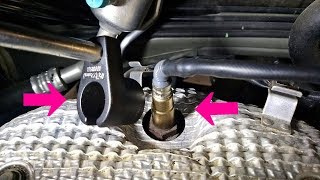
- The sensor is located on the exhaust manifold at the top-rear of the engine and is relatively easy to access for a DIY repair with the correct 22mm O2 sensor socket.
- Continuing to drive with this code will cause poor fuel mileage and can eventually damage your catalytic converter, leading to a much more expensive repair.
What's Unique About the 2017-2020 Hyundai Elantra
For the 2017-2020 Hyundai Elantra (AD generation), this code is straightforward. The 4-cylinder engines (2.0L, 1.4T, 1.6T) have only one exhaust bank, so 'Bank 1' is the only bank. Sensor 1 is conveniently located right on top of the exhaust manifold at the back of the engine bay, making it more accessible than on many other vehicles. The issue is almost always a failed sensor or its wiring, with few platform-specific quirks reported. The most common engine, the 2.0L Nu MPI, is known for simplicity but also has documented issues with oil consumption and piston rings which, while not a direct cause of P0134, can affect overall engine health.
Symptoms You May Notice
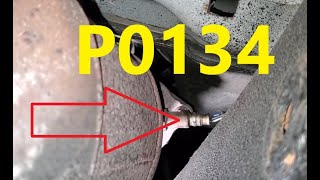
- Check Engine Light is on 🎬 See this breakdown of P0134 causes and common fixes.
- Decreased fuel economy
- Rough idling or engine hesitation
- Failing an emissions test
- Engine running too rich or too lean
- Replacing the downstream (Bank 1, Sensor 2) oxygen sensor. This code specifically points to the upstream sensor (Sensor 1), which is located before the catalytic converter.
- Assuming the sensor is bad without checking the fuse or wiring first. A simple blown fuse can mimic a failed sensor.
Most Likely Causes
- Faulty Upstream Oxygen Sensor (Bank 1, Sensor 1) 🔴 High Probability → Shop Oxygen Sensor The sensor's internal heating element is a very common failure point. This heater is required to bring the sensor to operating temperature quickly. The sensing element can also degrade over time from heat cycles and exhaust contaminants.
How to confirm: Use a scan tool to monitor live data for the B1S1 O2 sensor. The voltage should fluctuate rapidly between approximately 0.1 and 0.9 volts on a warm engine. If the voltage is stuck (e.g., flat-lining around 0.45V) or shows 0V, the sensor is bad. You can also test the heater circuit's resistance between the two same-colored wires on the sensor; it should typically be between 5-20 ohms, not an open circuit (infinite resistance).
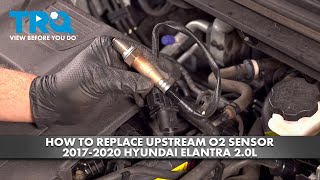
Typical fix: Replace the upstream oxygen sensor. 🎬 Watch: Step-by-step upstream O2 sensor replacement for the 2.0L engine. This requires a special 22mm (7/8") oxygen sensor socket to remove and install. Apply anti-seize compound to the threads if the new sensor doesn't have it pre-applied.
Est. part cost: $50-$150 - Damaged Wiring or Connector 🟡 Medium Probability The sensor's wiring harness is located near the hot exhaust manifold. If a retaining clip breaks or the harness is not properly secured, it can touch hot surfaces and melt, causing a short or open circuit. Owners on forums have reported finding melted or uncovered wires near the sensor.
How to confirm: Visually inspect the entire wiring harness from the sensor to the main engine harness. Look for melted sections, frayed wires, or corrosion inside the connector plug. Wiggle the harness while monitoring live data to see if the signal changes, which would indicate an intermittent connection.
Typical fix: Repair the damaged section of wire or replace the connector pigtail.
Est. part cost: $10-$30 - Blown Fuse for O2 Sensor Heater ⚪ Low Probability → Shop Oxygen Sensor
How to confirm: Check the fuse box in the engine compartment. On many Hyundais, this fuse is labeled 'SENSOR 1' and is typically a 15A fuse. Pull the fuse and visually inspect if the internal filament is broken.
Typical fix: Replace the blown fuse. If it blows again immediately, this indicates a short circuit in the heater circuit wiring or the sensor itself that must be diagnosed.
Est. part cost: $1-$5
Rare But Worth Checking
- Exhaust Leak: An exhaust leak from the manifold gasket or a crack in the manifold before the O2 sensor can introduce fresh air, causing incorrect readings. This is less likely to cause a 'no activity' code but is worth checking with a smoke test if a new sensor doesn't fix the issue.
- Faulty Powertrain Control Module (PCM): → Shop Engine Control Module (ECM) This is extremely rare. The PCM should only be considered a possibility after all other potential causes, including the sensor and its entire circuit (power, ground, and signal wires), have been thoroughly tested and ruled out.
Diagnosis Steps
- Scan for Codes: Use an OBD-II scanner to confirm P0134 is the primary code. If P0135 is also present, the heater circuit is the most likely culprit.
- Check the Fuse: Locate and inspect the fuse for the O2 sensor heater circuit in the engine bay fuse box. It is often a 15A fuse labeled 'SENSOR 1'.
- Inspect Wiring: Visually inspect the oxygen sensor's wiring harness and connector for any signs of melting, chafing, or corrosion. The harness is close to the hot exhaust manifold, so pay close attention to that area.
- Analyze Live Data: Use a scan tool to view the live data stream for 'O2S B1S1'. At idle on a warm engine, the voltage should fluctuate rapidly between ~0.1V and ~0.9V. If it is stuck at a fixed voltage (e.g., 0.45V) or shows no reading, the sensor is likely dead.
- Test the Sensor Heater Circuit: Disconnect the sensor. With a multimeter, check for resistance across the two same-colored wires on the sensor side of the connector. A reading of infinite resistance (OL) means the internal heater has failed. A good heater will typically read between 5-20 ohms.
- Check for Power at the Connector: With the key on, engine off, use a multimeter to check for 12V power at the heater circuit pin on the vehicle's harness connector. No voltage points to a problem upstream (fuse, relay, or wiring).
- Check for Exhaust Leaks: If a new sensor does not resolve the code, check for exhaust leaks between the cylinder head and the O2 sensor, as this can skew readings.
- Replace the Sensor: If the wiring, fuse, and power supply are good, but the sensor shows no activity, replace the Bank 1 Sensor 1 oxygen sensor.
Parts You'll Likely Need
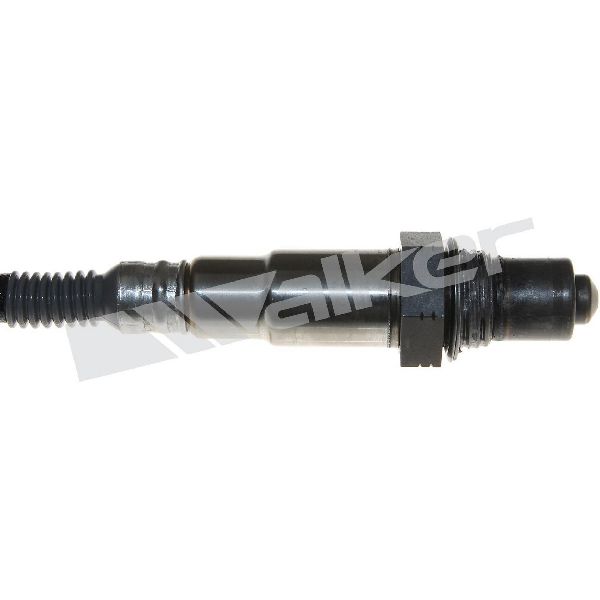
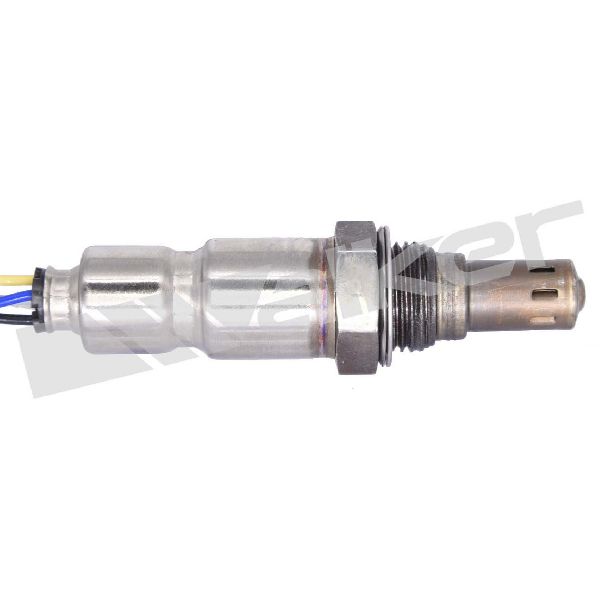
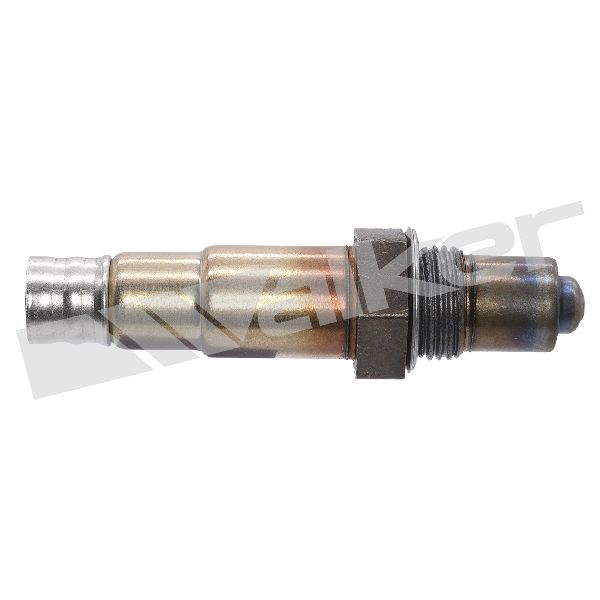
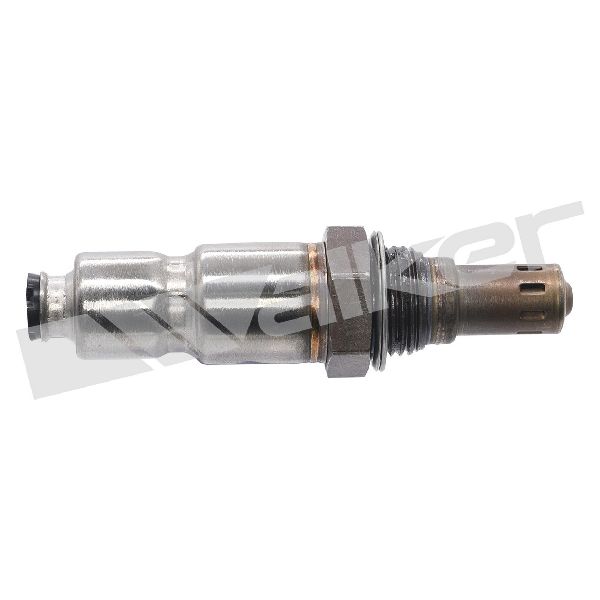
- Upstream Oxygen Sensor (Air/Fuel Ratio Sensor)
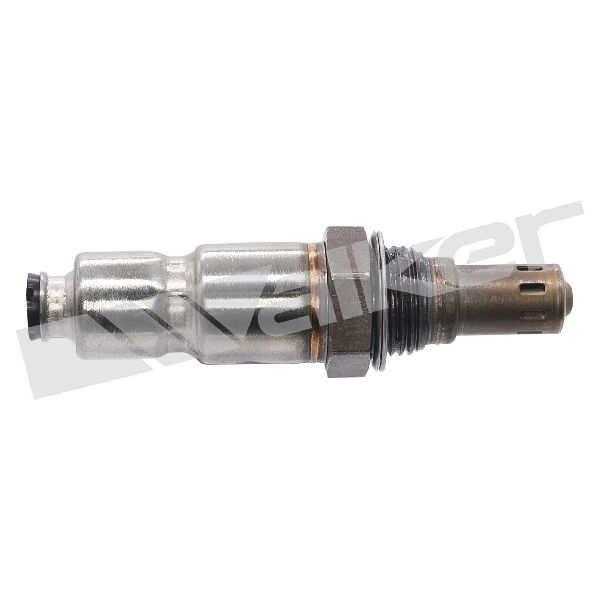
(OEM #39210-2E151 (For 2.0L Nu Engine), 39210-03AA0 (For 1.4L Turbo Engine), NGK 27077 (For 1.6L Turbo Engine))— This is the primary component that fails and causes the P0134 code due to internal heater failure or element degradation.
Trusted brands: Hyundai (OEM), NGK/NTK, Denso, Bosch, Walker
OEM price range: $120-$180
Aftermarket price range: $50-$120
Related Codes That Often Appear With This One
- P0135: O2 Sensor Heater Circuit Malfunction (Bank 1 Sensor 1) - This code often accompanies or precedes P0134, as a failure of the heater circuit will prevent the sensor from becoming active.
Mechanic-Grade Diagnostic Values
- Upstream O2 Sensor (B1S1) Heater Resistance — expected: 5 - 20 Ohms. Failure: Infinite resistance (OL - Open Loop) or zero resistance (short circuit).
- PCM Threshold for P0134 (Signal Amplitude) — expected: Signal amplitude should be > 0.20V.. Failure: If the upstream O2 sensor signal amplitude is < 0.20V for 120 seconds, the code may be set.
- PCM Threshold for P0134 (Fuel Cut-off) — expected: B1S1 voltage should be < 0.3V during fuel cut-off (deceleration).. Failure: If the B1S1 voltage is > 0.3V for 5 seconds during fuel cut-off, the code may be set.
Hidden / Shadow Codes Worth Checking
- Mode 06, Test ID $81 (example): Mode 6 data allows access to the results of onboard diagnostic monitoring tests. While a specific Test ID for the B1S1 heater on this exact model is not documented in the search, a similar monitor (Test ID $81, Comp ID $04) exists for the downstream sensor heater on related models. A professional scan tool can check these non-continuous monitor results, which can show a failure before the PCM sets a code after two drive cycles. (see via Professional scan tool with Mode 6 capabilities (e.g., Hyundai GDS).)
Scan Tool Commands That Help
- Hyundai GDS (Global Diagnostic System): Resetting Adaptive Values — After replacing the oxygen sensor, it is good practice to use the OEM scan tool or equivalent to reset the engine's adaptive fuel trim values. This forces the PCM to relearn fuel strategies with the new, accurate sensor data immediately.
Wiring & Ground Locations
- Engine Ground Strap — Typically a braided cable connecting the engine block or transmission case directly to the vehicle's chassis/frame rail to ensure a solid ground path for all engine sensors.. A poor or corroded engine ground can introduce electrical noise and voltage offsets, potentially causing the PCM to misinterpret the O2 sensor's low-voltage signal, leading to a P0134 code even with a good sensor. Inspecting the main ground connection (OEM P/N examples: 91861-F2020, 91865-F2030) for tightness and corrosion is a critical step in diagnosing persistent electrical issues.
- O2 Sensor Heater Wires — On the 4-wire sensor connector for this vehicle.. On a typical 4-wire O2 sensor, the two wires with the same color (often both white or both black) are for the internal heater circuit. These are the wires to probe when testing the heater's resistance with a multimeter.
Real Owner Repair Stories
- YouTube channel 'Automotive-Scanner-Tool' (2011-2016 Hyundai Elantra (prior generation, but identical diagnostic logic)) — Check Engine Light with codes P0134 and P1166 (Lambda Bank Control Limit).
❌ Tried (didn't work) Visual inspection for vacuum leaks (none found)., Exhaust system inspection for leaks (none found)., Smoke test of the intake manifold (no leaks found).
✅ What actually fixed it The technician used a scan tool and saw the B1S1 voltage was stuck lean. He then introduced propane into the intake to create a rich condition, but the sensor voltage did not respond. This confirmed the sensor was electronically dead, not just reading incorrectly due to a leak. Replacing the Bank 1 Sensor 1 oxygen sensor resolved both codes.
"I Checked Everything" — The Actual Cause
- In a documented repair, a technician performed a full visual and smoke test for intake/exhaust leaks, which could trick an O2 sensor. The tests came back clean, showing no leaks. The actual cause was an electronically failed O2 sensor that was completely unresponsive. This was confirmed by using propane to force a rich condition at the intake; when the sensor's voltage failed to react, it was condemned and replaced, which fixed the issue. This shows that even if there are no leaks, the sensor itself can fail internally without responding to stimulus.
Model Year Variations Within This Range
- 2017-2020: The 2019 model year introduced a significant cosmetic facelift. However, sources confirm the powertrains (2.0L NA, 1.4L Turbo, 1.6L Turbo) were carried over without changes. Therefore, the causes, diagnostic procedures, and parts for a P0134 code are identical across the entire 2017-2020 range.
Diagnostic Flowchart
Other Known Issues on This Vehicle
Issues unrelated to this code that are worth knowing about as an owner of this generation:
- Engine Failure / Excessive Oil Consumption (2.0L Nu MPI) 🔴 High — Affects 2019-2020 models with the 2.0L Nu engine. Can occur at various mileages, often starting with oil consumption around 60,000 miles. (Ref: NHTSA Recall 21V301000)
- Worn Steering Coupler 🟠 Medium — Common across many Hyundai/Kia models of this era. Owners report a clicking or notchy feeling in the steering wheel, typically after 50,000 miles.
- Peeling Paint 🟡 Low — Numerous owner complaints for the 2017 model year in particular, with paint peeling from the roof and hood without prior damage.
- Loss of Power Brake Assist 🔴 High — Specific to certain 2017 models where the brake booster could fail. (Ref: NHTSA Recall 17V213000 / Hyundai Recall 157)
- Loss of Power Steering 🔴 High — Affected some 2017 models due to a damaged Electronic Power Steering (MDPS) connector. (Ref: Hyundai Recall 161)
Used vs. New Parts: Buying Guide for This Vehicle
When a used part is the smart pick: For this repair, a used part is never recommended. Oxygen sensors are wear-and-tear items with a finite lifespan, much like spark plugs. A used sensor from a salvage yard has unknown remaining life and may have been contaminated, making it a poor value.
Aftermarket brands forum-validated for this vehicle:
- NTK (often the Original Equipment supplier for Hyundai)
- Denso
Brands owners have reported issues with on this vehicle:
- Unbranded 'universal' sensors that require splicing wires.
- Some owners on Hyundai/Kia forums report intermittent issues or premature failures with certain Bosch sensors not specifically designed for the application, suggesting sticking with OEM, NTK, or Denso is a safer choice.
Real Owner Stories
Aggregated from forums and TSBs cited above. Mileages and costs reflect what owners reported in those sources.
2017-2020 Hyundai Elantra 2.0L
Symptoms: Check Engine Light on; found melted or uncovered wires near the sensor.
What fixed it: Repairing the damaged section of wire or replacing the connector pigtail.
Source hint: Damaged Wiring or Connector section citing forum reports
2017-2020 Hyundai Elantra 2.0L
Symptoms: The O2 sensor voltage was stuck/flat-lining around 0.45V on the scan tool live data.
What fixed it: Replace the upstream oxygen sensor (Bank 1, Sensor 1) using a 22mm socket and applying anti-seize compound.
Source hint: How to Replace Upstream O2 Sensor 2017-2020 Hyundai Elantra 2.0L - YouTube
Related OBD-II Codes
Frequently Asked Questions
Is there a recall for the 2019-2020 Hyundai Elantra 2.0L engine that might be related to my O2 sensor issues?
Where is the fuse for the upstream oxygen sensor heater on my Elantra?
What specific tool do I need to replace the Bank 1 Sensor 1 O2 sensor on a 2017-2020 Elantra?
My 2017 Elantra has a P0134 code and the steering feels notchy; are these related?
Can I use a used oxygen sensor from a salvage yard to fix this code?
Why is my Elantra's O2 sensor wiring prone to damage?
Helpful Videos


We Have This Part in Stock


The information in this article is provided for general reference and educational purposes only. Vehicle specifications, procedures, and part compatibility can vary by production date, trim level, and region. Always consult your vehicle's factory service manual and verify part numbers before purchasing or performing repairs. Safety-critical components such as airbags, seat belts, and braking systems should be installed by a qualified professional.
- Hyundai Elantra:
- 🧭 Diagnostic Flowchart
- 🎬 Helpful Videos
- 🛍️ Shop This Part
- What's Unique About the 2017-2020 Hyundai Elantra
- Symptoms You May Notice
- Most Likely Causes
- Rare But Worth Checking
- Diagnosis Steps
- Parts You'll Likely Need
- Related Codes That Often Appear With This One
- Mechanic-Grade Diagnostic Values
- Hidden / Shadow Codes Worth Checking
- Scan Tool Commands That Help
- Wiring & Ground Locations
- Real Owner Repair Stories
- "I Checked Everything" — The Actual Cause
- Model Year Variations Within This Range
- Other Known Issues on This Vehicle
- Used vs. New Parts: Buying Guide for This Vehicle
- Real Owner Stories
- 2017-2020 Hyundai Elantra 2.0L
- 2017-2020 Hyundai Elantra 2.0L
- Related OBD-II Codes
- Frequently Asked Questions
- 🎟️ Get 5% Off