

P0134 on 2015-2019 Hyundai Sonata 2.4L: Upstream O2 Sensor Inactivity Causes and Fixes
For a 2015-2019 Sonata with the 2.4L engine, code P0134 almost always means the upstream oxygen sensor (Bank 1, Sensor 1) has failed. The fix is typically a new sensor, costing $60-$120 for an aftermarket part or $150+ for OEM. It's a DIY-friendly repair for most.
- P0134 on your Sonata almost certainly means the upstream O2 sensor (Bank 1, Sensor 1) needs replacement.
- Before buying a new sensor, perform a quick visual check of the wiring for melting and check the sensor's fuse.
- Use a quality aftermarket brand like Denso or NTK for a reliable repair without the full cost of an OEM part. The OEM part number is 39210-2G240.
- This is a manageable DIY repair with a special oxygen sensor socket, saving on labor costs.
- Ignoring this code will lead to poor gas mileage and can eventually cause expensive damage to your catalytic converter.
- Be aware that this engine has known issues with oil consumption and bearing failure; check for recalls and warranty extensions.
What's Unique About the 2015-2019 Hyundai Sonata
On the Sonata's 2.4L GDi engine, this is a very common and straightforward code. The Theta II engine platform is widely used across Hyundai and Kia models, and the failure pattern for the upstream O2 sensor is well-documented. There are no unusual or tricky platform-specific causes; the issue is almost always the sensor itself or its immediate wiring due to age and heat cycles. The repair is considered a standard maintenance-level task.
Symptoms You May Notice
- Check Engine Light is on
- Decreased fuel economy
- Rough or unstable idle
- Engine hesitation during acceleration
- Failing an emissions test
- Rotten egg smell from the exhaust
- Replacing the downstream (Bank 1, Sensor 2) oxygen sensor. This code specifically points to the upstream sensor (Sensor 1).
Most Likely Causes
- Failed Upstream Oxygen Sensor (Bank 1, Sensor 1) 🔴 High Probability → Shop Oxygen Sensor The sensor's internal heater element or sensing element is a common wear item that fails due to constant, extreme heat cycles. This is the most frequent cause of P0134.
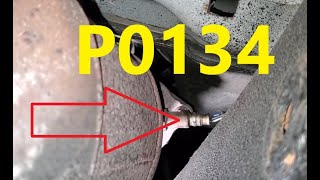
How to confirm: Use a scan tool to view live data for 'O2 Sensor B1S1'. If the voltage is flat (e.g., stuck at 0.45V) and not fluctuating rapidly between 0.1V and 0.9V 🎬 See how to diagnose P0134 causes and confirm a fix. when the engine is warm, the sensor is bad.
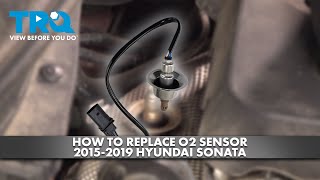
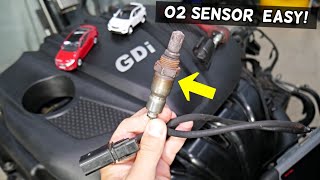
Typical fix: Replace the upstream oxygen sensor. This sensor is located on the exhaust manifold, accessible from the top of the engine bay. 🎬 Watch: Step-by-step upstream O2 sensor replacement for the 2.4L engine.
Est. part cost: $60-$220 - Damaged Wiring or Connector 🟡 Medium Probability The sensor's wiring is close to the hot exhaust manifold. It's common for the plastic retaining clips to break, allowing the harness to touch the exhaust, melt, and cause a short or open circuit. Oil from a leaking valve cover can also contaminate the connector.
How to confirm: Visually inspect the wiring harness from the sensor to the main engine harness. Look for melted plastic, frayed wires, or corrosion in the connector pins. Wiggle the harness while watching live data to see if the signal changes.
Typical fix: Repair or replace the damaged section of the wiring harness or clean the connector. Secure the harness away from the exhaust manifold.
Est. part cost: $10-$50 - Blown Fuse for Sensor Heater Circuit ⚪ Low Probability A short in the sensor's heater element or its wiring can cause the associated fuse to blow, cutting power to the sensor's heater and preventing it from reaching operating temperature to send a signal.
How to confirm: Locate the fuse for the oxygen sensor (often labeled 'SENSOR 1' in the engine bay fuse box) and check for continuity. A related code, P0135 (Heater Circuit Malfunction), may also be present.
Typical fix: Replace the blown fuse after diagnosing the underlying short circuit that caused it to blow.
Est. part cost: $1-$5
Rare But Worth Checking
- Exhaust Leak: An exhaust leak at the manifold gasket or flex pipe before the sensor can allow outside air in. This usually causes erratic or biased readings (like a P0133 slow response code) but can occasionally lead to a no-activity code if the leak is severe.
- Faulty Powertrain Control Module (PCM): → Shop Engine Control Module (ECM) This is extremely rare. The PCM should only be considered as the cause after all other possibilities (sensor, wiring, fuses) have been thoroughly ruled out by a professional.
Diagnosis Steps
- Connect an OBD-II scanner and confirm that P0134 is the active code. Note any other codes present, especially P0135.
- Visually inspect the upstream oxygen sensor's wiring harness and connector. Look for any signs of melting, chafing, or corrosion. Ensure the harness is properly secured and not touching the exhaust manifold.
- Check the fuse for the oxygen sensor heater circuit in the engine compartment fuse box (often labeled 'SENSOR 1').
- Using the OBD-II scanner's live data function, monitor the voltage for 'O2S B1S1' with the engine running and at operating temperature.
- A healthy sensor will show voltage rapidly switching between approximately 0.1 and 0.9 volts. If the voltage is stuck, flat (often near 0.45V), or shows 0V, it confirms a lack of activity.
- If the wiring and fuse are confirmed to be good, and the live data shows no activity, the oxygen sensor itself has failed and needs to be replaced.
- After replacement, clear the code and take a test drive to ensure the Check Engine Light does not return.
Parts You'll Likely Need
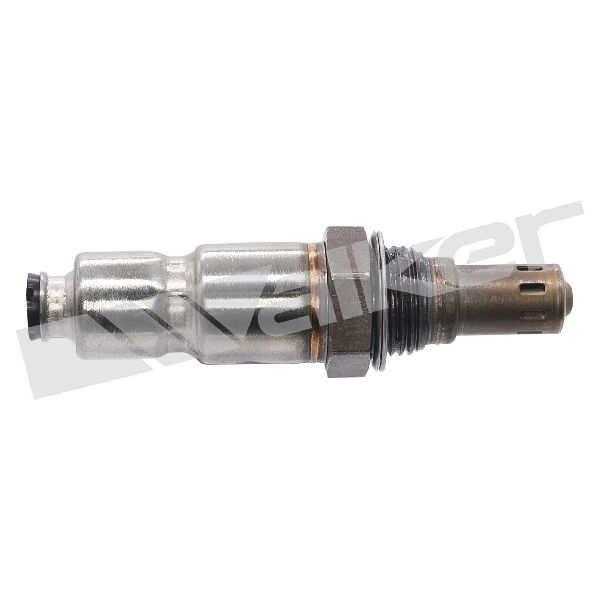
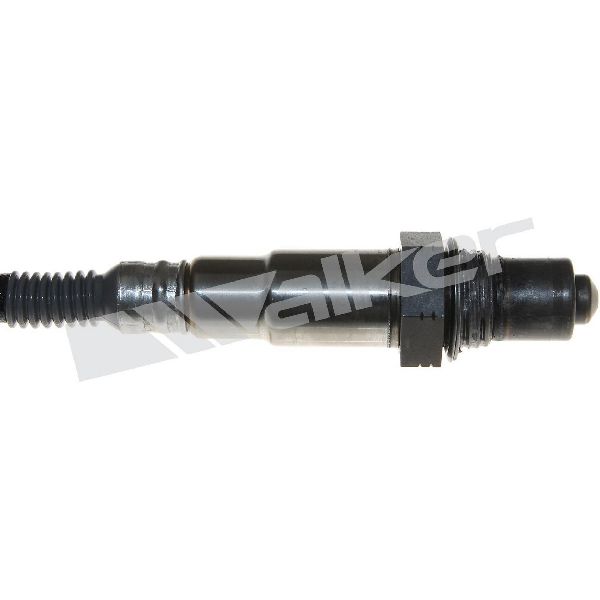
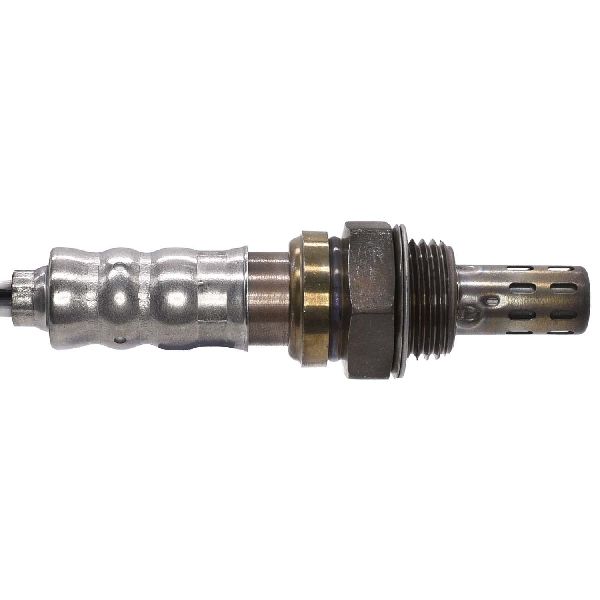
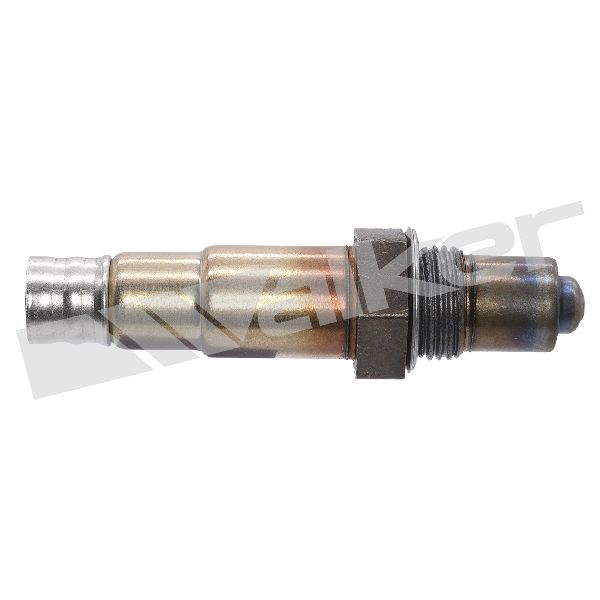
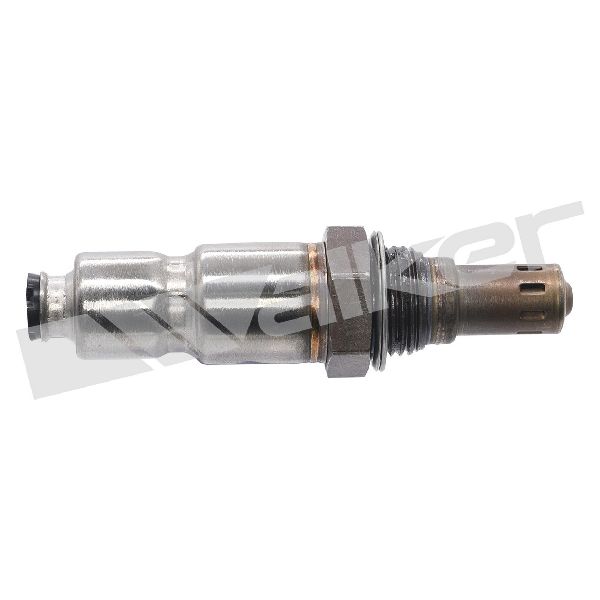
- Upstream Oxygen Sensor (Air/Fuel Ratio Sensor)
(OEM #39210-2G240)— This is the primary component that fails, causing the P0134 code. It is a wear-and-tear item.
Trusted brands: Denso, NTK, Bosch
OEM price range: $150-$220
Aftermarket price range: $60-$165
Related Codes That Often Appear With This One
- P0135 — P0135 indicates a fault in the sensor's heater circuit. Since a failed heater can prevent the sensor from activating and sending a signal, these codes often appear together.
- P0130, P0131, P0132, P0133 — These are all related to the performance and circuit of the same Bank 1, Sensor 1 oxygen sensor. They can appear alongside P0134 as the sensor degrades in different ways before failing completely. 🎬 Watch: Understanding related O2 sensor codes on your Hyundai or Kia.
Technical Service Bulletins (TSBs) & Recalls
- TSB 21-EM-003H: While not directly for P0134, this TSB details the procedure for diagnosing excessive oil consumption, a major issue with the Theta II engine that can lead to long-term engine and exhaust component damage.
Mechanic-Grade Diagnostic Values
- Upstream O2 Sensor (B1S1) Heater Circuit Resistance — expected: 2.5 - 4.0 Ω at 20°C (68°F). Failure: Infinite resistance (OL - Open Line) indicates a burned-out heater element. A reading significantly outside the expected range also points to a faulty sensor.
- PCM Diagnostic Logic - Stuck Voltage — expected: Voltage should fluctuate rapidly between ~0.1V and ~0.9V when in closed loop.. Failure: If the PCM sees the sensor voltage stick between 0.415V and 0.515V for more than 76.5 seconds, it will set the P0134 code.
- PCM Diagnostic Logic - Internal Resistance Check — expected: The sensor's internal resistance should be below a certain threshold.. Failure: If the PCM detects an internal resistance greater than 20 kΩ, it can set the P0134 code.
- Voltage at Harness Connector (Key On, Engine Off) — expected: Approximately 12V (battery voltage) at the heater power supply pin and a bias voltage of ~0.45V on the signal wire pin.. Failure: 0V on the heater power pin indicates a blown fuse or an open in the power wire. An incorrect bias voltage on the signal wire could point to a wiring issue or a problem with the PCM.
Scan Tool Commands That Help
- Hyundai GDS (Global Diagnostic System) or equivalent advanced scanner: A/F Control Active Test — This function allows a technician to manually command the fuel mixture rich or lean (+25% or -12.5%). While watching the B1S1 live data, if the voltage does not respond to these commands, it confirms the sensor is inactive, differentiating it from a fuel delivery problem.
Wiring & Ground Locations
- Upstream O2 Sensor Connector (B1S1) — On the top, rear of the engine, plugged directly into the sensor which is screwed into the exhaust manifold.. This is the primary point for testing. On a typical 4-wire sensor for this application, two same-colored wires (often white) are for the heater circuit, and the other two are for the sensor signal and ground. Testing for power, ground, and signal continuity happens here.
- Engine Ground Strap — Typically a braided wire connecting the engine block or cylinder head directly to the vehicle's chassis/frame.. A poor engine ground can cause a host of electrical issues, including erratic sensor readings. While not a common cause for a 'no activity' code, it's a fundamental check for any electrical fault. A bad ground can prevent the sensor from having a stable reference, potentially leading to a flatline signal.
- Fuse Box - Engine Compartment — Located in the engine bay, typically on the driver's side.. This box contains the fuse for the O2 sensor heater circuit, often labeled 'SENSOR 1'. A blown fuse here will cut power to the heater, preventing the sensor from warming up and becoming active, directly causing a P0134 code.
OEM Part Supersession History
39210-2G100→39210-2G240— Standard part evolution for improved performance, reliability, or manufacturing changes.
Model Year Variations Within This Range
- 2015-2019: The Hyundai Sonata LF received a facelift for the 2018 model year, which included cosmetic changes and some suspension tuning. However, the standard 2.4L GDI engine and its associated emissions components, including the upstream oxygen sensor (PN 39210-2G240), remained the same throughout the 2015-2019 period. Therefore, there are no significant variations related to the diagnosis or repair of code P0134 within this generation.
Diagnostic Flowchart
Other Known Issues on This Vehicle
Issues unrelated to this code that are worth knowing about as an owner of this generation:
- Connecting Rod Bearing Failure 🔴 High — Widespread across 2011-2019 models. Can occur at various mileages, often preceded by a knocking noise. A class-action lawsuit led to a lifetime warranty extension for this specific failure on many VINs. (Ref: NHTSA Campaign 17V226000 (Recall 162), and related KSDS (Knock Sensor Detection System) software update campaigns (e.g., Campaign 953).)
- Excessive Oil Consumption 🟠 Medium — Very common, often starting around 60,000-80,000 miles. Many owners report consuming a quart of oil every 1,000-2,000 miles. This is often caused by carbon-stuck piston rings. (Ref: TSB 21-EM-003H provides guidelines for oil consumption testing and repair procedures.)
- Carbon Buildup on Intake Valves 🟠 Medium — Inherent to GDI (Gasoline Direct Injection) engines as fuel is injected directly into the cylinder, not washing over the intake valves. Typically becomes problematic after 60,000 miles, causing misfires, rough idle, and reduced performance.
- High-Pressure Fuel Pump (HPFP) Failure 🟡 Low — The GDI high-pressure fuel pump can fail, leading to stalling or a no-start condition. It is a known noisy component even when operating normally.
Used vs. New Parts: Buying Guide for This Vehicle
When a used part is the smart pick: For this specific repair, a used part is NOT recommended. The only part that typically fails is the oxygen sensor itself, which is a wear-and-tear item with a finite lifespan. A used sensor has an unknown amount of life left and is a poor value proposition.
What to inspect on the donor part:
- Not applicable, as a used oxygen sensor should not be purchased.
OEM-only on this vehicle (don't cheap out):
- While not strictly 'OEM-only', using a reputable OE supplier is critical for oxygen sensors. Cheap, unbranded sensors are known to fail quickly or provide inaccurate readings, causing the code to return.
Aftermarket brands forum-validated for this vehicle:
- Denso
- NTK (part of NGK)
- Bosch
Brands owners have reported issues with on this vehicle:
- Unbranded, 'white-box' sensors from online marketplaces should be avoided as their quality and accuracy are often poor.
Real Owner Stories
Aggregated from forums and TSBs cited above. Mileages and costs reflect what owners reported in those sources.
2017 Hyundai Sonata 2.4L
Symptoms: Owner discussed the importance of maintenance and potential warranty claims regarding the engine's known issues and oil consumption.
What fixed it: The source highlights the importance of dealership response and maintenance for the larger context of engine problems, though specific P0134 resolution often involves sensor replacement as noted by World Mechanics.
Source hint: reddit.com/r/Hyundai: A thread discussing oil consumption on a 2017 Sonata 2.4L
2015 Hyundai Sonata 2.4L — ~70000 miles
Symptoms: Owner detailed their experience with oil burning and the dealership's response regarding the engine platform's issues.
What fixed it: The owner focused on the oil consumption testing and repair procedures outlined in TSB 21-EM-003H.
Source hint: bobistheoilguy.com: A forum thread titled 'Hyundai 2.4l excessive oil consumption'
2015-2019 Hyundai Sonata 2.4L GDi
Symptoms: O2 sensor codes (P0130-P0135) appearing on the 2.4L GDI engine.
What fixed it: Replacing the bad sensor or repairing melted wiring caused by proximity to the exhaust manifold.
Source hint: youtube.com: The channel 'World Mechanics' has multiple videos covering O2 sensor codes (P0130-P0135) on the 2.4L GDI engine
Related OBD-II Codes
Frequently Asked Questions
Does TSB 21-EM-003H for the Theta II engine apply to my P0134 code?
Can I use a used oxygen sensor from a salvage yard to fix this code?
Is there a fuse I should check before replacing the sensor on my Sonata?
Where is the sensor located on the 2.4L GDi engine?
Could my Sonata's oil consumption issue be causing the P0134 code?
What aftermarket brands are recommended for the 2015-2019 Sonata O2 sensor?
Helpful Videos

We Have This Part in Stock


The information in this article is provided for general reference and educational purposes only. Vehicle specifications, procedures, and part compatibility can vary by production date, trim level, and region. Always consult your vehicle's factory service manual and verify part numbers before purchasing or performing repairs. Safety-critical components such as airbags, seat belts, and braking systems should be installed by a qualified professional.
- Hyundai Sonata:
- 🧭 Diagnostic Flowchart
- 🎬 Helpful Videos
- 🛍️ Shop This Part
- What's Unique About the 2015-2019 Hyundai Sonata
- Symptoms You May Notice
- Most Likely Causes
- Rare But Worth Checking
- Diagnosis Steps
- Parts You'll Likely Need
- Related Codes That Often Appear With This One
- Technical Service Bulletins (TSBs) & Recalls
- Mechanic-Grade Diagnostic Values
- Scan Tool Commands That Help
- Wiring & Ground Locations
- OEM Part Supersession History
- Model Year Variations Within This Range
- Other Known Issues on This Vehicle
- Used vs. New Parts: Buying Guide for This Vehicle
- Real Owner Stories
- 2017 Hyundai Sonata 2.4L
- 2015 Hyundai Sonata 2.4L — ~70000 miles
- 2015-2019 Hyundai Sonata 2.4L GDi
- Related OBD-II Codes
- Frequently Asked Questions
- 🎟️ Get 5% Off