

P0134 on 2012-2017 Hyundai Veloster: No Activity from O2 Sensor Causes and Fixes
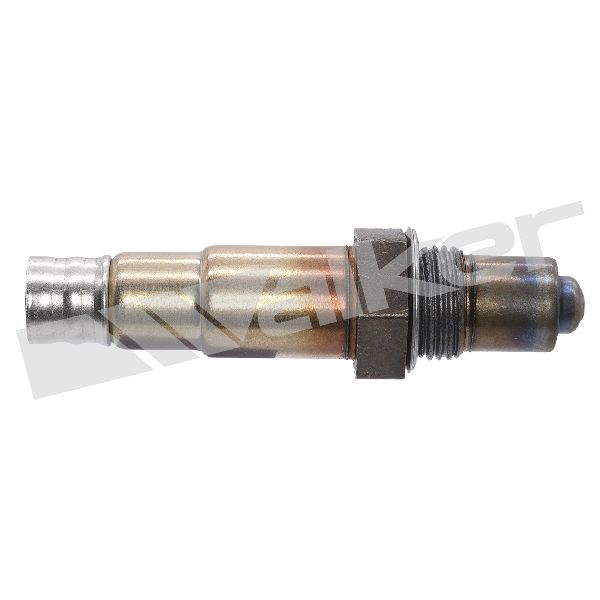
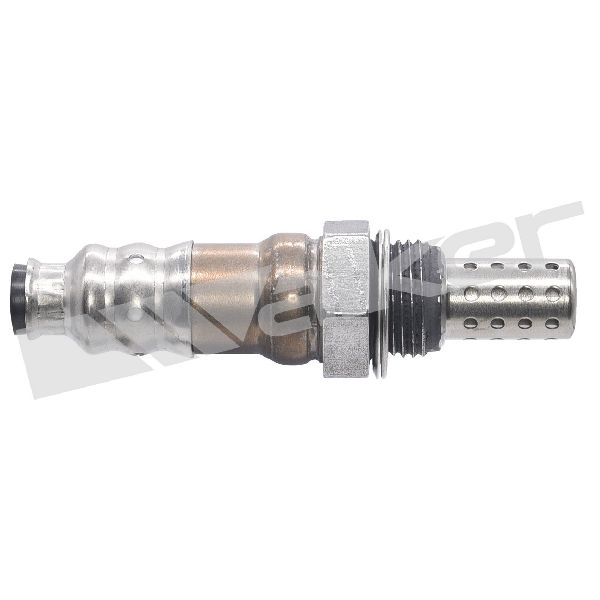
This code almost always means the upstream oxygen sensor (Bank 1, Sensor 1) has failed. Replacing the sensor is the most common fix. For non-turbo models, the part number is typically 39210-2B100, while turbo models use 39210-2B270. Expect to pay $70-$150 for an aftermarket part or $150-$250 for an OEM sensor. It's a DIY-friendly job for many owners, but requires a special O2 sensor socket.
- P0134 on a Veloster points directly to the upstream oxygen sensor (Bank 1, Sensor 1) being inactive.
- The most probable cause is a failed sensor, which is a standard wear item. Replacement is the usual fix.
- Before buying a new sensor, always perform a quick visual inspection of the wiring and connector for obvious damage, as this can save you money.
- If you have a 2013-2015 Turbo model, be aware of TSB 16-FL-002, which may entitle you to a sensor replacement and software update from the dealer.
- Ensure you purchase the correct part number for your model (Turbo vs. Non-Turbo).
What's Unique About the 2012-2017 Hyundai Veloster
On the 1.6L Gamma engine, whether naturally aspirated (GDi) or turbo (T-GDi), the upstream oxygen sensor is a critical input for fuel control. While the cause is typically a failed sensor, Hyundai issued a Technical Service Bulletin (TSB 16-FL-002) for 2013-2015 turbo models that involved replacing a faulty oxygen sensor and updating the engine's software, indicating a known issue on that specific variant. Otherwise, the reasons for failure are standard for modern direct-injection engines, though wiring is susceptible to heat damage due to its proximity to the exhaust.
Symptoms You May Notice
- Check Engine Light is on
- Reduced fuel economy
- Rough or unstable idle
- Engine hesitation during acceleration
- Failing a vehicle emissions test
- Black smoke from the exhaust in some cases.
- Replacing the downstream (Bank 1, Sensor 2) oxygen sensor. This code specifically points to Sensor 1, the upstream sensor before the catalytic converter.
- Cleaning the Mass Airflow (MAF) sensor. While a dirty MAF sensor can cause performance issues, it will not cause a 'no activity' code from the oxygen sensor circuit.
Most Likely Causes
- Failed Upstream Oxygen Sensor (Bank 1, Sensor 1) 🔴 High Probability → Shop Oxygen Sensor Oxygen sensors are wear-and-tear items with a finite lifespan of 50,000 to 100,000 miles. The internal heating element can fail, or the sensing element can become contaminated or simply wear out over time, which are the most common reasons for this code.
How to confirm: Use an OBD-II scanner with live data to monitor the 'O2S11' or 'A/F Sensor 1' voltage. If the voltage is stuck at a constant value (e.g., 0.45V) and does not fluctuate rapidly between ~0.1V and ~0.9V after the engine is fully warmed up, the sensor is inactive and has failed. A healthy sensor's voltage should swing up and down continuously. 🎬 Watch: How to diagnose and fix the P0134 code.
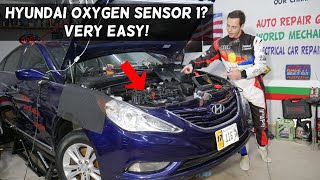
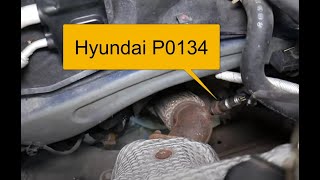
Typical fix: Replace the upstream oxygen sensor. This sensor is located on the exhaust manifold, accessible from the top of the engine bay. 🎬 Watch: Locate the upstream oxygen sensor on your Hyundai engine. A special tool, an O2 sensor socket, is required to remove and install it without damaging the wire.
Est. part cost: $70-$250 - Damaged Wiring or Corroded Connector 🟡 Medium Probability The sensor's wiring harness is close to the hot exhaust manifold and the front of the engine, making it susceptible to heat damage, melting, or physical abrasion over time. This can cause a short or open circuit.
How to confirm: Visually inspect the entire wiring harness from the oxygen sensor to the main engine harness. Look for any melted sections, frayed wires, or breaks. Unplug the connector and check for green or white corrosion on the pins. A multimeter can be used to check for continuity from the sensor connector back to the PCM.
Typical fix: Repair the damaged section of wire with a new connector pigtail or by soldering and heat-shrinking the break. If corrosion is present, clean the connector pins with electrical contact cleaner or replace the connector pigtail.
Est. part cost: $5-$50 - Blown Fuse for O2 Sensor Heater ⚪ Low Probability → Shop Oxygen Sensor
How to confirm: Check the fuse box in the engine bay for a fuse labeled 'SENSOR 1' (15A) or similar. Consult your owner's manual or the fuse box lid for the exact location. Pull the fuse to check for a break in the filament. A blown fuse indicates a short circuit in the heater circuit, either in the wiring or the sensor itself.
Typical fix: Replace the blown fuse with a new one of the same amperage. If the new fuse blows immediately, it confirms a short circuit in the heater circuit wiring or the sensor itself that must be diagnosed and repaired.
Est. part cost: $1-$5
Rare But Worth Checking
- Exhaust Leak: An exhaust leak from a cracked manifold or a bad gasket before the O2 sensor can introduce fresh air, which can sometimes cause the sensor to give an unusual, flat reading that the PCM interprets as inactivity. You will typically hear a ticking or hissing noise from the engine bay, especially when cold.
- Faulty Powertrain Control Module (PCM): → Shop Engine Control Module (ECM) This is extremely rare. Before condemning the PCM, all other possibilities, including the sensor, wiring, and fuses, must be exhaustively ruled out by a professional. This should be the absolute last consideration.
Diagnosis Steps
- Connect an OBD-II scanner to confirm P0134 is the only code present. If other codes exist, address them first as they may be related.
- Use the scanner's live data feature to observe the voltage for 'Bank 1 Sensor 1'. Start the engine and let it warm up completely (closed loop operation).
- A healthy sensor will show voltage fluctuating rapidly between approximately 0.1 and 0.9 volts. If the voltage is stuck flat around 0.45V, or at 0V or 1.2V, the sensor or its circuit is faulty.
- Turn off the engine and allow the exhaust to cool. Visually inspect the upstream O2 sensor's wiring harness for any signs of melting, chafing, or corrosion. Check that the connector is securely plugged in.
- Check the fuse for the O2 sensor heater circuit in the engine bay fuse panel, often labeled 'SENSOR 1'.
- If the wiring and fuse are good, the most likely cause is the sensor itself. Test the sensor's internal heater circuit with a multimeter set to resistance; an open circuit (infinite resistance) means the heater has failed and the sensor needs replacement.
- If the sensor, wiring, and fuse are all confirmed to be good, the issue may be a rare fault within the PCM, which requires professional diagnosis.
Parts You'll Likely Need
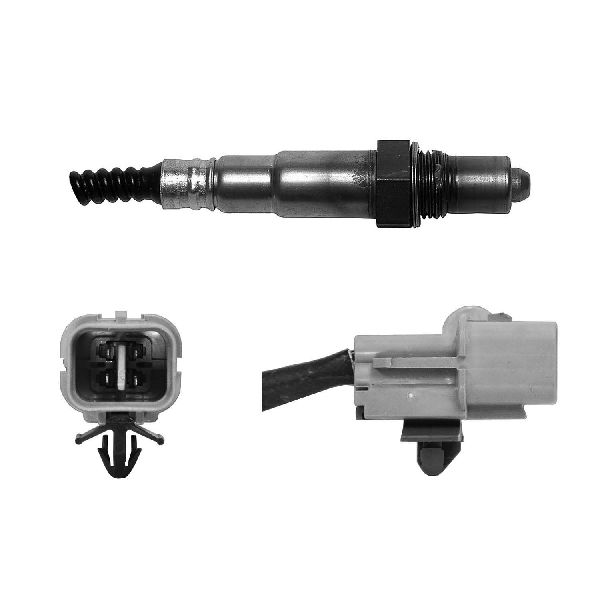
- Upstream Oxygen Sensor (Air/Fuel Ratio Sensor)
(OEM #39210-2B270 (Turbo) / 39210-2B100 (Non-Turbo))— This is the sensor identified by the code P0134. It is a common wear item and the most frequent cause of failure. Part numbers differ for Turbo and Non-Turbo models. The Turbo model uses 39210-2B270, while the Non-Turbo (NA) model typically uses 39210-2B100. Always verify with VIN.
Trusted brands: Denso, NGK, Bosch, Walker Products
OEM price range: $150-$250
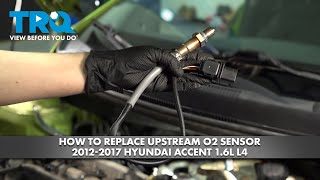
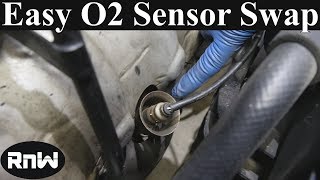
Aftermarket price range: $70-$150 - Oxygen Sensor Socket — A special slotted socket (usually 22mm or 7/8") is required to remove and install the oxygen sensor without cutting the wire. It is an essential tool for this DIY job. 🎬 See this step-by-step guide for replacing the 1.6L upstream sensor.
Trusted brands: Lisle, OEMTOOLS, GearWrench
OEM price range: $10-$25
Aftermarket price range: $10-$25
Technical Service Bulletins (TSBs) & Recalls
- TSB 16-FL-002: Addresses a faulty oxygen sensor and requires a software update for some 2013-2015 turbo models.
Platform-Specific Known Issues
- For 2013-2015 Veloster models with the 1.6L Turbo engine, Hyundai issued TSB 16-FL-002 for an issue where the Check Engine Light would illuminate due to a faulty oxygen sensor. The fix involved replacing the sensor and performing a software update on the engine control module.
Mechanic-Grade Diagnostic Values
- O2 Sensor Heater Circuit Resistance — expected: Approximately 9.0 Ω at 20°C (68°F). Failure: An open circuit (infinite resistance) or a value significantly outside the specification indicates a failed heater element within the sensor.
- O2 Sensor Heater Power Supply (KOEO) — expected: Battery Voltage (approx. 12V). Failure: 0V at the power supply pin of the sensor connector (with key on, engine off) points to a blown fuse (e.g., 'SENSOR 1' 15A fuse) or an open in the power wire from the fuse box.
Scan Tool Commands That Help
- Hyundai GDS (Global Diagnostic System): DTC Analysis & Current Data — The GDS is the OEM dealer tool. Use the 'Current Data' function to monitor the 'O2 SNSR VOL.-B1/S1' parameter in real-time. The 'DTC Analysis' function can provide more detailed trouble-shooting steps and component information directly from Hyundai's service data.
- Hyundai GDS (Global Diagnostic System): Verification of Vehicle Repair — After replacing the sensor or repairing wiring, use this function. It involves clearing the DTC, driving the vehicle under the conditions noted in the freeze frame data, and then checking the 'DTC Status' parameter to confirm the fault is 'History(Not Present)', which verifies the repair was successful.
Wiring & Ground Locations
- Engine/Transmission Ground Strap — A primary ground strap connects the transmission case or engine block to the vehicle's chassis, typically on the frame rail under the battery or airbox area.. While not specific to the O2 sensor circuit, a corroded or loose main ground strap can cause numerous, difficult-to-diagnose electrical issues, including erratic sensor readings or improper module function. A user reported charging issues from a loose ground strap, highlighting its importance for overall system voltage stability. Always ensure main grounds are clean and tight when troubleshooting any electrical code.
- O2 Sensor Heater Fuse ('SENSOR 1') — Located in the engine room fuse & relay box.. This 15A fuse provides power to the O2 sensor's internal heater. If this fuse is blown, the sensor cannot heat up to its operational temperature, which will prevent it from producing a signal and directly cause a P0134 'No Activity' code.
OEM Part Supersession History
39210-2B210→39210-2B100— Part number consolidation and potential minor revision for non-turbo models.
Heads up: 39210-2B100 is the widely accepted replacement for earlier non-turbo models that may have used 39210-2B210. Always verify by VIN, but 2B100 is the correct service part for the non-turbo Veloster.
Model Year Variations Within This Range
- 2013-2015 (Turbo Models): These years were subject to TSB 16-FL-002, which required not only replacing the upstream O2 sensor (PN 39210-2B270) but also performing an ECM software update to correct the logic that could lead to the P0134 code.
- 2014+: Some forum discussions suggest that post-2013 turbo models received internal engine revisions for better durability, though this does not directly affect the P0134 code, it's a notable change within the generation.
Diagnostic Flowchart
Other Known Issues on This Vehicle
Issues unrelated to this code that are worth knowing about as an owner of this generation:
- Engine Connecting Rod Bearing Failure 🔴 High — Widespread, affecting 2015-2016 models most notably, but a concern for the entire generation. Often occurs between 30,000 and 80,000 miles. (Ref: Subject of Hyundai Recall 198 (NHTSA 20V746) and a subsequent class-action lawsuit settlement which extended warranties and provided a KSDS (Knock Sensor Detection System) software update.)
- Dual-Clutch Transmission (DCT) Issues 🟠 Medium — Common complaint on automatic models. Issues include hesitation from a stop, shuddering, grinding, and premature failure. Problems are often worse in stop-and-go traffic or hot weather. (Ref: Multiple TCM (Transmission Control Module) software updates were released, but mechanical issues often persist. No single recall covers all complaints.)
- Carbon Buildup on Intake Valves 🟡 Low — An inherent issue for all GDi (Gasoline Direct Injection) engines, including the Gamma 1.6L. Becomes noticeable after 60,000-100,000 miles, causing rough idle, misfires, and reduced power. (Ref: No TSB or recall exists as it's considered a maintenance item. The fix is a manual cleaning (walnut blasting) of the intake valves.)
- Engine Knocking and Excessive Oil Consumption 🟠 Medium — Frequently reported by owners, often as a precursor to more serious engine failure. Some owners report consuming over a quart of oil between changes. (Ref: Related to the engine bearing failure issue covered by recalls and the class-action settlement.)
Used vs. New Parts: Buying Guide for This Vehicle
When a used part is the smart pick: A used part is generally NOT recommended for the oxygen sensor itself, as it is a wear-and-tear item with a finite lifespan. However, sourcing a used connector pigtail from a junkyard harness is a smart choice if your original connector is melted or corroded.
Donor-vehicle mileage cap: roughly under 100000 miles for the part to have meaningful remaining life.
What to inspect on the donor part:
- For a connector pigtail: Ensure the plastic is not brittle or cracked.
- Check for the absence of green or white corrosion on the pins.
- Verify the wiring insulation is not melted, frayed, or hardened from heat exposure.
- Make sure the locking tab on the connector is intact.
OEM-only on this vehicle (don't cheap out):
- No parts for this specific repair are strictly 'OEM-only', but using a reputable aftermarket brand is critical.
Aftermarket brands forum-validated for this vehicle:
- Denso
- NGK / NTK
Brands owners have reported issues with on this vehicle:
- Unnamed, no-brand 'white box' sensors from online marketplaces often have high failure rates or incorrect calibration, leading to the code returning.
Real Owner Stories
Aggregated from forums and TSBs cited above. Mileages and costs reflect what owners reported in those sources.
2013 Hyundai Veloster Turbo 1.6L
Symptoms: Check Engine Light illuminated with code P0134.
What fixed it: Replacing the upstream O2 sensor. The owner noted the importance of getting the correct part number specific to the Turbo model.
Source hint: hyundai-forums.com
2013-2015 Hyundai Veloster 1.6L T-GDi
Symptoms: Check Engine Light illumination due to a faulty oxygen sensor.
What fixed it: Replacing the sensor and performing a software update on the engine control module as per manufacturer instructions.
Source hint: TSB 16-FL-002
Hyundai 1.6L GDi (Related Model)
Symptoms: Diagnostic scanner showed a stuck voltage on live data, leading to an O2 sensor code.
What fixed it: Successful replacement of the upstream oxygen sensor after confirming the inactive voltage state via an OBD-II scanner.
Source hint: Reddit r/veloster
Related OBD-II Codes
Frequently Asked Questions
Does TSB 16-FL-002 apply to my 2014 Veloster Turbo?
Is there a difference between the oxygen sensors for the Turbo and Non-Turbo 1.6L Gamma engines?
Where is the 'SENSOR 1' fuse located if I suspect a circuit issue?
Can I use a standard wrench to replace the upstream sensor on my 1.6L GDi engine?
My Veloster is hesitating and has a rough idle; could this be related to P0134?
Is the P0134 code related to the engine bearing recalls on 2015-2016 models?
Helpful Videos

We Have This Part in Stock



The information in this article is provided for general reference and educational purposes only. Vehicle specifications, procedures, and part compatibility can vary by production date, trim level, and region. Always consult your vehicle's factory service manual and verify part numbers before purchasing or performing repairs. Safety-critical components such as airbags, seat belts, and braking systems should be installed by a qualified professional.
- Hyundai Veloster:
- 🧭 Diagnostic Flowchart
- 🎬 Helpful Videos
- 🛍️ Shop This Part
- What's Unique About the 2012-2017 Hyundai Veloster
- Symptoms You May Notice
- Most Likely Causes
- Rare But Worth Checking
- Diagnosis Steps
- Parts You'll Likely Need
- Technical Service Bulletins (TSBs) & Recalls
- Platform-Specific Known Issues
- Mechanic-Grade Diagnostic Values
- Scan Tool Commands That Help
- Wiring & Ground Locations
- OEM Part Supersession History
- Model Year Variations Within This Range
- Other Known Issues on This Vehicle
- Used vs. New Parts: Buying Guide for This Vehicle
- Real Owner Stories
- 2013 Hyundai Veloster Turbo 1.6L
- 2013-2015 Hyundai Veloster 1.6L T-GDi
- Hyundai 1.6L GDi (Related Model)
- Related OBD-II Codes
- Frequently Asked Questions
- 🎟️ Get 5% Off