

P0134 on 2014-2018 Kia Forte: Upstream O2 Sensor Causes and Fixes
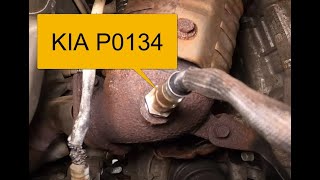
On a 2014-2018 Kia Forte, code P0134 almost always means the upstream oxygen sensor (Bank 1, Sensor 1) has failed. Replacing the sensor is the most common fix. Before replacing, check the 'SENSOR 1' fuse and inspect the wiring harness for melting. Expect to pay between $60-$150 for an aftermarket part and perform a DIY repair in under an hour.
- P0134 on your Forte almost certainly means the upstream O2 sensor (before the catalytic converter) needs to be replaced.
- Before buying any parts, perform a quick visual inspection of the sensor's wiring for any obvious melting or damage.
- Check the 'SENSOR 1' fuse in the engine bay fuse box as a quick, free check.
- This is a DIY-friendly job that requires a special O2 sensor socket but can be completed in under an hour.
- Do not ignore this code, as it will hurt your fuel economy and can lead to more expensive catalytic converter damage down the line.
What's Unique About the 2014-2018 Kia Forte
For the second-generation (YD) Kia Forte with the Nu 2.0L engine, P0134 is a common and straightforward issue. It typically points directly to the upstream O2 sensor being a standard wear-and-tear item, rather than a more complex electrical or computer problem. The simple exhaust layout on this inline-four engine makes accessing and diagnosing the sensor relatively easy compared to V-type engines. The failure pattern is consistent with its platform mates, the Hyundai Elantra and Kia Soul, which also use the Nu 2.0L engine.
Symptoms You May Notice
- Check Engine Light is on
- Reduced fuel economy
- Rough or hesitant idling
- Engine running too rich or too lean
- Failing a vehicle emissions test
- Possible sulfur or 'rotten egg' smell from the exhaust if the mixture is too rich
- Replacing the downstream (Bank 1, Sensor 2) oxygen sensor instead of the upstream (Bank 1, Sensor 1).
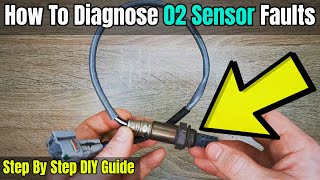
- Replacing other fuel system components like the Mass Airflow (MAF) sensor without first verifying the O2 sensor circuit is functioning. 🎬 Watch: A detailed breakdown of diagnosing the P0134 code
- Assuming a new sensor will fix the problem without checking the fuse and wiring first. If the code returns, the issue is likely in the harness or connector.
Most Likely Causes
- Failed Upstream Oxygen Sensor (Bank 1 Sensor 1) 🔴 High Probability → Shop Oxygen Sensor Oxygen sensors are wear-and-tear items that operate in a high-heat environment, typically lasting 60,000 to 100,000 miles. The internal heating element, which is necessary for the sensor to work quickly, is a common point of failure and will trigger a P0134 code.
How to confirm: Use a scan tool to monitor live data for the Bank 1 Sensor 1 voltage. If the voltage is stuck (often around 0.45V) and not fluctuating rapidly between ~0.1V and ~0.9V once the engine is warm, the sensor is likely dead. You can also test the internal resistance of the heater circuit with a multimeter; a good heater has low resistance (typically 2.5-4.1 ohms), while an open circuit (infinite resistance) confirms failure. 🎬 Watch: How to diagnose and fix oxygen sensor heater faults
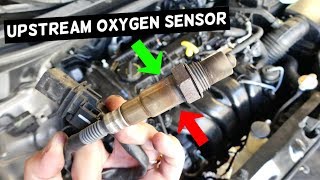
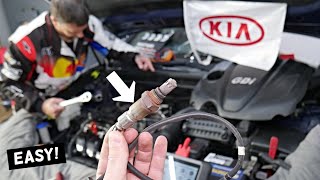
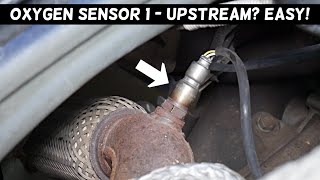
Typical fix: Replace the upstream oxygen sensor. Soaking the old sensor with penetrating oil before removal is recommended as they are often seized in the exhaust manifold. 🎬 See this video to locate and replace the upstream sensor
Est. part cost: $60-$180 - Damaged Wiring or Connector 🟡 Medium Probability The sensor's wiring harness is close to the hot exhaust manifold and can become brittle, melted, or frayed over time, leading to a short or open circuit. The connector itself can also accumulate corrosion, interrupting the signal.
How to confirm: Visually inspect the wiring harness from the sensor to the main engine harness. Look for any signs of melting, chafing against other components, or corrosion inside the connector pins. A continuity test with a multimeter can verify the integrity of each wire from the ECU connector to the sensor connector.
Typical fix: Repair the damaged section of wire or replace the connector pigtail. Secure the harness away from heat sources.
Est. part cost: $10-$30 - Blown Fuse for O2 Sensor Heater ⚪ Low Probability → Shop Oxygen Sensor A short in the sensor's heating element or its wiring can cause the associated fuse to blow, cutting power to the heater and preventing the sensor from activating.
How to confirm: Check the fuse box in the engine bay for a fuse labeled 'SNSR', 'O2 HTR', or specifically 'SENSOR 1' (often a 15A fuse on related Hyundai/Kia platforms). Visually inspect the fuse or test for continuity with a multimeter.
Typical fix: Replace the blown fuse. If it blows again immediately, a short circuit exists in the wiring or the new sensor itself that must be diagnosed.
Est. part cost: $1-$5 - Exhaust Leak ⚪ Low Probability Gaskets on the exhaust manifold and flex pipes can degrade over time, causing leaks. An exhaust leak before the O2 sensor can introduce outside air, causing the sensor to send a flat, lean signal that the ECU may interpret as 'no activity'.
How to confirm: Listen for a ticking or hissing sound from the engine bay, especially on a cold start. Look for black soot marks around the exhaust manifold or gaskets, which would indicate a leak. A smoke test is the most definitive way to find small leaks.
Typical fix: Replace the faulty exhaust gasket or repair the leaking component.
Est. part cost: $20-$100
Rare But Worth Checking
- Faulty Powertrain Control Module (PCM): → Shop Engine Control Module (ECM) This is extremely rare. The PCM should only be considered after all other possibilities, including the sensor, wiring, and fuses, have been thoroughly ruled out. A shop would need to verify the PCM driver for the O2 sensor is non-functional before recommending replacement.
Diagnosis Steps
- Confirm the code P0134 is present using an OBD-II scanner. Check for any other codes, especially P0135 or P0133.
- Visually inspect the Bank 1 Sensor 1 (upstream) oxygen sensor's wiring and connector for any obvious signs of damage, such as melting, fraying, or loose connections.
- Check the fuse for the oxygen sensor heater circuit in the engine bay fuse box. It may be labeled 'SNSR' or 'SENSOR 1'.
- Using a scan tool with live data, observe the voltage of 'O2S11' (Bank 1 Sensor 1) with the engine running and warmed up. A healthy sensor will show voltage fluctuating rapidly between approximately 0.1V and 0.9V. A faulty sensor will have a flat, unchanging voltage, often stuck near 0.45V.
- If the wiring and fuse are good but the sensor data is flat, the oxygen sensor itself has most likely failed.
- Check for exhaust leaks between the cylinder head and the sensor. Listen for hissing sounds and look for soot trails.
- If a new sensor does not resolve the issue, test the wiring harness for continuity and check for battery voltage and ground at the connector's heater circuit pins to rule out a wiring or PCM issue.
Parts You'll Likely Need
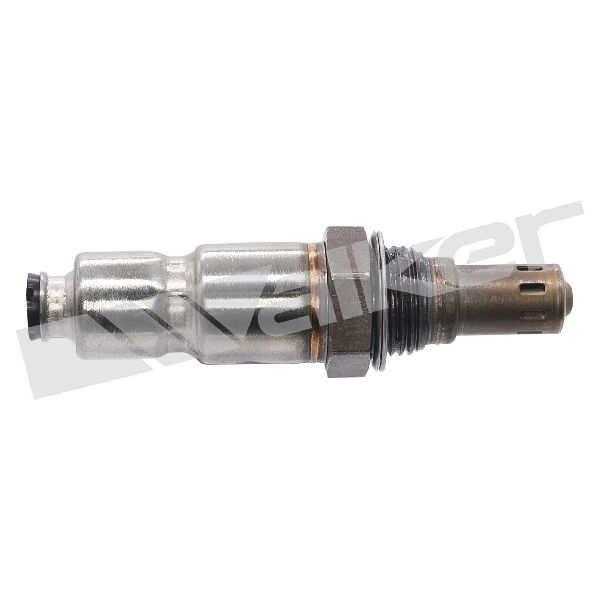
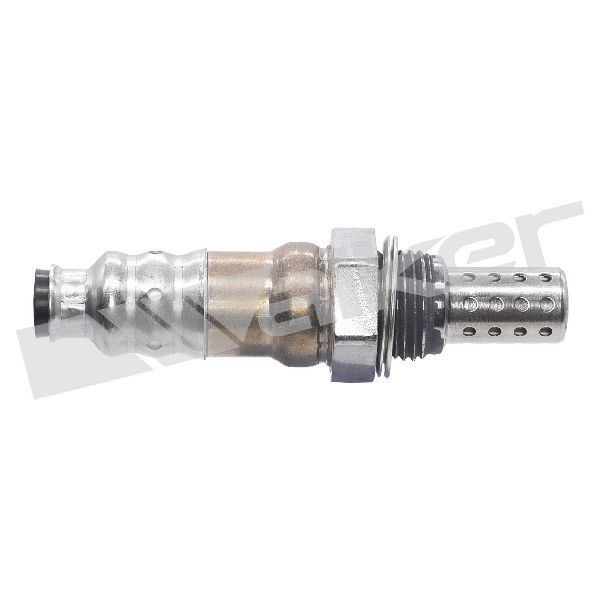
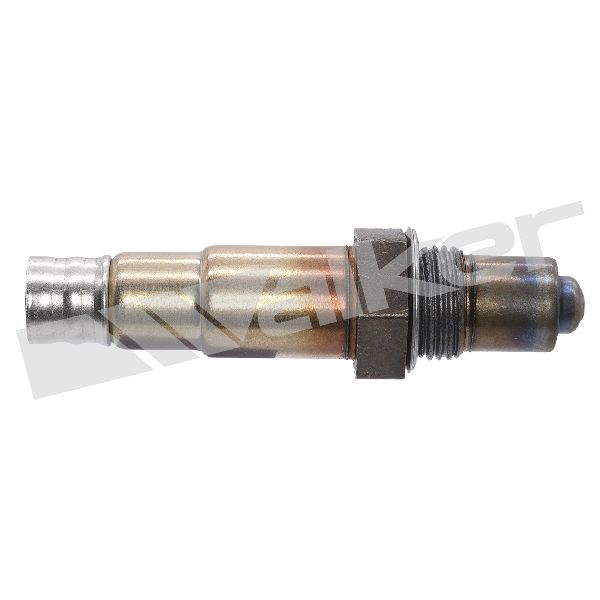
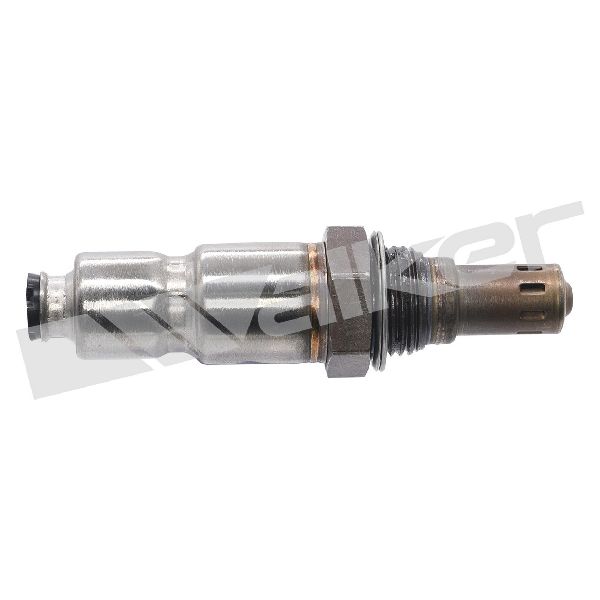
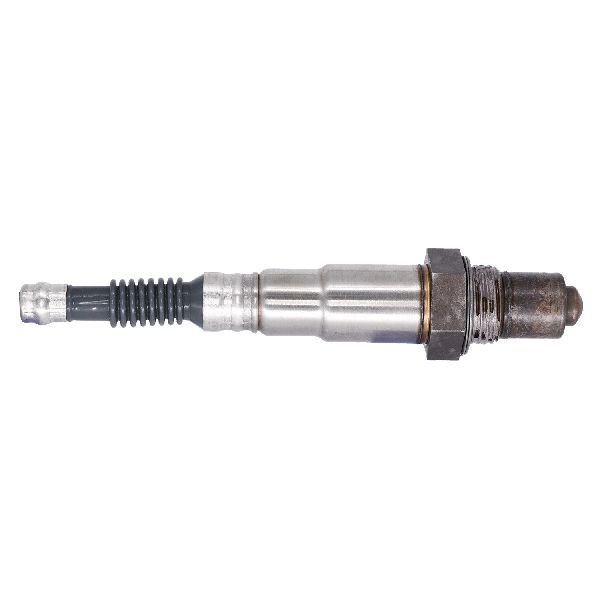
- Upstream Oxygen Sensor (Air/Fuel Ratio Sensor)
(OEM #39210-2E100)— This is the component that fails in the vast majority of P0134 cases on this vehicle. The internal heating element burns out or the sensing element wears out over time. Note: Part number 39210-2E100 is widely cited for 2014-2016 models. The 2017-2018 models use part number 39210-2E101. Always verify with your VIN before purchasing.
Trusted brands: Kia (Genuine), Denso, NGK/NTK, Bosch
OEM price range: $140-$210
Aftermarket price range: $60-$150
Related Codes That Often Appear With This One
- P0135 — This code indicates a failure in the O2 sensor's heater circuit. Since the heater is required for the sensor to become active, a P0135 fault will often lead to a P0134 'No Activity' code.
- P0133 — This code means the O2 sensor response is slow. A dying sensor might first become slow (P0133) before it fails completely and shows no activity (P0134).
Technical Service Bulletins (TSBs) & Recalls
- TSB ENG208 (June 2019): While not directly for P0134, this TSB addresses an ECM logic update for 2017-2018 Forte models to correct issues with misfire (P030x) and air-fuel imbalance (P219x) codes. An underlying air-fuel imbalance could potentially affect O2 sensor readings, making this update relevant if other codes are present.
Platform-Specific Known Issues
- Part Number Change Mid-Generation: The OEM part number for the upstream O2 sensor may differ between early (2014-2016) and late (2017-2018) models of this generation. 2014-2016 models commonly use 39210-2E100, while later models use 39210-2E101. It is critical to confirm the correct part number using the vehicle's VIN to ensure compatibility.
Mechanic-Grade Diagnostic Values
- Upstream O2 Sensor (B1S1) Heater Circuit Resistance — expected: 2.5 - 4.1 Ω at room temperature (approx. 70°F/21°C).. Failure: A reading of 'OL' (Open Loop/infinite resistance) or a value significantly outside the expected range indicates a failed internal heater.
- Voltage at O2 Sensor Heater Power Pin (Harness Side) — expected: Battery Voltage (~12.0V) with Key On, Engine Off (KOEO).. Failure: 0V indicates a blown fuse (e.g., 'SENSOR 1' 15A fuse) or an open in the power supply wire.
- Upstream O2 Sensor (B1S1) Signal Voltage (Live Data) — expected: Rapidly fluctuating between approximately 0.1V (lean) and 0.9V (rich) on a warm, running engine in closed loop.. Failure: A flat, unchanging voltage (often stuck near 0.45V) indicates no sensor activity.
Hidden / Shadow Codes Worth Checking
- Mode $06, Monitor ID $01: Mode $06 provides access to the results of non-continuous self-tests. For oxygen sensors, this can reveal if a sensor is close to failing its performance parameters before a DTC like P0134 is set. Monitor ID $01 typically corresponds to Bank 1 Sensor 1. Within this monitor, specific Test IDs (TIDs) track values like sensor response time or heater current. For example, a manufacturer might use TID $91 for a proprietary sensor check. If the measured value is approaching the minimum or maximum limit, it indicates a potential issue even without a Check Engine Light. (see via A professional-grade OBD-II scan tool that can display Mode $06 data. Interpreting the manufacturer-specific TIDs and values may require access to OEM service information.)
Scan Tool Commands That Help
- Kia GDS (Global Diagnostic System): Actuation Test — The OEM scan tool allows technicians to perform actuation tests on various components. While a specific 'O2 heater test' may not be listed, a technician can use related functions to check the integrity of the circuits controlled by the PCM. For example, monitoring the heater circuit status in live data while commanding other actuators can sometimes help identify intermittent power or ground issues within the harness.
- Kia GDS (Global Diagnostic System): Special Functions > Resetting Adaptive Values — After replacing an O2 sensor, it is good practice to reset the engine's adaptive fuel trim values. This forces the PCM to relearn the fuel strategy with the new, correctly functioning sensor, which can resolve any lingering performance issues and ensure the system returns to optimal efficiency more quickly.
Wiring & Ground Locations
- B1S1 Connector (C0015 - typical) — On the engine's wiring harness, connected to the upstream O2 sensor pigtail. The sensor itself is located on the exhaust manifold, easily visible at the back of the engine bay when the engine cover is removed.. This is the primary connection point for the sensor's power, ground, and signal wires. Corrosion or damage here will directly cause a P0134. Based on common Hyundai/Kia practice, the four wires are typically: two for the heater (often the same color, e.g., two white wires), one for the sensor signal (e.g., black), and one for the sensor ground (e.g., gray). Verifying power and ground at this connector is a key diagnostic step.
- Engine Ground Strap (G10) — A primary ground strap connecting the engine block to the chassis. A common location is from the engine or transmission housing to the frame rail near the battery.. A corroded or loose main engine ground can cause a host of electrical issues, including incorrect sensor readings. The PCM relies on a stable ground reference for all its sensors. If the ground potential fluctuates, the O2 sensor signal can become erratic or flatline, potentially triggering a P0134 code. Inspecting and cleaning the main ground connections is a crucial step when diagnosing persistent, hard-to-trace electrical codes.
When the Usual Fixes Don't Work
- While P0134 on this platform is overwhelmingly caused by a failed sensor, there are documented cases on other vehicles where the code persisted after multiple sensor replacements. In one instance involving a GM 2.2L engine, the final fix was a corroded and internally broken main engine ground wire located under the intake manifold. In another case, a faulty fuse tap used for an aftermarket accessory was interrupting the O2 sensor heater circuit, causing the code. These examples highlight that if a new, quality sensor and a good fuse do not solve the problem, the next step must be a thorough inspection of the wiring harness, paying special attention to power and ground circuits, before suspecting the expensive PCM.
OEM Part Supersession History
39210-2E100→39210-2E101— Unspecified engineering or supplier update. The change aligns with the 2017 model year refresh.
Heads up: The parts are specific to their year ranges. 39210-2E100 is for 2014-2016 models, while 39210-2E101 is for 2017-2018 models. While they may physically connect, their internal calibration or heater characteristics could be different, leading to incorrect performance if the wrong part is used.
Model Year Variations Within This Range
- 2014-2016 vs 2017-2018: The primary difference for this repair is the upstream oxygen sensor part number. 2014-2016 models use OEM part 39210-2E100. 2017-2018 models, which received a mid-cycle refresh, use OEM part 39210-2E101. It is critical to verify the part number with the vehicle's VIN.
Diagnostic Flowchart
Other Known Issues on This Vehicle
Issues unrelated to this code that are worth knowing about as an owner of this generation:
- Engine Knocking & Excessive Oil Consumption 🔴 High — A widespread and well-documented issue for Nu 2.0L GDi engines, similar to the Theta II engine problems. Can manifest at various mileages. Kia has faced class-action lawsuits and offered warranty extensions. (Ref: Multiple service campaigns and warranty extensions exist (e.g., Recall 209, TSB ENG123). Owners should contact a dealer with their VIN.)
- MDPS Steering Coupler Failure 🟠 Medium — Very common across many Hyundai/Kia models of this era, including the Forte. A clicking or knocking sound develops in the steering column, especially when turning at low speeds. (Ref: TSB CHA074 provides a repair procedure for replacing the worn flexible rubber coupler.)
- High-Pressure Fuel Pump (HPFP) Failure 🔴 High — A known failure point on Kia/Hyundai GDI engines. Can cause stalling, hesitation, and fuel contamination of the engine oil, often triggering code P0191.
- Transmission Hesitation / Rough Shifting 🟡 Low — Some owners of 2014-2016 models reported rough shifting or hesitation from the 6-speed automatic transmission, particularly when cold. (Ref: Software updates were sometimes issued to address shift logic. Later IVT transmissions had their own set of TSBs (e.g., TRA102).)
- ABS Module Fire Risk 🔴 High — While not specific to the Forte, a massive recall (NHTSA ID: 23V-652) was issued for many Kia models from 2010-2017 due to the ABS module leaking fluid internally, creating an electrical short and fire risk, even when parked. (Ref: Recall NHTSA ID: 23V-652000)
Used vs. New Parts: Buying Guide for This Vehicle
When a used part is the smart pick: For this repair, a used part is almost never a smart choice. The oxygen sensor is a wear-and-tear item with a finite lifespan. A used sensor from a junkyard has unknown remaining life and may fail shortly after installation, wasting time and money.
Donor-vehicle mileage cap: roughly under 20000 miles for the part to have meaningful remaining life.
What to inspect on the donor part:
- If buying used is unavoidable, source from a very low-mileage vehicle (under 20k miles).
- Inspect the sensor tip for heavy carbon deposits, or white/ashy contamination, which indicates a hard life or a poorly running donor engine.
- Ensure the wiring pigtail and connector are free of any cuts, melting, or corrosion.
OEM-only on this vehicle (don't cheap out):
- While not strictly OEM-only, using a sensor from the original equipment manufacturer (like Denso or NTK) is highly recommended over generic, no-name brands. The PCM is calibrated for the specific response characteristics of the OEM sensor.
Aftermarket brands forum-validated for this vehicle:
- Denso (often the OEM supplier)
- NTK / NGK (often the OEM supplier)
- Bosch
Brands owners have reported issues with on this vehicle:
- Avoid unbranded, 'white-box' parts from online marketplaces. Owners frequently report that these parts are dead on arrival, fail quickly, or have slightly different response rates that can cause other fuel trim issues even if they clear the P0134 code initially.
Real Owner Stories
Aggregated from forums and TSBs cited above. Mileages and costs reflect what owners reported in those sources.
2012-2019 Kia Soul (Nu 2.0L GDi)
Symptoms: Check engine light for P0134 returned even after replacing both oxygen sensors.
What fixed it: Further diagnosis for exhaust leaks, vacuum leaks, or faulty wiring as the sensor replacement alone did not resolve the 'no activity' code.
Source hint: Reddit r/KiaSoulClub - P0134 returns after replacing both sensors
2014-2018 Kia Forte (Nu 2.0L GDi)
Symptoms: The user replaced the O2 sensor three times and the P0134 code persisted; the shop suggested a faulty PCM.
What fixed it: The discussion identified that the issue was likely a faulty sensor heater circuit, contaminated sensors (coolant/silicone), or exhaust leaks rather than the PCM.
Source hint: Cartalk Community - 3 replacements of O2 sensor and still have P0134 code
2016-2021 Hyundai Tucson (Nu 2.0L GDi)
Symptoms: Intermittent codes and engine hesitation.
What fixed it: Traced back to wiring harness issues after an initial oxygen sensor replacement failed to fix the problem.
Source hint: 2016-2021 Hyundai Tucson (Nu 2.0L GDi) platform mate report
Related OBD-II Codes
Frequently Asked Questions
Does TSB ENG208 apply to my 2017 Kia Forte if I have a P0134 code?
Which specific part number do I need for the upstream O2 sensor on my 2015 Forte?
My Kia Forte has high oil consumption; could this be related to the P0134 code?
Where is the fuse for the O2 sensor heater located on the 2014-2018 Forte?
I replaced the sensor but the P0134 code came back. What else should I check on this specific engine?
Helpful Videos

We Have This Part in Stock


The information in this article is provided for general reference and educational purposes only. Vehicle specifications, procedures, and part compatibility can vary by production date, trim level, and region. Always consult your vehicle's factory service manual and verify part numbers before purchasing or performing repairs. Safety-critical components such as airbags, seat belts, and braking systems should be installed by a qualified professional.
- Kia Forte:
- 🧭 Diagnostic Flowchart
- 🎬 Helpful Videos
- 🛍️ Shop This Part
- What's Unique About the 2014-2018 Kia Forte
- Symptoms You May Notice
- Most Likely Causes
- Rare But Worth Checking
- Diagnosis Steps
- Parts You'll Likely Need
- Related Codes That Often Appear With This One
- Technical Service Bulletins (TSBs) & Recalls
- Platform-Specific Known Issues
- Mechanic-Grade Diagnostic Values
- Hidden / Shadow Codes Worth Checking
- Scan Tool Commands That Help
- Wiring & Ground Locations
- When the Usual Fixes Don't Work
- OEM Part Supersession History
- Model Year Variations Within This Range
- Other Known Issues on This Vehicle
- Used vs. New Parts: Buying Guide for This Vehicle
- Real Owner Stories
- 2012-2019 Kia Soul (Nu 2.0L GDi)
- 2014-2018 Kia Forte (Nu 2.0L GDi)
- 2016-2021 Hyundai Tucson (Nu 2.0L GDi)
- Related OBD-II Codes
- Frequently Asked Questions
- 🎟️ Get 5% Off