

P0134 on 2012-2013 Kia Soul 1.6L: Causes and Fixes for O2 Sensor No Activity
This code almost always means the upstream oxygen sensor (Bank 1, Sensor 1) has failed. Expect to pay around $70-$150 for a quality aftermarket sensor (like Denso or NGK) and $180-$260 for an OEM part. It's a straightforward DIY replacement for many owners. Before replacing, check the 'SENSOR 1' 10A fuse.
- P0134 on a 2012-2013 Kia Soul almost always points to a failed upstream oxygen sensor (Bank 1, Sensor 1).
- Before replacing the sensor, check the 10A 'SENSOR 1' fuse in the engine bay fuse box and visually inspect the wiring for melting.
- Use an OBD-II scanner that can read live data to confirm the sensor is not sending a fluctuating voltage signal.
- Check with a Kia dealer to see if your vehicle has had the free safety recall service (SC176) performed, as it relates to engine and exhaust health.
What's Unique About the 2012-2013 Kia Soul
For the first-generation Kia Soul with the 1.6L GDI engine, the P0134 code is a very common and straightforward issue, typically pointing directly to a failed sensor. However, owners must be aware of a critical safety recall (SC176) for this specific engine and year range. The recall addresses a condition where high exhaust temperatures can damage the catalytic converter, leading to debris entering the engine, causing piston damage, and potentially engine failure or fire. While a different code (P0420) is usually associated with the recall, driving with a faulty O2 sensor from a P0134 code causes an unregulated air-fuel mixture, which can create the exact high-temperature conditions the recall aims to prevent.
Symptoms You May Notice
- Check Engine Light is on
- Significantly reduced fuel economy
- Rough or unstable idle
- Engine hesitation or stumbling on acceleration
- Failing a vehicle emissions test
- Black smoke from the exhaust in some cases
- Replacing the downstream (Bank 1, Sensor 2) oxygen sensor. The P0134 code specifically refers to Sensor 1, which is upstream of the catalytic converter.
- Replacing the sensor without checking the 'SENSOR 1' fuse first. A new sensor will not work if its heater circuit has no power.
Most Likely Causes
- Failed Upstream Oxygen Sensor (Bank 1, Sensor 1) 🔴 High Probability → Shop Oxygen Sensor The oxygen sensor is a standard wear-and-tear component that operates in a high-temperature environment. Its internal heating element or sensing capabilities degrade over time, typically after 80,000-100,000 miles.
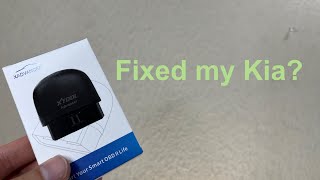
How to confirm: Use an OBD-II scanner with live data to view the Bank 1 Sensor 1 voltage. 🎬 Watch: Using an OBD2 scanner to diagnose a dead sensor On a warm engine, it should fluctuate rapidly. If the voltage is flat, stuck (e.g., at 0.45V), or shows 0V, the sensor has failed. You can also test the sensor's heater circuit resistance with a multimeter; it should be between 3-25 ohms.
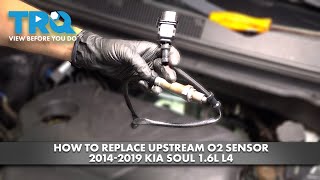
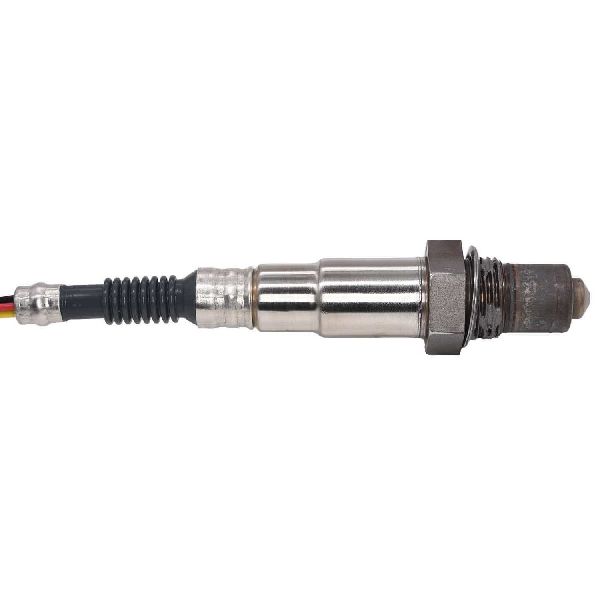
Typical fix: Replace the upstream oxygen sensor. This sensor is a 5-wire wideband type.
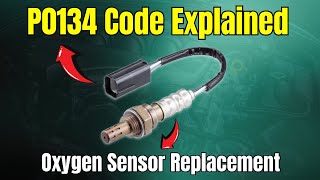
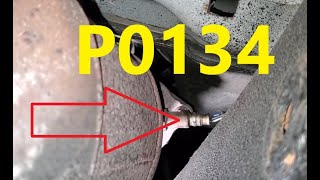
Est. part cost: $70-$260 - Damaged Wiring or Connectors 🟡 Medium Probability The wiring harness is close to hot exhaust components and can become brittle, melted, or corroded over time, causing an open or short in the circuit. 🎬 See this breakdown of common P0134 causes and wiring fixes The plastic connector can also become brittle and break.
How to confirm: Visually inspect the wiring harness from the sensor up to the main engine harness for any signs of melting, chafing, or corrosion. Check for continuity on each wire using a multimeter. Verify the heater circuit is receiving battery voltage (around 12V) with the key on, engine off.
Typical fix: Repair the damaged section of the wiring harness or replace the connector pigtail.
Est. part cost: $15-$50 - Blown Fuse for O2 Sensor Heater ⚪ Low Probability → Shop Oxygen Sensor
How to confirm: Locate the fuse panel in the engine bay. Identify the 10A fuse labeled 'SENSOR 1'. Visually inspect the fuse or test it for continuity.
Typical fix: Replace the blown fuse. If the fuse blows again, it indicates a short circuit in the wiring or in the new sensor's heater element that must be diagnosed.
Est. part cost: $1-$5
Rare But Worth Checking
- Exhaust Leak: An exhaust leak between the cylinder head and the upstream O2 sensor can introduce outside oxygen and skew readings. This is less likely to cause a 'no activity' code but is a possibility, especially if you hear a ticking noise from the exhaust manifold.
- Contaminated Sensor: An internal oil or coolant leak can foul the tip of the oxygen sensor, rendering it inoperable. If you replace a sensor and it fails again quickly, investigate for signs of oil or coolant in the exhaust.
- Faulty Powertrain Control Module (PCM): → Shop Engine Control Module (ECM) This is extremely rare. The PCM should only be considered after all other possibilities, including the sensor and its entire circuit, have been thoroughly tested and ruled out with 100% certainty.
Diagnosis Steps
- Read the code with an OBD-II scanner to confirm P0134 is the only code present.
- Check the 10A 'SENSOR 1' fuse in the engine compartment fuse box.
- Visually inspect the upstream oxygen sensor's wiring harness and connector for any obvious signs of damage, such as melting, fraying, or loose connections.
- Use an OBD-II scanner with live data capability to monitor the voltage for 'O2 Bank 1 Sensor 1'.
- Start the engine and let it warm up to operating temperature.
- A healthy sensor's voltage reading should fluctuate rapidly between approximately 0.1 and 0.9 volts.
- If the voltage reading is flat, stuck (e.g., at 0.45V), or shows 0V, it confirms a lack of activity.
- If the wiring and fuse are confirmed to be good, the oxygen sensor itself is defective and should be replaced.
Parts You'll Likely Need
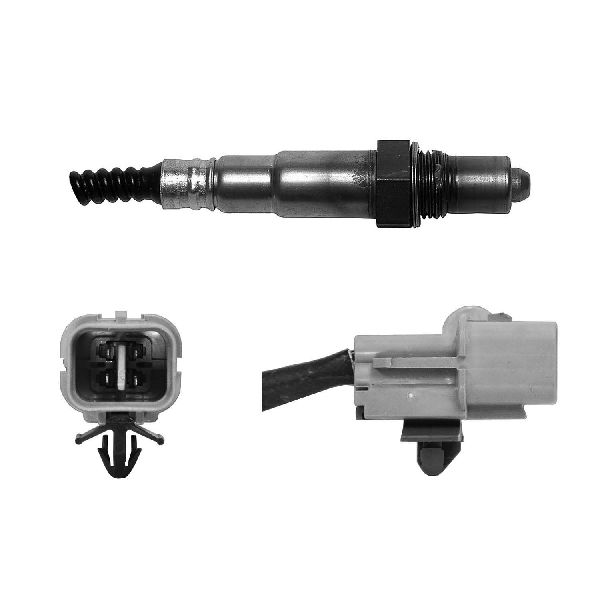
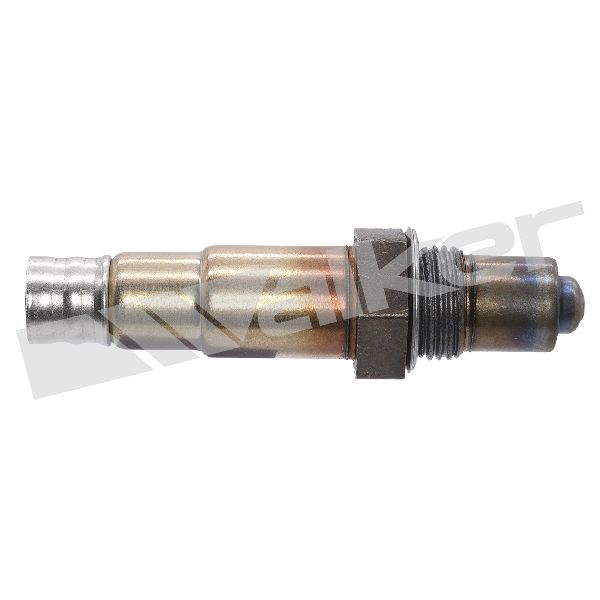
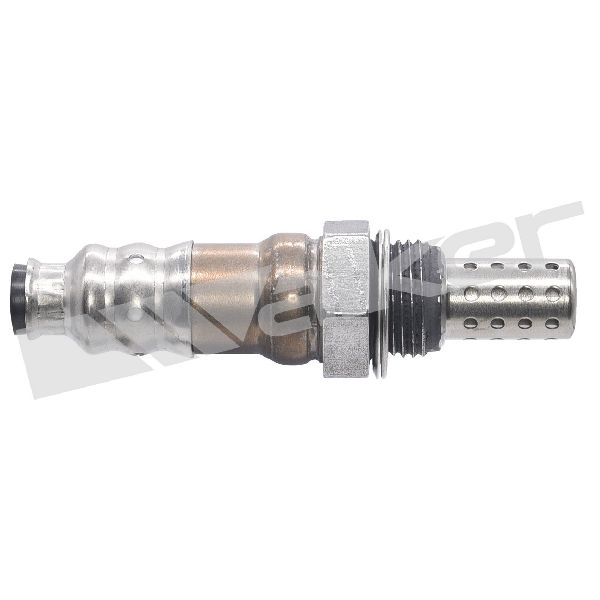
- Upstream Oxygen Sensor (Air/Fuel Ratio Sensor)
(OEM #39210-2B210)— This is the primary component identified by the P0134 code and is a common wear item. Its failure is the most frequent cause of no activity being detected by the ECM.
Trusted brands: Denso (p/n: 234-5055), NGK (p/n: 27093), Bosch
OEM price range: $180-$260
Aftermarket price range: $70-$150
Technical Service Bulletins (TSBs) & Recalls
- SC176 / NHTSA 19V-120: Voluntary safety recall for 2012-2016 Kia Soul 1.6L GDI models. Involves an ECU logic update to prevent catalytic converter overheating. The procedure may also involve replacing the catalytic converter and/or engine short block per TSB ENG190 if damage is found.
Platform-Specific Known Issues
- This vehicle is covered by Kia Safety Recall SC176, which addresses potential catalytic converter damage from high exhaust temperatures. The fix involves an ECU software update (the Knock Sensor Detection System or KSDS) and, if necessary, replacement of the catalytic converter or engine. Owners should contact a Kia dealer to ensure this free service has been performed, as a faulty O2 sensor can contribute to the overheating problem.
- The Gamma 1.6L GDI engine is subject to a class-action lawsuit regarding engine defects that can lead to seizure, failure, and fires. The recall (SC176) and its associated KSDS software update are Kia's primary remedy for this condition.
Mechanic-Grade Diagnostic Values
- Upstream O2 Sensor (B1S1) Heater Circuit Resistance — expected: 3 to 25 Ohms when measured across the two heater pins (often same-colored wires) on the sensor connector.. Failure: Infinite resistance (OL) indicates an open circuit in the heater; a reading near zero indicates a short. In either case, the sensor must be replaced.
- Upstream O2 Sensor (B1S1) Voltage - Snap Throttle Test — expected: When suddenly pressing the accelerator pedal (engine warm), voltage should spike to 0.6V - 1.0V. When suddenly releasing the pedal from ~4000 RPM, voltage should drop to 0.2V or lower as fuel is cut.. Failure: A slow or non-existent voltage change during these tests indicates a lazy or dead sensor, even if it shows some activity at idle.
- Upstream O2 Sensor (B1S1) Harness Heater Power — expected: Approximately 12V (battery voltage) at one of the heater circuit pins on the vehicle-side harness connector with the key on, engine off.. Failure: 0V indicates a problem upstream of the connector, such as a blown 'SENSOR 1' fuse or a wiring fault.
- Oxygen Sensor Installation Torque — expected: 30-45 Nm (22-33 ft-lbs).. Failure: Under-torquing can allow exhaust leaks; over-torquing can damage the sensor threads or the exhaust manifold.
Hidden / Shadow Codes Worth Checking
- P0135: While not a hidden code, P0135 (O2 Sensor Heater Circuit Malfunction, Bank 1 Sensor 1) is the most common companion or preceding code. A failure in the heater circuit directly causes the P0134 'No Activity' code because the sensor cannot reach its required operating temperature of over 600°F to generate a voltage signal. (see via Standard OBD-II scanner.)
Scan Tool Commands That Help
- Kia GDS (or advanced aftermarket scanner): A/F Control Active Test — This function allows a technician to manually command a rich (+25%) or lean (-12.5%) fuel mixture while observing the B1S1 voltage on live data. It is the definitive test to confirm if the sensor is responsive. If the voltage does not change according to the command, and the wiring is good, the sensor is faulty.
Wiring & Ground Locations
- Engine Ground Points — Key grounds for the engine harness include a strap from the battery negative terminal to the driver-side strut tower, another to the engine block itself, and a factory ground from the block down to the chassis frame rail.. A poor engine ground can create a voltage offset, causing the PCM to misinterpret the O2 sensor's low-voltage signal or lack thereof. All ground connections should be clean and tight before diagnosing sensor circuits.
- B1S1 Connector Pins — The 5-wire connector for the upstream O2 sensor on the exhaust manifold.. Testing requires identifying the correct pins. The two heater wires are typically the same color (e.g., white or black). One receives ~12V power from the 'SENSOR 1' fuse, and the other is a duty-cycled ground controlled by the PCM. The other wires are for sensor signal, sensor ground, and pump cell voltage.
Real Owner Repair Stories
- Reddit user, r/AskAMechanic (2013 Kia Soul 1.6L) — Crank no-start condition after engine replacement, which eventually led to a crank position sensor code.
❌ Tried (didn't work) Replacing crank sensor and pigtail.
✅ What actually fixed it The user discovered they had inadvertently swapped the visually similar electrical connectors for the crankshaft position sensor and the knock sensor. Swapping them back to their correct locations resolved the issue.
"I Checked Everything" — The Actual Cause
- In one documented case (on a different vehicle, but a universally applicable lesson), a P0134 code persisted after replacing the sensor. The root cause was eventually found to be a very small, hairline crack in the exhaust manifold, located before the O2 sensor. This crack was not large enough to be audible but introduced just enough oxygen to disrupt the sensor's reading, preventing it from switching properly and making the PCM believe it was inactive. This highlights the need to inspect the manifold carefully for cracks, not just listen for obvious leaks.
OEM Part Supersession History
39210-2B210→N/A— No supersession information was found during research. This part number appears to be stable for the specified vehicle and engine.
Model Year Variations Within This Range
- 2012-2013: The 2012 model year marked a significant facelift for the Soul, which included the introduction of the 1.6L Gamma GDI engine (G4FD) with 138 hp, replacing the previous, less powerful 1.6L MPI engine. Within the 2012-2013 range, it's critical to distinguish the 1.6L GDI engine from the optional 2.0L NU engine, which used MPI (Multi-Port Injection) and may have different sensor specifications. This article's details are specific to the 1.6L GDI.
Diagnostic Flowchart
Other Known Issues on This Vehicle
Issues unrelated to this code that are worth knowing about as an owner of this generation:
- Catastrophic Engine Failure & Fire Risk 🔴 High — Widespread enough to trigger a major safety recall (SC176) and class-action lawsuits. Can occur at various mileages, often starting with a knocking sound. (Ref: NHTSA 19V-120 (Recall SC176))
- Steering Column Clunk or Click 🟠 Medium — A very common issue on first-generation Souls, often caused by a failing flexible steering coupler. Typically starts as a minor click when turning and worsens over time.
- Excessive Oil Consumption 🟠 Medium — Many owners of the 1.6L GDI engine report consuming oil between changes, which can contribute to the conditions leading to engine damage if not monitored closely.
- Knock Sensor Failure 🟡 Low — The knock sensor itself can fail, triggering codes like P0326. The KSDS software update from recall SC176 was designed to be more sensitive to engine knock to prevent catastrophic failure. (Ref: Related to Recall SC176 software update.)
Used vs. New Parts: Buying Guide for This Vehicle
When a used part is the smart pick: A used part is only recommended for the wiring connector pigtail. If the original connector's locking tab is broken or the plastic is melted, a pigtail cut from a donor vehicle at a junkyard is a cost-effective and reliable repair when spliced correctly.
Donor-vehicle mileage cap: roughly under 30000 miles for the part to have meaningful remaining life.
What to inspect on the donor part:
- For a wiring pigtail: ensure the plastic is not brittle, the locking tab is intact, and there is at least 4-6 inches of wire to work with.
- For a used O2 sensor (not recommended): avoid sensors with heavy carbon buildup, any oily residue, or physical damage to the tip or wiring.
OEM-only on this vehicle (don't cheap out):
- No parts for this specific P0134 repair require OEM-only sourcing. Aftermarket sensors are widely available and reliable.
Aftermarket brands forum-validated for this vehicle:
- Denso (often the OEM supplier)
- NGK / NTK
Brands owners have reported issues with on this vehicle:
- No specific brands were consistently reported as problematic in research, but ultra-cheap, unbranded sensors from online marketplaces are generally a gamble and may have a short service life.
Real Owner Stories
Aggregated from forums and TSBs cited above. Mileages and costs reflect what owners reported in those sources.
2013 Kia Soul 1.6L
Symptoms: The check engine light was on with code P0134.
What fixed it: Replaced the upstream O2 sensor with a Denso 234-5055 and cleared the code. The sensor was easily accessible from the top of the engine bay using an O2 sensor socket.
Source hint: kiasoulforums.com - P0134 O2 Sensor No Activity Bank 1 Sensor 1
2012-2016 Kia Soul 1.6L GDI
Symptoms: Potential catalytic converter damage from high exhaust temperatures and engine knocking.
What fixed it: ECU logic update (KSDS) and potentially replacing the catalytic converter or engine short block per TSB ENG190.
Source hint: SC176 / NHTSA 19V-120: Voluntary safety recall
Related OBD-II Codes
Frequently Asked Questions
Is my 2012-2013 Kia Soul 1.6L GDi part of a recall that could be related to my P0134 code?
What specific O2 sensor should I buy for my 1.6L Gamma GDi engine?
Where is the Bank 1 Sensor 1 located on the Kia Soul 1.6L?
Which fuse should I check if I suspect the O2 sensor heater circuit is dead?
Can I use a used oxygen sensor from a junkyard to fix P0134?
My Kia Soul is also making a knocking sound; is this related to the O2 sensor?
Helpful Videos
We Have This Part in Stock



The information in this article is provided for general reference and educational purposes only. Vehicle specifications, procedures, and part compatibility can vary by production date, trim level, and region. Always consult your vehicle's factory service manual and verify part numbers before purchasing or performing repairs. Safety-critical components such as airbags, seat belts, and braking systems should be installed by a qualified professional.
- Kia Soul:
- 🧭 Diagnostic Flowchart
- 🎬 Helpful Videos
- 🛍️ Shop This Part
- What's Unique About the 2012-2013 Kia Soul
- Symptoms You May Notice
- Most Likely Causes
- Rare But Worth Checking
- Diagnosis Steps
- Parts You'll Likely Need
- Technical Service Bulletins (TSBs) & Recalls
- Platform-Specific Known Issues
- Mechanic-Grade Diagnostic Values
- Hidden / Shadow Codes Worth Checking
- Scan Tool Commands That Help
- Wiring & Ground Locations
- Real Owner Repair Stories
- "I Checked Everything" — The Actual Cause
- OEM Part Supersession History
- Model Year Variations Within This Range
- Other Known Issues on This Vehicle
- Used vs. New Parts: Buying Guide for This Vehicle
- Real Owner Stories
- 2013 Kia Soul 1.6L
- 2012-2016 Kia Soul 1.6L GDI
- Related OBD-II Codes
- Frequently Asked Questions
- 🎟️ Get 5% Off