

P0134 on 2004-2009 Mazda 3 2.3L: Causes and Fixes for No O2 Sensor Activity
On a 2004-2009 Mazda 3 2.3L, code P0134 almost always means the upstream air/fuel ratio sensor (Bank 1, Sensor 1) has failed. Replacing this sensor, located on the exhaust manifold, is the most common fix. Ensure you use a quality 5-wire wideband sensor from a brand like Denso or NTK. Expect to pay $70-$150 for a quality aftermarket part. Before replacing, quickly inspect the wiring for melting or corrosion.
- P0134 on your Mazda 3 points directly to the upstream A/F sensor (Bank 1, Sensor 1).
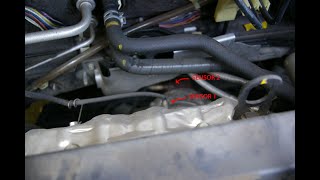
- The most likely fix is replacing this sensor, which is easily accessible on top of the engine's exhaust manifold.
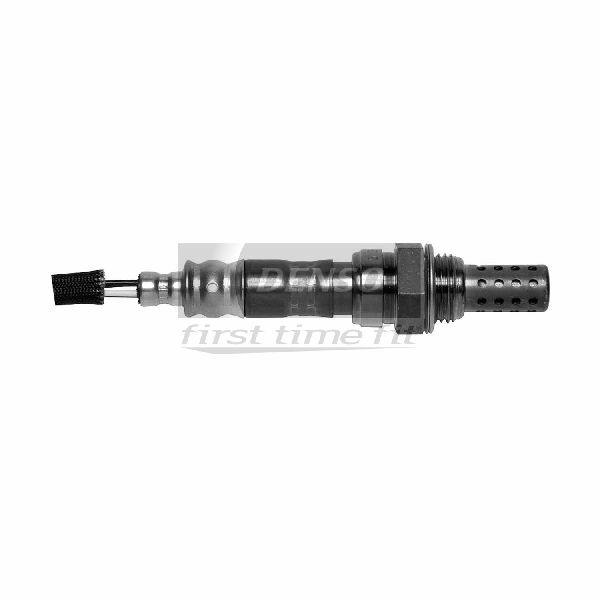
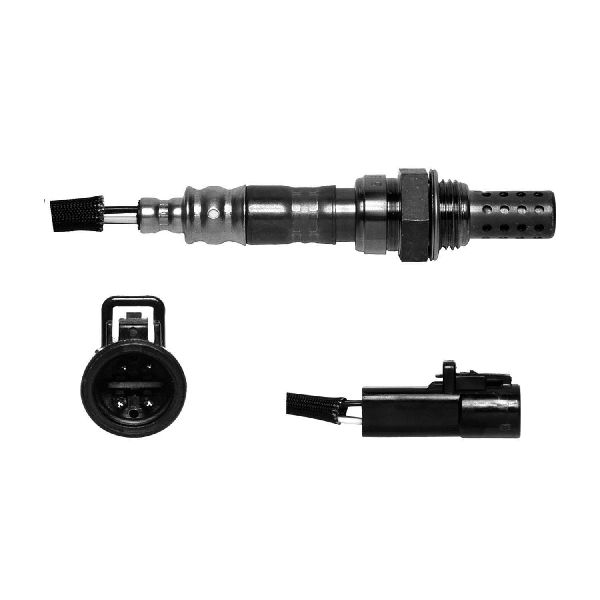
- Ensure you buy a 5-wire wideband A/F sensor from a reputable brand like Denso (p/n 234-5015) or NTK; a generic 4-wire O2 sensor will not work.
- Before replacing the sensor, always perform a quick visual check of the wiring for any obvious melting or damage and check the O2 sensor heater fuse in the engine bay fuse box.
- Ignoring this code can lead to poor performance, bad fuel economy, and eventual damage to your catalytic converter.
What's Unique About the 2004-2009 Mazda 3
The first-generation Mazda 3 with the 2.3L engine uses a more sophisticated 5-wire wideband Air/Fuel (A/F) ratio sensor for the upstream position (Bank 1, Sensor 1), not a basic 4-wire oxygen sensor. This is important because a generic, cheaper sensor will not work and can cause the code to return immediately. The good news is that on this engine, the sensor is located right on top of the exhaust manifold, making it much easier to access and replace than on many other vehicles where it might be under the car.
Symptoms You May Notice
- Check Engine Light is on
- Decreased fuel economy
- Rough or unstable idle
- Engine hesitation or stumbling on acceleration
- Failing an emissions test
- Engine running in "open loop" status on a scan tool, even when at operating temperature
- Replacing the downstream (post-catalytic converter) O2 sensor. P0134 specifically refers to Bank 1 Sensor 1, which is the upstream sensor.
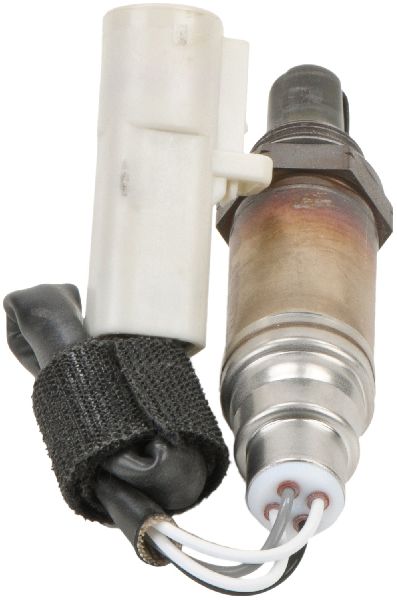
- Using a cheap, generic, or incorrect (4-wire) oxygen sensor instead of a 5-wire wideband A/F sensor from a reputable OEM supplier like Denso or NTK. This often leads to the code returning immediately or after a short time.
Most Likely Causes
- Failed Upstream Air/Fuel Ratio Sensor (Bank 1, Sensor 1) 🔴 High Probability → Shop Oxygen Sensor These sensors have a finite lifespan and fail from age, heat cycles, and contamination. The internal heater element is a common failure point, which directly causes a 'no activity' code since the sensor cannot warm up to produce a signal. Using cheap, non-OEM equivalent sensors from online marketplaces is a very common reason for repeat failures.
How to confirm: Use an OBD-II scanner with live data to view the B1S1 voltage or current (mA). If the reading is stuck at a fixed value (e.g., 1.01V) and does not fluctuate during engine operation, the sensor is bad. 🎬 See how to diagnose an inactive sensor circuit using live data. A healthy sensor's voltage will fluctuate rapidly. You can also test the resistance of the heater circuit within the sensor; infinite resistance indicates a broken internal filament.
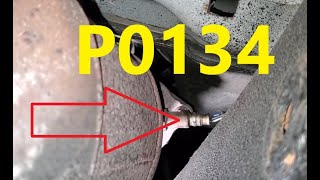
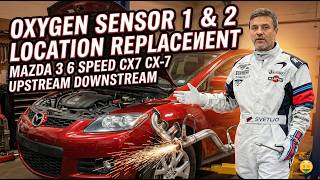
Typical fix: Replace the upstream air/fuel ratio sensor. It is located on the exhaust manifold, visible when you open the hood. Use a 7/8-inch (22mm) oxygen sensor socket for removal. 🎬 Watch this easy DIY walkthrough for replacing the upstream sensor. Applying a penetrating catalyst like PB Blaster beforehand is highly recommended.
Est. part cost: $70-$150 - Damaged Wiring or Connector 🟡 Medium Probability The sensor wiring is routed very close to the hot exhaust manifold. Over time, the protective loom can become brittle or shift, allowing wires to chafe or melt, causing a short or open circuit. Corrosion inside the connector where the sensor harness meets the main engine harness is also a known issue.
How to confirm: Visually inspect the entire length of the sensor's wiring harness from the sensor to its connection point. Look for any melted plastic, frayed wires, or green oxidation on the connector pins. Test for continuity between the sensor connector and the PCM connector using a multimeter and a wiring diagram.
Typical fix: Repair the damaged section of the wiring harness or clean the connector terminals with electrical contact cleaner. If damage is severe, a new connector pigtail may be needed.
Est. part cost: $5-$30 - Blown Heater Circuit Fuse ⚪ Low Probability A short in the sensor or its wiring can cause the associated fuse to blow, cutting power to the sensor's heater. Without the heater, the sensor won't become active.
How to confirm: Check the fuses in the engine bay fuse box. On a 2009 Mazda 3, users have identified 10A fuses at positions 32 and 33 as being related to the O2 sensors. The fuse box is located near the battery.
Typical fix: Replace the blown fuse. If the fuse blows again immediately, it indicates a short circuit in the wiring or the new sensor itself that must be diagnosed.
Est. part cost: $1-$5 - Exhaust Leak ⚪ Low Probability A crack in the exhaust manifold or a failed gasket before the A/F sensor can let outside air into the exhaust stream. This skews the sensor's readings, and while it typically causes performance codes, a large enough leak could prevent proper readings, contributing to a 'no activity' fault.
How to confirm: Listen for a ticking or hissing sound from the engine bay, especially when the engine is cold. A visual inspection may reveal black soot trails around the manifold gasket or a crack in the manifold itself.
Typical fix: Replace the exhaust manifold gasket or the entire exhaust manifold if it is cracked.
Est. part cost: $20-$300
Rare But Worth Checking
- Faulty Powertrain Control Module (PCM): → Shop Engine Control Module (ECM) This is extremely rare. All other possibilities, especially the sensor, its wiring, and fuses, should be exhaustively ruled out before considering a PCM failure.
Diagnosis Steps
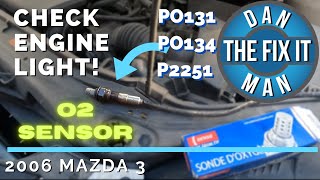
- Connect an OBD-II scanner to confirm P0134 is the primary code. Check for any other related codes like P0131, P2251, or P0030. 🎬 Check out this video on fixing P0134 and P2251 codes together.
- Use the scanner's live data function to monitor the 'O2S11' or 'B1S1' voltage and/or current. Start the engine and let it warm up. A healthy sensor's voltage will fluctuate rapidly. If the voltage is flat, unchanging, or stuck at a default value, the sensor is likely dead.
- Turn the engine off. Visually inspect the A/F sensor's wiring harness for any signs of melting, chafing, or disconnection from the exhaust manifold to the main harness connector. Pay close attention to where the harness may contact hot engine parts.
- Check the O2 sensor heater circuit fuse. In the first-gen Mazda 3, this is typically in the engine bay fuse box near the battery.
- If wiring and fuses look good and the live data was flat, the A/F sensor is the primary suspect. Proceed with replacement using a quality part.
- If you replace the sensor and the code returns immediately, you may have a faulty new part (especially if it's a cheap brand) or a persistent wiring issue that was missed. Re-inspect the wiring and test for continuity from the sensor plug to the PCM.
- If all else fails, check for exhaust leaks between the cylinder head and the sensor. A significant leak can introduce oxygen and prevent the sensor from reading correctly.
Parts You'll Likely Need
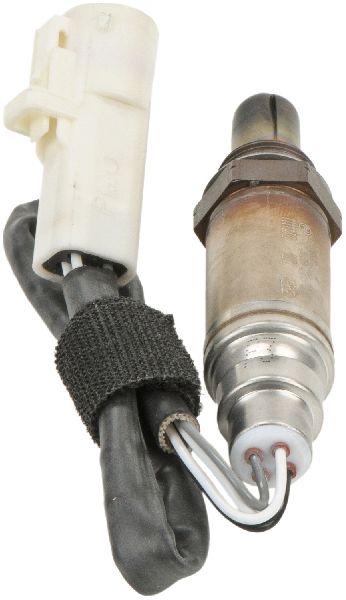
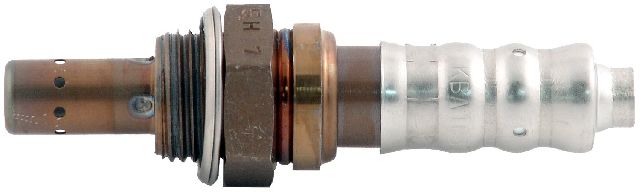
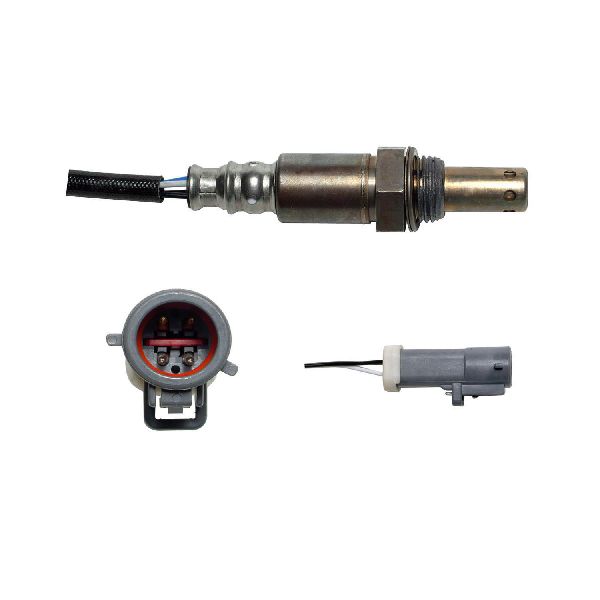
- Air/Fuel Ratio Sensor (Bank 1, Sensor 1)
(OEM #L33L-18-8G1C)— This sensor is the most common point of failure for code P0134. Its internal heating element fails, or the sensing element degrades over time, preventing it from sending a signal.
Trusted brands: Denso (234-5015), NTK (24327)
OEM price range: $180-$250
Aftermarket price range: $70-$150
Related Codes That Often Appear With This One
- P0131 — P0131 (O2 Sensor Circuit Low Voltage) can appear with P0134 as both indicate a sensor that is not producing the expected signal.
- P2251 — P2251 (O2 Sensor Negative Current Control Circuit/Open) points to an open circuit, which can be the root electrical cause for the 'no activity' reported by P0134.
- P0030 — P0030 (HO2S Heater Control Circuit) often appears alongside P0134 because a failure in the sensor's internal heater will prevent it from reaching operating temperature, thus causing 'no activity'.
Technical Service Bulletins (TSBs) & Recalls
- While no TSB is directly for P0134, a TSB for code P0442 (EVAP leak) on the 2.0L and 2.3L engines notes that a faulty fuel cap can cause an air leak that leads to lean conditions, which could potentially affect O2 sensor readings. This is mentioned as a related, though not direct, possibility.
Platform-Specific Known Issues
- Immediate Code Return After Replacement: Many owners report that the P0134 code returns instantly after clearing it, even with a new sensor. This strongly points to either a persistent wiring/fuse issue, or the use of a low-quality or incorrect type of sensor. It is critical to use a 5-wire wideband sensor from a reputable brand.
- Heater Circuit Fuse: A user on a Mazda forum identified fuses #32 and #33 (10A) in the engine bay fuse box as being related to the O2 sensors for a 2009 model. Checking these fuses is a quick and important diagnostic step.
Mechanic-Grade Diagnostic Values
- Upstream A/F Sensor Current (B1S1) — expected: At warm idle, the reading should fluctuate slightly around 0 mA. When holding RPMs steady (e.g., 2000, 2500), the reading should stabilize near 0 mA. When revving the engine, the reading should fluctuate up and down, potentially up to 3 mA before returning to near zero.. Failure: The reading is flat, stuck at a specific value, or does not move when the engine is revved. A sensor that stays exactly at zero and never moves is also faulty.
- A/F Sensor Heater Circuit Resistance — expected: Approximately 5 to 6 ohms when measured across the two heater pins on the sensor connector (often two wires of the same color).. Failure: An infinite resistance (open loop/OL) reading indicates a broken internal heater filament, which is a direct cause of a P0134 code.
Scan Tool Commands That Help
- Mazda IDS (or equivalent): Module Programming / Immobilizer Parameter Reset — This is required if the Powertrain Control Module (PCM) is replaced. The new PCM must be programmed to the vehicle's immobilizer system and keys to allow the engine to start.
- Advanced Aftermarket (e.g., Foxwell, Autel): A/F Reset — Some scan tools offer a function to 'set or learn Air/Fuel ratio parameters'. This may be useful after replacing the A/F sensor to reset learned values and expedite the PCM's adaptation to the new sensor.
Wiring & Ground Locations
- Powertrain Control Module (PCM/ECU) — On some models, it is located in the engine bay underneath the battery and battery tray. On other related models, it has been found in the passenger-side footwell, under the carpet near the firewall. Physical verification is recommended.. The PCM is the endpoint for the A/F sensor's wiring. If the code persists after sensor and wiring checks, accessing the PCM connector is necessary for end-to-end continuity testing and to check for a faulty PCM driver.
- Main Relay / Fuse Box Connection — In the engine bay fuse box. The A/F sensor harness includes a wire that provides power via the main relay.. A Reddit user successfully diagnosed a persistent P0134 by finding a lack of continuity on a green-striped wire between the sensor harness and the PCM harness. The fault was traced to green oxidation on the corresponding pin of the main relay in the fuse box. This is a critical, often-overlooked failure point beyond the sensor itself.
Real Owner Repair Stories
- Reddit user in r/AskMechanics (2007 Mazda 3) — P0134 code returned instantly after replacing the upstream 5-wire A/F sensor.
❌ Tried (didn't work) Replacing the upstream A/F sensor.
✅ What actually fixed it The owner performed a continuity test from the O2 sensor connector to the PCM connector. All wires passed except for one green-striped wire. This wire was traced to the main relay in the fuse box, where the corresponding pin had green oxidation (corrosion). Cleaning the corrosion from the relay pin resolved the open circuit and fixed the 'no activity' code. - YouTube channel 'Dan the Fix it Man' (2006 Mazda 3) — Check Engine Light with codes P0131, P0134, and P2251.
❌ Tried (didn't work) The owner had previously cleared the codes, but they returned on the next drive.
✅ What actually fixed it After a visual inspection of the wiring harness showed no damage, the upstream Air/Fuel ratio sensor was replaced with a Denso part (234-5015). The codes were cleared, and the Check Engine Light did not return after a week of driving, confirming the fix.
When the Usual Fixes Don't Work
- In cases where P0134 returns immediately after a sensor replacement, the cause is frequently not a faulty new sensor but a problem in the circuit providing power to the sensor. One owner traced the fault to a corroded pin on the main relay in the under-hood fuse box, which prevented power from reaching the sensor's heater circuit. This highlights the need to verify power and ground at the sensor connector before condemning a second sensor or the PCM.
OEM Part Supersession History
L33L-18-8G1B→L33L-18-8G1C— Standard part revision and update.
Heads up: Part L33L-18-8G1C is the correct replacement for the Pass 2 part number. Some aftermarket listings also show a 'L33L-18-8G1C9U' part number, which appears to be interchangeable.
Model Year Variations Within This Range
- 2006-2009: The 2.3L engine was offered in both Federal (non-PZEV) and PZEV (Partial Zero Emissions Vehicle) configurations, primarily for California-emissions states. The A/F sensors for these two emission types may be different. It is critical to order the replacement sensor based on the vehicle's specific emissions sticker, typically found under the hood. Using the wrong sensor can cause the code to persist.
Diagnostic Flowchart
Real Owner Stories
Aggregated from forums and TSBs cited above. Mileages and costs reflect what owners reported in those sources.
2006 Mazda 3
Symptoms: Check engine light came on with generic codes P0131, P0134, and P2251 pointing to the bank one oxygen sensor.
What fixed it: Inspected the wiring which looked okay, then proceeded to change out the sensor.
Source hint: YouTube comment by 'Dan the Fix it Man'
Mazda 3
Symptoms: Experienced codes P0030, P0130, and P0134 and replaced the sensor three times without success.
What fixed it: Realized the importance of diagnosing the circuit and checking fuses #32 and #33 before repeatedly replacing parts.
Source hint: Mazda3Forums.com thread titled 'mazda3 P0030/P0130/P0134'
2009 Mazda 3
Symptoms: O2 sensor heater circuit failure causing a no-activity code.
What fixed it: Identified and checked fuses #32 and #33 (10A) in the engine bay fuse box.
Source hint: User on a Mazda forum (cited in Vehicle Specific Issues)
Related OBD-II Codes
Frequently Asked Questions
I have a 2009 Mazda 3 2.3L and keep getting P0134. Which fuses should I check for the O2 sensor heater circuit?
I just replaced the upstream sensor on my Mazda 3 but the P0134 code returned immediately. What went wrong?
Is there a specific TSB for the P0134 code on the 2004-2009 Mazda 3?
Can I use an oxygen sensor from a Mazda 5 or Mazda 6 for my 2.3L Mazda 3?
What tools do I need to remove the upstream A/F sensor on the Mazda 3's 2.3L engine?
Helpful Videos
We Have This Part in Stock

The information in this article is provided for general reference and educational purposes only. Vehicle specifications, procedures, and part compatibility can vary by production date, trim level, and region. Always consult your vehicle's factory service manual and verify part numbers before purchasing or performing repairs. Safety-critical components such as airbags, seat belts, and braking systems should be installed by a qualified professional.
- Mazda 3:
- 🧭 Diagnostic Flowchart
- 🎬 Helpful Videos
- 🛍️ Shop This Part
- What's Unique About the 2004-2009 Mazda 3
- Symptoms You May Notice
- Most Likely Causes
- Rare But Worth Checking
- Diagnosis Steps
- Parts You'll Likely Need
- Related Codes That Often Appear With This One
- Technical Service Bulletins (TSBs) & Recalls
- Platform-Specific Known Issues
- Mechanic-Grade Diagnostic Values
- Scan Tool Commands That Help
- Wiring & Ground Locations
- Real Owner Repair Stories
- When the Usual Fixes Don't Work
- OEM Part Supersession History
- Model Year Variations Within This Range
- Real Owner Stories
- 2006 Mazda 3
- Mazda 3
- 2009 Mazda 3
- Related OBD-II Codes
- Frequently Asked Questions
- 🎟️ Get 5% Off