

P0134 on 2009-2012 Mazda 6 2.5L: Causes, Fixes, and O2 Sensor Replacement
On a 2009-2012 Mazda 6 with the 2.5L engine, code P0134 almost always means the upstream oxygen sensor (Bank 1, Sensor 1) has failed. Replacing this sensor is the most common fix, with parts costing between $60 for aftermarket and $180 for OEM. Before replacing, check the wiring and the O2 sensor heater fuse.
- P0134 on a 2.5L Mazda 6 points directly to the upstream oxygen sensor (Bank 1, Sensor 1).
- The most probable cause is a failed sensor, which is a common wear item.
- Before replacing the sensor, always perform a quick visual check of the wiring and connector for obvious damage, and check the associated fuse.
- Use a quality OEM-equivalent brand like Denso (234-5015) or NTK for the replacement sensor to avoid premature failure.
- Driving with this code can lead to poor fuel economy and will eventually damage your catalytic converter, a much more expensive repair.
What's Unique About the 2007-2012 Mazda 6
The 2009-2012 Mazda 6 with the 2.5L L5-VE engine uses a conventional and generally reliable emissions system. There are no widespread, unique design flaws that make this platform inherently prone to P0134. The issue is typically standard wear and tear on the front oxygen sensor after many miles and heat cycles. The key is to use a quality replacement sensor, as owners report that cheap aftermarket sensors can fail prematurely or be incompatible. The sensor can be difficult to remove due to rust, often requiring a specialized O2 sensor socket and significant force.
Generation note: The specified vehicle range of 2007-2012 covers two generations of the Mazda 6. However, the 2.5L L5-VE engine was only available in the second generation (GH), which began with the 2009 model year in North America. This guide is specific to the 2009-2012 Mazda 6 models equipped with the 2.5L engine.
Symptoms You May Notice
- Check Engine Light is on
- Decreased fuel economy
- Rough or unstable idle
- Engine hesitation or loss of power during acceleration
- Failing an emissions test
- A smell of rotten eggs from the exhaust, indicating a rich fuel mixture.
- Replacing the downstream (Bank 1, Sensor 2) oxygen sensor instead of the upstream (Bank 1, Sensor 1).
- Replacing the oxygen sensor without first checking the wiring and fuses for problems.
- Assuming the new sensor is good. Occasionally, a brand new sensor can be faulty out of the box, especially with cheaper aftermarket brands.
Most Likely Causes
- Failed Upstream Oxygen (A/F) Sensor 🔴 High Probability → Shop Oxygen Sensor This is a standard wear-and-tear item. After 80,000+ miles, the sensor's ability to generate a voltage signal can degrade due to age, heat cycles, and contamination from fuel or oil. The internal heater element can also fail, which is critical for sensor operation.
How to confirm: Use an OBD-II scanner with live data to monitor the Bank 1 Sensor 1 voltage (often labeled 'O2S11'). A healthy sensor's voltage will fluctuate rapidly between ~0.1V and ~0.9V. If the voltage is flat, stuck, or shows no activity, the sensor has likely failed.
Typical fix: Replace the Bank 1, Sensor 1 (upstream) oxygen sensor. It is located in the exhaust manifold, easily accessible from the front of the engine bay. An O2 sensor socket and penetrating oil are highly recommended for removal.
Est. part cost: $60-$180 - Damaged Wiring or Connector 🟡 Medium Probability The sensor wiring is exposed to high heat from the exhaust and potential road debris, which can cause wires to become brittle, frayed, or melted over time. The connector can also suffer from corrosion, leading to a poor electrical connection.
How to confirm: Visually inspect the entire wiring harness from the sensor to where it connects to the main engine harness. Check for melted insulation, frayed wires, or corrosion on the connector pins. Use a multimeter to check for continuity and proper voltage at the connector.
Typical fix: Repair the damaged section of the wiring harness or clean/replace the connector.
Est. part cost: $5-$50 - Blown O2 Sensor Heater Circuit Fuse ⚪ Low Probability → Shop Oxygen Sensor The oxygen sensor has an internal heater that must function for the sensor to work correctly. This heater is on a fused circuit. While not common, a short in the circuit or the sensor itself can blow the fuse.
How to confirm: Locate the fuse for the O2 sensor heater circuit. On this platform, it is typically in the engine compartment fuse box. Check the owner's manual for the specific fuse labeled 'HEATER' or 'O2 HTR', often a 15A fuse. Visually inspect the fuse to see if it is blown.
Typical fix: Replace the blown fuse. If the new fuse blows immediately, it indicates a short circuit in the wiring or the sensor heater element that must be diagnosed.
Est. part cost: $1-$5 - Exhaust Leak ⚪ Low Probability Rust can cause leaks at the exhaust manifold gasket or cracks in the manifold itself. This is more common in regions that use road salt. An exhaust leak before the sensor can introduce outside air, disrupting sensor readings.
How to confirm: Listen for a ticking or puffing sound from the engine bay, especially when the engine is cold. A visual inspection may reveal black soot trails around the manifold gasket or cracks.
Typical fix: Replace the leaking exhaust manifold gasket or repair/replace the cracked manifold.
Est. part cost: $20-$300
Rare But Worth Checking
- Faulty Powertrain Control Module (PCM): → Shop Engine Control Module (ECM) This is extremely rare. The PCM should only be considered after all other possibilities, including the sensor, wiring, and fuses, have been thoroughly tested and ruled out.
Diagnosis Steps
- Read the code with an OBD-II scanner to confirm P0134 is present and check for any other related codes like P0031 or P2251.
- Visually inspect the Bank 1 Sensor 1 (upstream) oxygen sensor's wiring harness and connector for any signs of melting, fraying, or corrosion.
- Check the fuse for the O2 sensor heater circuit in the engine compartment fuse box. It is often a 15A fuse.
- Using a scan tool with live data, monitor the voltage of 'O2S11' (Bank 1 Sensor 1) with the engine warm and running. The voltage should fluctuate rapidly. If it is flat, stuck at a specific voltage (e.g., 0.45V), or shows no activity, this confirms a lack of activity.
- If the wiring and fuse are good but the sensor shows no activity, the sensor itself is the most likely culprit and should be replaced.
- If a new sensor does not resolve the issue, perform a continuity test on the wiring between the sensor connector and the PCM to rule out a hidden break in a wire.
- Check for exhaust leaks between the cylinder head and the oxygen sensor by listening for ticking noises or looking for soot trails.
Parts You'll Likely Need
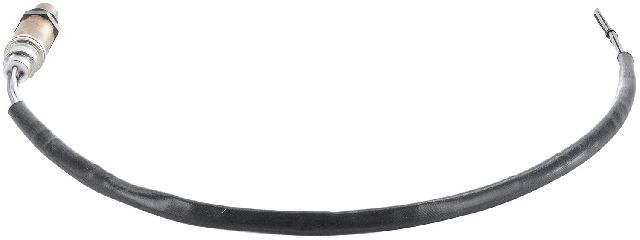
- Upstream Oxygen Sensor / Air-Fuel Ratio Sensor
(OEM #L509-18-8G1A)— This sensor is the primary component responsible for the signal the PCM is not receiving. It is a common wear item that fails over time.
Trusted brands: Denso (OEM equivalent, P/N: 234-5015), NTK (OEM)
OEM price range: $120-$180
Aftermarket price range: $60-$120
Related Codes That Often Appear With This One
- P0031 — This code indicates a problem with the sensor's internal heater circuit (low input). A failed sensor often has a failed heater element, so these codes frequently appear together.
- P2251 — This code means 'O2 Sensor Negative Current Control Circuit/Open'. A failure in the sensor or its wiring can affect both the signal and its ground reference circuit simultaneously. It is very common to see P0134 and P2251 together, strongly pointing to a bad sensor or wiring.
Platform-Specific Known Issues
- Rusted/Seized Oxygen Sensor: → Shop Oxygen Sensor Due to its location in the hot exhaust manifold, the original oxygen sensor often becomes seized with rust. Removal can be very difficult and may require a high-quality O2 sensor socket, a long breaker bar, and significant application of penetrating oil. In some cases, heating the manifold bung with a torch is necessary.
Mechanic-Grade Diagnostic Values
- Upstream A/F Sensor Heater Element Resistance — expected: 3.5 Ω. Failure: Significantly higher resistance or an open circuit (infinite resistance) indicates a failed heater element.
- Upstream A/F Sensor Activity Check (during deceleration) — expected: Sensor should generate more than 0.25mA.. Failure: Failure to generate this current during engine deceleration can indicate a lazy or faulty sensor, even if other readings seem normal.
- PCM Code Trigger Condition — expected: Sensor voltage should exceed 0.55 volts within 99 seconds when engine speed is over 1500 RPM and coolant temp is above 140°F.. Failure: If the voltage fails to meet this condition in two consecutive drive cycles, the PCM will set code P0134.
Wiring & Ground Locations
- Engine Ground near Passenger Motor Mount — On the passenger side of the engine bay, there is a primary ground connection near the motor mount.. A poor ground at this location can affect various engine sensors, including the reference voltage for the oxygen sensor circuit. While not a direct cause of P0134, a corroded or loose ground here can create intermittent electrical issues that are hard to diagnose.
- Transmission Grounds — There are multiple ground points on the transmission case, including one large and one small ground on the front, and another on top of the transmission harness.. The engine and transmission are major grounding planes for the electrical system. A faulty ground on the transmission can affect the entire engine sensor network, potentially leading to incorrect readings or reference voltages for the PCM.
- Frame Ground under Driver Headlight — Underneath the driver's side headlight, there is a point where multiple ground wires attach to the vehicle's frame.. This is a central grounding point for many components in the front of the vehicle. Corrosion or looseness here can cause a wide range of electrical gremlins, including sensor circuit faults.
Real Owner Repair Stories
- MazdaSpeeds Forum (Mazdaspeed 3 (similar engine/sensor setup)) — P0134 code appeared immediately after installing a new cat-less downpipe. AFRs were stuck at 14.8.
❌ Tried (didn't work) Inspected for pinched wiring., Found and fixed a spread terminal in the sensor connector., Checked fuses., Disconnected battery for 30 minutes to reset PCM.
✅ What actually fixed it Replacing the upstream O2 sensor with a new NTK unit. The owner discovered that the original sensor had been internally damaged (broken ceramic) when it was twisted during removal from the old downpipe, even though it looked fine externally. - Mazdas247 Forum (2013 Mazda 6) — Check engine light with codes P2243 and P0134. The light would sometimes turn off and then come back on, particularly on rainy days after driving through puddles.
❌ Tried (didn't work) Checking and re-tightening the gas cap., Clearing the codes with a scanner (they returned).
✅ What actually fixed it The user was advised that the combination of codes points directly to a failed upstream (pre-cat) O2 sensor and that this is a common failure item at higher mileage (over 100k miles). The resolution is replacing the single upstream sensor.
OEM Part Supersession History
L509-18-8G1A→L509-18-8G1B, L509-18-8G1C— Standard part revision and improvement by the manufacturer.
Heads up: The newer revisions (B and C) are direct replacements for the original 'A' part number and are fully compatible.
Diagnostic Flowchart
Other Known Issues on This Vehicle
Issues unrelated to this code that are worth knowing about as an owner of this generation:
- Melting / Sticky Dashboard 🟠 Medium — Very common, especially in hot and humid climates. Can begin to show after 5-7 years. (Ref: Mazda Special Service Program (SSP) A0 extended the warranty for this specific issue to 10 years/unlimited miles, but this has since expired for most vehicles.)
- VVT Actuator Rattle on Cold Start 🟠 Medium — Common on the MZR engine family, particularly the 2.3L Turbo but also reported on the 2.5L. Caused by a worn lock pin in the VVT actuator. (Ref: Mazda issued TSBs and a warranty extension (SSP 87) for the related 2.3L turbo engine, highlighting the known issue with the VVT system in this engine family.)
- Front Crossmember Corrosion 🔴 High — Primarily affects vehicles in regions with heavy road salt usage (Salt Belt). (Ref: NHTSA Recall 19V403000 was issued for 2011-2013 models, as severe corrosion could cause the passenger side lower control arm to detach.)
- Spider Webs in EVAP Canister Vent Hose 🟡 Low — An unusual but officially recognized issue where spiders nesting in the vent hose can cause a blockage. (Ref: NHTSA Recall 14V114000 (Mazda recall 7214C) was issued for 2010-2012 models. The fix involves a PCM reprogram and cleaning the vent line.)
- Difficult Headlight Bulb Replacement 🟡 Low — A common complaint from owners performing DIY maintenance. Accessing the headlight bulbs often requires removing the fender liner.
Used vs. New Parts: Buying Guide for This Vehicle
When a used part is the smart pick: For this repair, a used oxygen sensor is NEVER recommended. O2 sensors are wear items with a finite lifespan (typically 80k-100k miles) and are sensitive to contamination and physical shock. The cost savings are minimal compared to the high risk of premature failure or receiving a part that is already non-functional.
What to inspect on the donor part:
- Not applicable. Do not purchase a used oxygen sensor for this repair.
OEM-only on this vehicle (don't cheap out):
- While not strictly 'OEM-only', using a high-quality OEM-equivalent brand is critical. Cheap, unbranded sensors are a common cause of repeat failures.
Aftermarket brands forum-validated for this vehicle:
- Denso (often the original equipment manufacturer, P/N 234-5015 is the direct-fit equivalent).
- NTK / NGK (also a known OEM supplier for many Japanese vehicles).
Brands owners have reported issues with on this vehicle:
- Unbranded, no-name sensors from online marketplaces. Owners frequently report these parts failing quickly or being dead-on-arrival.
Real Owner Stories
Aggregated from forums and TSBs cited above. Mileages and costs reflect what owners reported in those sources.
2010 Mazda 3 2.5L
Symptoms: The car presented with both P0134 and P2251 codes simultaneously.
What fixed it: Replacement of the upstream oxygen sensor (sensor 1).
Source hint: YouTube - 2010 Mazda3 upstream oxygen sensor replacement (sensor 1) P2251 P0134
2011 Mazda 3 2.5L
Symptoms: The owner encountered an 'unequivocal' P0134 code indicating an open circuit in the pre-cat sensor or its wiring.
What fixed it: Replacement of the pre-cat (upstream) oxygen sensor.
Source hint: YouTube - BL Mazda 3: R&R the pre and post-cat o2 sensors
Related OBD-II Codes
Frequently Asked Questions
Where is the Bank 1 Sensor 1 oxygen sensor located on my 2.5L Mazda 6?
Is there a fuse I should check for the P0134 code on this vehicle?
I'm having trouble removing the sensor; is this common for the Mazda 6?
Could a ticking sound from my engine bay be related to the P0134 code?
Does the spider web recall (14V114000) cause the P0134 code?
What voltage should I see for 'O2S11' on my scan tool?
Helpful Videos
We Have This Part in Stock

The information in this article is provided for general reference and educational purposes only. Vehicle specifications, procedures, and part compatibility can vary by production date, trim level, and region. Always consult your vehicle's factory service manual and verify part numbers before purchasing or performing repairs. Safety-critical components such as airbags, seat belts, and braking systems should be installed by a qualified professional.
- Mazda 6:
- 🧭 Diagnostic Flowchart
- 🎬 Helpful Videos
- 🛍️ Shop This Part
- What's Unique About the 2007-2012 Mazda 6
- Symptoms You May Notice
- Most Likely Causes
- Rare But Worth Checking
- Diagnosis Steps
- Parts You'll Likely Need
- Related Codes That Often Appear With This One
- Platform-Specific Known Issues
- Mechanic-Grade Diagnostic Values
- Wiring & Ground Locations
- Real Owner Repair Stories
- OEM Part Supersession History
- Other Known Issues on This Vehicle
- Used vs. New Parts: Buying Guide for This Vehicle
- Real Owner Stories
- 2010 Mazda 3 2.5L
- 2011 Mazda 3 2.5L
- Related OBD-II Codes
- Frequently Asked Questions
- 🎟️ Get 5% Off