

P0134 on 2000-2005 Mitsubishi Eclipse: O2 Sensor No Activity Causes and Fixes
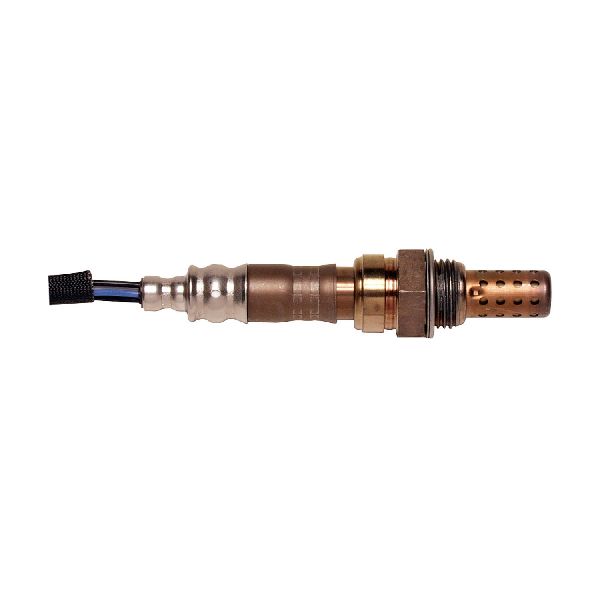
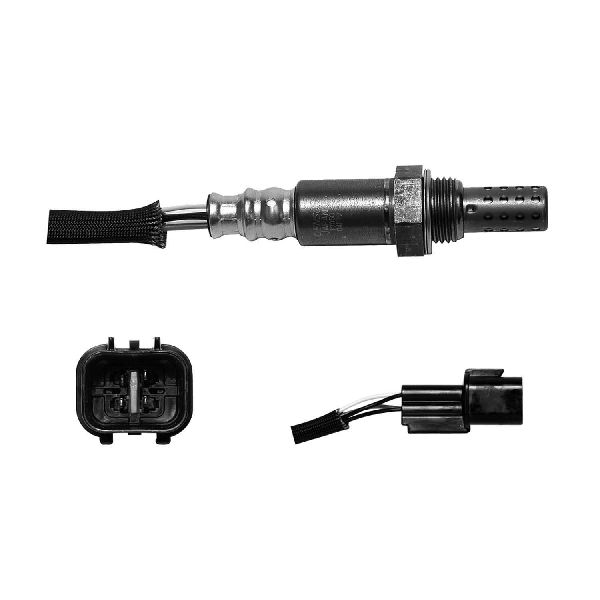
This code almost always means the primary (upstream) oxygen sensor has failed. On the 4-cylinder, it's the sensor before the catalytic converter. On the V6, it's the upstream sensor on the rear bank (firewall side). Expect to pay $40-$90 for an aftermarket sensor (Denso/NTK recommended) and $100-$180 for an OEM part. It's a DIY-friendly fix for those with basic tools and an O2 sensor socket.
- P0134 means the primary oxygen sensor (Bank 1, Sensor 1) is not sending a signal.
- The most common fix by far is to replace the Bank 1, Sensor 1 oxygen sensor, which is a Denso 234-4741 or equivalent.
- Before buying parts, check the sensor's wiring for obvious damage (especially from heat or oil leaks) and check the related fuse.
- Use a scan tool to watch the sensor's live data to confirm it is not fluctuating; this is the definitive diagnostic step.
- Ignoring this code will hurt your fuel economy and can eventually damage your catalytic converter.
What's Unique About the 2000-2005 Mitsubishi Eclipse
For the 3rd generation Eclipse, this code is straightforward and typically points to a failed front O2 sensor. However, Mitsubishi technical documents note a unique possibility: a deteriorated *rear* (post-catalyst) O2 sensor can, in some cases, cause improper fuel adjustments that lead to the *front* sensor appearing inactive, triggering a P0134. This is a known edge case on this platform, where the ECM uses the rear sensor to make corrections for front sensor aging; if the rear sensor responds poorly, it can improperly adjust its expectations for the front sensor. While the front sensor is still the most likely culprit, this is a key diagnostic consideration if a new front sensor doesn't resolve the issue.
Symptoms You May Notice
- Check Engine Light illuminated
- Decreased fuel economy
- Rough or unstable idle
- Engine hesitation during acceleration
- Failure to pass an emissions test
- Black smoke from exhaust (in some cases)
- Strong fuel odor from exhaust
- Replacing the catalytic converter. A bad O2 sensor can harm a converter over time, but the converter itself does not cause this code.
- Replacing the wrong O2 sensor. Ensure you are replacing Bank 1, Sensor 1 (upstream), not the downstream sensor (Sensor 2). On the V6, Bank 1 is the rear bank near the firewall.
- Ignoring a potential exhaust leak before the sensor, which can mimic a failed sensor.
Most Likely Causes
- Failed Bank 1, Sensor 1 Oxygen Sensor 🔴 High Probability → Shop Oxygen Sensor Oxygen sensors are wear items with a finite lifespan, typically failing from age, heat cycles, and contamination. Oil leaks from valve cover gaskets, a common issue on the 6G72 V6, can also drip onto and destroy the sensor.
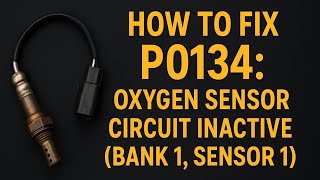
How to confirm: Use a scan tool to monitor live data for the 'O2 Sensor B1S1' parameter. If the voltage is stuck at a specific number (e.g., 0.45V) and not fluctuating rapidly 🎬 See how to diagnose an inactive O2 sensor between ~0.1V and ~0.9V on a warm, running engine, the sensor is bad.
Typical fix: Replace the Bank 1, Sensor 1 oxygen sensor. On the 4G64 I4, it is the upstream sensor in the exhaust manifold. On the 6G72 V6, it is the upstream sensor on the rear bank (firewall side), which can be tight to access. 🎬 Watch: Mitsubishi Eclipse O2 sensor locations and replacement
Est. part cost: $40-$180 - Damaged Wiring or Connector 🟡 Medium Probability The sensor wiring is close to the hot exhaust manifold and can become melted, brittle, or corroded over time. The connector itself can also fail.
How to confirm: Visually inspect the entire wiring harness from the O2 sensor to where it connects to the main engine harness. Look for melted plastic, frayed wires, or corrosion on the connector pins. Use a multimeter to check for continuity and proper voltage at the connector.
Typical fix: Repair the damaged section of the harness or replace the connector pigtail.
Est. part cost: $10-$30 - Blown Heater Circuit Fuse ⚪ Low Probability An internal short in an old O2 sensor can sometimes blow the fuse for the heater circuit, preventing the sensor from warming up and becoming active.
How to confirm: Locate the fuse for the O2 sensor heater circuit in your vehicle's fuse box (check the owner's manual or online diagrams). Visually inspect the fuse to see if it is blown. A multimeter can also be used to check for continuity.
Typical fix: Replace the blown fuse. If the fuse blows again immediately after replacing the O2 sensor, there is a short in the wiring that needs to be addressed.
Est. part cost: $1-$5 - Exhaust Leak ⚪ Low Probability
How to confirm: Listen for ticking or hissing noises from the exhaust manifold area, especially when the engine is cold. You can also use a smoke machine to introduce smoke into the exhaust system and look for leaks before the O2 sensor. An exhaust leak can introduce fresh air, making the sensor read incorrectly or appear inactive.
Typical fix: Replace the leaking exhaust manifold gasket or repair the crack in the manifold/pipe.
Est. part cost: $20-$200
Rare But Worth Checking
- Deteriorated Rear O2 Sensor (Bank 1, Sensor 2): → Shop Oxygen Sensor A Mitsubishi technical document suggests a failing rear O2 sensor can cause incorrect fuel trim learning, which makes the front sensor's signal flat, falsely triggering P0134. If a new front sensor doesn't fix the code, investigate the health of the rear sensor. 🎬 Watch: How to replace the rear O2 sensor
- Faulty Engine Control Module (ECM): → Shop Engine Control Module (ECM) This is very rare. The ECM should only be considered after all other possibilities, including sensors, wiring, and exhaust leaks, have been definitively ruled out.
Diagnosis Steps
- Connect an OBD-II scanner to verify the P0134 code is present.
- Using the scanner's live data function, select the 'O2 Sensor B1S1' parameter. Warm the engine to operating temperature.
- Observe the voltage. A healthy sensor will fluctuate rapidly between approximately 0.1 and 0.9 volts. If the voltage is stuck or moving very slowly (e.g., flatlined at 0.45V), the sensor has failed or is not active.
- If the signal is flat, turn off the engine and visually inspect the sensor's wiring and connector for any signs of melting, corrosion, or physical damage.
- Check the fuse for the O2 sensor heater circuit. This is often located in the under-hood fuse box. Replace if blown.
- If the wiring and fuse are good, the most likely cause is a failed O2 sensor.
- Inspect the exhaust manifold and downpipe for any signs of a leak (soot trails, audible ticking) that could be present before the sensor.
- If replacing the Bank 1 Sensor 1 does not resolve the code, use the scan tool to monitor the live data for Bank 1 Sensor 2. A lazy or failing rear sensor could be the root cause, as noted in Mitsubishi technical documents.
- As a final and very rare step, consider the possibility of a faulty ECM after all other avenues are exhausted.
Parts You'll Likely Need
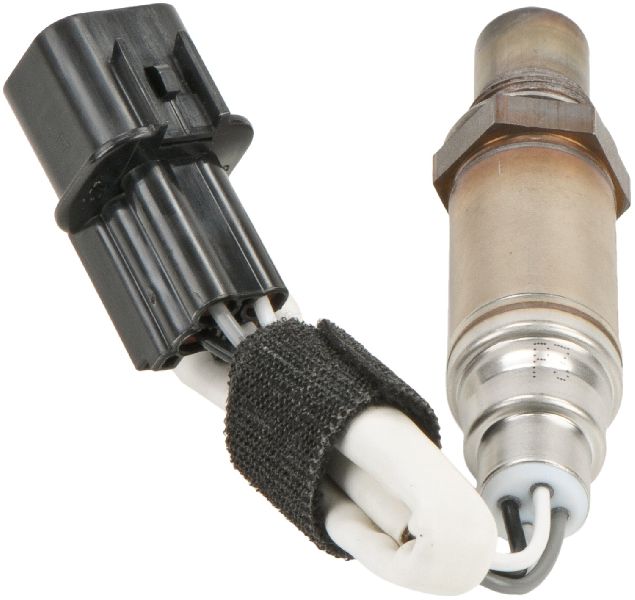
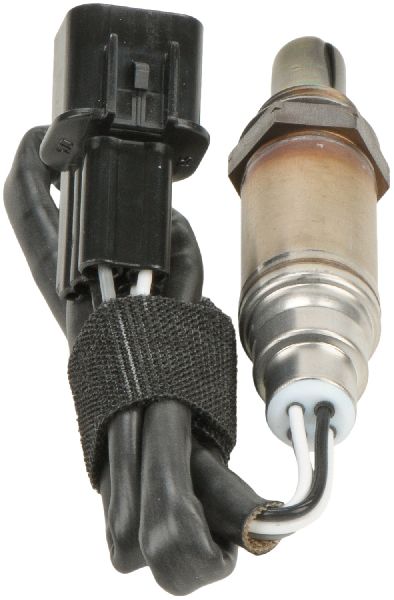
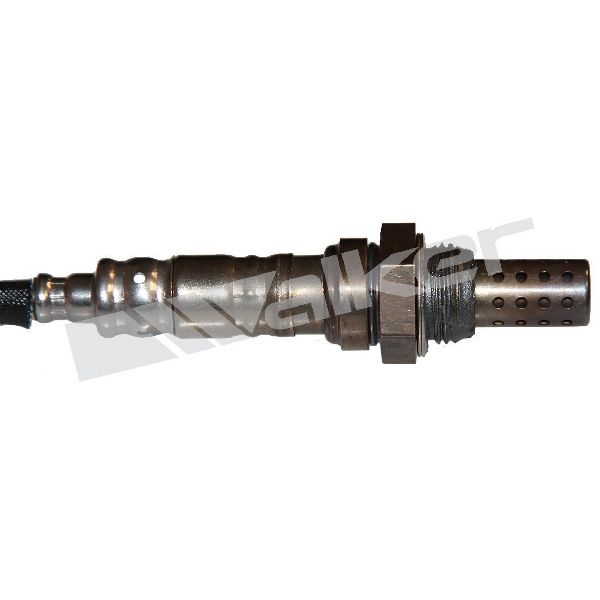
- Oxygen Sensor (Bank 1, Sensor 1)
(OEM #MN153010, MR507379, 1588A064)— This is the component that has failed in the vast majority of P0134 cases.
Trusted brands: Denso (OEM supplier), NGK/NTK, Bosch
OEM price range: $100-$180
Aftermarket price range: $40-$90
Related Codes That Often Appear With This One
- P0135 — P0135 indicates a failure in the heater circuit for the same sensor. If the heater fails, the sensor won't warm up and will show 'no activity', often causing both codes to appear.
- P0171 or P0172 — If the O2 sensor is failing but not completely dead, it may send incorrect data causing the engine to run too lean (P0171) or too rich (P0172) before it finally fails and sets P0134.
Technical Service Bulletins (TSBs) & Recalls
- TSB-01-13-003: While not for the Eclipse specifically, this TSB for other Mitsubishi models with the same engine family explains how a deteriorated rear O2 sensor can falsely trigger a P0134 for the front sensor.
- TSB-07-13-001: Mentioned for some 2002-2004 models, suggests an ECU re-flash may be needed to resolve a false P0134 code, but this is rare.
Platform-Specific Known Issues
- On the 6G72 V6 engine, the Bank 1 Sensor 1 is located on the rear exhaust manifold near the firewall, making access difficult. A specialized O2 sensor socket and extensions are highly recommended for removal.
- Valve cover gasket leaks are a common problem on the 6G72 V6. An oil leak from the rear valve cover can drip directly onto the Bank 1 O2 sensor and its wiring, causing premature failure.
Mechanic-Grade Diagnostic Values
- Front O2 Sensor Heater Circuit Resistance — expected: 4.5 - 8.0 Ohms (cold). Failure: Reading of 0 Ohms (short) or infinite/OL (open circuit).
- Rear O2 Sensor Heater Circuit Resistance — expected: 11 - 18 Ohms (cold). Failure: Reading outside this range, especially 0 Ohms or infinite/OL.
- B1S1 O2 Sensor Signal Voltage (Warm Engine, Idle) — expected: Rapidly fluctuating between ~0.1V and ~0.9V.. Failure: Voltage is flatlined or stuck (e.g., at 0.45V) and not responsive.
- B1S1 O2 Sensor Signal Voltage (Forced Rich/Lean) — expected: Snapping the throttle should cause voltage to spike towards 0.9V (rich). Creating a vacuum leak should cause voltage to drop towards 0.1V (lean).. Failure: Slow or no response to induced rich/lean conditions.
Scan Tool Commands That Help
- Mitsubishi MUT-II / MUT-III: Live Data Monitoring (O2 Sensor Voltage) — This is the dealer-level method to observe the sensor's voltage activity in real-time to confirm if it is flatlined, which is the primary diagnostic step for P0134. The tool also allows for checking the status of related sensors and parameters mentioned in the diagnostic criteria.
Wiring & Ground Locations
- G4 — Upper rear of engine / Left rear of intake manifold.. This is a primary engine ground point. A corroded or loose connection here can cause erratic behavior or failure codes for multiple engine sensors, including the O2 sensor which relies on a stable ground reference.
- B-17 — Connector for the front heated oxygen sensor.. This is the main connector to inspect for damage, corrosion, or to perform electrical tests (voltage, resistance) on the sensor and harness side.
- Front O2 Sensor Connector (Harness Side) — On the wiring harness connecting to the front O2 sensor.. For a 2G/3G Eclipse, wire colors are critical for testing. On the harness side: Red is typically heater power, White is the signal wire, and Black is the signal ground. Testing for voltage/continuity on the correct wires is essential.
"I Checked Everything" — The Actual Cause
- A technician reported a case where a P0134 was triggered intermittently. Standard checks (sensor, wiring) passed. A smoke test was clean, but the actual cause was found to be a hairline crack in the exhaust manifold that only opened up when the engine was hot and under load, allowing unmetered oxygen to hit the sensor and flatten its reading. The fix was replacing the exhaust manifold.
OEM Part Supersession History
MN153010→1588A064— Part number update/revision by the manufacturer.
Heads up: These parts are generally interchangeable for the specified applications (like the Evo 8/9 which shares sensor architecture), but always verify fitment for the specific Eclipse engine (I4 vs V6) as there may be harness length differences. The aftermarket equivalent Denso 234-4741 is listed as a replacement for both OEM numbers.
Model Year Variations Within This Range
- 2000-2005: No significant model-year variations within the 2000-2005 generation have been identified that specifically alter the diagnosis or common causes of a P0134 code. The primary variation remains the location of the sensor between the 4G64 and 6G72 engines.
Diagnostic Flowchart
Other Known Issues on This Vehicle
Issues unrelated to this code that are worth knowing about as an owner of this generation:
- Automatic Transmission 'Wave Spring' Failure (V6) 🔴 High — Common on 2000-2003 V6 automatic models. A wave spring inside the transmission can break, sending metal fragments throughout the unit, often requiring a full rebuild or replacement.
- Hardened Valve Stem Seals (6G72 V6) 🟠 Medium — Very common on higher-mileage 6G72 engines. The seals become hard and brittle, leading to oil consumption and blue smoke from the exhaust, particularly on startup.
- Manual Transmission Shifting Difficulty / Linkage Failure 🟠 Medium — Reported by numerous owners. Can be caused by worn synchronizers (leading to grinding) or failure of the rubber bushings in the shift linkage, causing a very sloppy or disconnected shifter feel.
- Timing Belt Maintenance (Interference Engines) 🔴 High — Both the 4G64 and 6G72 are interference engines. The timing belt has a 60,000-mile replacement interval. Failure to replace it will result in catastrophic engine damage when the belt snaps.
- Sunroof Malfunction / Leaks 🟡 Low — A frequently cited annoyance where the sunroof mechanism fails or the drains become clogged, leading to water leaking into the cabin.
Used vs. New Parts: Buying Guide for This Vehicle
When a used part is the smart pick: For this repair, a used part only makes sense for the wiring connector pigtail if the original is physically damaged. Never buy a used oxygen sensor, as it is a wear item with a finite and unknown remaining lifespan.
Donor-vehicle mileage cap: roughly under 80000 miles for the part to have meaningful remaining life.
What to inspect on the donor part:
- For a wiring pigtail: ensure the plastic is not brittle or cracked.
- Check that the connector's locking tab is intact.
- Inspect the pins for any signs of green or white corrosion.
- Ensure the wires have at least 4-6 inches of flexible, uncracked insulation.
OEM-only on this vehicle (don't cheap out):
- Engine Control Module (ECM) - In the extremely rare event the ECM is the cause, a new or professionally remanufactured OEM unit is the only reliable choice.
Aftermarket brands forum-validated for this vehicle:
- Denso (often the original OEM supplier for Mitsubishi)
- NTK (also a major OEM supplier)
- Bosch (generally reliable, but confirm exact fitment as physical size can sometimes differ from OEM)
Brands owners have reported issues with on this vehicle:
- Unnamed or generic 'white-box' brands from online marketplaces. These often use lower-quality sensor elements and heater circuits, leading to premature failure or inaccurate readings that can cause other running issues.
Real Owner Stories
Aggregated from forums and TSBs cited above. Mileages and costs reflect what owners reported in those sources.
2002 Mitsubishi Eclipse GT 3.0L V6
Symptoms: The owner confirmed no voltage fluctuation on the O2 sensor using a scan tool.
What fixed it: Replacing the upstream O2 sensor on the firewall side (Bank 1 Sensor 1).
Source hint: mitsubishiforum.com post by a user with a 2002 Eclipse GT
2000-2005 Mitsubishi Eclipse (Engine Unspecified)
Symptoms: P0134 and P0135 codes present simultaneously.
What fixed it: Replacing the Bank 1 Sensor 1, which is the rear manifold sensor on V6 models.
Source hint: club3g.com thread titled 'P0134 and P0135 codes need help'
2001-2005 Dodge Stratus Coupe 3.0L V6
Symptoms: P0134 code on a platform mate sharing the same 6G72 V6 engine and chassis.
What fixed it: Replacing the upstream O2 sensor, following the same diagnostic path as the Eclipse.
Source hint: DodgeForum.com user report regarding the Stratus Coupe platform mate
Related OBD-II Codes
Frequently Asked Questions
Where is the Bank 1 Sensor 1 located on my 6G72 V6 Eclipse?
Could a problem with my rear O2 sensor cause the P0134 code for the front sensor?
My 2002 Eclipse GT has a P0134 code that won't go away; is there a software fix?
Can an oil leak cause my O2 sensor to fail prematurely on the V6 model?
I have a 4G64 2.4L I4; where should I look for the P0134 sensor?
Is it possible a blown fuse is causing my P0134 code?
Helpful Videos
We Have This Part in Stock


The information in this article is provided for general reference and educational purposes only. Vehicle specifications, procedures, and part compatibility can vary by production date, trim level, and region. Always consult your vehicle's factory service manual and verify part numbers before purchasing or performing repairs. Safety-critical components such as airbags, seat belts, and braking systems should be installed by a qualified professional.
- Mitsubishi Eclipse:
- 🧭 Diagnostic Flowchart
- 🎬 Helpful Videos
- 🛍️ Shop This Part
- What's Unique About the 2000-2005 Mitsubishi Eclipse
- Symptoms You May Notice
- Most Likely Causes
- Rare But Worth Checking
- Diagnosis Steps
- Parts You'll Likely Need
- Related Codes That Often Appear With This One
- Technical Service Bulletins (TSBs) & Recalls
- Platform-Specific Known Issues
- Mechanic-Grade Diagnostic Values
- Scan Tool Commands That Help
- Wiring & Ground Locations
- "I Checked Everything" — The Actual Cause
- OEM Part Supersession History
- Model Year Variations Within This Range
- Other Known Issues on This Vehicle
- Used vs. New Parts: Buying Guide for This Vehicle
- Real Owner Stories
- 2002 Mitsubishi Eclipse GT 3.0L V6
- 2000-2005 Mitsubishi Eclipse (Engine Unspecified)
- 2001-2005 Dodge Stratus Coupe 3.0L V6
- Related OBD-II Codes
- Frequently Asked Questions
- 🎟️ Get 5% Off