

P0134 on 2007-2012 Nissan Altima: Causes and Fixes for No O2 Sensor Activity
This code means the primary oxygen sensor (Bank 1, Sensor 1) has failed and isn't sending a signal. The most common fix is to replace the front Air/Fuel Ratio sensor. Expect to pay $70-$150 for an aftermarket sensor (Denso/NTK) or $200-$250 for an OEM part. It's a straightforward DIY job on the 2.5L engine but more difficult on the 3.5L V6 due to tight access near the firewall.
- P0134 means the front (upstream) oxygen sensor on Bank 1 is not responding.
- The most likely cause is a failed Air/Fuel Ratio sensor, which is a wear item.
- Before replacing the sensor, always check the corresponding fuse and inspect the wiring for obvious damage.
- On the 2.5L 4-cylinder engine, this is a relatively easy DIY repair. On the 3.5L V6, access is much more difficult and may be best left to a professional.
- Use a quality replacement sensor from brands like Denso or NTK to ensure compatibility and avoid repeat failures.
What's Unique About the 2007-2012 Nissan Altima
For the 2007-2012 fourth-generation (L32) Altima, this code is a very common and straightforward issue. The upstream sensors, technically Air/Fuel ratio sensors, are known to fail from age and heat cycles. There isn't a specific design flaw that causes this, but rather it's a typical wear-and-tear item. The key difference between the two engines is accessibility; on the QR25DE 2.5L, the sensor is easy to reach at the front of the engine bay, while on the VQ35DE 3.5L, it's on the rear exhaust manifold near the firewall, making replacement much more challenging.
Symptoms You May Notice
- Check Engine Light is on
- Decreased fuel economy
- Rough or unstable idle
- Engine hesitation or sluggish acceleration
- Failure to pass an emissions test
- Engine pinging or rattling sounds during acceleration
- Replacing the downstream (Sensor 2) oxygen sensor instead of the upstream (Sensor 1) Air/Fuel Ratio sensor.
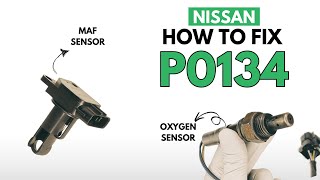
- Replacing the Mass Airflow (MAF) sensor without proper diagnosis. While a faulty MAF can cause fuel trim issues, it does not typically cause a 'no activity' code for the O2 sensor.
Most Likely Causes
- Failed Bank 1, Sensor 1 Air/Fuel Ratio Sensor 🔴 High Probability → Shop Oxygen Sensor These sensors have a finite lifespan and fail due to normal wear and tear from extreme heat cycles. The internal heater element, which is crucial for quick activation, is a common point of failure. Without a working heater, the sensor cannot reach operating temperature and will not send a signal, triggering P0134.
How to confirm: Use a scan tool to monitor live data for 'B1S1'. If the voltage is stuck (e.g., at 0.45V) and does not fluctuate rapidly once the engine is warm, the sensor is dead. You can also test the resistance of the sensor's heater circuit; an open circuit (infinite resistance) or a resistance value outside of the 11-16 Ω specification confirms failure.
Typical fix: Replace the Bank 1, Sensor 1 Air/Fuel Ratio sensor. It is highly recommended to use OEM, Denso, or NTK branded sensors to avoid compatibility issues.
Est. part cost: $70 - $250 - Damaged Wiring or Connector 🟡 Medium Probability The sensor wiring is exposed to high heat and road debris. Wires can become brittle and crack, or the connector can melt or get filled with contaminants. The harness can also be damaged by contact with hot exhaust components if not properly secured.
How to confirm: Visually inspect the wiring harness from the sensor to the main engine harness. Look for any signs of melting, chafing, corrosion in the connector pins, or breaks. Check for 12V power at the heater circuit wires in the connector with the key on.
Typical fix: Repair the damaged section of wiring or replace the connector pigtail.
Est. part cost: $10 - $30 - Blown Fuse for Sensor Heater Circuit ⚪ Low Probability
How to confirm: Locate the fuse for the 'A/F Heater' or 'O2 Heater' in the IPDM E/R (Intelligent Power Distribution Module Engine Room), which is the fuse box in the engine bay. For this platform, it is often a 15A fuse labeled 'A/F HTR' or similar. Visually inspect the fuse to see if it has blown.
Typical fix: Replace the blown fuse. If the fuse blows again immediately, it indicates a short circuit in the wiring or the sensor itself that must be diagnosed.
Est. part cost: $1 - $5 - Exhaust Leak Before the Sensor ⚪ Low Probability
How to confirm: Listen for a ticking or hissing sound from the exhaust manifold, especially when the engine is cold. A cracked manifold is a known issue on some QR25DE engines. You can also use a smoke machine to introduce smoke into the exhaust system and look for leaks between the cylinder head and the A/F sensor.
Typical fix: Replace the exhaust manifold gasket or repair/replace the cracked manifold.
Est. part cost: $20 - $400
Rare But Worth Checking
- Faulty Engine Control Module (ECM): → Shop Engine Control Module (ECM) This is extremely rare. Before condemning the ECM, all other possibilities, including the sensor, wiring, and fuses, must be exhaustively ruled out. A TSB for older 2000-2001 Maximas noted intermittent ECM connections, but this is not a documented common issue for this Altima.
- Leaking Intake Manifold Gasket: A vacuum leak from a faulty intake manifold gasket can disrupt the air/fuel mixture so significantly that it causes unusual O2 sensor readings, sometimes leading to a P0134 code, although it more commonly throws lean codes like P0171. One owner on a Nissan forum traced a P0134 to a split in the intake plenum gasket.
Diagnosis Steps
- Read the Codes: Use an OBD-II scanner to confirm P0134 is the only code, or note any other codes present, such as P0135.
- Inspect the Fuse: Locate and check the 15A fuse for the A/F sensor heater in the engine bay fuse box (IPDM E/R). If it's blown, replace it and see if the code returns.
- Visual Inspection: Carefully inspect the wiring and connector for the Bank 1 Sensor 1 A/F sensor. Look for any signs of melting, corrosion, or physical damage. Ensure the harness is properly clipped away from the hot exhaust manifold.
- Analyze Live Data: With a scan tool, monitor the live data stream for the 'B1S1' voltage. When the engine is running and warmed up, a healthy sensor's voltage should fluctuate rapidly. If it is stuck at a fixed voltage (often around 0.4-0.5V) or shows no activity, the sensor has likely failed.
- Check for Exhaust Leaks: With the engine running, listen for any hissing or ticking noises from the exhaust manifold area that would indicate a leak before the sensor. A smoke test is the most effective way to confirm a leak.
- Test the Sensor Circuit: If the sensor appears inactive but the wiring looks good, unplug the sensor. Check for 12V power and a good ground at the connector's heater circuit pins with the ignition on. If power or ground is missing, trace the wiring back to the ECM/fuse box.
- Replace the Sensor: If all other checks pass, the A/F sensor itself is the culprit. Replace it with a quality part (OEM, Denso, or NTK). Apply anti-seize to the new sensor's threads and torque to specification (typically around 30-38 ft-lbs).
Parts You'll Likely Need
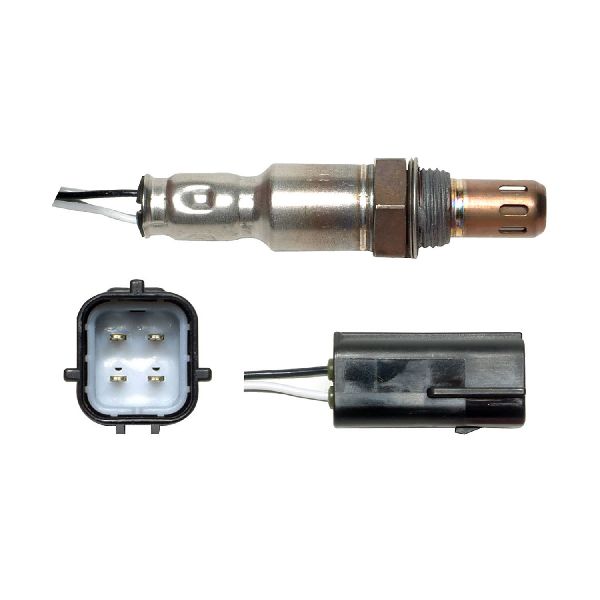
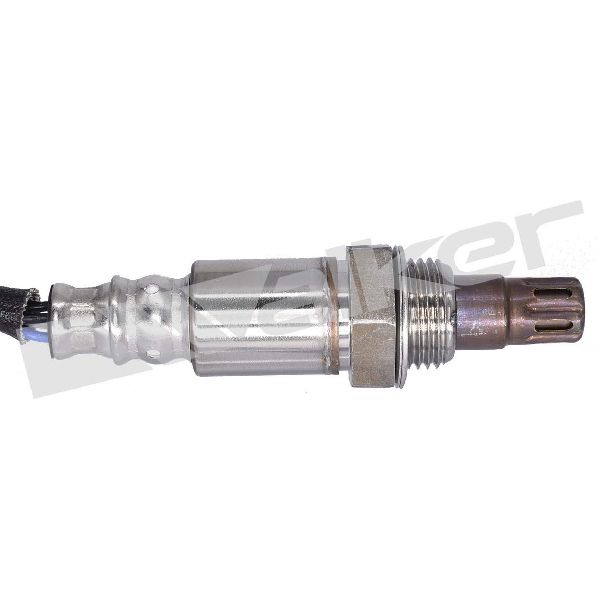
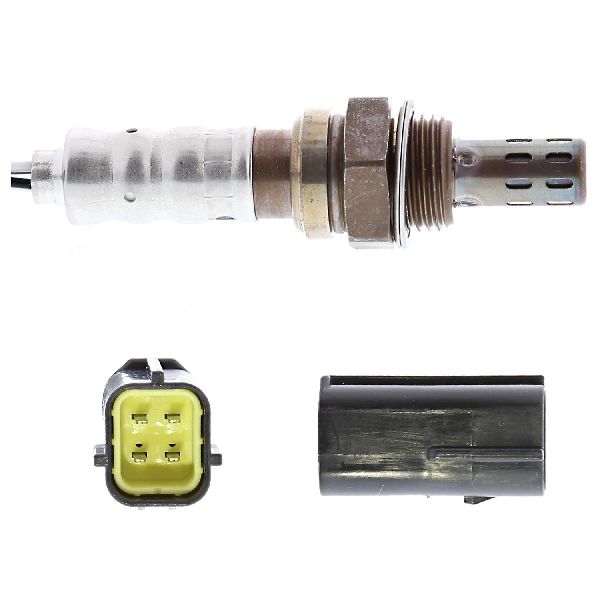
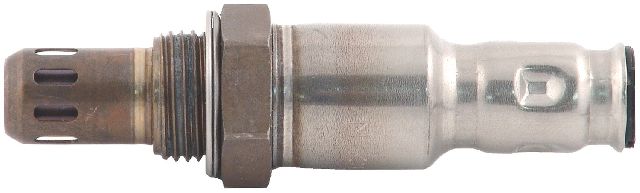
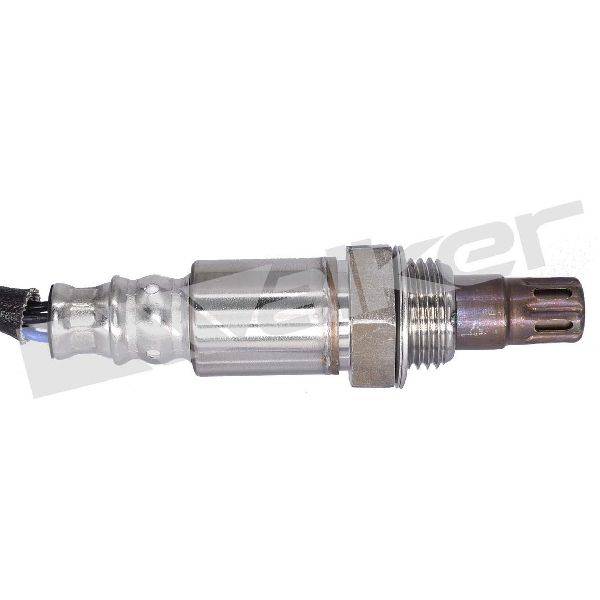
- Air/Fuel Ratio Sensor (Bank 1, Sensor 1)
(OEM #22693-3TY0B (replaces 22693-3TY0A))— This is the primary sensor responsible for reporting the air-fuel mixture to the computer. Its failure is the most common cause of P0134.
Trusted brands: Denso (Part #234-9072 for 2.5L; #234-9070 for 3.5L), NTK (NGK)
OEM price range: $200 - $250
Aftermarket price range: $70 - $150
Related Codes That Often Appear With This One
- P0135 — P0135 indicates a malfunction in the heater circuit of the same sensor. Since the sensor cannot become active without a working heater, a P0135 is often the root cause that leads to the P0134 'no activity' code.
- P0171 — This code indicates 'System Too Lean'. A significant exhaust leak before the O2 sensor can introduce extra oxygen, causing a lean reading (P0171) and potentially making the sensor's signal so erratic or flat that the ECM flags it as inactive (P0134).
Platform-Specific Known Issues
- Repair Difficulty: 2.5L vs 3.5L Engine: On the QR25DE 2.5L engine, the Bank 1 Sensor 1 is located directly on the front of the exhaust manifold, making it easily accessible from the top of the engine bay. The job can typically be done in under 30 minutes with a special O2 sensor socket or a 22mm wrench. On the VQ35DE 3.5L V6, Bank 1 is the rear bank, closer to the firewall. Accessing this sensor is significantly more difficult, often requiring removal of other components and working in a tight space from underneath the vehicle. This can turn a simple job into a multi-hour task.
Mechanic-Grade Diagnostic Values
- A/F Ratio Sensor (B1S1) Heater Resistance — expected: 11 to 16 Ω at 20°C (68°F). Failure: An open circuit (infinite resistance) or a reading outside the specified range indicates a failed heater element within the sensor.
- A/F Ratio Sensor (B1S1) Live Data Voltage — expected: Rapidly fluctuating between approximately 0.1V and 0.9V when in closed loop.. Failure: Voltage is stuck, flat, or does not exceed 0.45V for an extended period (e.g., 15-30 seconds) during specified driving conditions.
- ECM Malfunction Threshold (Internal Resistance) — expected: Internal resistance should be below 200 Ω after startup.. Failure: The ECM will flag a malfunction if the A/F sensor's internal resistance is 200 Ω or more for 40-90 seconds after startup, or 270 Ω or more for 1 second when hot.
- A/F Sensor Reference Voltage (at connector, from ECM) — expected: Approximately 2.2V with key on, engine off.. Failure: No voltage or significantly different voltage points to a wiring or ECM issue, not a sensor issue.
Hidden / Shadow Codes Worth Checking
- Mode 6, TID $01, CID $01: This refers to the Oxygen Sensor Heater Monitor for Bank 1, Sensor 1. It checks the performance of the heater circuit. (see via An advanced OBD-II scanner capable of displaying Mode $06 data. A 'FAIL' on this test points directly to a problem with the B1S1 heater, which is the most common cause of P0134.)
Scan Tool Commands That Help
- Nissan CONSULT or equivalent advanced scan tool: A/F CONTROL Active Test — This function allows a technician to manually command the fuel injection volume rich (+25%) or lean (-12.5%) while observing the A/F sensor's voltage response. If the voltage for B1S1 does not change accordingly, it confirms the sensor is inactive or the circuit is compromised. This is a definitive test to isolate a bad sensor from other fuel system issues.
Wiring & Ground Locations
- A/F Sensor 1 Connector (QR25DE) — On the 2.5L engine, the connector is typically clipped to a bracket on the top, rear of the engine, easily visible and accessible.. This is the primary point for testing voltage, ground, and resistance for the sensor and harness side. Corrosion or damage here is a common cause of failure.
- ECM Connector E44 (QR25DE) — The ECM is located in the engine compartment, on the left (driver's side) front area. E44 is one of the main harness connectors to the ECM.. Specific pins on this connector correspond to the A/F sensor heater, signal, and ground. For example, checking for continuity between the sensor connector and these pins can rule out a wiring break. Relevant pins include those for A/F SENSOR 1 (Signal), A/F SENSOR 1 HTR (Heater), and SENSOR GND.
- Engine Ground Points — Key ground points for the engine harness are located on the cylinder head and engine block. For the QR25DE, a critical ground is often found near the intake manifold.. A poor engine ground can cause floating voltages and erratic sensor readings. While not a primary cause for a 'no activity' code, it can contribute to sensor circuit faults and should be checked for corrosion and tightness if wiring issues are suspected.
Real Owner Repair Stories
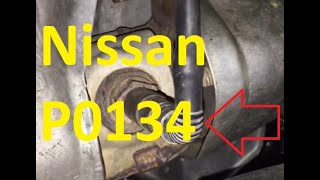
- YouTube Channel 'Trick Shift Garage' (2007-2012 Nissan Altima 2.5L) — Check Engine Light with codes related to the upstream oxygen sensor (P0130, P0134, etc.).
❌ Tried (didn't work) The video directly proceeds to replacement, implying diagnosis confirmed the sensor was the fault.
✅ What actually fixed it Replacing the upstream Air/Fuel Ratio sensor (Bank 1, Sensor 1) located on the front exhaust manifold. The repair was straightforward using a special O2 sensor socket.
OEM Part Supersession History
22693-3TY0A→22693-3TY0B— Standard part revision, likely for improved durability or minor manufacturing changes.
Heads up: The new part number (22693-3TY0B) is the correct, backward-compatible replacement. No incompatibility issues are known.
Diagnostic Flowchart
Other Known Issues on This Vehicle
Issues unrelated to this code that are worth knowing about as an owner of this generation:
- CVT Transmission Failure 🔴 High — Very common, especially in 2007-2010 models. Symptoms include whining, shuddering, and loss of acceleration. Failure often occurs between 80,000 and 120,000 miles. (Ref: Nissan extended the powertrain warranty to 10 years/120,000 miles for many early models to address this.)
- Electronic Steering Column Lock (ESCL) Failure 🔴 High — Widespread issue on models with push-button start (2009-2011). The module fails, preventing the car from starting and leaving the steering wheel locked. (Ref: Nissan issued Voluntary Service Campaign PC516 for 2009-2010 models to replace the faulty unit.)
- Melting / Sticky Dashboard 🟠 Medium — Common on 2008-2009 models, particularly in hot, sunny climates. The dashboard material degrades, becoming sticky and creating a dangerous reflective glare on the windshield. (Ref: A class-action lawsuit in Florida resulted in a settlement where Nissan covered most of the replacement cost for affected owners in that state.)
- Cracked Exhaust Manifold / Failed Catalytic Converter (QR25DE) 🟠 Medium — The pre-catalytic converter integrated into the exhaust manifold is a known failure point on early QR25DE engines. It can crack, causing an exhaust leak, or the catalyst material can break apart and be ingested by the engine, causing catastrophic failure.
- Rusted Floor Pans / Frame Rails 🔴 High — A significant issue in regions that use road salt. The floor pan on the driver and passenger side is prone to severe corrosion, which can be a major safety concern. (Ref: No official recall, but numerous owner complaints have been filed.)
Used vs. New Parts: Buying Guide for This Vehicle
When a used part is the smart pick: For this specific P0134 repair, buying a used part is generally not recommended for the sensor itself. However, if the cause is a cracked exhaust manifold or a damaged wiring harness pigtail, a used part from a low-mileage donor vehicle is a very cost-effective option.
Donor-vehicle mileage cap: roughly under 80000 miles for the part to have meaningful remaining life.
What to inspect on the donor part:
- For an exhaust manifold: Check thoroughly for hairline cracks, especially around the welds and flange. Ensure all mounting studs are intact.
- For a wiring connector/pigtail: Inspect for brittle plastic, melted sections, or corrosion on the pins. The wires should be flexible, not stiff or cracked.
OEM-only on this vehicle (don't cheap out):
- While not strictly 'OEM-only', it is highly recommended to use either OEM, Denso, or NTK for the Air/Fuel Ratio sensor. Cheaper, unbranded sensors are notorious for failing prematurely or having incorrect voltage ranges, causing the code to return.
Aftermarket brands forum-validated for this vehicle:
- Denso
- NTK (a brand of NGK)
Brands owners have reported issues with on this vehicle:
- Generic, no-name brands from online marketplaces are frequently reported on forums as being unreliable for this specific application.
Real Owner Stories
Aggregated from forums and TSBs cited above. Mileages and costs reflect what owners reported in those sources.
2007-2012 Nissan Altima
Symptoms: The user discovered a split in the intake plenum gasket between two runners.
What fixed it: Repairing the intake plenum gasket leak.
Source hint: NissanForums.com thread titled 'No bueno - Potential P0131 P0134 code culprit?'
2007-2012 Nissan Altima 3.5L V6
Symptoms: Difficulty accessing the sensor due to its location on the rear bank near the firewall.
What fixed it: Replacing the front A/F sensor using specific tools like an offset O2 sensor socket.
Source hint: NissanForums.com '4th Generation Altima Sedan (2007-2012) General Discussion'
Related OBD-II Codes
Frequently Asked Questions
Is it harder to replace the Bank 1 Sensor 1 on the 2.5L or the 3.5L Altima?
What brand of A/F sensor should I use for my 2007-2012 Altima to clear P0134?
Could a vacuum leak cause P0134 on my Altima instead of a bad sensor?
Where is the fuse for the air/fuel sensor heater located on this model?
My Altima has a ticking sound and P0134; could they be related?
What are the specific resistance specs for testing the A/F sensor heater circuit?
Helpful Videos
We Have This Part in Stock


The information in this article is provided for general reference and educational purposes only. Vehicle specifications, procedures, and part compatibility can vary by production date, trim level, and region. Always consult your vehicle's factory service manual and verify part numbers before purchasing or performing repairs. Safety-critical components such as airbags, seat belts, and braking systems should be installed by a qualified professional.
- Nissan Altima:
- 🧭 Diagnostic Flowchart
- 🎬 Helpful Videos
- 🛍️ Shop This Part
- What's Unique About the 2007-2012 Nissan Altima
- Symptoms You May Notice
- Most Likely Causes
- Rare But Worth Checking
- Diagnosis Steps
- Parts You'll Likely Need
- Related Codes That Often Appear With This One
- Platform-Specific Known Issues
- Mechanic-Grade Diagnostic Values
- Hidden / Shadow Codes Worth Checking
- Scan Tool Commands That Help
- Wiring & Ground Locations
- Real Owner Repair Stories
- OEM Part Supersession History
- Other Known Issues on This Vehicle
- Used vs. New Parts: Buying Guide for This Vehicle
- Real Owner Stories
- 2007-2012 Nissan Altima
- 2007-2012 Nissan Altima 3.5L V6
- Related OBD-II Codes
- Frequently Asked Questions
- 🎟️ Get 5% Off