

P0134 on 2009-2013 Subaru Forester: Causes and Fixes for Front O2 Sensor Failure
On a 2009-2010 Forester with the EJ25 engine, P0134 almost always means the front Air/Fuel (A/F) ratio sensor has failed. The most common fix is replacing it with a Denso sensor (part #234-9123). Expect to pay around $120-$180 for the part, with a DIY difficulty of 2/5. Before ordering parts, always check the 15A 'A/F HTR' fuse in the engine bay.
- P0134 on a 2009-2010 Forester almost certainly means the front Air/Fuel sensor has failed.
- Check for code P0030 at the same time; if present, it's a near-certain confirmation of a bad sensor.
- Always check the 15A 'A/F HTR' fuse in the engine bay before ordering parts.
- Use a high-quality replacement sensor from Denso (OEM) or NTK to ensure compatibility and avoid repeat failures.
- Do not confuse the front (Sensor 1) with the rear (Sensor 2); this code is only for the front sensor.
What's Unique About the 2009-2013 Subaru Forester
On this generation of Forester, the front A/F sensor is a known common failure item due to age and heat cycles, particularly the internal heater circuit. This failure is so common that P0134 is frequently accompanied by P0030 (Heater Circuit Malfunction), which strongly points to a dead sensor. Owners and mechanics widely report that using the OEM supplier, Denso, is critical for a lasting repair, as Subaru ECMs can be sensitive to other brands, especially Bosch sensors which are known to cause issues. It's also critical to note that 2009-2010 models use the EJ25 engine, while 2011-2013 models use the FB25 engine, and they require different A/F sensors.
Generation note: The 2009-2013 year range covers the end of the EJ25 SOHC engine (2009-2010) and the beginning of the FB25 DOHC engine (2011-2013) in the non-turbo Forester. While the P0134 code has the same meaning for both, they use different A/F sensor part numbers and have different common issues. This guide focuses on the EJ25 engine found in the 2009-2010 models.
Symptoms You May Notice
- Check Engine Light is on
- Cruise control light flashing and Vehicle Dynamics Control (VDC) light is on
- Significantly decreased fuel economy (e.g., dropping to 15 MPG)
- Rough or uneven idle
- Hesitation or sluggishness during acceleration
- Strong smell of gasoline or sulfur from the exhaust due to a rich fuel mixture
- Replacing the rear oxygen sensor (Sensor 2). This code is specific to the front sensor (Sensor 1).
- Replacing the catalytic converter. P0134 indicates a problem with the sensor *before* the converter, not the converter itself.
- Using a cheap, universal, or incorrect brand of sensor. Subaru ECMs are known to be incompatible with many non-OEM brands (especially Bosch for this application), which can lead to the code returning immediately or failing prematurely.
Most Likely Causes
- Failed Front Air/Fuel (A/F) Ratio Sensor 🔴 High Probability → Shop Oxygen Sensor The internal heater circuit of the sensor is a very common failure point due to age (typically 80k-100k miles) and constant heat cycles. This is the most frequent cause for P0134 on this vehicle.
How to confirm: Scan for other codes; P0030 (Heater Circuit Malfunction) often appears with P0134, confirming a sensor failure. Use a scan tool to watch live data for 'Bank 1 Sensor 1'; if the voltage/current is flat, unchanging, or zero after the engine has warmed up, the sensor is dead.
Typical fix: Replace the front A/F ratio sensor. It is located on the passenger side of the engine in the exhaust manifold. A 22mm (or 7/8") offset oxygen sensor socket is required for removal and installation.
Est. part cost: $120-$180 - Damaged Wiring or Connector ⚪ Low Probability The sensor wiring is routed near hot exhaust components and the radiator hose, and can become brittle, melt, or get damaged over time. The connector is a grey plug located on a bracket on the passenger side strut tower.
How to confirm: Visually inspect the wiring harness from the sensor up to the connector on the passenger side strut tower for any signs of melting, chafing, or breaks. Check the connector pins for corrosion or looseness.
Typical fix: Repair or replace the damaged section of the wiring harness or the connector.
Est. part cost: $10-$50 - Blown Fuse for Sensor Heater ⚪ Low Probability
How to confirm: Check the 15A 'A/F HTR' fuse in the main fuse box located in the engine bay near the battery.
Typical fix: Replace the blown fuse. If it blows again, there is a short circuit in the heater circuit that needs to be diagnosed, possibly in the sensor itself or the wiring.
Est. part cost: $1-$5
Rare But Worth Checking
- Exhaust Leak: A significant exhaust leak before the A/F sensor can allow outside air to enter the exhaust stream, potentially causing erratic readings, though it's less likely to cause a complete 'no activity' code.
- Faulty Engine Control Module (ECM): → Shop Engine Control Module (ECM) This is extremely rare. The ECM should only be considered after all other possibilities, including the sensor, wiring, and fuse have been thoroughly ruled out.
- Software Calibration Issues: In some Subaru models, the ECM may require updated software to correctly handle P0134. For instance, TSB Bulletin #11-144-14 notes that reprogramming files were released for other models in the Subaru lineup to address P0134 and related codes.
Diagnosis Steps
- Read the trouble codes with an OBD-II scanner. Note if P0030 is also present, as this strongly indicates a failed sensor.
- Visually inspect the A/F sensor's wiring harness for any signs of melting, fraying, or physical damage. The harness runs up the passenger side of the engine to a grey connector on the strut tower.
- Check the 'A/F HTR' 15A fuse in the engine bay fuse box. If it's blown, replace it. If it blows again, diagnose a short in the heater circuit.
- Using a scan tool with live data, monitor the voltage or current for 'Bank 1 Sensor 1'. If the engine is warm and the reading is flat, unchanging, or zero, the sensor is not working. A healthy sensor's voltage should fluctuate rapidly.
- If the fuse and wiring are good, and the live data shows no activity, the front A/F sensor is faulty and needs to be replaced.
- After replacement, clear the codes with the scanner and perform a test drive to ensure the Check Engine Light does not return.
Parts You'll Likely Need
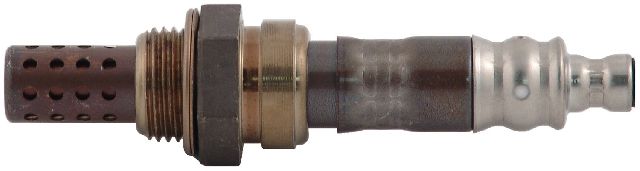
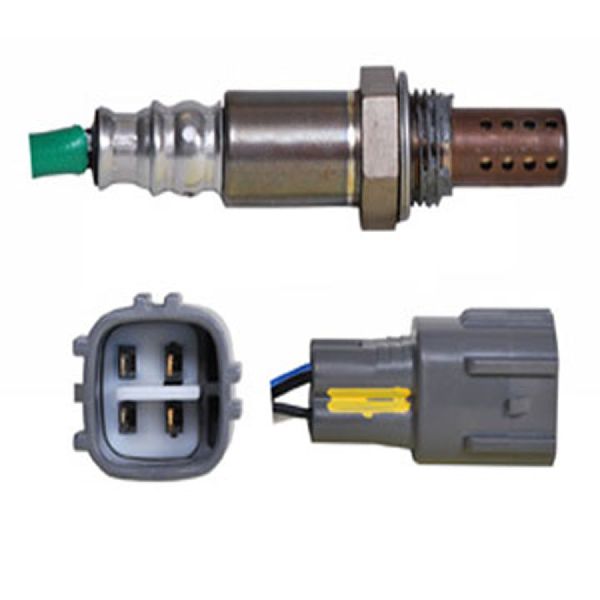
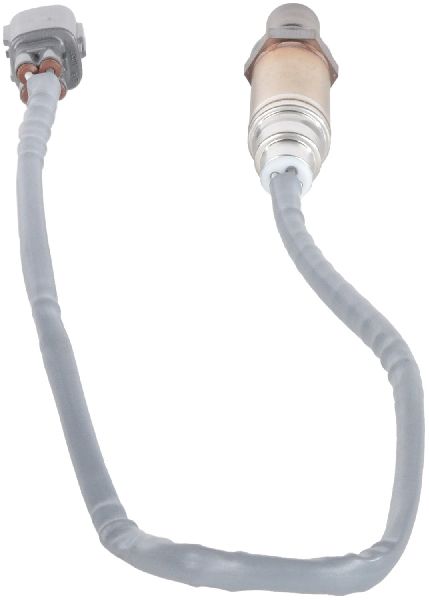
- Front Air/Fuel Ratio Sensor
(OEM #22641AA510)— This is the component that fails in the vast majority of P0134 cases on this vehicle, usually due to an internal heater circuit failure.
Trusted brands: Denso (OEM supplier, part #234-9123), NTK
OEM price range: $180-$250
Aftermarket price range: $120-$180
Related Codes That Often Appear With This One
- P0030 — This code indicates a fault in the heater control circuit for the exact same sensor (Bank 1, Sensor 1). They frequently appear together because a failure of the sensor's internal heater is the most common reason it stops sending a signal, triggering P0134. Seeing both codes is a near-certain confirmation of a bad A/F sensor.
Platform-Specific Known Issues
- Real Owner Experience: P0134 and P0030: A Reddit user with a 2010 Forester reported codes P0030 and P0134, along with a rough running condition and a rich exhaust smell. The community immediately pointed to a dead or unplugged front A/F sensor, confirming this is the textbook failure mode.
- Real Owner Experience: Disabled CEL and Horrible MPG: A 2009 Forester owner on Reddit discovered a P0134 code after experiencing horrible fuel mileage (15 MPG). They found a previous owner had disabled the check engine light bulb. This highlights that severe performance drops can be the only noticeable symptom if the CEL is ignored or disabled.
Mechanic-Grade Diagnostic Values
- A/F Sensor Heater Circuit Resistance — expected: 2.0 to 4.0 ohms at room temperature. Failure: A reading of 'OL' (Open Line/infinite resistance) on a multimeter, or a value of 255 ohms on a Subaru scan tool, indicates a burned-out heater circuit.
- A/F Sensor #1 Resistance (Live Data) — expected: A stable value around 31 ohms on a warm engine.. Failure: A very high or fluctuating reading (e.g., 98-170+ Ohms) or a value of 255 ohms indicates a faulty sensor or circuit problem.
- A/F Sensor Signal Voltage (Live Data) — expected: Relatively steady between 2.5V and 3.3V at idle for a healthy wideband sensor.. Failure: A flatlined, unresponsive voltage stuck at a specific value (e.g., 0.0V, 3.3V, or 5.0V) that does not change with engine RPM confirms 'no activity'.
- Heater Circuit Power Supply at Connector — expected: ~12V (Battery Voltage) with Key On, Engine Off.. Failure: Low or no voltage points to a problem upstream of the sensor, such as the 'A/F HTR' fuse or wiring from the fuse box.
Scan Tool Commands That Help
- Subaru Select Monitor (SSM) or equivalent advanced scanner: Current Data Display > A/F Sensor #1 Resistance — To view the sensor's internal resistance as seen by the ECM. This is a direct way to confirm if the ECU is detecting an open circuit (reading 255 ohms) or an out-of-spec resistance value from the sensor.
- Subaru Select Monitor (SSM) or equivalent advanced scanner: Current Data Display > A/F Correction #1 (%) — To monitor short-term fuel trim. When P0134 is active, this value will be frozen (often at 0%), confirming the ECM is in open-loop and ignoring the faulty sensor's input.
- Subaru Select Monitor (SSM) or generic OBD-II scanner: Read Freeze Frame Data — To see the exact engine conditions (coolant temp, RPM, speed) when the P0134 code was triggered. This can help determine if the failure is related to cold starts (heater circuit failure) or other specific operating conditions.
Wiring & Ground Locations
- Gb-1 — Right front of the engine compartment.. This is a primary engine bay ground distribution point. A corroded or loose connection here can cause various electrical issues, including erratic sensor behavior.
- Engine Block to Chassis Ground — A strap connecting the engine block directly to the vehicle's frame/chassis.. The ECU and its sensors rely on a solid ground reference. Subarus are known for having mediocre factory grounds that can degrade over time. A poor engine-to-chassis ground can introduce noise and voltage offsets, potentially affecting sensor readings.
- Intake Manifold Ground — The ECU grounds are often tied to the top of the intake manifold.. This is a critical ground path for the ECU itself. If the manifold's ground connection to the block or chassis is poor (e.g., due to corrosion or non-conductive spacers), it can cause a wide range of bizarre sensor codes and running issues.
- ECM Connector B134, Pin 26 — At the Engine Control Module (ECM), located in the passenger footwell area.. This specific pin is for the Front Oxygen (A/F) Sensor Signal 2 wire. In advanced diagnostics, checking for continuity from this pin to the sensor connector can definitively rule out a break in the signal wire.
Real Owner Repair Stories
- Cartalk forum user (2002 Chrysler T&C (similar principle)) — P0134 code, sluggish running, poor gas mileage.
❌ Tried (didn't work) Replacing the O2 sensor three times. The code returned each time after about 10 minutes of driving.
✅ What actually fixed it The user was advised that the PCM was likely not the issue and that the root cause could be something contaminating the new sensors, such as a coolant leak (from a head gasket) or use of non-sensor-safe silicone sealant on the engine. This highlights that if multiple new sensors fail, the cause is likely external contamination or a persistent wiring/voltage issue, not faulty parts.
OEM Part Supersession History
22641AA510→N/A— This part number remains current for the specified application (e.g., 2009-2010 Forester XT, 2008-2014 WRX/STI).
Heads up: This part number is for turbocharged EJ25 engines (WRX/STI). While it is a front A/F sensor, it is NOT the correct part for the non-turbo EJ25 in the 2009-2010 Forester. The correct OEM part for the non-turbo is 22641AA480, which corresponds to Denso 234-9123. Using the wrong part will result in incorrect readings and persistent codes.
Model Year Variations Within This Range
- 2011-2013 only: These model years use the FB25 engine, not the EJ25. They require a different front A/F sensor and have different wiring and diagnostic procedures. This guide, focused on the EJ25, does not apply to these years.
Diagnostic Flowchart
Other Known Issues on This Vehicle
Issues unrelated to this code that are worth knowing about as an owner of this generation:
- Head Gasket Failure (External Oil/Coolant Leak) 🔴 High — Very common on SOHC EJ25 engines, typically between 80,000 and 150,000 miles. Manifests as an external leak from the bottom of the head/block joint.
- Excessive Oil Consumption 🟠 Medium — Can affect EJ25 engines at higher mileage due to worn piston rings or PCV system issues, though it is more famously a problem on the later FB25 engine. Owners report needing to add oil between changes. (Ref: A class-action lawsuit addressed this for later models, but owners of 2009-2010 models also report issues.)
- Timing Belt Maintenance 🔴 High — The EJ25 is an interference engine requiring timing belt, water pump, and idler replacement every 105,000 miles. Failure to do so will result in catastrophic engine damage.
- Catalytic Converter Failure 🟠 Medium — Premature failure of the catalytic converter (often triggering code P0420) is a common complaint on this generation. It can be exacerbated by running too long with a faulty A/F sensor.
- Leaking Valve Cover & Spark Plug Tube Seals 🟡 Low → Shop Engine Valve Cover — Extremely common issue where hardened gaskets allow oil to leak externally and into the spark plug tubes, which can cause misfires.
Used vs. New Parts: Buying Guide for This Vehicle
When a used part is the smart pick: For this specific repair, a used A/F sensor is NEVER a smart choice. These are wear-and-tear items with a finite lifespan (typically 80k-100k miles). A used sensor from a junkyard has unknown mileage and is likely near the end of its life, making it a waste of time and money.
What to inspect on the donor part:
- Not applicable. Do not buy a used A/F sensor.
OEM-only on this vehicle (don't cheap out):
- Front Air/Fuel Ratio Sensor
Aftermarket brands forum-validated for this vehicle:
- Denso (OEM supplier, part #234-9123 for 2009-2010 non-turbo)
- NTK
Brands owners have reported issues with on this vehicle:
- Bosch (frequently reported as incompatible with the Subaru ECM for this application)
- Unbranded or 'universal' sensors
Real Owner Stories
Aggregated from forums and TSBs cited above. Mileages and costs reflect what owners reported in those sources.
2010 Subaru Forester 2.5L EJ25
Symptoms: Codes P0030 and P0134, rough running condition, and a rich exhaust smell.
What fixed it: The community identified the issue as a dead or unplugged front A/F sensor.
Source hint: Reddit r/subaruforester: 'Error codes P0030 and P0134 on 2010 Subaru Forester'
2009 Subaru Forester 2.5L EJ25
Symptoms: Code P0134, 'absolutely horrible fuel mileage (15mpg, highway!)', and the check engine light was found to be disabled by a previous owner.
What fixed it: Replacing the upstream sensor (Bank 1 Sensor 1) and removing a 'spark plug defouler' (extender) that had been used to mask issues.
Source hint: Reddit r/Cartalk: 'Getting a P0134 on a 2009 Forester, but the upstream sensor seems okay - downstream sensor is the one broken'
Related OBD-II Codes
Frequently Asked Questions
Where is the front A/F ratio sensor located on my 2009-2013 Forester?
Which replacement brand is recommended for the front A/F sensor on Subaru forums?
Could a blown fuse cause the P0134 code in my Forester?
What specific tool do I need to replace the sensor myself?
Why is my Forester's cruise control light flashing along with the P0134 code?
Is it common for the A/F sensor to fail at a specific mileage on the EJ25 engine?
Helpful Videos
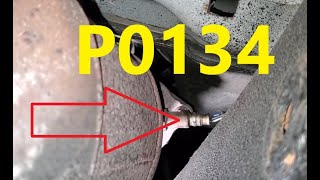

![How to Fix P0134 Engine Code in 3 Minutes [2 DIY Method / Only $9.88]](https://img.youtube.com/vi/epgyX5iNjLs/mqdefault.jpg)
We Have This Part in Stock
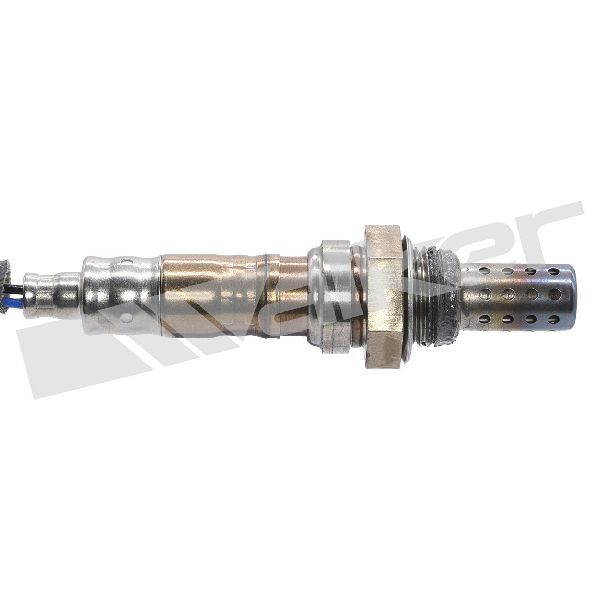
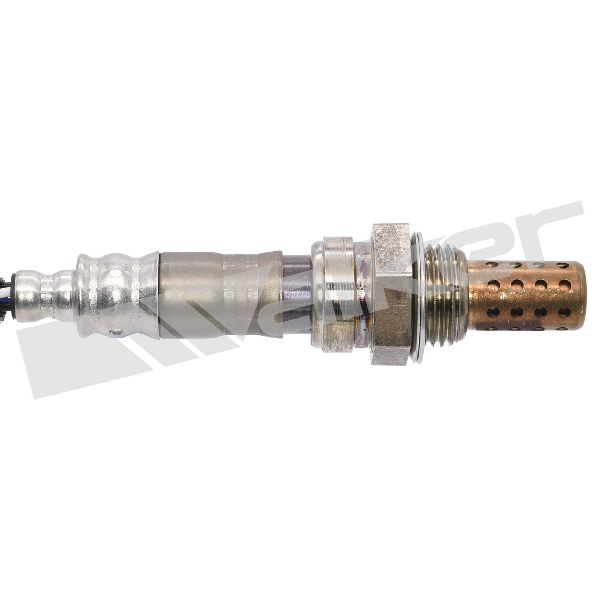


The information in this article is provided for general reference and educational purposes only. Vehicle specifications, procedures, and part compatibility can vary by production date, trim level, and region. Always consult your vehicle's factory service manual and verify part numbers before purchasing or performing repairs. Safety-critical components such as airbags, seat belts, and braking systems should be installed by a qualified professional.
- Subaru Forester:
- 🧭 Diagnostic Flowchart
- 🎬 Helpful Videos
- 🛍️ Shop This Part
- What's Unique About the 2009-2013 Subaru Forester
- Symptoms You May Notice
- Most Likely Causes
- Rare But Worth Checking
- Diagnosis Steps
- Parts You'll Likely Need
- Related Codes That Often Appear With This One
- Platform-Specific Known Issues
- Mechanic-Grade Diagnostic Values
- Scan Tool Commands That Help
- Wiring & Ground Locations
- Real Owner Repair Stories
- OEM Part Supersession History
- Model Year Variations Within This Range
- Other Known Issues on This Vehicle
- Used vs. New Parts: Buying Guide for This Vehicle
- Real Owner Stories
- 2010 Subaru Forester 2.5L EJ25
- 2009 Subaru Forester 2.5L EJ25
- Related OBD-II Codes
- Frequently Asked Questions
- 🎟️ Get 5% Off