

P0134 on 2005-2009 Subaru Legacy 2.5L: Front A/F Sensor Failure Causes and Fixes
On a 2005-2009 Subaru Legacy with the 2.5L EJ253 engine, P0134 almost always means the front Air/Fuel (A/F) ratio sensor has failed. Replacing this sensor with a quality part from Denso (OEM supplier, part #234-9120) or NTK is the most common fix. The job costs around $90-$180 for the part, with a DIY difficulty of 2/5.
- P0134 on your 2005-2009 Legacy almost certainly means the front A/F (oxygen) sensor has failed.
- Do not ignore this code. Continued driving can lead to poor fuel mileage and expensive damage to your catalytic converter.
- The most reliable fix is to replace the sensor. Use a high-quality brand like Denso (the OEM supplier, part #234-9120) or NTK for best results.
- Before buying a new sensor, perform a quick 2-minute check of the sensor's fuse and a visual inspection of the wiring harness for any obvious melting or damage.
What's Unique About the 2005-2009 Subaru Legacy
The 2005-2009 Subaru Legacy (fourth generation) with the non-turbo EJ253 engine is known for the front A/F sensor being a common failure item. The sensor's internal heater element, which is essential for bringing it to operating temperature quickly, frequently burns out with age and thousands of heat cycles. While P0134 is a generic code, on this specific platform, it is overwhelmingly caused by the sensor itself rather than complex wiring or computer issues. Owners on forums like LegacyGT.com and ScoobyNet.com consistently report that a direct replacement with an OEM-quality Denso sensor is the definitive fix.
Symptoms You May Notice
- Check Engine Light is on
- Cruise control light is flashing (a standard Subaru feature when a CEL is active)
- Poor fuel economy
- Rough idling or engine hesitation
- Failed emissions test
- Engine may sputter or run poorly immediately after clearing the code, until the ECU re-detects the fault and reverts to a default fuel map.
- Replacing the rear O2 sensor. This code specifically points to Sensor 1, which is the front sensor before the catalytic converter. The rear sensor (Sensor 2) has different codes associated with it (e.g., P0140).
- Replacing the catalytic converter. While a bad A/F sensor can eventually damage the converter, the P0134 code itself points to the sensor, not the converter.
- Using a cheap, generic 'universal' oxygen sensor. Subarus of this era are notoriously picky about their A/F sensors. Using a non-Denso or non-NTK part often results in the code returning or other performance issues.
Most Likely Causes
- Failed Front Air/Fuel (O2) Sensor 🔴 High Probability The internal heater element of the sensor is a very common failure point on this generation of Subaru. Years of exposure to high exhaust temperatures and thousands of heat cycles cause the element to burn out, leading to an open circuit and no sensor activity.
How to confirm: Use a scan tool to view live data for 'Bank 1 Sensor 1'. A healthy A/F sensor on this Subaru should show a relatively steady voltage around 3.3V at idle. If the voltage is flatlined, unresponsive, or stuck at a default value, the sensor is dead. Alternatively, you can test the resistance of the heater circuit on the sensor itself with a multimeter. Disconnect the sensor and measure between the two same-colored wires. A good sensor should have a low resistance (typically 2-10 ohms). A reading of infinity or 'OL' indicates an open circuit and a failed sensor.
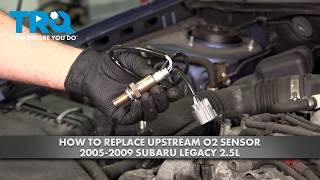
Typical fix: Replace the front A/F sensor. Applying penetrating oil to the threads before attempting removal is highly recommended. Use a 22mm (or 7/8") offset oxygen sensor socket to remove and install the new sensor. Torque the new sensor to the manufacturer's specification, typically around 20-30 ft-lbs. Ensure the new sensor's wiring is secured away from hot exhaust components using the provided clips.
Est. part cost: $90 - $180 - Damaged Sensor Wiring or Connector ⚪ Low Probability The wiring harness for the sensor is located in the engine bay near hot exhaust components. The plastic clips securing the harness can become brittle and break, allowing the wires to contact the exhaust manifold, which can lead to melting, chafing, or corrosion over time.
How to confirm: Visually inspect the entire length of the sensor's wiring harness from the sensor itself to the gray connector plug on the passenger side strut tower. Look for any signs of melting, chafing, frayed wires, or corrosion on the connector pins. Pay close attention to where the harness may have sagged or came into contact with the engine or exhaust.
Typical fix: Repair the damaged section of wiring with new wire and heat-shrink butt connectors. If the connector is damaged, it may need to be replaced. Secure the repaired harness with high-temperature zip ties to prevent future contact with hot surfaces.
Est. part cost: $10 - $50
Rare But Worth Checking
- Blown A/F Heater Fuse: A short in a faulty sensor can sometimes blow the fuse that powers its heater circuit. This is a quick and easy check before replacing parts. In the 2005-2009 Legacy, this is typically a 15A fuse located in the main fuse box in the engine bay, often labeled 'A/F-O2 HTR' or similar. Check your owner's manual or the fuse box lid for the exact location.
- Exhaust Leak: A significant exhaust leak between the cylinder head and the A/F sensor can introduce fresh air, which can confuse the sensor. While this more commonly causes lean codes (P0171), a large enough leak could potentially prevent the sensor from seeing any meaningful exhaust data, leading to a P0134. Check for audible ticking noises from the exhaust manifold gaskets, especially when the engine is cold.
- Faulty Engine Control Module (ECM): → Shop Engine Control Module (ECM) This is extremely rare. The internal driver circuit in the ECM that reads the sensor signal can fail. This should only be considered after all other possibilities, including the sensor, wiring, fuse, and for exhaust leaks, have been thoroughly ruled out by a professional. In some Subaru models, manufacturer service bulletin TSB Bulletin #11-144-14 notes that reprogramming files may be available for DTC P0134 to address software-related detection issues.
Diagnosis Steps
- Read the codes with an OBD-II scanner. Confirm P0134 is present and check for other related codes like P0030 or P0031.
- Visually inspect the front A/F sensor's wiring harness and connector. The connector is a gray plug located on a bracket on the passenger side strut tower. Look for any signs of melting, corrosion, or physical damage.
- Check the fuse for the A/F sensor heater circuit. It is a 15A fuse in the main fuse box under the hood. Verify it has continuity with a multimeter.
- Using a scan tool with live data capabilities, monitor the voltage for 'Bank 1 Sensor 1'. With the engine running, a healthy A/F sensor's voltage will be relatively steady around 3.3V. If the voltage is stuck at a fixed value (e.g., 0V, 1V, 5V) and does not respond to changes in engine RPM, the sensor has failed.
- If you do not have a scan tool, test the sensor directly. Disconnect the sensor and use a multimeter to measure the resistance between the two heater pins (usually the two wires of the same color). A good sensor should have a low resistance (typically 2-10 ohms). An infinite resistance reading ('OL') confirms the heater is broken and the sensor must be replaced. 🎬 See how to test and diagnose the heater circuit.
- If the sensor, wiring, and fuse are all good, check for significant exhaust leaks between the cylinder head and the sensor.
- If all other steps fail to identify the problem, the final, though very unlikely, step would be to test the ECM outputs with a wiring diagram and advanced diagnostic tools.
Parts You'll Likely Need
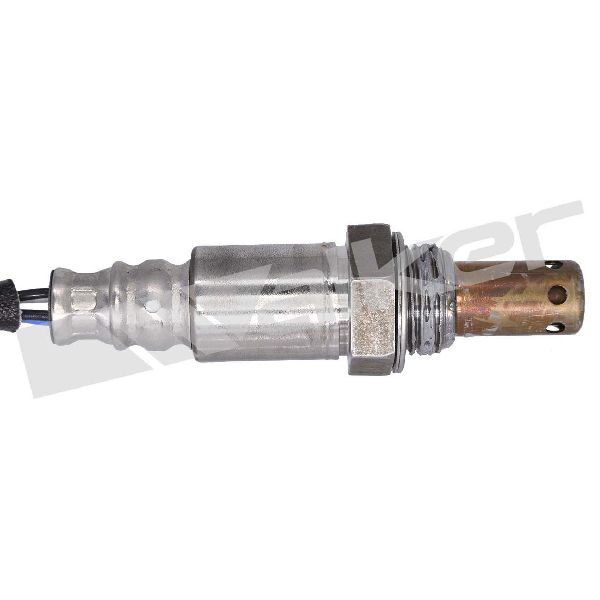
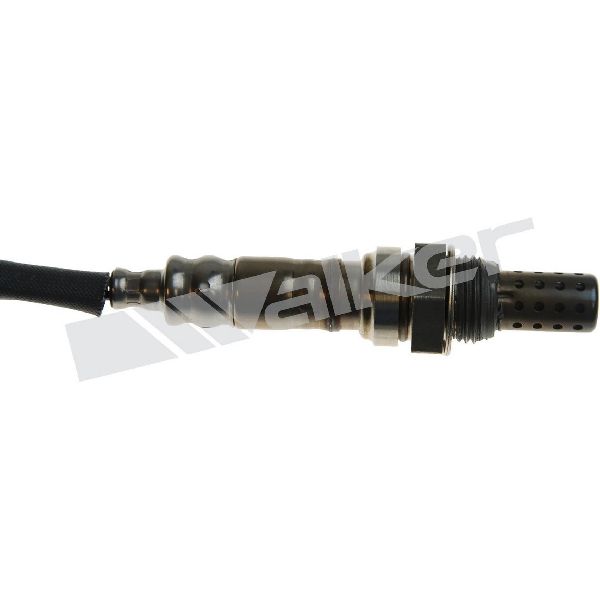
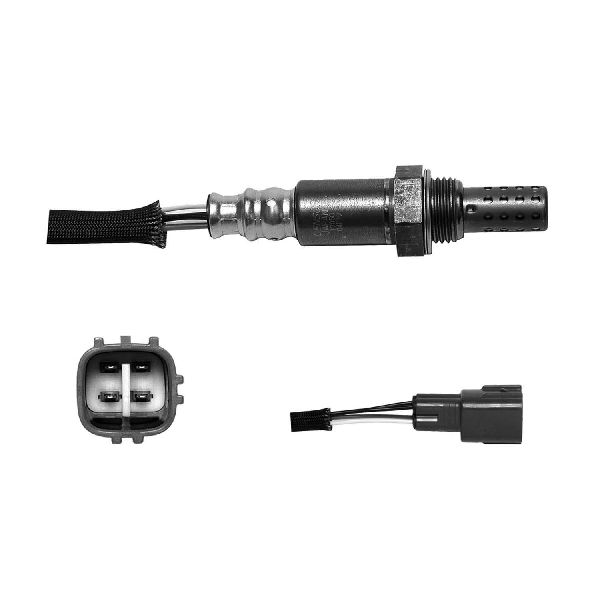
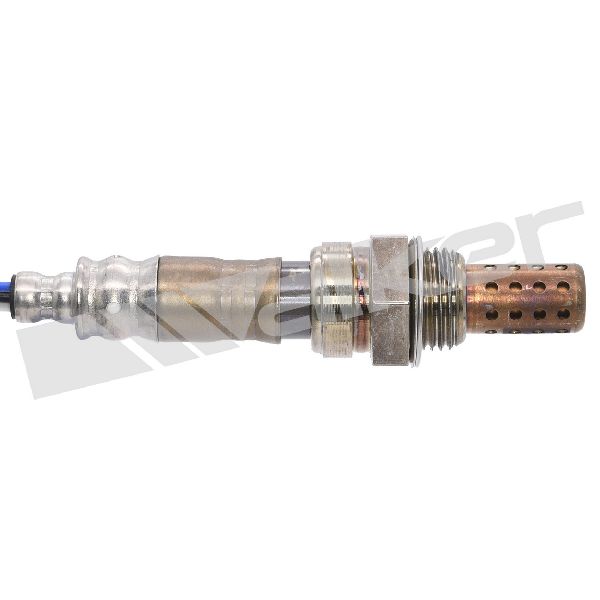
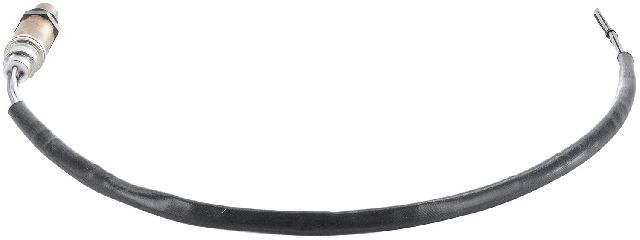
- Front Air/Fuel Ratio Sensor
(OEM #22641AA480)— This is the component that fails in over 90% of P0134 cases on this vehicle due to internal heater circuit failure.
Trusted brands: Denso (OEM Supplier), NTK
OEM price range: $150-$220
Aftermarket price range: $90-$180
Related Codes That Often Appear With This One
- P0030 — This code indicates a fault in the heater control circuit for the same sensor (Bank 1, Sensor 1). They often appear together when the sensor's internal heater has failed, which is the most common failure mode.
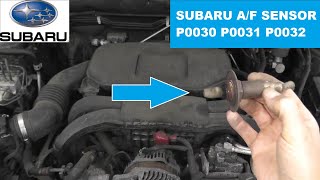
- P0031 — This code indicates the heater circuit resistance is low (short circuit). It points to the same component and often accompanies P0134 if there's a short in the heater element. 🎬 Watch this walkthrough for fixing related P0031 heater codes.
Technical Service Bulletins (TSBs) & Recalls
- WXW-80: Not a recall, but a Subaru Service Program acknowledging a high failure rate of the front A/F sensor on certain models due to internal element cracking.
- TSB Bulletin #11-144-14: While specifically referencing the Impreza WRX, this manufacturer bulletin highlights the availability of reprogramming files for DTC P0134, indicating that software updates are sometimes used to resolve this specific fault code in the Subaru lineup.
Platform-Specific Known Issues
- Subaru issued a service program (not a full safety recall) under the number WXW-80 for certain models where the front oxygen sensor element could develop a crack and fail. While this may not cover all vehicles in this year range, it acknowledges a known issue with the part's reliability.
- Owners strongly advise against using Bosch or other generic brand sensors for this application. The Subaru ECU is sensitive and often will not work correctly with non-OEM (Denso) or NTK sensors, leading to persistent codes or poor performance.
Mechanic-Grade Diagnostic Values
- Front A/F Sensor Heater Resistance — expected: Less than 5-10 Ω (Ohms) when measured between the two same-colored heater wires on the sensor connector.. Failure: A reading of infinity or 'OL' (Open Loop) on a multimeter indicates a broken internal heater element, requiring sensor replacement.
- Front A/F Sensor Live Data Voltage (Scan Tool) — expected: On this wideband sensor, a healthy reading at idle should be steady around 2.7V - 3.3V.. Failure: A flatlined voltage (e.g., stuck at 0V, 1V, or 5V) that does not change with engine RPM or load confirms a dead sensor.
- Front A/F Sensor Heater Current (Subaru Select Monitor) — expected: Greater than 0.2 A when the heater is commanded on.. Failure: A reading of 0 A indicates an open circuit in the heater element or its wiring/fuse.
Scan Tool Commands That Help
- Subaru Select Monitor (SSM) or equivalent professional scan tool: Current Data Display & Save — Use this function to monitor live data parameters like 'A/F Sensor #1 Current' (mA), 'A/F Sensor #1 Resistance' (ohm), and 'A/F Sensor #1' (Lambda/Voltage). This allows for real-time confirmation of sensor inactivity (0 mA current, abnormal resistance) which is the direct cause of P0134.
- Subaru Select Monitor (SSM) or equivalent professional scan tool: Read Diagnostic Trouble Code (DTC) & Freeze Frame Data — To confirm P0134 and check for related heater circuit codes (P0030, P0031) that often appear with it. Freeze frame data shows the exact engine conditions when the fault was first detected, which can provide diagnostic clues.
Wiring & Ground Locations
- Front A/F Sensor Connector (E22) — A gray plug mounted on a bracket on the passenger side strut tower in the engine bay.. This is the main connection point between the sensor and the engine harness. It's a common spot for corrosion or damage, which would interrupt the signal and cause P0134. A visual inspection here is a critical first step.
- Engine Ground (Intake Manifold) — A key grounding point for the ECU is located on the top of the intake manifold.. The ECU relies on a solid ground reference to accurately interpret sensor voltages. A poor ground at the intake manifold can cause a variety of strange electrical issues and sensor codes, including P0134, even if the sensor and its direct wiring are good.
- Chassis Ground (Driver's Side Strut Tower) — A primary ground strap connects the engine block/head to the chassis near the driver's side strut tower.. This is a main ground path. Corrosion or a loose connection here can create electrical noise and unstable sensor readings throughout the engine management system.
Real Owner Repair Stories
- YouTube user 'Renitent Entity' (2008 Subaru Impreza STI (Uses similar EJ engine and sensor)) — Check Engine Light, flashing cruise control, sputtering while driving.
❌ Tried (didn't work) Initial diagnosis pointed to potential secondary air pump issues, but the primary code was for the front O2 sensor.
✅ What actually fixed it Replaced the front A/F sensor (Bank 1, Sensor 1) with a new OEM part. After replacement, the code did not clear immediately. The ECU self-cleared the code after driving for approximately two miles over a couple of key cycles, without needing a scan tool. - subaruoutback.org forum user (2005-2009 Subaru Outback 2.5i) — Persistent P0134 code.
❌ Tried (didn't work) Replacing the front A/F sensor with a cheap aftermarket Bosch unit.
✅ What actually fixed it The P0134 code remained until the Bosch sensor was removed and replaced with an OEM-quality Denso sensor, which resolved the code immediately. This highlights the ECU's sensitivity to sensor brands.
OEM Part Supersession History
22641AA381→22641AA480— Part revision and consolidation by Subaru for various 2.0L and 2.5L non-turbo models.
Heads up: Always verify the part number with the vehicle's VIN, especially for PZEV (Partial Zero-Emission Vehicle) models, which may use a different sensor connector or part number.
Model Year Variations Within This Range
- 2005-2009: The front A/F sensor electrical connector may be a 4-pin or 6-pin design depending on the specific model year and whether the vehicle is a Federal (non-PZEV) or PZEV (California-spec) emissions model. It is critical to visually inspect the vehicle's existing connector before ordering a replacement part to ensure compatibility.
Diagnostic Flowchart
Other Known Issues on This Vehicle
Issues unrelated to this code that are worth knowing about as an owner of this generation:
- Head Gasket Failure 🔴 High — Very common, typically between 100,000 and 150,000 miles. The EJ253 engine is known for external coolant and/or oil leaks from the head gaskets.
- Wheel Bearing Failure 🟠 Medium — Common failure item, often starting around 80,000-120,000 miles. Results in a loud humming or grinding noise that increases with vehicle speed.
- Catalytic Converter Failure (P0420) 🟠 Medium — The front catalytic converter can degrade over time, leading to a P0420 code. This is often a separate issue but can be exacerbated by long-term driving with a faulty A/F sensor.
- ABS Control Module Failure 🟡 Low — The electronic portion of the ABS pump module can fail, causing an ABS light. The vehicle's standard brakes continue to function normally.
- Radio / HVAC Display Failure 🟡 Low — The integrated radio and HVAC control unit display can fail or become intermittent, which is an annoyance but does not affect vehicle operation.
Used vs. New Parts: Buying Guide for This Vehicle
When a used part is the smart pick: For this specific repair, buying a used A/F sensor is NOT recommended. These sensors are a wear item with a finite lifespan determined by heat cycles and mileage. A used sensor from a junkyard has an unknown history and is likely to fail soon, if it works at all, making it a poor value despite the lower initial cost.
Donor-vehicle mileage cap: roughly under 50000 miles for the part to have meaningful remaining life.
What to inspect on the donor part:
- If forced to buy used, source from a vehicle with the lowest possible mileage.
- Avoid sensors with any visible corrosion on the body or connector pins.
- Ensure the wiring harness is intact with no signs of melting, fraying, or previous repairs.
OEM-only on this vehicle (don't cheap out):
- Front Air/Fuel Ratio Sensor
Aftermarket brands forum-validated for this vehicle:
- Denso (OEM supplier for this part)
- NTK
Brands owners have reported issues with on this vehicle:
- Bosch (multiple owner reports of incompatibility and persistent codes)
- Unbranded 'universal' sensors that require splicing wires.
Real Owner Stories
Aggregated from forums and TSBs cited above. Mileages and costs reflect what owners reported in those sources.
2005-2009 Subaru Outback 2.5L
Symptoms: Check engine light illuminated with both P0134 and P0031 codes present.
What fixed it: Replaced the front A/F sensor with an OEM-quality Denso part.
Source hint: subaruoutback.org
2016 Subaru Legacy (referenced in thread for 2005-2009 parts)
Symptoms: P0134 and P0031 codes present.
What fixed it: Replacing the sensor with Denso part number 234-9120 solved the codes.
Source hint: LegacyGT.com: P0134 & p0031
2008 Subaru Legacy 2.5L
Symptoms: Vehicle throwing two codes at the same time: P0134 and P0030.
What fixed it: Replacing the front A/F sensor resolved the issue.
Source hint: LegacyGT.com: 2008 Legacy throwing 2 codes same time. P0134 and P0030
Related OBD-II Codes
Frequently Asked Questions
Is there a recall for the front A/F sensor on my 2005-2009 Subaru Legacy?
Can I use a generic Bosch sensor to fix the P0134 code on my EJ253 engine?
Why is my cruise control light flashing along with the Check Engine Light?
Where is the front A/F sensor connector located on the 2005-2009 Legacy?
What should the voltage reading be for a healthy 'Bank 1 Sensor 1' on my Subaru?
Which fuse should I check for the A/F sensor heater circuit?
Helpful Videos
We Have This Part in Stock


The information in this article is provided for general reference and educational purposes only. Vehicle specifications, procedures, and part compatibility can vary by production date, trim level, and region. Always consult your vehicle's factory service manual and verify part numbers before purchasing or performing repairs. Safety-critical components such as airbags, seat belts, and braking systems should be installed by a qualified professional.
- Subaru Legacy:
- 🧭 Diagnostic Flowchart
- 🎬 Helpful Videos
- 🛍️ Shop This Part
- What's Unique About the 2005-2009 Subaru Legacy
- Symptoms You May Notice
- Most Likely Causes
- Rare But Worth Checking
- Diagnosis Steps
- Parts You'll Likely Need
- Related Codes That Often Appear With This One
- Technical Service Bulletins (TSBs) & Recalls
- Platform-Specific Known Issues
- Mechanic-Grade Diagnostic Values
- Scan Tool Commands That Help
- Wiring & Ground Locations
- Real Owner Repair Stories
- OEM Part Supersession History
- Model Year Variations Within This Range
- Other Known Issues on This Vehicle
- Used vs. New Parts: Buying Guide for This Vehicle
- Real Owner Stories
- 2005-2009 Subaru Outback 2.5L
- 2016 Subaru Legacy (referenced in thread for 2005-2009 parts)
- 2008 Subaru Legacy 2.5L
- Related OBD-II Codes
- Frequently Asked Questions
- 🎟️ Get 5% Off