

P0135 on 2008-2016 Audi A4 2.0L TFSI: O2 Sensor Heater Circuit Causes and Fixes
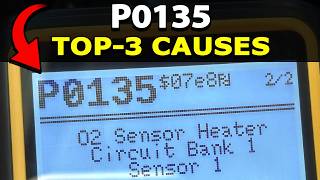
On a 2008-2016 Audi A4 2.0T, code P0135 almost always means the internal heating element in the upstream oxygen sensor has failed. The most common fix is to replace the sensor itself (Bank 1, Sensor 1). Expect to pay around $70-$150 for a quality aftermarket sensor and $180-$250 for a genuine Audi part. It's a DIY-friendly job, but always check the fuse first.
- P0135 on a 2008-2016 A4 2.0T almost always points to a failed upstream oxygen sensor (Bank 1, Sensor 1).
- Always check the fuse for the O2 heater circuit before buying any parts. It's a quick, simple step that could save you money.
- You can continue to drive with this code, but you will experience worse fuel mileage and should get it fixed to prevent potential damage to your catalytic converter.
- Use a quality replacement sensor from a reputable brand like Bosch (the OEM supplier) to avoid compatibility issues and premature failure.
- Replacing the sensor is a manageable DIY job for many home mechanics, provided you have a 22mm O2 sensor socket.
What's Unique About the 2008-2016 Audi A4
For the Audi A4 B8 generation with the 2.0L TFSI engine, this code is a straightforward and common issue. Because the engine is an inline-four, there is only one 'Bank,' which simplifies diagnosis. The failure is almost always the sensor itself due to normal wear and tear from thousands of heat cycles. Unlike some other VAG vehicles where this code can be caused by complex electrical issues like corroded fuses in a flooded plenum chamber, the A4 B8 platform typically points directly to the component named in the code. Audi's specific trigger for P0135 on this platform is when the O2 sensor's ceramic temperature is below 715°C for more than 40 seconds after the heater has been commanded on at 100% duty cycle.
Generation note: The 2008-2016 model years cover the Audi A4 B8 generation, which includes the 2013-2016 facelift (often called B8.5). The 2.0L TFSI engine (primarily the EA888 Gen 2) and its emissions control system are fundamentally the same regarding this fault code, so the diagnosis and repair are consistent across this entire year range. The EA888 Gen 2 engine was used from 2008-2015.
Symptoms You May Notice
- Check Engine Light is on
- Reduced fuel economy
- Rough idling or poor performance, especially during cold starts
- Increased exhaust emissions / failed emissions test
- Car may take longer to enter closed-loop operation
- Replacing the O2 sensor without first checking the fuse. A simple fuse check can save the cost of an unnecessary sensor replacement.
- Using a cheap, generic oxygen sensor. Some owners report that low-quality aftermarket sensors may be dead on arrival or fail prematurely, causing the code to return.
- Assuming the sensor is bad when the code returns after replacement. A user on Reddit reported still getting 0V at the sensor after replacement, indicating the problem was upstream in the wiring or fuse circuit.
Most Likely Causes
- Failed Oxygen Sensor Internal Heater 🔴 High Probability → Shop Oxygen Sensor The heating element inside the O2 sensor is a common wear-and-tear item that fails after many thousands of heat cycles. Its location in the exhaust stream right after the turbocharger exposes it to extreme temperatures.
How to confirm: After confirming the fuse and wiring are intact, test the resistance of the heater circuit terminals on the sensor itself with a multimeter. A healthy sensor should have a resistance between 3-15 Ohms when cold. An open circuit (infinite resistance or 'OL') or a reading near zero confirms the heater has failed.
Typical fix: Replace the Bank 1, Sensor 1 (upstream) oxygen sensor.
Est. part cost: $70-$250 - Blown Fuse 🟡 Medium Probability While less common on the A4 than on other Audi models like the Q7, a blown fuse for the O2 heater circuit can still occur due to an electrical short or age. A short in the sensor's heater element itself can cause the fuse to blow.
How to confirm: Locate the fuse for the O2 sensor heater circuit in the fuse panel on the driver's side of the dashboard (for left-hand drive models) and visually inspect it. Consult the owner's manual or fuse panel diagram for the specific fuse number, as it can vary by model year. Test for continuity with a multimeter if a visual inspection is inconclusive.
Typical fix: Replace the blown fuse. If the new fuse blows immediately, further diagnosis is needed to find a short circuit in the wiring or the sensor itself.
Est. part cost: $1-$5 - Damaged Wiring or Connector ⚪ Low Probability
How to confirm: Visually inspect the wiring harness and electrical connector for the upstream O2 sensor. Look for any signs of melting, chafing, fraying, or corrosion. The sensor is located on the turbocharger outlet pipe, an area of high heat that can make wiring brittle over time.
Typical fix: Repair the damaged section of wiring or replace the connector pigtail.
Est. part cost: $15-$50
Rare But Worth Checking
- Faulty Engine Control Module (ECM): → Shop Engine Control Module (ECM) This is extremely rare. Before condemning the ECM, all other possibilities, including the sensor, fuse, and wiring, must be exhaustively ruled out by a qualified technician.
Diagnosis Steps
- Read the fault codes with an OBD-II scanner to confirm P0135 is present.
- Locate and check the fuse for the O2 sensor heater circuit. This is the most important first step. On the B8 A4, this is typically in the fuse panel on the driver's side of the dashboard.
- If the fuse is good, perform a visual inspection of the Bank 1, Sensor 1 (upstream) oxygen sensor's wiring and connector. It is located on the turbocharger outlet pipe. Look for any signs of melting, fraying, or corrosion.
- If the wiring appears intact, disconnect the sensor's electrical connector. With the ignition on (engine off), use a multimeter to verify that you have battery voltage (approx. 12V) at the heater power supply pin in the harness-side connector.
- If voltage is present, the final step is to test the sensor itself. Set your multimeter to measure resistance (Ohms) and measure between the two heater circuit pins on the O2 sensor. A healthy reading is typically between 3 and 15 Ohms. A reading of infinite resistance ('OL') indicates an open circuit and a failed heater element.
- If all tests pass but the code persists, the issue may be an intermittent wiring fault or, in very rare cases, a problem with the ECM driver circuit.
Parts You'll Likely Need
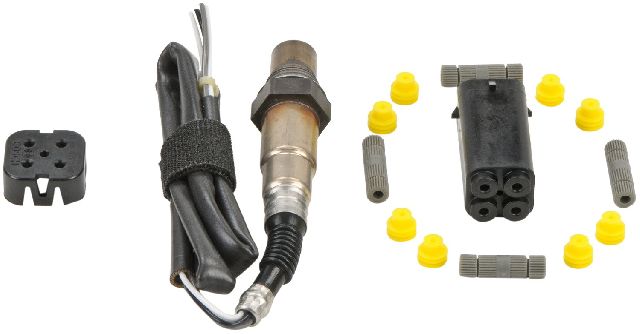
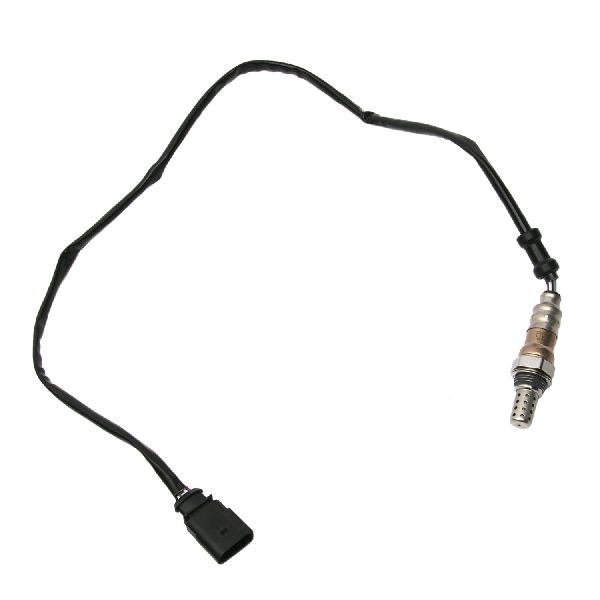
- Upstream Oxygen Sensor (Bank 1, Sensor 1)
(OEM #8K0906262C)— This is the most common failure point for code P0135 on this vehicle, as the internal heater element wears out over time.
Trusted brands: Bosch (OEM Supplier), NGK/NTK, Denso
OEM price range: $180-$250
Aftermarket price range: $70-$150
Related Codes That Often Appear With This One
- P1115 —
- P0030 —
Technical Service Bulletins (TSBs) & Recalls
- While no TSB is specifically for P0135 on the 2.0T A4, a related TSB for the Q5 (TSB #01139020337671) acknowledges this fault code as a recognized issue, indicating manufacturer awareness of heater circuit failures.
- Manufacturer TSB Bulletin #01139020337671 specifically addresses instances where the MIL is on due to a heater circuit fault in the lambda sensor, explicitly listing DTC P0135 as a reason for repair authorization.
Mechanic-Grade Diagnostic Values
- O2 Sensor Heater Resistance — expected: 2-20 Ohms when cold, measured between the two heater pins on the sensor connector.. Failure: An open circuit (OL or infinite resistance) or a reading significantly outside the expected range indicates a failed heater element.
- O2 Sensor Heater Power Supply — expected: Approximately 12V (battery voltage) at the harness-side connector's power pin with Key On, Engine Off.. Failure: 0V indicates a blown fuse, a bad relay, or a break in the power supply wire.
- VCDS Measuring Block Group 036 — expected: The status should read 'B1-S1 Htg. ON' during the engine warm-up phase.. Failure: A status of 'Htg. OFF' or a test failure message when the heater should be active points to a fault in the circuit or the ECM's control.
- VCDS Measuring Block Groups 030-033 — expected: These groups show live Lambda regulation and sensor voltage, which should begin oscillating shortly after a cold start as the heater works.. Failure: Static or non-responsive voltage from Sensor 1 after the initial warm-up period can indicate a failed sensor, even if the heater circuit appears electrically intact.
Hidden / Shadow Codes Worth Checking
- P1115: Audi-specific code for 'O2 Sensor Heater Circ.,Bank1-Sensor1 Short to Ground'. This is a more precise fault description than the generic P0135 and strongly indicates the sensor itself has an internal short. (see via VCDS (VAG-COM), OBDeleven, or other professional-grade scanners capable of reading manufacturer-specific codes.)
Scan Tool Commands That Help
- VCDS (VAG-COM) / ODIS: Engine -> Measuring Blocks -> Groups 030-036 — Use this to monitor the live status of the O2 sensor heater ('B1-S1 Htg. ON/OFF'), the sensor's voltage, and lambda regulation. This is crucial for verifying if the heater is being commanded on by the ECM and if the sensor is responding after a repair.
- VCDS (VAG-COM) / ODIS: Basic Settings -> O2 Sensor Heater Test (if available) — Some engine controllers offer a specific output test to actively command the heater circuit on. This can be used to verify the integrity of the wiring and ECM driver by checking for voltage at the sensor connector while the test is running.
Wiring & Ground Locations
- Fuse SB7 (Engine Bay) — In the fuse holder B (black carrier) located in the electronics box in the engine compartment plenum chamber (under the cowl cover).. On many 2.0T models, this 15A fuse (SB7) provides power to the heater for both the pre-cat (Sensor 1) and post-cat (Sensor 2) Lambda probes. A failure here will cut power to the heater circuit, directly causing P0135.
- Ground Point 12 — In the engine compartment, on the left side.. This is a primary chassis ground point in the engine bay. While not exclusively for the O2 sensor, a corroded or loose connection here can cause a variety of intermittent electrical issues, including faults in sensor circuits due to poor grounding.
- Ground Strap (Engine to Body) — Connects the engine block to the firewall or chassis frame rail. A primary ground is often on the transmission bellhousing.. A degraded main engine ground strap is a common issue on high-mileage B8 models and can cause a voltage drop across the entire engine's electrical system. This can lead to underperformance of components like the O2 heater and trigger faults. A voltage drop test between the engine block and negative battery terminal should show less than 0.15V at idle.
Real Owner Repair Stories
- AudiWorld Forums user (Audi A4 B8, mileage at failure: 90,000 miles) — Check Engine Light with code P0135.
✅ What actually fixed it The owner replaced the front (upstream) lambda sensor, and the code was resolved. This confirms the typical failure pattern of the sensor's internal heater element due to age and mileage. - AudiWorld Forums user (2014 Audi A4 2.0TDI (B8.5)) — Engine management light with code P0135, followed by a DPF light.
❌ Tried (didn't work) Replacing the sensor with a cheap part ordered from eBay.
✅ What actually fixed it The issue persisted after replacing the sensor. A VAG-COM scan showed no signal from the sensor, indicating the replacement part was dead-on-arrival. The resolution implies replacing the faulty aftermarket sensor with a reputable OEM or OEM-quality part.
When the Usual Fixes Don't Work
- In one documented case on Reddit, an owner replaced the O2 sensor for P0135, but the code immediately returned. A subsequent check with a multimeter at the harness connector revealed 0V, whereas it should have been ~12V. The ultimate cause was a blown fuse that was missed during the initial diagnosis. This highlights that even with a high probability of sensor failure, skipping the basic electrical checks (fuse and power supply) can lead to buying unnecessary parts.
OEM Part Supersession History
8K0906262A / 8K0906262B→8K0906262C, which is then superseded by 8K0906262J and potentially 06L906262G / 06L906262E depending on specific engine code and model year.— Revisions to improve longevity, material composition, or heater element design.
Heads up: While all listed parts are for the upstream sensor, it is critical to verify the correct part number by VIN. Using a sensor for a different engine variant (e.g., a 1.8T sensor on a 2.0T) may result in it physically fitting but having incorrect heater resistance or lambda calibration, causing the code to persist or other fuel trim issues to arise.
Model Year Variations Within This Range
- 2008-2012 (B8) vs 2013-2016 (B8.5): Fuse box layouts saw minor changes between the B8 and B8.5 facelift. While the O2 heater fuse is generally in the engine bay plenum box, its exact position (e.g., SB7) should be confirmed with a diagram specific to the model year.
- 2013+: Some later B8.5 models may use a UDS protocol for diagnostics. In VCDS, this means using 'Advanced Measuring Values' instead of the traditional 'Measuring Blocks' to view live O2 sensor data.
Diagnostic Flowchart
Other Known Issues on This Vehicle
Issues unrelated to this code that are worth knowing about as an owner of this generation:
- Excessive Oil Consumption 🔴 High — Very common on early EA888 Gen 2 engines (approx. 2009-2012). Caused by faulty piston ring design. Less common on later B8.5 models. (Ref: TSB 17 13 43 2027731/5 was issued for 2009-2011 models, leading to a class-action lawsuit and settlement.)
- Timing Chain Tensioner Failure 🔴 High — A critical issue on early EA888 Gen 2 engines. The original tensioner design can fail without warning, causing the timing chain to jump and leading to catastrophic engine damage. Failure can occur at any mileage, but risk increases after 60k miles. (Ref: Multiple TSBs were released, and a class-action lawsuit resulted in a warranty extension for affected vehicles.)
- Water Pump / Thermostat Housing Leak 🟠 Medium — Common across all B8 model years. The plastic housing is prone to cracking and leaking coolant over time due to heat cycles. Often fails between 60k-100k miles.
- PCV Valve Failure 🟠 Medium — The PCV (Positive Crankcase Ventilation) valve diaphragm can tear, leading to a whistling noise, rough idle, lean codes (like P2187), and increased oil consumption. It's a common failure item.
- Intake Manifold Carbon Buildup 🟠 Medium — As a direct-injection engine, the intake valves are not cleaned by fuel spray, leading to carbon deposit accumulation over time. This typically requires manual cleaning (walnut blasting) every 60k-80k miles to prevent misfires and performance loss.
Used vs. New Parts: Buying Guide for This Vehicle
When a used part is the smart pick: For this specific repair, a used part is almost never a smart choice. The oxygen sensor is a wear-and-tear item with a finite lifespan determined by heat cycles and mileage. A used sensor from a junkyard has unknown remaining life and could fail shortly after installation, forcing you to do the job twice.
Donor-vehicle mileage cap: roughly under 20000 miles for the part to have meaningful remaining life.
What to inspect on the donor part:
- If forced to consider used, only select a part from a very low-mileage vehicle (<20k miles).
- Inspect the connector for any signs of corrosion, melted plastic, or broken locking tabs.
- Check that the sensor's metal body is not heavily corroded or physically damaged.
- Ask for the VIN of the donor car to verify part number compatibility.
Aftermarket brands forum-validated for this vehicle:
- Bosch (this is the Original Equipment Manufacturer, providing the same part as the dealer without the Audi logo).
- NGK / NTK.
- Denso.
Brands owners have reported issues with on this vehicle:
- Unbranded, no-name sensors from online marketplaces like eBay or AliExpress. Forum users frequently report these parts are dead-on-arrival, have incorrect resistance values, or fail within a few months, causing the P0135 code to return.
Real Owner Stories
Aggregated from forums and TSBs cited above. Mileages and costs reflect what owners reported in those sources.
2009-2012 Audi A4 (B8) 2.0L TFSI — 90000 miles
Symptoms: Check engine light for P0135.
What fixed it: Replaced the front (upstream) lambda sensor.
Source hint: AudiWorld Forums
2014 Audi A4
Symptoms: Experienced a P0135 code; discussed issues with non-OEM replacement parts.
What fixed it: Replacing a faulty new sensor from eBay with a reputable one.
Source hint: AudiWorld Forums
B8.5 Audi A4
Symptoms: P0135 code persisted even after replacing the O2 sensor; measured 0V at the sensor connector.
What fixed it: Checking the fuse and power supply wiring (highlighted as critical step).
Source hint: Reddit r/Audi
Related OBD-II Codes
Frequently Asked Questions
Is there a TSB for the P0135 code on my Audi A4 or similar models?
Where is the O2 sensor heater circuit fuse located on a B8 Audi A4?
What is the correct resistance for a healthy upstream O2 sensor on the 2.0L TFSI?
Can I use a cheap aftermarket O2 sensor to fix the P0135 code?
Why does the O2 sensor heater fail so often on the A4 2.0T?
Will a P0135 code prevent my Audi A4 from passing an emissions test?
Helpful Videos

We Have This Part in Stock

The information in this article is provided for general reference and educational purposes only. Vehicle specifications, procedures, and part compatibility can vary by production date, trim level, and region. Always consult your vehicle's factory service manual and verify part numbers before purchasing or performing repairs. Safety-critical components such as airbags, seat belts, and braking systems should be installed by a qualified professional.
- Audi A4:
- 🧭 Diagnostic Flowchart
- 🎬 Helpful Videos
- 🛍️ Shop This Part
- What's Unique About the 2008-2016 Audi A4
- Symptoms You May Notice
- Most Likely Causes
- Rare But Worth Checking
- Diagnosis Steps
- Parts You'll Likely Need
- Related Codes That Often Appear With This One
- Technical Service Bulletins (TSBs) & Recalls
- Mechanic-Grade Diagnostic Values
- Hidden / Shadow Codes Worth Checking
- Scan Tool Commands That Help
- Wiring & Ground Locations
- Real Owner Repair Stories
- When the Usual Fixes Don't Work
- OEM Part Supersession History
- Model Year Variations Within This Range
- Other Known Issues on This Vehicle
- Used vs. New Parts: Buying Guide for This Vehicle
- Real Owner Stories
- 2009-2012 Audi A4 (B8) 2.0L TFSI — 90000 miles
- 2014 Audi A4
- B8.5 Audi A4
- Related OBD-II Codes
- Frequently Asked Questions
- 🎟️ Get 5% Off