

P0135 on 1997-2007 Chevrolet Malibu 3.1L V6: O2 Sensor Heater Failure Causes and Fixes
For a 1997-2003 Malibu with the 3.1L V6, code P0135 almost always means the heater element inside the upstream oxygen sensor has failed. This is Bank 1, Sensor 1, located on the rear exhaust manifold near the firewall. Replacing the sensor is the typical fix, costing around $25-$70 for a quality aftermarket part (like Denso or NGK/NTK) and is a straightforward, though sometimes tight, DIY job.
- P0135 points to a problem with the heater inside the upstream O2 sensor (Bank 1, Sensor 1).
- The most common fix is to replace the sensor itself, which is a manageable DIY task for many, though access is tight on the 3.1L V6.
- Before buying a new sensor, always check its wiring and the corresponding fuse ('ENG 1') to rule out a simpler electrical issue.
- This guide applies specifically to the 1997-2003 Malibu with the 3.1L V6 engine and its many platform mates.
- Driving with this code will hurt your gas mileage and emissions but is unlikely to cause immediate, severe engine damage.
What's Unique About the 1997-2007 Chevrolet Malibu
The user-specified year range covers two distinct Malibu generations. The 3.1L V6 engine (L82 and the later LG8) was only available in the 1997-2003 generation. For these models, P0135 is a very common and straightforward code, almost always pointing directly to the failure of the original upstream O2 sensor's internal heater. The primary platform-specific challenge is the physical location of the sensor on the rear exhaust manifold, which is tucked against the firewall and can be difficult to access. Otherwise, there are few quirks that complicate this diagnosis; it's a typical wear-and-tear failure common across many GM vehicles with this engine family.
Generation note: The 1997-2007 range spans the fifth generation (1997-2003) and the sixth generation (2004-2007). The 3.1L V6 engine was only offered in the 1997-2003 models (and the 2004-2005 'Classic' fleet version). This guide is specific to those 3.1L V6 models. The sixth-generation Malibu used different engines (2.2L I4, 3.5L V6, 3.9L V6) which may have different sensor locations and part numbers.
Symptoms You May Notice
- Check Engine Light is on.
- Decreased fuel economy.
- Rough or uneven idle, especially when cold.
- Potential for a 'rotten egg' or sulfur smell from the exhaust if the mixture runs excessively rich.
- Failure to pass an emissions test.
- Possible engine hesitation or misfires during acceleration.
- Replacing the downstream (post-catalyst) oxygen sensor. P0135 specifically refers to Bank 1, Sensor 1, which is the upstream sensor before the catalytic converter.
- Replacing the sensor without checking for a blown fuse or damaged wiring first.
Most Likely Causes
- Failed Upstream Oxygen Sensor (Bank 1, Sensor 1) 🔴 High Probability → Shop Oxygen Sensor The internal heater element is a common failure point on O2 sensors due to age and countless heat cycles. It's a standard wear item, with failures reported across the GM 3.1L platform.
How to confirm: Test the resistance of the heater circuit within the O2 sensor using a multimeter set to Ohms. Disconnect the sensor and measure between the two wires of the same color 🎬 Watch: A quick guide on performing these initial heater circuit checks. (usually black). A good heater should have a low resistance, typically between 3 and 30 Ohms depending on the brand. An open circuit (infinite resistance or 'OL' on the meter) confirms the heater has failed. You can also check for 12V power at the harness-side connector with the key on to verify the circuit is receiving power.
Typical fix: Replace the Bank 1, Sensor 1 oxygen sensor. On the 3.1L V6, this sensor is located in the rear exhaust manifold, accessible from the top of the engine bay near the firewall. Access is tight, and a special 7/8" (22mm) slotted oxygen sensor socket is highly recommended.
Est. part cost: $25 - $70 - Damaged Wiring or Connector 🟡 Medium Probability The wiring harness runs close to hot exhaust components. Over time, the plastic loom and wire insulation can become brittle and melt or chafe, causing a short or open circuit. The connector itself can also accumulate moisture and corrode.
How to confirm: Visually inspect the wiring harness and connector leading to the O2 sensor for any signs of melting, chafing, corrosion, or broken wires. Check for 12V power at the heater circuit feed wire (often pink) on the connector with the key on, engine off. A lack of voltage points to a problem upstream (fuse or wiring).
Typical fix: Repair the damaged section of the wiring harness or replace the connector pigtail.
Est. part cost: $10 - $30 - Blown Fuse ⚪ Low Probability
How to confirm: Check the fuse panel in the engine compartment for a blown fuse. On these models, the O2 sensor heater is often powered by a fuse labeled 'ENG 1' or 'O2 HTR'. A blown fuse almost always indicates a short circuit in the wiring or the sensor itself that must be fixed before replacing the fuse. In some GM vehicles, as noted in NHTSA ODI #11632222, a blown fuse (such as F03) can be linked to other components like the EGR valve, causing a cascade of codes including P0135.
Typical fix: Replace the blown fuse after diagnosing and repairing the underlying short circuit.
Est. part cost: $1 - $5
Rare But Worth Checking
- Exhaust or Vacuum Leaks: Per GM TSB 20-NA-065, other O2 sensor codes can be triggered by vacuum or exhaust leaks. While P0135 is specific to the heater circuit, an underlying leak could cause related fuel trim issues. It's good practice to rule out leaks before replacing parts.
- Faulty Powertrain Control Module (PCM): → Shop Engine Control Module (ECM) This is extremely rare. The PCM should only be considered after all other possibilities (sensor, wiring, fuses) have been exhaustively ruled out. A faulty PCM driver for the heater circuit is possible but highly unlikely.
Diagnosis Steps
- Verify code P0135 is present using an OBD-II scanner.
- Visually inspect the Bank 1, Sensor 1 oxygen sensor's wiring harness and connector for any obvious damage, melting, or corrosion. This sensor is in the rear exhaust manifold, against the firewall.
- Check the fuse for the O2 sensor heater circuit in the underhood fuse box (often labeled 'ENG 1' or similar). If blown, find the short before replacing.
- If the wiring and fuse are good, disconnect the sensor. Turn the ignition to 'ON' (engine off) and use a multimeter to check for ~12V (battery voltage) at the power supply wire in the harness-side connector.
- Using a multimeter, measure the resistance across the two heater pins (usually same-colored wires) on the sensor itself. A reading of 'OL' or infinite resistance means the heater is burned out and the sensor must be replaced. A good sensor will typically read between 3-30 ohms.
- If voltage is present at the harness and the sensor's resistance is within spec, there may be an issue with the ground side of the circuit or the PCM driver, but this is highly improbable.
- The most likely outcome is a failed sensor. Replace the Bank 1, Sensor 1 O2 sensor, clear the code with the scanner, and perform a test drive 🎬 See a full diagnostic walkthrough on a similar GM 3.1L platform. to ensure the light does not return.
Parts You'll Likely Need
- Upstream Oxygen Sensor (Bank 1, Sensor 1)
(OEM #GM 25312184; ACDelco AFS109 or 213-2870 (superseded numbers exist))— The internal heater element fails from age and heat cycles, which is the direct cause of the P0135 code.
Trusted brands: ACDelco (OEM), Denso (often the actual OE manufacturer), NGK/NTK, Bosch
OEM price range: $60-$110
Aftermarket price range: $25-$70
Technical Service Bulletins (TSBs) & Recalls
- While not for P0135 specifically, GM TSB 20-NA-065 is relevant. It advises that various fuel trim and oxygen sensor codes can be caused by small, hard-to-detect vacuum leaks or exhaust manifold gasket leaks. It recommends performing a smoke test to rule out these leaks before replacing O2 sensors.
Platform-Specific Known Issues
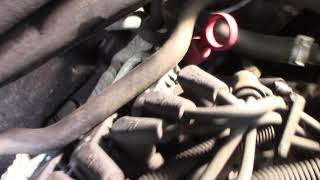
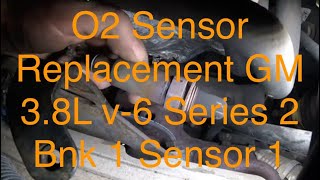
- Difficult Sensor Location: On the 3.1L V6, the upstream O2 sensor (Bank 1, Sensor 1) is located on the rear exhaust manifold, close to the firewall. Access from the top of the engine bay is tight, and reaching the sensor can be difficult without the correct tools. A 7/8" or 22mm oxygen sensor socket with a slot for the wire is essential for removal and installation. 🎬 Watch: How to access and replace the sensor in tight spaces. Some owners find it easier to access after removing the engine's decorative cover and other minor components for better visibility.
Mechanic-Grade Diagnostic Values
- O2 Sensor Heater Resistance — expected: 5 to 15 Ohms (example good sensor measured 5 Ohms). Failure: Open circuit ('OL' or infinite resistance) on a multimeter.
- O2 Sensor Heater Power Supply — expected: ~12V (battery voltage) with key on, engine off.. Failure: 0V, indicating a blown fuse or wiring issue upstream.
- Scan Tool O2 Sensor Voltage (Initial Startup) — expected: 425-450 mV immediately after startup, before oscillating.. Failure: Voltage that is stuck or does not start near the 450mV midpoint.
Scan Tool Commands That Help
- Tech 2 / Professional Scan Tool: HO2S Heater Resistance Learn Reset — This function must be performed after replacing an O2 sensor. The PCM learns the specific resistance of the heater for precise control. Failing to reset this learned value can cause the PCM to operate the new heater incorrectly. On these GM vehicles, performing a 'Clear Codes' function (even if no codes are present) also accomplishes this reset.
Wiring & Ground Locations
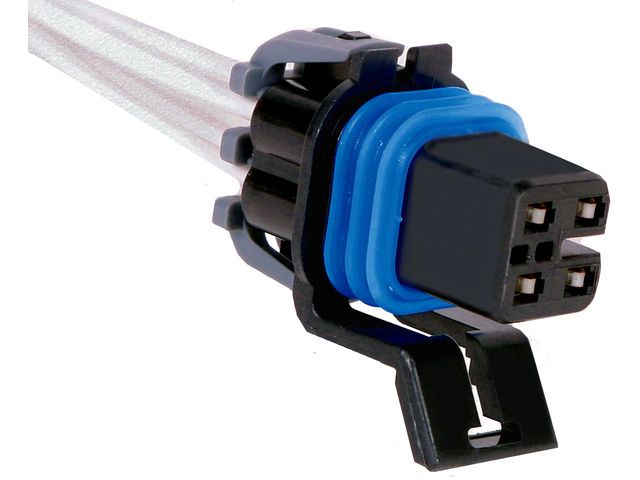
- Heater Circuit Wires — On the O2 sensor's own connector pigtail.. The two wires for the heater element are typically the same color, usually black on these GM models. Resistance should be measured between the pins for these two wires on the sensor side of the connector.
- G101 — At the front of the engine, on the lower part of the engine block.. G101 is a primary ground point for the Engine Control Module (ECM/PCM). While a sensor or wiring is more likely to fail, a corroded or loose ECM ground can cause erratic behavior in any sensor circuit controlled by the PCM, including the O2 sensor heater driver.
Real Owner Repair Stories
- YouTube channel 'robinsonsauto' (1999 Chevrolet Tracker (similar GM-era diagnostics)) — Check Engine Light with code P0135.
✅ What actually fixed it The mechanic tested the resistance between the two black heater wires on the O2 sensor and found an open circuit ('OL'). He confirmed battery voltage was present at the harness connector. Replacing the Bank 1 Sensor 1 oxygen sensor resolved the code. - NHTSA ODI #10156207 (Chevrolet Monte Carlo) — An owner reported that their vehicle displayed P0135 along with codes P1189 and C1216. Despite a dealer check where items tested good per the trouble tree, the warnings returned the next day, highlighting the intermittent nature of some electrical circuit faults.
- NHTSA ODI #10207750 (Chevrolet Motor Home) — In a report involving a GM-based platform, an owner noted that an OBD-II scanner read P0135, which was associated with a failure to start after several attempts.
When the Usual Fixes Don't Work
- While the most common fix is replacing the sensor, a critical and often missed step is ensuring the PCM's learned heater resistance value is reset. On these GM vehicles, the PCM performs a resistance check on cold start to determine how to pulse the heater for fastest warmup without burnout. If a new sensor is installed but the old value is retained, performance can be affected. A professional scan tool's 'HO2S Heater Resistance Learn Reset' function, or simply clearing all DTCs (even if none are present), forces the PCM to relearn the value for the new sensor on the next cold start.
Documented NHTSA Reports
NHTSA records for other Chevrolet models show that P0135 frequently appears alongside a long list of other codes. For instance, NHTSA ODI #11681144 and NHTSA ODI #11448862 describe scenarios where P0135 was pulled along with codes such as P0030, P0403, and P0443, sometimes resulting in a "Reduced Propulsion" message or the engine going offline.
OEM Part Supersession History
ACDelco AFS109, AFS95, GM 25312184→ACDelco 213-2870 (current primary replacement)— Part number updates and consolidation over time.
Heads up: Be cautious of aftermarket brands that over-consolidate parts. Some may use a single part number to replace up to six different GM O2 sensors. While it may fit, differences in heater type, element design, and wire length can lead to suboptimal performance or premature failure compared to the OE-specific ACDelco or Denso (234-4018) parts.
Model Year Variations Within This Range
- 1997-2003: No significant variations were found for the P0135 fault between the earlier L82 and later LG8 versions of the 3.1L V6. The diagnostic procedure, sensor location, and likely cause remain consistent across these model years.
Diagnostic Flowchart
Real Owner Stories
Aggregated from forums and TSBs cited above. Mileages and costs reflect what owners reported in those sources.
2000 Chevrolet Malibu 3.1L V6
Symptoms: The owner was initially dealing with a P0440 EVAP code. Upon plugging in a scan tool, they discovered a P0135 (Heated Oxygen Sensor Bank 1 Sensor 1 Heater Performance) code had also appeared.
What fixed it: Tested the old O2 sensor and found the heater circuit was open. Installed a new Bosch sensor and cleared the codes.
Source hint: BobIsTheOilGuy forum
2003 Pontiac Grand Am 3.1L/3.4L V6
Symptoms: Check Engine Light illuminated with a P0135 code.
What fixed it: Diagnosed as a straightforward heater circuit issue and resolved by installing a new oxygen sensor.
Source hint: YouTube - 'MV 444 - "The Grand Am's Oxygen Sensor Issue (Part 1)"' by Mike's Vehicle Spotlight
Related OBD-II Codes
Frequently Asked Questions
Where is the Bank 1 Sensor 1 oxygen sensor located on my 3.1L V6 Malibu?
What tools do I need to replace the upstream O2 sensor on the 3.1L engine?
Which fuse controls the O2 sensor heater on the 1997-2007 Malibu?
Are there any specific part numbers recommended for the replacement O2 sensor?
Does GM TSB 20-NA-065 apply to my P0135 code?
How can I test if the O2 sensor heater is actually bad on my Malibu?
Helpful Videos

We Have This Part in Stock


The information in this article is provided for general reference and educational purposes only. Vehicle specifications, procedures, and part compatibility can vary by production date, trim level, and region. Always consult your vehicle's factory service manual and verify part numbers before purchasing or performing repairs. Safety-critical components such as airbags, seat belts, and braking systems should be installed by a qualified professional.
- Chevrolet Malibu:
- 🧭 Diagnostic Flowchart
- 🎬 Helpful Videos
- 🛍️ Shop This Part
- What's Unique About the 1997-2007 Chevrolet Malibu
- Symptoms You May Notice
- Most Likely Causes
- Rare But Worth Checking
- Diagnosis Steps
- Parts You'll Likely Need
- Technical Service Bulletins (TSBs) & Recalls
- Platform-Specific Known Issues
- Mechanic-Grade Diagnostic Values
- Scan Tool Commands That Help
- Wiring & Ground Locations
- Real Owner Repair Stories
- When the Usual Fixes Don't Work
- Documented NHTSA Reports
- OEM Part Supersession History
- Model Year Variations Within This Range
- Real Owner Stories
- 2000 Chevrolet Malibu 3.1L V6
- 2003 Pontiac Grand Am 3.1L/3.4L V6
- Related OBD-II Codes
- Frequently Asked Questions
- 🎟️ Get 5% Off