

P0135 on 2004-2008 Chrysler Pacifica 3.5L: O2 Sensor Heater Circuit Causes and Fixes
This code almost always means the heater element inside the upstream oxygen sensor (Bank 1, Sensor 1) has failed. On the 3.5L V6, Bank 1 is the rear cylinder bank near the firewall. Replacing the sensor is the most common fix. Use only OEM (Mopar) or NTK/Denso branded sensors, as others are known to cause issues. Expect to pay $30-$80 for a quality aftermarket sensor or more for OEM.
- P0135 points directly to a problem with the heater inside the Bank 1, Sensor 1 O2 sensor.
- The most likely fix is to replace the sensor itself. On the 3.5L V6, this is the upstream sensor on the rear cylinder bank (near the firewall), which can be difficult to access.
- Use an OEM (Mopar), NTK (p/n 23527), or Denso (p/n 234-4756) brand sensor for the best results. Avoid other brands like Bosch, which are known to cause issues on this vehicle.
- Before replacing the sensor, check the 15A fuse in slot #23 of the under-hood fuse box and perform a quick visual inspection of the wiring harness for any obvious signs of melting or damage.
What's Unique About the 2004-2008 Chrysler Pacifica
The Chrysler Pacifica, like many Chrysler vehicles of this era, can be sensitive to the brand of oxygen sensor used. Forum discussions frequently warn against using Bosch sensors, as they can cause persistent codes or new drivability issues. Owners report the best success with OEM (Mopar) or the original equipment manufacturer, which is typically NTK. In fact, a Technical Service Bulletin (TSB 18-010-05 REV. A) for the related 3.8L engine in 2005 models specifically calls out verifying the correct O2 sensor is installed as a primary diagnostic step for P0135. Additionally, wiring harness chafing is a known issue on these vehicles, which can sometimes be the root cause of the electrical fault.
Symptoms You May Notice
- Check Engine Light is on
- Reduced fuel economy
- Rough idle, especially on cold starts
- Failing a vehicle emissions test
- Engine may run rich until warmed up, potentially causing a fuel smell from the exhaust
- Replacing the wrong oxygen sensor. This code is specific to Bank 1, Sensor 1. On the 3.5L V6, Bank 1 is the rear bank (near the firewall), and Sensor 1 is the upstream sensor (before the catalytic converter).
- Using an incompatible aftermarket sensor brand. Many owners report that using brands other than OEM/Mopar, NTK, or Denso (especially Bosch) can cause the code to return or create new problems.
- Assuming the sensor is bad without checking the fuse or wiring first. Experts suggest wiring issues can account for up to 40% of P0135 cases.
Most Likely Causes
- Failed Oxygen Sensor Heater Element 🔴 High Probability → Shop Oxygen Sensor The internal heating element is a common failure point on O2 sensors as they age, typically between 60,000 and 100,000 miles.
How to confirm: Disconnect the sensor and use a multimeter to measure the resistance between the two heater circuit wires (often two black wires). An open circuit (infinite resistance) or a reading far outside the manufacturer's specification (typically 4-10 ohms for this era) confirms failure.
Typical fix: Replace the Bank 1, Sensor 1 oxygen sensor with a quality NTK or Denso part.
Est. part cost: $30-$80 - Damaged Wiring or Connector 🟡 Medium Probability A forum post highlights a specific issue on the Pacifica 3.5L where a wiring harness near the transmission can rub against a flange, causing shorts or open circuits that affect various sensors, including the O2 sensor. The harness near the exhaust manifold is also susceptible to heat damage.
How to confirm: Visually inspect the wiring harness leading to the O2 sensor, paying close attention to areas where it might contact the engine block, exhaust, or transmission for signs of melting, chafing, or breaks. Check the connector for corrosion, moisture, or backed-out pins.
Typical fix: Repair the damaged section of the wire and protect it from future damage with loom or by re-routing. Replace the connector if it is corroded or damaged.
Est. part cost: $5-$25 - Blown Fuse ⚪ Low Probability
How to confirm: Locate the Integrated Power Module (IPM) in the engine compartment near the battery. Check Fuse #23 (15A), which typically powers the O2 sensor heaters. Visually inspect the fuse and test for continuity with a multimeter.
Typical fix: Replace the blown fuse. If the new fuse blows immediately, it indicates a short circuit in the wiring or the sensor itself that must be found and fixed.
Est. part cost: $1-$5
Rare But Worth Checking
- Faulty Powertrain Control Module (PCM): → Shop Engine Control Module (ECM) This is very rare. The PCM's internal driver for the heater circuit can fail. This should only be considered after all other possibilities (sensor, wiring, fuses) have been exhaustively ruled out. One owner on a technician forum reported replacing the PCM to fix the issue after replacing sensors and checking wiring.
Diagnosis Steps
- Use an OBD-II scanner to confirm P0135 is the only code present. Address other codes first if they exist.
- Locate the Bank 1, Sensor 1 oxygen sensor. On the Pacifica 3.5L, Bank 1 is the rear cylinder bank against the firewall. Sensor 1 is the upstream sensor, located in the exhaust manifold before the catalytic converter. Access may be difficult.
- Check the fuse for the O2 sensor heater circuit. In the under-hood Integrated Power Module (IPM), inspect the 15A fuse in slot #23. Replace if blown.
- Visually inspect the sensor's wiring harness and connector. Look for any signs of melting, chafing, corrosion, or loose pins. Pay special attention to the harness routing near the hot exhaust and where it passes by the transmission.
- If the wiring and fuse are okay, disconnect the O2 sensor connector. Use a multimeter to measure the resistance across the two heater pins (usually same-colored wires) on the sensor side of the connector. A good sensor typically reads between 4 and 10 ohms. A reading of infinite resistance (open) or a dead short (near zero ohms) indicates a failed sensor.
- With the key on and engine off, use a multimeter to check for battery voltage on one of the heater circuit pins in the vehicle-side harness connector. Check for a good ground on the other heater pin. If voltage or ground is missing, there is a wiring issue between the IPM/PCM and the sensor that must be traced.
- If the sensor's resistance is out of spec, replace it with a recommended brand (NTK 23527 or Denso 234-4756). If the sensor tests good but power/ground is missing, repair the wiring. If all tests pass and a new, quality sensor does not fix the code, the problem may be a rare failure of the PCM driver circuit.
Parts You'll Likely Need
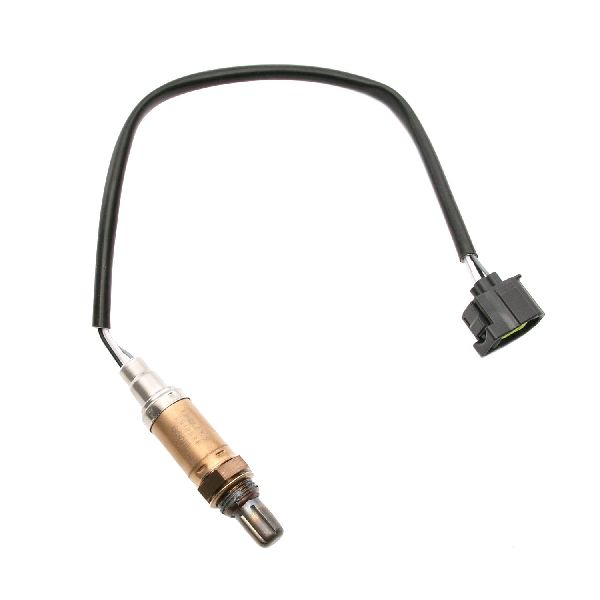
- Upstream Oxygen Sensor (Bank 1, Sensor 1)
(OEM #56028999AB)— The internal heater element is the most common point of failure, making sensor replacement the definitive fix for this code.
Trusted brands: NTK 23527, Denso 234-4756
OEM price range: $90-$140
Aftermarket price range: $30-$80
Technical Service Bulletins (TSBs) & Recalls
- TSB 18-010-05 REV. A (for 3.8L engine): Discusses P0135 being caused by an incorrect O2 sensor part number and the need for a potential PCM reflash. While not for the 3.5L, it highlights platform sensitivity to correct parts.
Platform-Specific Known Issues
- A known wiring harness chafe point exists near the transmission where a ground cable is bolted. The harness can rub against a flange, causing shorts that trigger various sensor codes, including O2 sensor faults.
- Chrysler TSB 18-010-05 REV. A, while for the 3.8L engine, highlights the sensitivity of the PCM to the specific O2 sensor installed, noting that an incorrect part number (even if it fits) can trigger P0135. This reinforces the need to use OEM or confirmed OE-equivalent parts.
Mechanic-Grade Diagnostic Values
- O2 Sensor Heater Element Resistance — expected: 4 to 10 Ohms at ambient temperature.. Failure: A reading of infinite resistance (OL) indicates a burned-out open circuit. A reading near zero indicates an internal short.
- Heater Circuit Power Supply Voltage — expected: 10 to 12 Volts DC with Key On, Engine Off.. Failure: 0V or significantly low voltage indicates a problem with the ASD relay, fuse, or wiring harness.
- PCM Code Set Condition — expected: The PCM sets code P0135 if the O2 sensor's internal temperature does not reach 575°C (959°F) within 90 seconds of the heater being activated.. Failure: This is the internal logic that triggers the fault code.
Scan Tool Commands That Help
- wiTECH or DRB III (Chrysler Dealer Tools): O2 Heater Test — This is a bidirectional test that allows a technician to manually command the O2 sensor heater circuit on and off. It is used to verify if the PCM driver is functioning correctly and if the circuit is drawing the proper amperage, which helps isolate the fault between the sensor, the wiring, or the PCM itself.
Wiring & Ground Locations
- Heater Circuit Power Wire — At the vehicle-side harness connector for the Bank 1 Sensor 1 O2 sensor.. This wire, typically Dark Green with an Orange stripe (DK GRN/ORG), supplies 12V power to the heater element from the ASD relay. No voltage here points to a wiring, fuse, or relay issue, not a bad sensor.
- G101 — At the rear of the engine.. This is a primary engine ground point. A poor connection at G101 can cause various electrical issues for components on the rear of the engine, including the Bank 1 O2 sensor which is located there.
- Auto Shut Down (ASD) Relay — Inside the Integrated Power Module (IPM) / under-hood fuse box.. The ASD relay provides the 12V power to the O2 sensor heater circuit (via Fuse 23). A faulty relay can intermittently starve the heater for power, causing a P0135 code even if the fuse and sensor are good.
OEM Part Supersession History
56028999AB→No supersession found. This appears to be the stable part number.— N/A
Diagnostic Flowchart
Other Known Issues on This Vehicle
Issues unrelated to this code that are worth knowing about as an owner of this generation:
- Engine Cradle / Subframe Rust and Corrosion 🔴 High — Very common, especially in 'salt belt' regions. Can become structurally unsound, leading to engine shifting or, in extreme cases, dropping. (Ref: Chrysler issued warranty extensions and TSBs (e.g., for 2004-2005 models) but they were limited and did not become a full recall, leading to a class-action lawsuit.)
- Premature Engine Mount Failure 🟠 Medium — Common failure item, particularly the front and rear hydraulic mounts. Symptoms include excessive vibration at idle, and clunking noises when shifting or accelerating. (Ref: No recall, but a widely discussed problem in owner forums. Some owners report premature failure of even aftermarket parts.)
- TIPM (Totally Integrated Power Module) Electrical Problems 🟠 Medium — The TIPM, or under-hood fuse box, is known to cause a wide range of difficult-to-diagnose electrical gremlins, from fuel pump issues to random stalling.
- Engine Stalling Under Certain Conditions 🟠 Medium — A recall (NHTSA Campaign ID: 04V112000) was issued for certain 2004 models where the EGR system test protocol could lead to engine stalling at low speeds. (Ref: NHTSA Campaign ID: 04V112000)
Used vs. New Parts: Buying Guide for This Vehicle
When a used part is the smart pick: A used wiring harness pigtail from a junkyard is a smart choice if your original connector is melted or corroded. A used Integrated Power Module (fuse box) or PCM are viable last-resort options after extensive diagnosis proves they are faulty.
Donor-vehicle mileage cap: roughly under 80000 miles for the part to have meaningful remaining life.
What to inspect on the donor part:
- For wiring connectors, ensure there is no visible corrosion on the pins, no melted plastic, and that the locking tabs are intact.
- For a donor PCM or IPM, check for any signs of water intrusion, corrosion, or physical damage to the case or connectors.
- Verify the donor vehicle was not involved in a front-end collision or engine fire.
OEM-only on this vehicle (don't cheap out):
- Oxygen Sensor: The PCM is highly sensitive to the specific resistance and performance characteristics of the O2 sensor. Using non-OEM or non-OES brands is the most common cause of the code returning after a repair.
Aftermarket brands forum-validated for this vehicle:
- NTK (OES for Mopar)
- Denso
Brands owners have reported issues with on this vehicle:
- Bosch: Multiple forum and technician reports indicate that Bosch sensors, while a quality brand for other applications, frequently cause persistent or new codes on this Chrysler platform.
Real Owner Stories
Aggregated from forums and TSBs cited above. Mileages and costs reflect what owners reported in those sources.
2005 Chrysler Town and Country (3.8L Platform Mate)
Symptoms: P0135 code triggered despite the sensor being replaced.
What fixed it: Verified the correct O2 sensor part number was installed and potentially reprogrammed the PCM as per TSB 18-010-05 REV. A.
Source hint: ChryslerForum.com - '2005 Town and Country P0135 issue' (2009)
2006 Chrysler Pacifica 3.5L
Symptoms: Stubborn P0135 code that persisted even after replacing the O2 sensors and the ECM.
What fixed it: The source highlights this as a very stubborn code that can sometimes remain unresolved even after major component replacement.
Source hint: iATN - 'P0135 Diagnostic Trouble Code Discussion' (2009)
2004-2008 Chrysler Pacifica 3.5L — ~80000 miles
Symptoms: Check Engine Light with P0135; internal heating element failure.
What fixed it: Replacement of the Bank 1, Sensor 1 oxygen sensor with an NTK or Denso part.
Source hint: Article Context - Common Causes (Failed Oxygen Sensor Heater Element)
2004-2008 Chrysler Pacifica 3.5L
Symptoms: Wiring harness near the transmission rubbing against a flange, causing shorts and sensor codes.
What fixed it: Repairing the damaged section of the wire and protecting it with loom or re-routing.
Source hint: Article Context - Vehicle Specific Issues (Wiring harness chafe point)
Related OBD-II Codes
Frequently Asked Questions
Does TSB 18-010-05 REV. A apply to my 3.5L Pacifica?
Which fuse should I check for the O2 sensor heater on my Pacifica?
Where is the Bank 1 Sensor 1 O2 sensor located on the 3.5L V6?
Are there specific brands of O2 sensors recommended for the Pacifica?
Is there a known wiring issue on the Pacifica that causes P0135?
Can a bad PCM cause this code on a 2004-2008 Pacifica?
Helpful Videos
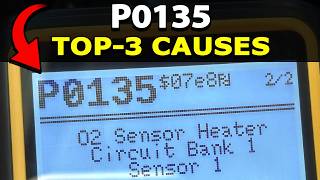
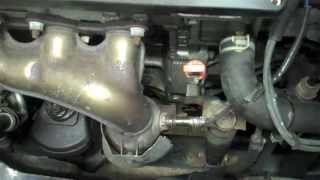
![How to Fix P0135 Engine Code in 2 Minutes [1 DIY Methods / Only $19.66]](https://img.youtube.com/vi/k4mHfR8jq8Q/mqdefault.jpg)
We Have This Part in Stock


The information in this article is provided for general reference and educational purposes only. Vehicle specifications, procedures, and part compatibility can vary by production date, trim level, and region. Always consult your vehicle's factory service manual and verify part numbers before purchasing or performing repairs. Safety-critical components such as airbags, seat belts, and braking systems should be installed by a qualified professional.
- Chrysler Pacifica:
- 🧭 Diagnostic Flowchart
- 🎬 Helpful Videos
- 🛍️ Shop This Part
- What's Unique About the 2004-2008 Chrysler Pacifica
- Symptoms You May Notice
- Most Likely Causes
- Rare But Worth Checking
- Diagnosis Steps
- Parts You'll Likely Need
- Technical Service Bulletins (TSBs) & Recalls
- Platform-Specific Known Issues
- Mechanic-Grade Diagnostic Values
- Scan Tool Commands That Help
- Wiring & Ground Locations
- OEM Part Supersession History
- Other Known Issues on This Vehicle
- Used vs. New Parts: Buying Guide for This Vehicle
- Real Owner Stories
- 2005 Chrysler Town and Country (3.8L Platform Mate)
- 2006 Chrysler Pacifica 3.5L
- 2004-2008 Chrysler Pacifica 3.5L — ~80000 miles
- 2004-2008 Chrysler Pacifica 3.5L
- Related OBD-II Codes
- Frequently Asked Questions
- 🎟️ Get 5% Off