

P0135 on 2001-2007 Ford Escape 3.0L V6: O2 Sensor Heater Causes and Fixes
This code means the heater inside the upstream oxygen sensor on the firewall side of the engine has failed. Before replacing the sensor, check fuse #5 (15A) in the under-hood fuse box, as it's a very common failure point. If the fuse is good, the sensor itself is the most likely culprit, costing $40-$120 for a replacement part.
- P0135 points to the upstream O2 sensor on the firewall side of the engine.
- ALWAYS check the 15A HEGO fuse (#5 in the under-hood box) first, especially if other O2 heater codes (P0141, P0155, P0161) or EVAP code P0443 are present.
- If the fuse is good, the sensor's internal heater has likely failed and the sensor needs replacement.
- Be prepared for a difficult replacement due to the sensor's location on the rear exhaust manifold.
What's Unique About the 2001-2007 Ford Escape
On the 3.0L V6 Escape, Bank 1 is the cylinder bank located against the firewall, making access to this sensor notoriously difficult. A very common issue for this platform is for multiple O2 heater codes (P0135, P0141, P0155, P0161) to appear at once due to a single blown 15A fuse that powers all of them. This is often caused by a short in the wiring harness of any one of the O2 sensors, which may have melted against the exhaust manifold or engine block. In some cases, this short can also blow the fuse and trigger EVAP system codes like P0443, which shares the same power circuit.
Generation note: The 2001-2007 year range covers the first generation of the Ford Escape. A significant refresh occurred for the 2005 model year, but the 3.0L V6 engine and its emissions control system, including the location and function of the oxygen sensors, remained fundamentally the same. The diagnostic and repair procedures are consistent across this entire period.
Symptoms You May Notice
- Check Engine Light is on
- Reduced fuel economy, especially during short trips.
- Vehicle may fail an emissions test.
- Rough idling or poor performance during cold starts in some cases.
- Replacing the O2 sensor without first checking the fuse. If the fuse is blown, a new sensor will not fix the problem and the code will return immediately.
- Replacing only the Bank 1, Sensor 1 O2 sensor when multiple heater codes are present, indicating a shared power supply problem (the fuse).
Most Likely Causes
- Failed Bank 1, Sensor 1 Oxygen Sensor 🔴 High Probability → Shop Oxygen Sensor The internal heater element is a common failure item due to age and constant heat cycles. It's a wear-and-tear component.
How to confirm: Disconnect the sensor and measure the resistance between the two heater circuit pins (usually the two same-colored wires, often white). A healthy sensor should have a low resistance, typically between 3 and 30 ohms. Some sources suggest a tighter range of 4-6 Ohms is common for this specific sensor type. An infinite reading (OL) indicates a broken/open heater element, and the sensor must be replaced.
Typical fix: Replace the Bank 1, Sensor 1 oxygen sensor. This sensor is located on the rear exhaust manifold (firewall side) and is difficult to access. An O2 sensor socket is highly recommended for removal.
Est. part cost: $40-$120 - Blown HEGO Fuse 🔴 High Probability A short circuit in any of the four O2 sensor wiring harnesses can cause the shared fuse to blow, disabling all heaters at once. This is a very frequent occurrence on the Escape/Tribute/Mariner platform.
How to confirm: Check fuse #5 (15A) in the under-hood Power Distribution Box. If it is blown, you have found a critical fault. If multiple heater codes (P0135, P0141, P0155, P0161) are present, this is almost certainly the cause.
Typical fix: Replace the 15A fuse. If it blows again, you must find and repair the short circuit in the O2 sensor wiring harness that is causing the issue before proceeding. A common culprit is the Bank 1 Sensor 2 (rear downstream) harness melting on the exhaust.
Est. part cost: $1-$5 - Damaged Wiring or Connector 🟡 Medium Probability The O2 sensor wiring is routed near hot exhaust components and can melt, chafe, or corrode over time, causing a short or open circuit. The harness for the downstream sensors is particularly vulnerable where it passes near the exhaust and driveshaft.
How to confirm: Visually inspect the entire wiring harness for the Bank 1, Sensor 1 O2 sensor, from the sensor itself to the main engine harness. Check for melted plastic, frayed wires, or corrosion in the connector pins. With the key on, engine off (KOEO), check for ~12V power on the power supply wire at the vehicle-side connector.
Typical fix: Repair the damaged section of wire or replace the connector pigtail. Ford advises against soldering repairs on O2 sensor wires as it can block the sensor's reference air path; use approved crimp-and-seal connectors instead.
Est. part cost: $10-$30
Rare But Worth Checking
- Faulty Powertrain Control Module (PCM): → Shop Engine Control Module (ECM) This is very rare. The PCM's internal driver for the heater circuit can fail. This should only be considered after all other possibilities (sensor, fuse, wiring) have been exhaustively ruled out by a professional.
Diagnosis Steps
- Scan for all OBD-II codes. Note if other O2 sensor heater codes (P0141, P0155, P0161) or EVAP codes (P0443) are present.
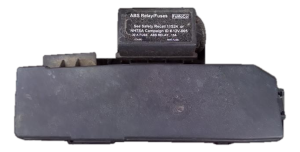
- Open the hood and locate the Power Distribution Box (under-hood fuse box).
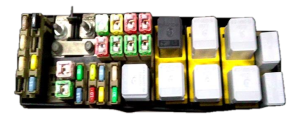
- Inspect fuse #5, a 15A mini fuse for the Heated Exhaust Gas Oxygen (HEGO) sensors. If it's blown, replace it. If it blows again, inspect all O2 sensor wiring harnesses for shorts to ground, paying close attention to areas near the exhaust.
- If the fuse is good, locate the Bank 1, Sensor 1 O2 sensor. It is the upstream sensor on the exhaust manifold against the firewall.
- Visually inspect the sensor's wiring harness and connector for any signs of melting, chafing, or corrosion.
- Disconnect the sensor. With the ignition key ON and engine OFF (KOEO), use a multimeter to check for ~12 volts on the power supply wire of the vehicle-side connector.
- With the multimeter, measure the resistance across the two heater pins on the sensor side of the connector (usually the two wires of the same color). The reading should be between 3 and 30 ohms. If it reads 'OL' (open loop), the heater is bad and the sensor needs to be replaced.
- If power, ground, and sensor resistance are all good, the problem may be an intermittent wiring issue or, very rarely, a faulty PCM.
Parts You'll Likely Need
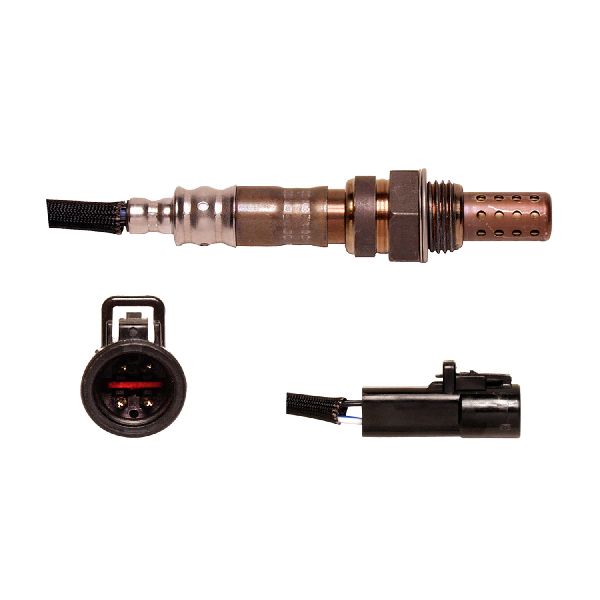
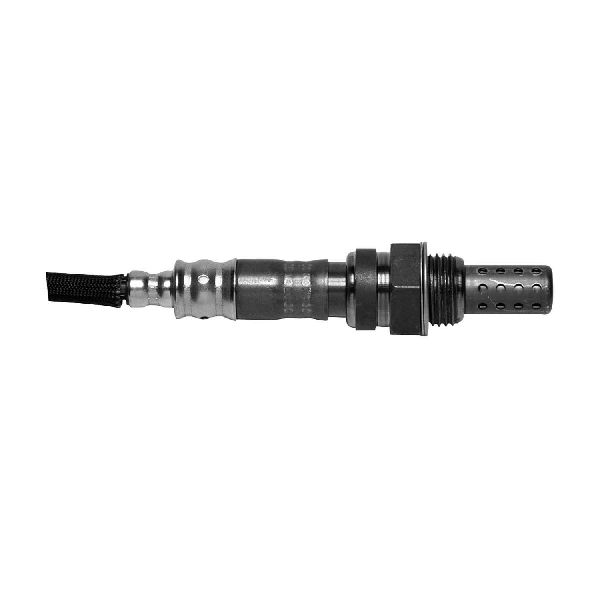
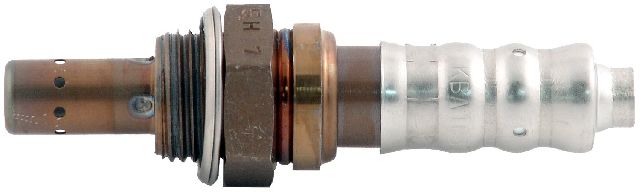
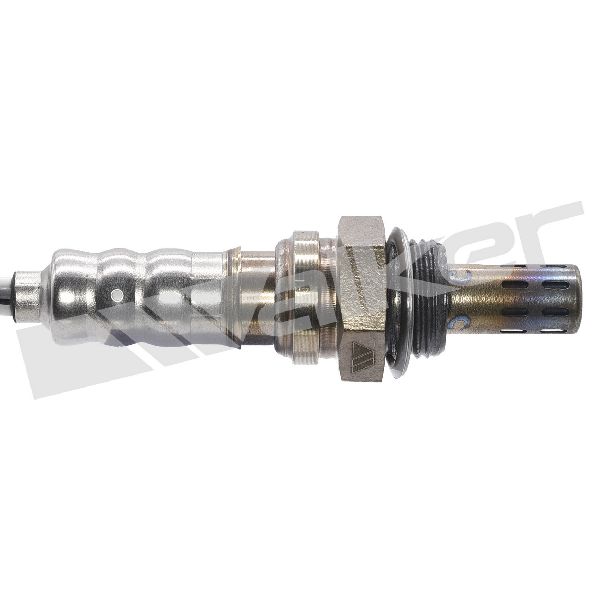
- Oxygen Sensor (Bank 1, Sensor 1)
(OEM #YL8Z-9G444-AC)— This is the specific upstream sensor on the rear bank whose internal heater is identified as faulty by the P0135 code. Note: Ford part YL8Z-9G444-CA was superseded by 5L8Z-9G444-A for some applications, always verify fitment.
Trusted brands: Motorcraft, Bosch (e.g., 15717), Denso, NGK/NTK
OEM price range: $70-$150
Aftermarket price range: $40-$120 - 15A Mini Automotive Fuse — This fuse powers the heater circuits for all four O2 sensors and frequently blows due to a short in the wiring, triggering code P0135 and others.
Trusted brands: Bussmann, Littlefuse
OEM price range: $1-$5
Aftermarket price range: $1-$5
Related Codes That Often Appear With This One
- P0141 — This is the heater circuit code for Bank 1, Sensor 2. If seen with P0135, it strongly suggests a common power supply issue, like a blown fuse.
- P0155 — This is the heater circuit code for Bank 2, Sensor 1. If seen with P0135, it strongly suggests a common power supply issue, like a blown fuse.
- P0161 — This is the heater circuit code for Bank 2, Sensor 2. If all four heater codes (P0135, P0141, P0155, P0161) appear together, the cause is almost certainly the shared 15A fuse.
- P0443 — EVAP Purge Control Valve Circuit. On this platform, the EVAP purge valve is often powered by the same fuse as the O2 sensor heaters. Seeing P0443 alongside P0135 is a very strong indicator that the shared fuse has blown due to a wiring short.
Platform-Specific Known Issues
- Melted Harness Causing Multiple Codes: A user on the Escape-City.com forums with a 2005 Ford Escape 3.0L reported getting six codes at once: P0135, P0141, P0155, P0161, P0443, and P0403. The cause was found to be the wiring harness for the Bank 1, Sensor 2 O2 sensor, which had melted against the exhaust, causing a short that blew the shared fuse. The fix was repairing the wires and replacing the fuse. This highlights the importance of checking for wiring damage when multiple, seemingly unrelated codes appear.
Mechanic-Grade Diagnostic Values
- O2 Sensor Heater Element Resistance — expected: 3 to 30 Ohms, with 4-6 Ohms being a more specific target for this platform.. Failure: An open circuit (OL on multimeter) or near-zero Ohms (short circuit).
- Heater Circuit Power Wire Voltage (at harness connector) — expected: Approximately 12V (Battery Voltage) with Key On, Engine Off (KOEO).. Failure: 0V, indicating a blown fuse or an open in the power supply wire.
- Heater Circuit Ground Control Wire (backprobed at harness connector) — expected: The PCM provides a pulsed ground to control the heater. With a test light or oscilloscope connected, you should see it cycle on and off after engine start.. Failure: No ground signal (voltage stays at 12V) indicates a wiring problem or a failed PCM driver. A constant ground could indicate a short in the harness.
Hidden / Shadow Codes Worth Checking
- Mode $06, TID $81, CID $01: This refers to the On-Board Test Result for the Bank 1, Sensor 1 Heater Circuit current. A scan tool capable of reading Mode $06 data can show the raw test results from the PCM's last self-test. If the measured value is outside the minimum/maximum limits stored in the PCM, it can confirm a failure even before the CEL is triggered on the next drive cycle. (see via A professional scan tool or advanced DIY tool like FORScan that can access Ford's Mode $06 data.)
Scan Tool Commands That Help
- Ford IDS / FORScan: HO2S Heater PID — When monitoring live data, a technician can view the status of the heater circuit (e.g., ON/OFF) and sometimes the duty cycle percentage commanded by the PCM. This helps verify if the PCM is attempting to activate the heater, which is useful if the fuse and sensor are good but the code persists.
- Generic OBD-II Scanner / Test Light: Heater Circuit Load Test — A simple but effective test involves unplugging the O2 sensor and plugging a test light (like a 194 or 7440 bulb) into the power and ground terminals of the vehicle-side harness connector. When the engine is started, the PCM should command the heater on, and the bulb should illuminate brightly, confirming the integrity of the power, ground, and PCM control circuit. If the bulb doesn't light, the problem is in the vehicle wiring or PCM, not the sensor.
Wiring & Ground Locations
- G101 / G104 — Primary engine bay ground points, typically located on the inner fender aprons near the battery tray or at the front corners of the engine compartment.. The PCM and its sensor circuits rely on a clean, solid ground reference. While not a direct cause of a P0135 heater circuit code (which is a dedicated circuit), a corroded main ground can cause erratic PCM behavior and other phantom electrical issues that can complicate diagnosis.
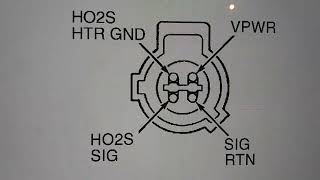
- HO2S-11 Connector — On the rear (firewall side) of the 3.0L V6 engine, connecting to the upstream O2 sensor in the exhaust manifold.. This is the primary connection point for testing. The heater power wire is typically Light Blue/Orange, and the heater ground control wire is Red/White on 2001-2004 models. Verifying power and ground at this connector is the core of diagnosing P0135.
- Splice S132 — A splice point located within the engine control sensor harness for V6 models.. Factory splices are potential failure points for corrosion and intermittent open circuits. If voltage tests at the sensor connector fail, tracing the circuit back may lead to a fault at this splice, though it is less common than a fuse or direct harness damage.
Real Owner Repair Stories
- Escape-City.com forum user (2005 Ford Escape 3.0L V6) — Check Engine Light with six codes: P0135, P0141, P0155, P0161 (all four O2 heaters), P0443 (EVAP Purge), and P0403 (EGR Control).
❌ Tried (didn't work) Initially replacing just the Bank 1 Sensor 1 O2 sensor would not have worked.
✅ What actually fixed it The wiring harness for the Bank 1, Sensor 2 (downstream rear) O2 sensor had melted against the hot exhaust pipe. This created a short to ground that blew the 15A fuse which powers all four O2 heaters and the EVAP components. The fix was to repair the melted wires with butt connectors and heat shrink, then replace the blown fuse.
OEM Part Supersession History
YL8Z-9G444-AC→GU2Z-9G444-A (Motorcraft DY-1401)— Part consolidation and updates over time.
Heads up: While GU2Z-9G444-A is listed as a replacement for many Ford applications, it's critical to verify fitment for the specific Bank 1 Sensor 1 position on the 2001-2007 Escape. Aftermarket brands like Bosch and Denso often have more specific listings.
Model Year Variations Within This Range
- 2005-2007: The 2005 model year refresh introduced a new PCM with three separate plugs instead of the single large connector on earlier models. While the function of the O2 heater circuit remained the same, the specific pinout locations on the PCM for the heater control wire would be different. This is critical information for a technician diagnosing a potential PCM or deep wiring fault.
Diagnostic Flowchart
Other Known Issues on This Vehicle
Issues unrelated to this code that are worth knowing about as an owner of this generation:
- Premature Alternator Failure 🔴 High — Very common. Often fails due to its location under the rear valve cover, where leaking oil drips directly onto it. Failure can occur as early as 60,000-90,000 miles.
- Automatic Transmission (CD4E) Failure 🔴 High — Common, especially in earlier 2001-2004 models. Issues include harsh shifting, slipping, and complete failure, often before 100,000 miles. Regular fluid changes are critical.
- Cracked Rear Exhaust Manifold / Pre-Catalytic Converter 🟠 Medium — The rear manifold (Bank 1) is prone to cracking, causing exhaust leaks that can be mistaken for other issues. This can also damage the integrated catalytic converter.
- Leaking Valve Cover Gaskets 🟠 Medium — The gaskets, particularly for the rear valve cover (Bank 1), are known to leak oil. This leak is a primary cause of the common alternator failures.
- Failing DPFE Sensor 🟡 Low — The original metal-cased EGR pressure feedback sensor (DPFE) was prone to failure from heat and moisture, causing EGR-related codes like P0401. Ford issued a TSB and an updated plastic-cased part. (Ref: TSB 04-01-17)
Used vs. New Parts: Buying Guide for This Vehicle
When a used part is the smart pick: A used part is a smart choice for a connector pigtail or a section of wiring harness from a junkyard vehicle. If your connector is melted or the wires are damaged close to the connector, splicing in a used pigtail is an effective and inexpensive repair.
Donor-vehicle mileage cap: roughly under 120000 miles for the part to have meaningful remaining life.
What to inspect on the donor part:
- For a wiring harness/pigtail, ensure the plastic isn't brittle and the locking tab is intact.
- Check for any signs of melting, chafing, or previous amateurish repairs (e.g., tape, non-sealed connectors).
- Look for a donor vehicle that does not show signs of major fluid leaks, which can degrade wiring insulation over time.
OEM-only on this vehicle (don't cheap out):
- While not strictly 'OEM-only', using extremely cheap, unbranded 'white box' oxygen sensors is a common cause of premature failure or immediate new codes. Sticking to OEM (Motorcraft) or reputable OE-equivalent brands is highly recommended.
Aftermarket brands forum-validated for this vehicle:
- Denso
- NGK / NTK
- Bosch
Brands owners have reported issues with on this vehicle:
- Generic, unbranded sensors from online marketplaces are frequently reported on forums as being problematic, either failing quickly or having incorrect resistance values out of the box.
Real Owner Stories
Aggregated from forums and TSBs cited above. Mileages and costs reflect what owners reported in those sources.
2005 Ford Escape 3.0L V6
Symptoms: Check engine light with six codes simultaneously: P0135, P0141, P0155, P0161, P0443, and P0403.
What fixed it: Repairing the wiring harness for the Bank 1, Sensor 2 O2 sensor which had melted against the exhaust, and replacing the blown shared fuse.
Source hint: Escape-City.com Forums
2003 Ford Escape 3.0L V6
Symptoms: Poor mileage and four O2 heater codes: P0135, P0141, P0155, and P0161.
What fixed it: Checking and replacing fuse #5 in the engine compartment Power Distribution Box.
Source hint: 2carpros.com: '2003 Ford Escape Poor Mileage and Codes P0135, P0141, P0155 and P0161'
Related OBD-II Codes
Frequently Asked Questions
I have P0135 along with P0141, P0155, and P0161 on my Ford Escape. Are all four of my oxygen sensors bad?
Where is the Bank 1, Sensor 1 oxygen sensor located on the 3.0L V6 Escape?
Can I solder the wires to fix a P0135 code on my 2001-2007 Escape?
Is there a TSB for EGR issues that might appear alongside O2 sensor codes?
What should the resistance be for a healthy Bank 1, Sensor 1 heater circuit on this vehicle?
Why does my Escape keep blowing the 15A HEGO fuse?
Helpful Videos
Used OEM Parts in Stock
New Aftermarket Parts Available


The information in this article is provided for general reference and educational purposes only. Vehicle specifications, procedures, and part compatibility can vary by production date, trim level, and region. Always consult your vehicle's factory service manual and verify part numbers before purchasing or performing repairs. Safety-critical components such as airbags, seat belts, and braking systems should be installed by a qualified professional.
- Ford Escape:
- 🧭 Diagnostic Flowchart
- 🎬 Helpful Videos
- 🛍️ Shop This Part
- What's Unique About the 2001-2007 Ford Escape
- Symptoms You May Notice
- Most Likely Causes
- Rare But Worth Checking
- Diagnosis Steps
- Parts You'll Likely Need
- Related Codes That Often Appear With This One
- Platform-Specific Known Issues
- Mechanic-Grade Diagnostic Values
- Hidden / Shadow Codes Worth Checking
- Scan Tool Commands That Help
- Wiring & Ground Locations
- Real Owner Repair Stories
- OEM Part Supersession History
- Model Year Variations Within This Range
- Other Known Issues on This Vehicle
- Used vs. New Parts: Buying Guide for This Vehicle
- Real Owner Stories
- 2005 Ford Escape 3.0L V6
- 2003 Ford Escape 3.0L V6
- Related OBD-II Codes
- Frequently Asked Questions
- 🎟️ Get 5% Off