

P0135 on 2008-2012 Ford Escape 2.5L: O2 Sensor Heater Failure Causes and Fixes
On a 2008-2012 Ford Escape with the 2.5L engine, code P0135 almost always means the upstream oxygen sensor's internal heater has failed. The most likely fix is to replace the sensor. Before buying parts, check the 15A O2 sensor fuse (F33) in the under-hood fuse box. Expect to pay $50-$80 for an aftermarket sensor or $90-$150 for an OEM Motorcraft part.
- P0135 on this Escape almost always points to a failed upstream (pre-catalytic converter) oxygen sensor.
- Before replacing the sensor, always check the 15A O2 sensor/HEGO fuse (F33) in the under-hood fuse box first; it's a simple check that can save you money.
- Continued driving will hurt your fuel economy and will eventually damage the much more expensive catalytic converter.
- Use a quality replacement sensor from brands like Motorcraft, Denso, or Bosch for the best reliability.
- You will likely need a special oxygen sensor socket (a deep socket with a slot for the wire) to perform the replacement.
What's Unique About the 2008-2012 Ford Escape
For the second-generation Ford Escape with the 2.5L Duratec engine (introduced in model year 2009), the P0135 code is a very common and straightforward issue. There are no significant design flaws or unique platform-specific problems that complicate this diagnosis. The failure is almost always due to the O2 sensor's heater element reaching the end of its service life, a typical wear-and-tear item that often fails between 60,000 and 100,000 miles. The repair is consistent and well-documented across this model year range and its platform mates, the Mercury Mariner and Mazda Tribute.
Symptoms You May Notice
- Check Engine Light illuminated
- Reduced fuel economy, potentially by 10-20%
- Failed emissions test
- Hesitation or rough idle, particularly during warm-up
- Replacing the downstream (Bank 1, Sensor 2) oxygen sensor. P0135 specifically refers to Sensor 1, the upstream sensor before the catalytic converter.
- Assuming the sensor is bad without first checking the fuse. A blown fuse is a simple, cheap fix that can be easily overlooked.
Most Likely Causes
- Failed Upstream Oxygen Sensor 🔴 High Probability → Shop Oxygen Sensor The internal heater element is a common wear-and-tear component that simply burns out over time, typically after 60,000-100,000 miles.
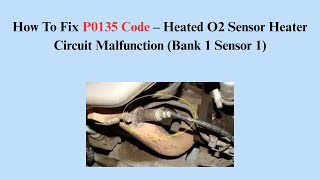
How to confirm: After confirming the fuse is good, use a multimeter to test the resistance of 🎬 Watch: How to test and fix the P0135 heater circuit the heater circuit at the sensor's connector. A reading of open-loop (infinite resistance) or far outside the typical 4-30 ohm range confirms a failed heater element. A healthy sensor will typically read in a much tighter range, between 2.5 and 10 Ohms.
Typical fix: Replace the Bank 1, Sensor 1 (upstream) oxygen sensor.
Est. part cost: $50-$150 - Blown O2 Sensor Heater Fuse 🟡 Medium Probability → Shop Oxygen Sensor A short in the O2 sensor wiring or the sensor's internal heater element can cause the dedicated fuse to blow, cutting power to the circuit.
How to confirm: Locate the under-hood fuse box (Power Distribution Box). Check fuse F33, a 15A fuse often labeled 'HEGO' or 'O2 HTR'. Visually inspect it to see if it is blown.
Typical fix: Replace the blown fuse with a new one of the same amperage. If the fuse blows again immediately, a short circuit exists in the wiring or in one of the O2 sensors that must be located and repaired.
Est. part cost: $1-$5 - Damaged Wiring or Connector ⚪ Low Probability The wiring harness for the O2 sensor is routed near the hot exhaust manifold and engine block, making it susceptible to melting or chafing over time, which can cause a short or open circuit.
How to confirm: Visually inspect the entire wiring harness from the sensor to the main engine harness. Look for melted plastic, chafed insulation, or corroded pins in the connector.
Typical fix: Repair the damaged section of wire or replace the connector pigtail.
Est. part cost: $10-$30
Rare But Worth Checking
- Blown Shared System Fuse (Fuse 28): In rare cases, a short circuit in a completely different component can blow a shared fuse. One documented case on a 2009 Escape showed a blown Fuse 28 causing P0135 along with numerous other codes (P0010, P0020, P0141, P0155, P0161, P0443, etc.). If you have multiple, seemingly unrelated codes, check other fuses besides the dedicated HEGO fuse.
- Powertrain Control Module (PCM) Fault: → Shop Engine Control Module (ECM) This is extremely rare. The PCM should only be considered a potential cause after all other possibilities (sensor, fuse, wiring) have been definitively ruled out.
Diagnosis Steps
- Connect an OBD-II scanner and confirm that P0135 is the active code. Note any other codes present.
- Open the hood and locate the under-hood fuse box (Power Distribution Box).
- Consult the owner's manual or online diagrams to identify the fuse for the O2 sensor heater. Check fuse F33 (15A), often labeled HEGO. Visually inspect it. Replace if blown and re-test.
- If multiple other codes are present, also check fuse 28 as a potential secondary cause.
- If the fuse is good, locate the upstream oxygen sensor. It is screwed into the exhaust manifold, visible at the back of the engine bay.
- Carefully inspect the sensor's wiring harness and connector for any signs of melting, chafing, or corrosion.
- If the wiring appears intact, disconnect the sensor. Use a multimeter set to Ohms (Ω) to measure the resistance between the two heater circuit pins on the sensor side of the connector. A normal reading is typically between 4 and 30 Ohms. An infinite reading (OL) means the heater is open and the sensor is bad. A more precise reading for a healthy sensor is often between 2.5 and 10 Ohms.
- If the resistance is within spec, the sensor itself may be good. The next step is to check for power at the vehicle's harness connector. With the key on and engine off, use a multimeter set to DC Volts to check for 12V at the heater power pin on the harness connector. If no voltage is present, there is a wiring issue between the fuse box and the connector.
Parts You'll Likely Need
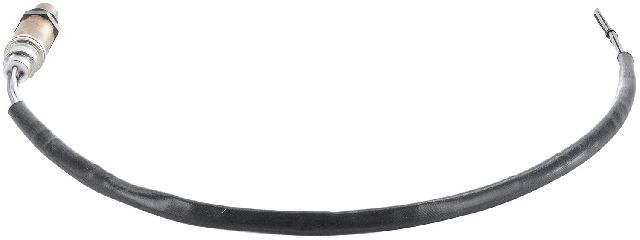
- Upstream Oxygen Sensor (Bank 1, Sensor 1)
(OEM #9L8Z-9F472-A (Motorcraft Service #: DY-1119))— This is the most common cause of P0135, as the internal heater element fails from normal use over time.
Trusted brands: Motorcraft, Denso, Bosch, NTK
OEM price range: $90-$150
Aftermarket price range: $50-$80
Related Codes That Often Appear With This One
- P0134 — P0134 (O2 Sensor Circuit No Activity Detected) can be triggered if the failed heater prevents the sensor from warming up and sending a signal.
- P0031 — P0031 is a more specific code for 'HO2S Heater Control Circuit Low'. They often appear together and point to the same root cause in the upstream sensor's heater circuit.
- P0141, P0155, P0161, P0443, P0010 — If P0135 appears with a large group of other codes, it strongly suggests a blown shared fuse (like fuse 28) rather than an individual component failure. The other codes relate to other O2 sensor heaters, the EVAP system, and VCT solenoids that may share a power source.
Technical Service Bulletins (TSBs) & Recalls
- Ford Recall 14S05 / NHTSA 14V284000: Addresses sudden failure of the Electric Power Steering (EPS) system. Unrelated to P0135 but a critical safety recall for this platform.
- Ford Customer Satisfaction Program 13N03: Extended warranty coverage for failing Electronic Throttle Bodies (ETB) that cause 'limp mode'. Unrelated to P0135 but a common, high-severity issue.
Platform-Specific Known Issues
- Shared Fuse Failure Causing Multiple Codes: While the primary fuse to check is F33 (15A) for the O2 heaters, be aware that a short in another system can blow a different, shared fuse. In one documented case for a 2009 Escape, a short caused fuse 28 to blow, which resulted in a cascade of codes including P0135, P0141, P0155, P0161, P0443, P0010, and P0020. If you see a large number of unrelated codes, suspect a shared fuse before diagnosing individual components.
Mechanic-Grade Diagnostic Values
- Upstream O2 Sensor (HO2S11) Heater Circuit Resistance — expected: 2.5 - 10 Ohms (healthy), up to 30 Ohms may be acceptable per general specs.. Failure: Infinite resistance (OL) indicates an open circuit; near-zero resistance indicates a short. Both mean the sensor is bad.
- O2 Sensor Heater Power Supply at Harness Connector — expected: ~12 Volts (Battery Voltage) with Key On, Engine Off (KOEO).. Failure: 0 Volts indicates a blown fuse (F33 or F28) or an open in the power supply wire from the fuse box.
- Upstream O2 Sensor (O2S11) Live Data Voltage — expected: Rapidly fluctuating between approximately 0.1V and 0.9V when the engine is warm and in closed loop.. Failure: A voltage that is stuck, flat, or very slow to respond after warm-up can indicate a sensor that is not functioning correctly, possibly due to the failed heater.
Hidden / Shadow Codes Worth Checking
- Mode 6, Test ID for HO2S Heater Monitor: Ford vehicles use Mode 6 to display results of non-continuous monitor self-tests. While not a 'shadow code,' a technician can use a professional scan tool to view the status of the O2 sensor heater monitor test. A 'failed' status for this monitor confirms the PCM's diagnosis that triggered P0135. (see via Professional-grade OBD-II scan tool with Mode 6 data capability (e.g., Ford IDS, FORScan, high-end Autel/Snap-on scanners).)
Scan Tool Commands That Help
- Ford IDS / FORScan: KOER (Key On, Engine Running) Self-Test — After a repair (like replacing a fuse or sensor), initiating the KOER self-test can force the PCM to immediately re-run the O2 sensor heater monitor. This allows for quick verification that the fix was successful without needing to complete a full, lengthy drive cycle.
- Any Graphing Scan Tool: Live Data Graphing: O2S11 Voltage — This is a primary diagnostic step to assess the overall health of the sensor, not just the heater. After a cold start, a sensor with a working heater will begin to produce a fluctuating voltage signal much faster than one with a failed heater.
Wiring & Ground Locations
- C134 — The main electrical connector joining the upstream O2 sensor to the engine wiring harness. It is often a green connector located in a tight spot near the back of the engine, sometimes more easily accessed from the top of the engine bay.. This is the primary point to test for power, ground, and sensor resistance. Corrosion or damaged pins within this connector can directly cause a P0135 code.
- G103 / G104 — Primary chassis ground points in the engine compartment. G103 is typically on the right (passenger) side front, and G104 is on the left (driver) side front or on the transmission.. The PCM and its sensors rely on these main grounds for a stable reference. A loose or corroded ground here can cause erratic electrical behavior across multiple systems, including the O2 sensor circuits.
- C175b — One of the main multi-pin connectors at the Powertrain Control Module (PCM), which is located on the left side of the engine compartment.. This is the final termination point for the O2 sensor wiring. Performing continuity checks from C134 to the corresponding pins at C175b is the definitive way to rule out a wiring harness issue.
OEM Part Supersession History
9L8Z-9F472-A→DY-1119 (Motorcraft Service Number)— Standard part number transition from engineering number to service number.
Heads up: There is conflicting data on whether DY-1119 is used for the upstream or downstream sensor in certain model years. It is critical to verify the part number against the vehicle's VIN to ensure the correct sensor is purchased.
Model Year Variations Within This Range
- 2009-2012: The 2.5L Duratec I4 engine was introduced for the 2009 model year, replacing the 2.3L engine used in the 2008 Escape. Therefore, this specific guide is most accurate for 2009-2012 models.
- 2008 vs 2009+: Wiring and ground locations may differ. For example, ground point G109 is noted as being on the firewall for 2008 models, a location not typically referenced for later years.
Diagnostic Flowchart
Other Known Issues on This Vehicle
Issues unrelated to this code that are worth knowing about as an owner of this generation:
- Electric Power Steering (EPS) Failure 🔴 High — Very common across 2008-2011 models. Can result in a sudden loss of power steering assist, making the vehicle difficult to steer at low speeds. (Ref: NHTSA: 14V284000 / Ford Recall: 14S05)
- 6F35 Automatic Transmission Failure 🔴 High — Common, particularly in 2009-2012 models. Symptoms include harsh shifting, shuddering, hesitation, and complete failure, often before 100,000 miles. Subject of multiple lawsuits.
- Electronic Throttle Body (ETB) Failure 🔴 High — A widespread problem causing the vehicle to enter a 'limp home' mode with drastically reduced power. Affects 2009-2012 models. (Ref: Ford Customer Satisfaction Program 13N03 (extended warranty))
- Cracked Front ABS Tone Ring 🟠 Medium — A common failure where the ABS tone ring on the front axle cracks, causing erratic ABS and traction control activation and illuminating warning lights.
- Body Rust (Rear Quarter Panels / Tailgate) 🟡 Low — Frequently occurs on vehicles used in the 'salt belt'. Rust typically forms around the rear wheel arches and the bottom of the tailgate.
Used vs. New Parts: Buying Guide for This Vehicle
When a used part is the smart pick: For this specific repair, a used part is almost never a good choice. The primary cause of P0135 is the failure of the O2 sensor itself, which is a wear-and-tear item with a finite lifespan. A used sensor has an unknown amount of life already consumed. A used wiring harness pigtail can be a viable option if the original connector is damaged and the donor part is in excellent condition.
What to inspect on the donor part:
- For a wiring pigtail: Check for flexible, non-brittle insulation.
- Inspect for any signs of melting, cuts, or previous tape repairs.
- Ensure connector pins are clean, straight, and free of corrosion.
- Verify the locking tab on the connector is intact and functional.
OEM-only on this vehicle (don't cheap out):
- Powertrain Control Module (PCM) - If this is the root cause, using a new or professionally remanufactured OEM unit is highly recommended to avoid compatibility issues.
Aftermarket brands forum-validated for this vehicle:
- Denso
- NTK
- Bosch
Brands owners have reported issues with on this vehicle:
- Unbranded, 'white-box' sensors from online marketplaces often have high failure rates or incorrect heater resistance values, causing the code to return.
Real Owner Stories
Aggregated from forums and TSBs cited above. Mileages and costs reflect what owners reported in those sources.
2009 Ford Escape 3.0L
Symptoms: The check engine light came on after driving about 50 miles; the scanner showed codes P0135 and P0155. Two different replacement sensors from an auto parts store were found to be defective right out of the box.
What fixed it: Testing the sensors with a multimeter revealed they had open loops on the heater side; the fix required obtaining functional sensors with intact heater circuits.
Source hint: Ford Truck Enthusiasts Forums
2009 Ford Escape
Symptoms: A massive list of codes appeared simultaneously, including P0135, P0141, P0155, P0161, P0443, P0010, and P0020.
What fixed it: The technician traced the issue to a short circuit that blew a shared fuse (#28) rather than individual sensor failures.
Source hint: YouTube: '2009 FORD ESCAPE , CODE - P0010,P0020,P0102,P0135,P0141,P0155,P0161,P0443,P0403,P0505'
2008-2012 Ford Escape 2.5L Duratec I4 — ~80000 miles
Symptoms: Check engine light illuminated with P0135; the internal heater element in the upstream sensor burned out.
What fixed it: Replacement of the Bank 1, Sensor 1 (upstream) oxygen sensor.
Source hint: escape-city.com
Related OBD-II Codes
Frequently Asked Questions
Which fuse should I check first for a P0135 code on my 2008-2012 Ford Escape?
Does the Ford Recall 14S05 for the Electric Power Steering (EPS) relate to my P0135 check engine light?
Is there an extended warranty that covers P0135 on the 2.5L Duratec engine?
Where is the Bank 1, Sensor 1 oxygen sensor located on the 2.5L Escape?
My Mercury Mariner has the same P0135 code; are the parts the same as the Ford Escape?
What resistance should I look for when testing the O2 sensor heater element?
Helpful Videos
We Have This Part in Stock


The information in this article is provided for general reference and educational purposes only. Vehicle specifications, procedures, and part compatibility can vary by production date, trim level, and region. Always consult your vehicle's factory service manual and verify part numbers before purchasing or performing repairs. Safety-critical components such as airbags, seat belts, and braking systems should be installed by a qualified professional.
- Ford Escape:
- 🧭 Diagnostic Flowchart
- 🎬 Helpful Videos
- 🛍️ Shop This Part
- What's Unique About the 2008-2012 Ford Escape
- Symptoms You May Notice
- Most Likely Causes
- Rare But Worth Checking
- Diagnosis Steps
- Parts You'll Likely Need
- Related Codes That Often Appear With This One
- Technical Service Bulletins (TSBs) & Recalls
- Platform-Specific Known Issues
- Mechanic-Grade Diagnostic Values
- Hidden / Shadow Codes Worth Checking
- Scan Tool Commands That Help
- Wiring & Ground Locations
- OEM Part Supersession History
- Model Year Variations Within This Range
- Other Known Issues on This Vehicle
- Used vs. New Parts: Buying Guide for This Vehicle
- Real Owner Stories
- 2009 Ford Escape 3.0L
- 2009 Ford Escape
- 2008-2012 Ford Escape 2.5L Duratec I4 — ~80000 miles
- Related OBD-II Codes
- Frequently Asked Questions
- 🎟️ Get 5% Off