

P0135 on 2012-2018 Ford Focus: O2 Sensor Heater Circuit Causes and Fixes
On a 2012-2018 Ford Focus, code P0135 almost always means the upstream oxygen sensor (Bank 1, Sensor 1) has failed. The internal heater element burns out, requiring sensor replacement. Expect to pay $50-$100 for an aftermarket sensor or $100-$150 for an OEM Motorcraft part. It's a common DIY fix with a 2/5 difficulty, often requiring a special O2 sensor socket.
- P0135 on a 2012-2018 Focus almost certainly means you need a new upstream O2 sensor.
- The job is DIY-friendly and requires basic hand tools plus a special 22mm (7/8") O2 sensor socket.
- Confirm the failure by testing the resistance of the old sensor's heater circuit (should be 2.5-10 ohms); a failed one will read open (OL).
- Ignoring the code will hurt your fuel economy and can eventually damage your catalytic converter.
- Use a reputable brand like Motorcraft, Bosch, or NTK for the replacement part to ensure longevity and correct performance.
What's Unique About the 2012-2018 Ford Focus
For the third-generation Ford Focus (Mk3), this code is a very common and straightforward issue. The 2.0L GDI engine uses a wideband oxygen sensor, sometimes called an Air/Fuel Ratio sensor, for precise fuel control. The failure mode is almost always a simple burnout of the sensor's internal heating element due to age and thousands of heat cycles. Unlike some vehicles where wiring or fuse issues are equally probable, on the Focus, the sensor itself is the primary point of failure by a large margin. One owner on an Australian Ford Forum noted the failure at 110k KMs and fixed it with a simple replacement.
Symptoms You May Notice
- Check Engine Light is on
- Decreased fuel economy
- Rough idle, especially on cold starts
- Vehicle may hesitate or run poorly during warm-up
- Failing a vehicle emissions test
- Strong smell of fuel from the exhaust when the engine is running rich
- Replacing the downstream (post-catalyst) O2 sensor. P0135 specifically refers to Sensor 1, which is always the upstream sensor.
- On the 2.0L TDCi diesel model, some early versions (around 2012) may not have an O2 sensor, but a generic OBD-II reader might still show a P0135 code. This is a 'red herring', and the issue lies elsewhere or is a scanner compatibility problem.
Most Likely Causes
- Failed Upstream O2 Sensor 🔴 High Probability → Shop Oxygen Sensor The internal heating element is a wear-and-tear component subjected to thousands of heat cycles and extreme exhaust temperatures, causing it to eventually burn out. This is a common failure point on most modern vehicles, with a typical lifespan of 60,000 to 100,000 miles.
How to confirm: Disconnect the sensor and measure the resistance between the two heater circuit pins (often two wires of the same color). A good sensor will have very low resistance, typically between 2.5 and 10 ohms when cold. A failed sensor will show an open circuit 🎬 Watch: How to test and replace a sensor with code P0135 (infinite resistance, or 'OL' on a multimeter).
Typical fix: Replace the upstream (Bank 1, Sensor 1) oxygen sensor. This is a 10-minute job for a DIYer with the right tools.
Est. part cost: $50-$150 - Damaged Wiring or Connector ⚪ Low Probability The wiring harness is close to the hot exhaust manifold. While generally well-protected, wires can become brittle and crack over time. A specific, though uncommon, cause found on these vehicles is rodent damage, where animals chew through the wires, causing a short.
How to confirm: Visually inspect the wiring harness from the sensor up to the main loom for any signs of melting, chafing, corrosion, or chewing. With the key on and engine off, use a multimeter to check for 12-volt power at the appropriate pin on the harness-side of the connector.
Typical fix: Repair the damaged section of wire or replace the connector pigtail.
Est. part cost: $10-$30 - Blown Fuse ⚪ Low Probability Not a platform-specific issue, but a short circuit in the heater wiring can cause the fuse to blow. This is often a symptom of another problem (like chewed wires) rather than the root cause.
How to confirm: For the 2.0L GDI, locate fuse F35 (a 15A fuse) in the under-hood fuse box. This fuse often powers multiple components, including both O2 sensor heaters and the EVAP purge valve. Check if it's blown.
Typical fix: Replace the blown fuse. If it blows again immediately, a short circuit exists in one of the components on that circuit which must be found and repaired.
Est. part cost: $1-$5
Rare But Worth Checking
- Faulty Powertrain Control Module (PCM): → Shop Engine Control Module (ECM) This is extremely rare. The PCM's internal driver for the heater circuit can fail, but this should only be considered after all other possibilities (sensor, wiring, fuses) have been exhaustively ruled out with professional diagnostic tools.
Diagnosis Steps
- Read the code with an OBD-II scanner to confirm P0135 is present. Check for other codes like P0141 or P1450.
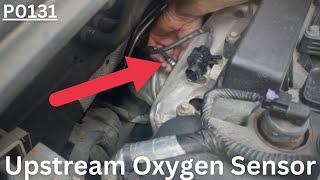
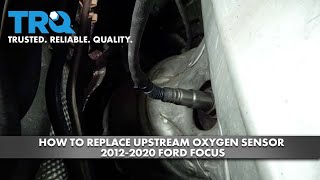
- Locate the upstream oxygen sensor (Bank 1, Sensor 1). On the 2.0L engine, it is on the back of the engine, screwed into the exhaust manifold, easily visible from the top. 🎬 See this walkthrough for locating and replacing the upstream sensor
- Check fuse F35 (15A) in the under-hood fuse box. If it's blown, there's likely a short in the circuit for the O2 sensors or another component on that circuit.
- Visually inspect the sensor's electrical connector and wiring for any obvious signs of damage, such as melting, chafing, or corrosion.
- Disconnect the sensor. With the ignition key in the 'On' position (engine off), carefully test the harness-side connector for 12V power on the heater circuit supply wire (typically a White/Blue wire).
- Using a multimeter set to resistance (Ohms), test the heater circuit pins on the sensor itself. A reading of 'OL' or infinite resistance indicates an open circuit and a failed sensor. A good sensor should show low resistance, around 3-4 ohms.
- If the wiring has power and the sensor's heater circuit is open, the sensor is faulty and needs to be replaced. This is the most common outcome.
- If the sensor tests good and the wiring has power, there may be an issue with the ground control side of the circuit leading back to the PCM, which may require more advanced diagnostics.
Parts You'll Likely Need
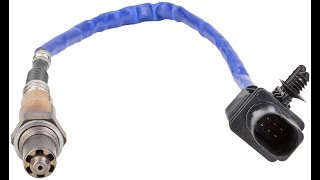
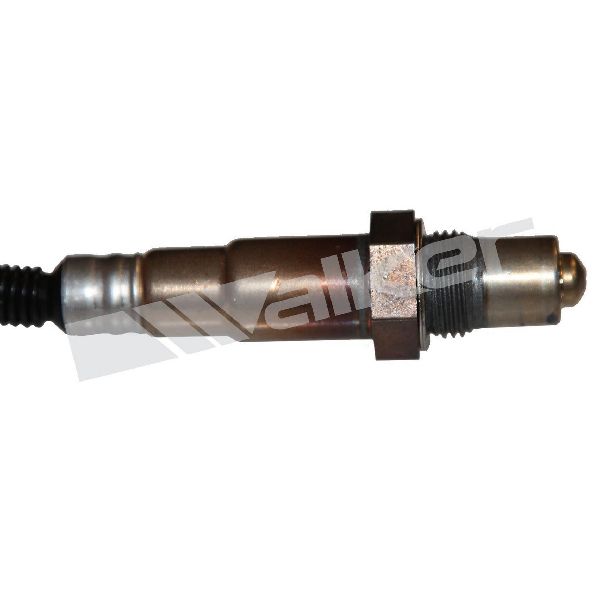
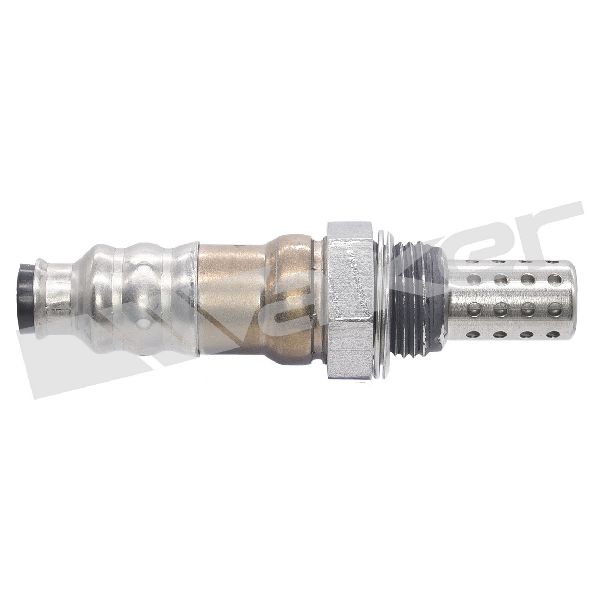
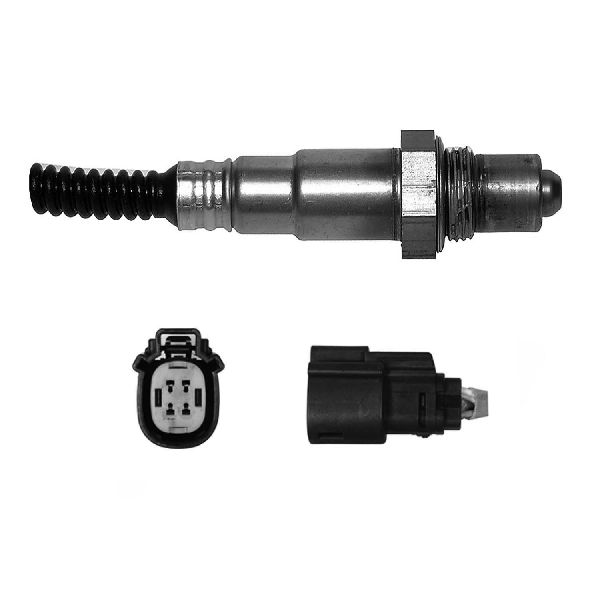
- Upstream Oxygen Sensor (Air/Fuel Ratio Sensor)
(OEM #CV6Z-9G444-A)— This is the component that contains the heater element that fails, directly causing the P0135 code. Other reported part numbers include 8F9Z9F472J and BV61-9G444-AA.
Trusted brands: Motorcraft (OEM), Bosch (Often the OE manufacturer for Ford), Denso, NGK/NTK
OEM price range: $100-$150
Aftermarket price range: $50-$100 - O2 Sensor Socket — A special slotted socket (22mm or 7/8") is required to remove and install the sensor without damaging its wire. 🎬 Watch: Step-by-step guide to replacing the sensor on a Focus
Trusted brands: Lisle, OEMTools, GearWrench
Aftermarket price range: $10-$20
Related Codes That Often Appear With This One
- P0141 (O2 Sensor Heater Circuit Bank 1, Sensor 2): If the same fuse protects both sensors, a short in one could cause a code for the other.
- P1450 (Unable to Bleed Up Fuel Tank Vacuum): The O2 sensor heater fuse (F35) on the Focus also powers the canister purge valve. A shorted purge valve can blow the fuse, triggering P0135 as a secondary code.
Technical Service Bulletins (TSBs) & Recalls
- No specific Technical Service Bulletins (TSBs) from Ford directly address the P0135 code on its own for this platform, as it is considered a standard component failure. However, it can appear secondarily to issues covered in other TSBs, such as those related to the EVAP system (e.g., TSB 16-0062 for the purge valve).
Platform-Specific Known Issues
- Owner Experience: Simple DIY Fix: An owner on Australian Ford Forums with a P0135 code on their Focus reported it was an easy 10-minute job. They replaced the sensor using a new part from Repco and a $14 O2 sensor socket. The steps were simply: remove engine cover, disconnect wire, use socket to remove old sensor, install new one, and clear the code.
- Note on Part Numbers and Brands: The primary OEM part number is CV6Z-9G444-A. The corresponding Motorcraft service part is often DY-1199. Bosch is a frequent original equipment manufacturer for Ford, and their aftermarket part 17321 is listed as an OE-equivalent. While some forums have debates about aftermarket sensor quality, Bosch, Denso, and NTK are generally considered reliable replacements.
- TDCi Diesel Engine Consideration: A 2012 Focus 2.0L TDCi owner reported a P0135 code but could not find an O2 sensor on their vehicle. A forum expert noted that not all 2012 diesel models were fitted with one, and the code was likely a 'red herring' from a generic OBD reader. Using a Ford-specific scanner like Forscan is recommended for accurate codes on these models.
Mechanic-Grade Diagnostic Values
- Upstream O2 Sensor Heater Circuit Resistance — expected: Approximately 3.0 ohms for a new OEM Motorcraft sensor when cold. Aftermarket sensors should be in a similar low single-digit range (e.g., 2-10 ohms).. Failure: An open circuit ('OL' or infinite resistance) on the multimeter indicates a burned-out heater element.
- Heater Circuit Power Supply Voltage (KOEO) — expected: Battery voltage (approx. 12V) at the harness-side connector pin for the heater power feed wire.. Failure: 0V indicates a blown fuse (F35), a bad relay, or a break in the power wire.
- Live Data - Equivalence Ratio (Lambda) — expected: Should fluctuate around 1.0 at idle and respond to throttle changes once the engine is in closed loop.. Failure: Stuck at a fixed value or no activity indicates a sensor or circuit problem.
Hidden / Shadow Codes Worth Checking
- N/A (Internal PCM Test): The PCM triggers P0135 after performing an internal current and voltage test on the heater circuit. It samples the current draw multiple times; if the current is below a calibrated threshold for a set number of samples, the PCM flags the heater as degraded or failed and sets the code. (see via This is an internal PCM logic test, not a user-accessible shadow code. The result is displayed only as the P0135 DTC.)
Scan Tool Commands That Help
- Ford IDS / FORScan / Professional Scanners: Live Data Monitoring (Data Logger) — After starting the car, monitor PIDs such as 'HO2S11 Heater Status' (or similar) to see if the PCM is commanding the heater on. Also monitor 'HO2S11 Voltage' or 'Equivalence Ratio' to see if the sensor begins responding as it warms up. A working heater will show sensor activity within a minute of a cold start.
Wiring & Ground Locations
- Upstream O2 Sensor Heater Circuit Pins — On the 6-pin connector for the upstream O2 sensor, located on the back of the engine.. These are the specific pins for testing the heater. On a 2013 Focus 2.0L, the heater circuit uses Pins 3 (White/Blue - 12V Power) and 4 (White/Green - PCM Ground Control).
- Engine Bay Chassis Grounds — Underneath the airbox, in front of the battery. There are typically two ground wires bolted directly to the painted chassis.. These ground points are known to have poor contact from the factory due to being bolted over paint. A poor ground can cause various electrical issues, including erratic sensor behavior that could potentially trigger a P0135 code. Cleaning the paint from under the ground lugs is a known 'ground mod' in the Focus community.
Real Owner Repair Stories
- YouTube channel 'Fix It All' (2013 Ford Focus with 2.0L GDI engine and manual transmission.) — Check Engine Light on with DTC P0135.
❌ Tried (didn't work) The technician diagnosed the issue correctly on the first attempt.
✅ What actually fixed it The technician first verified 12V power at the White/Blue wire in the sensor harness connector. He then tested the resistance of the old sensor's heater circuit and found it was open ('no continuity'). A new Motorcraft sensor (P/N 8F9Z-9F472-H) was tested and showed a resistance of ~3 ohms. After installing the new sensor, the code was cleared and did not return.
When the Usual Fixes Don't Work
- While Pass 2 suggested OEM part number CV6Z-9G444-A, further investigation reveals this is the part number for the downstream (rear) oxygen sensor. The P0135 code refers specifically to the upstream (front) sensor. A technician successfully resolved the code using Motorcraft part 8F9Z-9F472-H, confirming a different part is required. This highlights a common parts-lookup error where the incorrect sensor is purchased.
OEM Part Supersession History
8F9Z-9F472-H (or similar)→N/A— This is the correct OEM part family for the upstream sensor.
Heads up: The part number CV6Z-9G444-A is commonly misidentified for this repair; it is the DOWNSTREAM (Sensor 2) sensor and will not fix P0135.Bosch 17321→Bosch 17319— Part number change for later model years.
Heads up: Bosch lists part 17321 for 2012-2013 models and 17319 for 2013-2018 models, suggesting a change around the time of the mid-cycle facelift. Ensure you are purchasing the correct part for your specific model year.
Model Year Variations Within This Range
- 2012-2014 vs 2015-2018: The Ford Focus received a major facelift for the 2015 model year. While the P0135 fault remains common, there are variations in part numbers for aftermarket sensors (e.g., Bosch 17321 vs 17319). While the fuse location (F35) is documented, it's possible wiring or fuse box layouts were altered in the facelift. Always verify the correct part number and fuse location for your specific year.
Diagnostic Flowchart
Real Owner Stories
Aggregated from forums and TSBs cited above. Mileages and costs reflect what owners reported in those sources.
2006 Ford Focus LS
Symptoms: Received a P0135 O2 Sensor Heater Circuit error code.
What fixed it: Replaced the sensor in a 10-minute DIY job. Removed the engine cover, disconnected the wire, used a $14 O2 sensor socket to remove the old sensor, installed a new part from Repco, and cleared the code.
Source hint: Australian Ford Forums - 'P0135 O2 Sensor Heater Circuit error? Focus LS 2006'
2015 Ford Focus
Symptoms: Experienced fuel control issues and fuel trim problems accompanied by O2 sensor codes.
What fixed it: Diagnosed and replaced a bad EVAP purge valve, which was causing code P144A and linking to the O2 sensor and fuel trim problems.
Source hint: ScannerDanner Forum - 'Another FORD with fuel control issue.'
2012 Ford Focus 2.0L TDCi
Symptoms: Scanned the vehicle and found a P0135 fault code, but could not physically locate an O2 sensor on the exhaust.
What fixed it: Determined the code was a 'red herring' generated by a generic OBD reader, as not all 2012 diesel models were equipped with this sensor. Switched to using Forscan for accurate diagnostics.
Source hint: Ford Owners Club - 'Fault code P0135'
Related OBD-II Codes
Frequently Asked Questions
What is the correct OEM part number for the upstream O2 sensor on my 2.0L GDI Focus?
I have a 2012 Focus 2.0L TDCi diesel with a P0135 code, but I can't find the O2 sensor. Where is it located?
Which fuse controls the O2 sensor heater circuit on the 2012-2018 Focus 2.0L GDI?
Are there any Ford Technical Service Bulletins (TSBs) that cover the P0135 code for this generation of Focus?
How difficult is it to replace the Bank 1 Sensor 1 oxygen sensor myself on the 2.0L engine?
Helpful Videos


We Have This Part in Stock



The information in this article is provided for general reference and educational purposes only. Vehicle specifications, procedures, and part compatibility can vary by production date, trim level, and region. Always consult your vehicle's factory service manual and verify part numbers before purchasing or performing repairs. Safety-critical components such as airbags, seat belts, and braking systems should be installed by a qualified professional.
- Ford Focus:
- 🧭 Diagnostic Flowchart
- 🎬 Helpful Videos
- 🛍️ Shop This Part
- What's Unique About the 2012-2018 Ford Focus
- Symptoms You May Notice
- Most Likely Causes
- Rare But Worth Checking
- Diagnosis Steps
- Parts You'll Likely Need
- Related Codes That Often Appear With This One
- Technical Service Bulletins (TSBs) & Recalls
- Platform-Specific Known Issues
- Mechanic-Grade Diagnostic Values
- Hidden / Shadow Codes Worth Checking
- Scan Tool Commands That Help
- Wiring & Ground Locations
- Real Owner Repair Stories
- When the Usual Fixes Don't Work
- OEM Part Supersession History
- Model Year Variations Within This Range
- Real Owner Stories
- 2006 Ford Focus LS
- 2015 Ford Focus
- 2012 Ford Focus 2.0L TDCi
- Related OBD-II Codes
- Frequently Asked Questions
- 🎟️ Get 5% Off