

P0135 on 2010-2019 Ford Taurus 3.5L: O2 Sensor Heater Circuit Causes and Fixes
P0135 on a Ford Taurus most often means the Bank 1, Sensor 1 oxygen sensor has failed. However, always check the 20A fuse in the under-hood fuse box first (location F67 or F92 depending on year), as a single blown fuse can cause this and multiple other codes. A new sensor costs $50-$150.
- Before buying any parts for a P0135 code, check for other stored codes. If you have multiple codes, the problem is very likely a single 20A fuse under the hood.
- The most common fix for an isolated P0135 code is replacing the Bank 1, Sensor 1 (upstream, firewall side) oxygen sensor.
- This specific O2 sensor is difficult to reach. Be prepared for a challenging repair that may require accessing it from the passenger wheel well.
- Always use a quality replacement sensor from a reputable brand like Motorcraft, Bosch, NTK, or Denso to ensure compatibility and longevity.
What's Unique About the 2010-2019 Ford Taurus
For the 2010-2019 Taurus with the 3.5L V6, the P0135 code has a significant platform-specific quirk. While the O2 sensor itself can fail, a very common cause is a single blown 20-amp fuse in the under-hood fuse box. This fuse often powers the heaters for multiple O2 sensors, the mass airflow sensor, and VVT solenoids, so its failure can trigger a cascade of other trouble codes along with P0135. Additionally, the Bank 1 Sensor 1 is located on the firewall side of the engine, making it notoriously difficult to access for replacement, often requiring work from underneath the car or through the passenger side wheel well.
Symptoms You May Notice
- Check Engine Light is on
- Decreased fuel economy
- Rough idle or engine hesitation
- Poor engine performance or sluggishness
- Failing an emissions test
- If caused by a blown fuse, you may experience more severe symptoms like transmission shifting problems and significant power loss
- Immediately replacing the O2 sensor without first checking the fuse. If multiple codes are present (P0135, P0155, etc.), a blown fuse is a very likely cause on this vehicle, and replacing the sensor will not fix the problem.
Most Likely Causes
- Blown O2 Sensor Heater Fuse 🔴 High Probability → Shop Oxygen Sensor This fuse powers multiple components, including all O2 sensor heaters and VVT solenoids. A short in any of these components or their wiring can cause the fuse to blow, triggering multiple codes at once.
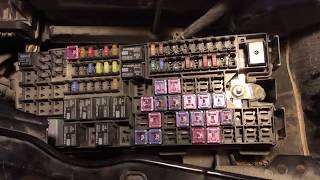
How to confirm: Check for other codes (P0141, P0155, P0161, P0010, P0020, P0443). Inspect the 20A fuse in the under-hood fuse box. 🎬 Watch: How a single fuse causes this cascade of codes. For 2011-2015 models, this is typically fuse #67. For 2016-2019 models, it may be fuse #92. Always verify with your owner's manual.
Typical fix: Replace the blown 20A mini fuse. If it blows again, there is an underlying short circuit in one of the powered components or wiring that must be diagnosed. This often involves unplugging each component on the circuit one by one until the fuse no longer blows.
Est. part cost: $1-$5 - Failed Bank 1, Sensor 1 Oxygen Sensor 🔴 High Probability → Shop Oxygen Sensor The internal heater element within the oxygen sensor is a common failure point due to age and constant heat cycles. It's a resistive element that simply burns out over time.
How to confirm: If the fuse is good, test the resistance of the heater circuit on the O2 sensor itself using a multimeter. The two same-colored wires are for the heater. A reading of 'OL' (open loop) or infinite resistance means the heater is broken. A good sensor will show low resistance (typically 2-10 ohms).
Typical fix: Replace the Bank 1, Sensor 1 oxygen sensor. This sensor is on the firewall side of the engine and is difficult to access. A special O2 sensor socket is required. 🎬 See this walkthrough for replacing the difficult upstream sensors.
Est. part cost: $50-$150 - Damaged Wiring or Connector 🟡 Medium Probability
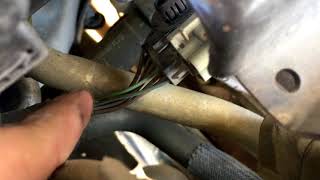
How to confirm: Visually inspect the wiring harness and connector leading to the Bank 1, Sensor 1 O2 sensor. Look for signs of melting, chafing, corrosion, or broken wires. The harness is in a tight, hot area between the engine and firewall. Use a multimeter to check for 12V power at the connector with the key on.
Typical fix: Repair the damaged section of the wiring harness or clean/replace the connector. Ensure the new wiring is protected from heat and abrasion.
Est. part cost: $10-$50
Rare But Worth Checking
- Powertrain Control Module (PCM) Fault: → Shop Engine Control Module (ECM) This is extremely rare. The PCM's internal driver circuit for the O2 sensor heater can fail, but all other possibilities should be exhausted before considering PCM replacement. This is a last resort after confirming the sensor, fuse, and wiring are all good.
Diagnosis Steps
- Read all stored trouble codes. If you see a combination of O2 sensor heater codes (P0135, P0141, P0155, P0161) and/or other codes like P0010, P0020, or P0443, proceed directly to step 2.
- Open the under-hood fuse box. Locate and inspect the fuse for the O2 sensor heaters. This is typically a 20A fuse in position F67 (for earlier models) or F92 (for later models). If it's blown, replace it, clear the codes, and see if they return. If they do, a short circuit exists.
- If the fuse is good and only P0135 is present, visually inspect the wiring and connector for the Bank 1, Sensor 1 O2 sensor. It is located on the exhaust manifold against the firewall. Check for any signs of melting, fraying, or corrosion.
- Disconnect the sensor and test the vehicle-side connector. With the ignition on (engine off), check for 12-volt power at the two heater circuit pins.
- Using a multimeter set to Ohms, measure the resistance between the two heater circuit pins on the sensor itself. A reading of infinite resistance (OL) confirms the sensor's internal heater is broken and the sensor must be replaced. A good sensor should read between 2 and 10 ohms.
- If the sensor tests good but power is not present at the connector (and the fuse is good), there is a break in the wiring harness that needs to be traced and repaired.
Parts You'll Likely Need
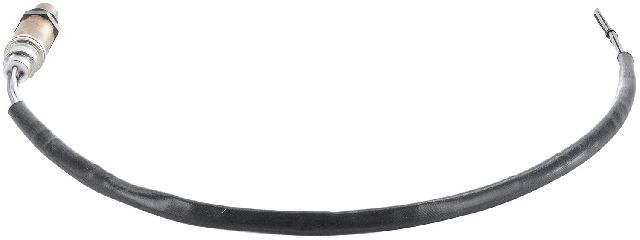
- Upstream Oxygen Sensor (Bank 1, Sensor 1)
(OEM #8F9Z-9F472-A)— The internal heater element fails from age and heat cycles, which is the most common root cause of an isolated P0135 code.
Trusted brands: Motorcraft (OEM), Bosch, NTK / NGK, Denso
OEM price range: $100-$180
Aftermarket price range: $50-$120 - 20 Amp Mini Fuse — A common failure point on this platform is a blown fuse that powers multiple systems, including the O2 sensor heaters.
Trusted brands: Bussmann, Littlefuse
OEM price range: $1-$5
Aftermarket price range: $1-$5
Related Codes That Often Appear With This One
- P0141 — Heater circuit fault for Bank 1, Sensor 2. Often appears with P0135 if the shared heater fuse is blown.
- P0155 — Heater circuit fault for Bank 2, Sensor 1. Often appears with P0135 if the shared heater fuse is blown.
- P0161 — Heater circuit fault for Bank 2, Sensor 2. Often appears with P0135 if the shared heater fuse is blown.
- P0010 / P0020 — Camshaft Position Actuator Solenoid Control Circuit codes. These can be triggered if the shared power fuse is blown.
Platform-Specific Known Issues
- The Bank 1, Sensor 1 oxygen sensor is in a very tight location against the firewall, making replacement difficult. Access often requires working from the passenger side wheel well or from underneath the car. Some owners report having to heat and bend a wrench to get the proper angle for removal.
- A blown fuse (F67 or F92) is a well-documented issue that can cause P0135 along with a host of other unrelated codes, leading to misdiagnosis if not checked first.
Mechanic-Grade Diagnostic Values
- O2 Sensor Heater Element Resistance — expected: 5 to 20 Ohms at room temperature.. Failure: Infinite resistance (Open Line/OL) indicates a burned-out heater. Zero Ohms indicates an internal short.
- Heater Circuit Power Supply Voltage — expected: Battery voltage (approx. 12V) at the harness connector pin with Key On, Engine Off (KOEO).. Failure: 0V indicates a blown fuse or an open in the power supply wire from the fuse box.
- Heater Circuit Ground Control — expected: The PCM supplies a pulse-width modulated (PWM) ground. With the engine running, you should see fluctuating voltage or a duty cycle reading on a graphing multimeter or scope.. Failure: A constant 0V or battery voltage on the ground control wire when the engine is running points to a wiring or PCM driver issue.
- Mode $06, Test ID $01, Component ID $01 — expected: The test value should be within the MIN/MAX thresholds specified by the PCM on a capable scan tool.. Failure: A test value exceeding the maximum limit confirms the PCM has detected a heater circuit fault. This is the raw data behind the P0135 code.
Scan Tool Commands That Help
- Ford IDS (or equivalent high-end bidirectional scanner): HO2S Heater Output State Control — This command allows a technician to manually toggle the O2 sensor heater on and off. It's used to verify the integrity of the power, ground, and control circuits in real-time by monitoring voltage and current draw without needing to run the engine.
Wiring & Ground Locations
- G104 — On the left front of the engine compartment for the naturally aspirated 3.5L.. This is a primary engine ground. A poor connection here due to corrosion or looseness can cause erratic sensor readings and intermittent faults across the engine, including for the O2 sensor circuits.
- G105 — Located at the rear of the engine compartment.. Another critical ground point for the powertrain control system. A fault at this ground can affect the PCM's ability to accurately read sensor data.
- B1S1 HEGO Connector — On the firewall side of the engine, connecting to the upstream O2 sensor in the exhaust manifold. The harness is routed in a high-heat area.. This is the direct connector for the sensor. The two same-colored wires (often both white or both black) are for the heater circuit. Check for 12V power on one pin and a PWM ground signal from the PCM on the other.
Real Owner Repair Stories
- Ford Explorer Forum (platform sibling) (2014 Ford Explorer 3.5L (same engine/platform)) — P0135, P0155, and other codes. Car would intermittently stall.
❌ Tried (didn't work) Replacing the Bank 1 Sensor 1 O2 sensor., Replacing the Bank 2 Sensor 1 O2 sensor.
✅ What actually fixed it Found a section of the wiring harness near the firewall had chafed against a metal bracket, causing the heater circuit power wire to short to ground. This would blow the shared 20A fuse (#67) intermittently. Repairing the wire and protecting the harness with loom resolved all codes.
OEM Part Supersession History
8F9Z-9F472-A→8F9Z-9F472-H— Standard part number update, likely for minor improvements in materials or manufacturing.
Heads up: The parts are generally interchangeable for the 2010-2019 model years, but it is always best practice to use the latest revision (8F9Z-9F472-H) or an aftermarket equivalent that cross-references to it.
Model Year Variations Within This Range
- 2010-2015 vs 2016-2019: The location of the 20A fuse for the O2 sensor heaters in the under-hood Battery Junction Box (BJB) changed. For earlier models (approx. 2010-2015), it is typically fuse #67. For later models (approx. 2016-2019), it is often fuse #92. The owner's manual is the definitive source for the specific vehicle.
Diagnostic Flowchart
Other Known Issues on This Vehicle
Issues unrelated to this code that are worth knowing about as an owner of this generation:
- Internal Water Pump Failure 🔴 High — Common on high-mileage (80k-150k miles) 3.5L V6 engines. Failure can cause coolant to mix with engine oil, leading to catastrophic engine damage if not caught early via the weep hole.
- Power Transfer Unit (PTU) Failure (AWD Models) 🔴 High — Widespread issue due to the unit's fluid overheating and breaking down. Ford considers it 'non-serviceable' with no drain plug, leading to frequent failure. Symptoms include grinding/binding on turns and a burning gear oil smell.
- Electronic Throttle Body (ETB) Failure 🟠 Medium — Common across many Ford models of this era. Causes sudden loss of power ('limp mode') and a wrench light on the dash. Often sets codes like P2111 and P2112. (Ref: Customer Satisfaction Program 13N03, TSB 10-21-6, TSB 16B32 (all expired))
- Transmission Failure (Reverse/3rd/5th Gear) 🔴 High — Reported primarily on 2015-2016 models, where an internal transmission component failure can lead to the loss of reverse, 3rd, and 5th gears, requiring a rebuild or replacement.
- Cracked Flex Plate 🟠 Medium — Can occur on some models, causing a rhythmic ticking or knocking sound from the bellhousing area that changes with engine RPM. Often misdiagnosed as engine noise.
Used vs. New Parts: Buying Guide for This Vehicle
When a used part is the smart pick: For this repair, a used part only makes sense for a replacement wiring harness pigtail if the original connector is melted or damaged. A complete used harness from a low-mileage, non-crashed donor can also be a cost-effective solution for widespread wiring damage.
Donor-vehicle mileage cap: roughly under 80000 miles for the part to have meaningful remaining life.
What to inspect on the donor part:
- For a pigtail/connector: Check for brittle plastic, corrosion on pins, or signs of melting.
- For a harness: Inspect the entire length for previous repairs, cuts, or chafing. Ensure all connector locking tabs are intact.
OEM-only on this vehicle (don't cheap out):
- While not strictly 'OEM-only', using a Motorcraft sensor is highly recommended to avoid compatibility issues. Some aftermarket sensors can have slightly different heater resistances or response times that the PCM may not adapt to correctly.
Aftermarket brands forum-validated for this vehicle:
- NTK / NGK (often the original equipment manufacturer)
- Denso
- Bosch
Brands owners have reported issues with on this vehicle:
- Unnamed, no-brand 'white box' sensors from online marketplaces often have high failure rates or incorrect heater specifications, leading to the code returning quickly.
Real Owner Stories
Aggregated from forums and TSBs cited above. Mileages and costs reflect what owners reported in those sources.
2015 Ford Taurus 3.5L V6
Symptoms: Check engine light is on with multiple DTC codes including P0135 for oxygen sensor heater circuit bank 1 sensor 1. The owner noted that all four oxygen sensors could not realistically be broken at the same time.
What fixed it: Checked for a shared fuse issue, as a single blown fuse often powers all O2 sensor heaters and other components on this platform.
Source hint: youtube_comment from FixIT
2010-2019 Ford Taurus 3.5L V6
Symptoms: P0135 code present; users discussed the difficulty of accessing the firewall-side sensor.
What fixed it: Checking the fuse (F67 or F92) first to avoid unnecessary and difficult sensor replacement.
Source hint: TaurusClub.com
Related OBD-II Codes
Frequently Asked Questions
Where is the Bank 1 Sensor 1 O2 sensor located on my 3.5L V6 Taurus?
Why did my Taurus trigger P0135 along with transmission shifting problems and power loss?
Which fuse should I check for a P0135 code on a 2011-2015 Ford Taurus?
Which fuse should I check for a P0135 code on a 2016-2019 Ford Taurus?
Is there a specific tool I need to replace the Bank 1 Sensor 1 O2 sensor?
Can a bad VVT solenoid cause my P0135 code?
Helpful Videos
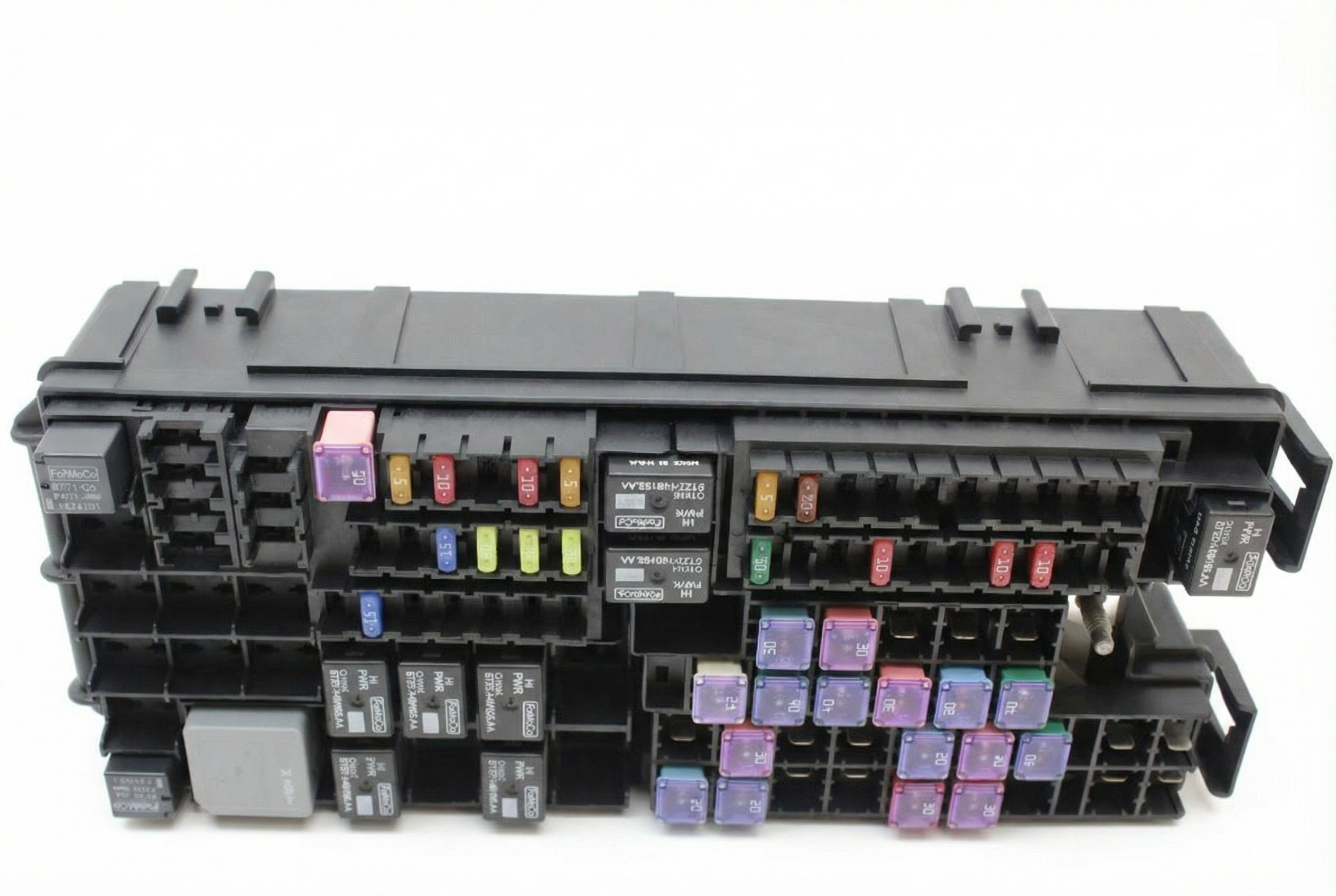
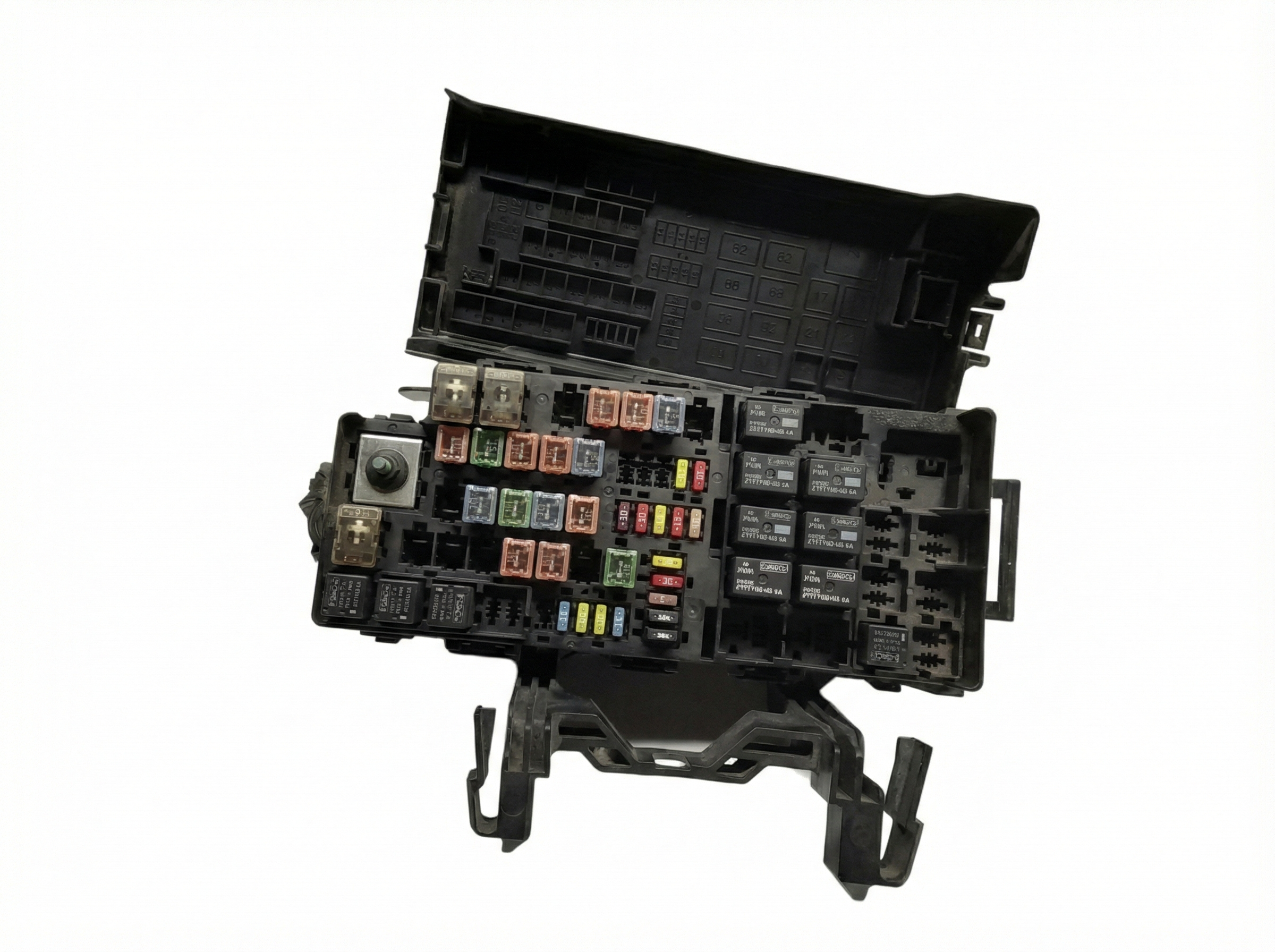
Used OEM Parts in Stock
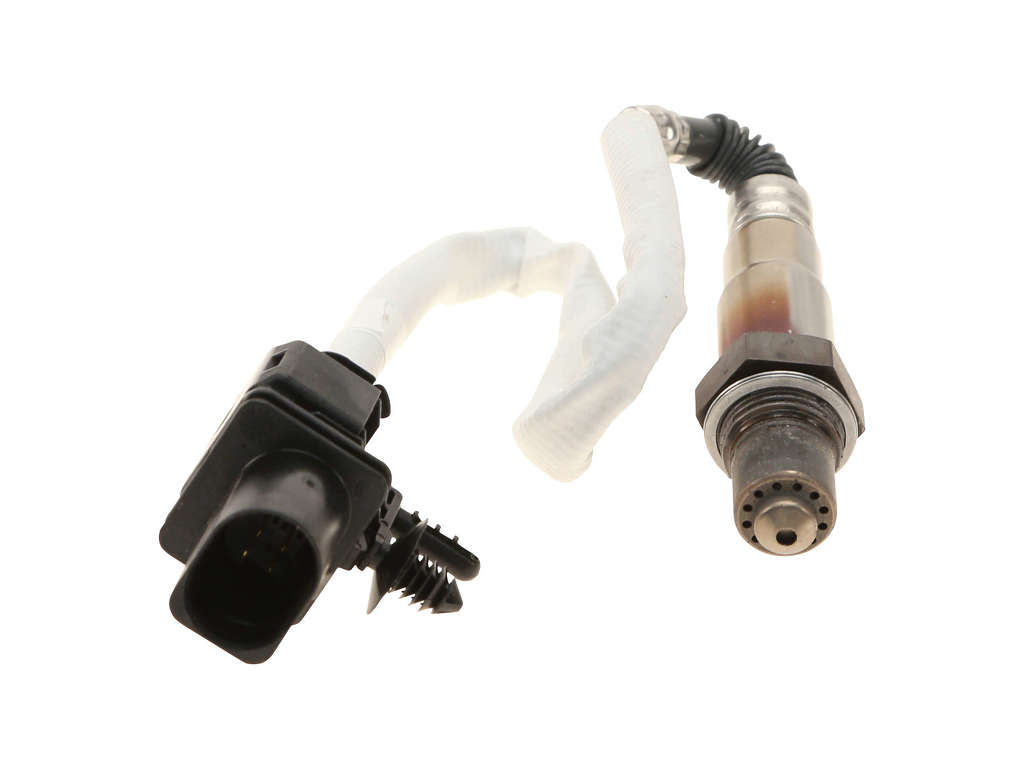
New Aftermarket Parts Available


The information in this article is provided for general reference and educational purposes only. Vehicle specifications, procedures, and part compatibility can vary by production date, trim level, and region. Always consult your vehicle's factory service manual and verify part numbers before purchasing or performing repairs. Safety-critical components such as airbags, seat belts, and braking systems should be installed by a qualified professional.
- Ford Taurus:
- 🧭 Diagnostic Flowchart
- 🎬 Helpful Videos
- 🛍️ Shop This Part
- What's Unique About the 2010-2019 Ford Taurus
- Symptoms You May Notice
- Most Likely Causes
- Rare But Worth Checking
- Diagnosis Steps
- Parts You'll Likely Need
- Related Codes That Often Appear With This One
- Platform-Specific Known Issues
- Mechanic-Grade Diagnostic Values
- Scan Tool Commands That Help
- Wiring & Ground Locations
- Real Owner Repair Stories
- OEM Part Supersession History
- Model Year Variations Within This Range
- Other Known Issues on This Vehicle
- Used vs. New Parts: Buying Guide for This Vehicle
- Real Owner Stories
- 2015 Ford Taurus 3.5L V6
- 2010-2019 Ford Taurus 3.5L V6
- Related OBD-II Codes
- Frequently Asked Questions
- 🎟️ Get 5% Off